Media coverage of NaCl for COVID‑19
Media covered none of the 6 studies showing significantly lower risk
No positive NaCl studies were covered
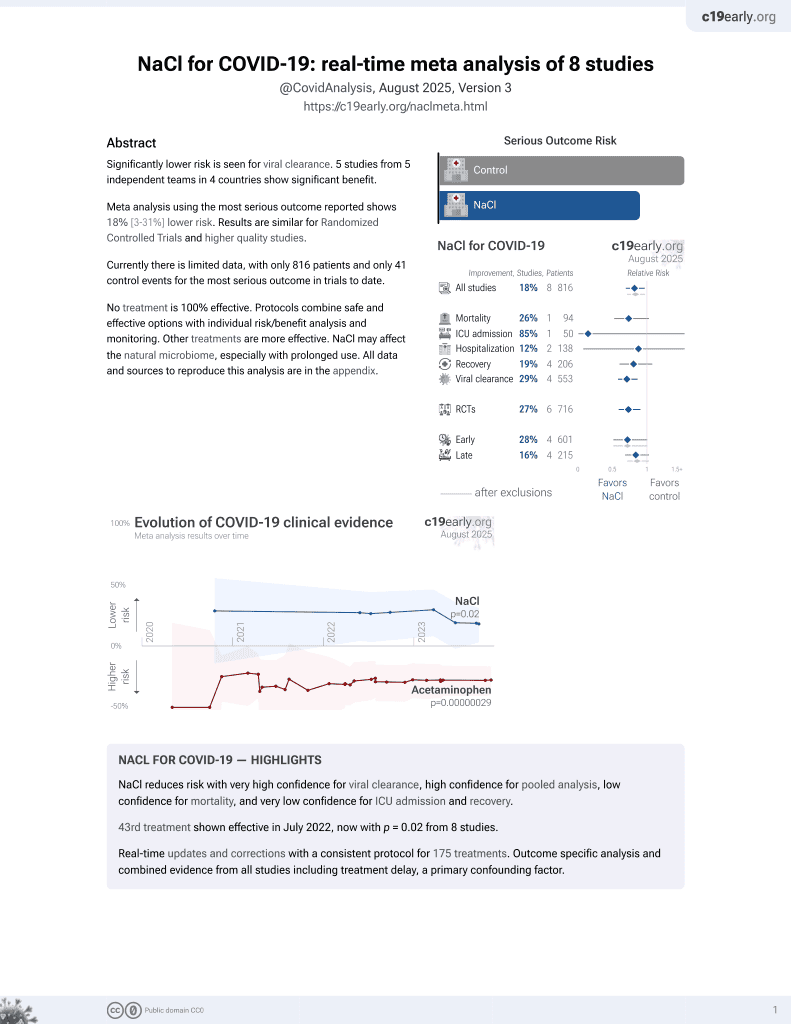
NaCl for COVID-19
How the evidence developed
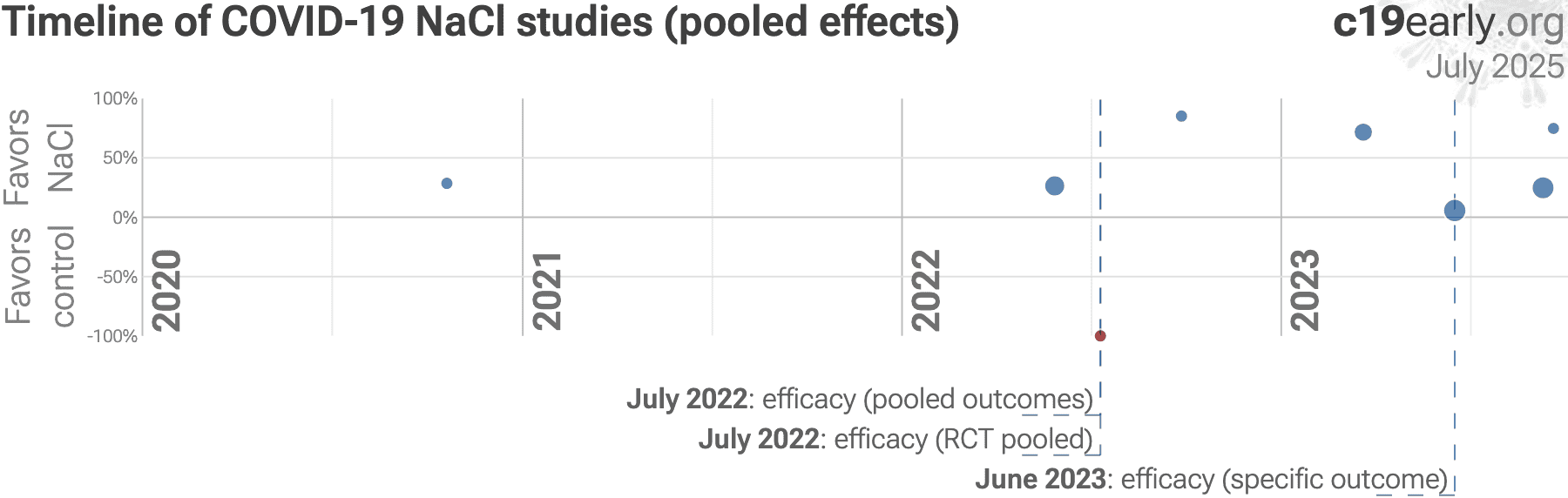
Meta-analysis results over time
NaCl for COVID-19
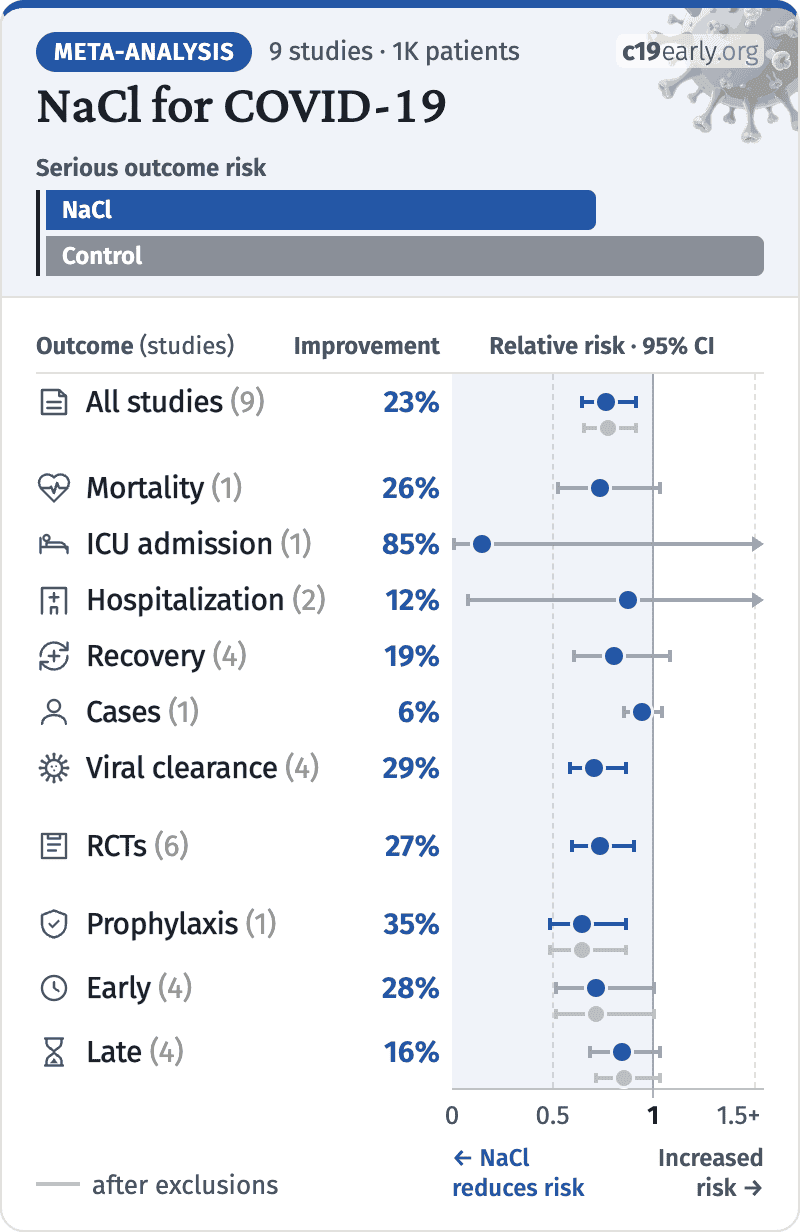
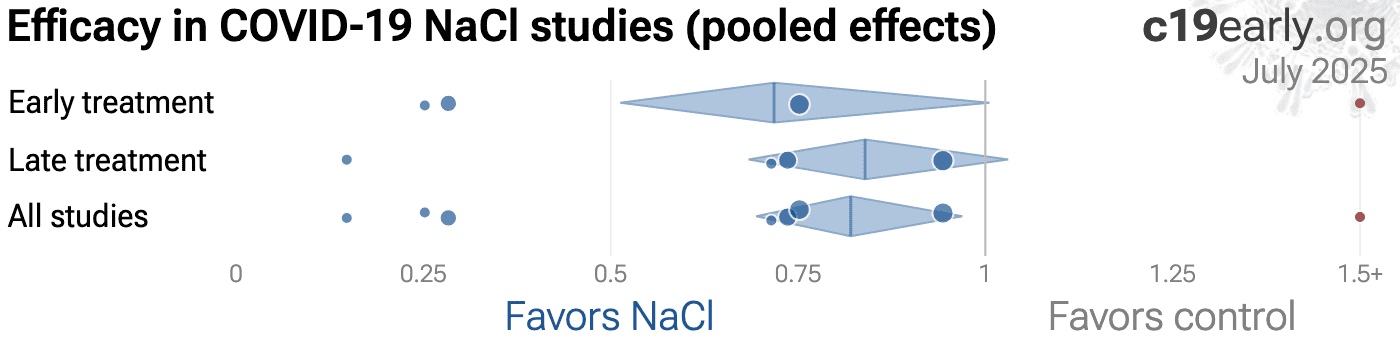
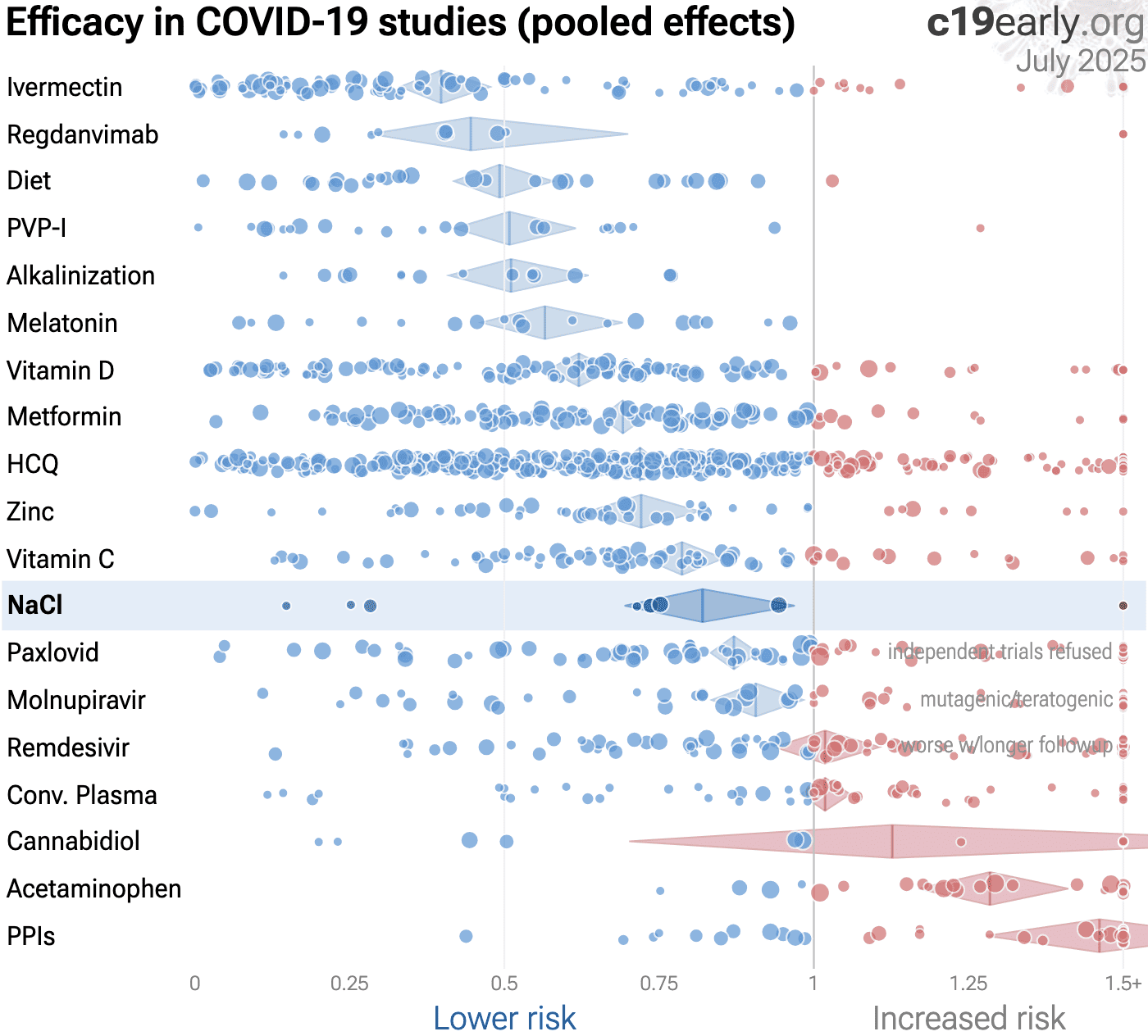
Highlights- NaCl reduces risk with very high confidence for viral clearance and in pooled analysis, low confidence for mortality and progression, and very low confidence for ICU admission and recovery.
- Emergent results for the efficacy gradient across stages (p = 0.00006) that match the biological mechanisms confirm efficacy.
- 39th treatment shown effective in July 2022, now with p = 0.0028 from 9 studies.
- Real-time updates and corrections with a consistent protocol for 227 treatments. Outcome specific analysis and combined evidence from all studies including treatment delay, a primary confounding factor.
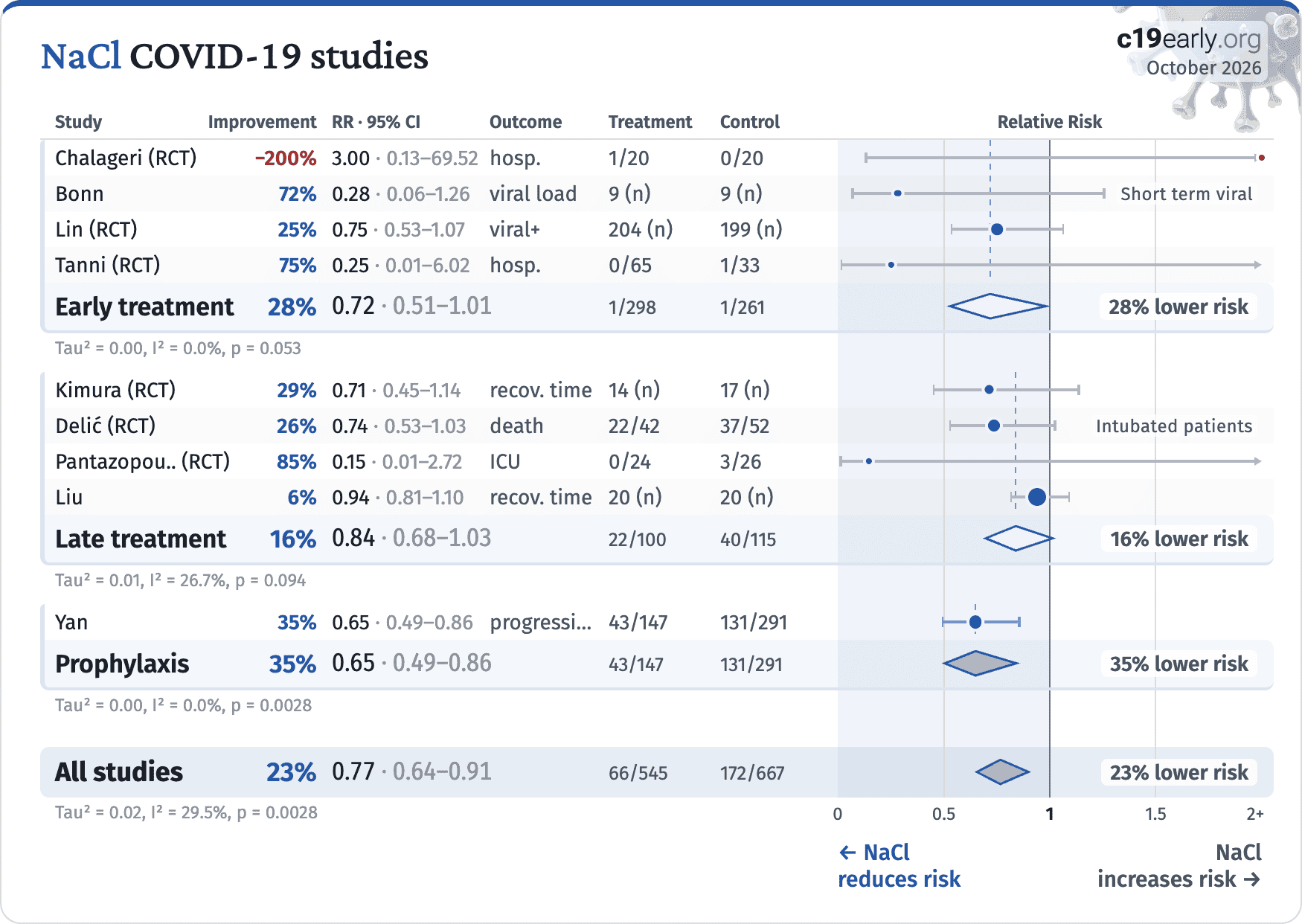
NaCl COVID-19 studies
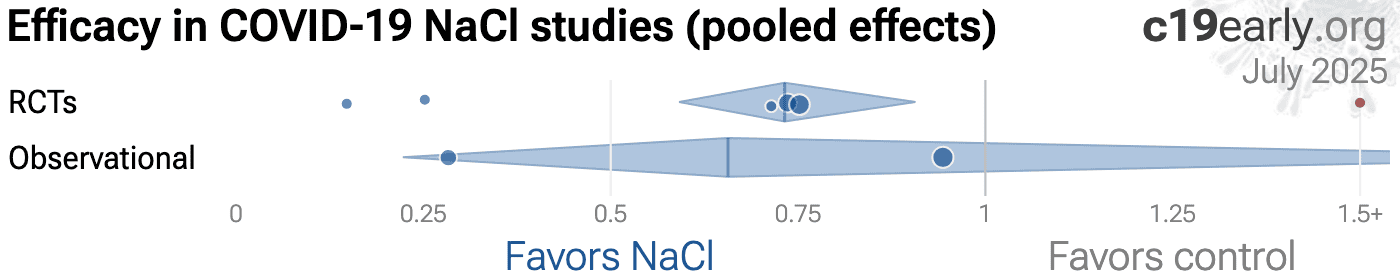
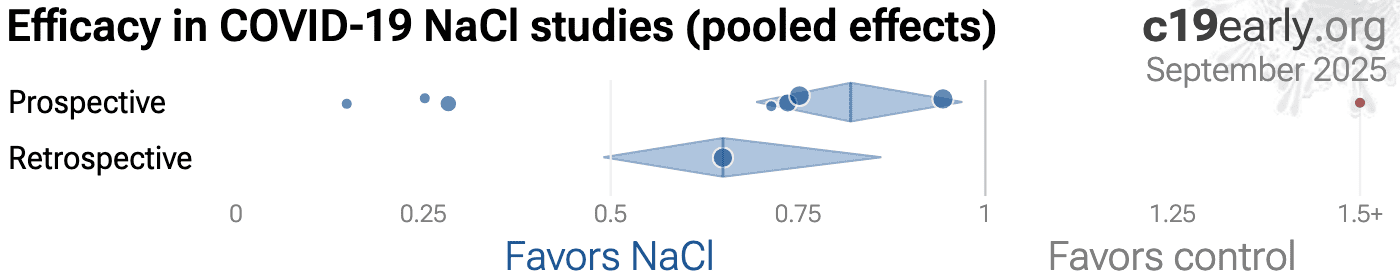
NaCl for COVID-19: meta-analysis results
Random-effects meta-analysis. Relative risk with 95% CI. * p < 0.05, ** p < 0.01, *** p < 0.001.
NaCl COVID-19 studies
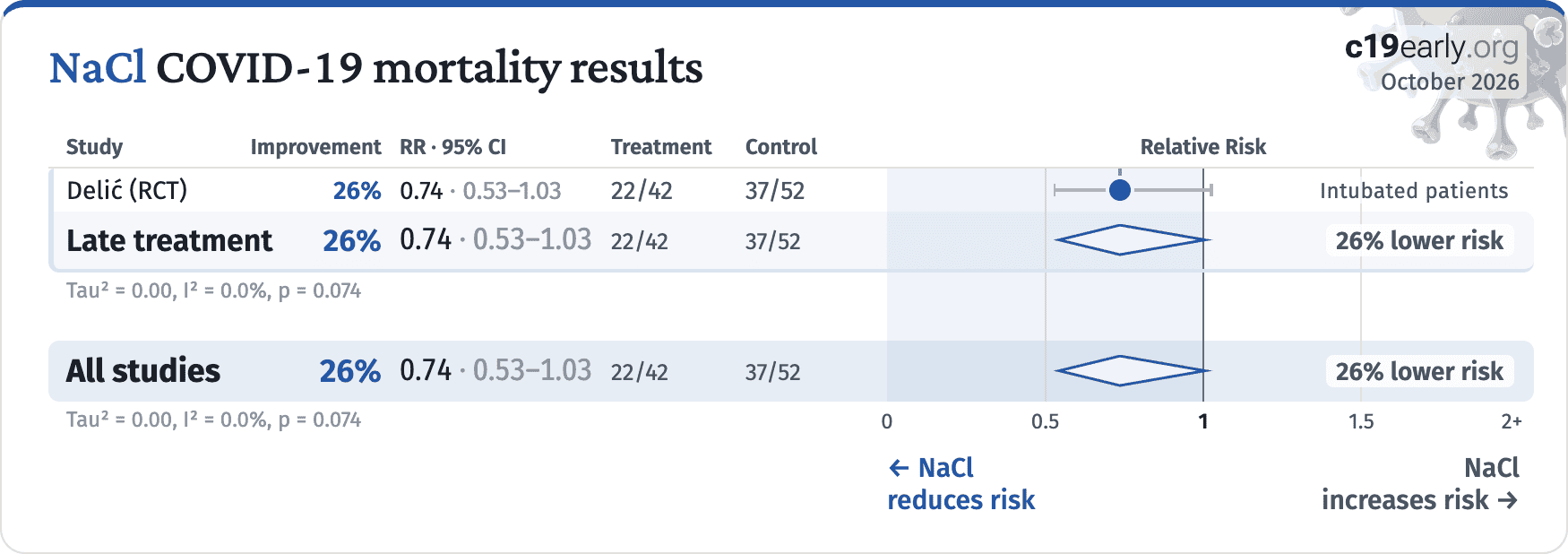
NaCl COVID-19 mortality results
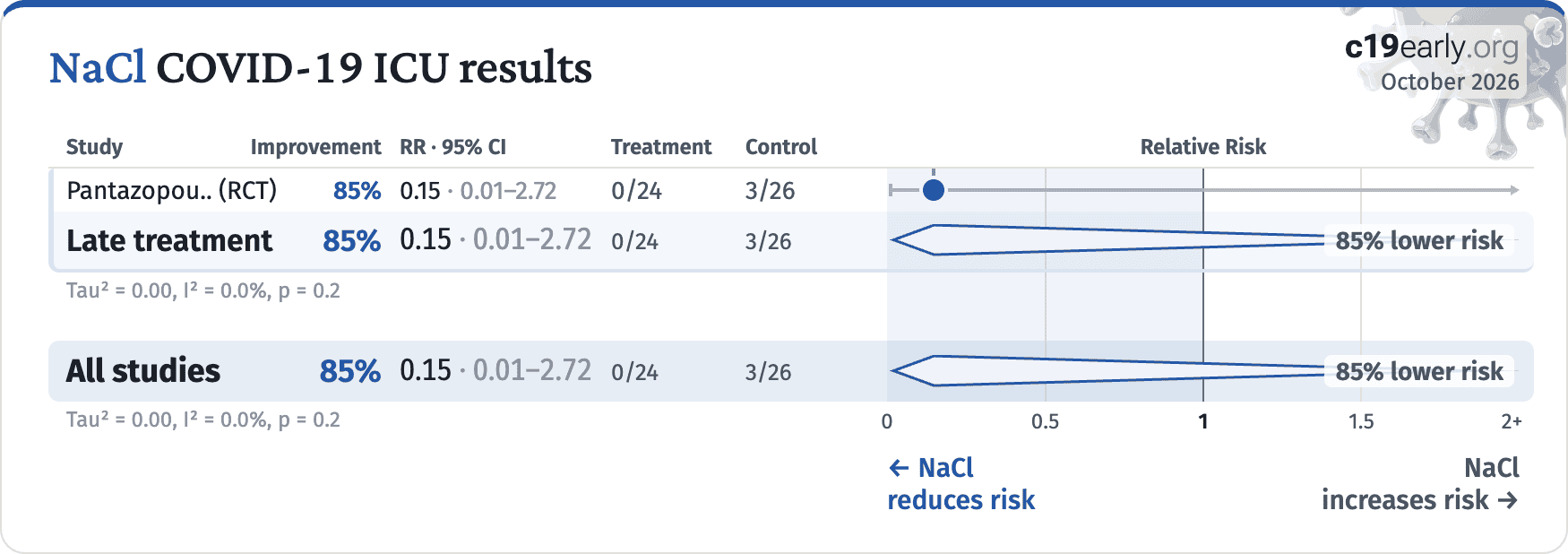
NaCl COVID-19 ICU results
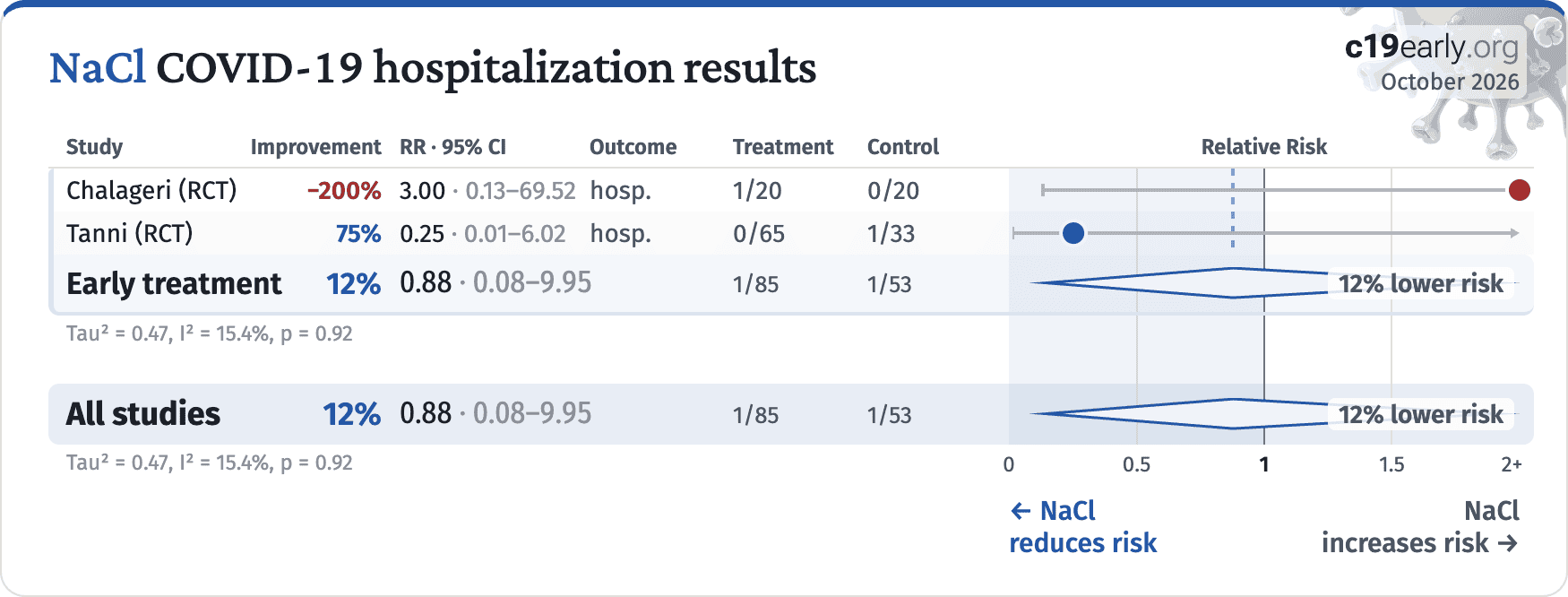
NaCl COVID-19 hospitalization results
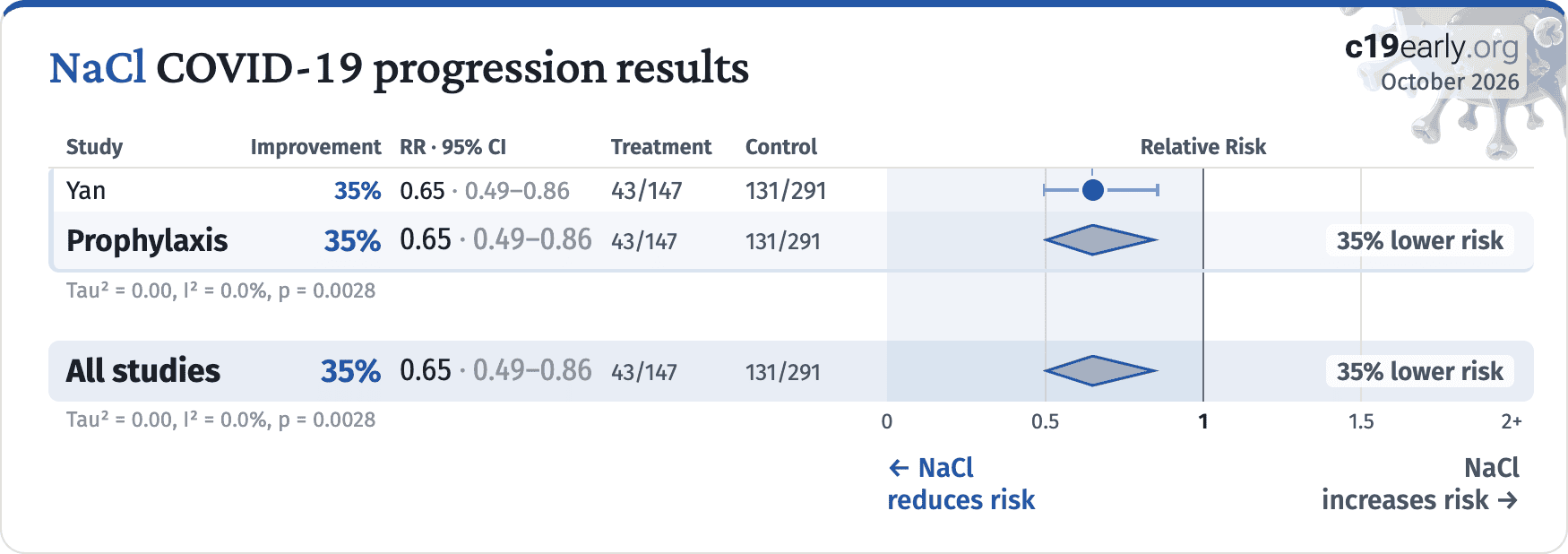
NaCl COVID-19 progression results
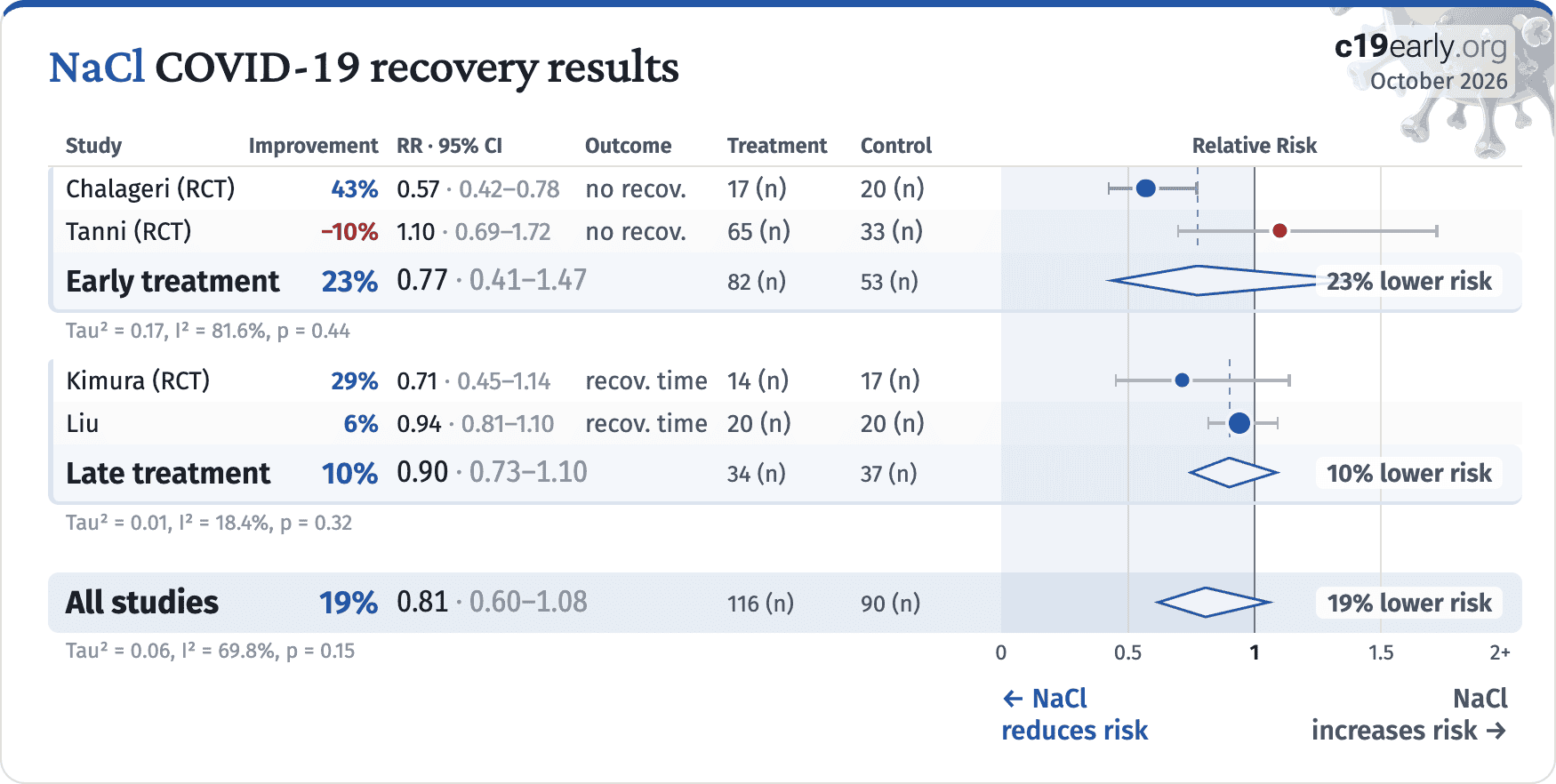
NaCl COVID-19 recovery results
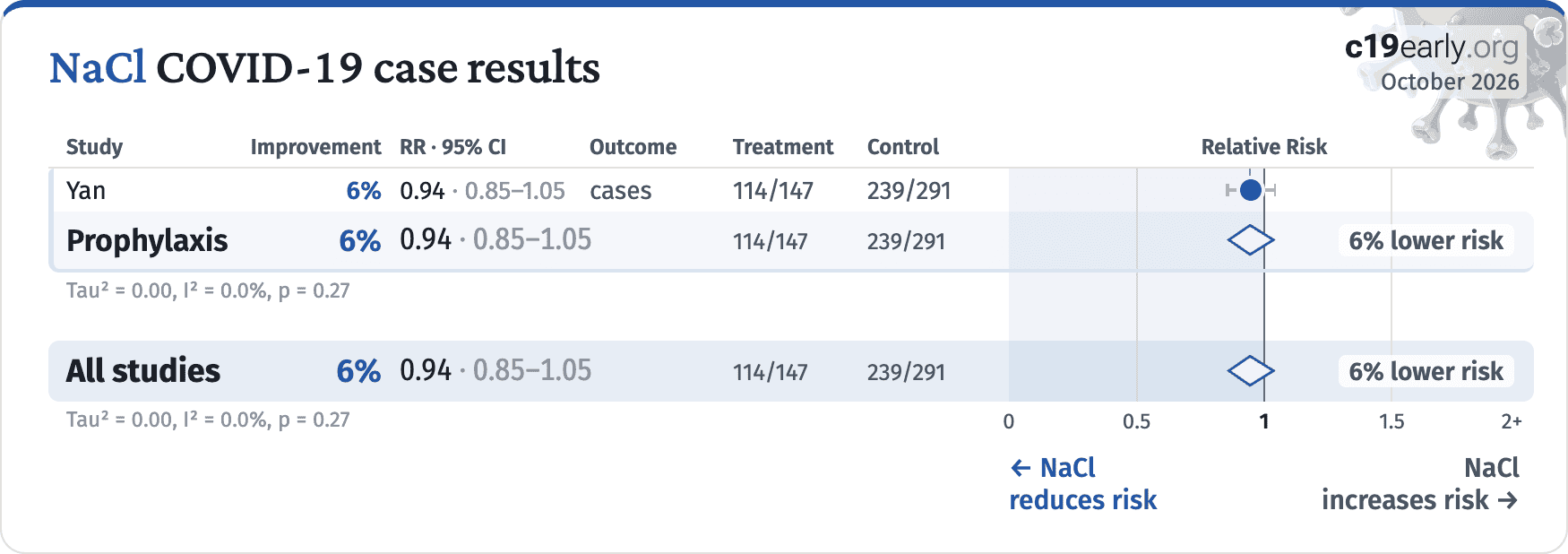
NaCl COVID-19 case results
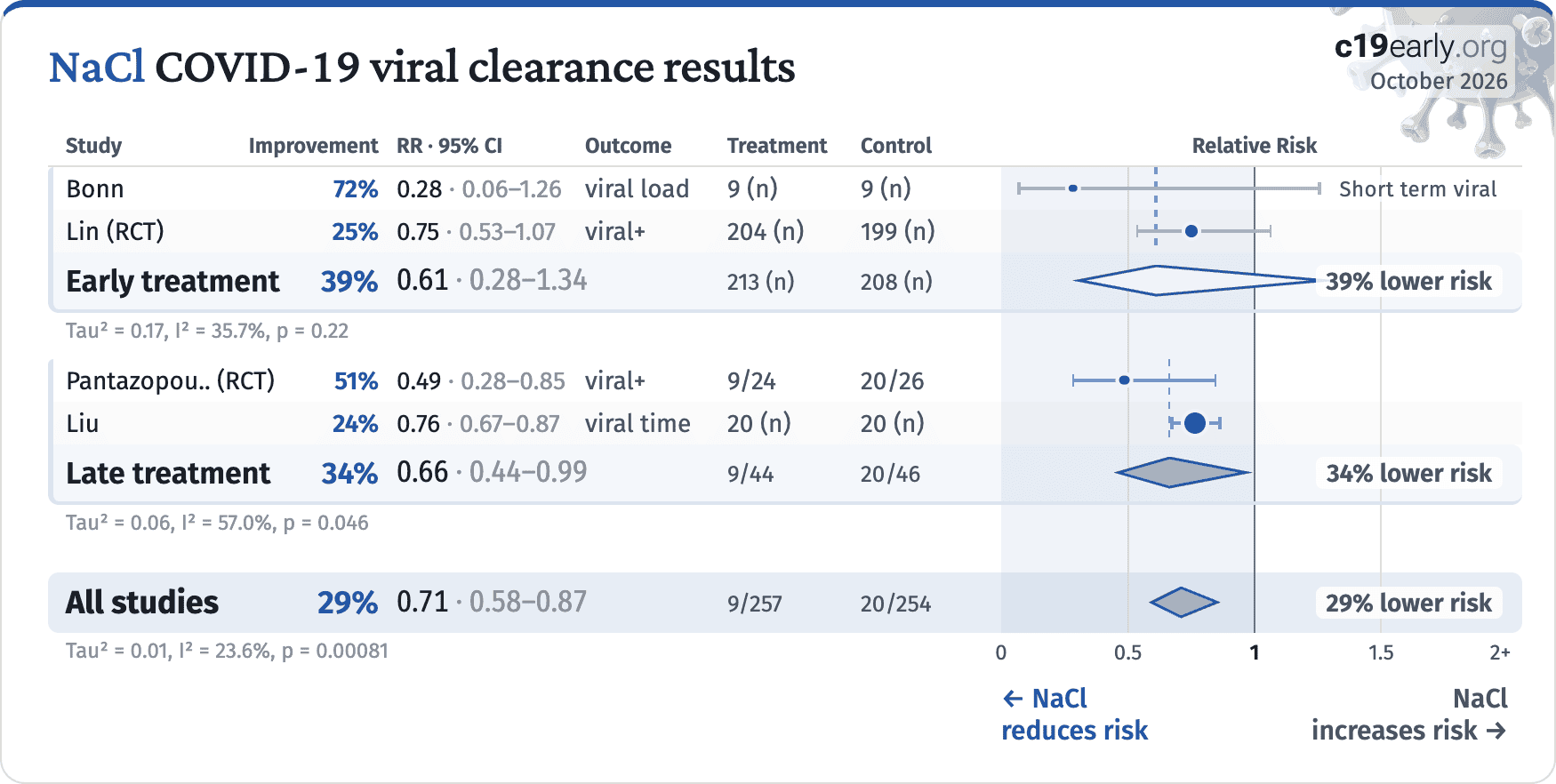
NaCl COVID-19 viral clearance results
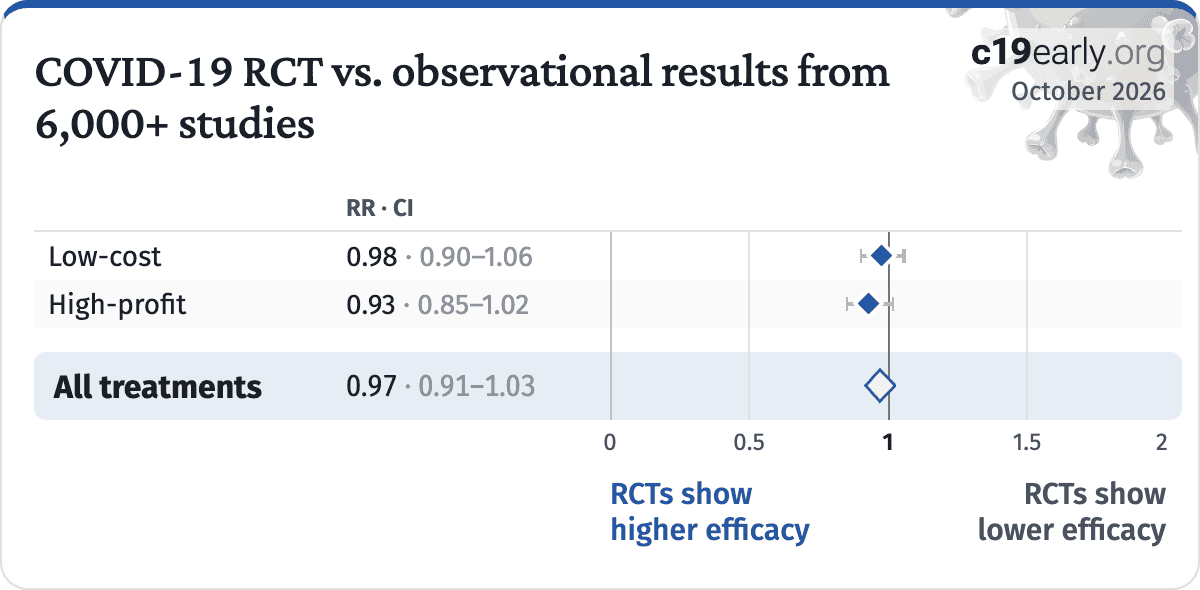
COVID-19 RCT vs. observational results from 6,000+ studies
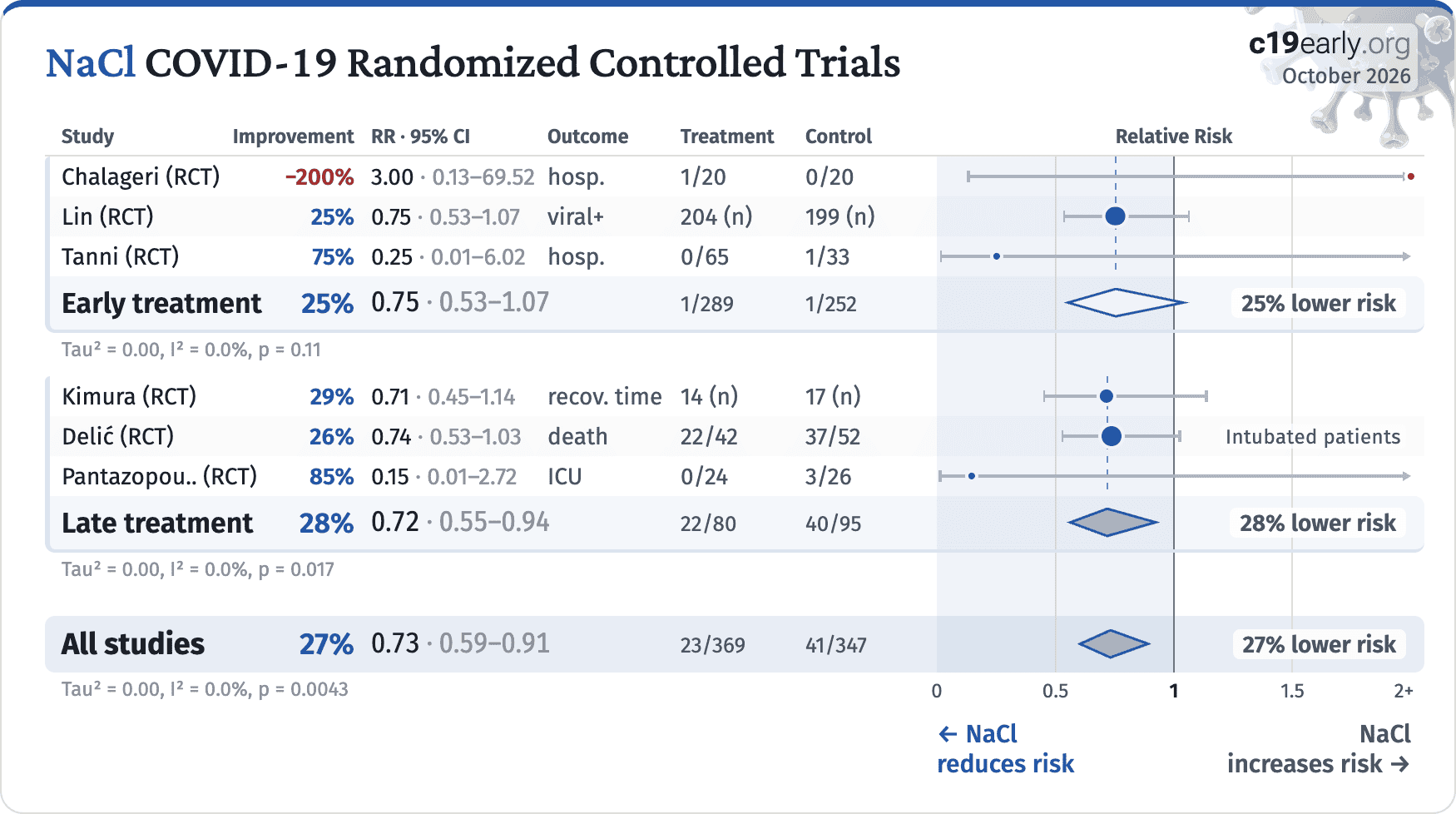
NaCl COVID-19 Randomized Controlled Trials
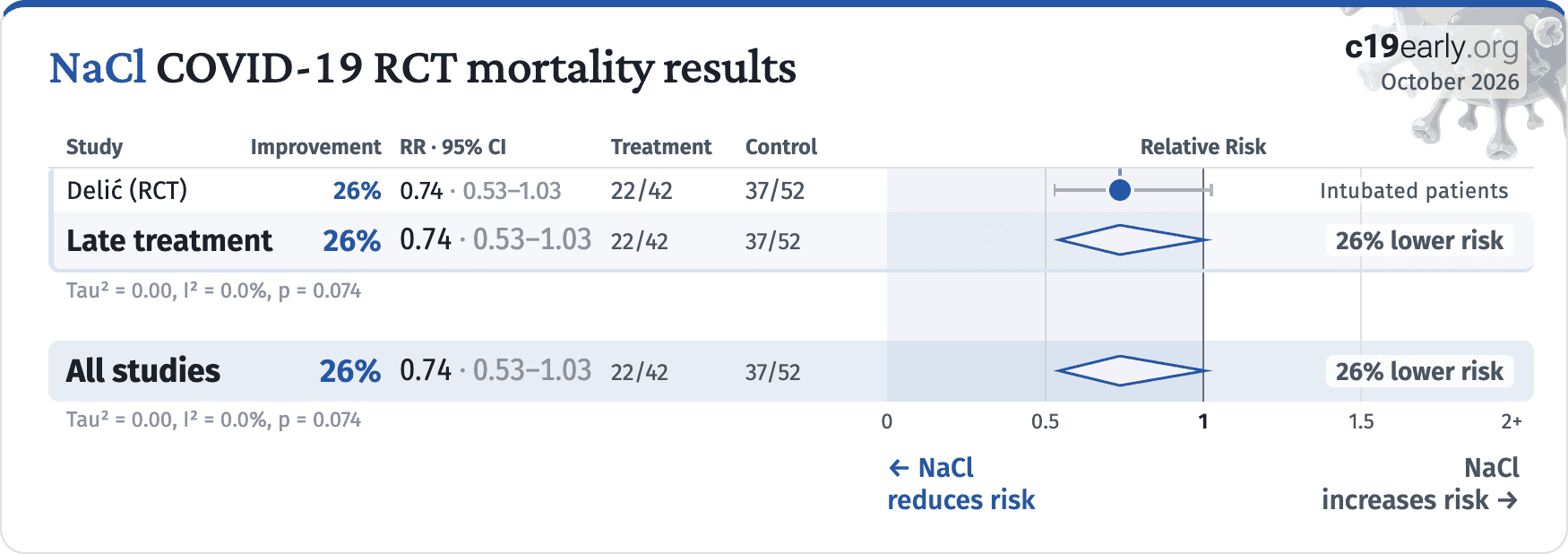
NaCl COVID-19 RCT mortality results
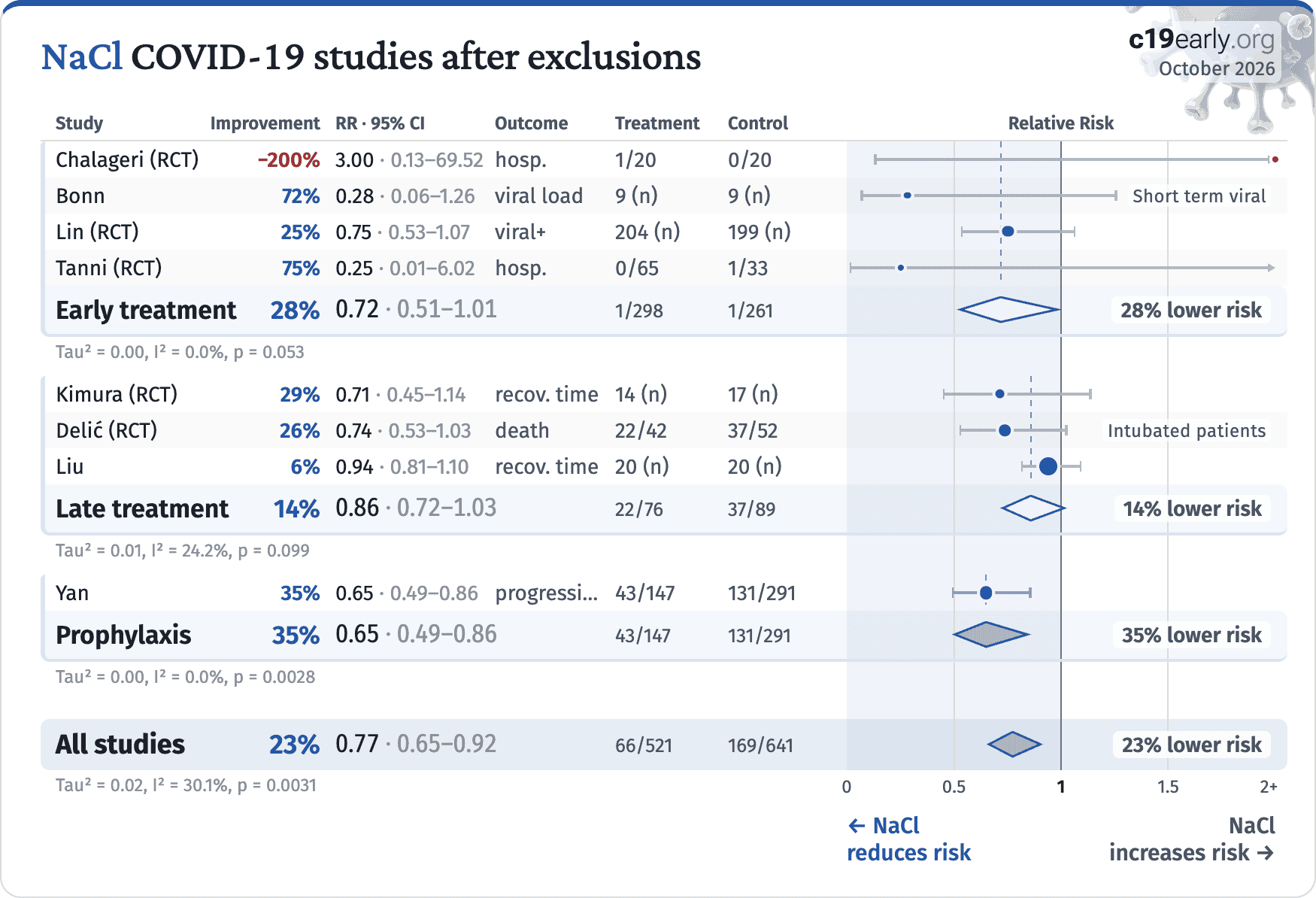
NaCl COVID-19 studies after exclusions
Media coverage of NaCl for COVID‑19
Media covered none of the 6 studies showing significantly lower risk
No positive NaCl studies were covered
Media bias for low-cost COVID‑19 treatments
Media covered only 0.8% of studies showing significantly lower COVID-19 risk
Only 5 positive studies were covered
one each: budesonide, cannabidiol, fluvoxamine, HCQ, vitamin D
34 negative studies were covered
HCQ 12, ivermectin 6, lopinavir/ritonavir 4, azithromycin 3, vitamin D 3, fluvoxamine 2, one each: ibuprofen, metformin, vitamin C, zinc
Media was 3.8× more likely to cover positive studies
19 positive studies were covered
paxlovid 5, remdesivir 3, casirivimab/imdevimab 2, convalescent plasma 2, molnupiravir 2, one each: antiandrogens, peginterferon lambda, sargramostim, tixagevimab/cilgavimab, tocilizumab
Only 6 negative studies were covered
remdesivir 3, one each: bamlanivimab/etesevimab, bebtelovimab, sotrovimab
National treatment protocols
Protocols varied widely
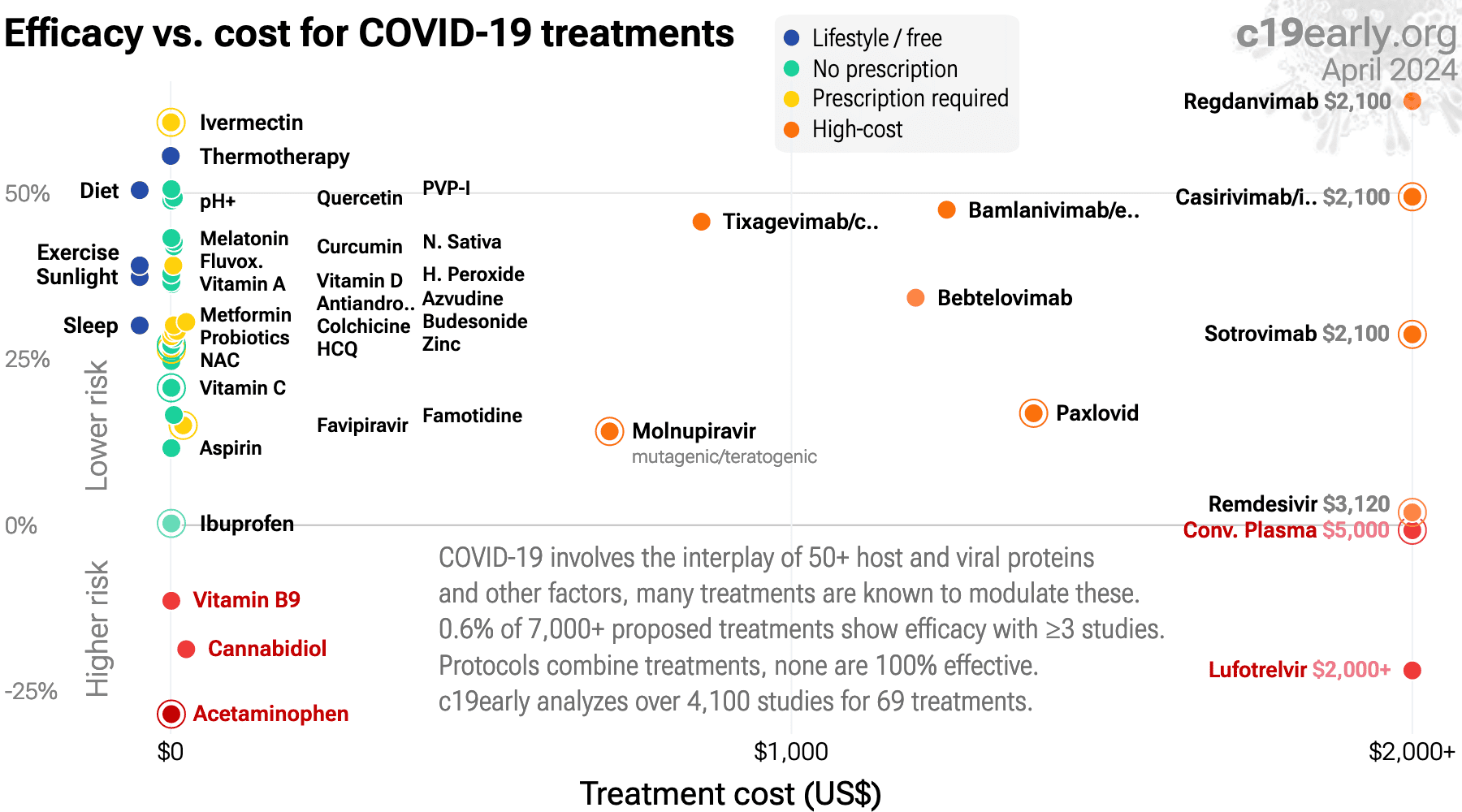
Most widely used early treatments selected by the most populous countries. Official protocols varied widely. Treatments only expected to be helpful for late-stage patients are excluded. low-cost, high-profit, and increased risk.
Full matrix and analysis →Protocol efficacy and cost by country
Treatment protocols varied widely
| Evidence | Official Acknowledgment | Approx. Delay | |
|---|---|---|---|
| Citrus Fruit (vitamin C) for Scurvy (effectiveness) | 1747: James Lind conducted one of the first-ever controlled clinical trials, proving that oranges and lemons cured scurvy in sailors. | 1795: The British Royal Navy finally made a daily ration of lemon juice a standard issue for all its sailors, effectively eliminating the disease. | 48 years |
| Handwashing (lower mortality) | 1847: Dr. Ignaz Semmelweis provided conclusive proof that having doctors wash their hands with a chlorine solution before delivering babies reduced maternal mortality rates from over 18% to around 1%. | ~1870s: Semmelweis's findings were rejected and he was ridiculed. His work was only validated decades later (after his death). | ~20+ years |
| Helicobacter pylori (bacteria causes ulcers) | 1982-1984: Marshall and Warren discovered that Helicobacter pylori bacteria causes ulcers, confirmed via direct exposure. Officials maintained that ulcers were caused by stress and spicy food. | 1994: The US NIH released a consensus statement officially recommending antibiotics as the standard treatment for peptic ulcers, overturning decades of acid-suppression therapy. | ~12 years |
| Asbestos (causes asbestosis & cancer) | 1924: The British Medical Journal published the first case study of a death from "asbestosis." By 1918, U.S. insurance companies had stopped selling life insurance to asbestos workers. | 1971 (US): The Occupational Safety and Health Administration (OSHA) was formed and began regulating asbestos as a carcinogen, setting the first federal workplace safety standards for it. | ~47 years |
| Leaded Gasoline (neurotoxicity) | ~1924: Dangers of low-level lead exposure were known. Experts like Alice Hamilton warned the U.S. Surgeon General that adding lead to gasoline would cause widespread public poisoning. | 1973 (US): The Environmental Protection Agency (EPA) ordered the first phasedown of lead in gasoline, following the Clean Air Act of 1970. A full ban for on-road vehicles took effect in 1996. | ~49 years |
| Harms of Smoking (causes lung cancer) | 1939: Franz Müller (Germany) published the first case-control epidemiological study strongly linking tobacco smoking to lung cancer. This was followed by major U.S. & U.K. studies in the 1950s. | 1964 (US): The U.S. Surgeon General's report, "Smoking and Health," was released. It was the first U.S. government report to definitively link smoking to lung cancer and heart disease. | 25 years |
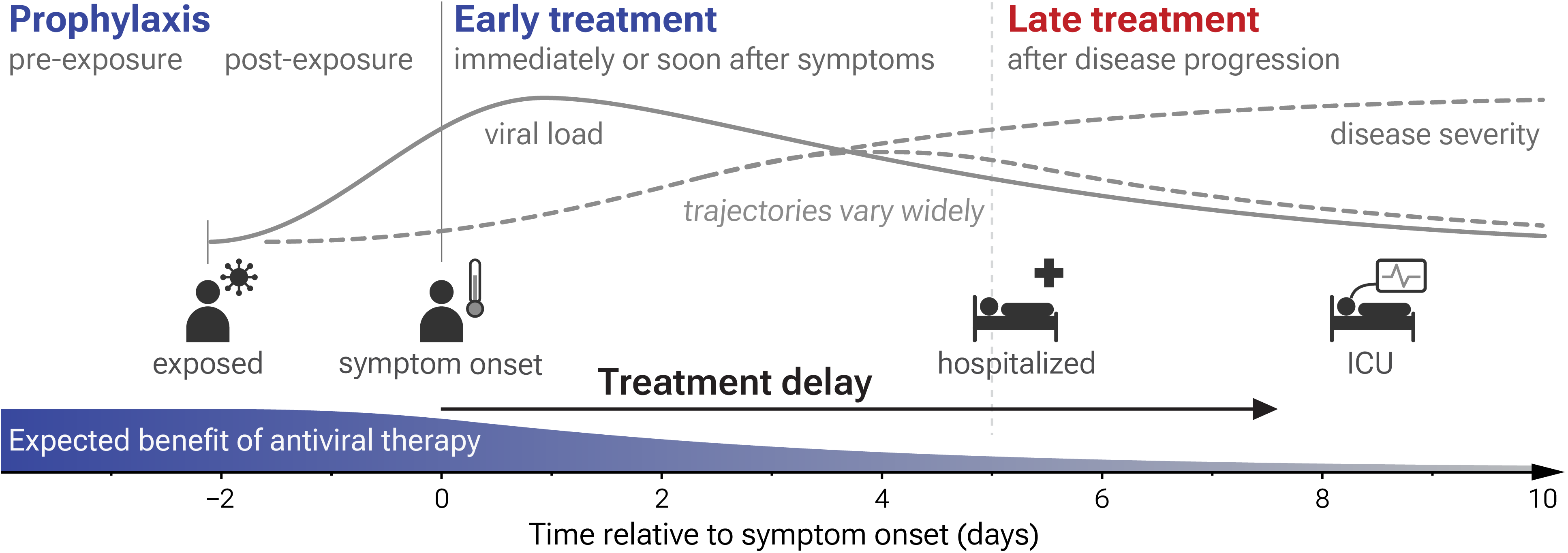
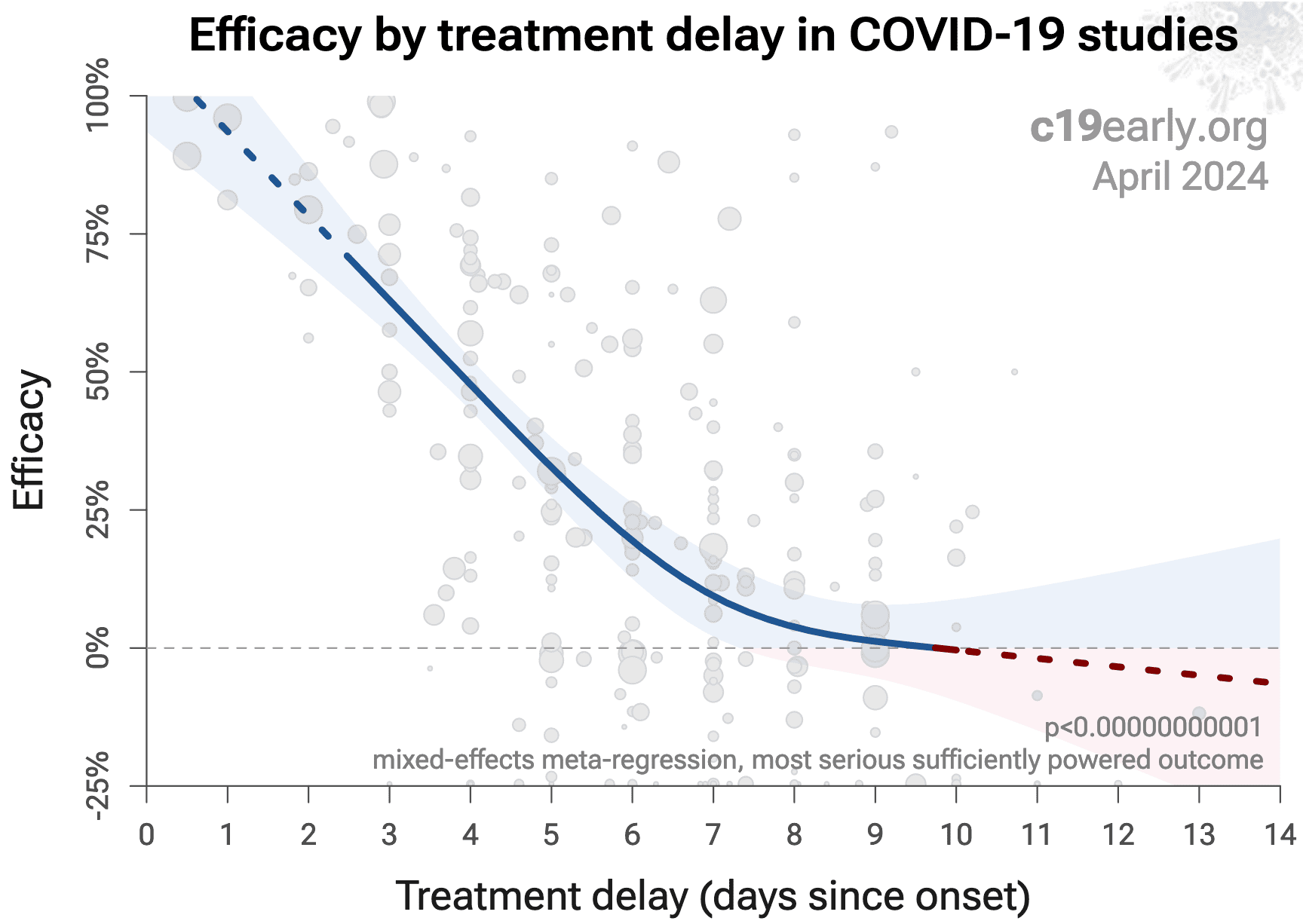
Early treatment is more effective: baloxavir marboxil
When studies showed efficacy
all studies RCTs only delay RCTs alone not yet significant · blue : pooled outcomes grey : specific outcomes · higher risk red: meta-analysis shows harm · efficacy: ≥10% improvement, p < 0.05, ≥3 studies · harm: RR > 1.0, p < 0.05, ≥3 studies
| Administration | Improvement | Studies |
|---|---|---|
| Nasal & oral | 88% [72‑95%] | 10 |
| Nasal spray/rinse | 59% [50‑66%] | 21 |
| Oral spray/rinse | 38% [25‑49%] | 11 |
| Virucidal action | Chemically inactivating or destroying the structure of viral particles |
| Blocking attachment | Binding to the virus or host cells to prevent viral attachment to host cells |
| Physical barrier | Forming a physical layer over the nasal mucosa preventing viral access to host cells |
| Physical removal | Mechanical washout/flushing of viral particles and mucus (e.g., large volume irrigation) |
| Mucociliary clearance | Stimulating the natural beating of nasal cilia to accelerate the clearing of trapped pathogens |
| Treatment | Mechanisms | Notes |
|---|---|---|
| Azelastine116 |
Antiviral: inhibits interaction between spike protein and ACE2 Antiviral: potential inhibition of viral protease (Mpro) Other: H1-receptor antagonist (antihistamine) Other: mast cell stabilizer |
Antihistamine. Designed to affect human receptors. Risks include dysgeusia, drowsiness, and nasal burning. |
| Cetylpyridinium Chloride117 |
Virucidal: disrupts viral lipid envelope Antiseptic: quaternary ammonium compound |
Chemical virucide. Common in mouthwashes. Can cause temporary staining of teeth or tongue irritation if used frequently. |
| Chlorhexidine118 |
Virucidal: disrupts viral lipid membranes Antiseptic: cationic polybiguanide |
Chemical virucide. May cause tooth staining and altered taste. |
| Chlorpheniramine119 |
Antiviral: binds to viral spike protein to block entry Antiviral: high affinity for viral transport proteins Other: H1-receptor antagonist (1st generation antihistamine) Other: anticholinergic activity |
Antihistamine. Stronger systemic risks than azelastine. Known to cause significant sedation/drowsiness and cognitive impairment. |
| Hydrogen Peroxide120 |
Virucidal: oxidizing agent that destroys viral parts Other: tissue debridement |
Chemical virucide. Can be toxic to healthy tissue if concentration is too high (>1%). Long-term safety on nasal mucosa is debated. |
| Hypochlorous Acid121 |
Virucidal: oxidizes viral proteins, causing aggregation and loss of function. Impairs spike-ACE2 binding Antiseptic: broad-spectrum antimicrobial activity via oxidative damage to microbial proteins and membranes |
Chemical virucide. Activity depends on concentration, pH, and contact time. Saliva may reduce activity. |
| Inhaled Heparin122 |
Antiviral: acts as a decoy receptor (mimics heparan sulfate) Antiviral: anti-inflammatory effects on lung tissue Other: Anticoagulant |
Anticoagulant. Use requires caution regarding bleeding risks. |
| Iota-carrageenan123 |
Barrier: forms a viscous physical layer on mucosa Trap: electrostatistically traps virus particles (mimics cell surface) |
Physical barrier. High safety profile for daily use. |
| NaCl |
Cleaning: physically washes away viral particles Support: moisturizes mucosa to support natural immune barrier |
Physical wash. High degree of safety, reduces viral load via physical removal. |
| Nitric Oxide124 |
Virucidal: physically damages viral structure via nitrosylation Other: vasodilator (relaxes blood vessels) in systemic use |
Virucide/drug hybrid. In nasal spray form, it acts primarily as a topical disinfectant. Rapidly cleared, so systemic vasodilation risks are low but present. |
| Phthalocyanine125 |
Virucidal: generates reactive oxygen species (ROS) when exposed to light to kill virus Other: photosensitizer |
Chemical virucide. A synthetic compound often used in photodynamic therapy. Works by creating an oxidative environment hostile to the virus. |
| Povidone-Iodine126 |
Virucidal: oxidizes viral proteins and destabilizes membrane structures Antiseptic: broad-spectrum bacterial/fungal killer |
Chemical virucide. Highly effective but risk of thyroid absorption with chronic use. Can be irritating to mucous membranes. |
| Sodium Bicarbonate127 |
Environment: raises pH to inhibit viral fusion Cleaning: improves mucociliary clearance (washing) |
Physical/chemical environment. Changes the environment rather than attacking the virus directly. High degree of safety. |
| Treatment | Microbiome disruption potential | Notes |
|---|---|---|
| Iota-carrageenan123 | Low | Primarily antiviral, however extended use may mildly affect the microbiome |
| Nitric Oxide124 | Low to moderate | More selective towards pathogens, however excessive concentrations or prolonged use may disrupt the balance of bacteria |
| Alkalinization130 | Moderate | Increases pH, negatively impacting beneficial microbes that thrive in a slightly acidic environment |
| Cetylpyridinium Chloride117 | Moderate | Quaternary ammonium broad-spectrum antiseptic that can disrupt beneficial and harmful bacteria |
| Hypochlorous Acid121 | Moderate | Broad-spectrum oxidizing antiseptic that may affect beneficial and harmful bacteria |
| Phthalocyanine125 | Moderate to high | Photodynamic compound with antimicrobial activity, likely to affect the microbiome |
| Chlorhexidine118 | High | Potent antiseptic with broad activity, significantly disrupts the microbiome |
| Hydrogen Peroxide120 | High | Strong oxidizer, harming both beneficial and harmful microbes |
| Povidone-Iodine126 | High | Potent broad-spectrum antiseptic harmful to beneficial microbes |

| Bonn, 3/21/2023, prospective, Germany, peer-reviewed, 14 authors, study period 4 January, 2022 - 22 February, 2022, trial DRKS00027812. | viral load, 71.7% lower, relative load 0.28, p = 0.10, treatment median 1.7 IQR 2.3 n=9, control median 6.0 IQR 49.0 n=9, relative infectious viral load, 30 min vs. baseline. |
| viral load, 70.6% lower, relative load 0.29, p = 0.53, treatment 30, control 30, relative PCR viral load, 30 min vs. baseline. | |
| Chalageri, 7/11/2022, Randomized Controlled Trial, India, peer-reviewed, mean age 38.6, 15 authors, study period September 2020 - February 2021. | risk of hospitalization, 200.0% higher, RR 3.00, p = 1.00, treatment 1 of 20 (5.0%), control 0 of 20 (0.0%), continuity correction due to zero event (with reciprocal of the contrasting arm). |
| risk of no recovery, 42.9% lower, RR 0.57, p < 0.001, treatment median 4.0 IQR 3.5 n=17, control median 7.0 IQR 2.8 n=20. | |
| Lin, 9/10/2023, Randomized Controlled Trial, China, peer-reviewed, 10 authors, average treatment delay 3.72 days. | risk of no viral clearance, 24.8% lower, HR 0.75, p = 0.11, treatment 204, control 199, inverted to make HR<1 favor treatment, viral clearance, day 5. |
| risk of no viral clearance, 21.3% lower, HR 0.79, p = 0.02, treatment 204, control 199, inverted to make HR<1 favor treatment, shorter viral shedding duration, day 5. | |
| Tanni, 9/20/2023, Randomized Controlled Trial, Brazil, peer-reviewed, 20 authors. | risk of hospitalization, 74.8% lower, RR 0.25, p = 0.34, treatment 0 of 65 (0.0%), control 1 of 33 (3.0%), NNT 33, relative risk is not 0 because of continuity correction due to zero events (with reciprocal of the contrasting arm). |
| risk of no recovery, 9.9% higher, HR 1.10, p = 0.70, treatment 65, control 33, inverted to make HR<1 favor treatment, fever. | |
| risk of no recovery, 52.4% lower, HR 0.48, p = 0.009, treatment 65, control 33, inverted to make HR<1 favor treatment, cough. | |
| risk of no recovery, 32.9% lower, HR 0.67, p = 0.11, treatment 65, control 33, inverted to make HR<1 favor treatment, sore throat. | |
| risk of no recovery, 2.0% lower, HR 0.98, p = 0.94, treatment 65, control 33, inverted to make HR<1 favor treatment, dysgeusia. | |
| risk of no recovery, 8.7% higher, HR 1.09, p = 0.74, treatment 65, control 33, inverted to make HR<1 favor treatment, anosmia. |
| Delić, 5/28/2022, Randomized Controlled Trial, Croatia, peer-reviewed, 12 authors, study period October 2020 - June 2021, trial NCT04755972 (history). | risk of death, 26.4% lower, RR 0.74, p = 0.09, treatment 22 of 42 (52.4%), control 37 of 52 (71.2%), NNT 5.3, ICU mortality. |
| risk of death, 32.1% lower, RR 0.68, p = 0.10, treatment 17 of 42 (40.5%), control 31 of 52 (59.6%), NNT 5.2, 28 day mortality. | |
| Kimura, 10/20/2020, Randomized Controlled Trial, USA, peer-reviewed, 10 authors. | recovery time, 28.6% lower, relative time 0.71, p = 0.16, treatment 14, control 17. |
| Liu, 6/17/2023, prospective, China, peer-reviewed, mean age 7.3, 5 authors, study period 1 April, 2022 - 1 May, 2022. | recovery time, 5.7% lower, relative time 0.94, p = 0.46, treatment 20, control 20, combined saline groups, fever. |
| recovery time, 8.7% lower, relative time 0.91, p = 0.46, treatment mean 1.58 (±0.72) n=20, control mean 1.73 (±0.53) n=20, isotonic, fever. | |
| recovery time, 3.5% lower, relative time 0.97, p = 0.74, treatment mean 1.67 (±0.6) n=20, control mean 1.73 (±0.53) n=20, hypertonic, fever. | |
| recovery time, 1.3% lower, relative time 0.99, p = 0.88, treatment 20, control 20, combined saline groups, cough. | |
| recovery time, 3.3% lower, relative time 0.97, p = 0.78, treatment mean 5.8 (±2.4) n=20, control mean 6.0 (±2.16) n=20, isotonic, cough. | |
| recovery time, 0.5% higher, relative time 1.01, p = 0.97, treatment mean 6.03 (±2.27) n=20, control mean 6.0 (±2.16) n=20, hypertonic, cough. | |
| time to viral-, 23.8% lower, relative time 0.76, p < 0.001, treatment 20, control 20, combined saline groups. | |
| time to viral-, 23.2% lower, relative time 0.77, p = 0.007, treatment mean 17.25 (±4.16) n=20, control mean 22.46 (±7.1) n=20, isotonic. | |
| time to viral-, 24.4% lower, relative time 0.76, p = 0.003, treatment mean 16.98 (±2.8) n=20, control mean 22.46 (±7.1) n=20, hypertonic. | |
| Pantazopoulos, 9/27/2022, Randomized Controlled Trial, Greece, peer-reviewed, mean age 51.0, 9 authors, study period 1 June, 2021 - 31 August, 2021, trial NCT05525832 (history), excluded in exclusion analyses: unadjusted results with significant baseline differences. | risk of ICU admission, 85.2% lower, RR 0.15, p = 0.24, treatment 0 of 24 (0.0%), control 3 of 26 (11.5%), NNT 8.7, relative risk is not 0 because of continuity correction due to zero events (with reciprocal of the contrasting arm). |
| risk of oxygen therapy, 63.9% lower, RR 0.36, p = 0.25, treatment 2 of 24 (8.3%), control 6 of 26 (23.1%), NNT 6.8, high flow nasal cannula or noninvasive ventilation. | |
| risk of no viral clearance, 51.2% lower, RR 0.49, p = 0.009, treatment 9 of 24 (37.5%), control 20 of 26 (76.9%), NNT 2.5, negative test 2 weeks after discharge. |
| Yan, 2/29/2024, retrospective, China, peer-reviewed, 9 authors, study period 7 December, 2022 - 7 January, 2023. | fever, 35.0% lower, RR 0.65, p = 0.002, treatment 43 of 147 (29.3%), control 131 of 291 (45.0%), NNT 6.3, NPC patients. |
| risk of case, 5.6% lower, RR 0.94, p = 0.25, treatment 114 of 147 (77.6%), control 239 of 291 (82.1%), NNT 22, NPC patients. |