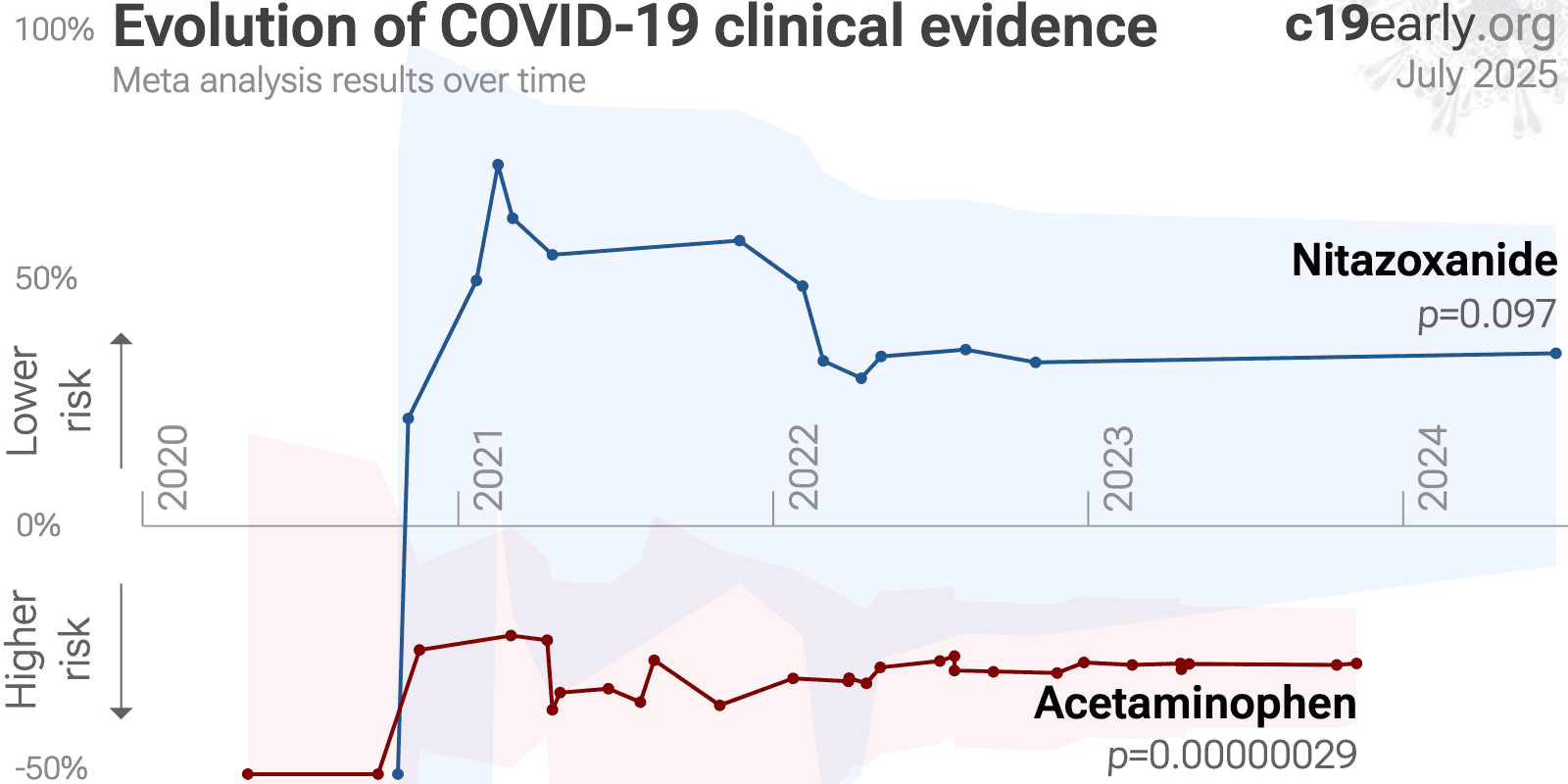
Nitazoxanide for COVID-19: real-time meta-analysis of 14 studies
Serious outcome risk
Outcome (studies)
Improvement
Relative risk · 95% CI
All studies (14)36%
Mortality (6)42%
Ventilation (3)82%
ICU admission (3)28%
Hospitalization (6)61%
Progression (3)−2%
Recovery (6)6%
Cases (2)13%
Viral clearance (7)38%
RCTs (11)19%
RCT mortality (4)28%
Peer-reviewed (11)50%
Prophylaxis (2)44%
Early (8)33%
Late (4)12%
Abstract
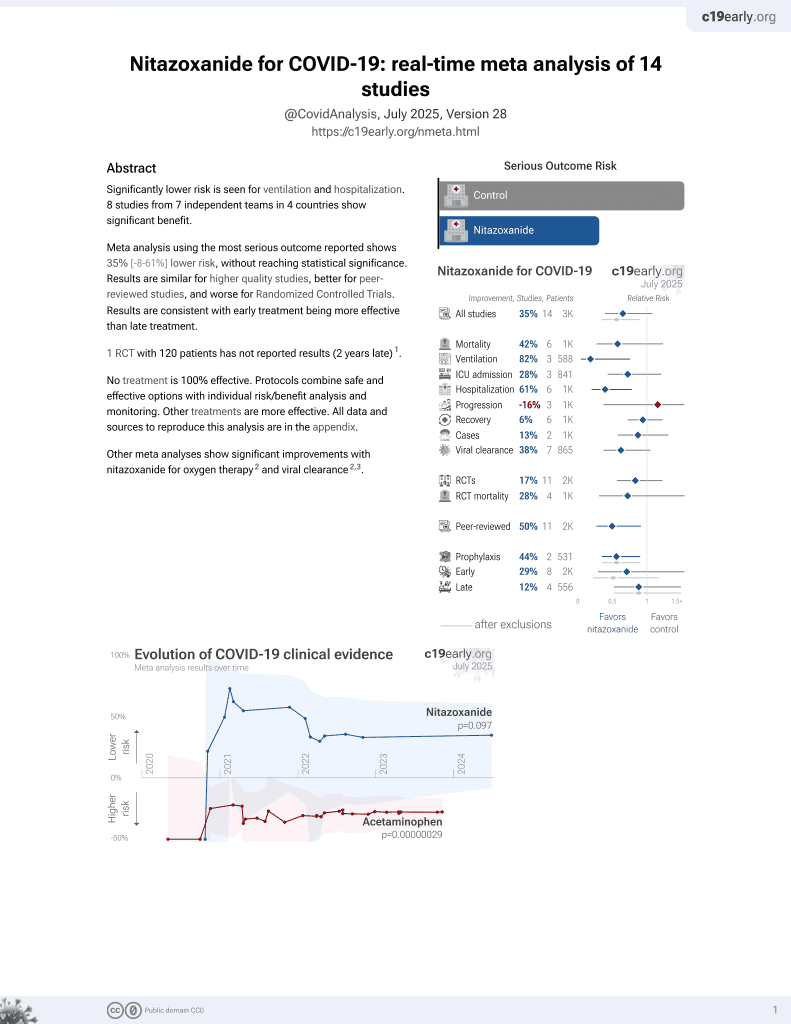
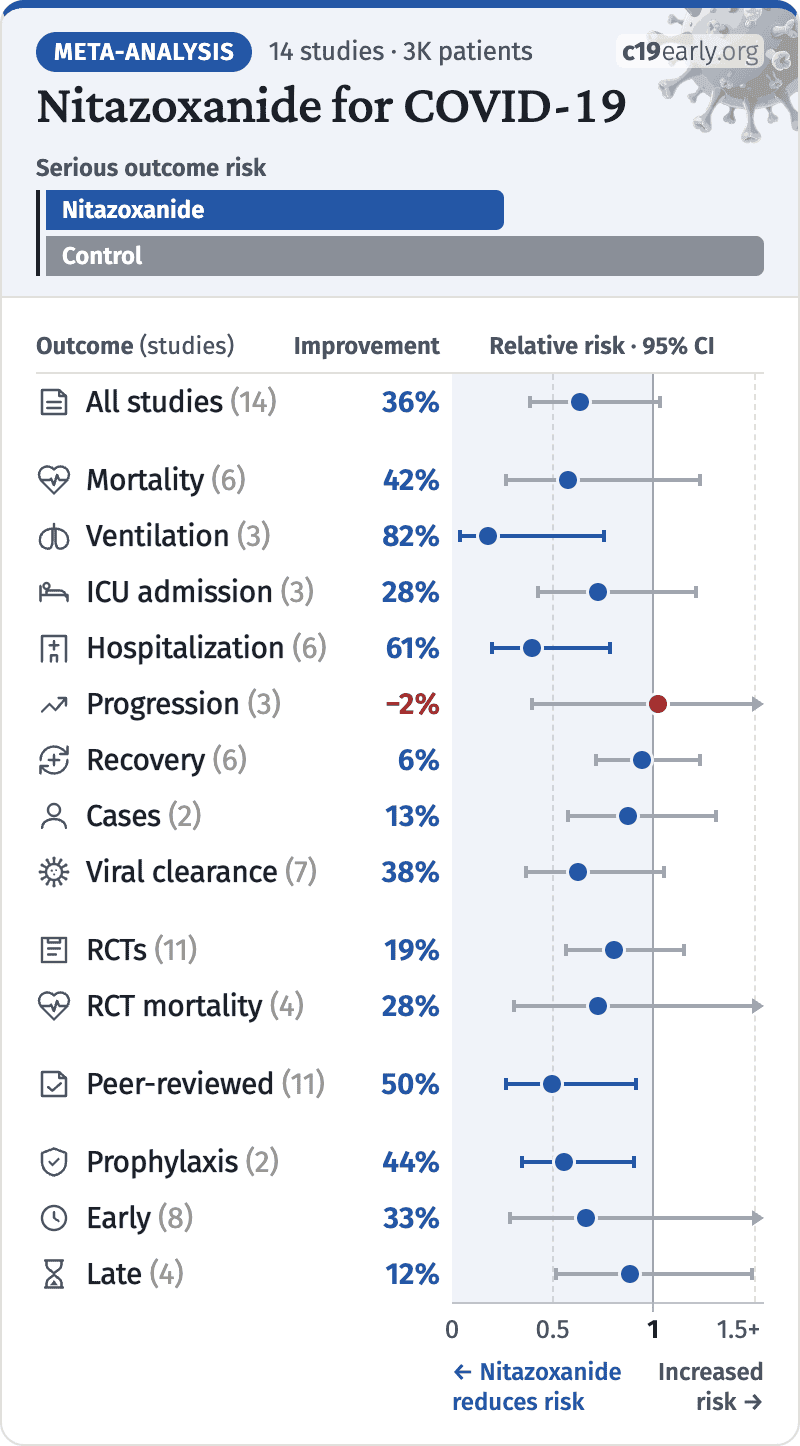
Significantly lower risk is seen for ventilation and hospitalization. 8 studies from 7 independent teams in 4 countries show significant
benefit.
Meta-analysis using the most serious outcome reported shows
36% [-4‑61%] lower risk, without reaching statistical significance. Results are better for peer-reviewed studies and worse for Randomized Controlled Trials.
Results are consistent with early treatment being more effective than late treatment.
Nitazoxanide for COVID-19
Serious outcome risk
Outcome (studies)
Improvement
Relative risk · 95% CI
All studies (14)36%
Mortality (6)42%
Ventilation (3)82%
ICU admission (3)28%
Hospitalization (6)61%
Progression (3)−2%
Recovery (6)6%
Cases (2)13%
Viral clearance (7)38%
RCTs (11)19%
RCT mortality (4)28%
Peer-reviewed (11)50%
Prophylaxis (2)44%
Early (8)33%
Late (4)12%
No treatment is 100%
effective. Protocols combine safe and effective options with individual
risk/benefit analysis and monitoring.
Other treatments are more effective.
Administration with a high-fat meal increases the bioavailability of nitazoxanide.
All data and sources to reproduce this analysis are in the appendix.
Nitazoxanide for COVID-19
Highlights- Nitazoxanide reduces risk with very high confidence for hospitalization, high confidence for ventilation, low confidence for viral clearance and in pooled analysis, and very low confidence for mortality and ICU admission.
- Real-time updates and corrections with a consistent protocol for 227 treatments. Outcome specific analysis and combined evidence from all studies including treatment delay, a primary confounding factor.
A
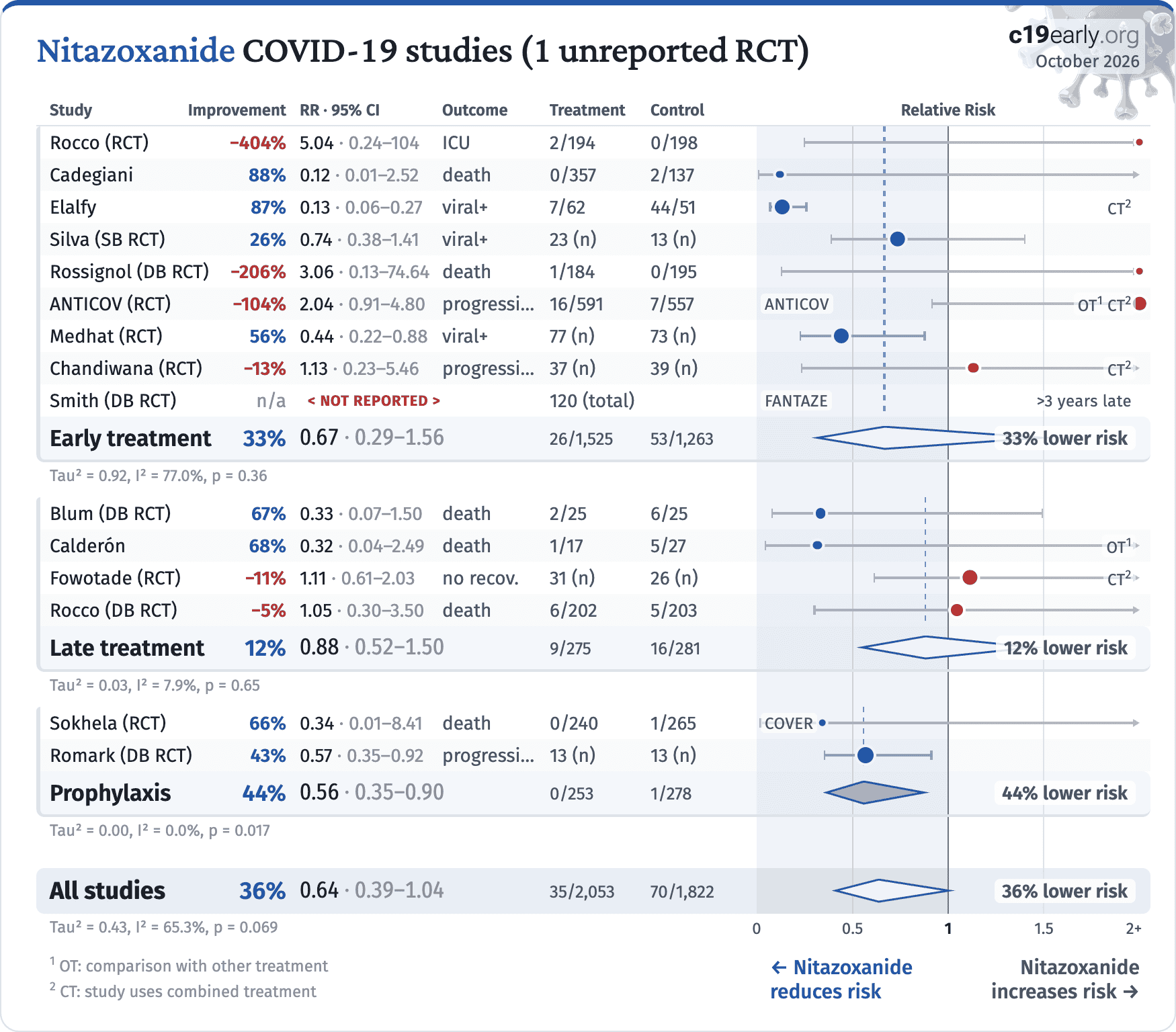
Nitazoxanide COVID-19 studies (1 unreported RCT)
November 2026
StudyImprovementRR · 95% CIOutcomeTreatmentControlRelative Risk
Rocco (RCT)−404%5.04 · 0.24–104ICU2/1940/198
Cadegiani88%0.12 · 0.01–2.52death0/3572/137
Elalfy87%0.13 · 0.06–0.27viral+7/6244/51CT2
Silva (SB RCT)26%0.74 · 0.38–1.41viral+23 (n)13 (n)
Rossignol (DB RCT)−206%3.06 · 0.13–74.64death1/1840/195
ANTICOV (RCT)−104%2.04 · 0.91–4.80progression16/5917/557ANTICOVOT1 CT2
Medhat (RCT)56%0.44 · 0.22–0.88viral+77 (n)73 (n)
Chandiwana (RCT)−13%1.13 · 0.23–5.46progression37 (n)39 (n)CT2
Smith (DB RCT)n/a< NOT REPORTED >120 (total)FANTAZE>3 years late
Early treatment33%0.67 · 0.29–1.5626/1,52553/1,26333% lower risk
Tau² = 0.92, I² = 77.0%, p = 0.36
Blum (DB RCT)67%0.33 · 0.07–1.50death2/256/25
Calderón68%0.32 · 0.04–2.49death1/175/27OT1
Fowotade (RCT)−11%1.11 · 0.61–2.03no recov.31 (n)26 (n)CT2
Rocco (DB RCT)−5%1.05 · 0.30–3.50death6/2025/203
Late treatment12%0.88 · 0.52–1.509/27516/28112% lower risk
Tau² = 0.03, I² = 7.9%, p = 0.65
Sokhela (RCT)66%0.34 · 0.01–8.41death0/2401/265COVER
Romark (DB RCT)43%0.57 · 0.35–0.92progression13 (n)13 (n)
Prophylaxis44%0.56 · 0.35–0.900/2531/27844% lower risk
Tau² = 0.00, I² = 0.0%, p = 0.017
All studies36%0.64 · 0.39–1.0435/2,05370/1,82236% lower risk
Tau² = 0.43, I² = 65.3%, p = 0.06900.511.52+
B
Loading..
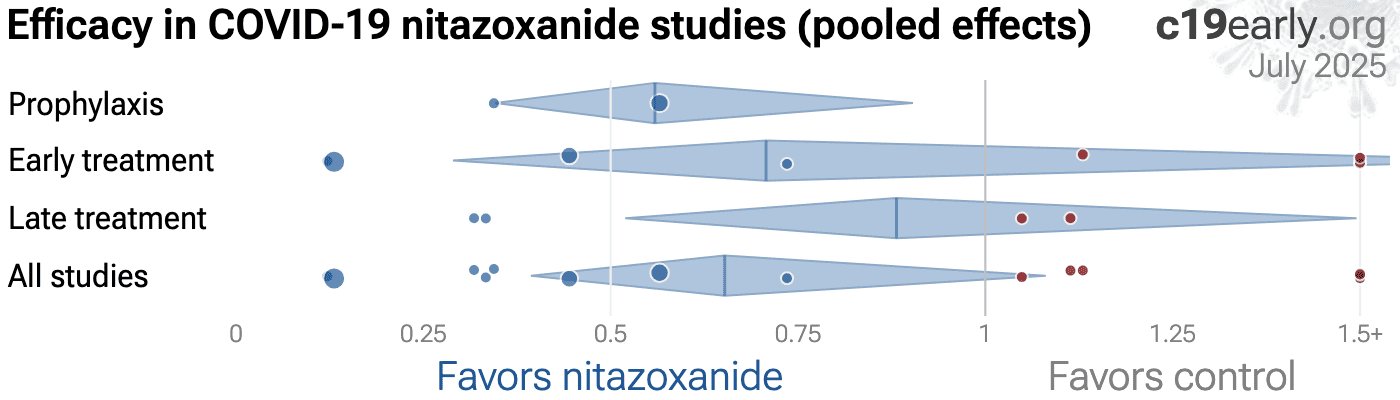
Fig. 1. A. Random-effects meta-analysis. This plot shows pooled effects,
see the specific outcome analyses for individual outcomes.
Analysis validating pooled outcomes for
COVID-19 can be found below.
Effect extraction is pre-specified, using the most serious outcome reported.
For details see the appendix.
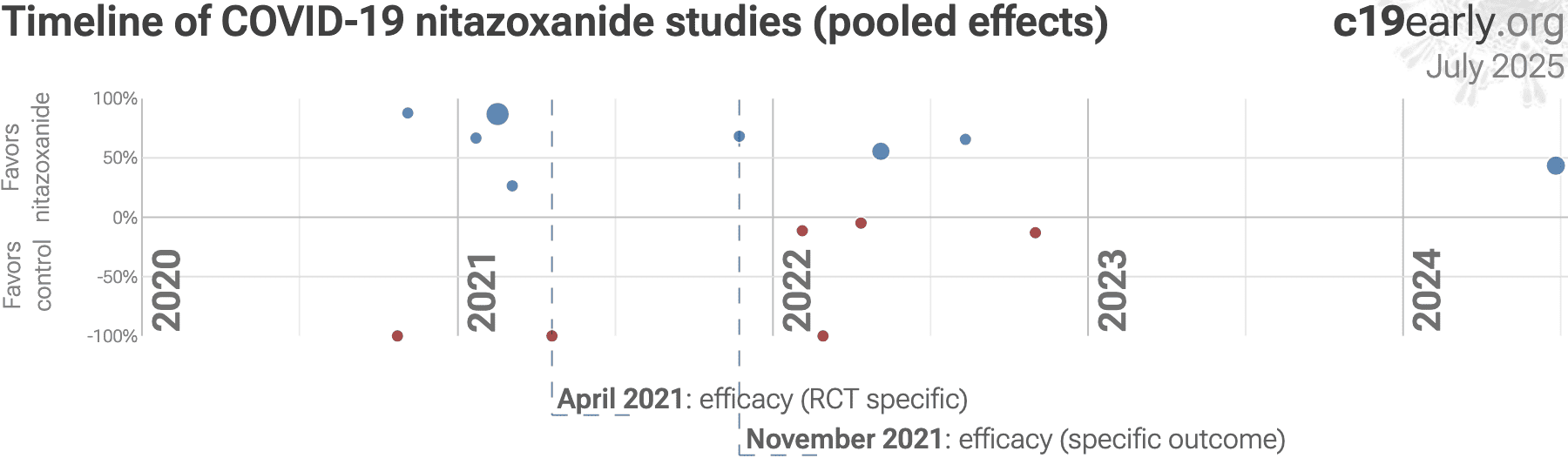
B. Timeline of results in nitazoxanide studies. The marked dates indicate the time when efficacy was known with a statistically significant improvement of ≥10% from ≥3 studies for one or more specific outcome and one or more specific outcome in RCTs.
SARS-CoV-2 infection primarily begins in the upper respiratory
tract and may progress to the lower respiratory tract, other tissues, and the
nervous and cardiovascular systems, which may lead to cytokine storm,
pneumonia, ARDS, neurological injury5-21 and
cognitive deficits8,13, cardiovascular
complications22-28, DNA
damage29-32, organ failure, and death.
Even mild untreated infections may result in persistent cognitive
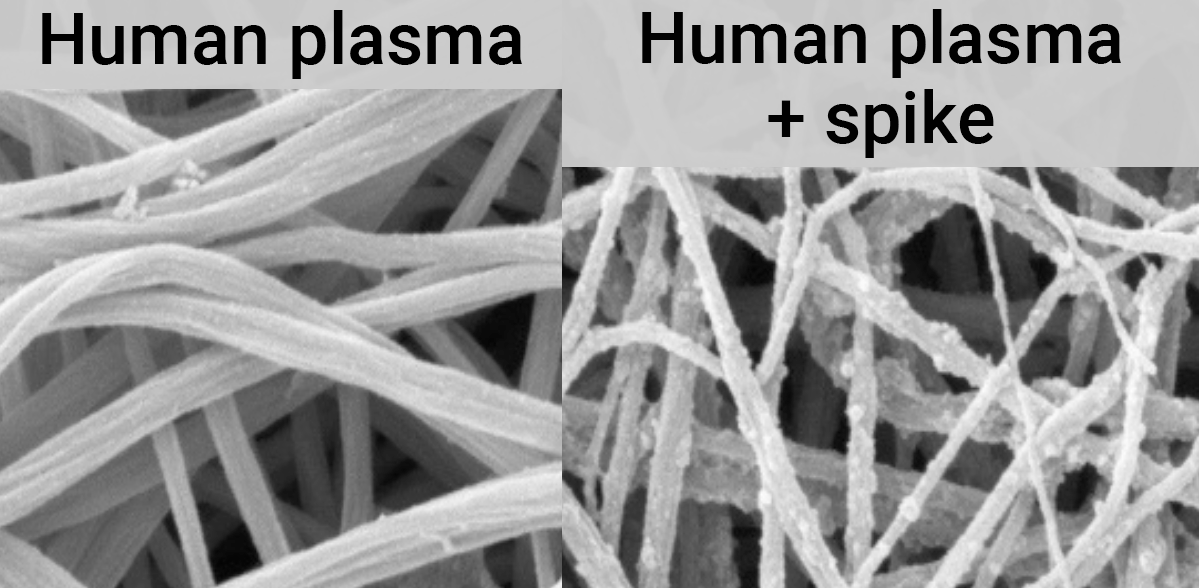
deficits33—the spike protein binds to fibrin leading to
fibrinolysis-resistant blood clots, thromboinflammation, and
neuropathology.
Minimizing replication as early as possible is recommended.
SARS-CoV-2 infection and replication involves the complex interplay of 500+
host and viral proteins and other factorsA,34-41 , providing many
therapeutic targets for which many existing compounds have known activity.
Scientists have predicted that over 12,000 compounds may
reduce COVID-19 risk42, either by
directly minimizing infection or replication, by supporting immune system
function, or by minimizing secondary complications.
We analyze all significant
controlled studies of
nitazoxanide
for COVID-19.
Search methods, inclusion criteria, effect extraction criteria (more serious
outcomes have priority), all individual study data, PRISMA answers, and
statistical methods are detailed in Appendix 1. We present random-effects
meta-analysis results for all studies, studies within each treatment stage, individual outcomes, peer-reviewed studies, and Randomized Controlled Trials (RCTs).
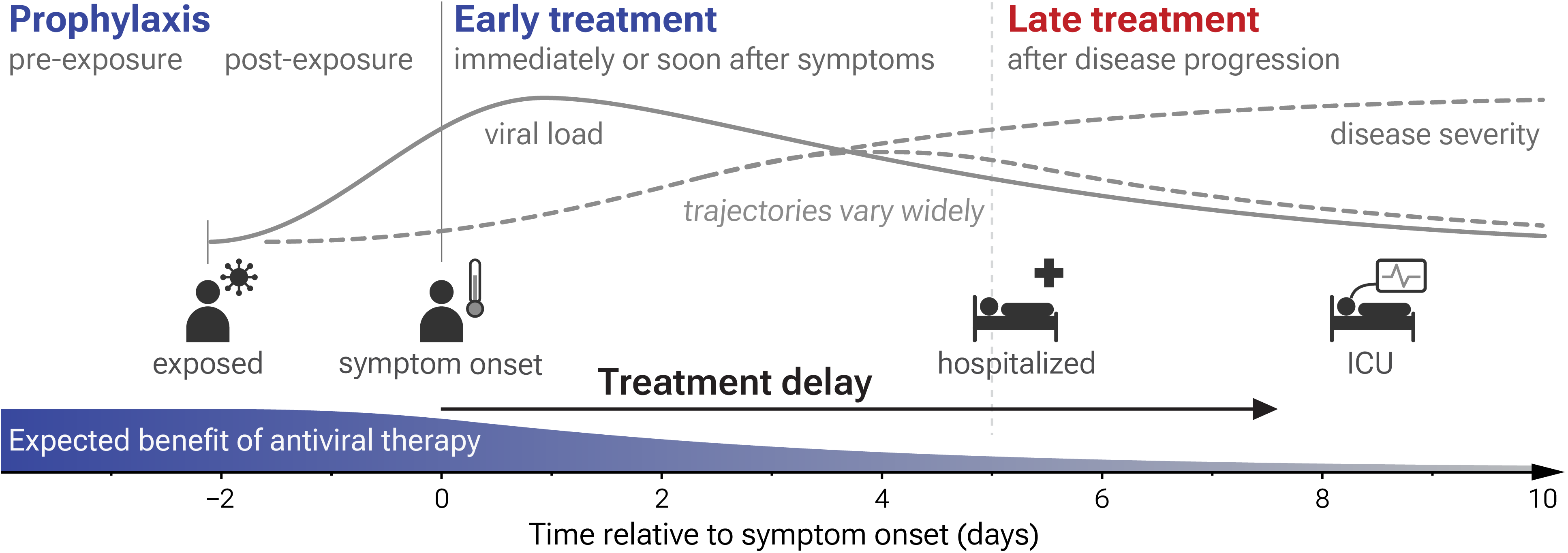
Fig. 3 shows stages of possible treatment for
COVID-19. Prophylaxis refers to regularly taking medication before
becoming sick, in order to prevent or minimize infection. Early
treatment refers to treatment immediately or soon after symptoms appear,
while late treatment refers to more delayed treatment.
Fig. 3. Treatment stages.
An in vivo animal study supports the efficacy of nitazoxanide54.
Studies show synergistic antiviral effects for nitazoxanide in combination with remdesivir50,55 and arbidol50, which may allow increased efficacy and/or similar efficacy at lower doses, potentially reducing dose-dependent side effects.
A study shows complementary effects for nitazoxanide in combination with remdesivir52.
Preclinical research is an important part of the development of
treatments, however results may be very different in clinical trials.
Preclinical results are not used in this paper.
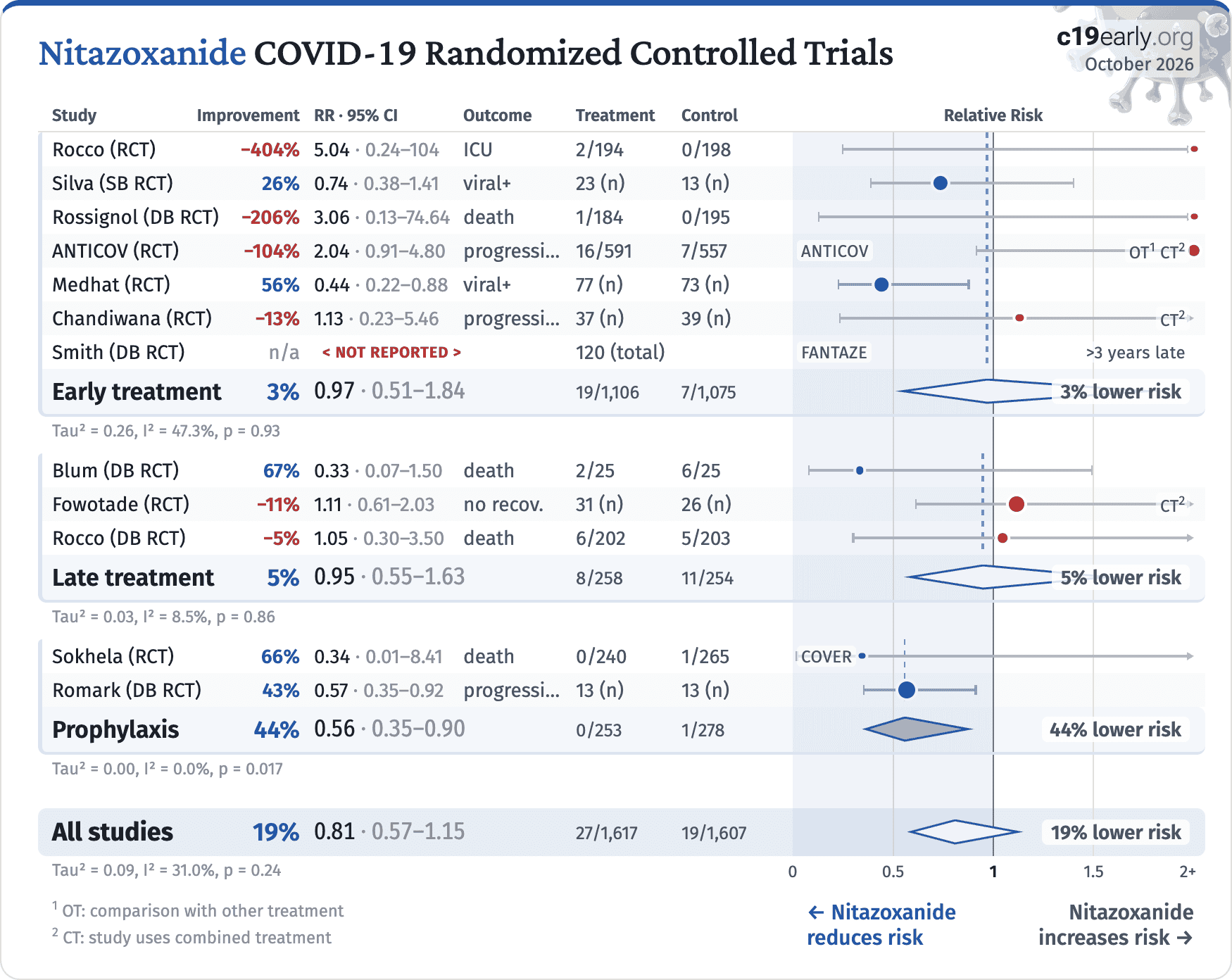
Table 1 summarizes the results for all studies, for Randomized Controlled Trials, for peer-reviewed studies, for specific outcomes, and by treatment stage.
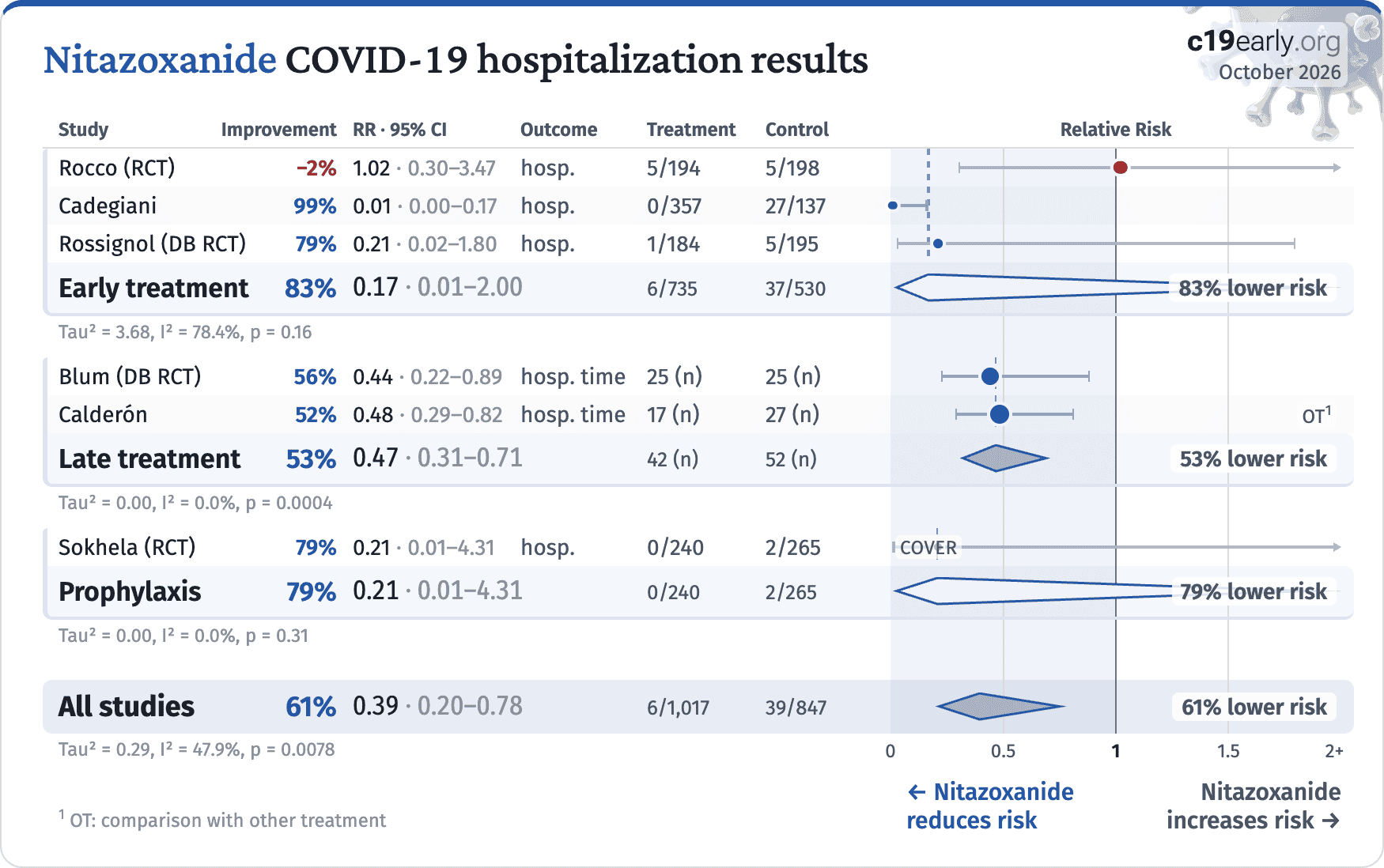
Fig. 4 plots individual results by treatment stage.
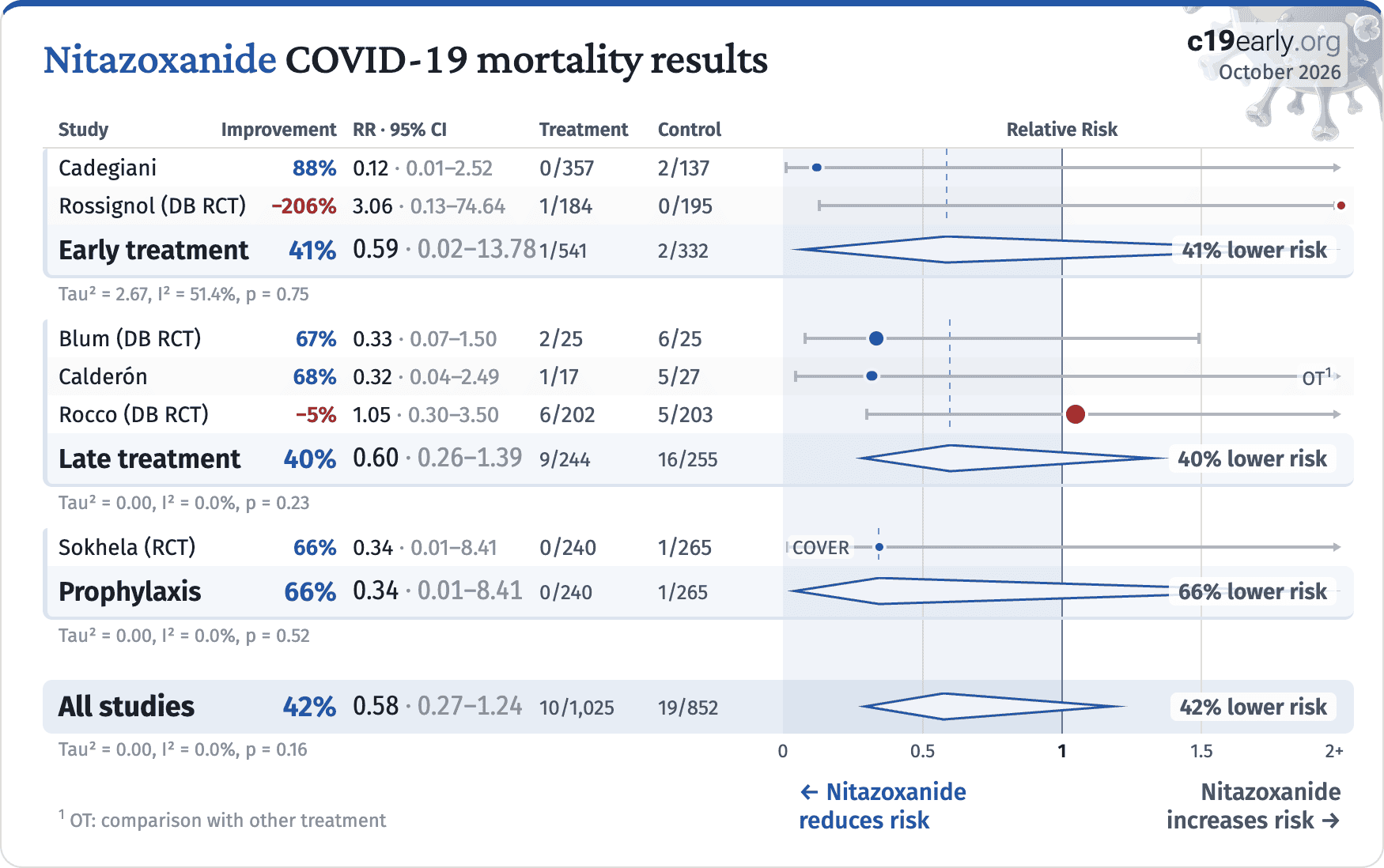
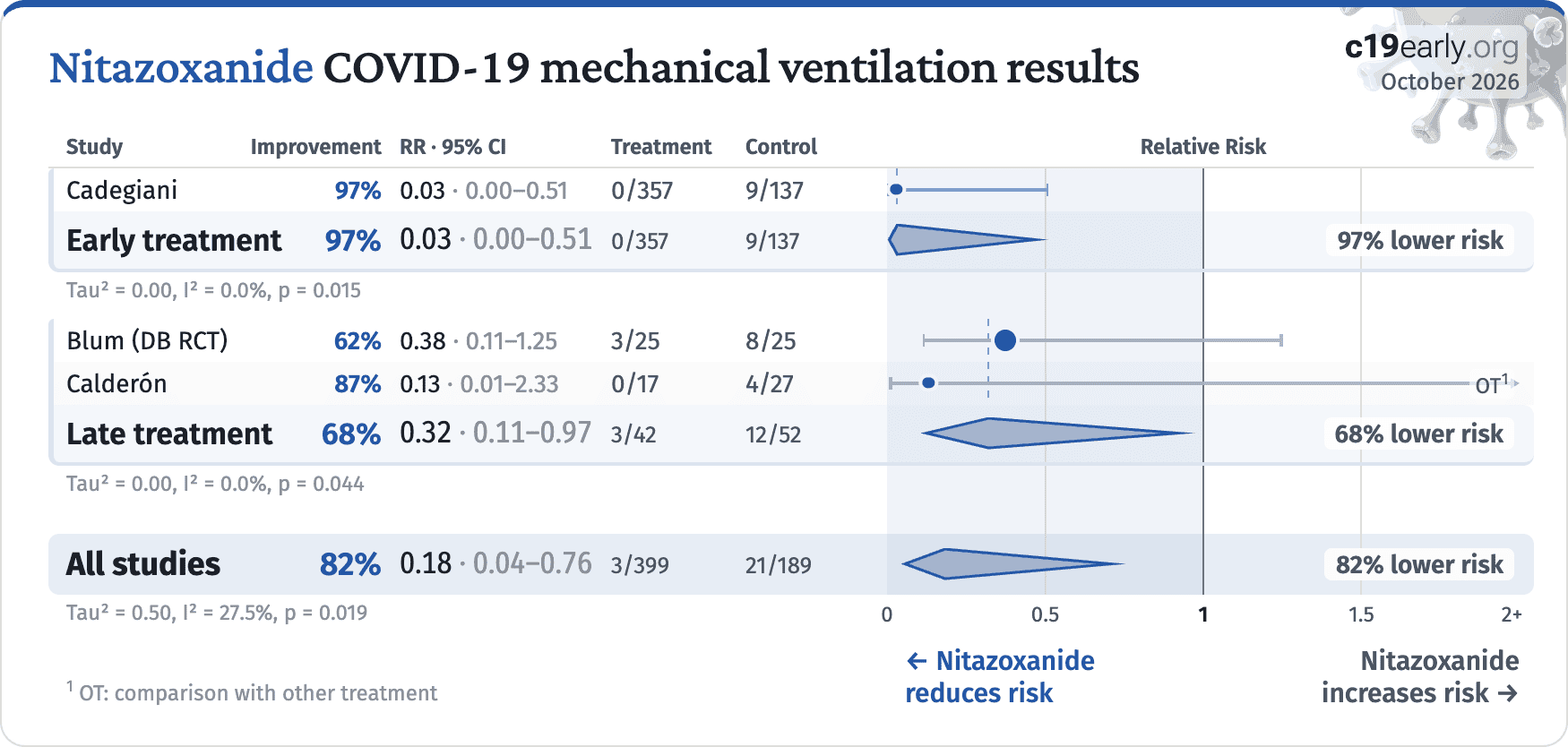
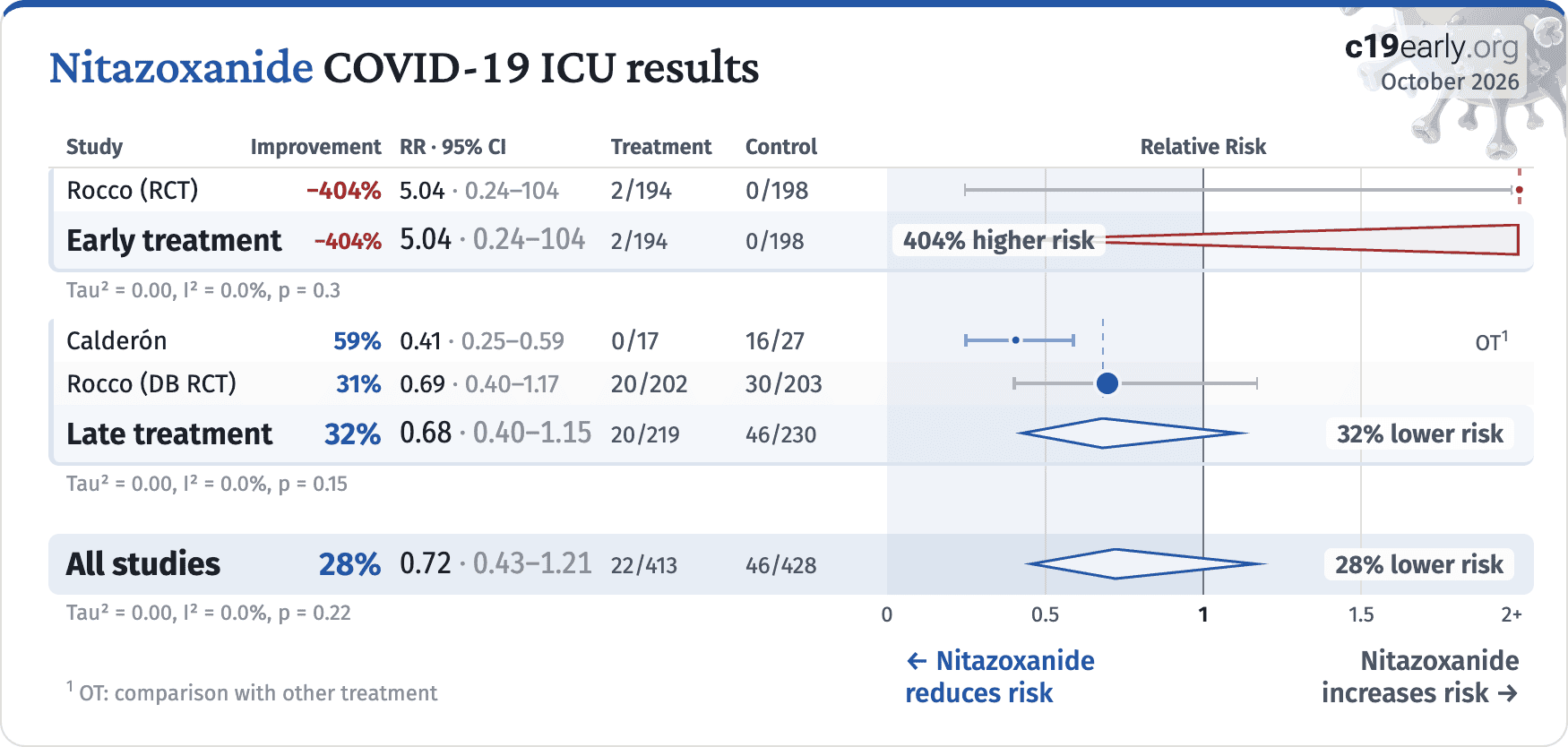
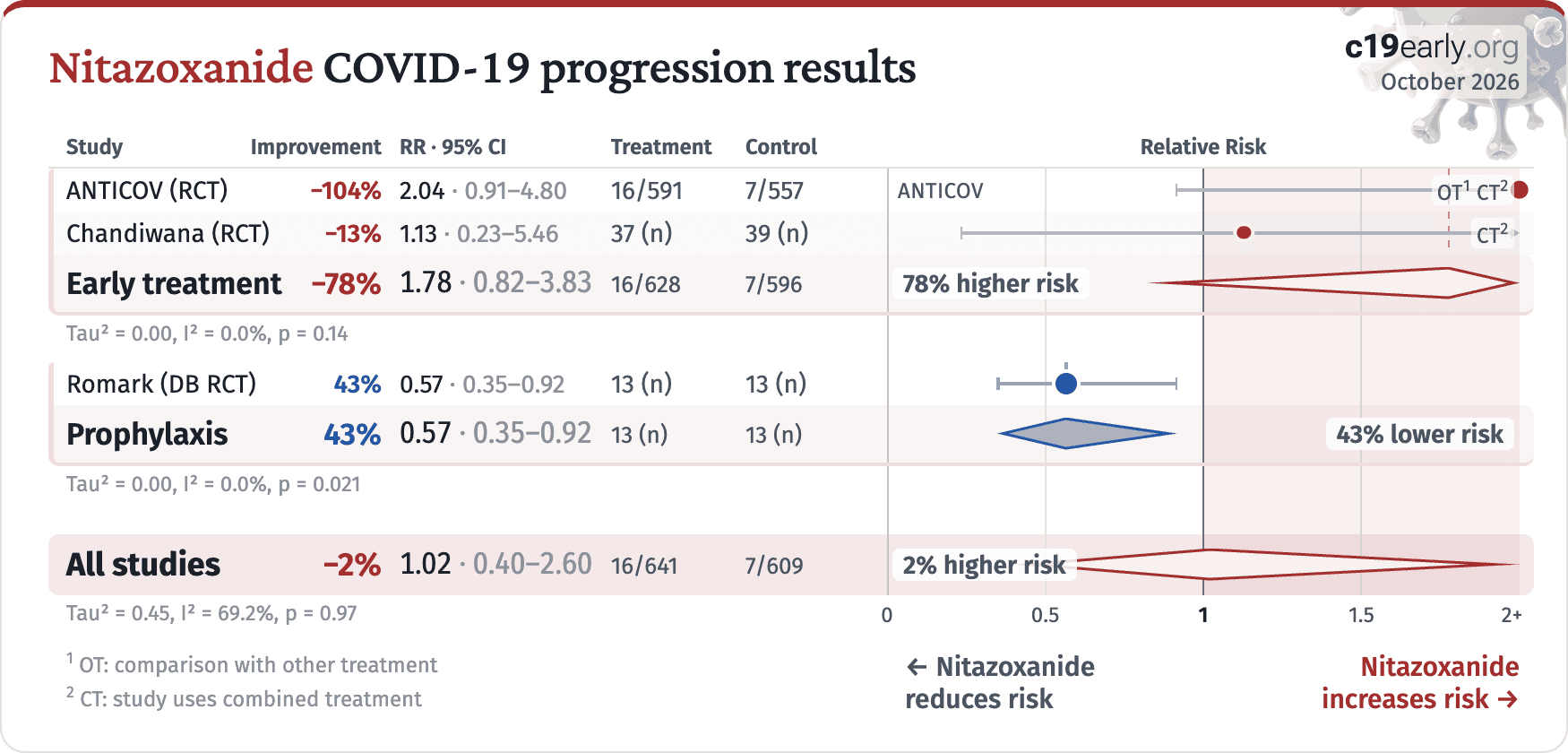
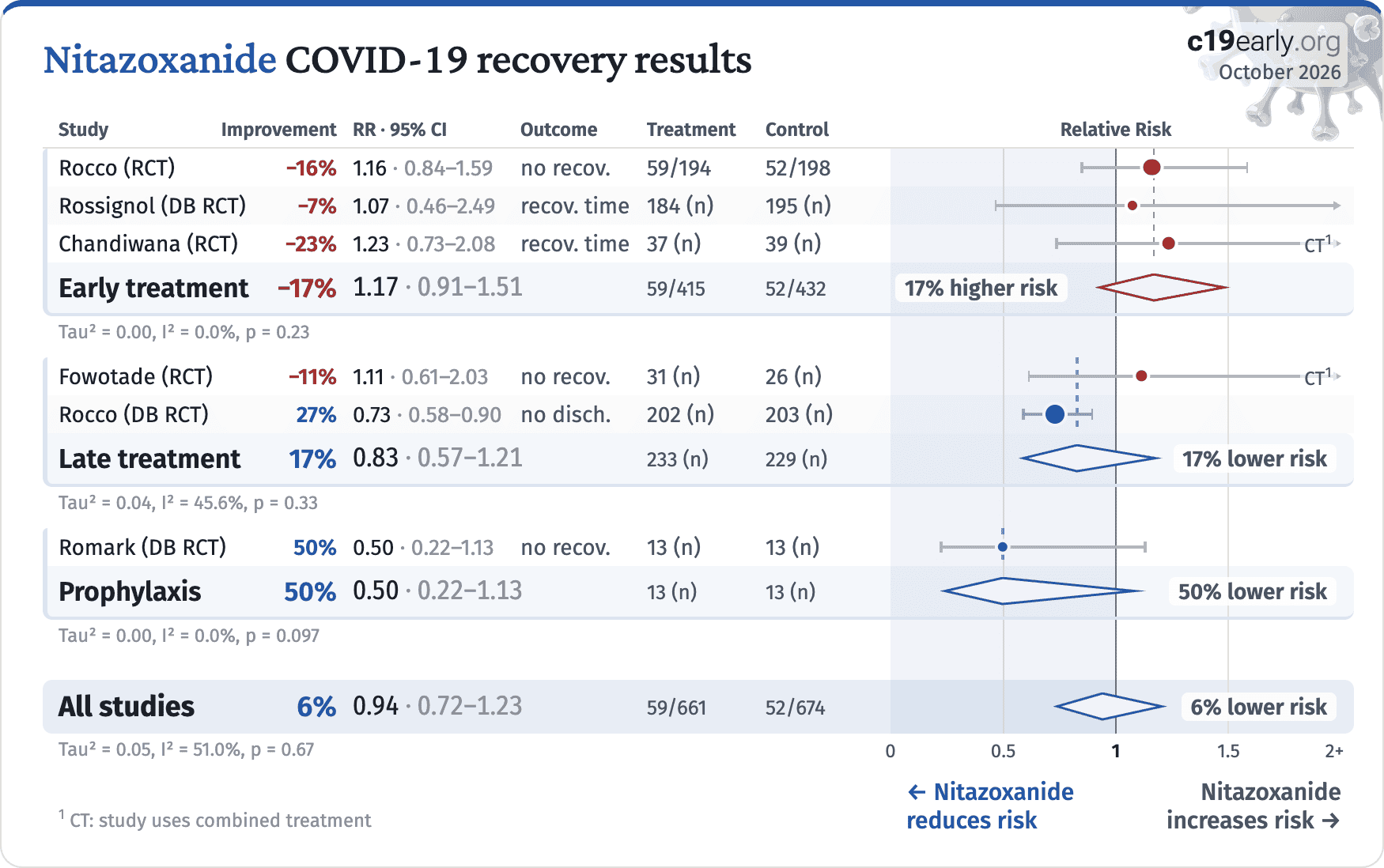
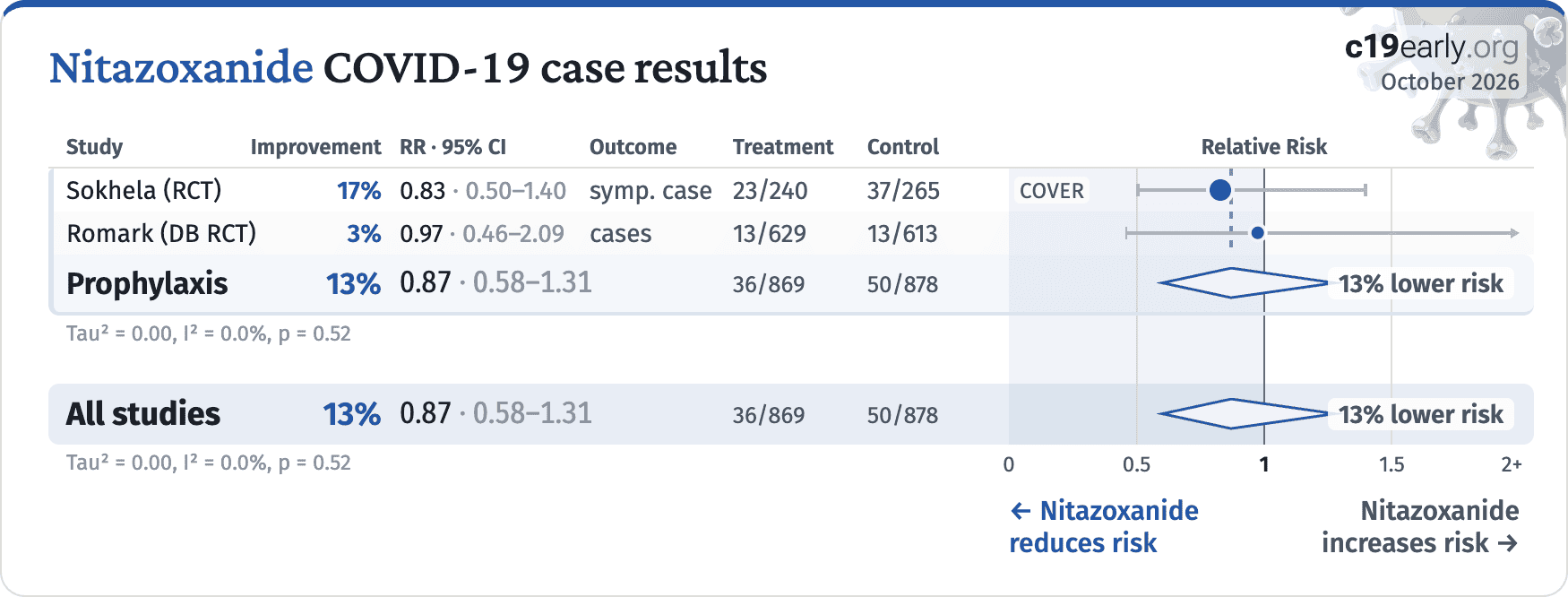
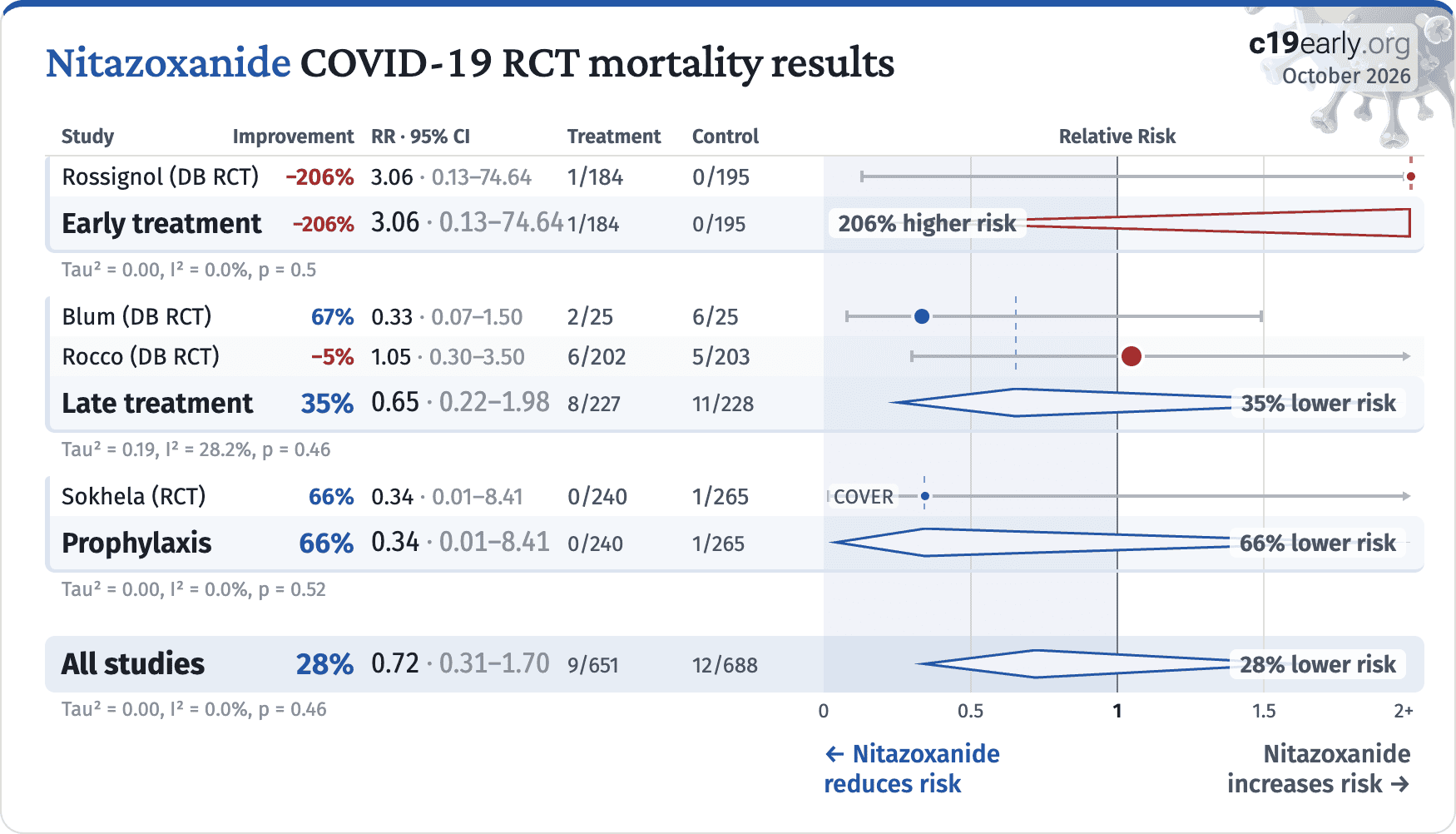
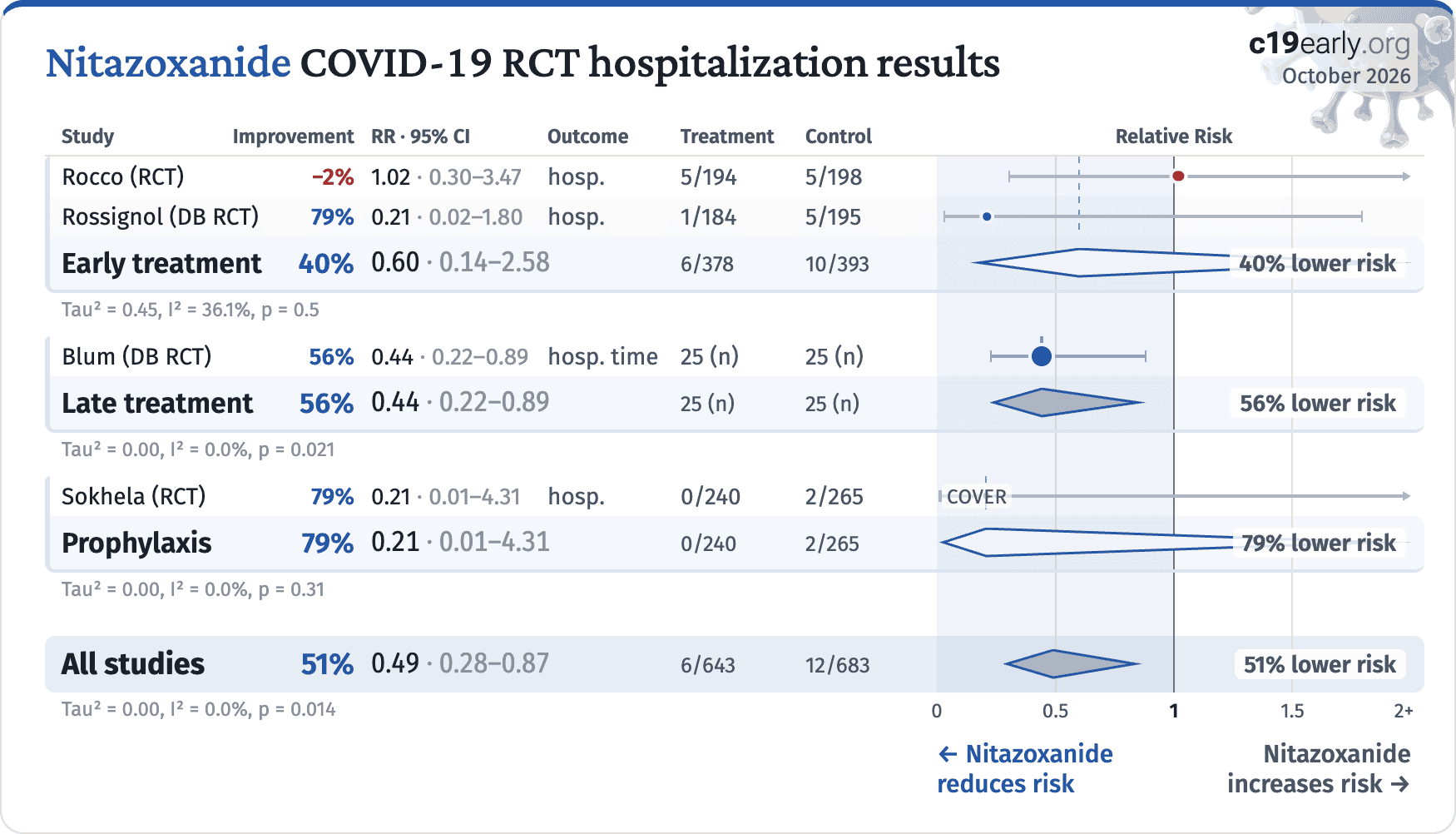
Fig. 5, 6, 7, 8, 9, 10, 11, 12, 13, and 14
show forest plots for random-effects meta-analysis of
all studies with pooled effects, mortality results, ventilation, ICU admission, hospitalization, progression, recovery, cases, viral clearance, and peer reviewed studies.
Nitazoxanide for COVID-19: meta-analysis results
November 2026
All stages
Prophylaxis
Early treatment
Late treatment
All studies14 studies · 3,875 patients
All stages0.64 0.39–1.0436% lower risk
Prophylaxis0.56* 0.35–0.9044% lower risk
Early treatment0.67 0.29–1.5633% lower risk
Late treatment0.88 0.52–1.5012% lower risk
Peer-reviewed11 studies · 2,644 patients
All stages0.50* 0.27–0.9150% lower risk
Prophylaxis0.34 0.01–8.4166% lower risk
Early treatment0.51 0.22–1.1849% lower risk
Late treatment0.60 0.26–1.3940% lower risk
RCTs11 studies · 3,224 patients
All stages0.81 0.57–1.1519% lower risk
Prophylaxis0.56* 0.35–0.9044% lower risk
Early treatment0.97 0.51–1.843% lower risk
Late treatment0.95 0.55–1.635% lower risk
Mortality6 studies · 1,877 patients
All stages0.58 0.27–1.2442% lower risk
Prophylaxis0.34 0.01–8.4166% lower risk
Early treatment0.6 0.0–13.841% lower risk
Late treatment0.60 0.26–1.3940% lower risk
Ventilation3 studies · 588 patients
All stages0.18* 0.04–0.7682% lower risk
Prophylaxis—
Early treatment0.03* 0.00–0.5197% lower risk
Late treatment0.32* 0.11–0.9768% lower risk
ICU admission3 studies · 841 patients
All stages0.72 0.43–1.2128% lower risk
Prophylaxis—
Early treatment5 0–104404% higher risk
Late treatment0.68 0.40–1.1532% lower risk
Hospitalization6 studies · 1,864 patients
All stages0.39** 0.20–0.7861% lower risk
Prophylaxis0.21 0.01–4.3179% lower risk
Early treatment0.17 0.01–2.0083% lower risk
Late treatment0.47*** 0.31–0.7153% lower risk
Recovery6 studies · 1,335 patients
All stages0.94 0.72–1.236% lower risk
Prophylaxis0.50 0.22–1.1350% lower risk
Early treatment1.17 0.91–1.5117% higher risk
Late treatment0.83 0.57–1.2117% lower risk
Cases2 studies · 1,747 patients
All stages0.87 0.58–1.3113% lower risk
Prophylaxis0.87 0.58–1.3113% lower risk
Early treatment—
Late treatment—
Viral7 studies · 865 patients
All stages0.62 0.37–1.0538% lower risk
Prophylaxis—
Early treatment0.62 0.35–1.1138% lower risk
Late treatment0.47 0.06–3.5953% lower risk
RCT mortality4 studies · 1,339 patients
All stages0.72 0.31–1.7028% lower risk
Prophylaxis0.34 0.01–8.4166% lower risk
Early treatment3.1 0.1–74.6206% higher risk
Late treatment0.65 0.22–1.9835% lower risk
RCT hospitalization4 studies · 1,326 patients
All stages0.49* 0.28–0.8751% lower risk
Prophylaxis0.21 0.01–4.3179% lower risk
Early treatment0.60 0.14–2.5840% lower risk
Late treatment0.44* 0.22–0.8956% lower risk
Random-effects meta-analysis. Relative risk with 95% CI. * p < 0.05, ** p < 0.01, *** p < 0.001.
Table 1. Random-effects meta-analysis results for nitazoxanide. Results show the relative risk and 95% confidence interval.
Fig. 4. Scatter plot showing the most serious outcome in all studies, and for studies within each stage. Diamonds shows the results of random-effects meta-analysis.
Nitazoxanide COVID-19 studies (1 unreported RCT)
November 2026
StudyImprovementRR · 95% CIOutcomeTreatmentControlRelative Risk
Rocco (RCT)−404%5.04 · 0.24–104ICU2/1940/198
Cadegiani88%0.12 · 0.01–2.52death0/3572/137
Elalfy87%0.13 · 0.06–0.27viral+7/6244/51CT2
Silva (SB RCT)26%0.74 · 0.38–1.41viral+23 (n)13 (n)
Rossignol (DB RCT)−206%3.06 · 0.13–74.64death1/1840/195
ANTICOV (RCT)−104%2.04 · 0.91–4.80progression16/5917/557ANTICOVOT1 CT2
Medhat (RCT)56%0.44 · 0.22–0.88viral+77 (n)73 (n)
Chandiwana (RCT)−13%1.13 · 0.23–5.46progression37 (n)39 (n)CT2
Smith (DB RCT)n/a< NOT REPORTED >120 (total)FANTAZE>3 years late
Early treatment33%0.67 · 0.29–1.5626/1,52553/1,26333% lower risk
Tau² = 0.92, I² = 77.0%, p = 0.36
Blum (DB RCT)67%0.33 · 0.07–1.50death2/256/25
Calderón68%0.32 · 0.04–2.49death1/175/27OT1
Fowotade (RCT)−11%1.11 · 0.61–2.03no recov.31 (n)26 (n)CT2
Rocco (DB RCT)−5%1.05 · 0.30–3.50death6/2025/203
Late treatment12%0.88 · 0.52–1.509/27516/28112% lower risk
Tau² = 0.03, I² = 7.9%, p = 0.65
Sokhela (RCT)66%0.34 · 0.01–8.41death0/2401/265COVER
Romark (DB RCT)43%0.57 · 0.35–0.92progression13 (n)13 (n)
Prophylaxis44%0.56 · 0.35–0.900/2531/27844% lower risk
Tau² = 0.00, I² = 0.0%, p = 0.017
All studies36%0.64 · 0.39–1.0435/2,05370/1,82236% lower risk
Tau² = 0.43, I² = 65.3%, p = 0.06900.511.52+
Fig. 5. Random-effects meta-analysis for all studies.
This plot shows pooled effects,
see the specific outcome analyses for individual outcomes.
Analysis validating pooled outcomes for
COVID-19 can be found below.
Effect extraction is pre-specified, using the most serious outcome reported.
For details see the appendix.
Nitazoxanide COVID-19 mortality results
November 2026
StudyImprovementRR · 95% CITreatmentControlRelative Risk
Early treatment41%0.59 · 0.02–13.781/5412/33241% lower risk
Tau² = 2.67, I² = 51.4%, p = 0.75
Blum (DB RCT)67%0.33 · 0.07–1.502/256/25
Calderón68%0.32 · 0.04–2.491/175/27OT1
Rocco (DB RCT)−5%1.05 · 0.30–3.506/2025/203
Late treatment40%0.60 · 0.26–1.399/24416/25540% lower risk
Tau² = 0.00, I² = 0.0%, p = 0.23
Prophylaxis66%0.34 · 0.01–8.410/2401/26566% lower risk
Tau² = 0.00, I² = 0.0%, p = 0.52
All studies42%0.58 · 0.27–1.2410/1,02519/85242% lower risk
Tau² = 0.00, I² = 0.0%, p = 0.1600.511.52+
Fig. 6. Random-effects meta-analysis for mortality results.
Nitazoxanide COVID-19 mechanical ventilation results
November 2026
StudyImprovementRR · 95% CITreatmentControlRelative Risk
Early treatment97%0.03 · 0.00–0.510/3579/13797% lower risk
Tau² = 0.00, I² = 0.0%, p = 0.015
Late treatment68%0.32 · 0.11–0.973/4212/5268% lower risk
Tau² = 0.00, I² = 0.0%, p = 0.044
All studies82%0.18 · 0.04–0.763/39921/18982% lower risk
Tau² = 0.50, I² = 27.5%, p = 0.01900.511.52+
Fig. 7. Random-effects meta-analysis for ventilation.
Nitazoxanide COVID-19 ICU results
November 2026
StudyImprovementRR · 95% CITreatmentControlRelative Risk
Early treatment−404%5.04 · 0.24–1042/1940/198404% higher risk
Tau² = 0.00, I² = 0.0%, p = 0.3
Late treatment32%0.68 · 0.40–1.1520/21946/23032% lower risk
Tau² = 0.00, I² = 0.0%, p = 0.15
All studies28%0.72 · 0.43–1.2122/41346/42828% lower risk
Tau² = 0.00, I² = 0.0%, p = 0.2200.511.52+
Fig. 8. Random-effects meta-analysis for ICU admission.
Nitazoxanide COVID-19 hospitalization results
November 2026
StudyImprovementRR · 95% CIOutcomeTreatmentControlRelative Risk
Rocco (RCT)−2%1.02 · 0.30–3.47hosp.5/1945/198
Cadegiani99%0.01 · 0.00–0.17hosp.0/35727/137
Rossignol (DB RCT)79%0.21 · 0.02–1.80hosp.1/1845/195
Early treatment83%0.17 · 0.01–2.006/73537/53083% lower risk
Tau² = 3.68, I² = 78.4%, p = 0.16
Blum (DB RCT)56%0.44 · 0.22–0.89hosp. time25 (n)25 (n)
Calderón52%0.48 · 0.29–0.82hosp. time17 (n)27 (n)OT1
Late treatment53%0.47 · 0.31–0.7142 (n)52 (n)53% lower risk
Tau² = 0.00, I² = 0.0%, p = 0.0004
Prophylaxis79%0.21 · 0.01–4.310/2402/26579% lower risk
Tau² = 0.00, I² = 0.0%, p = 0.31
All studies61%0.39 · 0.20–0.786/1,01739/84761% lower risk
Tau² = 0.29, I² = 47.9%, p = 0.007800.511.52+
Fig. 9. Random-effects meta-analysis for hospitalization.
Nitazoxanide COVID-19 progression results
November 2026
StudyImprovementRR · 95% CITreatmentControlRelative Risk
ANTICOV (RCT)−104%2.04 · 0.91–4.8016/5917/557ANTICOVOT1 CT2
Chandiwana (RCT)−13%1.13 · 0.23–5.4637 (n)39 (n)CT2
Early treatment−78%1.78 · 0.82–3.8316/6287/59678% higher risk
Tau² = 0.00, I² = 0.0%, p = 0.14
Prophylaxis43%0.57 · 0.35–0.9213 (n)13 (n)43% lower risk
Tau² = 0.00, I² = 0.0%, p = 0.021
All studies−2%1.02 · 0.40–2.6016/6417/6092% higher risk
Tau² = 0.45, I² = 69.2%, p = 0.9700.511.52+
Fig. 10. Random-effects meta-analysis for progression.
Nitazoxanide COVID-19 recovery results
November 2026
StudyImprovementRR · 95% CIOutcomeTreatmentControlRelative Risk
Rocco (RCT)−16%1.16 · 0.84–1.59no recov.59/19452/198
Rossignol (DB RCT)−7%1.07 · 0.46–2.49recov. time184 (n)195 (n)
Chandiwana (RCT)−23%1.23 · 0.73–2.08recov. time37 (n)39 (n)CT1
Early treatment−17%1.17 · 0.91–1.5159/41552/43217% higher risk
Tau² = 0.00, I² = 0.0%, p = 0.23
Fowotade (RCT)−11%1.11 · 0.61–2.03no recov.31 (n)26 (n)CT1
Rocco (DB RCT)27%0.73 · 0.58–0.90no disch.202 (n)203 (n)
Late treatment17%0.83 · 0.57–1.21233 (n)229 (n)17% lower risk
Tau² = 0.04, I² = 45.6%, p = 0.33
Prophylaxis50%0.50 · 0.22–1.1313 (n)13 (n)50% lower risk
Tau² = 0.00, I² = 0.0%, p = 0.097
All studies6%0.94 · 0.72–1.2359/66152/6746% lower risk
Tau² = 0.05, I² = 51.0%, p = 0.6700.511.52+
Fig. 11. Random-effects meta-analysis for recovery.
Nitazoxanide COVID-19 case results
November 2026
StudyImprovementRR · 95% CIOutcomeTreatmentControlRelative Risk
Sokhela (RCT)17%0.83 · 0.50–1.40symp. case23/24037/265COVER
Romark (DB RCT)3%0.97 · 0.46–2.09cases13/62913/613
Prophylaxis13%0.87 · 0.58–1.3136/86950/87813% lower risk
Tau² = 0.00, I² = 0.0%, p = 0.52
All studies13%0.87 · 0.58–1.3136/86950/87813% lower risk
Tau² = 0.00, I² = 0.0%, p = 0.5200.511.52+
Fig. 12. Random-effects meta-analysis for cases.
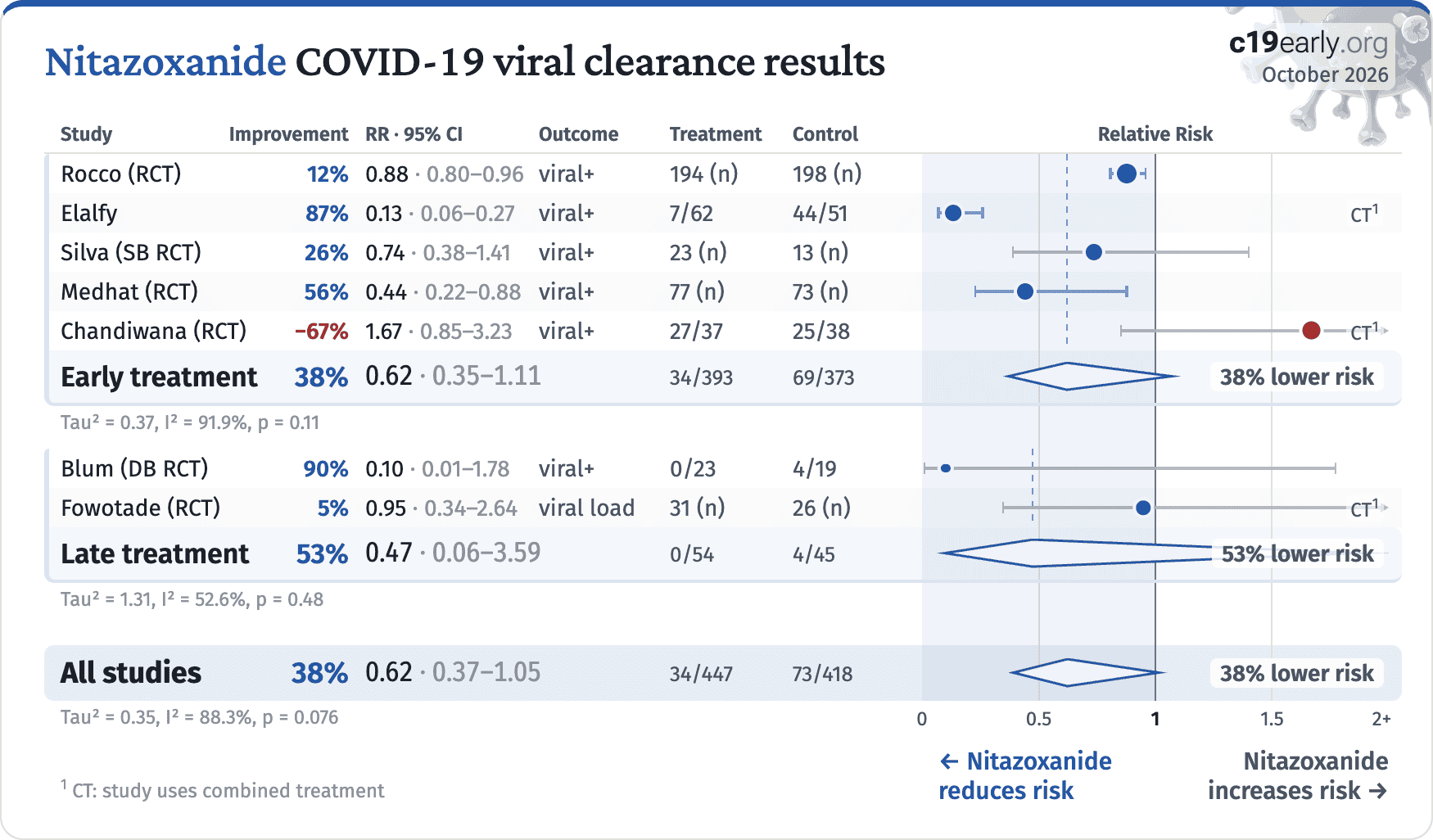
Nitazoxanide COVID-19 viral clearance results
November 2026
StudyImprovementRR · 95% CIOutcomeTreatmentControlRelative Risk
Rocco (RCT)12%0.88 · 0.80–0.96viral+194 (n)198 (n)
Elalfy87%0.13 · 0.06–0.27viral+7/6244/51CT1
Silva (SB RCT)26%0.74 · 0.38–1.41viral+23 (n)13 (n)
Medhat (RCT)56%0.44 · 0.22–0.88viral+77 (n)73 (n)
Chandiwana (RCT)−67%1.67 · 0.85–3.23viral+27/3725/38CT1
Early treatment38%0.62 · 0.35–1.1134/39369/37338% lower risk
Tau² = 0.37, I² = 91.9%, p = 0.11
Blum (DB RCT)90%0.10 · 0.01–1.78viral+0/234/19
Fowotade (RCT)5%0.95 · 0.34–2.64viral load31 (n)26 (n)CT1
Late treatment53%0.47 · 0.06–3.590/544/4553% lower risk
Tau² = 1.31, I² = 52.6%, p = 0.48
All studies38%0.62 · 0.37–1.0534/44773/41838% lower risk
Tau² = 0.35, I² = 88.3%, p = 0.07600.511.52+
Fig. 13. Random-effects meta-analysis for viral clearance.
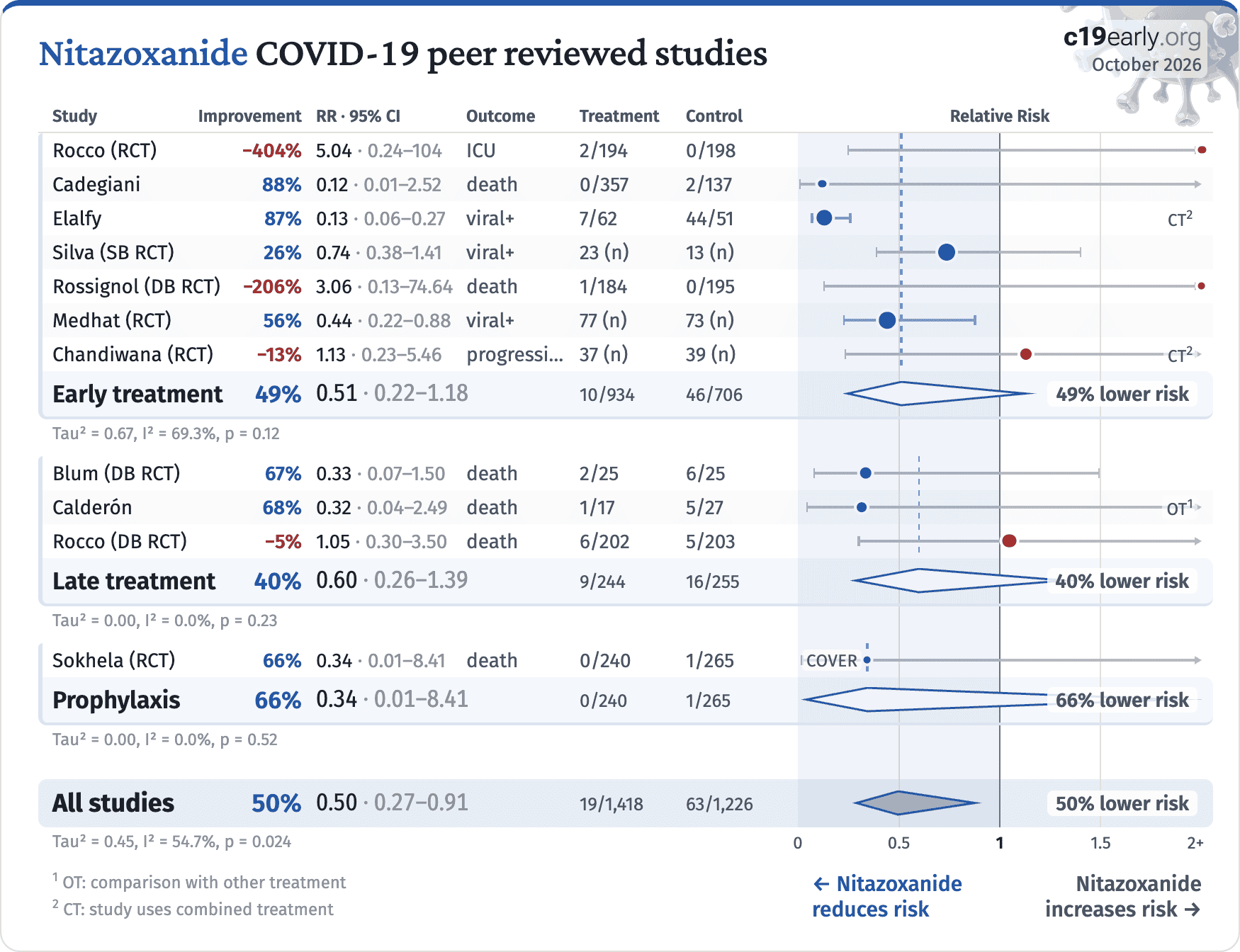
Nitazoxanide COVID-19 peer reviewed studies
November 2026
StudyImprovementRR · 95% CIOutcomeTreatmentControlRelative Risk
Rocco (RCT)−404%5.04 · 0.24–104ICU2/1940/198
Cadegiani88%0.12 · 0.01–2.52death0/3572/137
Elalfy87%0.13 · 0.06–0.27viral+7/6244/51CT2
Silva (SB RCT)26%0.74 · 0.38–1.41viral+23 (n)13 (n)
Rossignol (DB RCT)−206%3.06 · 0.13–74.64death1/1840/195
Medhat (RCT)56%0.44 · 0.22–0.88viral+77 (n)73 (n)
Chandiwana (RCT)−13%1.13 · 0.23–5.46progression37 (n)39 (n)CT2
Early treatment49%0.51 · 0.22–1.1810/93446/70649% lower risk
Tau² = 0.67, I² = 69.3%, p = 0.12
Blum (DB RCT)67%0.33 · 0.07–1.50death2/256/25
Calderón68%0.32 · 0.04–2.49death1/175/27OT1
Rocco (DB RCT)−5%1.05 · 0.30–3.50death6/2025/203
Late treatment40%0.60 · 0.26–1.399/24416/25540% lower risk
Tau² = 0.00, I² = 0.0%, p = 0.23
Prophylaxis66%0.34 · 0.01–8.410/2401/26566% lower risk
Tau² = 0.00, I² = 0.0%, p = 0.52
All studies50%0.50 · 0.27–0.9119/1,41863/1,22650% lower risk
Tau² = 0.45, I² = 54.7%, p = 0.02400.511.52+
Fig. 14. Random-effects meta-analysis for peer reviewed studies.
Zeraatkar et al. analyze 356 COVID-19 trials, finding no significant
evidence that preprint results are inconsistent with peer-reviewed studies.
They also show extremely long peer-review delays, with a median of 6 months to
journal publication. A six month delay was equivalent to around 1.5 million
deaths during the first two years of the pandemic. Authors recommend using
preprint evidence, with appropriate checks for potential falsified data, which
provides higher certainty much earlier. Davidson et al. also showed no
important difference between meta-analysis results of preprints and
peer-reviewed publications for COVID-19, based on 37 meta-analyses including
114 trials.
Effect extraction is pre-specified, using the most serious outcome reported,
see the appendix for details.
Analysis validating pooled outcomes for
COVID-19 can be found below.
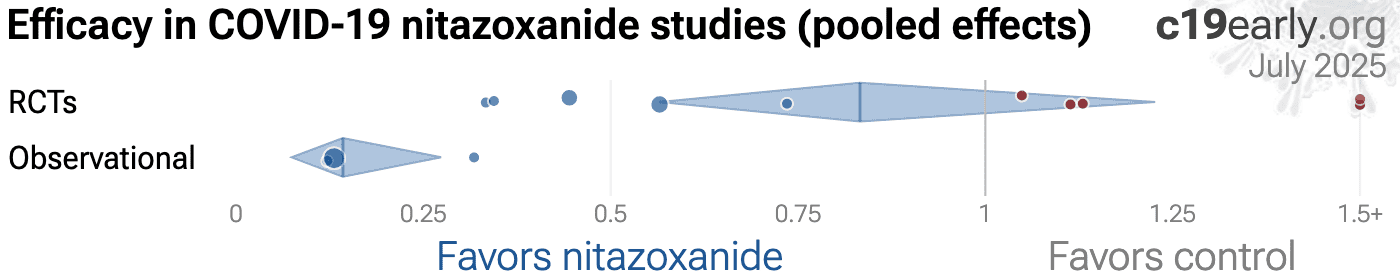
Fig. 15 shows a comparison of results for RCTs and observational studies.
Fig. 16, 17, and 18
show forest plots for random-effects meta-analysis of
all Randomized Controlled Trials, RCT mortality results, and RCT hospitalization results.
RCT results are included in Table 1.
Fig. 15. Results for RCTs and observational studies.
RCTs help to make study groups more similar and can provide a higher level of
evidence, however they are subject to many biases58, and
analysis of double-blind RCTs has identified extreme levels of bias59.
For COVID-19, the overhead may delay treatment, dramatically compromising
efficacy; they may encourage monotherapy for simplicity at the cost of
efficacy which may rely on combined or synergistic effects; the participants
that sign up may not reflect real world usage or the population that benefits
most in terms of age, comorbidities, severity of illness, or other factors;
standard of care may be compromised and unable to evolve quickly based on
emerging research for new diseases; errors may be made in randomization and
medication delivery; and investigators may have hidden agendas or vested
interests influencing design, operation, analysis, reporting, and the
potential for fraud. All of these biases have been observed with COVID-19
RCTs. There is no guarantee that a specific RCT provides a higher level of
evidence.
RCTs are expensive and many RCTs are funded
by pharmaceutical companies or other organizations with conflicts of interest, for example
governments that previously denied treatment with the study drug.
For COVID-19, this creates an incentive to show efficacy for
patented commercial products, and an incentive to show a lack of efficacy for
inexpensive treatments. The bias is expected to be significant, for example
Als-Nielsen et al. analyzed 370 RCTs from Cochrane reviews, showing that
trials funded by for-profit organizations were 5 times more likely to
recommend the experimental drug compared with those funded by nonprofit
organizations. Bekelman et al. and Lundh et al. show that
industry-sponsored studies are more likely to be favorable.
For COVID-19, some major philanthropic organizations are
largely funded by investments with extreme conflicts of interest for and
against specific COVID-19 interventions.
High quality RCTs for novel acute diseases are more challenging, with
increased ethical issues due to the urgency of treatment, increased risk due
to enrollment delays, and more difficult design with a rapidly evolving
evidence base. For COVID-19, the most common site of initial infection is the
upper respiratory tract. Immediate treatment is likely to be most successful
and may prevent or slow progression to other parts of the body. For a
non-prophylaxis RCT, it makes sense to provide treatment in advance and
instruct patients to use it immediately on symptoms, just as some governments
have done by providing medication kits in advance. Unfortunately, no RCTs have
been done in this way. Every treatment RCT to date involves delayed treatment.
Among the 227 treatments we have analyzed,
67% of RCTs involve very late treatment 5+ days after
onset. No non-prophylaxis COVID-19 RCTs match the potential real-world use of
early treatments. They may more accurately represent results for treatments
that require visiting a medical facility, e.g., those requiring intravenous
administration.
RCTs have a bias against finding an effect for interventions
that are widely available—patients that believe they need the
intervention are more likely to decline participation and take the
intervention. RCTs for nitazoxanide are more likely to enroll low-risk
participants that do not need treatment to recover, making the results less
applicable to clinical practice. This bias is likely to be greater for widely
known treatments, and may be greater when the risk of a serious outcome is
overstated. This bias does not apply to the typical pharmaceutical trial of a
new drug that is otherwise unavailable.
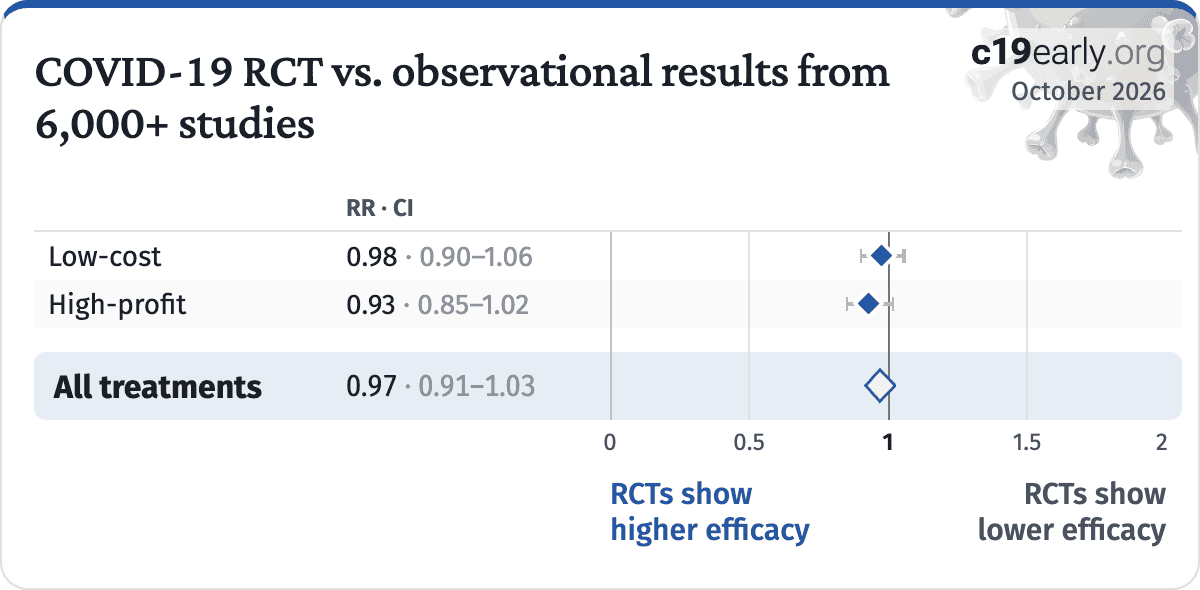
COVID-19 RCT vs. observational results from 6,000+ studies
November 2026
RR · CI
All treatments0.97 · 0.91–1.03
00.511.52
Evidence shows that observational studies
can also provide reliable results. Concato et al. found that well-designed
observational studies do not systematically overestimate the magnitude of the
effects of treatment compared to RCTs. Anglemyer et al. analyzed reviews
comparing RCTs to observational studies and found little evidence for
significant differences in effect estimates.
We performed a similar analysis across the 227 treatments
we cover, showing no significant difference in the results of RCTs compared to
observational studies, RR 0.97 [0.91‑1.03]47. Similar results are found for all low-cost treatments, RR
0.98 [0.90‑1.06]. High-cost treatments
show a non-significant trend towards RCTs showing greater efficacy,
RR 0.92 [0.84‑1.02].
Details can be found in the
supplementary data.
Lee et al. showed that only 14% of the guidelines of the Infectious
Diseases Society of America were based on RCTs. Evaluation of studies relies
on an understanding of the study and potential biases. Limitations in an RCT
can outweigh the benefits, for example excessive dosages, excessive treatment
delays, or remote survey bias may have a greater effect on results. Ethical
issues may also prevent running RCTs for known effective treatments. For more
on issues with RCTs see67,68.
Concato et al. report a paradoxical finding—RCT results had higher
variability, and only RCTs were found to sometimes report significant results the opposite
of the overall result. The same trend is seen for the most popular (most politicized)
COVID-19 treatments—considering all statistically significant results reported in
studies, RCTs are slightly more likely to report a result in the opposite direction. In
other words, for these COVID-19 treatments and for the topics covered by Concato et al., assuming causality from a single study is more likely to result in an incorrect conclusion for
RCTs.
Increased risk of inconsistent results for RCTs suggests higher prevalence of
bias, which may arise due to many issues including design bias, conflicts of interest,
treatment differences by physicians aware of allocation, attrition bias, ascertainment
bias, randomization failures, errors, or fraud.
Currently, 59 of the treatments we analyze show statistically significant efficacy or harm, defined as ≥10% decreased risk or >0% increased risk from ≥3 studies. Of these, 54% have been confirmed in RCTs, with a mean delay of 7.8 months (62% with 8.7 months delay for low-cost treatments). The remaining treatments either have no RCTs, or the point estimate is consistent.
Neither observational studies nor RCTs prove causation—any study can be
flawed or fraudulent. We need much more, for example a combination of results from many
independent teams, detailed understanding of each study, knowledge of conflicts/team
reliability, dose-response relationships, delay-response relationships, logical results across outcomes, or details consistent with preclinical expectations.
All studies must be evaluated individually. RCTs for a
given medication and disease may be more reliable, however they may also be
less reliable. For off-patent medications, very high conflict of interest
trials may be more likely to be RCTs, and more likely to be large trials that
dominate meta-analyses.
Nitazoxanide COVID-19 Randomized Controlled Trials
November 2026
StudyImprovementRR · 95% CIOutcomeTreatmentControlRelative Risk
Rocco (RCT)−404%5.04 · 0.24–104ICU2/1940/198
Silva (SB RCT)26%0.74 · 0.38–1.41viral+23 (n)13 (n)
Rossignol (DB RCT)−206%3.06 · 0.13–74.64death1/1840/195
ANTICOV (RCT)−104%2.04 · 0.91–4.80progression16/5917/557ANTICOVOT1 CT2
Medhat (RCT)56%0.44 · 0.22–0.88viral+77 (n)73 (n)
Chandiwana (RCT)−13%1.13 · 0.23–5.46progression37 (n)39 (n)CT2
Smith (DB RCT)n/a< NOT REPORTED >120 (total)FANTAZE>3 years late
Early treatment3%0.97 · 0.51–1.8419/1,1067/1,0753% lower risk
Tau² = 0.26, I² = 47.3%, p = 0.93
Blum (DB RCT)67%0.33 · 0.07–1.50death2/256/25
Fowotade (RCT)−11%1.11 · 0.61–2.03no recov.31 (n)26 (n)CT2
Rocco (DB RCT)−5%1.05 · 0.30–3.50death6/2025/203
Late treatment5%0.95 · 0.55–1.638/25811/2545% lower risk
Tau² = 0.03, I² = 8.5%, p = 0.86
Sokhela (RCT)66%0.34 · 0.01–8.41death0/2401/265COVER
Romark (DB RCT)43%0.57 · 0.35–0.92progression13 (n)13 (n)
Prophylaxis44%0.56 · 0.35–0.900/2531/27844% lower risk
Tau² = 0.00, I² = 0.0%, p = 0.017
All studies19%0.81 · 0.57–1.1527/1,61719/1,60719% lower risk
Tau² = 0.09, I² = 31.0%, p = 0.2400.511.52+
Fig. 16. Random-effects meta-analysis for all Randomized Controlled Trials.
This plot shows pooled effects,
see the specific outcome analyses for individual outcomes.
Analysis validating pooled outcomes for
COVID-19 can be found below.
Effect extraction is pre-specified, using the most serious outcome reported.
For details see the appendix.
Nitazoxanide COVID-19 RCT mortality results
November 2026
StudyImprovementRR · 95% CITreatmentControlRelative Risk
Early treatment−206%3.06 · 0.13–74.641/1840/195206% higher risk
Tau² = 0.00, I² = 0.0%, p = 0.5
Late treatment35%0.65 · 0.22–1.988/22711/22835% lower risk
Tau² = 0.19, I² = 28.2%, p = 0.46
Prophylaxis66%0.34 · 0.01–8.410/2401/26566% lower risk
Tau² = 0.00, I² = 0.0%, p = 0.52
All studies28%0.72 · 0.31–1.709/65112/68828% lower risk
Tau² = 0.00, I² = 0.0%, p = 0.4600.511.52+
Fig. 17. Random-effects meta-analysis for RCT mortality results.
Nitazoxanide COVID-19 RCT hospitalization results
November 2026
StudyImprovementRR · 95% CIOutcomeTreatmentControlRelative Risk
Early treatment40%0.60 · 0.14–2.586/37810/39340% lower risk
Tau² = 0.45, I² = 36.1%, p = 0.5
Late treatment56%0.44 · 0.22–0.8925 (n)25 (n)56% lower risk
Tau² = 0.00, I² = 0.0%, p = 0.021
Prophylaxis79%0.21 · 0.01–4.310/2402/26579% lower risk
Tau² = 0.00, I² = 0.0%, p = 0.31
All studies51%0.49 · 0.28–0.876/64312/68351% lower risk
Tau² = 0.00, I² = 0.0%, p = 0.01400.511.52+
Fig. 18. Random-effects meta-analysis for RCT hospitalization results.
1 nitazoxanide
RCT has not reported results1.
The trial reports
total actual enrollment of 120 patients.
The result is delayed over 3 years.
Low-cost treatments were subject to bias and censorship during the pandemic.
Scientific bias is seen in the design, analysis, presentation, and selective
reporting of studies, which often favored negative results. A similar bias is seen in the media
coverage for low-cost treatments.
While broadly seen, bias was particularly notable for ivermectin and hydroxychloroquine, e.g., Scott Alexander noted that "if you say anything in favor of ivermectin you will be cast out of civilization and thrown into the circle of social hell reserved for Klan members and 1/6 insurrectionists. All the health officials in the world will shout 'horse dewormer!' at you and compare you to Josef Mengele."43.
We analyze media coverage for the 227 treatments we
cover using Altmetric69 and PlumX
Metrics70. Altmetric covers ~14,000
news outlets71 and PlumX covers
~55,000 news sources72.
The two services are complementary with coverage of different news sources and different
methods for identifying articles not containing a DOI. We consider studies to have
received significant media coverage if they were covered by at least 100 articles in
either Altmetric of PlumX72,73. The most widespread study was covered
by 1,047 outlets. Studies covered by major
syndicated sources shows hundreds of news articles, while studies covered by few outlets
typically appear in niche medical news sources or press releases.
Fig. 20 and 21 analyze coverage for all low-cost treatments and all high-profit treatments, showing significant bias.
For low-cost treatments media coverage favored negative results 5.4× more than positive results, whereas for high-profit treatments coverage favored positive results 3.8× more than negative results.
The media bias may result in widespread incorrect perceptions on the relative efficacy of high-profit and low-cost treatments. The impact is significant—increased cost limits the use of high-profit
treatments and treatment equity. High-profit treatments were also more difficult to access, especially for earlier treatment which improves efficacy and minimizes community transmission.
Media bias for low-cost COVID‑19 treatments
November 2026
Media covered only 0.8% of studies showing significantly lower COVID-19 risk
Only 5 positive studies were covered
2020
2021
2022
2023
2020
2021
2022
2023
0.8%
one each: budesonide, cannabidiol, fluvoxamine, HCQ, vitamin D
34 negative studies were covered
2020
2021
2022
2023
2020
2021
2022
2023
4%
HCQ 12, ivermectin 6, lopinavir/ritonavir 4, azithromycin 3, vitamin D 3, fluvoxamine 2, one each: ibuprofen, metformin, vitamin C, zinc
5.4×
Negative bias for low-cost treatments
negative studies were 5.4 times more likely to be coveredFig. 20. Mainstream media coverage was biased against positive results for low-cost treatments. When restricting to RCTs, the bias was even larger, with negative RCTs 6.9× more likely to be covered.
Media was 3.8× more likely to cover positive studies
19 positive studies were covered
2020
2021
2022
2023
2020
2021
2022
2023
11%
paxlovid 5, remdesivir 3, casirivimab/imdevimab 2, convalescent plasma 2, molnupiravir 2, one each: antiandrogens, peginterferon lambda, sargramostim, tixagevimab/cilgavimab, tocilizumab
Only 6 negative studies were covered
2020
2021
2022
2023
2020
2021
2022
2023
3%
remdesivir 3, one each: bamlanivimab/etesevimab, bebtelovimab, sotrovimab
3.8×
Positive bias for high-profit treatments
positive studies were 3.8 times more likely to be coveredFig. 21. For high-profit treatments, mainstream media coverage was biased towards positive results. When restricting to RCTs, the bias was even larger, with positive RCTs 12.0× more likely to be covered.
A combination of factors may have led to the very low media coverage of low-cost treatments:
•
Politicization
led to a media environment where coverage was often framed to support a political
narrative rather than to provide objective scientific information. As Scott Alexander
said: "if you say anything in favor of ivermectin you will be cast out
of civilization and thrown into the circle of social hell reserved for Klan members and
1/6 insurrectionists. All the health officials in the world will shout 'horse dewormer!'
at you and compare you to Josef Mengele."
There was strong social pressure to
discredit low-cost treatments.•
Censorship
of
information conflicting with selected authorities. For example, individuals and
organizations presenting conflicting science were often shadowbanned or completely banned
on Twitter and YouTube if the science they were reporting conflicted with the opinions of
specific authorities selected by those companies, including when the authorities had
not even reviewed the scientific results in question.•
FDA requires "no
adequate, approved, and available alternatives"
in order to grant an EUA for
novel high-profit interventions, creating an incentive for authorities to ignore or
downplay existing low-cost treatments.•
Regulatory
capture
biases authorities towards high-profit interventions.•
Authorities ignored
most evidence for low-cost treatments
, for example the NIH references only 2% of
studies in delayed, rarely-updated, biased commentaries with no quantitive analysis.•
Media coverage of
science is often not very accurate
, e.g., misunderstanding confounding issues. For
example the media widely considered the RECOVERY HCQ RCT to be conclusive on efficacy, but
very late treatment of late-stage patients (mostly on oxygen already) with an excessive
toxic dose (shown dangerous in a dose comparison RCT) provides no information on the
recommended early/prophylactic treatment. With difficulting in understanding basic
confounders like treatment delay and dose, the media may favor deferring to authorities.
Many studies for low-cost treatments require greater expertise to analyze.
•
Substantial funding
from pharmaceutical advertising
biases editorial decisions towards high-profit
interventions.•
PR power
-
companies/teams with strong PR presence are favored in the media, which correlates with
high-profit and high conflict of interest studies.•
The media was very
negative in general
, inflating risk, and elevating fear and anxiety. A negative bias may
improve ratings and revenue, increasing motivation to continue watching coverage.
Heterogeneity in COVID-19 studies arises from many factors including:
The time between infection or the onset of symptoms and
treatment may critically affect how well a treatment works. For example an
antiviral may be very effective when used early but may not be effective in
late stage disease, and may even be harmful. Oseltamivir, for example, is
generally only considered effective for influenza when used within 0-36 or
0-48 hours74,75. Baloxavir marboxil studies for influenza
also show that treatment delay is critical — Ikematsu et al. report
an 86% reduction in cases for post-exposure prophylaxis, Hayden et al.
show a 33 hour reduction in the time to alleviation of symptoms for treatment
within 24 hours and a reduction of 13 hours for treatment within 24-48 hours,
and Kumar et al. report only 2.5 hours improvement for inpatient
treatment.
Early treatment is more effective: baloxavir marboxil
November 2026
Table 2. Studies of baloxavir marboxil for influenza
show that early treatment is more effective.
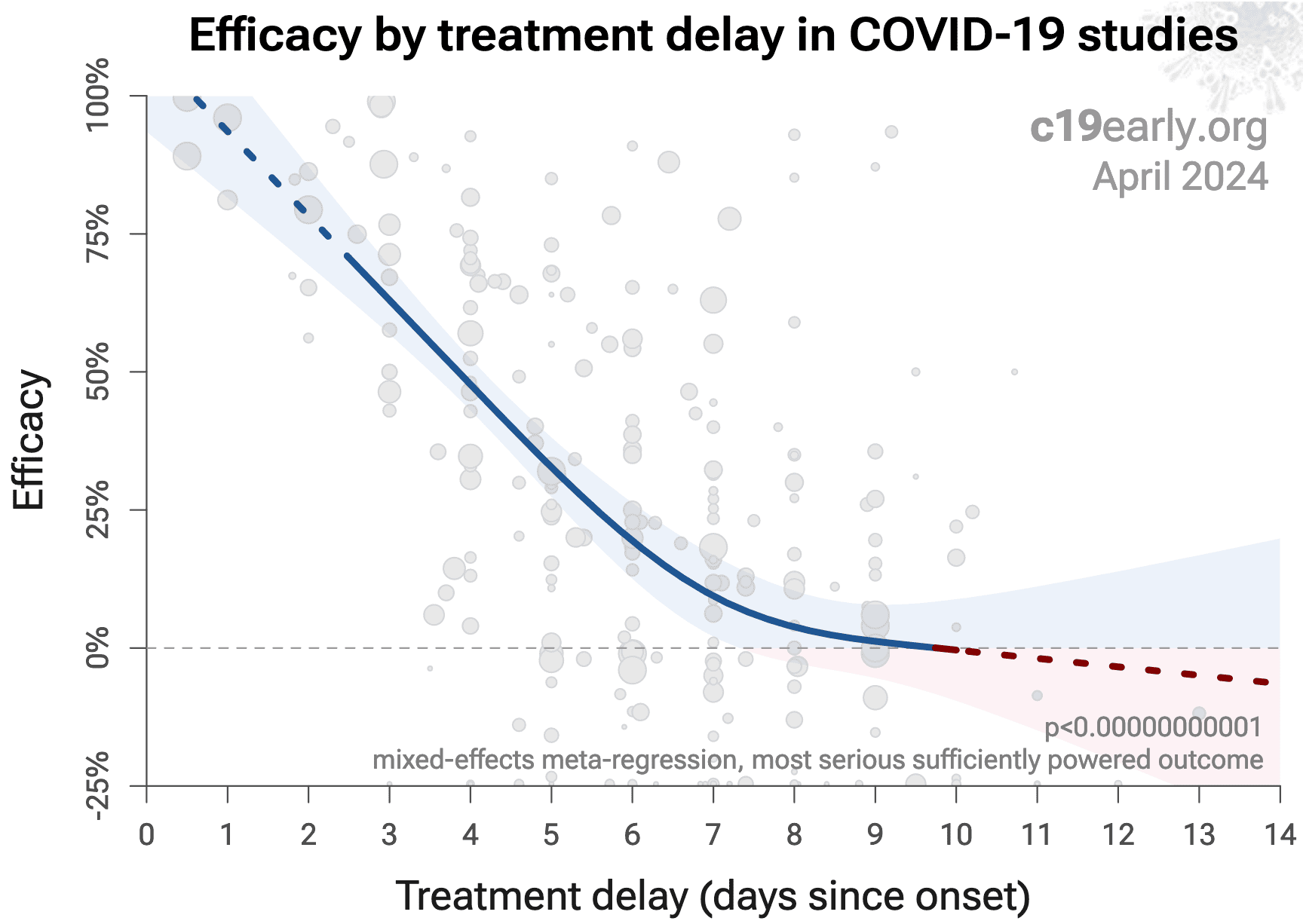
Fig. 22 shows a mixed-effects meta-regression for
efficacy as a function of treatment delay in COVID-19 studies from 227 treatments, showing that efficacy
declines rapidly with treatment delay. Early treatment is critical for COVID-19.
Fig. 22. Early treatment is more effective. Meta-regression showing efficacy as a function of treatment delay in COVID-19 studies from 227 treatments.
Details of the patient population including age and comorbidities may
critically affect how well a treatment works. For example, many COVID-19
studies with relatively young low-comorbidity patients show all patients
recovering quickly with or without treatment. In such cases, there is little
room for an effective treatment to improve results, for example as in
López-Medina et al.
Efficacy may depend critically on the distribution of
SARS-CoV-2 variants encountered by patients. Risk varies significantly across
variants80, for example the Gamma variant shows significantly
different characteristics81-84. Different
mechanisms of action may be more or less effective depending on variants, for
example the degree to which TMPRSS2 contributes to viral entry can differ
across variants85,86.
Effectiveness may depend strongly on the dosage and treatment regimen.
The quality of medications may vary significantly between
manufacturers and production batches, which may significantly affect efficacy
and safety. Williams et al. analyze ivermectin from 11 different sources,
showing highly variable antiparasitic efficacy across different manufacturers.
Xu (B) et al. analyze a treatment from two different manufacturers, showing 9
different impurities, with significantly different concentrations for each
manufacturer.
Across all
studies there is a strong association between different outcomes, for example
improved recovery is strongly associated with lower mortality. However,
efficacy may differ depending on the effect measured, for example a treatment
may be more effective against secondary complications and have minimal effect
on viral clearance.
The
distribution of studies will alter the outcome of a meta-analysis. Consider a
simplified example where everything is equal except for the treatment delay,
and effectiveness decreases to zero or below with increasing delay. If there
are many studies using very late treatment, the outcome may be negative, even
though early treatment is very effective.
All meta-analyses combine heterogeneous studies, varying in population,
variants, and potentially all factors above, and therefore may obscure
efficacy by including studies where treatment is less effective. Generally, we
expect the estimated effect size from meta-analysis to be less than that for
the optimal case.
Looking at all studies is valuable for providing an overview of all research,
important to avoid cherry-picking, and informative when a positive result is
found despite combining less-optimal situations. However, the resulting
estimate does not apply to specific cases such as
early treatment in high-risk populations.
While we present results for all studies, we also present treatment time and
individual outcome analyses, which may be more informative for specific use
cases.
This section validates the use of pooled effects for COVID-19, which enables
earlier detection of efficacy, however pooled effects are no longer required
for nitazoxanide as of April 2021. Efficacy is now known based on specific outcomes for all studies and when restricted to RCTs.
For COVID-19, delay in clinical results translates into
additional death and morbidity, as well as additional economic and societal
damage. Combining the results of studies reporting different outcomes is
required.
There may be no mortality in a trial with low-risk patients,
however a reduction in severity or improved viral clearance may translate
into lower mortality in a high-risk population.
Different studies may report lower severity, improved recovery, and lower mortality,
and the significance may be very high when combining the results.
"The studies reported different outcomes" is not a good reason for
disregarding results.
Pooling the results of studies reporting different outcomes allows us to use
more of the available information. Logically we should, and do, use additional
information when evaluating treatments—for example dose-response and
treatment delay-response relationships provide additional evidence of efficacy
that is considered when reviewing the evidence for a treatment.
We present both specific outcome and pooled analyses.
In order to combine the results of studies reporting different outcomes we use
the most serious outcome reported in each study, based on the thesis that
improvement in the most serious outcome provides comparable measures of
efficacy for a treatment. A critical advantage of this approach is
simplicity and transparency.
There are many other ways to combine evidence for different outcomes, along
with additional evidence such as dose-response relationships, however these
increase complexity.
Trials with high-risk patients may be restricted due to ethics for treatments
that are known or expected to be effective, and they increase difficulty for
recruiting. Using less severe outcomes as a proxy for more serious outcomes
allows faster and safer collection of evidence.
For many COVID-19 treatments, a reduction in mortality logically
follows from a reduction in hospitalization, which follows from a reduction in
symptomatic cases, which follows from a reduction in PCR positivity. We can
directly test this for COVID-19.
Analysis of the the association between different outcomes across studies from
all 227
treatments we cover confirms the validity of pooled outcome analysis for COVID-19.
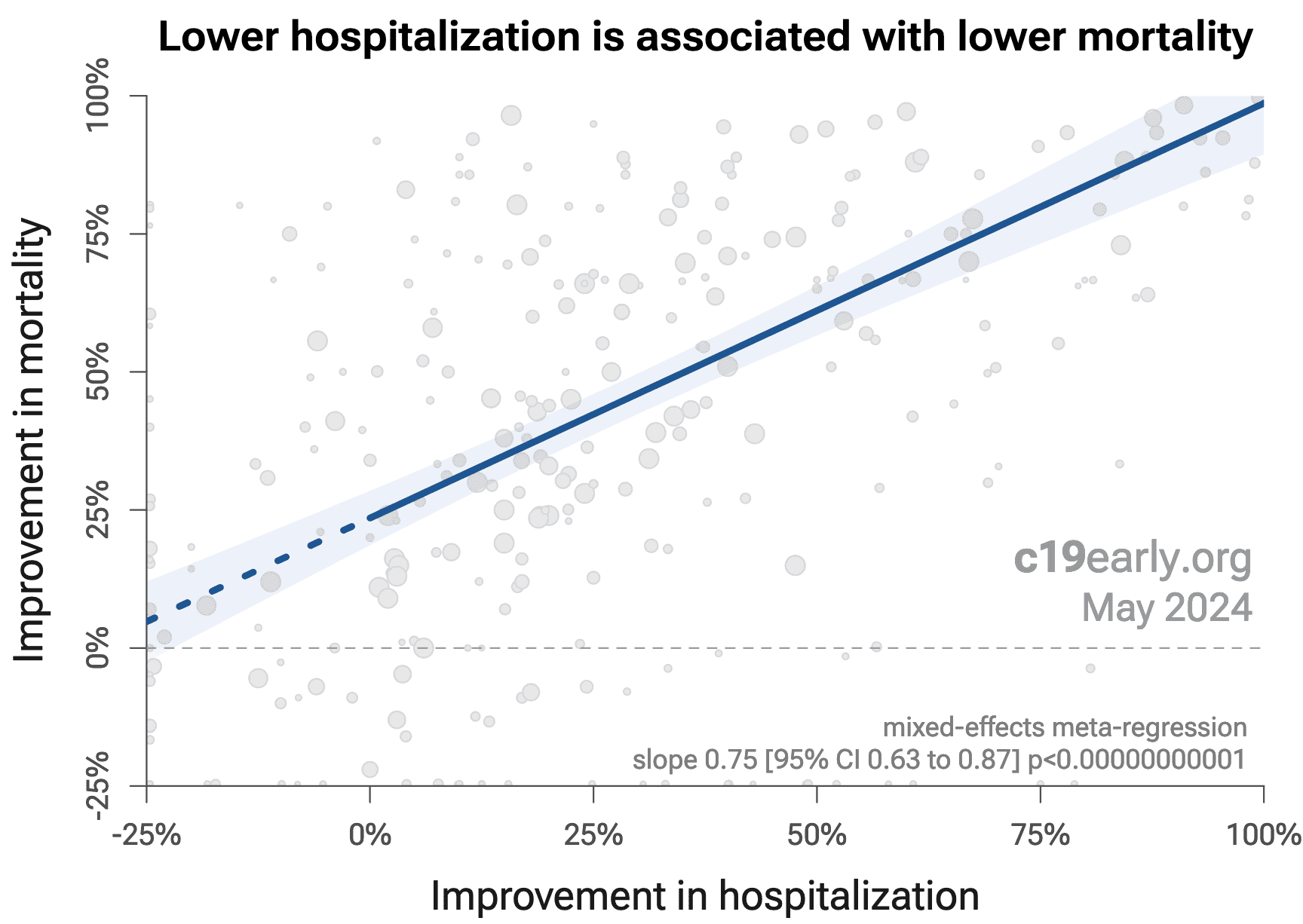
Fig. 23 shows that lower hospitalization is very strongly associated
with lower mortality (p < 0.0000000001).
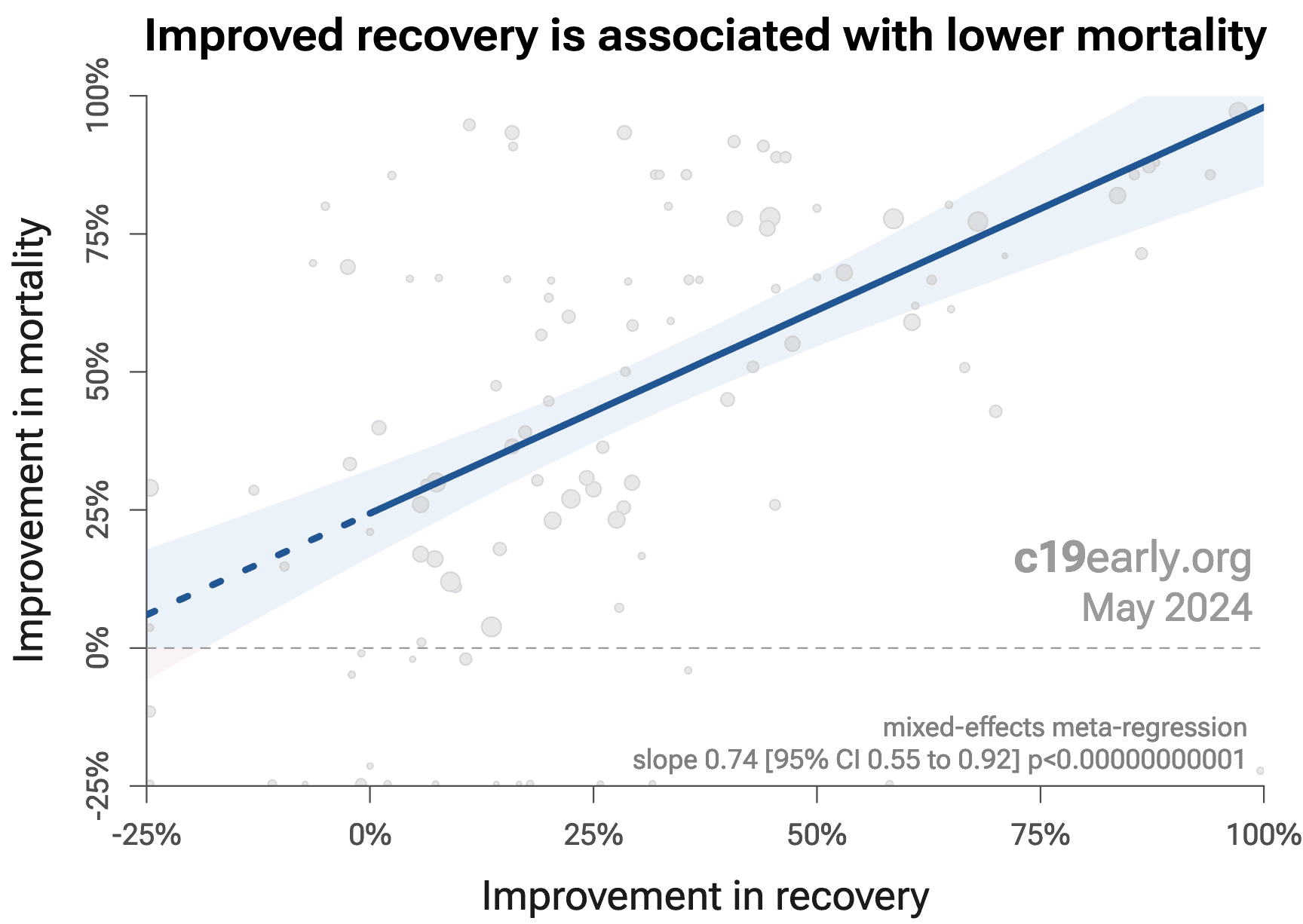
Similarly, Fig. 24 shows that improved recovery is very strongly associated
with lower mortality (p < 0.0000000001).
Considering the extremes, Singh et al. show an association between viral clearance and
hospitalization or death, with p = 0.003 after excluding one large
outlier from a mutagenic treatment, and based on 44 RCTs including 52,384
patients.
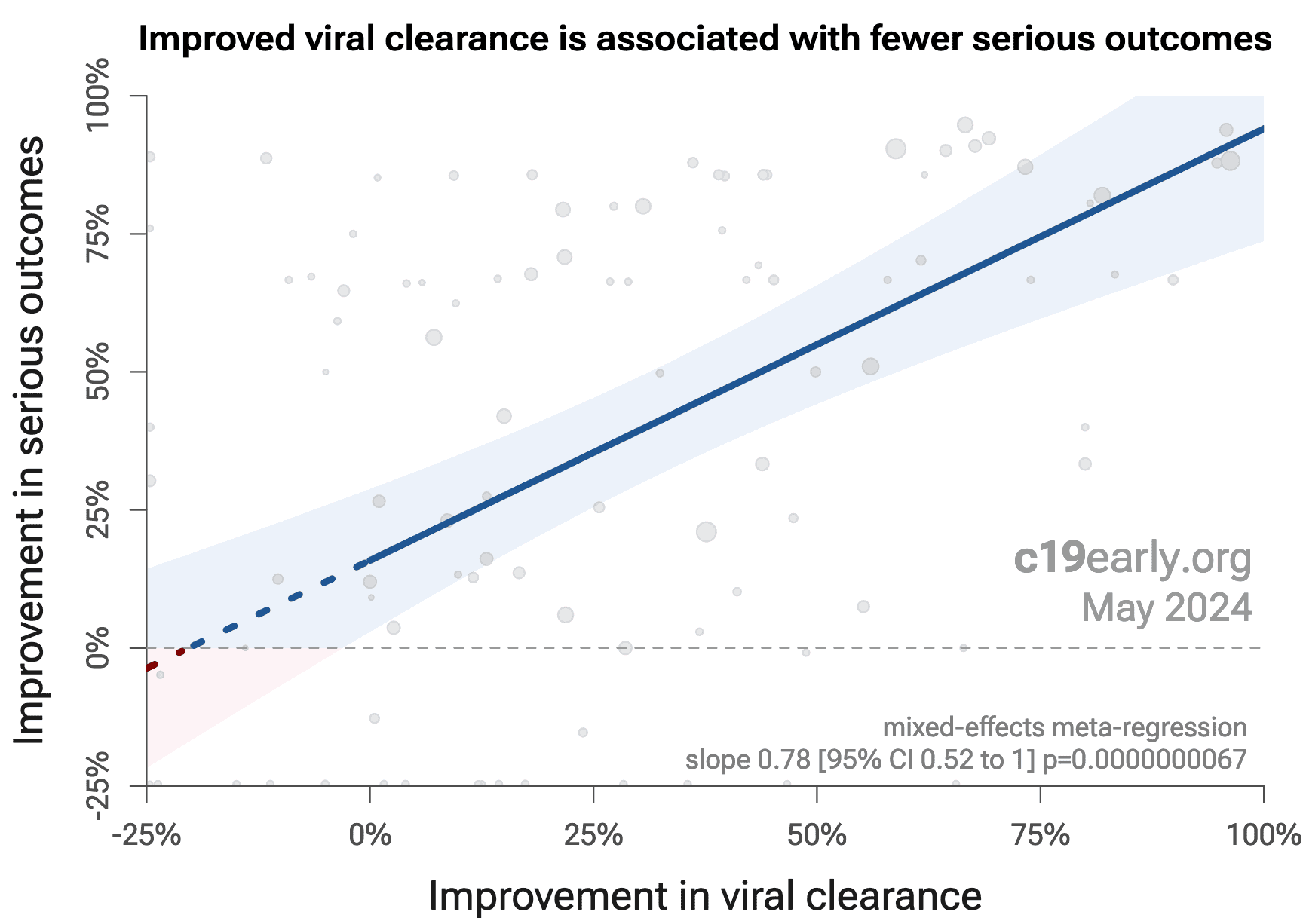
Fig. 25 shows that improved viral clearance is strongly associated
with fewer serious outcomes. The association is very similar to
Singh et al., with higher confidence due to the larger number of
studies. As with Singh et al., the confidence increases
when excluding the outlier treatment, from p = 0.0000000074 to p = 0.00000000015.
Fig. 23. Lower hospitalization is associated with lower mortality, supporting pooled outcome analysis.
Fig. 24. Improved recovery is associated with lower mortality, supporting pooled outcome analysis.
Fig. 23. Improved viral clearance is associated with fewer serious outcomes, supporting pooled outcome analysis.
Currently, 59 of the treatments we analyze show statistically significant efficacy or harm, defined as ≥10% decreased risk or >0% increased risk from ≥3 studies. 85% of these have been confirmed with one or more specific outcomes, with a mean delay of 4.6 months. When restricting to RCTs only, 53% of treatments showing statistically significant efficacy/harm with pooled effects have been confirmed with one or more specific outcomes, with a mean delay of 7.5 months.
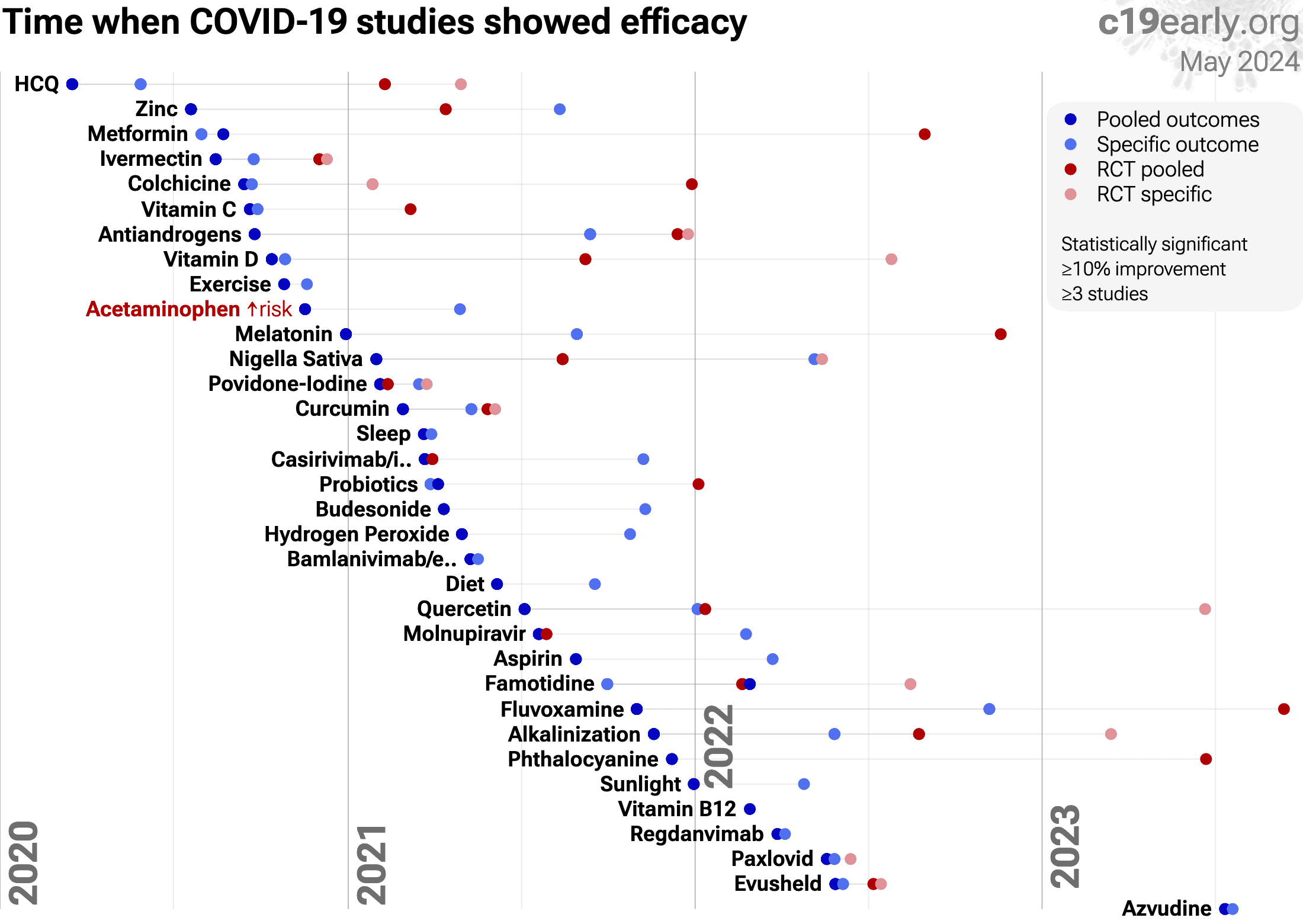
Fig. 26 shows when treatments were found effective during the
pandemic. Pooled outcomes often resulted in earlier detection of efficacy.
Fig. 26. The time when studies showed that
treatments were effective, defined as statistically significant improvement of
≥10% from ≥3 studies.
Pooled results typically show efficacy earlier than specific
outcome results. Results from all studies often shows efficacy much earlier
than when restricting to RCTs.
Results reflect conditions as used in trials to date, these depend on the
population treated, treatment delay, and treatment regimen.
Pooled analysis could hide efficacy, for example a treatment that is
beneficial for late stage patients but has no effect on viral clearance may
show no efficacy if most studies only examine viral clearance. In practice, it
is rare for a non-antiviral treatment to report viral clearance and to not
report clinical outcomes; and in practice other sources of heterogeneity such
as differences in treatment delay are more likely to hide efficacy.
Analysis validates the use of pooled effects and shows significantly faster
detection of efficacy on average.
However, as with all meta-analyses, it is important to review the different
studies included. We also present individual outcome analyses, which may be
more informative for specific use cases.
Publishing is often biased
towards positive results, however evidence suggests that there may be a negative bias for
inexpensive treatments for COVID-19. Both negative and positive results are
very important for COVID-19, media in many countries prioritizes negative
results for inexpensive treatments (inverting the typical incentive for
scientists that value media recognition), and there are many reports of
difficulty publishing positive results114-117.
For nitazoxanide, there is currently not
enough data to evaluate publication bias with high confidence.
One method to evaluate bias is to compare prospective vs.
retrospective studies. Prospective studies are more likely to be published
regardless of the result, while retrospective studies are more likely to
exhibit bias. For example, researchers may perform preliminary analysis with
minimal effort and the results may influence their decision to continue.
Retrospective studies also provide more opportunities for the specifics of
data extraction and adjustments to influence results.
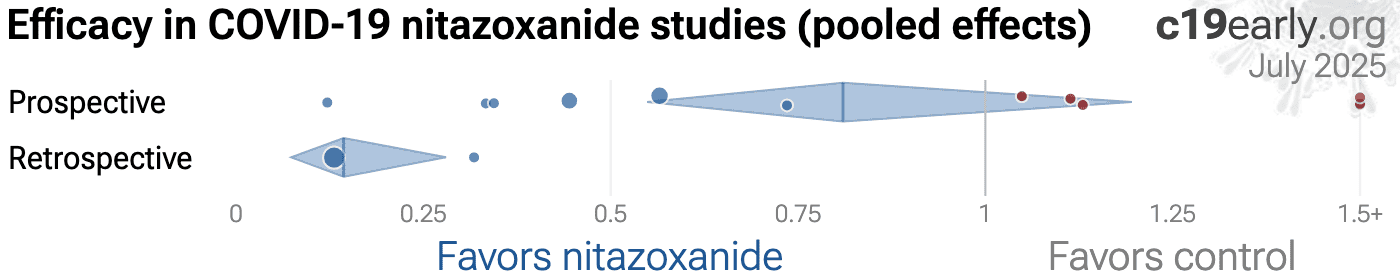
Fig. 27 shows a scatter plot of
results for prospective and retrospective studies.
100% of retrospective studies
report a statistically significant positive effect for
one or more outcomes, compared to
50% of prospective studies, consistent with a bias toward publishing positive results.
Fig. 27. Prospective vs. retrospective studies.
The diamonds show the results of random-effects meta-analysis.
Funnel
plots have traditionally been used for analyzing publication bias. This is
invalid for COVID-19 acute treatment trials — the underlying assumptions
are invalid, which we can demonstrate with a simple example. Consider a set of
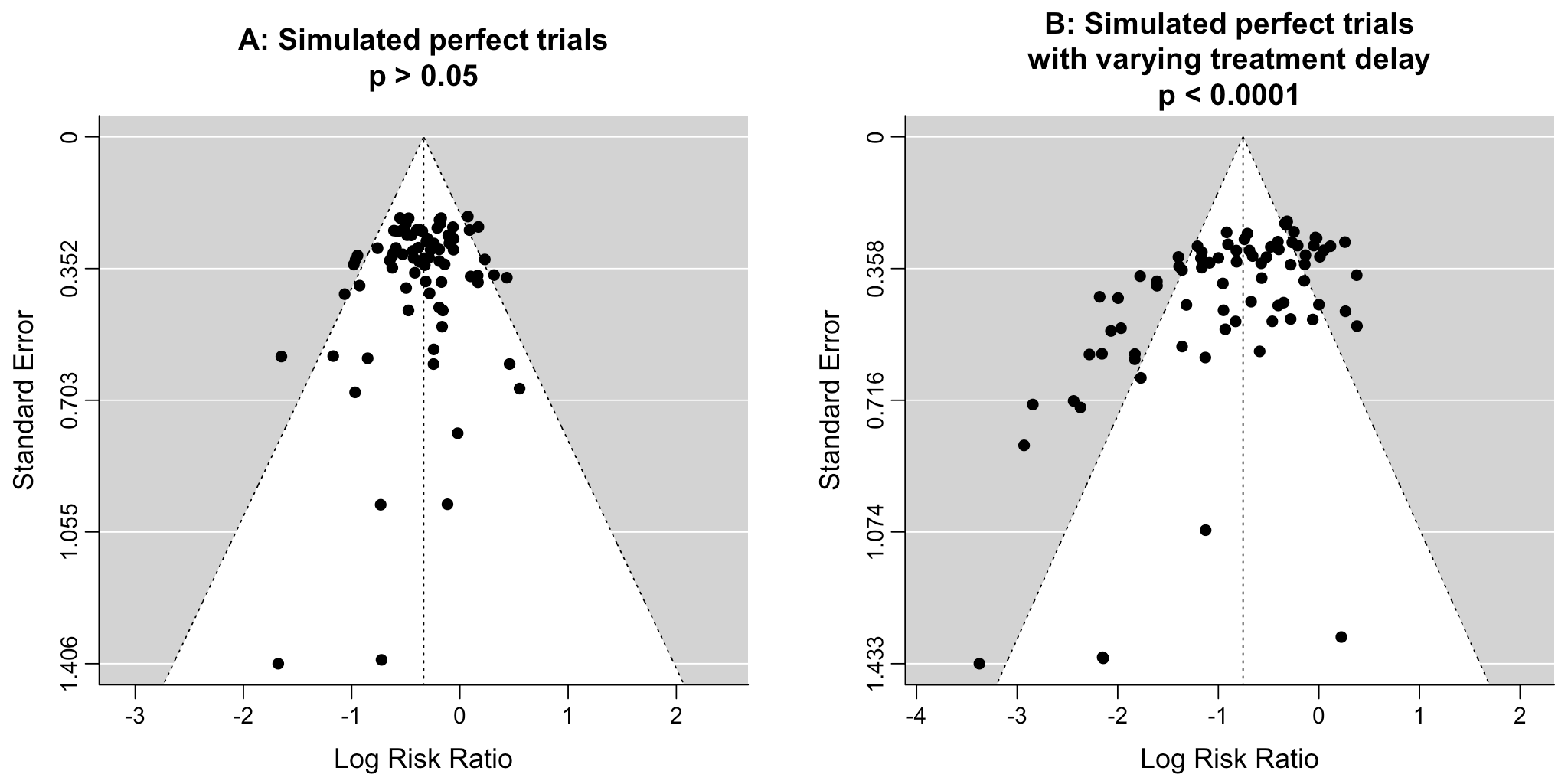
hypothetical perfect trials with no bias. Fig. 28 plot A
shows a funnel plot for a simulation of 80 perfect trials, with random group
sizes, and each patient's outcome randomly sampled (10% control event
probability, and a 30% effect size for treatment). Analysis shows no asymmetry
(p > 0.05). In plot B, we add a single typical variation in COVID-19 treatment
trials — treatment delay. Consider that efficacy varies from 90% for
treatment within 24 hours, reducing to 10% when treatment is delayed 3 days.
In plot B, each trial's treatment delay is randomly selected. Analysis now
shows highly significant asymmetry, p < 0.0001, with six variants of
Egger's test all showing p < 0.05118-125.
Note that these tests fail even though treatment delay is uniformly
distributed. In reality treatment delay is more complex — each trial has
a different distribution of delays across patients, and the distribution
across trials may be biased (e.g., late treatment trials may be more common).
Similarly, many other variations in trials may produce asymmetry, including
dose, administration, duration of treatment, differences in SOC,
comorbidities, age, variants, and bias in design, implementation, analysis,
and reporting.
Fig. 28. Example funnel plot analysis for simulated perfect trials.
Pharmaceutical drug
trials often have conflicts of interest whereby sponsors or trial staff have a
financial interest in the outcome being positive. Nitazoxanide for COVID-19
lacks this because it is off-patent, has multiple manufacturers, and is very low cost.
In contrast, most COVID-19 nitazoxanide trials have been run by
physicians on the front lines with the primary goal of finding the best
methods to save human lives and minimize the collateral damage caused by
COVID-19. While pharmaceutical companies are careful to run trials under
optimal conditions (for example, restricting patients to those most likely to
benefit, only including patients that can be treated soon after onset when
necessary, and ensuring accurate dosing), not all nitazoxanide trials
represent the optimal conditions for efficacy.
Summary statistics from
meta-analysis necessarily lose information. As with all meta-analyses, studies
are heterogeneous, with differences
in treatment delay, treatment regimen, patient demographics, variants,
conflicts of interest, standard of care, and other factors. We provide analyses for specific
outcomes and by treatment delay, and we aim to identify key characteristics in
the forest plots and summaries. Results should be viewed in the context of
study characteristics.
Some analyses classify treatment based on early or late
administration, as done here, while others distinguish between mild, moderate,
and severe cases. Viral load does not indicate degree of symptoms — for
example patients may have a high viral load while being asymptomatic. With
regard to treatments that have antiviral properties, timing of treatment is
critical — late administration may be less helpful regardless of
severity.
Details of treatment delay per patient is often not available.
For example, a study may treat 90% of patients relatively early, but the
events driving the outcome may come from 10% of patients treated very late.
Our 5 day cutoff for early treatment may be too conservative, 5 days may be too late in many cases.
Comparison across treatments is confounded by differences in
the studies performed, for example dose, variants, and conflicts of interest.
Trials with conflicts of interest may use designs better suited to the
preferred outcome.
In some cases, the most serious outcome has very few events,
resulting in lower confidence results being used in pooled analysis, however
the method is simpler and more transparent. This is less critical as the
number of studies increases. Restriction to outcomes with sufficient power may
be beneficial in pooled analysis and improve accuracy when there are few
studies, however we maintain our pre-specified method to avoid any
retrospective changes.
Studies show that combinations of treatments can be highly
synergistic and may result in many times greater efficacy than individual
treatments alone52,89-112 .
Therefore standard of care may be critical and benefits may diminish or
disappear if standard of care does not include certain treatments.
This real-time analysis is constantly updated based on
submissions. Accuracy benefits from widespread review and submission of
updates and corrections from reviewers. Less popular treatments may receive
fewer reviews.
No treatment or intervention is 100% available and
effective for all current and future variants. Efficacy may vary significantly
with different variants and within different populations. All treatments have
potential side effects. Propensity to experience side effects may be predicted
in advance by qualified physicians. We do not provide medical advice. Before
taking any medication, consult a qualified physician who can compare all
options, provide personalized advice, and provide details of risks and
benefits based on individual medical history and situations.
2 of the 14
studies compare against other treatments, which may reduce the effect
seen.
4 of 14 studies
combine treatments. The results of
nitazoxanide
alone may differ.
3 of 11 RCTs use combined treatment.
Other meta-analyses show significant improvements with nitazoxanide for oxygen therapy2 and viral clearance2,3.
SARS-CoV-2 infection and replication involves a complex
interplay of 500+ host and viral proteins and other
factors34-41, providing many therapeutic
targets.
Over 12,000 compounds have been predicted to reduce COVID-19
risk42, either by directly
minimizing infection or replication, by supporting immune system function, or
by minimizing secondary complications.
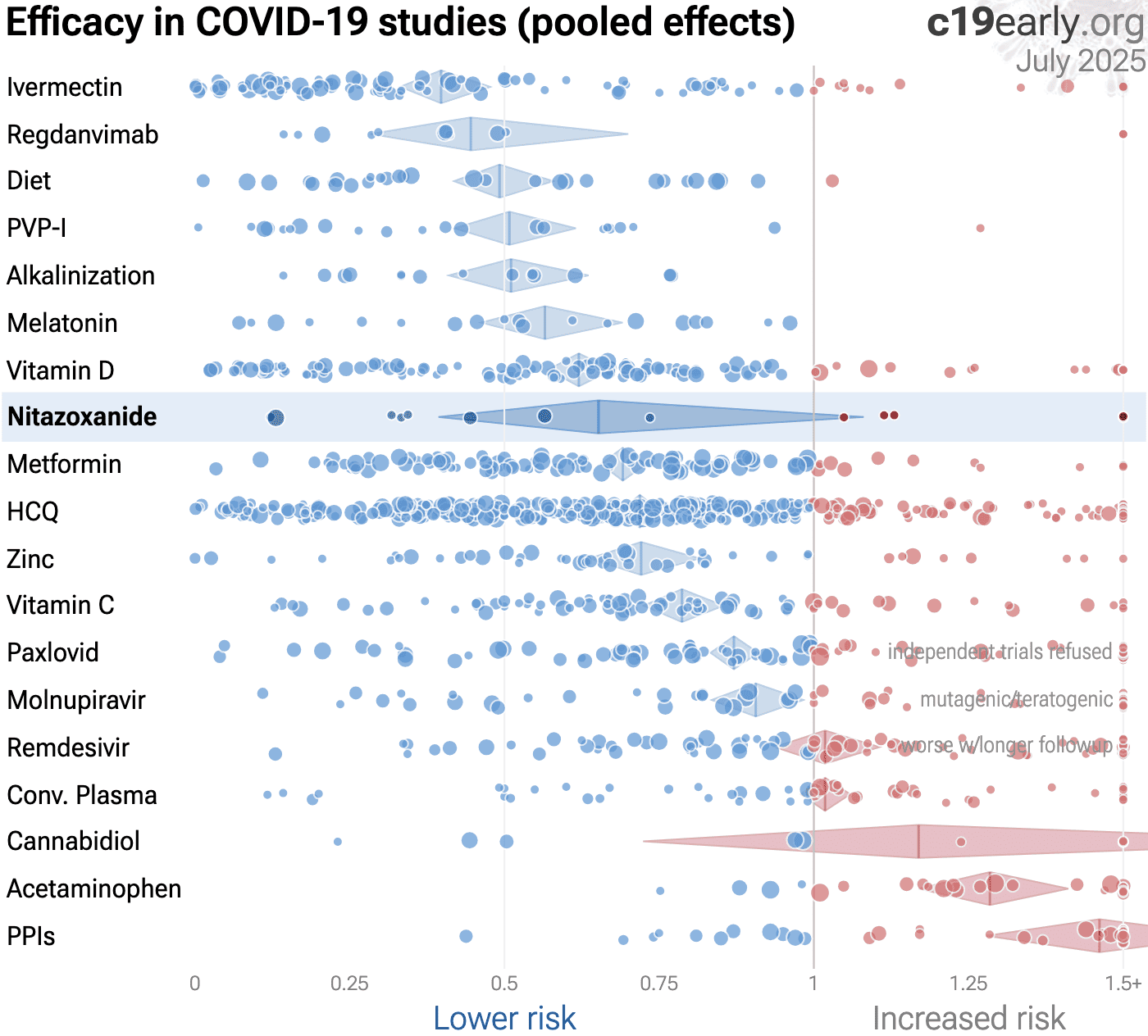
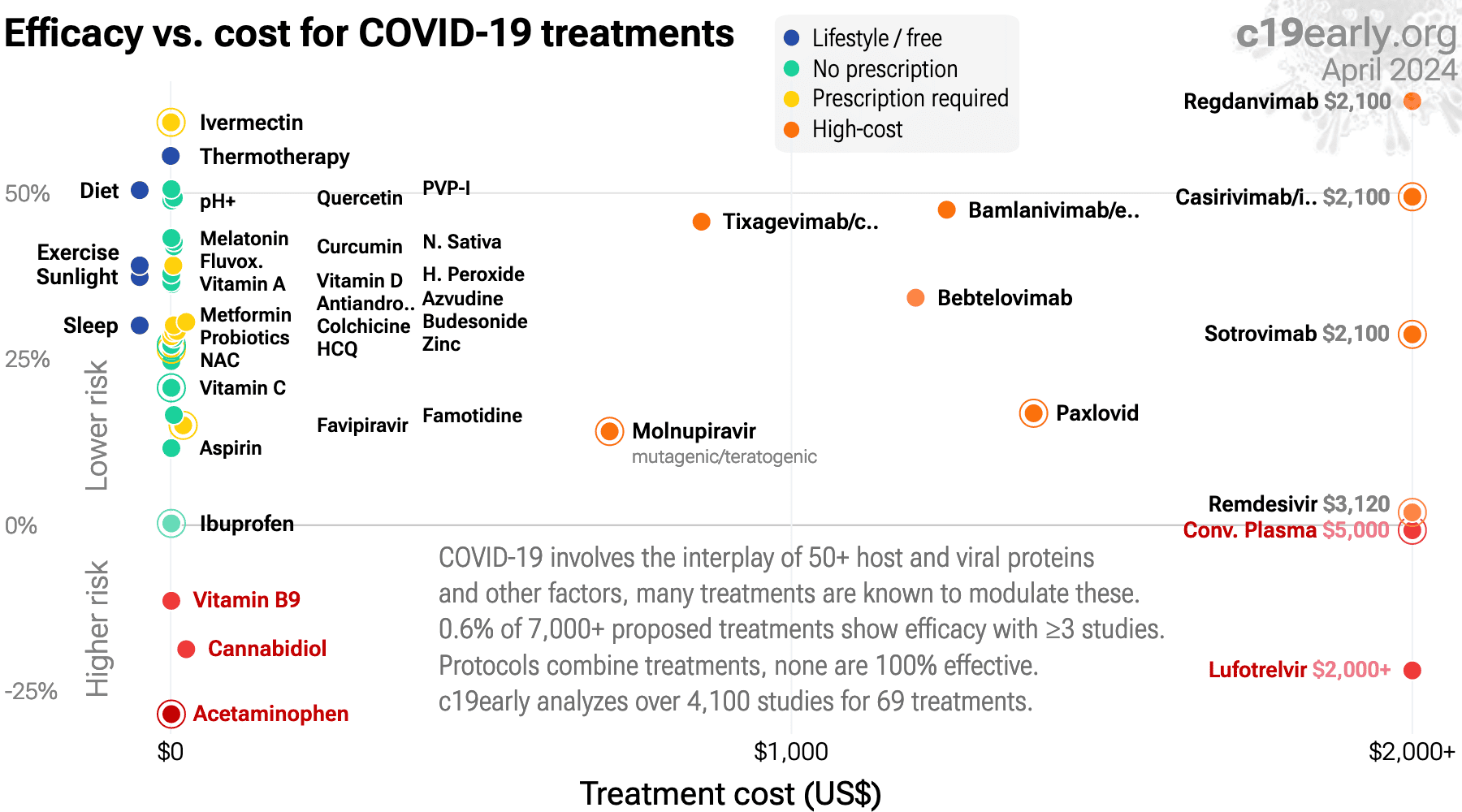
Fig. 29 shows an overview of the results for nitazoxanide
in the context of multiple COVID-19 treatments, and Fig. 30 shows a plot
of efficacy vs. cost for COVID-19 treatments.
Fig. 30. Efficacy vs. cost for COVID-19 treatments.
Significantly lower risk is seen for ventilation and hospitalization. 8 studies from 7 independent teams in 4 countries show significant
benefit.
Meta-analysis using the most serious outcome reported shows
36% [-4‑61%] lower risk, without reaching statistical significance. Results are better for peer-reviewed studies and worse for Randomized Controlled Trials.
Results are consistent with early treatment being more effective than late treatment.
Other meta-analyses show significant improvements with nitazoxanide for oxygen therapy2 and viral clearance2,3.
Contact.
Contact us on X at @CovidAnalysis.
Funding.
We have received no funding or
compensation in any form, and do not accept donations. This is entirely volunteer work.
Conflicts of interest.
We have no conflicts of interest.
We have no affiliation with any pharmaceutical companies, supplement companies, governments, political parties, or advocacy organizations.AI.
We use AI models (Gemini, Grok, Claude, and
ChatGPT) tasked with functioning as additional peer-reviewers to check for errors, suggest
improvements, and review spelling and grammar. Any corrections are manually verified. Our preference for em dashes is independent of AI.Updates.
Our COVID-19 meta-analyses involve the extraction of over 229,000
datapoints from thousands of papers for 227 treatments. We thank the
thousands of scientists, physicians, and other contributors that have provided updates,
suggestions, feedback, and corrections. These are all welcome and can be submitted
at https://c19early.org/nmeta.html.
Dedication.
This work is dedicated to top
evidence-based physicians that worked tirelessly to analyze evidence and greatly reduce
mortality and morbidity during the pandemic. In alphabetical order:
Dr. Thomas J. Borody, Dr. Mary Talley Bowden, Dr. Flavio Cadegiani, Dr. Shankara Chetty,
Dr. Ryan Cole, Dr. George Fareed, Dr. Sabine Hazan, Dr. Pierre Kory, Dr. Tess Lawrie, Dr.
Robert Malone, Dr. Paul Marik, Dr. Peter McCullough, Dr. Didier Raoult, Dr. Harvey Risch,
Dr. Jackie Stone, Dr. Brian Tyson, Dr. Joseph Varon, and Dr. Vladimir Zelenko.
Public domain.
This is a public domain work
distributed in accordance with the Creative Commons CC0 1.0 Universal license, which
dedicates the work to the public domain by waiving all rights worldwide under copyright law.
You can distribute, remix, adapt, and build upon this work in any medium or format,
including for commercial purposes, without asking permission. Referenced material and
third-party images retain any original copyrights or restrictions.
See: https://creativecommons.org/publicdomain/zero/1.0/.
Nitazoxanide for COVID-19
Outcome
Improvement
Relative Risk · 95% CI
00.511.52+
← Nitazoxanide
reduces riskNitazoxanide
increases risk →
reduces riskNitazoxanide
increases risk →
Higher progression with treatment
Not statistically significant · p = 0.092
Trial compares with paracetamol, results vs. placebo may differ
RCT with 591 nitazoxanide/ciclesonide and 557 control patients, up to 7 days from onset, showing higher progression, without statistical significance. Control patients were assigned to paracetamol as needed for fever or pain, however treatment patients were also allowed to take paracetamol as needed for fever or pain.
Nitazoxanide for COVID-19
Outcome
Improvement
Relative Risk · 95% CI
no CI
00.511.52+
← Nitazoxanide
reduces riskNitazoxanide
increases risk →
reduces riskNitazoxanide
increases risk →
Shorter hospitalization and improved viral clearance
p = 0.021 (hospitalization) and p = 0.035 (viral clearance)
RCT with 25 nitazoxanide patients and 25 control patients, showing improved virological and clinical outcomes with treatment.
Authors also perform an in vitro study in Vero E6 cells showing 90% inhibition with 0.5µM, with no cytotoxicity. NCT04348409.
Nitazoxanide for COVID-19
Outcome
Improvement
Relative Risk · 95% CI
00.511.52+
← Nitazoxanide
reduces riskNitazoxanide
increases risk →
reduces riskNitazoxanide
increases risk →
Lower ventilation and hospitalization
p < 0.0001 (ventilation) and p < 0.0001 (hospitalization)
Comparison of HCQ, nitazoxanide, and ivermectin showing similar effectiveness for overall clinical outcomes in COVID-19 when used before seven days of symptoms, and overwhelmingly superior compared to the untreated COVID-19 population, even for those outcomes not influenced by placebo effect, at least when combined with azithromycin, and vitamin C, D and zinc in the majority of the cases. 585 patients with mean treatment delay 2.9 days. There was no hospitalization, mechanical ventilation, or mortality with treatment. Control group 1 was a retrospectively obtained group of untreated patients of the same population.
Nitazoxanide for COVID-19
Outcome
Improvement
Relative Risk · 95% CI
00.511.52+
← Nitazoxanide
reduces riskNitazoxanide
increases risk →
reduces riskNitazoxanide
increases risk →
Lower ICU admission and shorter hospitalization
p < 0.0001 (ICU admission) and p = 0.0065 (hospitalization)
Study compares with HCQ, results vs. placebo may differ
Planned RCT of HCQ vs. HCQ+nitazoxanide which was aborted due to the retracted Surgisphere paper. Authors retrospectively analyze a small set of HCQ vs. nitazoxanide patients (which were protocol deviations in the planned RCT), showing reduced hospitalization time and ICU admission with nitazoxanide.
Nitazoxanide for COVID-19
Outcome
Improvement
Relative Risk · 95% CI
00.511.52+
← Nitazoxanide
reduces riskNitazoxanide
increases risk →
reduces riskNitazoxanide
increases risk →
Slower recovery and worse viral clearance
Not statistically significant · p = 0.42 (Slower recovery) and p = 0.13 (viral clearance)
High COI low-risk patient RCT in South Africa, showing no significant differences with favipiravir plus nitazoxanide. There were no deaths and no COVID-19 hospitalizations for favipiravir plus nitazoxanide. More patients were seropositive at baseline in the treatment arm (28% vs 22%). Favipiravir 1600mg 12-hourly for 1 day, then 600mg 12-hourly for 6 days. Nitazoxanide 1000mg 12-hourly for 7 days.
Nitazoxanide for COVID-19
Outcome
Improvement
Relative Risk · 95% CI
00.511.52+
← Nitazoxanide
reduces riskNitazoxanide
increases risk →
reduces riskNitazoxanide
increases risk →
Improved viral clearance with treatment
p < 0.000001
Non-randomized controlled trial with 62 mild and early moderate patients with home treatment with ivermectin + nitazoxanide + ribavirin + zinc, showing significantly faster viral clearance.
Nitazoxanide for COVID-19
Outcome
Improvement
Relative Risk · 95% CI
primary
00.511.52+
← Nitazoxanide
reduces riskNitazoxanide
increases risk →
reduces riskNitazoxanide
increases risk →
No significant difference in outcomes seen
Small RCT in Nigeria with 31 nitazoxanide and atazanavir/ritonavir patients, and 26 control patients, showing no significant differences with treatment. 4 treatment group patients discontinued treatment due to the size of the tablets. Time from onset is not provided, only time from diagnosis. NACOVID. 14-day course of nitazoxanide (1000 mg b.i.d.) and atazanavir/ritonavir (300/100 mg od). NCT04459286.
Nitazoxanide for COVID-19
Outcome
Improvement
Relative Risk · 95% CI
00.511.52+
← Nitazoxanide
reduces riskNitazoxanide
increases risk →
reduces riskNitazoxanide
increases risk →
Improved viral clearance with nitazoxanide
p = 0.02
RCT with 77 nitazoxanide, 70 sofosbuvir/ledipasvir, and 73 SOC patients in Egypt, showing faster viral clearance with nitazoxanide and with sofosbuvir/ledipasvir. There was no mortality or progression to severe COVID-19 or ICU admission. Nitazoxanide 500mg qid for 14 days. SOC included vitamin C and zinc.
Nitazoxanide for COVID-19
Outcome
Improvement
Relative Risk · 95% CI
00.511.52+
← Nitazoxanide
reduces riskNitazoxanide
increases risk →
reduces riskNitazoxanide
increases risk →
Improved viral clearance with nitazoxanide
p = 0.006
RCT 392 patients, median treatment delay 5 days, showing improved viral recovery at 5 days. Symptom recovery was no different at 5 days, and the treatment arm had two ICU admissions compared to zero for control. There were no serious adverse events.
Nitazoxanide for COVID-19
Outcome
Improvement
Relative Risk · 95% CI
00.511.52+
← Nitazoxanide
reduces riskNitazoxanide
increases risk →
reduces riskNitazoxanide
increases risk →
Faster improvement and higher discharge
p < 0.0001 (improvement) and p = 0.0043 (discharge)
RCT late stage patients with COVID-19 pneumonia, 202 treated with nitazoxanide and 203 placebo patients, showing improved recovery, but no significant difference in mortality.
Nitazoxanide for COVID-19
Outcome
Improvement
Relative Risk · 95% CI
00.511.52+
← Nitazoxanide
reduces riskNitazoxanide
increases risk →
reduces riskNitazoxanide
increases risk →
Lower progression with nitazoxanide
p = 0.021
RCT 1,407 healthcare workers and others at high risk of SARS-CoV-2 exposure, showing no difference in COVID-19 cases (13 in each group). There was lower symptom severity for nitazoxanide and a trend towards shorter illness duration. There is no publication, results are only available on clinicaltrials.gov, posted 3 years after completion (FDA pre-notice of noncompliance181).
Nitazoxanide for COVID-19
Outcome
Improvement
Relative Risk · 95% CI
primary
00.511.52+
← Nitazoxanide
reduces riskNitazoxanide
increases risk →
reduces riskNitazoxanide
increases risk →
Higher mortality and lower hospitalization
Not statistically significant · p = 0.49 (mortality) and p = 0.22 (hospitalization)
RCT with 184 outpatients treated with an extended release formulation of nitazoxanide, and 195 controls, showing lower hospitalization and progression to severe disease with treatment. There was one COVID-19 related death in the treatment arm. 600mg twice daily for five days.
Nitazoxanide for COVID-19
Outcome
Improvement
Relative Risk · 95% CI
00.511.52+
← Nitazoxanide
reduces riskNitazoxanide
increases risk →
reduces riskNitazoxanide
increases risk →
Improved viral clearance with nitazoxanide
Not statistically significant · p = 0.36
Small RCT with 23 nitazoxanide and 13 control patients showing significantly more patients achieved over 35% reduction in viral load from baseline.
120 patient nitazoxanide early treatment RCT with results not reported over 3 years after completion.
The protocol has been published182.
Nitazoxanide for COVID-19
Outcome
Improvement
Relative Risk · 95% CI
primary
00.511.52+
← Nitazoxanide
reduces riskNitazoxanide
increases risk →
reduces riskNitazoxanide
increases risk →
Lower hospitalization and fewer symptomatic cases
Not statistically significant · p = 0.5 (hospitalization) and p = 0.49 (fewer symptomatic cases)
Prophylaxis RCT 828 high-risk participants in South Africa, showing no significant difference with nitazoxanide and sofosbuvir/daclatasvir treatment. FLU-PRO results were available for 74% of the nitazoxanide arm compared to 54% of the control arm.
We perform ongoing searches of PubMed, medRxiv, Europe PMC, ClinicalTrials.gov, The Cochrane
Library, Google Scholar, Research Square, ScienceDirect, Oxford University Press, the
reference lists of other studies and meta-analyses, and submissions to the site c19early.org, which regularly receives notification of studies upon
publication.
Search terms are nitazoxanide and COVID-19 or SARS-CoV-2. Automated searches are performed twice daily, with all matches reviewed for inclusion.
All studies regarding the use of nitazoxanide for COVID-19 that report a comparison with a
control group are included in the main analysis.
Studies with major unexplained data issues, for example major outcome data that is
impossible to be correct with no response from the authors, are excluded.

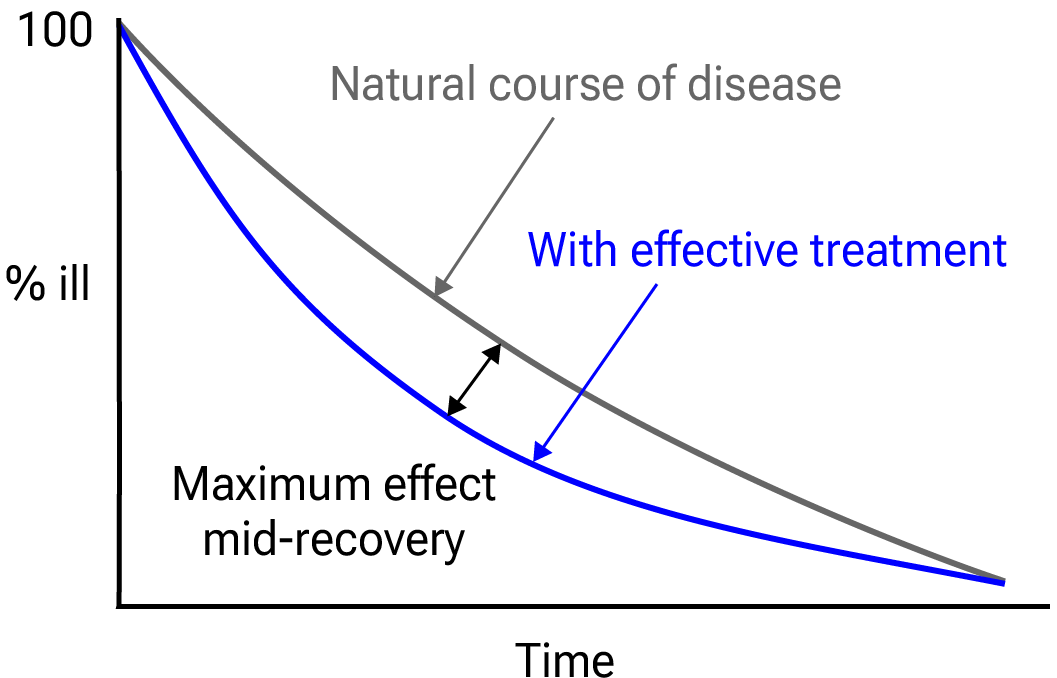
Fig. 31.
Mid-recovery results can more accurately reflect efficacy when almost all patients
recover. Mateja et al. confirm that intermediate viral load results more accurately
reflect hospitalization/death.
We extracted effect sizes and associated data from all studies. If studies report multiple
kinds of effects then the most serious outcome is used in pooled analysis, while
other outcomes are included in the outcome-specific analyses. For example, if effects for
mortality and cases are reported then they are both used in specific outcome analyses,
while mortality is used for pooled analysis.
If symptomatic results are reported at multiple times, we use the latest time, for example
if mortality results are provided at 14 days and 28 days, the results at 28 days have
preference. Mortality alone is preferred over combined outcomes.
Outcomes with zero events in both arms are not used, the next most serious outcome with
one or more events is used. For example, in low-risk populations with no mortality, a
reduction in mortality with treatment is not possible, however a reduction in
hospitalization, for example, is still valuable.
Clinical outcomes are considered more important than viral outcomes.
When basically all patients recover in both treatment and control groups, preference for
viral clearance and recovery is given to results mid-recovery where available. After most
or all patients have recovered there is little or no room for an effective treatment to do
better, however faster recovery is valuable.
An IPD meta-analysis confirms that intermediate viral load reduction is more closely
associated with hospitalization/death than later viral load reduction183.
If only individual symptom data is available, the most serious symptom has
priority, for example difficulty breathing or low SpO2 is more
important than cough.
Forest plots are computed using PythonMeta184 with the DerSimonian and
Laird random-effects model (the fixed effect assumption is not plausible in this case) and
inverse variance weighting.
Results are presented with 95% confidence intervals. Heterogeneity among studies was
assessed using the I2 statistic.
When results provide an odds ratio, we compute the relative risk when possible, or convert
to a relative risk according to Zhang et al.
Reported confidence intervals and p-values are used when available, and adjusted
values are used when provided. If multiple types of adjustments are reported propensity
score matching and multivariable regression has preference over propensity score matching
or weighting, which has preference over multivariable regression. Adjusted results have
preference over unadjusted results for a more serious outcome when the adjustments
significantly alter results.
When needed, conversion between reported p-values and confidence intervals followed
Altman, Altman (B), and Fisher's exact test was used to calculate
p-values for event data. If continuity correction for zero values is required, we
use the reciprocal of the opposite arm with the sum of the correction factors equal to
1188.
Results are expressed with RR < 1.0 favoring treatment, and using the risk of a negative
outcome when applicable (for example, the risk of death rather than the risk of survival).
If studies only report relative continuous values such as relative times, the ratio of the
time for the treatment group versus the time for the control group is used. Calculations
are done in Python (3.15.2) with
scipy (1.18.1), pythonmeta (1.26), numpy (2.5.4), statsmodels (0.15.0), and plotly (6.9.0).
Mixed-effects meta-regression results are computed with R (4.4.0) using the metafor
(4.6-0) and rms (6.8-0) packages, and using the most serious sufficiently powered outcome.
For all statistical tests, a p-value less than 0.05 was considered statistically
significant.
Grobid 0.8.2 is used to parse PDF documents.
When evaluating potential effect modification across groups, we use an
interaction test as described by Altman (C) et al. We compared the log-transformed
relative risks using a z-test, deriving the standard error of the difference from
the 95% confidence intervals. A two-sided interaction p-value of < 0.05 was
considered a statistically significant difference in treatment effect between the
groups.
Cochrane RoB 2/ROBINS-I are often used to evaluate studies, and have the advantage of
providing standardized rules that can be applied with minimal understanding of the domain
and study. However, the rules do not account for many real-world issues, often
overemphasize or underemphasize others, and studies show low inter-rater
reliability195.
Certain domains are more applicable for these tools, however the time-sensitive nature of
a pandemic, with significant mortality for every day of delay in evidence assessment, and
the characteristics of COVID-19 make them inappropriate for this domain.
This can be demonstrated with examples where expert RoB 2/ROBINS-I ratings do not match
reality for COVID-19. Popp et al. use RoB 2 to classify Reis et al. as low
risk of bias, however this is the opposite of reality—the trial not only has very
high risk of bias, but has very high actual known bias, refusing to release data despite
pledging to, reporting multiple impossible numbers, having blinding and randomization
failure, and many other issues197.
Axfors et al. use RoB 2 to classify Horby et al. as low risk of bias, however
this is the opposite of reality—the very late treatment and excessive dosage used
produces results with no relevance to recommended usage.
HCQ shows poor results with
late treatment and excessive dosage, and the combination shows harmC.
Hempenius et al. use ROBINS-I to classify 33 studies for HCQ. The two rated as having
the lowest risk of bias193,194 are far from the most informative. Both
involve very late treatment, providing no information on recommended usage, and ROBINS-I
does a very poor job of accounting for the impact of confounding factorsD.
Our quality evaluation focuses on known issues and bias, and the potential
impact on outcomes, rather than just the risk of bias.
The estimated potential impact of each confounding factor, and the direction of the impact
is considered. For example, consider a study that shows significantly lower risk, the
value of the study varies significantly if confounding points to an underestimate or an
overestimate of efficacy. In one case, the real effect may be null, while the other case
provides stronger evidence of efficacy (which may be greater than the study shows).
Analysis focusing on the risk of bias, while simpler, may penalize studies for theoretical
or technical issues that have no or minimal impact on outcomes. Analysis also depends on
the outcome, for example certain issues are less relevant for objective outcomes such as
mortality.
Inaccurate penalization, and inaccurate high-quality evaluation in the face of known major
issues affecting outcomes, increases in significance during a pandemic when immediate
recognition of new evidence is critical, and when considering all global studies, as
required during a pandemic. Investigators in other countries may have different customs
for design, analysis, and reporting, and different English language skills, however they
may not be less diligent or have greater bias.
Investigators in lower-pharmaceutical-profit countries may have lower bias towards
profitable interventions.
We have classified studies as
early treatment if most patients are not already at a severe stage at the time of
treatment (for example based on oxygen status or lung involvement), and treatment started
within 5 days of the onset of symptoms. If studies contain a mix of early treatment and
late treatment patients, we consider the treatment time of patients contributing most to
the events (for example, consider a study where most patients are treated early but late
treatment patients are included, and all mortality events were observed with late
treatment patients).
We note that a shorter time may be preferable. Antivirals are typically only considered
effective when used within a shorter timeframe, for example 0-36 or 0-48 hours for
oseltamivir, with longer delays not being effective74,75.
This is a living analysis and is updated regularly.
We received no funding, this research is done in our spare time.
We have no affiliation with any pharmaceutical companies, supplement companies, governments, political parties, or advocacy organizations.
A summary of study results is below. Please submit
updates and corrections at https://c19early.org/nmeta.html.
Effect extraction follows pre-specified rules as detailed above
and gives priority to more serious outcomes.
For pooled analyses, the first (most serious) outcome is used, which may
differ from the effect a paper focuses on.
Other outcomes are used in outcome specific analyses.
| ANTICOV, 2/28/2022, Randomized Controlled Trial, multiple countries, preprint, 1 author, this trial compares with another treatment - results may be better when compared to placebo, this trial uses multiple treatments in the treatment arm (combined with ciclesonide) - results of individual treatments may vary, trial NCT04920838 (history) (ANTICOV). | risk of progression, 104.3% higher, RR 2.04, p = 0.09, treatment 16 of 591 (2.7%), control 7 of 557 (1.3%), adjusted per study, odds ratio converted to relative risk, SpO2 ≤93 or death, day 21, Table 13. |
| Cadegiani, 11/4/2020, prospective, Brazil, peer-reviewed, 4 authors, average treatment delay 2.9 days. | risk of death, 87.8% lower, RR 0.12, p = 0.08, treatment 0 of 357 (0.0%), control 2 of 137 (1.5%), NNT 68, relative risk is not 0 because of continuity correction due to zero events (with reciprocal of the contrasting arm), control group 1. |
| risk of mechanical ventilation, 97.0% lower, RR 0.03, p < 0.001, treatment 0 of 357 (0.0%), control 9 of 137 (6.6%), NNT 15, relative risk is not 0 because of continuity correction due to zero events (with reciprocal of the contrasting arm), control group 1. | |
| risk of hospitalization, 99.0% lower, RR 0.01, p < 0.001, treatment 0 of 357 (0.0%), control 27 of 137 (19.7%), NNT 5.1, relative risk is not 0 because of continuity correction due to zero events (with reciprocal of the contrasting arm), control group 1. | |
| Chandiwana, 11/1/2022, Randomized Controlled Trial, South Africa, peer-reviewed, mean age 34.9, 16 authors, study period 3 September, 2020 - 23 August, 2021, average treatment delay 2.6 days, this trial uses multiple treatments in the treatment arm (combined with favipiravir) - results of individual treatments may vary, trial NCT04532931 (history). | risk of progression, 13.0% higher, OR 1.13, p = 0.89, treatment 37, control 39, adjusted per study, day 28, Table S9, RR approximated with OR. |
| time to WHO zero score, 23.5% higher, HR 1.23, p = 0.42, treatment 37, control 39, inverted to make HR<1 favor treatment, Cox proportional hazards, Table S10. | |
| risk of no viral clearance, 66.7% higher, RR 1.67, p = 0.13, treatment 27 of 37 (73.0%), control 25 of 38 (65.8%), adjusted per study, inverted to make RR<1 favor treatment. | |
| Elalfy, 2/16/2021, retrospective, Egypt, peer-reviewed, 15 authors, this trial uses multiple treatments in the treatment arm (combined with ivermectin, ribavirin, and zinc) - results of individual treatments may vary. | risk of no viral clearance, 86.9% lower, RR 0.13, p < 0.001, treatment 7 of 62 (11.3%), control 44 of 51 (86.3%), NNT 1.3, day 15. |
| risk of no viral clearance, 58.1% lower, RR 0.42, p < 0.001, treatment 26 of 62 (41.9%), control 51 of 51 (100.0%), NNT 1.7, day 7. | |
| Medhat, 5/6/2022, Randomized Controlled Trial, Egypt, peer-reviewed, 20 authors, study period July 2020 - October 2021, trial NCT04498936 (history). | risk of no viral clearance, 55.5% lower, HR 0.44, p = 0.02, treatment 77, control 73, inverted to make HR<1 favor treatment, Cox proportional hazards. |
| Rocco, 10/23/2020, Randomized Controlled Trial, Brazil, peer-reviewed, 29 authors, study period 8 June, 2020 - 20 August, 2020, average treatment delay 5.0 days. | risk of ICU admission, 404.1% higher, RR 5.04, p = 0.24, treatment 2 of 194 (1.0%), control 0 of 198 (0.0%), continuity correction due to zero event (with reciprocal of the contrasting arm), table S3. |
| risk of hospitalization, 2.1% higher, RR 1.02, p = 1.00, treatment 5 of 194 (2.6%), control 5 of 198 (2.5%), table S3. | |
| risk of no recovery, 15.8% higher, RR 1.16, p = 0.37, treatment 59 of 194 (30.4%), control 52 of 198 (26.3%), day 5. | |
| relative viral load, 12.1% better, RR 0.88, p = 0.006, treatment 194, control 198, day 5. | |
| risk of no viral clearance, 14.3% lower, RR 0.86, p = 0.009, treatment 136 of 194 (70.1%), control 162 of 198 (81.8%), NNT 8.5, day 5. | |
| Rossignol, 4/20/2021, Double Blind Randomized Controlled Trial, USA, peer-reviewed, 5 authors, study period August 2020 - February 2021, average treatment delay 1.83 days, trial NCT04486313 (history). | risk of death, 206.0% higher, RR 3.06, p = 0.49, treatment 1 of 184 (0.5%), control 0 of 195 (0.0%), continuity correction due to zero event (with reciprocal of the contrasting arm), COVID-19 deaths. |
| risk of hospitalization, 78.8% lower, RR 0.21, p = 0.22, treatment 1 of 184 (0.5%), control 5 of 195 (2.6%), NNT 49. | |
| risk of severe case, 84.9% lower, RR 0.15, p = 0.07, treatment 1 of 184 (0.5%), control 7 of 195 (3.6%), NNT 33. | |
| risk of severe case, 83.9% lower, RR 0.16, p = 0.07, treatment 1 of 112 (0.9%), control 7 of 126 (5.6%), NNT 21, high-risk subgroup. | |
| time to sustained recovery, 7.3% higher, relative time 1.07, p = 0.88, treatment 184, control 195, primary outcome. | |
| Silva, 3/5/2021, Single Blind Randomized Controlled Trial, Argentina, peer-reviewed, 12 authors, study period July 2020 - December 2020, trial NCT04463264 (history). | relative mean improvement in Ct, 26.5% better, RR 0.74, p = 0.36, treatment 23, control 13. |
| risk of viral load reduction < 35% at day 7, 38.3% lower, RR 0.62, p = 0.08, treatment 12 of 23 (52.2%), control 11 of 13 (84.6%), NNT 3.1. | Smith, 3/21/2023, Double Blind Randomized Controlled Trial, Mexico, trial NCT04918927 (history) (FANTAZE). | 120 patient RCT with results unknown and over 3 years late. |
Effect extraction follows pre-specified rules as detailed above
and gives priority to more serious outcomes.
For pooled analyses, the first (most serious) outcome is used, which may
differ from the effect a paper focuses on.
Other outcomes are used in outcome specific analyses.
| Blum, 1/22/2021, Double Blind Randomized Controlled Trial, Brazil, peer-reviewed, 17 authors, study period 20 May, 2020 - 21 September, 2020, trial NCT04348409 (history). | risk of death, 66.7% lower, RR 0.33, p = 0.25, treatment 2 of 25 (8.0%), control 6 of 25 (24.0%), NNT 6.3. |
| risk of mechanical ventilation, 62.5% lower, RR 0.38, p = 0.17, treatment 3 of 25 (12.0%), control 8 of 25 (32.0%), NNT 5.0. | |
| hospitalization time, 55.7% lower, relative time 0.44, p = 0.02, treatment 25, control 25. | |
| risk of no viral clearance, 89.8% lower, RR 0.10, p = 0.03, treatment 0 of 23 (0.0%), control 4 of 19 (21.1%), NNT 4.8, relative risk is not 0 because of continuity correction due to zero events (with reciprocal of the contrasting arm), day 21. | |
| Calderón, 11/23/2021, retrospective, Mexico, peer-reviewed, 7 authors, this trial compares with another treatment - results may be better when compared to placebo. | risk of death, 68.2% lower, RR 0.32, p = 0.38, treatment 1 of 17 (5.9%), control 5 of 27 (18.5%), NNT 7.9. |
| risk of mechanical ventilation, 86.7% lower, RR 0.13, p = 0.15, treatment 0 of 17 (0.0%), control 4 of 27 (14.8%), NNT 6.8, relative risk is not 0 because of continuity correction due to zero events (with reciprocal of the contrasting arm). | |
| risk of ICU admission, 59.3% lower, RR 0.41, p < 0.001, treatment 0 of 17 (0.0%), control 16 of 27 (59.3%), NNT 1.7, adjusted per study. | |
| hospitalization time, 51.8% lower, relative time 0.48, p = 0.006, treatment 17, control 27. | |
| Fowotade, 2/4/2022, Randomized Controlled Trial, Nigeria, preprint, 18 authors, study period 25 November, 2020 - 20 April, 2021, this trial uses multiple treatments in the treatment arm (combined with atazanavir/ritonavir) - results of individual treatments may vary, trial NCT04459286 (history). | risk of no recovery, 11.4% higher, HR 1.11, p = 0.72, treatment 31, control 26, inverted to make HR<1 favor treatment, time to clinical improvement, Cox proportional hazards, primary outcome. |
| risk of no recovery, 86.9% higher, HR 1.87, p = 0.10, treatment 31, control 26, inverted to make HR<1 favor treatment, time to symptom resolution, Cox proportional hazards. | |
| viral load, 5.2% lower, relative load 0.95, p = 0.92, treatment 31, control 26, viral load change from days 2 to 28. | |
| Rocco (B), 4/13/2022, Double Blind Randomized Controlled Trial, placebo-controlled, Brazil, peer-reviewed, median age 56.0, 37 authors, study period 20 April, 2020 - 2 October, 2020, trial NCT04561219 (history). | risk of death, 4.9% higher, RR 1.05, p = 0.94, treatment 6 of 202 (3.0%), control 5 of 203 (2.5%), adjusted per study, odds ratio converted to relative risk, multivariable, day 14. |
| risk of ICU admission, 30.5% lower, RR 0.69, p = 0.18, treatment 20 of 202 (9.9%), control 30 of 203 (14.8%), NNT 21, adjusted per study, odds ratio converted to relative risk, multivariable, day 14. | |
| risk of oxygen therapy, 39.7% lower, RR 0.60, p = 0.06, treatment 22 of 202 (10.9%), control 33 of 203 (16.3%), NNT 19, adjusted per study, odds ratio converted to relative risk, multivariable, day 14. | |
| time to improvement, 63.6% lower, HR 0.36, p < 0.001, treatment 202, control 203, inverted to make HR<1 favor treatment, Kaplan-Meier. | |
| improvement, 34.2% better, OR 0.66, p = 0.14, treatment 202, control 203, adjusted per study, inverted to make OR<1 favor treatment, multivariable, day 14, RR approximated with OR. | |
| time to discharge, 27.0% lower, HR 0.73, p = 0.004, treatment 202, control 203, inverted to make HR<1 favor treatment, Kaplan-Meier. | |
| discharge, 8.3% lower, OR 0.92, p = 0.82, treatment 202, control 203, adjusted per study, inverted to make OR<1 favor treatment, multivariable, day 14, RR approximated with OR. |
Effect extraction follows pre-specified rules as detailed above
and gives priority to more serious outcomes.
For pooled analyses, the first (most serious) outcome is used, which may
differ from the effect a paper focuses on.
Other outcomes are used in outcome specific analyses.
| Romark, 6/26/2024, Double Blind Randomized Controlled Trial, placebo-controlled, USA, preprint, 1 author, trial NCT04359680 (history). | risk of progression, 43.5% lower, RR 0.57, p = 0.02, treatment mean 1.3 (±0.95) n=13, control mean 2.3 (±1.11) n=13. |
| time to perform usual activities, 50.3% lower, RR 0.50, p = 0.10, treatment mean 8.2 (±11.73) n=13, control mean 16.5 (±12.72) n=13. | |
| time to usual health, 32.3% lower, RR 0.68, p = 0.32, treatment mean 13.2 (±16.88) n=13, control mean 19.5 (±14.58) n=13. | |
| acute respiratory illness time, 27.5% lower, RR 0.72, p = 0.49, treatment mean 10.0 (±15.52) n=13, control mean 13.8 (±12.05) n=13. | |
| risk of case, 2.5% lower, RR 0.97, p = 1.00, treatment 13 of 629 (2.1%), control 13 of 613 (2.1%), NNT 1854. | |
| Sokhela, 8/12/2022, Randomized Controlled Trial, South Africa, peer-reviewed, median age 24.0, 11 authors, study period December 2020 - January 2022, trial NCT04561063 (history) (COVER). | risk of death, 65.6% lower, RR 0.34, p = 1.00, treatment 0 of 240 (0.0%), control 1 of 265 (0.4%), NNT 265, relative risk is not 0 because of continuity correction due to zero events (with reciprocal of the contrasting arm). |
| risk of hospitalization, 79.2% lower, RR 0.21, p = 0.50, treatment 0 of 240 (0.0%), control 2 of 265 (0.8%), NNT 132, relative risk is not 0 because of continuity correction due to zero events (with reciprocal of the contrasting arm). | |
| risk of symptomatic case, 17.0% lower, RR 0.83, p = 0.49, treatment 23 of 240 (9.6%), control 37 of 265 (14.0%), incidence rate ratio . | |
| risk of case, 21.0% higher, RR 1.21, p = 0.67, treatment 23 of 240 (9.6%), control 37 of 265 (14.0%), incidence rate ratio , primary outcome. |

Viral infection and replication involves attachment, entry, uncoating and release, genome replication and transcription, translation and protein processing, assembly and budding, and release. Each step can be disrupted by therapeutics.
Monoclonal antibodies were
previously included. Other treatments such as dexamethasone, tocilizumab, and baricitinib
were recommended for late stage hospitalized patients.
When administered late in infection, HCQ may enhance viral egress by further increasing
lysosomal pH beyond the effect of ORF3a's water channel activity, thereby promoting
lysosomal exocytosis, inactivating degradative enzymes, and facilitating the release of
SARS-CoV-2 particles into the extracellular environment190,191.
Research also suggests potential cardioprotective effects at lower doses, but
cardiotoxicity with excessive dosage192. Bobrowski et al. also
indicate negative effects if HCQ and remdesivir are combined.
Peters (B) et al. is subject to confounding by calendar-time (SOC evolved rapidly early in
the pandemic, the linear covariate does not reflect non-linear SOC changes and hospital
specific effects), hospital type (non-treatment hospitals were tertiary university
centers), confounding by indication (4/7 hospitals initiated treatment on deterioration),
immortal-time bias for as-treated (exposure assigned after baseline), significant
differences for other experimental treatments, potential overadjustment from collider bias
(steroid use and indication bias), limited baseline severity information, differences in
hospice referral propensity across hospitals, unadjusted difference in time from onset to
admission, difference in PCR positivity, and other factors.
Mahévas et al. is subject to confounding by hospital (treatment highly dependent on
the hospital, different SOC/ICU transfer practices, not included in PS), immortal time
(only partly addressed in sensitivity analysis), co-treatment differences, calendar-time
(SOC evolved rapidly early in the pandemic), binary coding for age (age ≥65 despite steep
age-risk gradient), residual imbalance (variables dropped from PS), a composite outcome
dependent on hospital triage/capacity, and other factors.
Smith et al., Favipiravir and/or Nitazoxanide: a Randomized, Double-blind, Placebo-controlled Trial of Early Antiviral Therapy in COVID-19 (FANTAZE), NCT04918927, clinicaltrials.gov/study/NCT04918927.
Abuelazm et al., The Effect of Nitazoxanide on the Clinical Outcomes in Patients with COVID-19: A Systematic Review and Meta-Analysis of Randomized Controlled Trials, Clinical Drug Investigation, doi:10.1007/s40261-022-01213-y.
Weng et al., Clinical outcomes, virological efficacy and safety of nitazoxanide in the treatment of patients with COVID-19: a systematic review and meta-analysis of randomized controlled trials, Expert Review of Anti-infective Therapy, doi:10.1080/14787210.2022.2142117.
Ryu et al., Fibrin drives thromboinflammation and neuropathology in COVID-19, Nature, doi:10.1038/s41586-024-07873-4.
Rong et al., Persistence of spike protein at the skull-meninges-brain axis may contribute to the neurological sequelae of COVID-19, Cell Host & Microbe, doi:10.1016/j.chom.2024.11.007.
Yang et al., SARS-CoV-2 infection causes dopaminergic neuron senescence, Cell Stem Cell, doi:10.1016/j.stem.2023.12.012.
Scardua-Silva et al., Microstructural brain abnormalities, fatigue, and cognitive dysfunction after mild COVID-19, Scientific Reports, doi:10.1038/s41598-024-52005-7.
Hampshire et al., Cognition and Memory after Covid-19 in a Large Community Sample, New England Journal of Medicine, doi:10.1056/NEJMoa2311330.
Duloquin et al., Is COVID-19 Infection a Multiorganic Disease? Focus on Extrapulmonary Involvement of SARS-CoV-2, Journal of Clinical Medicine, doi:10.3390/jcm13051397.
Sodagar et al., Pathological Features and Neuroinflammatory Mechanisms of SARS-CoV-2 in the Brain and Potential Therapeutic Approaches, Biomolecules, doi:10.3390/biom12070971.
Sagar et al., COVID-19-associated cerebral microbleeds in the general population, Brain Communications, doi:10.1093/braincomms/fcae127.
Verma et al., Persistent Neurological Deficits in Mouse PASC Reveal Antiviral Drug Limitations, bioRxiv, doi:10.1101/2024.06.02.596989.
Panagea et al., Neurocognitive Impairment in Long COVID: A Systematic Review, Archives of Clinical Neuropsychology, doi:10.1093/arclin/acae042.
Ariza et al., COVID-19: Unveiling the Neuropsychiatric Maze—From Acute to Long-Term Manifestations, Biomedicines, doi:10.3390/biomedicines12061147.
Vashisht et al., Neurological Complications of COVID-19: Unraveling the Pathophysiological Underpinnings and Therapeutic Implications, Viruses, doi:10.3390/v16081183.
Ahmad et al., Neurological Complications and Outcomes in Critically Ill Patients With COVID-19: Results From International Neurological Study Group From the COVID-19 Critical Care Consortium, The Neurohospitalist, doi:10.1177/19418744241292487.
Wang et al., SARS-CoV-2 membrane protein induces neurodegeneration via affecting Golgi-mitochondria interaction, Translational Neurodegeneration, doi:10.1186/s40035-024-00458-1.
Freitas et al., Central nervous system and systemic inflammatory networks associated with acute neurological outcomes in COVID-19, Scientific Reports, doi:10.1038/s41598-025-08632-9.
Lu et al., Risk of neuropsychiatric and related conditions associated with SARS-CoV-2 infection: a difference-in-differences analysis, Nature Communications, doi:10.1038/s41467-025-61961-1.
Jachman-Kapułka et al., Cross-Section of Neurological Manifestations Among SARS-CoV-2 Omicron Subvariants—Single-Center Study, Brain Sciences, doi:10.3390/brainsci14111161.
Beckman et al., SARS-CoV-2 infects neurons and induces neuroinflammation in a non-human primate model of COVID-19, Cell Reports, doi:10.1016/j.celrep.2022.111573.
Eberhardt et al., SARS-CoV-2 infection triggers pro-atherogenic inflammatory responses in human coronary vessels, Nature Cardiovascular Research, doi:10.1038/s44161-023-00336-5.
Van Tin et al., Spike Protein of SARS-CoV-2 Activates Cardiac Fibrogenesis through NLRP3 Inflammasomes and NF-κB Signaling, Cells, doi:10.3390/cells13161331.
Borka Balas et al., COVID-19 and Cardiac Implications—Still a Mystery in Clinical Practice, Reviews in Cardiovascular Medicine, doi:10.31083/j.rcm2405125.
AlTaweel et al., An In-Depth Insight into Clinical, Cellular and Molecular Factors in COVID19-Associated Cardiovascular Ailments for Identifying Novel Disease Biomarkers, Drug Targets and Clinical Management Strategies, Archives of Microbiology & Immunology, doi:10.26502/ami.936500177.
Saha et al., COVID-19 beyond the lungs: Unraveling its vascular impact and cardiovascular complications—mechanisms and therapeutic implications, Science Progress, doi:10.1177/00368504251322069.
Yin et al., COVID-19: a vascular nightmare unfolding, Frontiers in Immunology, doi:10.3389/fimmu.2025.1593885.
Bruno et al., Accelerated vascular ageing after COVID-19 infection: the CARTESIAN study, European Heart Journal, doi:10.1093/eurheartj/ehaf430.
Abiri et al., The silent legacy of COVID-19: exploring genomic instability in long-term COVID-19 survivors, BMC Infectious Diseases, doi:10.1186/s12879-025-11419-y.
Gioia et al., SARS-CoV-2 infection induces DNA damage, through CHK1 degradation and impaired 53BP1 recruitment, and cellular senescence, Nature Cell Biology, doi:10.1038/s41556-023-01096-x.
Doğan et al., Clinical Investigation of Leukocyte DNA Damage in COVID-19 Patients, Current Issues in Molecular Biology, doi:10.3390/cimb45020062.
Rueda-Torres et al., Longitudinal Assessment of DNA Damage in PBMCs From Hospitalized COVID‐19 Patients via Alkaline Comet Assay, Environmental and Molecular Mutagenesis, doi:10.1002/em.70055.
Trender et al., Changes in memory and cognition during the SARS-CoV-2 human challenge study, eClinicalMedicine, doi:10.1016/j.eclinm.2024.102842.
Dugied et al., Multimodal SARS-CoV-2 interactome sketches the virus-host spatial organization, Communications Biology, doi:10.1038/s42003-025-07933-z.
Malone et al., Structures and functions of coronavirus replication–transcription complexes and their relevance for SARS-CoV-2 drug design, Nature Reviews Molecular Cell Biology, doi:10.1038/s41580-021-00432-z.
Murigneux et al., Proteomic analysis of SARS-CoV-2 particles unveils a key role of G3BP proteins in viral assembly, Nature Communications, doi:10.1038/s41467-024-44958-0.
Lv et al., Host proviral and antiviral factors for SARS-CoV-2, Virus Genes, doi:10.1007/s11262-021-01869-2.
Lui et al., Nsp1 facilitates SARS-CoV-2 replication through calcineurin-NFAT signaling, Virology, doi:10.1128/mbio.00392-24.
Niarakis et al., Drug-target identification in COVID-19 disease mechanisms using computational systems biology approaches, Frontiers in Immunology, doi:10.3389/fimmu.2023.1282859.
Katiyar et al., SARS-CoV-2 Assembly: Gaining Infectivity and Beyond, Viruses, doi:10.3390/v16111648.
Wu et al., Decoding the genome of SARS-CoV-2: a pathway to drug development through translation inhibition, RNA Biology, doi:10.1080/15476286.2024.2433830.
web.archive.org, web.archive.org/web/20211117052139/https://astralcodexten.substack.com/p/ivermectin-much-more-than-you-wanted.
Hayward et al., Ivermectin for COVID-19 in adults in the community (PRINCIPLE): an open, randomised, controlled, adaptive platform trial of short- and longer-term outcomes, Journal of Infection, doi:10.1016/j.jinf.2024.106130.
Xu et al., Two-way pharmacodynamic modeling of drug combinations and its application to pairs of repurposed Ebola and SARS-CoV-2 agents, Antimicrobial Agents and Chemotherapy, doi:10.1128/aac.01015-23.
Rajoli et al., Dose prediction for repurposing nitazoxanide in SARS‐CoV‐2 treatment or chemoprophylaxis, British Journal of Clinical Pharmacology, doi:10.1111/bcp.14619.
Abd Elsalam et al., Anti-COVID-19 activity and simple HPLC method for concurrent detection of repurposed drugs in novel binary mixtures, AMB Express, doi:10.1186/s13568-026-02030-8.
Riccio et al., Impairment of SARS-CoV-2 spike glycoprotein maturation and fusion activity by nitazoxanide: an effect independent of spike variants emergence, Cellular and Molecular Life Sciences, doi:10.1007/s00018-022-04246-w.
Miorin et al., The oral drug nitazoxanide restricts SARS-CoV-2 infection and attenuates disease pathogenesis in Syrian hamsters, bioRxiv, doi:10.1101/2022.02.08.479634.
Bobrowski et al., Synergistic and Antagonistic Drug Combinations against SARS-CoV-2, Molecular Therapy, doi:10.1016/j.ymthe.2020.12.016.
Zeraatkar et al., Consistency of covid-19 trial preprints with published reports and impact for decision making: retrospective review, BMJ Medicine, doi:10.1136/bmjmed-2022-0003091.
Davidson et al., No evidence of important difference in summary treatment effects between COVID-19 preprints and peer-reviewed publications: a meta-epidemiological study, Journal of Clinical Epidemiology, doi:10.1016/j.jclinepi.2023.08.011.
Jadad et al., Randomized Controlled Trials: Questions, Answers, and Musings, Second Edition, doi:10.1002/9780470691922.
Gøtzsche, P., Bias in double-blind trials, Doctoral Thesis, University of Copenhagen, www.scientificfreedom.dk/2023/05/16/bias-in-double-blind-trials-doctoral-thesis/.
Als-Nielsen et al., Association of Funding and Conclusions in Randomized Drug Trials, JAMA, doi:10.1001/jama.290.7.921.
Bekelman et al., Scope and Impact of Financial Conflicts of Interest in Biomedical Research, JAMA, doi:10.1001/jama.289.4.454.
Lundh et al., Industry sponsorship and research outcome, Cochrane Database of Systematic Reviews, doi:10.1002/14651858.MR000033.pub3.
Concato et al., Randomized, Controlled Trials, Observational Studies, and the Hierarchy of Research Designs, New England Journal of Medicine, doi:10.1056/NEJM200006223422507.
Anglemyer et al., Healthcare outcomes assessed with observational study designs compared with those assessed in randomized trials, Cochrane Database of Systematic Reviews, doi:10.1002/14651858.MR000034.pub2.
Lee et al., Analysis of Overall Level of Evidence Behind Infectious Diseases Society of America Practice Guidelines, Arch Intern Med., 2011, 171:1, 18-22, doi:10.1001/archinternmed.2010.482.
Deaton et al., Understanding and misunderstanding randomized controlled trials, Social Science & Medicine, 210, doi:10.1016/j.socscimed.2017.12.005.
Nichol et al., Challenging issues in randomised controlled trials, Injury, 2010, doi: 10.1016/j.injury.2010.03.033, www.injuryjournal.com/article/S0020-1383(10)00233-0/fulltext.
Meschede et al., Cross-metric compatability and inconsistencies of altmetrics, Scientometrics, doi:10.1007/s11192-018-2674-1.
Ortega, J., Reliability and accuracy of altmetric providers: a comparison among Altmetric.com, PlumX and Crossref Event Data, Scientometrics, doi:10.1007/s11192-018-2838-z.
Treanor et al., Efficacy and Safety of the Oral Neuraminidase Inhibitor Oseltamivir in Treating Acute Influenza: A Randomized Controlled Trial, JAMA, 2000, 283:8, 1016-1024, doi:10.1001/jama.283.8.1016.
McLean et al., Impact of Late Oseltamivir Treatment on Influenza Symptoms in the Outpatient Setting: Results of a Randomized Trial, Open Forum Infect. Dis. September 2015, 2:3, doi:10.1093/ofid/ofv100.
Ikematsu et al., Baloxavir Marboxil for Prophylaxis against Influenza in Household Contacts, New England Journal of Medicine, doi:10.1056/NEJMoa1915341.
Hayden et al., Baloxavir Marboxil for Uncomplicated Influenza in Adults and Adolescents, New England Journal of Medicine, doi:10.1056/NEJMoa1716197.
Kumar et al., Combining baloxavir marboxil with standard-of-care neuraminidase inhibitor in patients hospitalised with severe influenza (FLAGSTONE): a randomised, parallel-group, double-blind, placebo-controlled, superiority trial, The Lancet Infectious Diseases, doi:10.1016/S1473-3099(21)00469-2.
López-Medina et al., Effect of Ivermectin on Time to Resolution of Symptoms Among Adults With Mild COVID-19: A Randomized Clinical Trial, JAMA, doi:10.1001/jama.2021.3071.
Korves et al., SARS-CoV-2 Genetic Variants and Patient Factors Associated with Hospitalization Risk, medRxiv, doi:10.1101/2024.03.08.24303818.
Faria et al., Genomics and epidemiology of the P.1 SARS-CoV-2 lineage in Manaus, Brazil, Science, doi:10.1126/science.abh2644.
Nonaka et al., SARS-CoV-2 variant of concern P.1 (Gamma) infection in young and middle-aged patients admitted to the intensive care units of a single hospital in Salvador, Northeast Brazil, February 2021, International Journal of Infectious Diseases, doi:10.1016/j.ijid.2021.08.003.
Karita et al., Trajectory of viral load in a prospective population-based cohort with incident SARS-CoV-2 G614 infection, medRxiv, doi:10.1101/2021.08.27.21262754.
Zavascki et al., Advanced ventilatory support and mortality in hospitalized patients with COVID-19 caused by Gamma (P.1) variant of concern compared to other lineages: cohort study at a reference center in Brazil, Research Square, doi:10.21203/rs.3.rs-910467/v1.
Willett et al., The hyper-transmissible SARS-CoV-2 Omicron variant exhibits significant antigenic change, vaccine escape and a switch in cell entry mechanism, medRxiv, doi:10.1101/2022.01.03.21268111.
Peacock et al., The SARS-CoV-2 variant, Omicron, shows rapid replication in human primary nasal epithelial cultures and efficiently uses the endosomal route of entry, bioRxiv, doi:10.1101/2021.12.31.474653.
Williams, T., Not All Ivermectin Is Created Equal: Comparing The Quality of 11 Different Ivermectin Sources, Do Your Own Research, doyourownresearch.substack.com/p/not-all-ivermectin-is-created-equal.
Xu (B) et al., A study of impurities in the repurposed COVID-19 drug hydroxychloroquine sulfate by UHPLC-Q/TOF-MS and LC-SPE-NMR, Rapid Communications in Mass Spectrometry, doi:10.1002/rcm.9358.
Jitobaom et al., Favipiravir and Ivermectin Showed in Vitro Synergistic Antiviral Activity against SARS-CoV-2, Research Square, doi:10.21203/rs.3.rs-941811/v1.
Jitobaom (B) et al., Synergistic anti-SARS-CoV-2 activity of repurposed anti-parasitic drug combinations, BMC Pharmacology and Toxicology, doi:10.1186/s40360-022-00580-8.
Jeffreys et al., Remdesivir-ivermectin combination displays synergistic interaction with improved in vitro activity against SARS-CoV-2, International Journal of Antimicrobial Agents, doi:10.1016/j.ijantimicag.2022.106542.
Ostrov et al., Highly Specific Sigma Receptor Ligands Exhibit Anti-Viral Properties in SARS-CoV-2 Infected Cells, Pathogens, doi:10.3390/pathogens10111514.
Alsaidi et al., Griffithsin and Carrageenan Combination Results in Antiviral Synergy against SARS-CoV-1 and 2 in a Pseudoviral Model, Marine Drugs, doi:10.3390/md19080418.
Andreani et al., In vitro testing of combined hydroxychloroquine and azithromycin on SARS-CoV-2 shows synergistic effect, Microbial Pathogenesis, doi:10.1016/j.micpath.2020.104228.
De Forni et al., Synergistic drug combinations designed to fully suppress SARS-CoV-2 in the lung of COVID-19 patients, PLoS ONE, doi:10.1371/journal.pone.0276751.
Wan et al., Synergistic inhibition effects of andrographolide and baicalin on coronavirus mechanisms by downregulation of ACE2 protein level, Scientific Reports, doi:10.1038/s41598-024-54722-5.
Said et al., The effect of Nigella sativa and vitamin D3 supplementation on the clinical outcome in COVID-19 patients: A randomized controlled clinical trial, Frontiers in Pharmacology, doi:10.3389/fphar.2022.1011522.
Fiaschi et al., In Vitro Combinatorial Activity of Direct Acting Antivirals and Monoclonal Antibodies against the Ancestral B.1 and BQ.1.1 SARS-CoV-2 Viral Variants, Viruses, doi:10.3390/v16020168.
Xing et al., Published anti-SARS-CoV-2 in vitro hits share common mechanisms of action that synergize with antivirals, Briefings in Bioinformatics, doi:10.1093/bib/bbab249.
Chen et al., Synergistic Inhibition of SARS-CoV-2 Replication Using Disulfiram/Ebselen and Remdesivir, ACS Pharmacology & Translational Science, doi:10.1021/acsptsci.1c00022.
Hempel et al., Synergistic inhibition of SARS-CoV-2 cell entry by otamixaban and covalent protease inhibitors: pre-clinical assessment of pharmacological and molecular properties, Chemical Science, doi:10.1039/D1SC01494C.
Schultz et al., Pyrimidine inhibitors synergize with nucleoside analogues to block SARS-CoV-2, Nature, doi:10.1038/s41586-022-04482-x.
Ohashi et al., Potential anti-COVID-19 agents, cepharanthine and nelfinavir, and their usage for combination treatment, iScience, doi:10.1016/j.isci.2021.102367.
Al Krad et al., The protease inhibitor Nirmatrelvir synergizes with inhibitors of GRP78 to suppress SARS-CoV-2 replication, bioRxiv, doi:10.1101/2025.03.09.642200.
Rana et al., Ivermectin and Doxycycline combination as a promising anti-viral drug candidate: an in-silico and DFT study, In Silico Pharmacology, doi:10.1007/s40203-026-00576-w.
Setz et al., Synergistic Virus Neutralizing Activities of European Black Elderberry Fruit Extract and Iota-Carrageenan Against SARS-CoV-2, Influenza A Virus and Respiratory Syncytial Virus, Nutrients, doi:10.3390/nu18081205.
Ali et al., Preclinical Screening Platform Identifies Azatadine‐Dimaleate as a Potent Repurposed Therapeutic Against SARS‐CoV‐2 Infection, Journal of Medical Virology, doi:10.1002/jmv.70713.
Lew et al., Combination of Remdesivir and Ivermectin Exerts Highly Potent and Synergistic Antiviral Activity Against Murine Coronavirus and SARS-CoV-2 Infections, Cells, doi:10.3390/cells15131146.
Khatun et al., An All-Oral Antiviral Combination Strategy against COVID-19 Enabled by the Synergistic Mechanism of Action of Auranofin and Remdesivir, Elsevier BV, doi:10.2139/ssrn.6942990.
How et al., The Combination of Nirmatrelvir and Ivermectin Exerts Strongly Synergistic Antiviral and Anti-Inflammatory Effects Against Murine Coronavirus Infection of Macrophages, International Journal of Molecular Sciences, doi:10.3390/ijms27167316.
Tan et al., Combination Treatment With Remdesivir and Ivermectin Exerts Highly Synergistic and Potent Antiviral Activity Against Murine Coronavirus Infection, Frontiers in Cellular and Infection Microbiology, doi:10.3389/fcimb.2021.700502.
Thairu et al., A Comparison of Ivermectin and Non Ivermectin Based Regimen for COVID-19 in Abuja: Effects on Virus Clearance, Days-to-discharge and Mortality, Journal of Pharmaceutical Research International, doi:10.9734/jpri/2022/v34i44A36328.
Singh et al., The relationship between viral clearance rates and disease progression in early symptomatic COVID-19: a systematic review and meta-regression analysis, Journal of Antimicrobial Chemotherapy, doi:10.1093/jac/dkae045.
Boulware, D., Comments regarding paper rejection, twitter.com/boulware_dr/status/1311331372884205570.
Rothstein, H., Publication Bias in Meta-Analysis: Prevention, Assessment and Adjustments, www.wiley.com/en-ae/Publication+Bias+in+Meta+Analysis:+Prevention,+Assessment+and+Adjustments-p-9780470870143.
Stanley et al., Meta-regression approximations to reduce publication selection bias, Research Synthesis Methods, doi:10.1002/jrsm.1095.
Rücker et al., Arcsine test for publication bias in meta-analyses with binary outcomes, Statistics in Medicine, doi:10.1002/sim.2971.
Peters, J., Comparison of Two Methods to Detect Publication Bias in Meta-analysis, JAMA, doi:10.1001/jama.295.6.676.
Moreno et al., Assessment of regression-based methods to adjust for publication bias through a comprehensive simulation study, BMC Medical Research Methodology, doi:10.1186/1471-2288-9-2.
Macaskill et al., A comparison of methods to detect publication bias in meta-analysis, Statistics in Medicine, doi:10.1002/sim.698.
Egger et al., Bias in meta-analysis detected by a simple, graphical test, BMJ, doi:10.1136/bmj.315.7109.629.
Harbord et al., A modified test for small-study effects in meta-analyses of controlled trials with binary endpoints, Statistics in Medicine, doi:10.1002/sim.2380.
Brechot et al., Nitazoxanide in the Treatment of COVID-19: A paradigm for Antiviral Drugs Targeting Host-Infected Cells, Medical Research Archives, doi:10.18103/mra.v12i4.5252.
Pepperrell et al., Review of safety and minimum pricing of nitazoxanide for potential treatment of COVID-19, Journal of Virus Eradication, doi:10.1016/S2055-6640(20)30017-0.
Chandiwana et al., Safety and efficacy of four drug regimens versus standard-of-care for the treatment of symptomatic outpatients with COVID-19: A randomised, open-label, multi-arm, phase 2 clinical trial, eBioMedicine, doi:10.1016/j.ebiom.2022.104322.
Medhat et al., Sofosbuvir/Ledipasvir in Combination or Nitazoxanide Alone are Safe and Efficient Treatments for COVID-19 Infection: A Randomized Controlled Trial for Repurposing antivirals, Arab Journal of Gastroenterology, doi:10.1016/j.ajg.2022.04.005.
ANTICOV, ANTICOV Trial Finds Nitazoxanide/Ciclesonide Drug Combination Does Not Reduce Hospitalisation Risk in Patients With Mild COVID-19, News, anticov.org/wp-content/uploads/2024/07/ANTICOV-ClinicalStudyReport_2024.pdf.
Rossignol et al., A randomized double-blind placebo-controlled clinical trial of nitazoxanide for treatment of mild or moderate COVID-19, eClinicalMedicine, doi:10.1016/j.eclinm.2022.101310.
Silva et al., Efficacy of Nitazoxanide in reducing the viral load in COVID-19 patients. Randomized, placebo-controlled, single-blinded, parallel group, pilot study, Medical Research Archives, doi:10.18103/mra.v11i2.3364.
Elalfy et al., Effect of a combination of Nitazoxanide, Ribavirin and Ivermectin plus zinc supplement (MANS.NRIZ study) on the clearance of mild COVID-19, Journal of Medical Virology, doi:10.1002/jmv.26880.
Cadegiani et al., Early COVID-19 Therapy with azithromycin plus nitazoxanide, ivermectin or hydroxychloroquine in Outpatient Settings Significantly Improved COVID-19 outcomes compared to Known outcomes in untreated patients, New Microbes and New Infections, doi:10.1016/j.nmni.2021.100915.
Rocco et al., Early use of nitazoxanide in mild Covid-19 disease: randomized, placebo-controlled trial (preprint 10/23), European Respiratory Journal, doi:10.1183/13993003.03725-2020.
Rocco (B) et al., Nitazoxanide in Patients Hospitalized With COVID-19 Pneumonia: A Multicentre, Randomized, Double-Blind, Placebo-Controlled Trial, Frontiers in Medicine, doi:10.3389/fmed.2022.844728.
Fowotade et al., Efficacy and safety of nitazoxanide combined with ritonavir-boosted atazanavir for the treatment of mild to moderate COVID-19, medRxiv, doi:10.1101/2022.02.03.22270152.
Calderón et al., Treatment with hydroxychloroquine vs nitazoxanide in patients with COVID-19: brief report, PAMJ - Clinical Medicine, doi:10.11604/pamj-cm.2021.7.15.30981.
Blum et al., Nitazoxanide superiority to placebo to treat moderate COVID-19 – A Pilot prove of concept randomized double-blind clinical trial, eClinicalMedicine, doi:10.1016/j.eclinm.2021.100981.
Romark, Trial to Evaluate the Efficacy and Safety of Nitazoxanide (NTZ) for Pre- and Post Exposure Prophylaxis of COVID-19 and Other Viral Respiratory Illnesses (VRI) in Healthcare Workers and Others at Increased Risk of SARS-CoV-2 Infection, NCT04359680, clinicaltrials.gov/study/NCT04359680?term=NCT04359680&rank=1&tab=results.
Sokhela et al., Randomized clinical trial of nitazoxanide or sofosbuvir/daclatasvir for the prevention of SARS-CoV-2 infection, Journal of Antimicrobial Chemotherapy, doi:10.1093/jac/dkac266.
Al-Qattan, M., Docking, Molecular Dynamics and MMPBSA Study of Selected FDA-Approved Drugs Against SARS-CoV-2 Proteases and Spike Proteins, Iraqi Journal of Pharmacy, doi:10.33899/iraqij.p.2025.166836.1176.
Du et al., Drug Repurposing as a Broad-Spectrum Strategy Against Coronaviruses: Frontiers in Mechanisms and Clinical Translation, Viruses, doi:10.3390/v18070804.
Fadel et al., Targeting asparagine and cysteine in SARS-CoV-2 variants and human pro-inflammatory mediators to alleviate COVID-19 severity; a cross-section and in-silico study, Scientific Reports, doi:10.1038/s41598-025-19359-y.
Kianfar et al., Nanomaterials and Vitamins to Combat Future Pandemics: Lessons from COVID-19: A Review, Trends in Sciences, doi:10.48048/tis.2026.11481.
Zeng et al., Novel receptor, mutation, vaccine, and establishment of coping mode for SARS-CoV-2: current status and future, Frontiers in Microbiology, doi:10.3389/fmicb.2023.1232453.
Kumar (B) et al., Advancements in the development of antivirals against SARS-Coronavirus, Frontiers in Cellular and Infection Microbiology, doi:10.3389/fcimb.2025.1520811.
Hanai, T., COVID-19, Infection Inhibitors and Medicines, MDPI AG, doi:10.20944/preprints202501.1042.v1.
Bogoyavlenskiy et al., The Ability of Combined Flavonol and Trihydroxyorganic Acid to Suppress SARS-CoV-2 Reproduction, Viruses, doi:10.3390/v17010037.
Morales-Bayuelo et al., Study anti-viral drugs for their efficiency against multiple SARS CoV-2 drug targets within molecular docking, molecular quantum similarity, and chemical reactivity indices frameworks, F1000Research, doi:10.12688/f1000research.146350.2.
Rath et al., A Glimpse for the subsistence from pandemic SARS-CoV-2 infection, Bioorganic Chemistry, doi:10.1016/j.bioorg.2024.107977.
Singh (B), A., Artificial intelligence for drug repurposing against infectious diseases, Artificial Intelligence Chemistry, doi:10.1016/j.aichem.2024.100071.
Saranya et al., Systems medicine framework for repurposable drug combinations for COVID-19 comorbidities, Medicine in Omics, doi:10.1016/j.meomic.2024.100038.
Sharma et al., Reviewing the insights of SARS-CoV-2: Its Epidemiology, Pathophysiology, and Potential Preventive Measures in Traditional Medicinal System, Clinical Traditional Medicine and Pharmacology, doi:10.1016/j.ctmp.2024.200147.
Lei et al., Small molecules in the treatment of COVID-19, Signal Transduction and Targeted Therapy, doi:10.1038/s41392-022-01249-8.
Choi et al., Review of COVID-19 Therapeutics by Mechanism: From Discovery to Approval, Journal of Korean Medical Science, doi:10.3346/jkms.2024.39.e134.
Zeng (B) et al., Calpain-2 mediates SARS-CoV-2 entry via regulating ACE2 levels, mBio, doi:10.1128/mbio.02287-23.
Masoudi-Sobhanzadeh et al., Structure-based drug repurposing against COVID-19 and emerging infectious diseases: methods, resources and discoveries, Briefings in Bioinformatics, doi:10.1093/bib/bbab113.
Sharun et al., A comprehensive review on pharmacologic agents, immunotherapies and supportive therapeutics for COVID-19, Narra J, doi:10.52225/narra.v2i3.92.
Heiser et al., Identification of potential treatments for COVID-19 through artificial intelligence-enabled phenomic analysis of human cells infected with SARS-CoV-2, bioRxiv, doi:10.1101/2020.04.21.054387.
Shah et al., In silico studies on therapeutic agents for COVID-19: Drug repurposing approach, Life Sciences, doi:10.1016/j.lfs.2020.117652.
Lan et al., Clinical development of antivirals against SARS-CoV-2 and its variants, Current Research in Microbial Sciences, doi:10.1016/j.crmicr.2023.100208.
Coimbra et al., Identification of Compounds With Antiviral Activity Against SARS-CoV-2 in the MMV Pathogen Box Using a Phenotypic High-Throughput Screening Assay, Frontiers in Virology, doi:10.3389/fviro.2022.854363.
Mushebenge et al., Assessing the Potential Contribution of In Silico Studies in Discovering Drug Candidates That Interact with Various SARS-CoV-2 Receptors, International Journal of Molecular Sciences, doi:10.3390/ijms242115518.
Senger et al., COVID-19: molecular targets, drug repurposing and new avenues for drug discovery, Memórias do Instituto Oswaldo Cruz, doi:10.1590/0074-02760200254.
Chen (B) et al., Drug Repurposing Screen for Compounds Inhibiting the Cytopathic Effect of SARS-CoV-2, Frontiers in Pharmacology, doi:10.3389/fphar.2020.592737.
Sharfalddin et al., Investigating the Biological Potency of Nitazoxanide-Based Cu(II), Ni(II) and Zn(II) Complexes Synthesis, Characterization and Anti-COVID-19, Antioxidant, Antibacterial and Anticancer Activities, Molecules, doi:10.3390/molecules28166126.
Kushwaha et al., A comprehensive review on the global efforts on vaccines and repurposed drugs for combating COVID-19, European Journal of Medicinal Chemistry, doi:10.1016/j.ejmech.2023.115719.
Mushebenge (B) et al., Assessing the Potential Contribution of in Silico Studies in Discovering Drug Candidates that Interact with Various SARS-CoV-2 Receptors, MDPI AG, doi:10.20944/preprints202308.0434.v1.
Oliver et al., Different drug approaches to COVID-19 treatment worldwide: an update of new drugs and drugs repositioning to fight against the novel coronavirus, Therapeutic Advances in Vaccines and Immunotherapy, doi:10.1177/25151355221144845.
Pati et al., Drug discovery through Covid-19 genome sequencing with siamese graph convolutional neural network, Multimedia Tools and Applications, doi:10.1007/s11042-023-15270-8.
Mostafa et al., FDA-Approved Drugs with Potent In Vitro Antiviral Activity against Severe Acute Respiratory Syndrome Coronavirus 2, Pharmaceuticals, doi:10.3390/ph13120443.
Bojkova et al., Identification of novel antiviral drug candidates using an optimized SARS-CoV-2 phenotypic screening platform, iScience, doi:10.1016/j.isci.2023.105944.
Risner et al., Maraviroc inhibits SARS-CoV-2 multiplication and s-protein mediated cell fusion in cell culture, bioRxiv, doi:10.1101/2020.08.12.246389.
Zhong et al., Recent advances in small-molecular therapeutics for COVID-19, Precision Clinical Medicine, doi:10.1093/pcmedi/pbac024.
Doshi et al., A computational approach to drug repurposing using graph neural networks, Computers in Biology and Medicine, doi:10.1016/j.compbiomed.2022.105992.
Arshad et al., Prioritization of Anti‐SARS‐Cov‐2 Drug Repurposing Opportunities Based on Plasma and Target Site Concentrations Derived from their Established Human Pharmacokinetics, Clinical Pharmacology & Therapeutics, doi:10.1002/cpt.1909.
Chellasamy et al., Docking and molecular dynamics studies of human ezrin protein with a modelled SARS-CoV-2 endodomain and their interaction with potential invasion inhibitors, Journal of King Saud University - Science, doi:10.1016/j.jksus.2022.102277.
Jamalipour Soufi et al., Potential inhibitors of SARS-CoV-2: recent advances, Journal of Drug Targeting, doi:10.1080/1061186X.2020.1853736.
trialsjournal.biomedcentral.com, trialsjournal.biomedcentral.com/articles/10.1186/s13063-022-06533-0.
Mateja et al., The choice of viral load endpoint in early phase trials of COVID-19 treatments aiming to reduce 28-day hospitalization and/or death, The Journal of Infectious Diseases, doi:10.1093/infdis/jiaf282.
Zhang et al., What's the relative risk? A method of correcting the odds ratio in cohort studies of common outcomes, JAMA, 80:19, 1690, doi:10.1001/jama.280.19.1690.
Altman (B) et al., How to obtain the confidence interval from a P value, BMJ, doi:10.1136/bmj.d2090.
Sweeting et al., What to add to nothing? Use and avoidance of continuity corrections in meta-analysis of sparse data, Statistics in Medicine, doi:10.1002/sim.1761.
Altman (C) et al., Interaction revisited: the difference between two estimates, BMJ, doi:10.1136/bmj.326.7382.219.
Michelucci et al., SARS-CoV-2 ORF3a accessory protein is a water-permeable channel that induces lysosome swelling, Communications Biology, doi:10.1038/s42003-024-07442-5.
Ghosh et al., β-Coronaviruses Use Lysosomes for Egress Instead of the Biosynthetic Secretory Pathway, Cell, doi:10.1016/j.cell.2020.10.039.
Kamga Kapchoup et al., In vitro effect of hydroxychloroquine on pluripotent stem cells and their cardiomyocytes derivatives, Frontiers in Pharmacology, doi:10.3389/fphar.2023.1128382.
Peters (B) et al., Outcomes of Persons With COVID-19 in Hospitals With and Without Standard Treatment With (Hydroxy)chloroquine, Clinical Microbiology and Infection, doi:10.1016/j.cmi.2020.10.004.
Mahévas et al., Clinical efficacy of hydroxychloroquine in patients with covid-19 pneumonia who require oxygen: observational comparative study using routine care data, BMJ 2020, doi:10.1136/bmj.m1844.
Minozzi et al., The revised Cochrane risk of bias tool for randomized trials (RoB 2) showed low interrater reliability and challenges in its application, Journal of Clinical Epidemiology, doi:10.1016/j.jclinepi.2020.06.015.
Popp et al., Ivermectin for preventing and treating COVID-19, Cochrane Database of Systematic Reviews, doi:10.1002/14651858.CD015017.pub3.
Reis et al., Effect of Early Treatment with Ivermectin among Patients with Covid-19, New England Journal of Medicine, doi:10.1056/NEJMoa2115869.
Axfors et al., Mortality outcomes with hydroxychloroquine and chloroquine in COVID-19 from an international collaborative meta-analysis of randomized trials, Nature, doi:10.1038/s41467-021-22446-z.