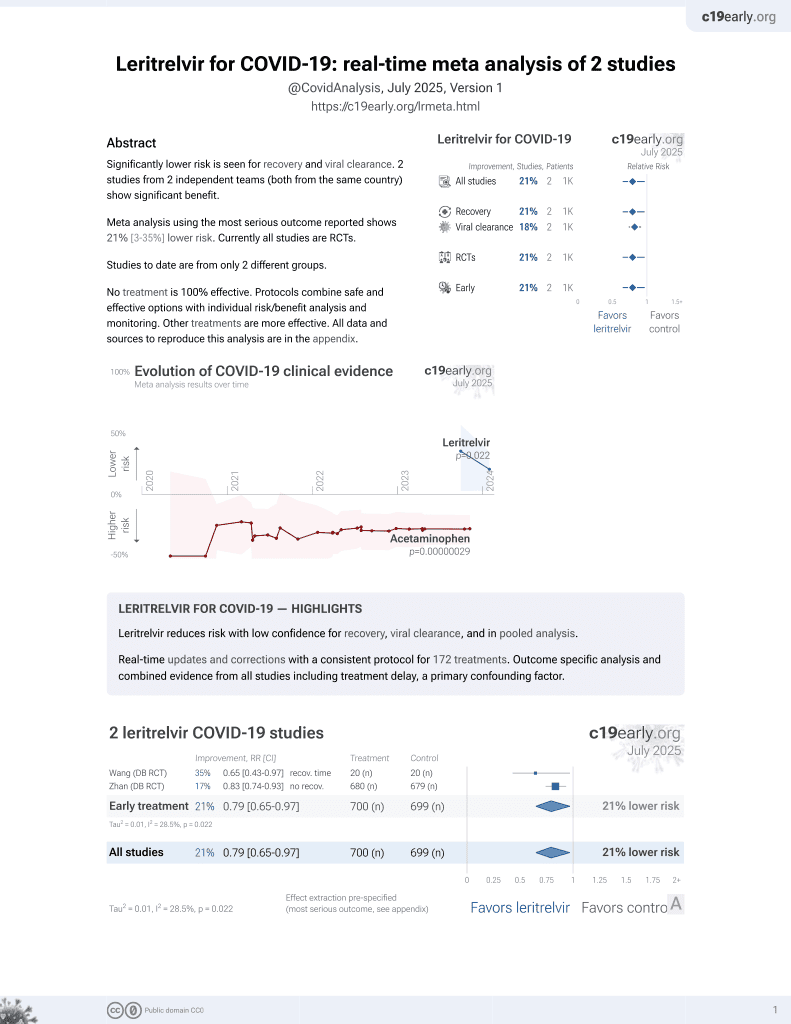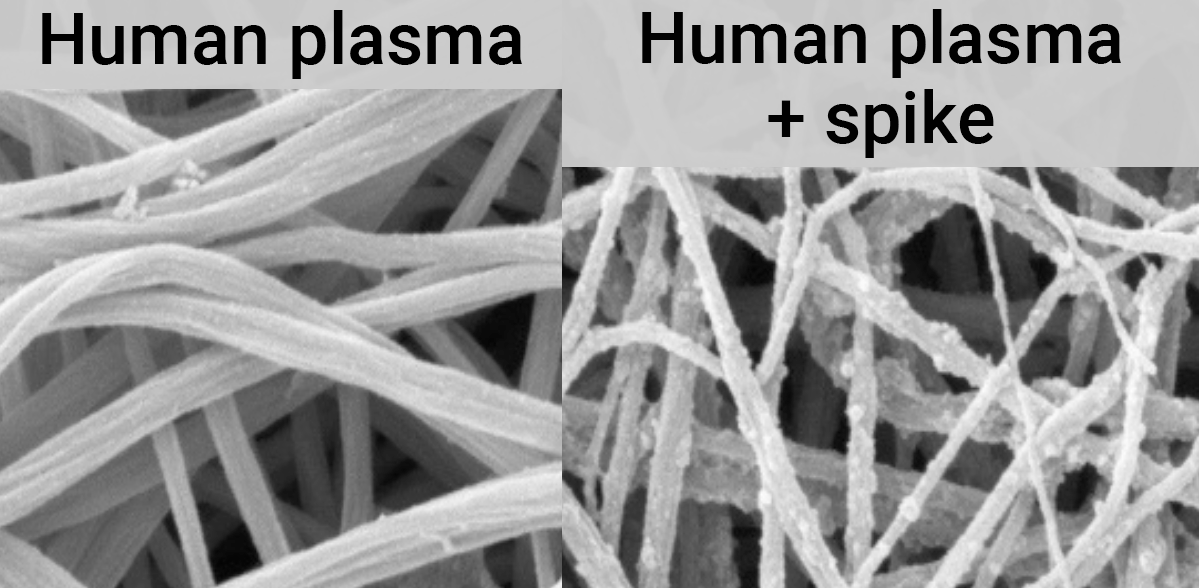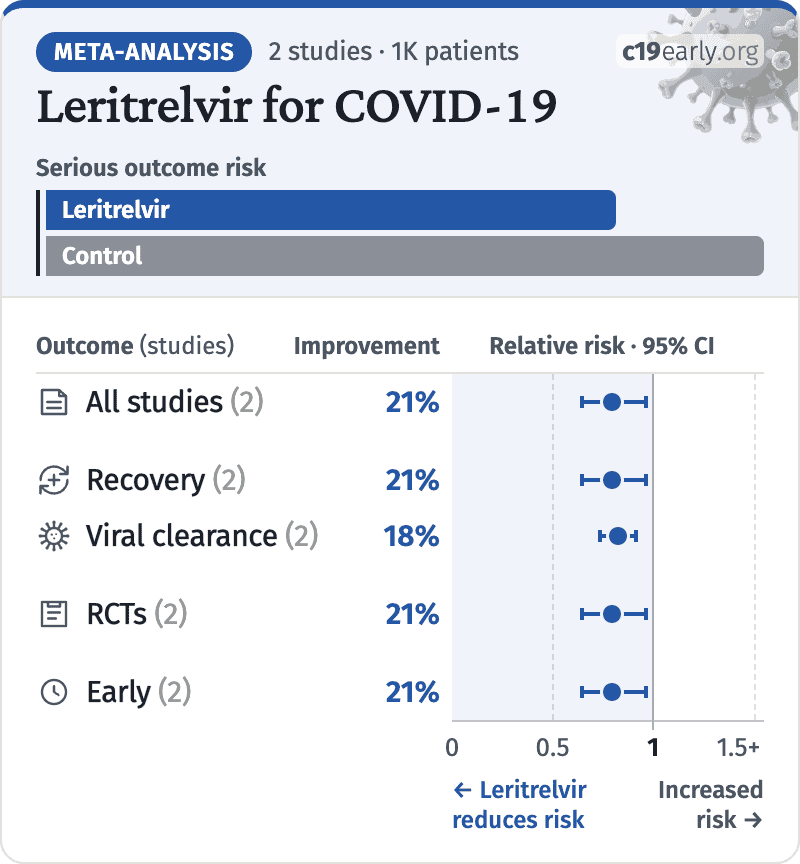
Leritrelvir for COVID-19
Serious outcome risk
Outcome (studies)
Improvement
Relative risk · 95% CI
Meta-analysis results over time
Random-effects meta-analysis. Relative risk with 95% CI. * p < 0.05, ** p < 0.01, *** p < 0.001.
Media was 3.8× more likely to cover positive studies
paxlovid 5, remdesivir 3, casirivimab/imdevimab 2, convalescent plasma 2, molnupiravir 2, one each: antiandrogens, peginterferon lambda, sargramostim, tixagevimab/cilgavimab, tocilizumab
remdesivir 3, one each: bamlanivimab/etesevimab, bebtelovimab, sotrovimab
Media covered only 0.8% of studies showing significantly lower COVID-19 risk
one each: budesonide, cannabidiol, fluvoxamine, HCQ, vitamin D
HCQ 12, ivermectin 6, lopinavir/ritonavir 4, azithromycin 3, vitamin D 3, fluvoxamine 2, one each: ibuprofen, metformin, vitamin C, zinc
National treatment protocols
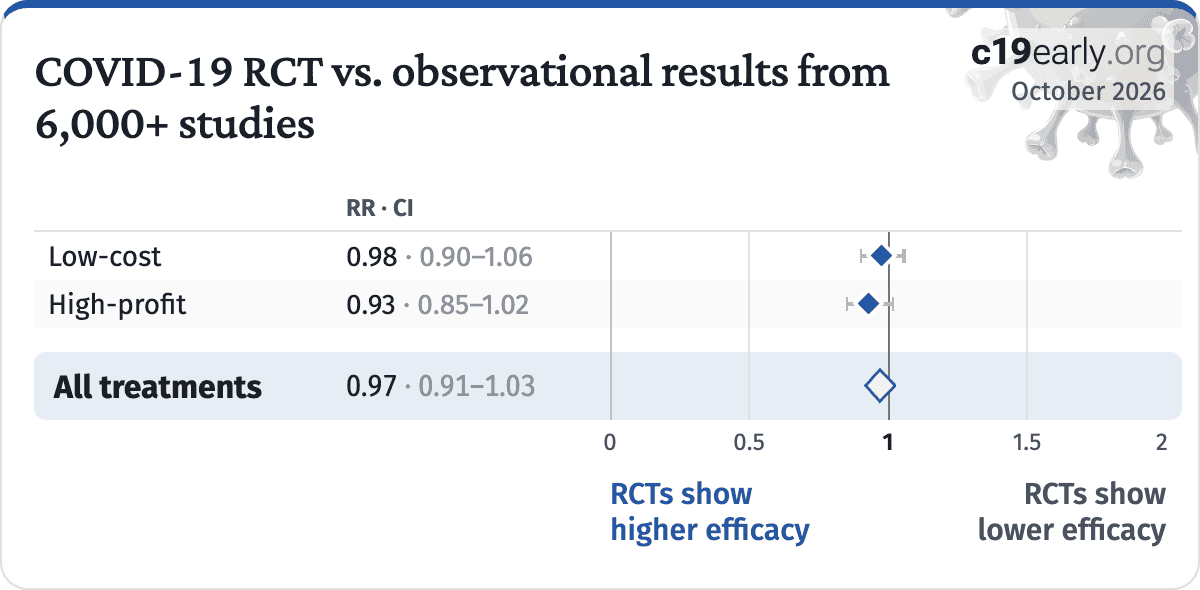
Most widely used early treatments selected by the most populous countries. Official protocols varied widely. Treatments only expected to be helpful for late-stage patients are excluded. low-cost, high-profit, and increased risk.
Full matrix and analysis →Treatment protocols varied widely
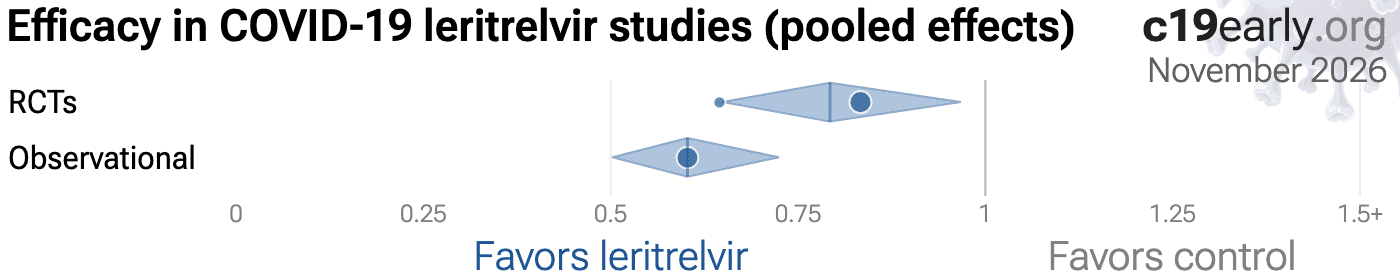
all studies RCTs only delay RCTs alone not yet significant · blue : pooled outcomes grey : specific outcomes · higher risk red: meta-analysis shows harm · efficacy: ≥10% improvement, p < 0.05, ≥3 studies · harm: RR > 1.0, p < 0.05, ≥3 studies
| Cheng, 10/31/2026, prospective, China, peer-reviewed, 34 authors, study period 22 May, 2023 - 4 May, 2024, trial ChiCTR2300077635. | risk of no recovery, 39.8% lower, HR 0.60, p < 0.001, treatment 1,388, control 139, adjusted per study, inverted to make HR<1 favor treatment, sustained symptom resolution, multivariable, Cox proportional hazards, day 28. |
| risk of no recovery, 44.8% lower, HR 0.55, p < 0.001, treatment 136, control 136, inverted to make HR<1 favor treatment, sustained symptom resolution, propensity score matching, Cox proportional hazards, day 28. | |
| recovery time, 25.0% lower, relative time 0.75, p < 0.001, treatment 6.0 [5.0-6.0] n=136, control 8.0 [8.0-9.0] n=136, median days to sustained symptom resolution, propensity score matching, Kaplan-Meier. | |
| risk of no viral clearance, 18.0% lower, HR 0.82, p = 0.04, treatment 1,388, control 139, adjusted per study, inverted to make HR<1 favor treatment, negative conversion, multivariable, Cox proportional hazards. | |
| risk of no viral clearance, 32.0% lower, HR 0.68, p < 0.001, treatment 136, control 136, inverted to make HR<1 favor treatment, negative conversion, propensity score matching, Cox proportional hazards. | |
| time to viral-, 25.0% lower, relative time 0.75, p = 0.006, treatment 3.0 [2.0-3.0] n=136, control 4.0 [3.0-4.0] n=136, median days to negative conversion, propensity score matching, Kaplan-Meier. | |
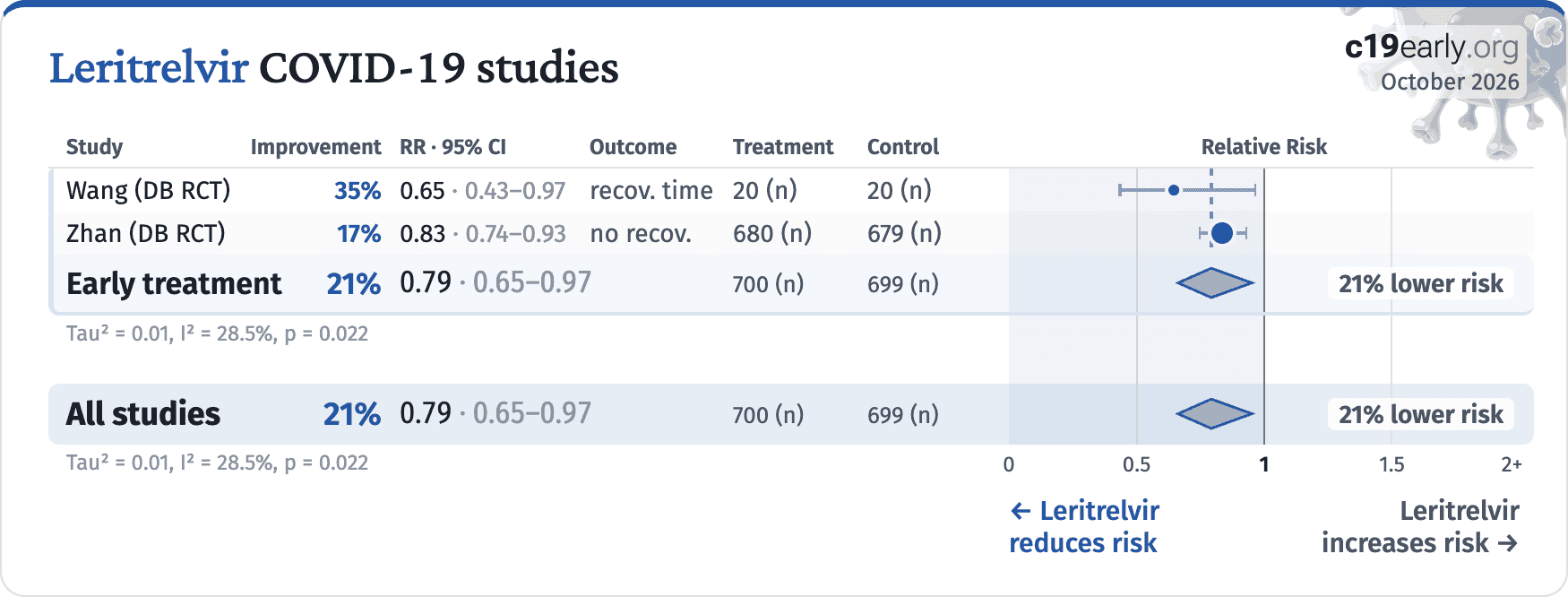
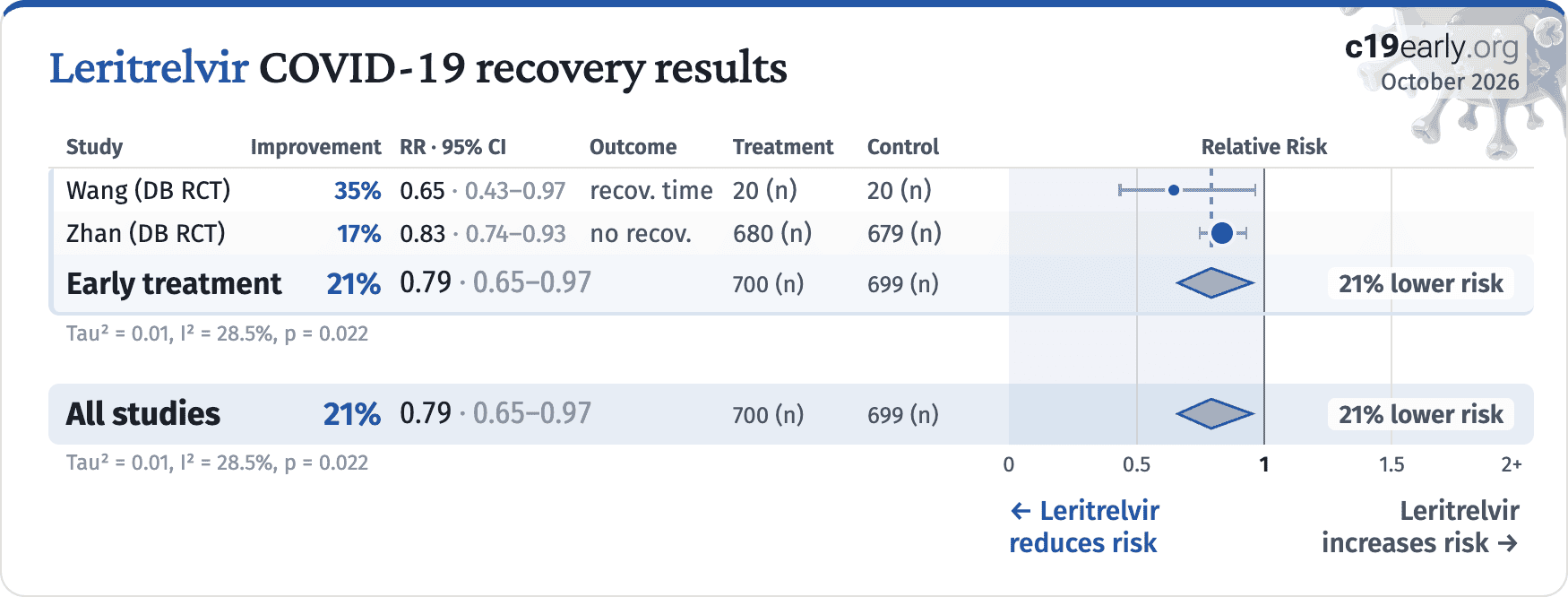
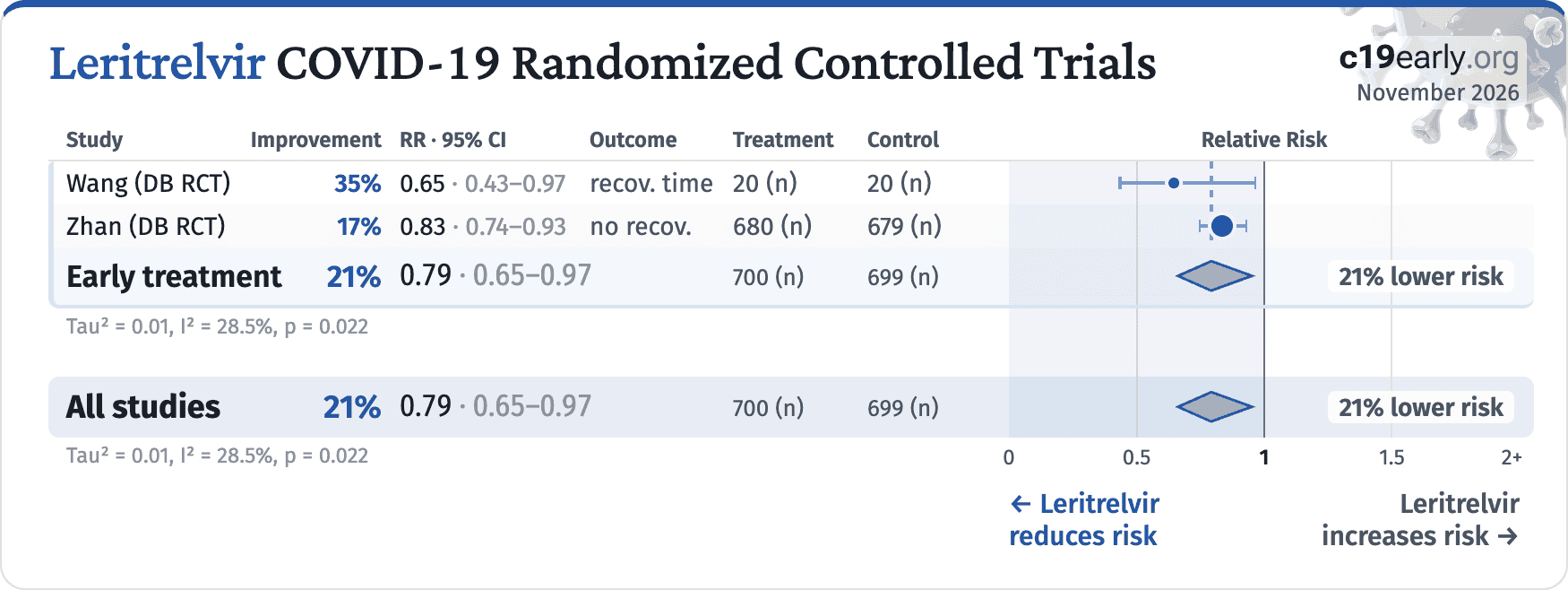
| Wang (B), 9/30/2023, Double Blind Randomized Controlled Trial, placebo-controlled, China, peer-reviewed, 13 authors, study period 14 August, 2022 - 26 September, 2022, trial ChiCTR2200062889. | recovery time, 35.5% lower, relative time 0.65, p = 0.04, treatment 20, control 20, RAY1216 vs. placebo. |
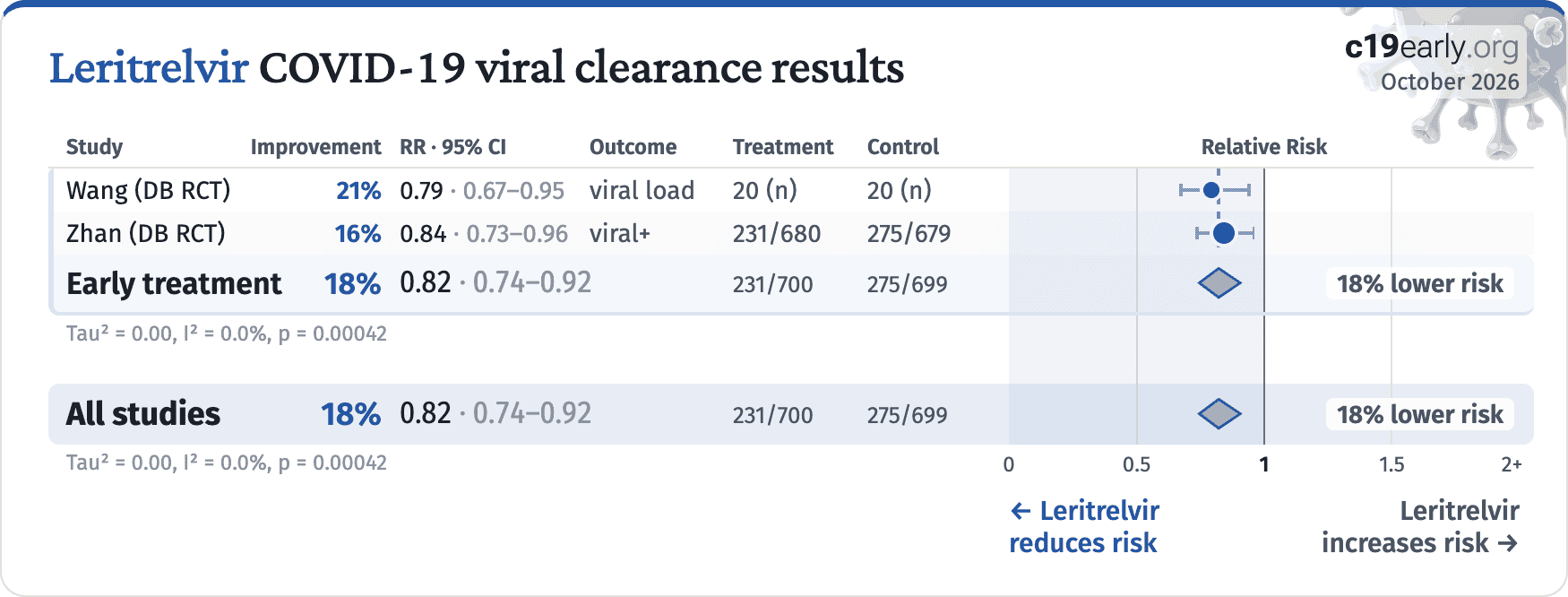
| relative viral load reduction, 20.5% better, RR 0.79, p = 0.01, treatment 20, control 20, RAY1216 vs. placebo, day 5. | |
| relative viral load reduction, 11.4% better, RR 0.89, p = 0.20, treatment 20, control 20, RAY1216 + RTV vs. placebo, day 5. | |
| risk of no viral clearance, 52.4% lower, HR 0.48, p = 0.06, treatment 20, control 20, inverted to make HR<1 favor treatment, RAY1216 vs. placebo. | |
| risk of no viral clearance, 80.0% lower, HR 0.20, p < 0.001, treatment 20, control 20, inverted to make HR<1 favor treatment, RAY1216 + RTV vs. placebo. | |
| Zhan, 1/31/2024, Double Blind Randomized Controlled Trial, placebo-controlled, China, peer-reviewed, 45 authors, study period 12 November, 2022 - 30 December, 2022, trial NCT05620160 (history). | sustained clinical recovery, 16.7% lower, HR 0.83, p = 0.002, treatment 680, control 679, inverted to make HR<1 favor treatment. |
| sustained clinical remission, 13.8% lower, HR 0.86, p = 0.01, treatment 680, control 679, inverted to make HR<1 favor treatment. | |
| clinical recovery, 21.4% lower, RR 0.79, p = 0.04, treatment 111 of 680 (16.3%), control 141 of 679 (20.8%), NNT 23, day 28. | |
| clinical remission, 22.0% lower, RR 0.78, p = 0.06, treatment 89 of 680 (13.1%), control 114 of 679 (16.8%), NNT 27, day 28. | |
| risk of no viral clearance, 16.1% lower, RR 0.84, p = 0.01, treatment 231 of 680 (34.0%), control 275 of 679 (40.5%), NNT 15, day 15. |