Preclinical Screening Platform Identifies Azatadine‐Dimaleate as a Potent Repurposed Therapeutic Against SARS‐CoV‐2 Infection
et al., Journal of Medical Virology, doi:10.1002/jmv.70713, Nov 2025
In vitro, ex vivo, and mouse study showing potent antiviral activity of azatadine-dimaleate, a H1-receptor antagonist, against SARS-CoV-2. Combination with remdesivir demonstrated strong synergy.
Gérard, Zhou, Wu, Kamo, Choi, Kim show increased risk of acute kidney injury, Leo, Briciu, Muntean, Petrov, Arch show increased risk of liver injury, Negru, Cheng, Mohammed, Kwok, Zhu show increased risk of cardiac disorders, and Kwok, Merches, Akinci, Tang, Bagheri show increased risk of mitochondrial toxicity with remdesivir.
Studies show synergistic antiviral effects for remdesivir in combination with ebselen8, ivermectin1-4, nitazoxanide6,7, azatadine-dimaleate5, azithromycin2, and disulfiram8, which may allow increased efficacy and/or similar efficacy at lower doses, potentially reducing dose-dependent side effects.

1.
Lew et al., Combination of Remdesivir and Ivermectin Exerts Highly Potent and Synergistic Antiviral Activity Against Murine Coronavirus and SARS-CoV-2 Infections, Cells, doi:10.3390/cells15131146.
2.
De Forni et al., Synergistic drug combinations designed to fully suppress SARS-CoV-2 in the lung of COVID-19 patients, PLoS ONE, doi:10.1371/journal.pone.0276751.
3.
Tan et al., Combination Treatment With Remdesivir and Ivermectin Exerts Highly Synergistic and Potent Antiviral Activity Against Murine Coronavirus Infection, Frontiers in Cellular and Infection Microbiology, doi:10.3389/fcimb.2021.700502.
4.
Jeffreys et al., Remdesivir-ivermectin combination displays synergistic interaction with improved in vitro activity against SARS-CoV-2, International Journal of Antimicrobial Agents, doi:10.1016/j.ijantimicag.2022.106542.
5.
Ali et al., Preclinical Screening Platform Identifies Azatadine‐Dimaleate as a Potent Repurposed Therapeutic Against SARS‐CoV‐2 Infection, Journal of Medical Virology, doi:10.1002/jmv.70713.
6.
Xu et al., Two-way pharmacodynamic modeling of drug combinations and its application to pairs of repurposed Ebola and SARS-CoV-2 agents, Antimicrobial Agents and Chemotherapy, doi:10.1128/aac.01015-23.
7.
Bobrowski et al., Synergistic and Antagonistic Drug Combinations against SARS-CoV-2, Molecular Therapy, doi:10.1016/j.ymthe.2020.12.016.
8.
Chen et al., Synergistic Inhibition of SARS-CoV-2 Replication Using Disulfiram/Ebselen and Remdesivir, ACS Pharmacology & Translational Science, doi:10.1021/acsptsci.1c00022.
9.
Gérard et al., Remdesivir and Acute Renal Failure: A Potential Safety Signal From Disproportionality Analysis of the WHO Safety Database, Clinical Pharmacology & Therapeutics, doi:10.1002/cpt.2145.
10.
Zhou et al., Acute Kidney Injury and Drugs Prescribed for COVID-19 in Diabetes Patients: A Real-World Disproportionality Analysis, Frontiers in Pharmacology, doi:10.3389/fphar.2022.833679.
11.
Wu et al., Acute Kidney Injury Associated With Remdesivir: A Comprehensive Pharmacovigilance Analysis of COVID-19 Reports in FAERS, Frontiers in Pharmacology, doi:10.3389/fphar.2022.692828.
12.
Kamo et al., Association of Antiviral Drugs for the Treatment of COVID-19 With Acute Renal Failure, In Vivo, doi:10.21873/invivo.13637.
13.
Choi et al., Comparative effectiveness of combination therapy with nirmatrelvir–ritonavir and remdesivir versus monotherapy with remdesivir or nirmatrelvir–ritonavir in patients hospitalised with COVID-19: a target trial emulation study, The Lancet Infectious Diseases, doi:10.1016/S1473-3099(24)00353-0.
14.
Kim et al., Investigating the Safety Profile of Fast‐Track COVID‐19 Drugs Using the FDA Adverse Event Reporting System Database: A Comparative Observational Study, Pharmacoepidemiology and Drug Safety, doi:10.1002/pds.70043.
15.
Leo et al., Hepatocellular liver injury in hospitalized patients affected by COVID-19: Presence of different risk factors at different time points, Digestive and Liver Disease, doi:10.1016/j.dld.2021.12.014.
16.
Briciu et al., Evolving Clinical Manifestations and Outcomes in COVID-19 Patients: A Comparative Analysis of SARS-CoV-2 Variant Waves in a Romanian Hospital Setting, Pathogens, doi:10.3390/pathogens12121453.
17.
Muntean et al., Effects of COVID-19 on the Liver and Mortality in Patients with SARS-CoV-2 Pneumonia Caused by Delta and Non-Delta Variants: An Analysis in a Single Centre, Pharmaceuticals, doi:10.3390/ph17010003.
18.
Petrov et al., The Effect of Potentially Hepatotoxic Medicinal Products on Alanine Transaminase Levels in COVID-19 Patients: A Case–Control Study, Safety and Risk of Pharmacotherapy, doi:10.30895/2312-7821-2025-458.
19.
Arch et al., Evaluation of the effectiveness of remdesivir in treating severe COVID-19 using data from the ISARIC WHO Clinical Characterisation Protocol UK: a prospective, national cohort study, medRxiv, doi:10.1101/2021.06.18.21259072.
20.
Negru et al., Comparative Pharmacovigilance Analysis of Approved and Repurposed Antivirals for COVID-19: Insights from EudraVigilance Data, Biomedicines, doi:10.3390/biomedicines13061387.
21.
Cheng et al., Cardiovascular Safety of COVID-19 Treatments: A Disproportionality Analysis of Adverse Event Reports from the WHO VigiBase, Infectious Diseases and Therapy, doi:10.1007/s40121-025-01225-z.
22.
Mohammed et al., Bradycardia associated with remdesivir treatment in coronavirus disease 2019 patients: A propensity score-matched analysis, Medicine, doi:10.1097/MD.0000000000044501.
23.
Kwok et al., Remdesivir induces persistent mitochondrial and structural damage in human induced pluripotent stem cell-derived cardiomyocytes, Cardiovascular Research, doi:10.1093/cvr/cvab311.
24.
Zhu et al., Cardiovascular Risks of COVID-19 Therapeutics: Integrated Analysis of FAERS, Electronic Health Records, and Transcriptomics, Pharmaceuticals, doi:10.3390/ph19040574.
25.
Merches et al., The potential of remdesivir to affect function, metabolism and proliferation of cardiac and kidney cells in vitro, Archives of Toxicology, doi:10.1007/s00204-022-03306-1.
26.
Akinci et al., Elucidation of remdesivir cytotoxicity pathways through genome-wide CRISPR-Cas9 screening and transcriptomics, bioRxiv, doi:10.1101/2020.08.27.270819.
Ali et al., 20 Nov 2025, United Kingdom, peer-reviewed, 14 authors.
Contact: ahlam.ali@wlv.ac.uk, u.power@qub.ac.uk.
Abstract:
Preclinical Screening Platform Identifies Azatadine -Dimaleate as a Potent Repurposed Therapeutic Against SARS -CoV -2 Infection
Ahlam Ali 1,2 | David Courtney 3 | Lindsay Broadbent 3 | Parul Sharma 4 | Connor G. G. Bamford 3 | Sheerien Manzoor 3 | Olivier Touzelet 3 | Conall McCaughey 5 | Adam Kirby 4 | Eleanor Bentley 4 | Anja Kipar 4,6 | Ken I. Mills 1 | James P. Stewart 4 | Ultan F. Power 3
1 Patrick G Johnston Centre for Cancer Research, School of Medicine, Dentistry and Biomedical Sciences, Queen's University Belfast; Belfast, Belfast, Ireland | 2 Current Affiliation: School of Life Sciences, University of Wolverhampton, Wolverhampton, UK | 3 Wellcome -Wolfson Institute for Experimental Medicine, School of Medicine, Dentistry and Biomedical Sciences, Queen's University Belfast; Belfast, Belfast, Ireland | 4 Department of Infection Biology and Microbiomes, University of Liverpool, Liverpool, UK | 5 Regional Virology Laboratory, Belfast Trust, Belfast, Ireland | 6 Laboratory for Animal Model Pathology, Institute of Veterinary Pathology, Vetsuisse Faculty, University of Zurich, Zurich, Switzerland
Correspondence: Ahlam Ali (Ahlam.Ali@wlv.ac.uk) | Ultan F. Power (u.power@qub.ac.uk)
Received: 14 August 2025 | Revised: 23 October 2025 | Accepted: 3 November 2025
Funding: UK Research and Innovation (UKRI) rapid response call MC\_PC\_19057 (UP, AA, KM); HSC R&D Division Opportunity -led Research Award COM/ 5613/20 (UP); Medical Research Council Confidence in Concept MC\_PC\_19050 (UP).
ABSTRACT
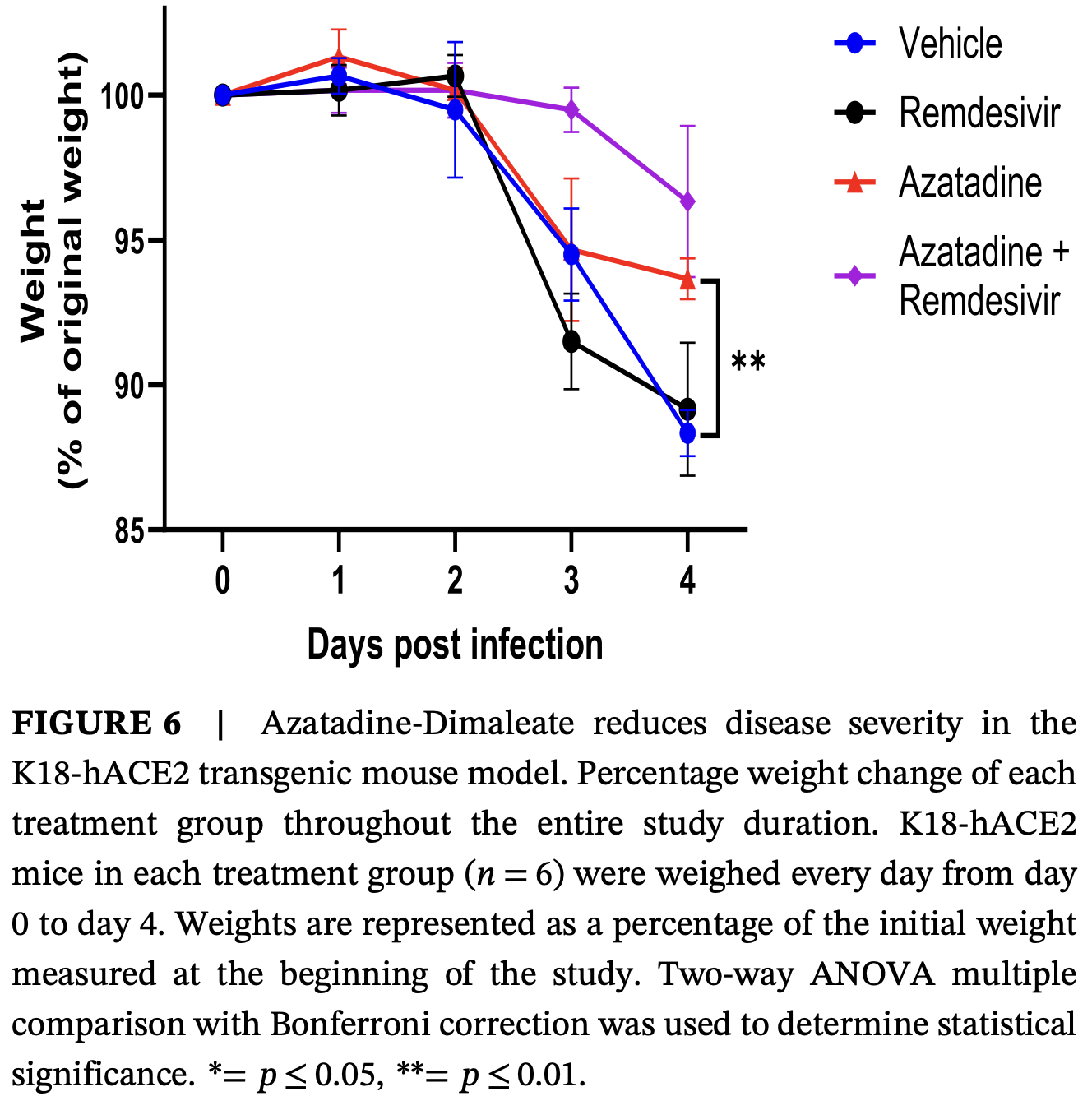
The emergence of SARS -CoV -2 posed a major global public health threat, necessitating urgent development of therapeutics. Despite vaccine availability, continuous emergence of viral variants with enhanced transmissibility and immune escape capabilities, and consequential impacts on health services, requires effective antiviral therapeutics. Drug repurposing offers an expeditious strategy to identify therapeutics with established safety profiles. We implemented a comprehensive three -tiered validation approach, screening 2,570 compounds against SARS -CoV -2 in vitro, followed by ex vivo validation in well -differentiated primary human bronchial epithelial cell (WD -PBEC) cultures, and rigorous in vivo assessment. This methodical progression identified Azatadine -Dimaleate, a H1 -receptor antagonist, as an exceptional candidate with consistent efficacy across all systems. Azatadine -Dimaleate demonstrated potent antiviral activity -EC50: 4.0 µM (95% CI: 3.2 -4.8 µM), reducing viral replication by ~5,000 -fold at 25 µM in epithelial cultures and lowering peak viral titers in WD -PBECs by 1.4 log10, and 2.33 log10 at 48 and 96 hpi, respectively, compared to controls. There was also a concomitant reduction in expression of interferons and pro -inflammatory genes, including IL -6. Combination with Remdesivir synergistically enhanced antiviral activity, reducing the EC50 of both drugs by > 60%. In the K18 -hACE2 transgenic mouse model, Azatadine -Dimaleate significantly reduced weight loss (4% vs. 12%, p ≤ 0.05), decreased viral loads, and halved viral antigen expression in lung tissues. Unlike many candidates that faltered in complex models, Azatadine -Dimaleate maintained efficacy across all platforms. These findings support its clinical evaluation, alone or in combination with Remdesivir, as a versatile therapeutic with strong potential to address current and emerging SARS -CoV -2 variants.
1 | Introduction
The emergence of severe acute..
DOI record:
{
"DOI": "10.1002/jmv.70713",
"ISSN": [
"0146-6615",
"1096-9071"
],
"URL": "http://dx.doi.org/10.1002/jmv.70713",
"abstract": "<jats:title>ABSTRACT</jats:title>\n <jats:p>\n The emergence of SARS‐CoV‐2 posed a major global public health threat, necessitating urgent development of therapeutics. Despite vaccine availability, continuous emergence of viral variants with enhanced transmissibility and immune escape capabilities, and consequential impacts on health services, requires effective antiviral therapeutics. Drug repurposing offers an expeditious strategy to identify therapeutics with established safety profiles. We implemented a comprehensive three‐tiered validation approach, screening 2,570 compounds against SARS‐CoV‐2 in vitro, followed by\n <jats:italic>ex vivo</jats:italic>\n validation in well‐differentiated primary human bronchial epithelial cell (WD‐PBEC) cultures, and rigorous in vivo assessment. This methodical progression identified Azatadine‐Dimaleate, a H1‐receptor antagonist, as an exceptional candidate with consistent efficacy across all systems. Azatadine‐Dimaleate demonstrated potent antiviral activity‐ EC50: 4.0 µM (95% CI: 3.2–4.8 µM), reducing viral replication by ~5,000‐fold at 25 µM in epithelial cultures and lowering peak viral titers in WD‐PBECs by 1.4 log\n <jats:sub>10</jats:sub>\n , and 2.33 log\n <jats:sub>10</jats:sub>\n at 48 and 96 hpi, respectively, compared to controls. There was also a concomitant reduction in expression of interferons and pro‐inflammatory genes, including IL‐6. Combination with Remdesivir synergistically enhanced antiviral activity, reducing the EC50 of both drugs by > 60%. In the K18‐hACE2 transgenic mouse model, Azatadine‐Dimaleate significantly reduced weight loss (4%\n <jats:italic>vs.</jats:italic>\n 12%,\n <jats:italic>p</jats:italic>\n ≤ 0.05), decreased viral loads, and halved viral antigen expression in lung tissues. Unlike many candidates that faltered in complex models, Azatadine‐Dimaleate maintained efficacy across all platforms. These findings support its clinical evaluation, alone or in combination with Remdesivir, as a versatile therapeutic with strong potential to address current and emerging SARS‐CoV‐2 variants.\n </jats:p>",
"alternative-id": [
"10.1002/jmv.70713"
],
"article-number": "e70713",
"assertion": [
{
"group": {
"label": "Publication History",
"name": "publication_history"
},
"label": "Received",
"name": "received",
"order": 0,
"value": "2025-08-14"
},
{
"group": {
"label": "Publication History",
"name": "publication_history"
},
"label": "Accepted",
"name": "accepted",
"order": 2,
"value": "2025-11-03"
},
{
"group": {
"label": "Publication History",
"name": "publication_history"
},
"label": "Published",
"name": "published",
"order": 3,
"value": "2025-11-20"
}
],
"author": [
{
"affiliation": [
{
"name": "Patrick G Johnston Centre for Cancer Research, School of Medicine, Dentistry and Biomedical Sciences Queen's University Belfast; Belfast Belfast Ireland"
},
{
"name": "Current Affiliation: School of Life Sciences University of Wolverhampton Wolverhampton UK"
}
],
"family": "Ali",
"given": "Ahlam",
"sequence": "first"
},
{
"affiliation": [
{
"name": "Wellcome‐Wolfson Institute for Experimental Medicine, School of Medicine, Dentistry and Biomedical Sciences Queen's University Belfast; Belfast Belfast Ireland"
}
],
"family": "Courtney",
"given": "David",
"sequence": "additional"
},
{
"affiliation": [
{
"name": "Wellcome‐Wolfson Institute for Experimental Medicine, School of Medicine, Dentistry and Biomedical Sciences Queen's University Belfast; Belfast Belfast Ireland"
}
],
"family": "Broadbent",
"given": "Lindsay",
"sequence": "additional"
},
{
"affiliation": [
{
"name": "Department of Infection Biology and Microbiomes University of Liverpool Liverpool UK"
}
],
"family": "Sharma",
"given": "Parul",
"sequence": "additional"
},
{
"affiliation": [
{
"name": "Wellcome‐Wolfson Institute for Experimental Medicine, School of Medicine, Dentistry and Biomedical Sciences Queen's University Belfast; Belfast Belfast Ireland"
}
],
"family": "Bamford",
"given": "Connor G. G.",
"sequence": "additional"
},
{
"affiliation": [
{
"name": "Wellcome‐Wolfson Institute for Experimental Medicine, School of Medicine, Dentistry and Biomedical Sciences Queen's University Belfast; Belfast Belfast Ireland"
}
],
"family": "Manzoor",
"given": "Sheerien",
"sequence": "additional"
},
{
"affiliation": [
{
"name": "Wellcome‐Wolfson Institute for Experimental Medicine, School of Medicine, Dentistry and Biomedical Sciences Queen's University Belfast; Belfast Belfast Ireland"
}
],
"family": "Touzelet",
"given": "Olivier",
"sequence": "additional"
},
{
"affiliation": [
{
"name": "Regional Virology Laboratory, Belfast Trust Belfast Ireland"
}
],
"family": "McCaughey",
"given": "Conall",
"sequence": "additional"
},
{
"affiliation": [
{
"name": "Department of Infection Biology and Microbiomes University of Liverpool Liverpool UK"
}
],
"family": "Kirby",
"given": "Adam",
"sequence": "additional"
},
{
"affiliation": [
{
"name": "Department of Infection Biology and Microbiomes University of Liverpool Liverpool UK"
}
],
"family": "Bentley",
"given": "Eleanor",
"sequence": "additional"
},
{
"affiliation": [
{
"name": "Department of Infection Biology and Microbiomes University of Liverpool Liverpool UK"
},
{
"name": "Laboratory for Animal Model Pathology, Institute of Veterinary Pathology, Vetsuisse Faculty University of Zurich Zurich Switzerland"
}
],
"family": "Kipar",
"given": "Anja",
"sequence": "additional"
},
{
"affiliation": [
{
"name": "Patrick G Johnston Centre for Cancer Research, School of Medicine, Dentistry and Biomedical Sciences Queen's University Belfast; Belfast Belfast Ireland"
}
],
"family": "Mills",
"given": "Ken I.",
"sequence": "additional"
},
{
"affiliation": [
{
"name": "Department of Infection Biology and Microbiomes University of Liverpool Liverpool UK"
}
],
"family": "Stewart",
"given": "James P.",
"sequence": "additional"
},
{
"affiliation": [
{
"name": "Wellcome‐Wolfson Institute for Experimental Medicine, School of Medicine, Dentistry and Biomedical Sciences Queen's University Belfast; Belfast Belfast Ireland"
}
],
"family": "Power",
"given": "Ultan F.",
"sequence": "additional"
}
],
"container-title": "Journal of Medical Virology",
"container-title-short": "Journal of Medical Virology",
"content-domain": {
"crossmark-restriction": true,
"domain": [
"onlinelibrary.wiley.com"
]
},
"created": {
"date-parts": [
[
2025,
11,
20
]
],
"date-time": "2025-11-20T10:38:22Z",
"timestamp": 1763635102000
},
"deposited": {
"date-parts": [
[
2025,
11,
21
]
],
"date-time": "2025-11-21T13:11:52Z",
"timestamp": 1763730712000
},
"indexed": {
"date-parts": [
[
2025,
11,
21
]
],
"date-time": "2025-11-21T13:15:35Z",
"timestamp": 1763730935838,
"version": "3.45.0"
},
"is-referenced-by-count": 0,
"issue": "11",
"issued": {
"date-parts": [
[
2025,
11
]
]
},
"journal-issue": {
"issue": "11",
"published-print": {
"date-parts": [
[
2025,
11
]
]
}
},
"language": "en",
"license": [
{
"URL": "http://creativecommons.org/licenses/by/4.0/",
"content-version": "vor",
"delay-in-days": 19,
"start": {
"date-parts": [
[
2025,
11,
20
]
],
"date-time": "2025-11-20T00:00:00Z",
"timestamp": 1763596800000
}
}
],
"link": [
{
"URL": "https://onlinelibrary.wiley.com/doi/pdf/10.1002/jmv.70713",
"content-type": "unspecified",
"content-version": "vor",
"intended-application": "similarity-checking"
}
],
"member": "311",
"original-title": [],
"prefix": "10.1002",
"published": {
"date-parts": [
[
2025,
11
]
]
},
"published-online": {
"date-parts": [
[
2025,
11,
20
]
]
},
"published-print": {
"date-parts": [
[
2025,
11
]
]
},
"publisher": "Wiley",
"reference": [
{
"DOI": "10.1038/D41586‐022‐00104‐8",
"doi-asserted-by": "publisher",
"key": "e_1_2_9_2_1"
},
{
"DOI": "10.1021/ACSCENTSCI.0C00489/ASSET/IMAGES/LARGE/OC0C00489_0004.JPEG",
"doi-asserted-by": "publisher",
"key": "e_1_2_9_3_1"
},
{
"DOI": "10.1056/NEJMOA2007764/SUPPL_FILE/NEJMOA2007764_PRELIMINARY‐REPORT.PDF",
"doi-asserted-by": "publisher",
"key": "e_1_2_9_4_1"
},
{
"DOI": "10.2174/1566524023666230613141746/CITE/REFWORKS",
"doi-asserted-by": "publisher",
"key": "e_1_2_9_5_1"
},
{
"key": "e_1_2_9_6_1",
"unstructured": "T.Saeheng JKS & T. 2024undefined. The Failure of Repurposing Drug Therapies Based on in vitro and in vivo Studies: A Case Study of COVID‐19. ph02.tci‐thaijo.orgT S J Karbwang K Na‐BangchangScience & Technology Asia 2024•ph02.tci‐thaijo.org accessed April 19 2025 https://ph02.tci‐thaijo.org/index.php/SciTechAsia/article/download/250034/170328/941118."
},
{
"DOI": "10.1177/17534666221132736/ASSET/E385AB29‐167A‐42A1‐8799‐48FEE7002DCC/ASSETS/IMAGES/LARGE/10.1177_17534666221132736‐",
"doi-asserted-by": "publisher",
"key": "e_1_2_9_7_1"
},
{
"DOI": "10.1016/J.DRUDIS.2022.02.012",
"doi-asserted-by": "publisher",
"key": "e_1_2_9_8_1"
},
{
"DOI": "10.1128/AAC.02034‐19",
"doi-asserted-by": "publisher",
"key": "e_1_2_9_9_1"
},
{
"DOI": "10.1371/JOURNAL.PONE.0228229",
"doi-asserted-by": "publisher",
"key": "e_1_2_9_10_1"
},
{
"DOI": "10.1128/JVI.02012‐06/ASSET/DD96C003‐9AC6‐4AB8‐9514‐8D6030242ED7/ASSETS/GRAPHIC/ZJV0020786520008.JPEG",
"doi-asserted-by": "publisher",
"key": "e_1_2_9_11_1"
},
{
"DOI": "10.3390/V14051020/S1",
"doi-asserted-by": "publisher",
"key": "e_1_2_9_12_1"
},
{
"DOI": "10.1126/SCITRANSLMED.ABB5883",
"doi-asserted-by": "publisher",
"key": "e_1_2_9_13_1"
},
{
"DOI": "10.1128/AAC.00819‐20",
"doi-asserted-by": "publisher",
"key": "e_1_2_9_14_1"
},
{
"DOI": "10.1016/J.CELREP.2021.108959",
"doi-asserted-by": "publisher",
"key": "e_1_2_9_15_1"
},
{
"DOI": "10.1016/J.HLIFE.2023.12.001",
"doi-asserted-by": "publisher",
"key": "e_1_2_9_16_1"
},
{
"DOI": "10.1056/NEJMOA2016638",
"doi-asserted-by": "publisher",
"key": "e_1_2_9_17_1"
},
{
"DOI": "10.3390/V16060863/S1",
"doi-asserted-by": "publisher",
"key": "e_1_2_9_18_1"
},
{
"DOI": "10.1128/SPECTRUM.01829‐24",
"doi-asserted-by": "publisher",
"key": "e_1_2_9_19_1"
},
{
"DOI": "10.1007/BF01978891",
"doi-asserted-by": "publisher",
"key": "e_1_2_9_20_1"
},
{
"DOI": "10.3390/V16121838/S1",
"doi-asserted-by": "publisher",
"key": "e_1_2_9_21_1"
},
{
"DOI": "10.3390/V15081637/S1",
"doi-asserted-by": "publisher",
"key": "e_1_2_9_22_1"
},
{
"DOI": "10.1007/S40656‐022‐00532‐9/FIGURES/4",
"doi-asserted-by": "publisher",
"key": "e_1_2_9_23_1"
},
{
"DOI": "10.1093/BIB/BBAA288",
"doi-asserted-by": "publisher",
"key": "e_1_2_9_24_1"
},
{
"DOI": "10.1038/s41598‐022‐17082‐6",
"doi-asserted-by": "publisher",
"key": "e_1_2_9_25_1"
},
{
"DOI": "10.1073/PNAS.2024302118/SUPPL_FILE/PNAS.2024302118.SAPP.PDF",
"doi-asserted-by": "publisher",
"key": "e_1_2_9_26_1"
},
{
"DOI": "10.1016/J.JPHS.2023.02.004",
"doi-asserted-by": "publisher",
"key": "e_1_2_9_27_1"
},
{
"DOI": "10.1177/13596535241305536/SUPPL_FILE/SJ‐PDF‐1‐AVT‐10.1177_13596535241305536.PDF",
"doi-asserted-by": "publisher",
"key": "e_1_2_9_28_1"
},
{
"DOI": "10.1038/S41598‐020‐70143‐6",
"doi-asserted-by": "publisher",
"key": "e_1_2_9_29_1"
},
{
"DOI": "10.1038/S41586‐020‐2577‐1",
"doi-asserted-by": "publisher",
"key": "e_1_2_9_30_1"
},
{
"DOI": "10.1128/JVI.01218‐20",
"doi-asserted-by": "publisher",
"key": "e_1_2_9_31_1"
},
{
"DOI": "10.1038/S41586‐020‐2286‐9",
"doi-asserted-by": "publisher",
"key": "e_1_2_9_32_1"
},
{
"DOI": "10.3390/MOLECULES25173830",
"doi-asserted-by": "publisher",
"key": "e_1_2_9_33_1"
},
{
"DOI": "10.1016/j.jaci.2011.09.005",
"doi-asserted-by": "publisher",
"key": "e_1_2_9_34_1"
},
{
"DOI": "10.1046/J.0954‐7894.2002.01314.X",
"doi-asserted-by": "publisher",
"key": "e_1_2_9_35_1"
},
{
"DOI": "10.4049/JIMMUNOL.0901058",
"doi-asserted-by": "publisher",
"key": "e_1_2_9_36_1"
},
{
"DOI": "10.1016/J.BBRC.2020.11.095",
"doi-asserted-by": "publisher",
"key": "e_1_2_9_37_1"
},
{
"DOI": "10.21203/rs.3.rs-23951/v1",
"doi-asserted-by": "crossref",
"key": "e_1_2_9_38_1",
"unstructured": "B.Ellinger D.Bojkova A.Zaliani et al.Identification of inhibitors of SARS‐CoV‐2 in‐vitro cellular toxicity in human (Caco‐2) cells using a large scale drug repurposing collection. Published onlineApril 20 2020 https://doi.org/10.21203/RS.3.RS‐23951/V1."
},
{
"DOI": "10.1101/2020.09.15.296228",
"doi-asserted-by": "publisher",
"key": "e_1_2_9_39_1"
},
{
"DOI": "10.1038/S41598‐023‐32546‐Z",
"doi-asserted-by": "publisher",
"key": "e_1_2_9_40_1"
},
{
"DOI": "10.3390/MICROORGANISMS12122589",
"doi-asserted-by": "publisher",
"key": "e_1_2_9_41_1"
},
{
"DOI": "10.1016/J.PUPT.2021.101989",
"doi-asserted-by": "publisher",
"key": "e_1_2_9_42_1"
},
{
"DOI": "10.1136/bmjopen-2020-041577",
"doi-asserted-by": "crossref",
"key": "e_1_2_9_43_1",
"unstructured": "A.Vila‐Córcoles O.Ochoa‐Gondar andE. M.Satué‐Gracia et al. Influence of prior comorbidities and chronic medications use on the risk of COVID‐19 in adults: a population‐based cohort study in Tarragona Spain https://doi.org/10.1136/bmjopen‐2020‐041577."
},
{
"DOI": "10.1038/s41590‐020‐0778‐2",
"doi-asserted-by": "publisher",
"key": "e_1_2_9_44_1"
},
{
"DOI": "10.3390/V15081637",
"doi-asserted-by": "publisher",
"key": "e_1_2_9_45_1"
},
{
"DOI": "10.3748/WJG.V11.I19.2851",
"doi-asserted-by": "publisher",
"key": "e_1_2_9_46_1"
},
{
"article-title": "Interleukin‐1 Family Cytokines and Mast Cells: Activation and Inhibition",
"author": "Gallenga C. E.",
"first-page": "1",
"issue": "1",
"journal-title": "Journal of Biological Regulators and Homeostatic Agents",
"key": "e_1_2_9_47_1",
"volume": "33",
"year": "2025"
},
{
"DOI": "10.1016/S0091‐6749(03)01878‐5",
"doi-asserted-by": "publisher",
"key": "e_1_2_9_48_1"
},
{
"DOI": "10.1126/SCITRANSLMED.3010286",
"doi-asserted-by": "publisher",
"key": "e_1_2_9_49_1"
},
{
"DOI": "10.2165/00003088‐198510060‐00002/METRICS",
"doi-asserted-by": "publisher",
"key": "e_1_2_9_50_1"
},
{
"DOI": "10.1007/BF01965229/METRICS",
"doi-asserted-by": "publisher",
"key": "e_1_2_9_51_1"
},
{
"DOI": "10.1074/JBC.RA120.013679",
"doi-asserted-by": "publisher",
"key": "e_1_2_9_52_1"
},
{
"DOI": "10.1128/MBIO.03705‐21",
"doi-asserted-by": "publisher",
"key": "e_1_2_9_53_1"
},
{
"DOI": "10.2174/0113816128355749241111045626",
"doi-asserted-by": "publisher",
"key": "e_1_2_9_54_1"
},
{
"DOI": "10.1016/j.cell.2022.12.018",
"doi-asserted-by": "publisher",
"key": "e_1_2_9_55_1"
},
{
"DOI": "10.1038/S41586‐021‐04385‐3",
"doi-asserted-by": "publisher",
"key": "e_1_2_9_56_1"
},
{
"DOI": "10.3390/V14020325",
"doi-asserted-by": "publisher",
"key": "e_1_2_9_57_1"
},
{
"DOI": "10.1093/INFDIS/JIAA507",
"doi-asserted-by": "publisher",
"key": "e_1_2_9_58_1"
},
{
"DOI": "10.1186/S13073‐020‐00763‐0",
"doi-asserted-by": "publisher",
"key": "e_1_2_9_59_1"
},
{
"DOI": "10.1099/JGV.0.001481/CITE/REFWORKS",
"doi-asserted-by": "publisher",
"key": "e_1_2_9_60_1"
},
{
"DOI": "10.1016/J.CELL.2020.09.018",
"doi-asserted-by": "publisher",
"key": "e_1_2_9_61_1"
},
{
"DOI": "10.1126/SCITRANSLMED.ABB5883/SUPPL_FILE/ABB5883_DATAS1.XLSX",
"doi-asserted-by": "publisher",
"key": "e_1_2_9_62_1"
},
{
"DOI": "10.1007/BF01978891",
"doi-asserted-by": "publisher",
"key": "e_1_2_9_63_1"
},
{
"DOI": "10.1016/0165‐6147(83)90490‐X",
"doi-asserted-by": "publisher",
"key": "e_1_2_9_64_1"
}
],
"reference-count": 63,
"references-count": 63,
"relation": {},
"resource": {
"primary": {
"URL": "https://onlinelibrary.wiley.com/doi/10.1002/jmv.70713"
}
},
"score": 1,
"short-title": [],
"source": "Crossref",
"subject": [],
"subtitle": [],
"title": "Preclinical Screening Platform Identifies Azatadine‐Dimaleate as a Potent Repurposed Therapeutic Against SARS‐CoV‐2 Infection",
"type": "journal-article",
"update-policy": "https://doi.org/10.1002/crossmark_policy",
"volume": "97"
}