Ivermectin and Doxycycline combination as a promising anti-viral drug candidate: an in-silico and DFT study
et al., In Silico Pharmacology, doi:10.1007/s40203-026-00576-w, Aug 2021 (preprint)
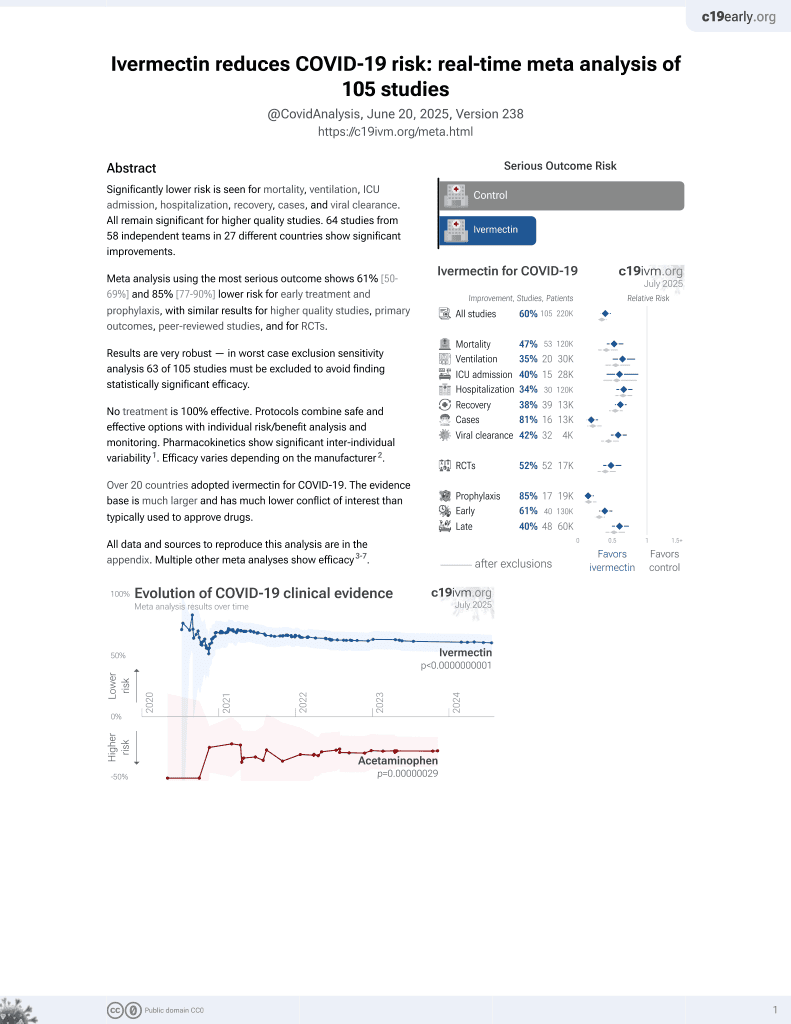
Ivermectin for COVID-19
4th treatment shown to reduce risk in
August 2020, now with p < 0.0000000001 from 106 studies, recognized in 24 countries.
No treatment is 100% effective.
Protocols combine treatments.
In silico study showing strong binding affinity of ivermectin and doxycycline for SARS-CoV-2 main protease 3CLpro, and increased binding affinity for the combination of both.
78 preclinical studies support the efficacy of ivermectin for COVID-19:
Ivermectin, better known for antiparasitic activity, is a broad spectrum antiviral with activity against many viruses including H7N775, Dengue40,76,77 , HIV-177, Simian virus 4078, Zika40,79,80 , West Nile80, Yellow Fever81,82, Japanese encephalitis81, Chikungunya82, Semliki Forest virus82, Human papillomavirus60, Epstein-Barr60, BK Polyomavirus83, and Sindbis virus82.
Ivermectin inhibits importin-α/β-dependent nuclear import of viral proteins75,77,78,84 , shows spike-ACE2 disruption at 1nM with microfluidic diffusional sizing41, binds to glycan sites on the SARS-CoV-2 spike protein preventing interaction with blood and epithelial cells and inhibiting hemagglutination44,85, shows dose-dependent inhibition of wildtype and omicron variants39, exhibits dose-dependent inhibition of lung injury65,70, may inhibit SARS-CoV-2 via IMPase inhibition40, may inhibit SARS-CoV-2 induced formation of fibrin clots resistant to degradation10, inhibits SARS-CoV-2 3CLpro57, may inhibit SARS-CoV-2 RdRp activity1,29, may minimize viral myocarditis by inhibiting NF-κB/p65-mediated inflammation in macrophages64, may be beneficial for COVID-19 ARDS by blocking GSDMD and NET formation86, may interfere with SARS-CoV-2's immune evasion via ORF8 binding5, may inhibit SARS-CoV-2 by disrupting CD147 interaction87-90, may inhibit SARS-CoV-2 attachment to lipid rafts via spike NTD binding3, shows protection against inflammation, cytokine storm, and mortality in an LPS mouse model sharing key pathological features of severe COVID-1962,91, may be beneficial in severe COVID-19 by binding IGF1 to inhibit the promotion of inflammation, fibrosis, and cell proliferation that leads to lung damage9, significantly mitigates bleomycin-induced pulmonary fibrosis by reducing collagen accumulation and inflammatory cell infiltration63, improves oxidative stress markers while suppressing myofibroblast proliferation63, may minimize SARS-CoV-2 induced cardiac damage43,51, may counter immune evasion by inhibiting NSP15-TBK1/KPNA1 interaction and restoring IRF3 activation92, may disrupt SARS-CoV-2 N and ORF6 protein nuclear transport and their suppression of host interferon responses2, reduces TAZ/YAP nuclear import, relieving SARS-CoV-2-driven suppression of IRF3 and NF-κB antiviral pathways38, increases Bifidobacteria which play a key role in the immune system93, has immunomodulatory54 and anti-inflammatory74,94 properties, and has an extensive and very positive safety profile95.

1.
Li et al., Drug–Target Interaction Prediction via Dual-Interaction Fusion, Molecules, doi:10.3390/molecules31030498.
2.
Gayozo et al., Binding affinities analysis of ivermectin, nucleocapsid and ORF6 proteins of SARS-CoV-2 to human importins α isoforms: A computational approach, Biotecnia, doi:10.18633/biotecnia.v27.2485.
3.
Lefebvre et al., Characterization and Fluctuations of an Ivermectin Binding Site at the Lipid Raft Interface of the N-Terminal Domain (NTD) of the Spike Protein of SARS-CoV-2 Variants, Viruses, doi:10.3390/v16121836.
4.
Haque et al., Exploring potential therapeutic candidates against COVID-19: a molecular docking study, Discover Molecules, doi:10.1007/s44345-024-00005-5.
5.
Bagheri-Far et al., Non-spike protein inhibition of SARS-CoV-2 by natural products through the key mediator protein ORF8, Molecular Biology Research Communications, doi:10.22099/mbrc.2024.50245.2001.
6.
de Oliveira Só et al., In Silico Comparative Analysis of Ivermectin and Nirmatrelvir Inhibitors Interacting with the SARS-CoV-2 Main Protease, Preprints, doi:10.20944/preprints202404.1825.v1.
7.
Agamah et al., Network-based multi-omics-disease-drug associations reveal drug repurposing candidates for COVID-19 disease phases, ScienceOpen, doi:10.58647/DRUGARXIV.PR000010.v1.
8.
Oranu et al., Validation of the binding affinities and stabilities of ivermectin and moxidectin against SARS-CoV-2 receptors using molecular docking and molecular dynamics simulation, GSC Biological and Pharmaceutical Sciences, doi:10.30574/gscbps.2024.26.1.0030.
9.
Zhao et al., Identification of the shared gene signatures between pulmonary fibrosis and pulmonary hypertension using bioinformatics analysis, Frontiers in Immunology, doi:10.3389/fimmu.2023.1197752.
10.
Vottero et al., Computational Prediction of the Interaction of Ivermectin with Fibrinogen, Molecular Sciences, doi:10.3390/ijms241411449.
11.
Chellasamy et al., Docking and molecular dynamics studies of human ezrin protein with a modelled SARS-CoV-2 endodomain and their interaction with potential invasion inhibitors, Journal of King Saud University - Science, doi:10.1016/j.jksus.2022.102277.
12.
Umar et al., Inhibitory potentials of ivermectin, nafamostat, and camostat on spike protein and some nonstructural proteins of SARS-CoV-2: Virtual screening approach, Jurnal Teknologi Laboratorium, doi:10.29238/teknolabjournal.v11i1.344.
13.
Alvarado et al., Interaction of the New Inhibitor Paxlovid (PF-07321332) and Ivermectin With the Monomer of the Main Protease SARS-CoV-2: A Volumetric Study Based on Molecular Dynamics, Elastic Networks, Classical Thermodynamics and SPT, Computational Biology and Chemistry, doi:10.1016/j.compbiolchem.2022.107692.
14.
Aminpour et al., In Silico Analysis of the Multi-Targeted Mode of Action of Ivermectin and Related Compounds, Computation, doi:10.3390/computation10040051.
15.
Parvez et al., Insights from a computational analysis of the SARS-CoV-2 Omicron variant: Host–pathogen interaction, pathogenicity, and possible drug therapeutics, Immunity, Inflammation and Disease, doi:10.1002/iid3.639.
16.
Francés-Monerris et al., Microscopic interactions between ivermectin and key human and viral proteins involved in SARS-CoV-2 infection, Physical Chemistry Chemical Physics, doi:10.1039/D1CP02967C.
17.
González-Paz et al., Comparative study of the interaction of ivermectin with proteins of interest associated with SARS-CoV-2: A computational and biophysical approach, Biophysical Chemistry, doi:10.1016/j.bpc.2021.106677.
18.
González-Paz (B) et al., Structural Deformability Induced in Proteins of Potential Interest Associated with COVID-19 by binding of Homologues present in Ivermectin: Comparative Study Based in Elastic Networks Models, Journal of Molecular Liquids, doi:10.1016/j.molliq.2021.117284.
19.
Rana et al., Ivermectin and Doxycycline combination as a promising anti-viral drug candidate: an in-silico and DFT study, In Silico Pharmacology, doi:10.1007/s40203-026-00576-w.
20.
Muthusamy et al., Virtual Screening Reveals Potential Anti-Parasitic Drugs Inhibiting the Receptor Binding Domain of SARS-CoV-2 Spike protein, Journal of Virology & Antiviral Research, www.scitechnol.com/abstract/virtual-screening-reveals-potential-antiparasitic-drugs-inhibiting-the-receptor-binding-domain-of-sarscov2-spike-protein-16398.html.
21.
Qureshi et al., Mechanistic insights into the inhibitory activity of FDA approved ivermectin against SARS-CoV-2: old drug with new implications, Journal of Biomolecular Structure and Dynamics, doi:10.1080/07391102.2021.1906750.
22.
Schöning et al., Highly-transmissible Variants of SARS-CoV-2 May Be More Susceptible to Drug Therapy Than Wild Type Strains, Research Square, doi:10.21203/rs.3.rs-379291/v1.
23.
Bello et al., Elucidation of the inhibitory activity of ivermectin with host nuclear importin α and several SARS-CoV-2 targets, Journal of Biomolecular Structure and Dynamics, doi:10.1080/07391102.2021.1911857.
24.
Udofia et al., In silico studies of selected multi-drug targeting against 3CLpro and nsp12 RNA-dependent RNA-polymerase proteins of SARS-CoV-2 and SARS-CoV, Network Modeling Analysis in Health Informatics and Bioinformatics, doi:10.1007/s13721-021-00299-2.
25.
Choudhury et al., Exploring the binding efficacy of ivermectin against the key proteins of SARS-CoV-2 pathogenesis: an in silico approach, Future Medicine, doi:10.2217/fvl-2020-0342.
26.
Kern et al., Modeling of SARS-CoV-2 Treatment Effects for Informed Drug Repurposing, Frontiers in Pharmacology, doi:10.3389/fphar.2021.625678.
27.
Saha et al., The Binding mechanism of ivermectin and levosalbutamol with spike protein of SARS-CoV-2, Structural Chemistry, doi:10.1007/s11224-021-01776-0.
28.
Eweas et al., Molecular Docking Reveals Ivermectin and Remdesivir as Potential Repurposed Drugs Against SARS-CoV-2, Frontiers in Microbiology, doi:10.3389/fmicb.2020.592908.
29.
Parvez (B) et al., Prediction of potential inhibitors for RNA-dependent RNA polymerase of SARS-CoV-2 using comprehensive drug repurposing and molecular docking approach, International Journal of Biological Macromolecules, doi:10.1016/j.ijbiomac.2020.09.098.
30.
Francés-Monerris (B) et al., Has Ivermectin Virus-Directed Effects against SARS-CoV-2? Rationalizing the Action of a Potential Multitarget Antiviral Agent, ChemRxiv, doi:10.26434/chemrxiv.12782258.v1.
31.
Kalhor et al., Repurposing of the approved small molecule drugs in order to inhibit SARS-CoV-2 S protein and human ACE2 interaction through virtual screening approaches, Journal of Biomolecular Structure and Dynamics, doi:10.1080/07391102.2020.1824816.
32.
Swargiary, A., Ivermectin as a promising RNA-dependent RNA polymerase inhibitor and a therapeutic drug against SARS-CoV2: Evidence from in silico studies, Research Square, doi:10.21203/rs.3.rs-73308/v1.
33.
Maurya, D., A Combination of Ivermectin and Doxycycline Possibly Blocks the Viral Entry and Modulate the Innate Immune Response in COVID-19 Patients, American Chemical Society (ACS), doi:10.26434/chemrxiv.12630539.v1.
34.
Lehrer et al., Ivermectin Docks to the SARS-CoV-2 Spike Receptor-binding Domain Attached to ACE2, In Vivo, 34:5, 3023-3026, doi:10.21873/invivo.12134.
35.
Suravajhala et al., Comparative Docking Studies on Curcumin with COVID-19 Proteins, Preprints, doi:10.20944/preprints202005.0439.v3.
36.
How et al., The Combination of Nirmatrelvir and Ivermectin Exerts Strongly Synergistic Antiviral and Anti-Inflammatory Effects Against Murine Coronavirus Infection of Macrophages, International Journal of Molecular Sciences, doi:10.3390/ijms27167316.
37.
Lew et al., Combination of Remdesivir and Ivermectin Exerts Highly Potent and Synergistic Antiviral Activity Against Murine Coronavirus and SARS-CoV-2 Infections, Cells, doi:10.3390/cells15131146.
38.
Kofler et al., M-Motif, a potential non-conventional NLS in YAP/TAZ and other cellular and viral proteins that inhibits classic protein import, iScience, doi:10.1016/j.isci.2025.112105.
39.
Shahin et al., The selective effect of Ivermectin on different human coronaviruses; in-vitro study, Research Square, doi:10.21203/rs.3.rs-4180797/v1.
40.
Jitobaom et al., Identification of inositol monophosphatase as a broad‐spectrum antiviral target of ivermectin, Journal of Medical Virology, doi:10.1002/jmv.29552.
41.
Fauquet et al., Microfluidic Diffusion Sizing Applied to the Study of Natural Products and Extracts That Modulate the SARS-CoV-2 Spike RBD/ACE2 Interaction, Molecules, doi:10.3390/molecules28248072.
42.
García-Aguilar et al., In Vitro Analysis of SARS-CoV-2 Spike Protein and Ivermectin Interaction, International Journal of Molecular Sciences, doi:10.3390/ijms242216392.
43.
Liu et al., SARS-CoV-2 viral genes Nsp6, Nsp8, and M compromise cellular ATP levels to impair survival and function of human pluripotent stem cell-derived cardiomyocytes, Stem Cell Research & Therapy, doi:10.1186/s13287-023-03485-3.
44.
Boschi et al., SARS-CoV-2 Spike Protein Induces Hemagglutination: Implications for COVID-19 Morbidities and Therapeutics and for Vaccine Adverse Effects, bioRxiv, doi:10.1101/2022.11.24.517882.
45.
De Forni et al., Synergistic drug combinations designed to fully suppress SARS-CoV-2 in the lung of COVID-19 patients, PLoS ONE, doi:10.1371/journal.pone.0276751.
46.
Saha (B) et al., Manipulation of Spray-Drying Conditions to Develop an Inhalable Ivermectin Dry Powder, Pharmaceutics, doi:10.3390/pharmaceutics14071432.
47.
Jitobaom (B) et al., Synergistic anti-SARS-CoV-2 activity of repurposed anti-parasitic drug combinations, BMC Pharmacology and Toxicology, doi:10.1186/s40360-022-00580-8.
48.
Croci et al., Liposomal Systems as Nanocarriers for the Antiviral Agent Ivermectin, International Journal of Biomaterials, doi:10.1155/2016/8043983.
49.
Zheng et al., Red blood cell-hitchhiking mediated pulmonary delivery of ivermectin: Effects of nanoparticle properties, International Journal of Pharmaceutics, doi:10.1016/j.ijpharm.2022.121719.
50.
Delandre et al., Antiviral Activity of Repurposing Ivermectin against a Panel of 30 Clinical SARS-CoV-2 Strains Belonging to 14 Variants, Pharmaceuticals, doi:10.3390/ph15040445.
51.
Liu (B) et al., Genome-wide analyses reveal the detrimental impacts of SARS-CoV-2 viral gene Orf9c on human pluripotent stem cell-derived cardiomyocytes, Stem Cell Reports, doi:10.1016/j.stemcr.2022.01.014.
52.
Segatori et al., Effect of Ivermectin and Atorvastatin on Nuclear Localization of Importin Alpha and Drug Target Expression Profiling in Host Cells from Nasopharyngeal Swabs of SARS-CoV-2- Positive Patients, Viruses, doi:10.3390/v13102084.
53.
Jitobaom (C) et al., Favipiravir and Ivermectin Showed in Vitro Synergistic Antiviral Activity against SARS-CoV-2, Research Square, doi:10.21203/rs.3.rs-941811/v1.
54.
Munson et al., Niclosamide and ivermectin modulate caspase-1 activity and proinflammatory cytokine secretion in a monocytic cell line, British Society For Nanomedicine Early Career Researcher Summer Meeting, 2021, web.archive.org/web/20230401070026/https://michealmunson.github.io/COVID.pdf.
55.
Mountain Valley MD, Mountain Valley MD Receives Successful Results From BSL-4 COVID-19 Clearance Trial on Three Variants Tested With Ivectosol™, 5/18, www.globenewswire.com/en/news-release/2021/05/18/2231755/0/en/Mountain-Valley-MD-Receives-Successful-Results-From-BSL-4-COVID-19-Clearance-Trial-on-Three-Variants-Tested-With-Ivectosol.html.
56.
Yesilbag et al., Ivermectin also inhibits the replication of bovine respiratory viruses (BRSV, BPIV-3, BoHV-1, BCoV and BVDV) in vitro, Virus Research, doi:10.1016/j.virusres.2021.198384.
57.
Mody et al., Identification of 3-chymotrypsin like protease (3CLPro) inhibitors as potential anti-SARS-CoV-2 agents, Communications Biology, doi:10.1038/s42003-020-01577-x.
58.
Jeffreys et al., Remdesivir-ivermectin combination displays synergistic interaction with improved in vitro activity against SARS-CoV-2, International Journal of Antimicrobial Agents, doi:10.1016/j.ijantimicag.2022.106542.
59.
Surnar et al., Clinically Approved Antiviral Drug in an Orally Administrable Nanoparticle for COVID-19, ACS Pharmacol. Transl. Sci., doi:10.1021/acsptsci.0c00179.
60.
Li (B) et al., Quantitative proteomics reveals a broad-spectrum antiviral property of ivermectin, benefiting for COVID-19 treatment, J. Cellular Physiology, doi:10.1002/jcp.30055.
61.
Caly et al., The FDA-approved drug ivermectin inhibits the replication of SARS-CoV-2 in vitro, Antiviral Research, doi:10.1016/j.antiviral.2020.104787.
62.
Zhang et al., Ivermectin inhibits LPS-induced production of inflammatory cytokines and improves LPS-induced survival in mice, Inflammation Research, doi:10.1007/s00011-008-8007-8.
63.
Zaher et al., Testing the Possible Protective Effect of Ivermectin on Bleomycin-Induced Pulmonary Fibrosis in Albino Rats: Histological and Immunohistochemical Study, Medicina, doi:10.3390/medicina62030560.
64.
Gao et al., Ivermectin ameliorates acute myocarditis via the inhibition of importin-mediated nuclear translocation of NF-κB/p65, International Immunopharmacology, doi:10.1016/j.intimp.2024.112073.
65.
Abd-Elmawla et al., Suppression of NLRP3 inflammasome by ivermectin ameliorates bleomycin-induced pulmonary fibrosis, Journal of Zhejiang University-SCIENCE B, doi:10.1631/jzus.B2200385.
66.
Uematsu et al., Prophylactic administration of ivermectin attenuates SARS-CoV-2 induced disease in a Syrian Hamster Model, The Journal of Antibiotics, doi:10.1038/s41429-023-00623-0.
67.
Albariqi et al., Pharmacokinetics and Safety of Inhaled Ivermectin in Mice as a Potential COVID-19 Treatment, International Journal of Pharmaceutics, doi:10.1016/j.ijpharm.2022.121688.
68.
Errecalde et al., Safety and Pharmacokinetic Assessments of a Novel Ivermectin Nasal Spray Formulation in a Pig Model, Journal of Pharmaceutical Sciences, doi:10.1016/j.xphs.2021.01.017.
69.
Madrid et al., Safety of oral administration of high doses of ivermectin by means of biocompatible polyelectrolytes formulation, Heliyon, doi:10.1016/j.heliyon.2020.e05820.
70.
Ma et al., Ivermectin contributes to attenuating the severity of acute lung injury in mice, Biomedicine & Pharmacotherapy, doi:10.1016/j.biopha.2022.113706.
71.
de Melo et al., Attenuation of clinical and immunological outcomes during SARS-CoV-2 infection by ivermectin, EMBO Mol. Med., doi:10.15252/emmm.202114122.
72.
Arévalo et al., Ivermectin reduces in vivo coronavirus infection in a mouse experimental model, Scientific Reports, doi:10.1038/s41598-021-86679-0.
73.
Chaccour et al., Nebulized ivermectin for COVID-19 and other respiratory diseases, a proof of concept, dose-ranging study in rats, Scientific Reports, doi:10.1038/s41598-020-74084-y.
74.
Yan et al., Anti-inflammatory effects of ivermectin in mouse model of allergic asthma, Inflammation Research, doi:10.1007/s00011-011-0307-8.
75.
Götz et al., Influenza A viruses escape from MxA restriction at the expense of efficient nuclear vRNP import, Scientific Reports, doi:10.1038/srep23138.
76.
Tay et al., Nuclear localization of dengue virus (DENV) 1–4 non-structural protein 5; protection against all 4 DENV serotypes by the inhibitor Ivermectin, Antiviral Research, doi:10.1016/j.antiviral.2013.06.002.
77.
Wagstaff et al., Ivermectin is a specific inhibitor of importin α/β-mediated nuclear import able to inhibit replication of HIV-1 and dengue virus, Biochemical Journal, doi:10.1042/BJ20120150.
78.
Wagstaff (B) et al., An AlphaScreen®-Based Assay for High-Throughput Screening for Specific Inhibitors of Nuclear Import, SLAS Discovery, doi:10.1177/1087057110390360.
79.
Barrows et al., A Screen of FDA-Approved Drugs for Inhibitors of Zika Virus Infection, Cell Host & Microbe, doi:10.1016/j.chom.2016.07.004.
80.
Yang et al., The broad spectrum antiviral ivermectin targets the host nuclear transport importin α/β1 heterodimer, Antiviral Research, doi:10.1016/j.antiviral.2020.104760.
81.
Mastrangelo et al., Ivermectin is a potent inhibitor of flavivirus replication specifically targeting NS3 helicase activity: new prospects for an old drug, Journal of Antimicrobial Chemotherapy, doi:10.1093/jac/dks147.
82.
Varghese et al., Discovery of berberine, abamectin and ivermectin as antivirals against chikungunya and other alphaviruses, Antiviral Research, doi:10.1016/j.antiviral.2015.12.012.
83.
Bennett et al., Role of a nuclear localization signal on the minor capsid Proteins VP2 and VP3 in BKPyV nuclear entry, Virology, doi:10.1016/j.virol.2014.10.013.
84.
Kosyna et al., The importin α/β-specific inhibitor Ivermectin affects HIF-dependent hypoxia response pathways, Biological Chemistry, doi:10.1515/hsz-2015-0171.
85.
Scheim et al., Sialylated Glycan Bindings from SARS-CoV-2 Spike Protein to Blood and Endothelial Cells Govern the Severe Morbidities of COVID-19, International Journal of Molecular Sciences, doi:10.3390/ijms242317039.
86.
Liu (C) et al., Crosstalk between neutrophil extracellular traps and immune regulation: insights into pathobiology and therapeutic implications of transfusion-related acute lung injury, Frontiers in Immunology, doi:10.3389/fimmu.2023.1324021.
87.
Shouman et al., SARS-CoV-2-associated lymphopenia: possible mechanisms and the role of CD147, Cell Communication and Signaling, doi:10.1186/s12964-024-01718-3.
88.
Scheim (B), D., Ivermectin for COVID-19 Treatment: Clinical Response at Quasi-Threshold Doses Via Hypothesized Alleviation of CD147-Mediated Vascular Occlusion, SSRN, doi:10.2139/ssrn.3636557.
89.
Scheim (C), D., From Cold to Killer: How SARS-CoV-2 Evolved without Hemagglutinin Esterase to Agglutinate and Then Clot Blood Cells, Center for Open Science, doi:10.31219/osf.io/sgdj2.
90.
Behl et al., CD147-spike protein interaction in COVID-19: Get the ball rolling with a novel receptor and therapeutic target, Science of The Total Environment, doi:10.1016/j.scitotenv.2021.152072.
91.
DiNicolantonio et al., Ivermectin may be a clinically useful anti-inflammatory agent for late-stage COVID-19, Open Heart, doi:10.1136/openhrt-2020-001350.
92.
Mothae et al., SARS-CoV-2 host-pathogen interactome: insights into more players during pathogenesis, Virology, doi:10.1016/j.virol.2025.110607.
93.
Hazan et al., Treatment with Ivermectin Increases the Population of Bifidobacterium in the Gut, ACG 2023, acg2023posters.eventscribe.net/posterspeakers.asp.
Rana et al., 5 Aug 2021, peer-reviewed, 5 authors.
In silico studies are an important part of preclinical research, however results may be very different in vivo.
A Computational Study of Ivermectin and Doxycycline Combination Drug Against SARS-CoV-2 Infection
doi:10.21203/rs.3.rs-755838/v1
In the present study, we have described how by using molecular docking and molecular dynamics (MD) simulation studies the combination drug of ivermectin and doxycycline can be used as a potential inhibitor for Severe Acute Respiratory Syndrome Coronavirus (SARS-CoV) virus. In lieu of unavailability of specific cure of coronavirus disease of 2019 (COVID-19) till now various possibilities for individual and combination drugs have been explored by the medical practitioners/scientists for the remedial purpose of CoV-2 infections. 3C-like protease (3CL pro ) is the main protease of SARS-CoV-2 virus which plays an essential role in mediating viral replication in the human body. 3CL pro protein can serve as an attractive drug target. In this work, we have studied drug: 3CL pro interactions by in-silico molecular docking and MD simulation approaches. Common and easily available antiviral drugs ivermectin, doxycycline and their combination can regulate 3CL pro protein's function due to its easy inhibition.
docked pose position (Table 2 ). For doxycycline: protein complex, pose 7 is the better interacted position with the binding affinity of -6.4 kcal/mol, dreiding energy; 6,063.5, dipole moment; 6.104 Debye, inhibition constant; 2.0 X 10 -5 M and 7 number of hydrogen bonds (Table 2 ). Best pose of the donor-acceptor surface with their possible hydrogen bonding and hydrophobic interactions 3D and 2D view are shown in Figure 3b . Our result shows that out of two possible ligand drug structures, ivermectin represents the best potentiality to inhibit with the SARS 3CL pro (6LU7) by its best docking affinity compared to the doxycycline. Good binding mode of interactions of ivermectin: protein complex also verified by its less binding energy, minimum inhibition constant value as compared to doxycycline. Both the drug molecules showed good stability as a complex with the targeted protein. These drug molecules also satisfy the required drug likeness properties according to Ro5, Veber etc. rules, polar surface areas and logP values. RMSD corresponds to any change in the conformational stability of the protein: drug complex and in the protein dynamics. RMSD of the free protein and protein: ligand complex have been simulated to 100000 psby using MD simulations. RMSD and RMSF have been measured by using the GROMACS module at an interval of 1000 ps. RMSD variation of apo 3CL pro lies in the range from 0.08 to 0.16Å. Ivermectin: 3CL pro , doxycycline: 3CL pro , ivermectin+doxycycline: 3CL..
References
Alout, Foy, Ivermectin: a complimentary weapon against the spread of malaria?. Expert review of anti-infective therapy
Anand, Ziebuhr, Wadhwani, Mesters, Hilgenfeld, Coronavirus main proteinase (3CL pro ) structure: basis for design of anti-SARS drugs, Science
Baildya, Ghosh, Chattopadhyay, Ap, Inhibitory capacity of Chloroquine against SARS-COV-2 by effective binding with Angiotensin converting enzyme-2 receptor: An insight from molecular docking and MD-simulation studies, Journal of Molecular Structure
Baildya, Khan, Ghosh, Dutta, Chattopadhyay, Screening of potential drug from Azadirachta Indica (Neem) extracts for SARS-CoV-2: An insight from molecular docking and MDsimulation studies, Journal of molecular structure
Belouzard, Millet, Licitra, Whittaker, Mechanisms of coronavirus cell entry mediated by the viral spike protein, Viruses
Benson, Daggett, A comparison of multiscale methods for the analysis of molecular dynamics simulations, The Journal of Physical Chemistry B
Berendsen, Postma, Van Gunsteren, Dinola, Haak, Molecular dynamics with coupling to an external bath, The Journal of chemical physics
Berendsen, Van Der Spoel, Van Drunen, GROMACS: a message-passing parallel molecular dynamics implementation, Computer physics communications
Bhowmick, Dang, Vallish, Dang, Safety and Efficacy of Ivermectin and Doxycycline Monotherapy and in Combination in the Treatment of COVID-19: A Scoping Review, Drug safety
Burley, Berman, Bhikadiya, Bi, Chen et al., RCSB Protein Data Bank: biological macromolecular structures enabling research and education in fundamental biology, biomedicine, biotechnology and energy, Nucleic acids research
Caly, Druce, Catton, Jans, Wagstaff, The FDA-approved drug ivermectin inhibits the replication of SARS-CoV-2 in vitro, Antiviral Res, doi:10.1016/j.antiviral.2020.104787
Cardoso, Mendanha, Molecular dynamics simulation of docking structures of SARS-CoV-2 main protease and HIV protease inhibitors, Journal of molecular structure
Chowdhury, In silico investigation of phytoconstituents from Indian medicinal herb 'Tinosporacordifolia (giloy)'against SARS-CoV-2 (COVID-19) by molecular dynamics approach, Journal of Biomolecular Structure and Dynamics
Chowdhury, Pathak, Neuroprotective Immunity by Essential Nutrient "Choline" for the Prevention of SARS CoV2 Infections: An In Silico Study by Molecular Dynamics Approach, Chemical Physics Letters
Dassaultsystemes, Discovery studio modeling environment
Dennington, Keith, Millam, Gauss View
Dixit, Yadav, Singh, Ivermectin: potential role as repurposed drug for COVID-19, Malays J Med Sci, doi:10.21315/mjms2020.27.4.15
Dobson, Whitley, Pocock, Monto, Oseltamivir treatment for influenza in adults: a meta-analysis of randomised controlled trials, The Lancet
Drożdżal, Rosik, Lechowicz, Machaj, Kotfis et al., FDA approved drugs with pharmacotherapeutic potential for SARS-CoV-2 (COVID-19) therapy, Drug resistance updates
Dyall, Gross, Kindrachuk, Johnson, Olinger et al., Middle East respiratory syndrome and severe acute respiratory syndrome: current therapeutic options and potential targets for novel therapies, Drugs
Estola, Coronaviruses, a new group of animal RNA viruses, Avian Dis
Frisch, Gaussian 09, Revision B.01
Gendrot, Andreani, Jardot, Hutter, Delandre et al., In vitro antiviral activity of doxycycline against SARS-CoV-2, Molecules, doi:10.3390/molecules25215064
Gorbalenya, Baker, Baric, Groot, Drosten et al., and its viruses-a statement of the Coronavirus Study Group
Graham, Donaldson, Baric, A decade after SARS: strategies for controlling emerging coronaviruses, Nature Reviews Microbiology
Guo, Cao, Hong, Tan, Chen et al., The origin, transmission and clinical therapies on coronavirus disease 2019 (COVID-19) outbreak-an update on the status, Military Medical Research
Gupta, Sahoo, Singh, Ivermectin: potential candidate for the treatment of Covid 19, Braz J Infect Dis, doi:10.1016/j.bjid.2020.06.002
Hendaus, Jomha, Covid-19 induced superimposed bacterial infection, Journal of Biomolecular Structure and Dynamics
Hendaus, Jomha, Covid-19 induced superimposed bacterial infection, Journal of Biomolecular Structure and Dynamics, doi:10.1080/07391102.2020.1772110
Huang, Wang, Li, Ren, Zhao et al., Clinical features of patients infected with 2019 novel coronavirus in Wuhan, China, The lancet
Hung, Lung, Tso, Liu, Chung et al., Triple combination of interferon beta-1b, lopinavir-ritonavir, and ribavirin in the treatment of patients admitted to hospital with COVID-19: an open-label, randomised, phase 2 trial, The Lancet
Jairajpuri, Hussain, Nasreen, Mohammad, Anjum et al., Identification of natural compounds as potent inhibitors of SARS-CoV-2 main protease using combined docking and molecular dynamics simulations, Saudi Journal of Biological Sciences
Jin, Du, Xu, Deng, Liu et al., Structure of M pro from SARS-CoV-2 and discovery of its inhibitors, Nature
Kelleni, Nitazoxanide/azithromycin combination for COVID-19: A suggested new protocol for early management, Pharmacological research
Khan, Zia, Ashraf, Uddin, Ul-Haq, Identification of chymotrypsin-like protease inhibitors of SARS-CoV-2 via integrated computational approach, Journal of Biomolecular Structure and Dynamics, doi:10.1080/07391102.2020.1751298
Kircik, Rosso, Layton, Schauber, Over 25 years of clinical experience with ivermectin: an overview of safety for an increasing number of indications, J Drugs Dermatol
Km, Tanase, Richard, Cao, Hederer et al., Indacaterol acetate/mometasonefuroate provides sustained improvements in lung function compared with salmeterolxinafoate/fluticasone propionate in patients with moderate-tovery-severe COPD: results from a Phase II randomized, double-blind 12-week study, International Journal of Chronic Obstructive Pulmonary Disease
Kumari, Kumar, Open Source Drug Discovery Consortium, Lynn A. g_mmpbsa A GROMACS tool for high-throughput MM-PBSA calculations, Journal of chemical information and modeling
Leong, Ang, Earnest, Teoh, Xu et al., Investigational use of ribavirin in the treatment of severe acute respiratory syndrome, Singapore, 2003, Tropical Medicine & International Health
Leong, Chan, Khan, Oon, Sy et al., Virus-specific RNA and antibody from convalescent-phase SARS patients discharged from hospital, Emerging infectious diseases
Liu, Lin, Ho, Chen, Homology models of main proteinase from coronavirus, Chem. Phys. Lett
Lv, Ren, Chen, Wu, Chen, Application of CRISPRi for prokaryotic metabolic engineering involving multiple genes, a case study: controllable P (3HB-co-4HB) biosynthesis, Metabolic engineering
Malek, Granwehr, Kontoyiannis, Doxycycline as a potential partner of COVID-19 therapies, IDCases, doi:10.1016/j.idcr.2020.e00864
Mcintosh, Chao, Krause, Wasil, Mocega et al., Coronavirus infection in acute lower respiratory tract disease of infants, Journal of Infectious Diseases
Mercorelli, Palù, Loregian, Drug repurposing for viral infectious diseases: how far are we?, Trends in microbiology
Muralidharan, Sakthivel, Velmurugan, Gromiha, Computational studies of drug repurposing and synergism of lopinavir, oseltamivir and ritonavir binding with SARS-CoV-2 Protease against COVID-19, Journal of Biomolecular Structure and Dynamics
Panyod, Ho, Sheen, Dietary therapy and herbal medicine for COVID-19 prevention: A review and perspective, Journal of Traditional and Complementary Medicine
Poulopoulos, Waters, Carbidopa/levodopa/entacapone: the evidence for its place in the treatment of Parkinson's disease, Core evidence
Rana, Chowdhury, Perturbation of hydrogen bonding in hydrated pyrrole-2-carboxaldehyde complexes, Journal of molecular modeling
Rana, Chowdhury, Studies on Size Dependent Structures and Optical Properties of CdSeS Clusters, Journal of Cluster Science
Rota, Oberste, Monroe, Nix, Campagnoli et al., Characterization of a novel coronavirus associated with severe acute respiratory syndrome, science
Sanner, Python: a programming language for software integration and development, J Mol Graph Model
Smitha, Mary, Mary, Serdaroglu, Chowdhury et al., Modeling the DFT structural and reactivity studies of a pyrimidine-6-carboxylate derivative with reference to its wavefunction-dependent, MD simulations and evaluation for potential antimicrobial activity, Journal of Molecular Structure
Su, Wong, Shi, Liu, Lai et al., Epidemiology, genetic recombination, and pathogenesis of coronaviruses, Trends in microbiology
Trott, Olson, AutoDockVina: improving the speed and accuracy of docking with a new scoring function, efficient optimization, and multithreading, J. Comput. Chem
Van Der Hoek, Pyrc, Jebbink, Vermeulen-Oost, Berkhout et al., Identification of a new human coronavirus, Nature medicine
Vangunsteren, Billeter, Eising, Hünenberger, Krüger et al., Biomolecular simulation: the GROMOS96 manual and user guide
Verma, Kumar, Singh, Goswami, Camps et al., Repurposing potential of Ayurvedic medicinal plants derived active principles against SARS-CoV-2 associated target proteins revealed by molecular docking, molecular dynamics and MM-PBSA studies, Biomedicine & Pharmacotherapy
Wang, Guo, Ling, Ji, Niu et al., The chronic adverse effect of chloroquine on kidney in rats through an autophagy dependent and independent pathways, Nephron
Whittaker, Varela, Broderick, Seddon, Examining the complex relationship between tuberculosis and other infectious diseases in children: a review, Frontiers in pediatrics
Xue, Li, Xie, Wang, Review of drug repositioning approaches and resources, International journal of biological sciences
Yiğit, Yardım, Çelebi, Levent, Şentürk, Graphene/Nafion composite film modified glassy carbon electrode for simultaneous determination of paracetamol, aspirin and caffeine in pharmaceutical formulations, Talanta
Yuriev, Agostino, Ramsland, Challenges and advances in computational docking: 2009 in review, Journal of Molecular Recognition
Zhang, Lin, Sun, Curth, Drosten et al., Crystal structure of SARS-CoV-2 main protease provides a basis for design of improved α-ketoamide inhibitors, Science
Zhang, Mylonakis, In inpatients with COVID-19, none of remdesivir, hydroxychloroquine, lopinavir, or interferon β-1a differed from standard care for in-hospital mortality, Annals of internal medicine
DOI record:
{
"DOI": "10.1007/s40203-026-00576-w",
"ISSN": [
"2193-9616"
],
"URL": "http://dx.doi.org/10.1007/s40203-026-00576-w",
"alternative-id": [
"576"
],
"article-number": "72",
"assertion": [
{
"group": {
"label": "Article History",
"name": "ArticleHistory"
},
"label": "Received",
"name": "received",
"order": 1,
"value": "26 September 2025"
},
{
"group": {
"label": "Article History",
"name": "ArticleHistory"
},
"label": "Accepted",
"name": "accepted",
"order": 2,
"value": "16 January 2026"
},
{
"group": {
"label": "Article History",
"name": "ArticleHistory"
},
"label": "First Online",
"name": "first_online",
"order": 3,
"value": "17 February 2026"
},
{
"group": {
"label": "Declarations",
"name": "EthicsHeading"
},
"name": "Ethics",
"order": 1
},
{
"group": {
"label": "Conflict of interests",
"name": "EthicsHeading"
},
"name": "Ethics",
"order": 2,
"value": "The authors declare that they have no known competing financial interests or personal relationships that could have appeared to influence the work reported in this paper."
}
],
"author": [
{
"affiliation": [],
"family": "Rana",
"given": "Meenakshi",
"sequence": "first"
},
{
"affiliation": [],
"family": "Yadav",
"given": "Pooja",
"sequence": "additional"
},
{
"affiliation": [],
"family": "Lakhera",
"given": "Shradha",
"sequence": "additional"
},
{
"affiliation": [],
"family": "Sharma",
"given": "Shruti",
"sequence": "additional"
},
{
"affiliation": [],
"family": "Chowdhury",
"given": "Papia",
"sequence": "additional"
}
],
"container-title": "In Silico Pharmacology",
"container-title-short": "In Silico Pharmacol.",
"content-domain": {
"crossmark-restriction": false,
"domain": [
"link.springer.com"
]
},
"created": {
"date-parts": [
[
2026,
2,
17
]
],
"date-time": "2026-02-17T19:16:26Z",
"timestamp": 1771355786000
},
"deposited": {
"date-parts": [
[
2026,
2,
17
]
],
"date-time": "2026-02-17T20:02:48Z",
"timestamp": 1771358568000
},
"indexed": {
"date-parts": [
[
2026,
2,
17
]
],
"date-time": "2026-02-17T21:03:29Z",
"timestamp": 1771362209386,
"version": "3.50.1"
},
"is-referenced-by-count": 0,
"issue": "1",
"issued": {
"date-parts": [
[
2026,
2,
17
]
]
},
"journal-issue": {
"issue": "1",
"published-online": {
"date-parts": [
[
2026,
4
]
]
}
},
"language": "en",
"license": [
{
"URL": "https://www.springernature.com/gp/researchers/text-and-data-mining",
"content-version": "tdm",
"delay-in-days": 0,
"start": {
"date-parts": [
[
2026,
2,
17
]
],
"date-time": "2026-02-17T00:00:00Z",
"timestamp": 1771286400000
}
},
{
"URL": "https://www.springernature.com/gp/researchers/text-and-data-mining",
"content-version": "vor",
"delay-in-days": 0,
"start": {
"date-parts": [
[
2026,
2,
17
]
],
"date-time": "2026-02-17T00:00:00Z",
"timestamp": 1771286400000
}
}
],
"link": [
{
"URL": "https://link.springer.com/content/pdf/10.1007/s40203-026-00576-w.pdf",
"content-type": "application/pdf",
"content-version": "vor",
"intended-application": "text-mining"
},
{
"URL": "https://link.springer.com/article/10.1007/s40203-026-00576-w",
"content-type": "text/html",
"content-version": "vor",
"intended-application": "text-mining"
},
{
"URL": "https://link.springer.com/content/pdf/10.1007/s40203-026-00576-w.pdf",
"content-type": "application/pdf",
"content-version": "vor",
"intended-application": "similarity-checking"
}
],
"member": "297",
"original-title": [],
"prefix": "10.1007",
"published": {
"date-parts": [
[
2026,
2,
17
]
]
},
"published-online": {
"date-parts": [
[
2026,
2,
17
]
]
},
"publisher": "Springer Science and Business Media LLC",
"reference": [
{
"DOI": "10.1126/science.1085658",
"author": "K Anand",
"doi-asserted-by": "publisher",
"first-page": "1763",
"journal-title": "Science",
"key": "576_CR1",
"unstructured": "Anand K, Ziebuhr J, Wadhwani P, Mesters JR, Hilgenfeld R (2003) Coronavirus main proteinase (3CLpro) structure: basis for design of anti-SARS drugs. Science 300:1763–1767",
"volume": "300",
"year": "2003"
},
{
"DOI": "10.2147/COPD.S179293",
"author": "KM Beeh",
"doi-asserted-by": "publisher",
"journal-title": "Int J Chron Obstruct Pulmon Dis",
"key": "576_CR2",
"unstructured": "Beeh KM, Kirsten A-M, Tanase A-M, Richard A, Cao W, Hederer B, Beier J, Kornmann O, van Zyl-Smit RN (2018) Indacaterol acetate/mometasone furoate provides sustained improvements in lung function compared with salmeterol xinafoate/fluticasone propionate in patients with moderate-to-very-severe COPD: results from a phase II randomized, double-blind 12-week study. Int J Chron Obstruct Pulmon Dis. https://doi.org/10.2147/COPD.S179293",
"year": "2018"
},
{
"DOI": "10.3390/v4061011",
"author": "S Belouzard",
"doi-asserted-by": "publisher",
"first-page": "1011",
"journal-title": "Viruses",
"key": "576_CR3",
"unstructured": "Belouzard S, Millet JK, Licitra BN, Whittaker GR (2012) Mechanisms of coronavirus cell entry mediated by the viral spike protein. Viruses 4:1011–1033",
"volume": "4",
"year": "2012"
},
{
"DOI": "10.1021/jp302103t",
"author": "NC Benson",
"doi-asserted-by": "publisher",
"first-page": "8722",
"journal-title": "J Phys Chem B",
"key": "576_CR4",
"unstructured": "Benson NC, Daggett V (2012) A comparison of multiscale methods for the analysis of molecular dynamics simulations. J Phys Chem B 116:8722–8731",
"volume": "116",
"year": "2012"
},
{
"DOI": "10.1016/0010-4655(95)00042-E",
"author": "HJ Berendsen",
"doi-asserted-by": "publisher",
"first-page": "43",
"journal-title": "Comput Phys Commun",
"key": "576_CR5",
"unstructured": "Berendsen HJ, van der Spoel D, van Drunen R (1995) GROMACS: A message-passing parallel molecular dynamics implementation. Comput Phys Commun 91:43–56",
"volume": "91",
"year": "1995"
},
{
"key": "576_CR6",
"unstructured": "Biovia DS (2017) Discovery studio modeling environment, Release San Diego, CA."
},
{
"DOI": "10.1093/nar/gky1004",
"author": "SK Burley",
"doi-asserted-by": "publisher",
"first-page": "D464",
"journal-title": "Nucleic Acids Res",
"key": "576_CR7",
"unstructured": "Burley SK, Berman HM, Bhikadiya C, Bi C, Chen L, Di Costanzo L, Christie C, Dalenberg K, Duarte JM, Dutta S (2019) RCSB Protein Data Bank: biological macromolecular structures enabling research and education in fundamental biology, biomedicine, biotechnology and energy. Nucleic Acids Res 47:D464–D474",
"volume": "47",
"year": "2019"
},
{
"DOI": "10.1080/07391102.2020.1803968",
"author": "P Chowdhury",
"doi-asserted-by": "publisher",
"first-page": "6792",
"journal-title": "J Biomol Struct Dyn",
"key": "576_CR8",
"unstructured": "Chowdhury P (2021) In silico investigation of phytoconstituents from Indian medicinal herb ‘Tinospora cordifolia (giloy)’against SARS-CoV-2 (COVID-19) by molecular dynamics approach. J Biomol Struct Dyn 39:6792–6809",
"volume": "39",
"year": "2021"
},
{
"DOI": "10.1016/j.cplett.2020.138057",
"author": "P Chowdhury",
"doi-asserted-by": "publisher",
"journal-title": "Chem Phys Lett",
"key": "576_CR9",
"unstructured": "Chowdhury P, Pathak P (2020) Neuroprotective immunity by essential nutrient “Choline” for the prevention of SARS CoV2 infections: an in silico study by molecular dynamics approach. Chem Phys Lett 761:138057",
"volume": "761",
"year": "2020"
},
{
"DOI": "10.1038/s41564-020-0695-z",
"author": "Coronaviridae Study Group of the International Committee on Taxonomy of Viruses",
"doi-asserted-by": "publisher",
"first-page": "536",
"journal-title": "Nat Microbiol",
"key": "576_CR10",
"unstructured": "Coronaviridae Study Group of the International Committee on Taxonomy of Viruses (2020) The species Severe acute respiratory syndrome-related coronavirus: classifying 2019-nCoV and naming it SARS-CoV-2. Nat Microbiol 5:536–544",
"volume": "5",
"year": "2020"
},
{
"DOI": "10.7717/peerj-pchem.10",
"author": "CJ Cortés-García",
"doi-asserted-by": "publisher",
"journal-title": "PeerJ Phys Chem",
"key": "576_CR11",
"unstructured": "Cortés-García CJ, Chacón-García L, Mejía-Benavides JE, Díaz-Cervantes E (2020) Tackling the SARS-CoV-2 main protease using hybrid derivatives of 1, 5-disubstituted tetrazole-1, 2, 3-triazoles: an in silico assay. PeerJ Phys Chem 2:e10",
"volume": "2",
"year": "2020"
},
{
"DOI": "10.2183/pjab.87.13",
"author": "A Crump",
"doi-asserted-by": "publisher",
"first-page": "13",
"journal-title": "Proc Jpn Acad Ser B Phys Biol Sci",
"key": "576_CR12",
"unstructured": "Crump A, Omura S (2011) Ivermectin, ‘wonder drug’from Japan: the human use perspective. Proc Jpn Acad Ser B Phys Biol Sci 87:13–28",
"volume": "87",
"year": "2011"
},
{
"key": "576_CR13",
"unstructured": "Dennington R, Keith T and Millam J (2007) GaussView, Version 4.1. 2. Semichem Inc, Shawnee Mission, KS."
},
{
"DOI": "10.1016/S0140-6736(14)62449-1",
"author": "J Dobson",
"doi-asserted-by": "publisher",
"first-page": "1729",
"journal-title": "Lancet",
"key": "576_CR14",
"unstructured": "Dobson J, Whitley RJ, Pocock S, Monto AS (2015) Oseltamivir treatment for influenza in adults: a meta-analysis of randomised controlled trials. Lancet 385:1729–1737",
"volume": "385",
"year": "2015"
},
{
"DOI": "10.1016/j.drup.2020.100719",
"author": "S Drożdżal",
"doi-asserted-by": "publisher",
"journal-title": "Drug Resist Updat",
"key": "576_CR15",
"unstructured": "Drożdżal S, Rosik J, Lechowicz K, Machaj F, Kotfis K, Ghavami S, Łos MJ (2020) FDA approved drugs with pharmacotherapeutic potential for SARS-CoV-2 (COVID-19) therapy. Drug Resist Updat 53:100719",
"volume": "53",
"year": "2020"
},
{
"DOI": "10.1007/s40265-017-0830-1",
"author": "J Dyall",
"doi-asserted-by": "publisher",
"first-page": "1935",
"journal-title": "Drugs",
"key": "576_CR16",
"unstructured": "Dyall J, Gross R, Kindrachuk J, Johnson RF, Olinger GG Jr, Hensley LE, Frieman MB, Jahrling PB (2017) Middle East respiratory syndrome and severe acute respiratory syndrome: current therapeutic options and potential targets for novel therapies. Drugs 77:1935–1966",
"volume": "77",
"year": "2017"
},
{
"DOI": "10.1093/abt/tbad006",
"author": "KC Entzminger",
"doi-asserted-by": "publisher",
"first-page": "108",
"journal-title": "Antibody Ther",
"key": "576_CR17",
"unstructured": "Entzminger KC, Fleming JK, Entzminger PD, Espinosa LY, Samadi A, Hiramoto Y, Okumura SC, Maruyama T (2023) Rapid engineering of SARS-CoV-2 therapeutic antibodies to increase breadth of neutralization including BQ. 1.1, CA. 3.1, CH. 1.1, XBB. 1.16, and XBB. 1.5. Antibody Ther 6:108–118",
"volume": "6",
"year": "2023"
},
{
"key": "576_CR18",
"unstructured": "Frisch M, Trucks G, Schlegel H, Scuseria G, Robb M, Cheeseman J, Scalmani G, Barone V, Mennucci B and Petersson G (2009) Gaussian 09, Revision D. 01, Gaussian, Inc., Wallingford CT. See also: URL: http://www.gaussian.com."
},
{
"DOI": "10.1016/j.jics.2021.100272",
"author": "S Ghosh",
"doi-asserted-by": "publisher",
"journal-title": "J Indian Chem Soc",
"key": "576_CR19",
"unstructured": "Ghosh S, Das S, Ahmad I, Patel H (2021) In silico validation of anti-viral drugs obtained from marine sources as a potential target against SARS-CoV-2 Mpro. J Indian Chem Soc 98:100272",
"volume": "98",
"year": "2021"
},
{
"DOI": "10.1208/s12248-007-9000-9",
"author": "A González Canga",
"doi-asserted-by": "publisher",
"first-page": "42",
"journal-title": "AAPS J",
"key": "576_CR20",
"unstructured": "González Canga A, Sahagún Prieto AM, Diez Liébana MJ, Fernández Martínez N, Sierra Vega M, García Vieitez JJ (2008) The pharmacokinetics and interactions of ivermectin in humans—a mini-review. AAPS J 10:42–46",
"volume": "10",
"year": "2008"
},
{
"DOI": "10.1101/2020.02.07.937862",
"doi-asserted-by": "crossref",
"key": "576_CR21",
"unstructured": "Gorbalenya AE, Baker SC, Baric RS, de Groot RJ, Drosten C, Gulyaeva AA, Haagmans BL, Lauber C, Leontovich AM and Neuman BW (2020) Severe acute respiratory syndrome-related coronavirus: The species and its viruses–a statement of the Coronavirus Study Group. BioRxiv."
},
{
"DOI": "10.1038/nrmicro3143",
"author": "RL Graham",
"doi-asserted-by": "publisher",
"first-page": "836",
"journal-title": "Nat Rev Microbiol",
"key": "576_CR22",
"unstructured": "Graham RL, Donaldson EF, Baric RS (2013) A decade after SARS: strategies for controlling emerging coronaviruses. Nat Rev Microbiol 11:836–848",
"volume": "11",
"year": "2013"
},
{
"author": "Y-R Guo",
"first-page": "11",
"journal-title": "Mil Med Res",
"key": "576_CR23",
"unstructured": "Guo Y-R, Cao Q-D, Hong Z-S, Tan Y-Y, Chen S-D, Jin H-J, Tan K-S, Wang D-Y, Yan Y (2020) The origin, transmission and clinical therapies on coronavirus disease 2019 (COVID-19) outbreak–an update on the status. Mil Med Res 7:11",
"volume": "7",
"year": "2020"
},
{
"DOI": "10.1016/j.bmc.2016.06.034",
"author": "IS Gutiérrez",
"doi-asserted-by": "publisher",
"first-page": "4812",
"journal-title": "Bioorg Med Chem",
"key": "576_CR24",
"unstructured": "Gutiérrez IS, Lin F-Y, Vanommeslaeghe K, Lemkul JA, Armacost KA, Brooks CL III, MacKerell AD Jr (2016) Parametrization of halogen bonds in the CHARMM general force field: Improved treatment of ligand–protein interactions. Bioorg Med Chem 24:4812–4825",
"volume": "24",
"year": "2016"
},
{
"DOI": "10.1063/1.1672392",
"author": "WJ Hehre",
"doi-asserted-by": "publisher",
"first-page": "2657",
"journal-title": "J Chem Phys",
"key": "576_CR25",
"unstructured": "Hehre WJ, Stewart RF, Pople JA (1969) Self-consistent molecular-orbital methods. I. Use of Gaussian expansions of Slater-type atomic orbitals. J Chem Phys 51:2657–2664",
"volume": "51",
"year": "1969"
},
{
"DOI": "10.1038/s41429-020-0336-z",
"author": "F Heidary",
"doi-asserted-by": "publisher",
"first-page": "593",
"journal-title": "J Antibiot",
"key": "576_CR26",
"unstructured": "Heidary F, Gharebaghi R (2020) Ivermectin: a systematic review from antiviral effects to COVID-19 complementary regimen. J Antibiot 73:593–602",
"volume": "73",
"year": "2020"
},
{
"DOI": "10.1080/07391102.2020.1772110",
"author": "MA Hendaus",
"doi-asserted-by": "publisher",
"first-page": "4185",
"journal-title": "J Biomol Struct Dyn",
"key": "576_CR27",
"unstructured": "Hendaus MA, Jomha FA (2021) Covid-19 induced superimposed bacterial infection. J Biomol Struct Dyn 39:4185–4191",
"volume": "39",
"year": "2021"
},
{
"DOI": "10.1016/S0140-6736(20)30183-5",
"author": "C Huang",
"doi-asserted-by": "publisher",
"first-page": "497",
"journal-title": "Lancet",
"key": "576_CR28",
"unstructured": "Huang C, Wang Y, Li X, Ren L, Zhao J, Hu Y, Zhang L, Fan G, Xu J, Gu X (2020) Clinical features of patients infected with 2019 novel coronavirus in Wuhan, China. Lancet 395:497–506",
"volume": "395",
"year": "2020"
},
{
"DOI": "10.1016/S0140-6736(20)31042-4",
"author": "IF-N Hung",
"doi-asserted-by": "publisher",
"first-page": "1695",
"journal-title": "Lancet",
"key": "576_CR29",
"unstructured": "Hung IF-N, Lung K-C, Tso EY-K, Liu R, Chung TW-H, Chu M-Y, Ng Y-Y, Lo J, Chan J, Tam AR (2020) Triple combination of interferon beta-1b, lopinavir–ritonavir, and ribavirin in the treatment of patients admitted to hospital with COVID-19: an open-label, randomised, phase 2 trial. Lancet 395:1695–1704",
"volume": "395",
"year": "2020"
},
{
"DOI": "10.1038/s41586-020-2223-y",
"author": "Z Jin",
"doi-asserted-by": "publisher",
"first-page": "289",
"journal-title": "Nature",
"key": "576_CR30",
"unstructured": "Jin Z, Du X, Xu Y, Deng Y, Liu M, Zhao Y, Zhang B, Li X, Zhang L, Peng C (2020) Structure of Mpro from SARS-CoV-2 and discovery of its inhibitors. Nature 582:289–293",
"volume": "582",
"year": "2020"
},
{
"DOI": "10.1016/j.phrs.2020.104874",
"author": "MT Kelleni",
"doi-asserted-by": "publisher",
"journal-title": "Pharmacol Res",
"key": "576_CR31",
"unstructured": "Kelleni MT (2020) Nitazoxanide/azithromycin combination for COVID-19: a suggested new protocol for early management. Pharmacol Res 157:104874",
"volume": "157",
"year": "2020"
},
{
"author": "LH Kircik",
"first-page": "325",
"journal-title": "Journal of Drugs in Dermatology: JDD",
"key": "576_CR32",
"unstructured": "Kircik LH, Del Rosso JQ, Layton AM, Schauber J (2016) Over 25 years of clinical experience with ivermectin: an overview of safety for an increasing number of indications. Journal of Drugs in Dermatology: JDD 15:325–332",
"volume": "15",
"year": "2016"
},
{
"DOI": "10.1016/S0031-8914(34)90011-2",
"author": "T Koopmans",
"doi-asserted-by": "publisher",
"first-page": "104",
"journal-title": "Physica",
"key": "576_CR33",
"unstructured": "Koopmans T (1934) Über die Zuordnung von Wellenfunktionen und Eigenwerten zu den einzelnen Elektronen eines Atoms. Physica 1:104–113",
"volume": "1",
"year": "1934"
},
{
"DOI": "10.1021/ci500020m",
"author": "R Kumari",
"doi-asserted-by": "publisher",
"first-page": "1951",
"journal-title": "J Chem Inf Model",
"key": "576_CR34",
"unstructured": "Kumari R, Kumar R, Consortium OSDD, Lynn A (2014) g_mmpbsa a GROMACS tool for high-throughput MM-PBSA calculations. J Chem Inf Model 54:1951–1962",
"volume": "54",
"year": "2014"
},
{
"DOI": "10.1016/j.pt.2017.02.004",
"author": "R Laing",
"doi-asserted-by": "publisher",
"first-page": "463",
"journal-title": "Trends Parasitol",
"key": "576_CR35",
"unstructured": "Laing R, Gillan V, Devaney E (2017) Ivermectin–old drug, new tricks? Trends Parasitol 33:463–472",
"volume": "33",
"year": "2017"
},
{
"DOI": "10.3201/eid1010.040026",
"author": "HN Leong",
"doi-asserted-by": "publisher",
"first-page": "1745",
"journal-title": "Emerg Infect Dis",
"key": "576_CR36",
"unstructured": "Leong HN, Chan KP, Khan AS, Oon L, Se-Thoe SY, Bai XL, Yeo D, Leo YS, Ang B, Ksiazek TG (2004) Virus-specific RNA and antibody from convalescent-phase SARS patients discharged from hospital. Emerg Infect Dis 10:1745",
"volume": "10",
"year": "2004"
},
{
"DOI": "10.1016/j.cplett.2004.11.030",
"author": "H-L Liu",
"doi-asserted-by": "publisher",
"first-page": "24",
"journal-title": "Chem Phys Lett",
"key": "576_CR37",
"unstructured": "Liu H-L, Lin J-C, Ho Y, Chen C-W (2005) Homology models of main proteinase from coronavirus associated with SARS. Chem Phys Lett 401:24–29",
"volume": "401",
"year": "2005"
},
{
"DOI": "10.1016/j.ymben.2015.03.013",
"author": "L Lv",
"doi-asserted-by": "publisher",
"first-page": "160",
"journal-title": "Metab Eng",
"key": "576_CR38",
"unstructured": "Lv L, Ren Y-L, Chen J-C, Wu Q, Chen G-Q (2015) Application of CRISPRi for prokaryotic metabolic engineering involving multiple genes, a case study: controllable P (3HB-co-4HB) biosynthesis. Metab Eng 29:160–168",
"volume": "29",
"year": "2015"
},
{
"DOI": "10.1093/jac/dks147",
"author": "E Mastrangelo",
"doi-asserted-by": "publisher",
"first-page": "1884",
"journal-title": "J Antimicrob Chemother",
"key": "576_CR39",
"unstructured": "Mastrangelo E, Pezzullo M, De Burghgraeve T, Kaptein S, Pastorino B, Dallmeier K, de Lamballerie X, Neyts J, Hanson AM, Frick DN (2012) Ivermectin is a potent inhibitor of flavivirus replication specifically targeting NS3 helicase activity: new prospects for an old drug. J Antimicrob Chemother 67:1884–1894",
"volume": "67",
"year": "2012"
},
{
"DOI": "10.1093/infdis/130.5.502",
"author": "K McIntosh",
"doi-asserted-by": "publisher",
"first-page": "502",
"journal-title": "J Infect Dis",
"key": "576_CR40",
"unstructured": "McIntosh K, Chao RK, Krause HE, Wasil R, Mocega HE, Mufson MA (1974) Coronavirus infection in acute lower respiratory tract disease of infants. J Infect Dis 130:502–507",
"volume": "130",
"year": "1974"
},
{
"DOI": "10.1016/j.tim.2018.04.004",
"author": "B Mercorelli",
"doi-asserted-by": "publisher",
"first-page": "865",
"journal-title": "Trends Microbiol",
"key": "576_CR41",
"unstructured": "Mercorelli B, Palù G, Loregian A (2018) Drug repurposing for viral infectious diseases: how far are we? Trends Microbiol 26:865–876",
"volume": "26",
"year": "2018"
},
{
"DOI": "10.1016/j.jics.2021.100164",
"author": "A Mishra",
"doi-asserted-by": "publisher",
"journal-title": "J Indian Chem Soc",
"key": "576_CR42",
"unstructured": "Mishra A, Choudhary M, Das TR, Saren P, Bhattacherjee P, Thakur N, Tripathi SK, Upadhaya S, Kim H-S, Murugan NA (2021) Sustainable chemical preventive models in COVID-19: understanding, innovation, adaptations, and impact. J Indian Chem Soc 98:100164",
"volume": "98",
"year": "2021"
},
{
"DOI": "10.1007/s43393-022-00091-x",
"author": "D Mitra",
"doi-asserted-by": "publisher",
"first-page": "653",
"journal-title": "Syst Microbiol Biomanuf",
"key": "576_CR43",
"unstructured": "Mitra D, Pal AK, Das Mohapatra PK (2022a) Intra-protein interactions of SARS-CoV-2 and SARS: a bioinformatic analysis for plausible explanation regarding stability, divergency, and severity. Syst Microbiol Biomanuf 2:653–664",
"volume": "2",
"year": "2022"
},
{
"DOI": "10.1080/07391102.2021.1942210",
"author": "D Mitra",
"doi-asserted-by": "publisher",
"first-page": "10239",
"journal-title": "J Biomol Struct Dyn",
"key": "576_CR44",
"unstructured": "Mitra D, Paul M, Thatoi H, Mohapatra PKD (2022b) Study of potentiality of dexamethasone and its derivatives against COVID-19. J Biomol Struct Dyn 40:10239–10249",
"volume": "40",
"year": "2022"
},
{
"DOI": "10.1007/s00894-023-05489-5",
"author": "D Mitra",
"doi-asserted-by": "publisher",
"journal-title": "J Mol Model",
"key": "576_CR45",
"unstructured": "Mitra D, Afreen S, Das Mohapatra PK, Abdalla M (2023a) Threat of respiratory syncytial virus infection knocking the door: a proposed potential drug candidate through molecular dynamics simulations, a future alternative. J Mol Model 29:91",
"volume": "29",
"year": "2023"
},
{
"DOI": "10.1007/s40203-023-00178-w",
"author": "D Mitra",
"doi-asserted-by": "publisher",
"journal-title": "In Silico Pharmacol",
"key": "576_CR46",
"unstructured": "Mitra D, Paul M, Thatoi H, Das Mohapatra PK (2023b) Potentiality of bioactive compounds as inhibitor of M protein and F protein function of human respiratory syncytial virus. In Silico Pharmacol 12:5",
"volume": "12",
"year": "2023"
},
{
"DOI": "10.1080/07391102.2023.2300408",
"author": "D Mitra",
"doi-asserted-by": "publisher",
"first-page": "2440",
"journal-title": "J Biomol Struct Dyn",
"key": "576_CR47",
"unstructured": "Mitra D, Afreen S, Das Mohapatra PK, Abdalla M (2025) Inhibition of respiratory syncytial virus by daclatasvir and its derivatives: synthesis of computational derivatives as a new drug development. J Biomol Struct Dyn 43:2440–2462",
"volume": "43",
"year": "2025"
},
{
"DOI": "10.1007/978-3-031-04597-4_5",
"doi-asserted-by": "crossref",
"key": "576_CR48",
"unstructured": "Mitra D and Das Mohapatra PK (2022) Computational intelligence in identification of some FDA approved drug compounds for treatment of COVID-19, in Artificial intelligence and machine learning methods in COVID-19 and related health diseases pp 109–122, Springer."
},
{
"DOI": "10.1080/07391102.2020.1752802",
"author": "N Muralidharan",
"doi-asserted-by": "publisher",
"first-page": "2673",
"journal-title": "J Biomol Struct Dyn",
"key": "576_CR49",
"unstructured": "Muralidharan N, Sakthivel R, Velmurugan D, Gromiha MM (2021) Computational studies of drug repurposing and synergism of lopinavir, oseltamivir and ritonavir binding with SARS-CoV-2 protease against COVID-19. J Biomol Struct Dyn 39:2673–2678",
"volume": "39",
"year": "2021"
},
{
"DOI": "10.1002/cbf.3760",
"author": "V Najafi",
"doi-asserted-by": "publisher",
"first-page": "58",
"journal-title": "Cell Biochem Funct",
"key": "576_CR50",
"unstructured": "Najafi V, Yoosefian M, Hassani Z (2023) Development of venetoclax performance using its new derivatives on BCL-2 protein inhibition. Cell Biochem Funct 41:58–66",
"volume": "41",
"year": "2023"
},
{
"key": "576_CR51",
"unstructured": "Organization WH (2020) Coronavirus disease (COVID-19): situation report, 193."
},
{
"DOI": "10.1016/j.jtcme.2020.05.004",
"author": "S Panyod",
"doi-asserted-by": "publisher",
"first-page": "420",
"journal-title": "J Tradit Complement Med",
"key": "576_CR52",
"unstructured": "Panyod S, Ho C-T, Sheen L-Y (2020) Dietary therapy and herbal medicine for COVID-19 prevention: a review and perspective. J Tradit Complement Med 10:420–427",
"volume": "10",
"year": "2020"
},
{
"DOI": "10.1371/journal.pone.0012029",
"author": "R Patil",
"doi-asserted-by": "publisher",
"journal-title": "PLoS ONE",
"key": "576_CR53",
"unstructured": "Patil R, Das S, Stanley A, Yadav L, Sudhakar A, Varma AK (2010) Optimized hydrophobic interactions and hydrogen bonding at the target-ligand interface leads the pathways of drug-designing. PLoS ONE 5:e12029",
"volume": "5",
"year": "2010"
},
{
"DOI": "10.2147/CE.S7031",
"doi-asserted-by": "crossref",
"key": "576_CR54",
"unstructured": "Poulopoulos M and Waters C (2009) Carbidopa/levodopa/entacapone: the evidence for its place in the treatment of Parkinson’s disease. Core evidence:1–10."
},
{
"DOI": "10.1126/science.1085952",
"author": "PA Rota",
"doi-asserted-by": "publisher",
"first-page": "1394",
"journal-title": "Science",
"key": "576_CR55",
"unstructured": "Rota PA, Oberste MS, Monroe SS, Nix WA, Campagnoli R, Icenogle JP, Peñaranda S, Bankamp B, Maher K, Chen M-h (2003) Characterization of a novel coronavirus associated with severe acute respiratory syndrome. Science 300:1394–1399",
"volume": "300",
"year": "2003"
},
{
"DOI": "10.1056/NEJMc2001468",
"author": "C Rothe",
"doi-asserted-by": "publisher",
"first-page": "970",
"journal-title": "N Engl J Med",
"key": "576_CR56",
"unstructured": "Rothe C, Schunk M, Sothmann P, Bretzel G, Froeschl G, Wallrauch C, Zimmer T, Thiel V, Janke C, Guggemos W (2020) Transmission of 2019-nCoV infection from an asymptomatic contact in Germany. N Engl J Med 382:970–971",
"volume": "382",
"year": "2020"
},
{
"DOI": "10.1038/s41598-025-01666-z",
"author": "H Sabaghian",
"doi-asserted-by": "publisher",
"journal-title": "Sci Rep",
"key": "576_CR57",
"unstructured": "Sabaghian H, Yoosefian M (2025) Analysis of raltegravir analogs to enhance inhibitory efficiency against HIV integrase. Sci Rep 15:16665",
"volume": "15",
"year": "2025"
},
{
"author": "MF Sanner",
"first-page": "57",
"journal-title": "J Mol Graph Model",
"key": "576_CR58",
"unstructured": "Sanner MF (1999) Python: a programming language for software integration and development. J Mol Graph Model 17:57–61",
"volume": "17",
"year": "1999"
},
{
"DOI": "10.1016/j.tim.2016.03.003",
"author": "S Su",
"doi-asserted-by": "publisher",
"first-page": "490",
"journal-title": "Trends Microbiol",
"key": "576_CR59",
"unstructured": "Su S, Wong G, Shi W, Liu J, Lai AC, Zhou J, Liu W, Bi Y, Gao GF (2016) Epidemiology, genetic recombination, and pathogenesis of coronaviruses. Trends Microbiol 24:490–502",
"volume": "24",
"year": "2016"
},
{
"DOI": "10.1002/jcc.21334",
"doi-asserted-by": "crossref",
"key": "576_CR60",
"unstructured": "Trott O and Vina AOA Improving the speed and accuracy of docking with a new scoring function, efficient optimization, and multithreading., 2010, 31."
},
{
"DOI": "10.1038/nm1024",
"author": "L Van Der Hoek",
"doi-asserted-by": "publisher",
"first-page": "368",
"journal-title": "Nat Med",
"key": "576_CR61",
"unstructured": "Van Der Hoek L, Pyrc K, Jebbink MF, Vermeulen-Oost W, Berkhout RJ, Wolthers KC, van Wertheim- Dillen PM, Kaandorp J, Spaargaren J, Berkhout B (2004) Identification of a new human coronavirus. Nat Med 10:368–373",
"volume": "10",
"year": "2004"
},
{
"author": "WF van Gunsteren",
"first-page": "1",
"journal-title": "Vdf Hochschulverlag AG an der ETH Zürich, Zürich",
"key": "576_CR62",
"unstructured": "van Gunsteren WF, Billeter S, Eising A, Hünenberger P, Krüger P, Mark A, Scott W, Tironi I (1996) Biomolecular simulation: the GROMOS96 manual and user guide. Vdf Hochschulverlag AG an der ETH Zürich, Zürich 86:1–1044",
"volume": "86",
"year": "1996"
},
{
"DOI": "10.1001/jama.2020.1585",
"author": "D Wang",
"doi-asserted-by": "publisher",
"first-page": "1061",
"journal-title": "JAMA",
"key": "576_CR63",
"unstructured": "Wang D, Hu B, Hu C, Zhu F, Liu X, Zhang J, Wang B, Xiang H, Cheng Z, Xiong Y (2020) Clinical characteristics of 138 hospitalized patients with 2019 novel coronavirus–infected pneumonia in Wuhan, China. JAMA 323:1061–1069",
"volume": "323",
"year": "2020"
},
{
"DOI": "10.3389/fped.2019.00233",
"author": "E Whittaker",
"doi-asserted-by": "publisher",
"first-page": "233",
"journal-title": "Front Pediatr",
"key": "576_CR64",
"unstructured": "Whittaker E, López-Varela E, Broderick C, Seddon JA (2019) Examining the complex relationship between tuberculosis and other infectious diseases in children. Front Pediatr 7:233",
"volume": "7",
"year": "2019"
},
{
"DOI": "10.7150/ijbs.24612",
"author": "H Xue",
"doi-asserted-by": "publisher",
"first-page": "1232",
"journal-title": "Int J Biol Sci",
"key": "576_CR65",
"unstructured": "Xue H, Li J, Xie H, Wang Y (2018) Review of drug repositioning approaches and resources. Int J Biol Sci 14:1232",
"volume": "14",
"year": "2018"
},
{
"DOI": "10.1016/j.heliyon.2022.e12327",
"author": "P Yadav",
"doi-asserted-by": "publisher",
"journal-title": "Heliyon",
"key": "576_CR66",
"unstructured": "Yadav P, Chowdhury P (2022) Effectivity of repurposed drugs against SARS-CoV-2 infections, a hope for COVID 19: inhibitor modelling studies by docking and molecular dynamics. Heliyon. https://doi.org/10.1016/j.heliyon.2022.e12327",
"year": "2022"
},
{
"DOI": "10.1016/j.molstruc.2021.131253",
"author": "P Yadav",
"doi-asserted-by": "publisher",
"journal-title": "J Mol Struct",
"key": "576_CR67",
"unstructured": "Yadav P, Rana M, Chowdhury P (2021) DFT and MD simulation investigation of favipiravir as an emerging antiviral option against viral protease (3CLpro) of SARS-CoV-2. J Mol Struct 1246:131253",
"volume": "1246",
"year": "2021"
},
{
"DOI": "10.1016/j.talanta.2016.05.046",
"author": "A Yiğit",
"doi-asserted-by": "publisher",
"first-page": "21",
"journal-title": "Talanta",
"key": "576_CR68",
"unstructured": "Yiğit A, Yardım Y, Çelebi M, Levent A, Şentürk Z (2016) Graphene/Nafion composite film modified glassy carbon electrode for simultaneous determination of paracetamol, aspirin and caffeine in pharmaceutical formulations. Talanta 158:21–29",
"volume": "158",
"year": "2016"
},
{
"DOI": "10.1016/j.compbiomed.2025.109675",
"author": "M Yoosefian",
"doi-asserted-by": "publisher",
"journal-title": "Comput Biol Med",
"key": "576_CR69",
"unstructured": "Yoosefian M, Sabaghian H (2025) The role of weak interactions in evaluation of inhibitory potential of Indinavir as an HIV protease inhibitor and its comparison with innovative drug candidates. Comput Biol Med 187:109675",
"volume": "187",
"year": "2025"
},
{
"author": "M Yoosefian",
"first-page": "362",
"journal-title": "J Natl Med Assoc",
"key": "576_CR70",
"unstructured": "Yoosefian M, Sabaghian H, Kermanshahaninezhad SO (2024) The interplay of COVID-19 and HIV: a comprehensive review of clinical outcomes and demographic associations. J Natl Med Assoc 116:362–377",
"volume": "116",
"year": "2024"
},
{
"DOI": "10.1038/s41598-025-13094-0",
"author": "M Yoosefian",
"doi-asserted-by": "publisher",
"journal-title": "Sci Rep",
"key": "576_CR71",
"unstructured": "Yoosefian M, Esmaeili A, Abass KS (2025a) Pharmacokinetic, toxicological, and molecular interaction assessment of ginger-derived phenolics for SARS-CoV-2 main protease Inhibition. Sci Rep 15:27390",
"volume": "15",
"year": "2025"
},
{
"DOI": "10.1007/s10389-023-02120-y",
"author": "M Yoosefian",
"doi-asserted-by": "publisher",
"first-page": "1449",
"journal-title": "J Public Health",
"key": "576_CR72",
"unstructured": "Yoosefian M, Esmaeili A, Pakdin-Parizi Z, Kermanshahaninezhad SO, Shamsinezhad Babaki B (2025b) The effects of the Covid-19 vaccine on menstrual disorders in women of reproductive age. J Public Health 33:1449–1459",
"volume": "33",
"year": "2025"
},
{
"DOI": "10.1016/j.molliq.2025.127304",
"author": "M Yoosefian",
"doi-asserted-by": "publisher",
"journal-title": "J Mol Liq",
"key": "576_CR73",
"unstructured": "Yoosefian M, Esmaeili A, Sabaghian H, Keshavarz Z (2025c) Evaluation of the effect of sofosbuvir as an inhibitor of hepatitis C virus and an in-depth comparative analysis with advanced analogues. J Mol Liq 426:127304",
"volume": "426",
"year": "2025"
},
{
"DOI": "10.1002/jmr.1077",
"author": "E Yuriev",
"doi-asserted-by": "publisher",
"first-page": "149",
"journal-title": "J Mol Recognit",
"key": "576_CR74",
"unstructured": "Yuriev E, Agostino M, Ramsland PA (2011) Challenges and advances in computational docking: 2009 in review. J Mol Recognit 24:149–164",
"volume": "24",
"year": "2011"
},
{
"DOI": "10.1126/science.abb3405",
"author": "L Zhang",
"doi-asserted-by": "publisher",
"first-page": "409",
"journal-title": "Science",
"key": "576_CR75",
"unstructured": "Zhang L, Lin D, Sun X, Curth U, Drosten C, Sauerhering L, Becker S, Rox K, Hilgenfeld R (2020) Crystal structure of SARS-CoV-2 main protease provides a basis for design of improved α-ketoamide inhibitors. Science 368:409–412",
"volume": "368",
"year": "2020"
}
],
"reference-count": 75,
"references-count": 75,
"relation": {},
"resource": {
"primary": {
"URL": "https://link.springer.com/10.1007/s40203-026-00576-w"
}
},
"score": 1,
"short-title": [],
"source": "Crossref",
"subject": [],
"subtitle": [],
"title": "Ivermectin and Doxycycline combination as a promising anti-viral drug candidate: an in-silico and DFT study",
"type": "journal-article",
"update-policy": "https://doi.org/10.1007/springer_crossmark_policy",
"volume": "14"
}