Elucidation of the inhibitory activity of ivermectin with host nuclear importin α and several SARS-CoV-2 targets
et al., Journal of Biomolecular Structure and Dynamics, doi:10.1080/07391102.2021.1911857, Apr 2021
Ivermectin for COVID-19
4th treatment shown to reduce risk in
August 2020, now with p < 0.0000000001 from 106 studies, recognized in 24 countries.
No treatment is 100% effective.
Protocols combine treatments.
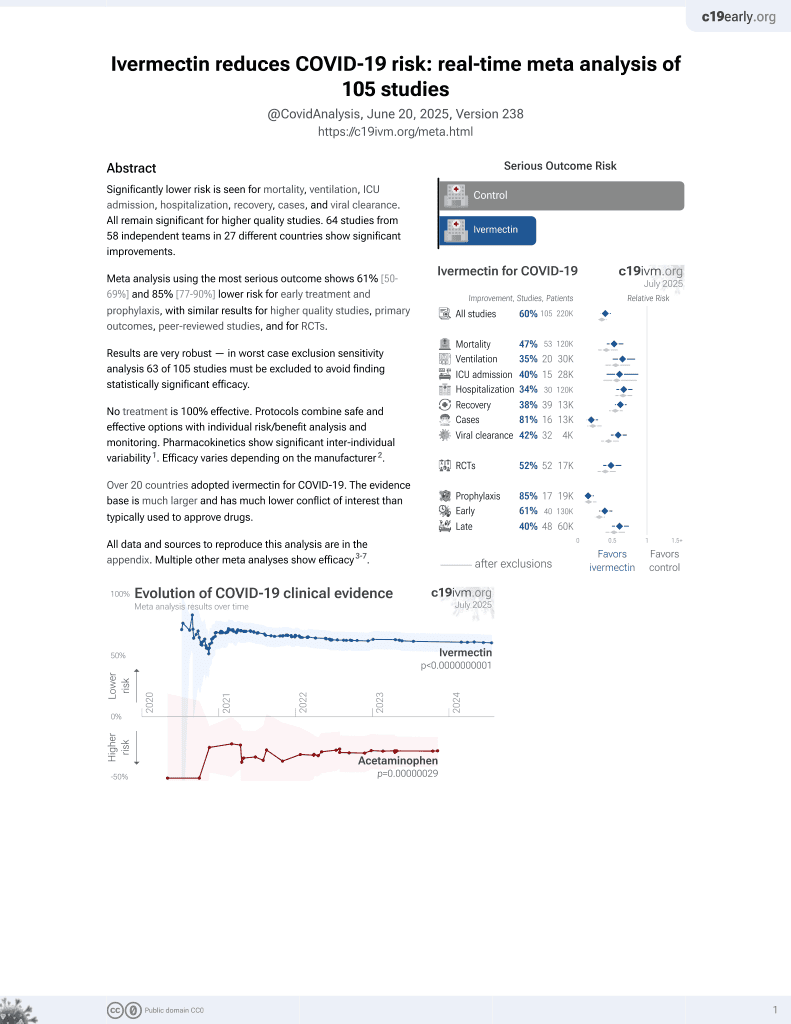
In silico analysis finding that the in vitro activity of ivermectin may explained by acting as an inhibitor of importin-α, dimeric 3CLpro, and Nsp9.
78 preclinical studies support the efficacy of ivermectin for COVID-19:
Ivermectin, better known for antiparasitic activity, is a broad spectrum antiviral with activity against many viruses including H7N775, Dengue40,76,77 , HIV-177, Simian virus 4078, Zika40,79,80 , West Nile80, Yellow Fever81,82, Japanese encephalitis81, Chikungunya82, Semliki Forest virus82, Human papillomavirus60, Epstein-Barr60, BK Polyomavirus83, and Sindbis virus82.
Ivermectin inhibits importin-α/β-dependent nuclear import of viral proteins75,77,78,84 , shows spike-ACE2 disruption at 1nM with microfluidic diffusional sizing41, binds to glycan sites on the SARS-CoV-2 spike protein preventing interaction with blood and epithelial cells and inhibiting hemagglutination44,85, shows dose-dependent inhibition of wildtype and omicron variants39, exhibits dose-dependent inhibition of lung injury65,70, may inhibit SARS-CoV-2 via IMPase inhibition40, may inhibit SARS-CoV-2 induced formation of fibrin clots resistant to degradation10, inhibits SARS-CoV-2 3CLpro57, may inhibit SARS-CoV-2 RdRp activity1,29, may minimize viral myocarditis by inhibiting NF-κB/p65-mediated inflammation in macrophages64, may be beneficial for COVID-19 ARDS by blocking GSDMD and NET formation86, may interfere with SARS-CoV-2's immune evasion via ORF8 binding5, may inhibit SARS-CoV-2 by disrupting CD147 interaction87-90, may inhibit SARS-CoV-2 attachment to lipid rafts via spike NTD binding3, shows protection against inflammation, cytokine storm, and mortality in an LPS mouse model sharing key pathological features of severe COVID-1962,91, may be beneficial in severe COVID-19 by binding IGF1 to inhibit the promotion of inflammation, fibrosis, and cell proliferation that leads to lung damage9, significantly mitigates bleomycin-induced pulmonary fibrosis by reducing collagen accumulation and inflammatory cell infiltration63, improves oxidative stress markers while suppressing myofibroblast proliferation63, may minimize SARS-CoV-2 induced cardiac damage43,51, may counter immune evasion by inhibiting NSP15-TBK1/KPNA1 interaction and restoring IRF3 activation92, may disrupt SARS-CoV-2 N and ORF6 protein nuclear transport and their suppression of host interferon responses2, reduces TAZ/YAP nuclear import, relieving SARS-CoV-2-driven suppression of IRF3 and NF-κB antiviral pathways38, increases Bifidobacteria which play a key role in the immune system93, has immunomodulatory54 and anti-inflammatory74,94 properties, and has an extensive and very positive safety profile95.

1.
Li et al., Drug–Target Interaction Prediction via Dual-Interaction Fusion, Molecules, doi:10.3390/molecules31030498.
2.
Gayozo et al., Binding affinities analysis of ivermectin, nucleocapsid and ORF6 proteins of SARS-CoV-2 to human importins α isoforms: A computational approach, Biotecnia, doi:10.18633/biotecnia.v27.2485.
3.
Lefebvre et al., Characterization and Fluctuations of an Ivermectin Binding Site at the Lipid Raft Interface of the N-Terminal Domain (NTD) of the Spike Protein of SARS-CoV-2 Variants, Viruses, doi:10.3390/v16121836.
4.
Haque et al., Exploring potential therapeutic candidates against COVID-19: a molecular docking study, Discover Molecules, doi:10.1007/s44345-024-00005-5.
5.
Bagheri-Far et al., Non-spike protein inhibition of SARS-CoV-2 by natural products through the key mediator protein ORF8, Molecular Biology Research Communications, doi:10.22099/mbrc.2024.50245.2001.
6.
de Oliveira Só et al., In Silico Comparative Analysis of Ivermectin and Nirmatrelvir Inhibitors Interacting with the SARS-CoV-2 Main Protease, Preprints, doi:10.20944/preprints202404.1825.v1.
7.
Agamah et al., Network-based multi-omics-disease-drug associations reveal drug repurposing candidates for COVID-19 disease phases, ScienceOpen, doi:10.58647/DRUGARXIV.PR000010.v1.
8.
Oranu et al., Validation of the binding affinities and stabilities of ivermectin and moxidectin against SARS-CoV-2 receptors using molecular docking and molecular dynamics simulation, GSC Biological and Pharmaceutical Sciences, doi:10.30574/gscbps.2024.26.1.0030.
9.
Zhao et al., Identification of the shared gene signatures between pulmonary fibrosis and pulmonary hypertension using bioinformatics analysis, Frontiers in Immunology, doi:10.3389/fimmu.2023.1197752.
10.
Vottero et al., Computational Prediction of the Interaction of Ivermectin with Fibrinogen, Molecular Sciences, doi:10.3390/ijms241411449.
11.
Chellasamy et al., Docking and molecular dynamics studies of human ezrin protein with a modelled SARS-CoV-2 endodomain and their interaction with potential invasion inhibitors, Journal of King Saud University - Science, doi:10.1016/j.jksus.2022.102277.
12.
Umar et al., Inhibitory potentials of ivermectin, nafamostat, and camostat on spike protein and some nonstructural proteins of SARS-CoV-2: Virtual screening approach, Jurnal Teknologi Laboratorium, doi:10.29238/teknolabjournal.v11i1.344.
13.
Alvarado et al., Interaction of the New Inhibitor Paxlovid (PF-07321332) and Ivermectin With the Monomer of the Main Protease SARS-CoV-2: A Volumetric Study Based on Molecular Dynamics, Elastic Networks, Classical Thermodynamics and SPT, Computational Biology and Chemistry, doi:10.1016/j.compbiolchem.2022.107692.
14.
Aminpour et al., In Silico Analysis of the Multi-Targeted Mode of Action of Ivermectin and Related Compounds, Computation, doi:10.3390/computation10040051.
15.
Parvez et al., Insights from a computational analysis of the SARS-CoV-2 Omicron variant: Host–pathogen interaction, pathogenicity, and possible drug therapeutics, Immunity, Inflammation and Disease, doi:10.1002/iid3.639.
16.
Francés-Monerris et al., Microscopic interactions between ivermectin and key human and viral proteins involved in SARS-CoV-2 infection, Physical Chemistry Chemical Physics, doi:10.1039/D1CP02967C.
17.
González-Paz et al., Comparative study of the interaction of ivermectin with proteins of interest associated with SARS-CoV-2: A computational and biophysical approach, Biophysical Chemistry, doi:10.1016/j.bpc.2021.106677.
18.
González-Paz (B) et al., Structural Deformability Induced in Proteins of Potential Interest Associated with COVID-19 by binding of Homologues present in Ivermectin: Comparative Study Based in Elastic Networks Models, Journal of Molecular Liquids, doi:10.1016/j.molliq.2021.117284.
19.
Rana et al., Ivermectin and Doxycycline combination as a promising anti-viral drug candidate: an in-silico and DFT study, In Silico Pharmacology, doi:10.1007/s40203-026-00576-w.
20.
Muthusamy et al., Virtual Screening Reveals Potential Anti-Parasitic Drugs Inhibiting the Receptor Binding Domain of SARS-CoV-2 Spike protein, Journal of Virology & Antiviral Research, www.scitechnol.com/abstract/virtual-screening-reveals-potential-antiparasitic-drugs-inhibiting-the-receptor-binding-domain-of-sarscov2-spike-protein-16398.html.
21.
Qureshi et al., Mechanistic insights into the inhibitory activity of FDA approved ivermectin against SARS-CoV-2: old drug with new implications, Journal of Biomolecular Structure and Dynamics, doi:10.1080/07391102.2021.1906750.
22.
Schöning et al., Highly-transmissible Variants of SARS-CoV-2 May Be More Susceptible to Drug Therapy Than Wild Type Strains, Research Square, doi:10.21203/rs.3.rs-379291/v1.
23.
Bello et al., Elucidation of the inhibitory activity of ivermectin with host nuclear importin α and several SARS-CoV-2 targets, Journal of Biomolecular Structure and Dynamics, doi:10.1080/07391102.2021.1911857.
24.
Udofia et al., In silico studies of selected multi-drug targeting against 3CLpro and nsp12 RNA-dependent RNA-polymerase proteins of SARS-CoV-2 and SARS-CoV, Network Modeling Analysis in Health Informatics and Bioinformatics, doi:10.1007/s13721-021-00299-2.
25.
Choudhury et al., Exploring the binding efficacy of ivermectin against the key proteins of SARS-CoV-2 pathogenesis: an in silico approach, Future Medicine, doi:10.2217/fvl-2020-0342.
26.
Kern et al., Modeling of SARS-CoV-2 Treatment Effects for Informed Drug Repurposing, Frontiers in Pharmacology, doi:10.3389/fphar.2021.625678.
27.
Saha et al., The Binding mechanism of ivermectin and levosalbutamol with spike protein of SARS-CoV-2, Structural Chemistry, doi:10.1007/s11224-021-01776-0.
28.
Eweas et al., Molecular Docking Reveals Ivermectin and Remdesivir as Potential Repurposed Drugs Against SARS-CoV-2, Frontiers in Microbiology, doi:10.3389/fmicb.2020.592908.
29.
Parvez (B) et al., Prediction of potential inhibitors for RNA-dependent RNA polymerase of SARS-CoV-2 using comprehensive drug repurposing and molecular docking approach, International Journal of Biological Macromolecules, doi:10.1016/j.ijbiomac.2020.09.098.
30.
Francés-Monerris (B) et al., Has Ivermectin Virus-Directed Effects against SARS-CoV-2? Rationalizing the Action of a Potential Multitarget Antiviral Agent, ChemRxiv, doi:10.26434/chemrxiv.12782258.v1.
31.
Kalhor et al., Repurposing of the approved small molecule drugs in order to inhibit SARS-CoV-2 S protein and human ACE2 interaction through virtual screening approaches, Journal of Biomolecular Structure and Dynamics, doi:10.1080/07391102.2020.1824816.
32.
Swargiary, A., Ivermectin as a promising RNA-dependent RNA polymerase inhibitor and a therapeutic drug against SARS-CoV2: Evidence from in silico studies, Research Square, doi:10.21203/rs.3.rs-73308/v1.
33.
Maurya, D., A Combination of Ivermectin and Doxycycline Possibly Blocks the Viral Entry and Modulate the Innate Immune Response in COVID-19 Patients, American Chemical Society (ACS), doi:10.26434/chemrxiv.12630539.v1.
34.
Lehrer et al., Ivermectin Docks to the SARS-CoV-2 Spike Receptor-binding Domain Attached to ACE2, In Vivo, 34:5, 3023-3026, doi:10.21873/invivo.12134.
35.
Suravajhala et al., Comparative Docking Studies on Curcumin with COVID-19 Proteins, Preprints, doi:10.20944/preprints202005.0439.v3.
36.
How et al., The Combination of Nirmatrelvir and Ivermectin Exerts Strongly Synergistic Antiviral and Anti-Inflammatory Effects Against Murine Coronavirus Infection of Macrophages, International Journal of Molecular Sciences, doi:10.3390/ijms27167316.
37.
Lew et al., Combination of Remdesivir and Ivermectin Exerts Highly Potent and Synergistic Antiviral Activity Against Murine Coronavirus and SARS-CoV-2 Infections, Cells, doi:10.3390/cells15131146.
38.
Kofler et al., M-Motif, a potential non-conventional NLS in YAP/TAZ and other cellular and viral proteins that inhibits classic protein import, iScience, doi:10.1016/j.isci.2025.112105.
39.
Shahin et al., The selective effect of Ivermectin on different human coronaviruses; in-vitro study, Research Square, doi:10.21203/rs.3.rs-4180797/v1.
40.
Jitobaom et al., Identification of inositol monophosphatase as a broad‐spectrum antiviral target of ivermectin, Journal of Medical Virology, doi:10.1002/jmv.29552.
41.
Fauquet et al., Microfluidic Diffusion Sizing Applied to the Study of Natural Products and Extracts That Modulate the SARS-CoV-2 Spike RBD/ACE2 Interaction, Molecules, doi:10.3390/molecules28248072.
42.
García-Aguilar et al., In Vitro Analysis of SARS-CoV-2 Spike Protein and Ivermectin Interaction, International Journal of Molecular Sciences, doi:10.3390/ijms242216392.
43.
Liu et al., SARS-CoV-2 viral genes Nsp6, Nsp8, and M compromise cellular ATP levels to impair survival and function of human pluripotent stem cell-derived cardiomyocytes, Stem Cell Research & Therapy, doi:10.1186/s13287-023-03485-3.
44.
Boschi et al., SARS-CoV-2 Spike Protein Induces Hemagglutination: Implications for COVID-19 Morbidities and Therapeutics and for Vaccine Adverse Effects, bioRxiv, doi:10.1101/2022.11.24.517882.
45.
De Forni et al., Synergistic drug combinations designed to fully suppress SARS-CoV-2 in the lung of COVID-19 patients, PLoS ONE, doi:10.1371/journal.pone.0276751.
46.
Saha (B) et al., Manipulation of Spray-Drying Conditions to Develop an Inhalable Ivermectin Dry Powder, Pharmaceutics, doi:10.3390/pharmaceutics14071432.
47.
Jitobaom (B) et al., Synergistic anti-SARS-CoV-2 activity of repurposed anti-parasitic drug combinations, BMC Pharmacology and Toxicology, doi:10.1186/s40360-022-00580-8.
48.
Croci et al., Liposomal Systems as Nanocarriers for the Antiviral Agent Ivermectin, International Journal of Biomaterials, doi:10.1155/2016/8043983.
49.
Zheng et al., Red blood cell-hitchhiking mediated pulmonary delivery of ivermectin: Effects of nanoparticle properties, International Journal of Pharmaceutics, doi:10.1016/j.ijpharm.2022.121719.
50.
Delandre et al., Antiviral Activity of Repurposing Ivermectin against a Panel of 30 Clinical SARS-CoV-2 Strains Belonging to 14 Variants, Pharmaceuticals, doi:10.3390/ph15040445.
51.
Liu (B) et al., Genome-wide analyses reveal the detrimental impacts of SARS-CoV-2 viral gene Orf9c on human pluripotent stem cell-derived cardiomyocytes, Stem Cell Reports, doi:10.1016/j.stemcr.2022.01.014.
52.
Segatori et al., Effect of Ivermectin and Atorvastatin on Nuclear Localization of Importin Alpha and Drug Target Expression Profiling in Host Cells from Nasopharyngeal Swabs of SARS-CoV-2- Positive Patients, Viruses, doi:10.3390/v13102084.
53.
Jitobaom (C) et al., Favipiravir and Ivermectin Showed in Vitro Synergistic Antiviral Activity against SARS-CoV-2, Research Square, doi:10.21203/rs.3.rs-941811/v1.
54.
Munson et al., Niclosamide and ivermectin modulate caspase-1 activity and proinflammatory cytokine secretion in a monocytic cell line, British Society For Nanomedicine Early Career Researcher Summer Meeting, 2021, web.archive.org/web/20230401070026/https://michealmunson.github.io/COVID.pdf.
55.
Mountain Valley MD, Mountain Valley MD Receives Successful Results From BSL-4 COVID-19 Clearance Trial on Three Variants Tested With Ivectosol™, 5/18, www.globenewswire.com/en/news-release/2021/05/18/2231755/0/en/Mountain-Valley-MD-Receives-Successful-Results-From-BSL-4-COVID-19-Clearance-Trial-on-Three-Variants-Tested-With-Ivectosol.html.
56.
Yesilbag et al., Ivermectin also inhibits the replication of bovine respiratory viruses (BRSV, BPIV-3, BoHV-1, BCoV and BVDV) in vitro, Virus Research, doi:10.1016/j.virusres.2021.198384.
57.
Mody et al., Identification of 3-chymotrypsin like protease (3CLPro) inhibitors as potential anti-SARS-CoV-2 agents, Communications Biology, doi:10.1038/s42003-020-01577-x.
58.
Jeffreys et al., Remdesivir-ivermectin combination displays synergistic interaction with improved in vitro activity against SARS-CoV-2, International Journal of Antimicrobial Agents, doi:10.1016/j.ijantimicag.2022.106542.
59.
Surnar et al., Clinically Approved Antiviral Drug in an Orally Administrable Nanoparticle for COVID-19, ACS Pharmacol. Transl. Sci., doi:10.1021/acsptsci.0c00179.
60.
Li (B) et al., Quantitative proteomics reveals a broad-spectrum antiviral property of ivermectin, benefiting for COVID-19 treatment, J. Cellular Physiology, doi:10.1002/jcp.30055.
61.
Caly et al., The FDA-approved drug ivermectin inhibits the replication of SARS-CoV-2 in vitro, Antiviral Research, doi:10.1016/j.antiviral.2020.104787.
62.
Zhang et al., Ivermectin inhibits LPS-induced production of inflammatory cytokines and improves LPS-induced survival in mice, Inflammation Research, doi:10.1007/s00011-008-8007-8.
63.
Zaher et al., Testing the Possible Protective Effect of Ivermectin on Bleomycin-Induced Pulmonary Fibrosis in Albino Rats: Histological and Immunohistochemical Study, Medicina, doi:10.3390/medicina62030560.
64.
Gao et al., Ivermectin ameliorates acute myocarditis via the inhibition of importin-mediated nuclear translocation of NF-κB/p65, International Immunopharmacology, doi:10.1016/j.intimp.2024.112073.
65.
Abd-Elmawla et al., Suppression of NLRP3 inflammasome by ivermectin ameliorates bleomycin-induced pulmonary fibrosis, Journal of Zhejiang University-SCIENCE B, doi:10.1631/jzus.B2200385.
66.
Uematsu et al., Prophylactic administration of ivermectin attenuates SARS-CoV-2 induced disease in a Syrian Hamster Model, The Journal of Antibiotics, doi:10.1038/s41429-023-00623-0.
67.
Albariqi et al., Pharmacokinetics and Safety of Inhaled Ivermectin in Mice as a Potential COVID-19 Treatment, International Journal of Pharmaceutics, doi:10.1016/j.ijpharm.2022.121688.
68.
Errecalde et al., Safety and Pharmacokinetic Assessments of a Novel Ivermectin Nasal Spray Formulation in a Pig Model, Journal of Pharmaceutical Sciences, doi:10.1016/j.xphs.2021.01.017.
69.
Madrid et al., Safety of oral administration of high doses of ivermectin by means of biocompatible polyelectrolytes formulation, Heliyon, doi:10.1016/j.heliyon.2020.e05820.
70.
Ma et al., Ivermectin contributes to attenuating the severity of acute lung injury in mice, Biomedicine & Pharmacotherapy, doi:10.1016/j.biopha.2022.113706.
71.
de Melo et al., Attenuation of clinical and immunological outcomes during SARS-CoV-2 infection by ivermectin, EMBO Mol. Med., doi:10.15252/emmm.202114122.
72.
Arévalo et al., Ivermectin reduces in vivo coronavirus infection in a mouse experimental model, Scientific Reports, doi:10.1038/s41598-021-86679-0.
73.
Chaccour et al., Nebulized ivermectin for COVID-19 and other respiratory diseases, a proof of concept, dose-ranging study in rats, Scientific Reports, doi:10.1038/s41598-020-74084-y.
74.
Yan et al., Anti-inflammatory effects of ivermectin in mouse model of allergic asthma, Inflammation Research, doi:10.1007/s00011-011-0307-8.
75.
Götz et al., Influenza A viruses escape from MxA restriction at the expense of efficient nuclear vRNP import, Scientific Reports, doi:10.1038/srep23138.
76.
Tay et al., Nuclear localization of dengue virus (DENV) 1–4 non-structural protein 5; protection against all 4 DENV serotypes by the inhibitor Ivermectin, Antiviral Research, doi:10.1016/j.antiviral.2013.06.002.
77.
Wagstaff et al., Ivermectin is a specific inhibitor of importin α/β-mediated nuclear import able to inhibit replication of HIV-1 and dengue virus, Biochemical Journal, doi:10.1042/BJ20120150.
78.
Wagstaff (B) et al., An AlphaScreen®-Based Assay for High-Throughput Screening for Specific Inhibitors of Nuclear Import, SLAS Discovery, doi:10.1177/1087057110390360.
79.
Barrows et al., A Screen of FDA-Approved Drugs for Inhibitors of Zika Virus Infection, Cell Host & Microbe, doi:10.1016/j.chom.2016.07.004.
80.
Yang et al., The broad spectrum antiviral ivermectin targets the host nuclear transport importin α/β1 heterodimer, Antiviral Research, doi:10.1016/j.antiviral.2020.104760.
81.
Mastrangelo et al., Ivermectin is a potent inhibitor of flavivirus replication specifically targeting NS3 helicase activity: new prospects for an old drug, Journal of Antimicrobial Chemotherapy, doi:10.1093/jac/dks147.
82.
Varghese et al., Discovery of berberine, abamectin and ivermectin as antivirals against chikungunya and other alphaviruses, Antiviral Research, doi:10.1016/j.antiviral.2015.12.012.
83.
Bennett et al., Role of a nuclear localization signal on the minor capsid Proteins VP2 and VP3 in BKPyV nuclear entry, Virology, doi:10.1016/j.virol.2014.10.013.
84.
Kosyna et al., The importin α/β-specific inhibitor Ivermectin affects HIF-dependent hypoxia response pathways, Biological Chemistry, doi:10.1515/hsz-2015-0171.
85.
Scheim et al., Sialylated Glycan Bindings from SARS-CoV-2 Spike Protein to Blood and Endothelial Cells Govern the Severe Morbidities of COVID-19, International Journal of Molecular Sciences, doi:10.3390/ijms242317039.
86.
Liu (C) et al., Crosstalk between neutrophil extracellular traps and immune regulation: insights into pathobiology and therapeutic implications of transfusion-related acute lung injury, Frontiers in Immunology, doi:10.3389/fimmu.2023.1324021.
87.
Shouman et al., SARS-CoV-2-associated lymphopenia: possible mechanisms and the role of CD147, Cell Communication and Signaling, doi:10.1186/s12964-024-01718-3.
88.
Scheim (B), D., Ivermectin for COVID-19 Treatment: Clinical Response at Quasi-Threshold Doses Via Hypothesized Alleviation of CD147-Mediated Vascular Occlusion, SSRN, doi:10.2139/ssrn.3636557.
89.
Scheim (C), D., From Cold to Killer: How SARS-CoV-2 Evolved without Hemagglutinin Esterase to Agglutinate and Then Clot Blood Cells, Center for Open Science, doi:10.31219/osf.io/sgdj2.
90.
Behl et al., CD147-spike protein interaction in COVID-19: Get the ball rolling with a novel receptor and therapeutic target, Science of The Total Environment, doi:10.1016/j.scitotenv.2021.152072.
91.
DiNicolantonio et al., Ivermectin may be a clinically useful anti-inflammatory agent for late-stage COVID-19, Open Heart, doi:10.1136/openhrt-2020-001350.
92.
Mothae et al., SARS-CoV-2 host-pathogen interactome: insights into more players during pathogenesis, Virology, doi:10.1016/j.virol.2025.110607.
93.
Hazan et al., Treatment with Ivermectin Increases the Population of Bifidobacterium in the Gut, ACG 2023, acg2023posters.eventscribe.net/posterspeakers.asp.
Bello et al., 10 Apr 2021, peer-reviewed, 1 author.
In silico studies are an important part of preclinical research, however results may be very different in vivo.
Elucidation of the inhibitory activity of ivermectin with host nuclear importin α and several SARS-CoV-2 targets
Journal of Biomolecular Structure and Dynamics, doi:10.1080/07391102.2021.1911857
Ivermectin (IVM) is an FDA-approved drug that has shown antiviral activity against a wide variety of viruses in recent years. IVM inhibits the formation of the importin-a/b1 heterodimeric complex responsible for the translocation and replication of various viral species proteins. Also, IVM hampers SARS-CoV-2 replication in vitro; however, the molecular mechanism through which IVM inhibits SARS-CoV-2 is not well understood. Previous studies have explored the molecular mechanism through which IVM inhibits importin-a and several potential targets associated with COVID-19 by using docking approaches and MD simulations to corroborate the docked complexes. This study explores the energetic and structural properties through which IVM inhibits importin-a and five targets associated with COVID-19 by using docking and MD simulations combined with the molecular mechanics generalized Born surface area (MMGBSA) approach. Energetic and structural analysis showed that the main protease 3CL pro reached the most favorable affinity, followed by importin-a and Nsp9, which shared a similar relationship. Therefore, in vitro activity of IVM can be explained by acting as an inhibitor of importin-a, dimeric 3CL pro , and Nsp9, but mainly over dimeric 3CL pro .
References
Azam, Taban, Eid, Iqbal, Alam et al., An in-silico analysis of ivermectin interaction with potential SARS-CoV-2 targets and host nuclear importin a, Journal of Biomolecular Structure and Dynamics
Bello, Garc Ia-Hern Andez, Ligand entry into the calyx of b-lactoglobulin, Biopolymers, doi:10.1002/bip.22454
Bello, Mart Inez-Muñoz, Balbuena-Rebolledo, Identification of saquinavir as a potent inhibitor of dimeric SARS-CoV2 main protease through MM/GBSA, Journal of Molecular Modeling, doi:10.1007/s00894-020-04600-4
Bello, Prediction of potential inhibitors of the dimeric SARS-CoV2 main proteinase through the MM/GBSA approach, Journal of Molecular Graphics & Modelling, doi:10.1016/j.jmgm.2020.107762
Berendsen, Postma, Van Gunsteren, Dinola, Haak, Molecular dynamics with coupling to an external bath, Journal of Chemical Physics
Borkotoky, Banerjee, A computational prediction of SARS-CoV-2 structural protein inhibitors from Azadirachta indica (Neem), Journal of Biomolecular Structure and Dynamics
Brinks, Ibert, From corona virus to corona crisis: The value of an analytical and geographical understanding of crisis, Tijdschrift Voor Economische en Sociale Geografie, doi:10.1111/tesg.12428
Caly, Druce, Catton, Jans, Wagstaff, The FDA-approved drug ivermectin inhibits the replication of SARS-CoV-2 in vitro, Antiviral Research, doi:10.1016/j.antiviral.2020.104787
Case, Cheatham, Darden, Gohlke, Luo et al., The Amber biomolecular simulation programs, Journal of Computational Chemistry, doi:10.1002/jcc.20290
Chen, Guo, Emerging coronaviruses: Genome structure, replication, parthenogenesis, Journal of Virology
Darden, York, Pedersen, Particle mesh Ewald-an N.Log(N) method for Ewald sums in large systems, Journal of Chemical Physics, doi:10.1063/1.464397
De Oliveira, Rocha, Paluch, Costa, Repurposing approved drugs as inhibitors of SARS-CoV-2S-protein from molecular modeling and virtual screening, Journal of Biomolecular Structure and Dynamics
Duan, Wu, Chowdhury, Lee, Xiong et al., A point-charge force field for molecular mechanics simulations of proteins based on condensed-phase quantum mechanical calculations, Journal of Computational Chemistry, doi:10.1002/jcc.10349
Fraser, Watanabe, Wang, Chan, Maher et al., A nuclear transport inhibitor that modulates the unfolded protein response and provides in vivo protection against lethal dengue virus infection, The Journal of Infectious Diseases, doi:10.1093/infdis/jiu319
Frisch, Schlegel, Scuseria, Revision D.01
Gohlke, Case, Converging free energy estimates: MM-PB(GB)SA studies on the protein-protein complex Ras-Raf, Journal of Computational Chemistry, doi:10.1002/jcc.10379
Gordon, Jang, Bouhaddou, Xu, Obernier et al., A SARS-CoV-2 protein interaction map reveals targets for drug repurposing, Nature, doi:10.1038/s41586-020-2286-9
Gorlich, Henklein, Laskey, Hartmann, A 41 amino acid motif in importin-alpha confers binding to importin-beta and hence transit into the nucleus, The EMBO Journal, doi:10.1002/j.1460-2075.1996.tb00530.x
Guan, Ni, Hu, Liang, Ou et al., Clinical characteristics of coronavirus disease 2019 in China, New England Journal of Medicine, doi:10.1056/NEJMoa2002032
Gupta, Biswal, Panda, Ray, Rana, Binding mechanism and structural insights into the identified protein target of COVID-19 and importin-a with in-vitro effective drug ivermectin, Journal of Biomolecular Structure and Dynamics
Huang, Wang, Li, Ren, Zhao et al., Clinical features of patients infected with 2019 novel coronavirus in Wuhan, China, Lancet, doi:10.1016/S0140-6736(20)30183-5
Jia, Yan, Ren, Wu, Wang et al., Delicate structural coordination of the severe acute respiratory syndrome coronavirus Nsp13 upon ATP hydrolysis, Nucleic Acids Research, doi:10.1093/nar/gkz409
Jorgensen, Chandrasekhar, Madura, Impey, Klein, Comparison of simple potential functions for simulating liquid water, Journal of Chemical Physics, doi:10.1063/1.445869
Kanchan, John, Parvesh, Jeroen, Rolf, Coronavirus main proteinase (3CLpro) structure: Basis for design of anti-SARS drugs, Science
Khan, Ali, Wang, Irfan, Khan et al., Marine natural compounds as potents inhibitors against the main protease of SARS-CoV-2-a molecular dynamic study, Journal of Biomolecular Structure and Dynamics
Kobe, Autoinhibition by an internal nuclear localization signal revealed by the crystal structure of mammalian importin alpha, Nature Structural Biology, doi:10.1038/7625
Kong, Yang, Xue, Liu, Wang et al., COVID-19 Docking Server: A meta server for docking small molecules, peptides and antibodies against potential targets of COVID-19, Bioinformatics, doi:10.1093/bioinformatics/btaa645
Kwong, Schwartz, Campitelli, Chung, Crowcroft et al., Acute myocardial infarction after laboratory-confirmed influenza infection, New England Journal of Medicine, doi:10.1056/NEJMoa1702090
Li, Caution on kidney dysfunctions of COVID-19 patients, SSRN Electronic Journal, doi:10.1101/2020.02.08.20021212
Littler, Gully, Colson, Rossjohn, Crystal Structure of the SARS-CoV-2 Non-structural Protein 9, Nsp9. iScience, doi:10.1016/j.isci.2020.101258
Luvira, Watthanakulpanich, Pittisuttithum, Management of Strongyloides stercoralis: A puzzling parasite, International Health, doi:10.1093/inthealth/ihu058
Miller, Mcgee, Swails, Homeyer, Gohlke et al., MMPBSA.py: An efficient program for end-state free energy calculations, Journal of Chemical Theory and Computation, doi:10.1021/ct300418h
Morris, Huey, Lindstrom, Sanner, Belew et al., AutoDock4 and AutoDockTools4: Automated docking with selective receptor flexibility, Journal of Computational Chemistry, doi:10.1002/jcc.21256
Nguyen, Yang, Ito, Matte, Shaman et al., Seasonal influenza infections and cardiovascular disease mortality, JAMA Cardiology, doi:10.1001/jamacardio.2016.0433
Onufriev, Bashford, Case, Exploring protein native states and large-scale conformational changes with a modified generalized born model, Proteins: Structure, Function, and Bioinformatics, doi:10.1002/prot.20033
Pumroy, Cingolani, Diversification of importin-a isoforms in cellular trafficking and disease states, Biochemical Journal, doi:10.1042/BJ20141186
Qiu, Xu, Functional studies of the coronavirus nonstructural proteins, STEMedicine, doi:10.37175/stemedicine.v1i2.39
Schr€ Odinger, None, Maestro, version
Shu, Gong, Structural basis of viral RNA-dependent RNA polymerase catalysis and translocation, Proceedings of the National Academy of Sciences
Sutton, Fry, Carter, Sainsbury, Walter et al., The nsp9 Replicase Protein of SARS-coronavirus, structure and functional insights, Structure, doi:10.1016/j.str.2004.01.016
Tay, Smith, Ng, Chan, Zhao et al., The C-terminal 18 amino acid region of dengue virus NS5 regulates its subcellular localization and contains a conserved arginine residue essential for infectious virus production, PLoS Pathogens, doi:10.1371/journal.ppat.1005886
Van Gunsteren, Berendsen, Algorithms for macromolecular dynamics and constraint dynamics, Molecular Physics, doi:10.1080/00268977700102571
Wagstaff, Sivakumaran, Heaton, Harrich, Jans, Ivermectin is a specific inhibitor of importin a/b-mediated nuclear import able to inhibit replication of HIV-1 and dengue virus, Biochemical Journal, doi:10.1042/BJ20120150
Walls, Park, Tortorici, Wall, Mcguire et al., Structure, function, and antigenicity of the SARS-CoV-2 spike glycoprotein, Cell, doi:10.1016/j.cell.2020.02.058
Wang, Wolf, Caldwell, Kollman, Case, Development and testing of a general amber force field, Journal of Computational Chemistry, doi:10.1002/jcc.20035
Woo, Huang, Lau, Yuen, Coronavirus genomics and bioinformatics analysis, Viruses, doi:10.3390/v2081803
Wu, Liu, Yang, Zhang, Zhong et al., Analysis of therapeutic targets for SARS-CoV-2 and discovery of potential drugs by computational methods, Acta Pharmaceutica Sinica B, doi:10.1016/j.apsb.2020.02.008
Yamasmith, Efficacy and safety of ivermectin against dengue infection: A phase III, randomized, double-blind, placebo-controlled trial
Yang, Atkinson, Fraser, Wang, Maher et al., Novel flavivirus antiviral that targets the host nuclear transport importin a/b1 heterodimer, Cells, doi:10.3390/cells8030281
Zhang, Lin, Sun, Curth, Drosten et al., Crystal structure of SARS-CoV-2 main protease provides a basis for design of improved a-ketoamide inhibitors, Science, doi:10.1126/science.abb3405
Zhu, Zhang, Wang, Li, Yang et al., A novel coronavirus from patients with pneumonia in China, 2019, New England Journal of Medicine, doi:10.1056/NEJMoa2001017
DOI record:
{
"DOI": "10.1080/07391102.2021.1911857",
"ISSN": [
"0739-1102",
"1538-0254"
],
"URL": "http://dx.doi.org/10.1080/07391102.2021.1911857",
"alternative-id": [
"10.1080/07391102.2021.1911857"
],
"assertion": [
{
"label": "Peer Review Statement",
"name": "peerreview_statement",
"order": 1,
"value": "The publishing and review policy for this title is described in its Aims & Scope."
},
{
"URL": "http://www.tandfonline.com/action/journalInformation?show=aimsScope&journalCode=tbsd20",
"label": "Aim & Scope",
"name": "aims_and_scope_url",
"order": 2,
"value": "http://www.tandfonline.com/action/journalInformation?show=aimsScope&journalCode=tbsd20"
},
{
"group": {
"label": "Publication History",
"name": "publication_history"
},
"label": "Received",
"name": "received",
"order": 0,
"value": "2021-02-05"
},
{
"group": {
"label": "Publication History",
"name": "publication_history"
},
"label": "Accepted",
"name": "accepted",
"order": 2,
"value": "2021-03-26"
},
{
"group": {
"label": "Publication History",
"name": "publication_history"
},
"label": "Published",
"name": "published",
"order": 3,
"value": "2021-04-10"
}
],
"author": [
{
"ORCID": "http://orcid.org/0000-0002-9686-0755",
"affiliation": [
{
"name": "Laboratorio de Diseño y Desarrollo de Nuevos Fármacos e Innovación Biotecnológica de la Escuela Superior de Medicina, Instituto Politécnico Nacional, Ciudad de Mexico, Mexico"
}
],
"authenticated-orcid": false,
"family": "Bello",
"given": "Martiniano",
"sequence": "first"
}
],
"container-title": "Journal of Biomolecular Structure and Dynamics",
"container-title-short": "Journal of Biomolecular Structure and Dynamics",
"content-domain": {
"crossmark-restriction": true,
"domain": [
"www.tandfonline.com"
]
},
"created": {
"date-parts": [
[
2021,
4,
10
]
],
"date-time": "2021-04-10T13:33:05Z",
"timestamp": 1618061585000
},
"deposited": {
"date-parts": [
[
2022,
12,
28
]
],
"date-time": "2022-12-28T19:18:40Z",
"timestamp": 1672255120000
},
"funder": [
{
"DOI": "10.13039/501100003141",
"award": [
"CB-A1-S-",
"8"
],
"doi-asserted-by": "publisher",
"name": "CONACYT"
},
{
"DOI": "10.13039/501100003069",
"doi-asserted-by": "publisher",
"name": "SIP/IPN"
}
],
"indexed": {
"date-parts": [
[
2023,
11,
10
]
],
"date-time": "2023-11-10T12:56:14Z",
"timestamp": 1699620974111
},
"is-referenced-by-count": 8,
"issue": "18",
"issued": {
"date-parts": [
[
2021,
4,
10
]
]
},
"journal-issue": {
"issue": "18",
"published-print": {
"date-parts": [
[
2022,
11,
24
]
]
}
},
"language": "en",
"link": [
{
"URL": "https://www.tandfonline.com/doi/pdf/10.1080/07391102.2021.1911857",
"content-type": "unspecified",
"content-version": "vor",
"intended-application": "similarity-checking"
}
],
"member": "301",
"original-title": [],
"page": "8375-8383",
"prefix": "10.1080",
"published": {
"date-parts": [
[
2021,
4,
10
]
]
},
"published-online": {
"date-parts": [
[
2021,
4,
10
]
]
},
"published-print": {
"date-parts": [
[
2022,
11,
24
]
]
},
"publisher": "Informa UK Limited",
"reference": [
{
"DOI": "10.1080/07391102.2020.1774419",
"doi-asserted-by": "publisher",
"key": "CIT0001"
},
{
"DOI": "10.1080/07391102.2020.1841028",
"doi-asserted-by": "publisher",
"key": "CIT0002"
},
{
"DOI": "10.1016/j.jmgm.2020.107762",
"doi-asserted-by": "publisher",
"key": "CIT0003"
},
{
"DOI": "10.1002/bip.22454",
"doi-asserted-by": "publisher",
"key": "CIT0004"
},
{
"DOI": "10.1007/s00894-020-04600-4",
"doi-asserted-by": "publisher",
"key": "CIT0005"
},
{
"DOI": "10.1063/1.448118",
"doi-asserted-by": "publisher",
"key": "CIT0006"
},
{
"DOI": "10.1111/tesg.12428",
"doi-asserted-by": "publisher",
"key": "CIT0007"
},
{
"DOI": "10.1016/j.antiviral.2020.104787",
"doi-asserted-by": "publisher",
"key": "CIT0008"
},
{
"DOI": "10.1002/jcc.20290",
"doi-asserted-by": "publisher",
"key": "CIT0009"
},
{
"author": "Chen Y. L. Q.",
"first-page": "418423",
"journal-title": "Journal of Virology",
"key": "CIT0010",
"volume": "92",
"year": "2020"
},
{
"DOI": "10.1063/1.464397",
"doi-asserted-by": "publisher",
"key": "CIT0011"
},
{
"DOI": "10.1080/07391102.2020.1772885",
"doi-asserted-by": "publisher",
"key": "CIT0012"
},
{
"DOI": "10.1002/jcc.10349",
"doi-asserted-by": "publisher",
"key": "CIT0014"
},
{
"DOI": "10.1093/infdis/jiu319",
"doi-asserted-by": "publisher",
"key": "CIT0015"
},
{
"key": "CIT0016",
"unstructured": "Frisch, M. J. T., G. W., Schlegel, H. B. & Scuseria, G. E. (2009). Gaussian 09, Revision D.01. Gaussian Gaussian Inc."
},
{
"DOI": "10.1002/jcc.10379",
"doi-asserted-by": "publisher",
"key": "CIT0017"
},
{
"DOI": "10.1038/s41586-020-2286-9",
"doi-asserted-by": "publisher",
"key": "CIT0018"
},
{
"DOI": "10.1002/j.1460-2075.1996.tb00530.x",
"doi-asserted-by": "publisher",
"key": "CIT0019"
},
{
"DOI": "10.1056/NEJMoa2002032",
"doi-asserted-by": "publisher",
"key": "CIT0020"
},
{
"DOI": "10.1016/S0140-6736(20)30183-5",
"doi-asserted-by": "publisher",
"key": "CIT0021"
},
{
"DOI": "10.1093/nar/gkz409",
"doi-asserted-by": "publisher",
"key": "CIT0022"
},
{
"DOI": "10.1063/1.445869",
"doi-asserted-by": "publisher",
"key": "CIT0023"
},
{
"DOI": "10.1126/science.1085658",
"doi-asserted-by": "publisher",
"key": "CIT0024"
},
{
"author": "Khan M. T.",
"first-page": "1",
"journal-title": "Journal of Biomolecular Structure and Dynamics",
"key": "CIT0025",
"year": "2020"
},
{
"DOI": "10.1038/7625",
"doi-asserted-by": "publisher",
"key": "CIT0026"
},
{
"DOI": "10.1093/bioinformatics/btaa645",
"doi-asserted-by": "publisher",
"key": "CIT0027"
},
{
"DOI": "10.1056/NEJMoa1702090",
"doi-asserted-by": "publisher",
"key": "CIT0028"
},
{
"DOI": "10.1016/j.isci.2020.101258",
"doi-asserted-by": "publisher",
"key": "CIT0013"
},
{
"author": "Li Z.",
"journal-title": "SSRN Electronic Journal",
"key": "CIT0029",
"volume": "2020",
"year": "2020"
},
{
"DOI": "10.1093/inthealth/ihu058",
"doi-asserted-by": "publisher",
"key": "CIT0030"
},
{
"DOI": "10.1021/ct300418h",
"doi-asserted-by": "publisher",
"key": "CIT0031"
},
{
"DOI": "10.1002/jcc.21256",
"doi-asserted-by": "publisher",
"key": "CIT0032"
},
{
"DOI": "10.1001/jamacardio.2016.0433",
"doi-asserted-by": "publisher",
"key": "CIT0033"
},
{
"DOI": "10.1002/prot.20033",
"doi-asserted-by": "publisher",
"key": "CIT0034"
},
{
"DOI": "10.1042/BJ20141186",
"doi-asserted-by": "publisher",
"key": "CIT0035"
},
{
"DOI": "10.37175/stemedicine.v1i2.39",
"doi-asserted-by": "publisher",
"key": "CIT0036"
},
{
"DOI": "10.17265/2159-5313/2016.09.003",
"doi-asserted-by": "publisher",
"key": "CIT0037"
},
{
"author": "Sen Gupta P. S.",
"first-page": "1",
"journal-title": "Journal of Biomolecular Structure and Dynamics",
"key": "CIT0038",
"year": "2020"
},
{
"DOI": "10.1073/pnas.1602591113",
"doi-asserted-by": "publisher",
"key": "CIT0039"
},
{
"DOI": "10.1016/j.str.2004.01.016",
"doi-asserted-by": "publisher",
"key": "CIT0040"
},
{
"DOI": "10.1371/journal.ppat.1005886",
"doi-asserted-by": "publisher",
"key": "CIT0041"
},
{
"DOI": "10.1080/00268977700102571",
"doi-asserted-by": "publisher",
"key": "CIT0042"
},
{
"DOI": "10.1042/BJ20120150",
"doi-asserted-by": "publisher",
"key": "CIT0043"
},
{
"DOI": "10.1016/j.cell.2020.02.058",
"doi-asserted-by": "publisher",
"key": "CIT0044"
},
{
"DOI": "10.1002/jcc.20035",
"doi-asserted-by": "publisher",
"key": "CIT0045"
},
{
"DOI": "10.3390/v2081803",
"doi-asserted-by": "publisher",
"key": "CIT0046"
},
{
"DOI": "10.1016/j.apsb.2020.02.008",
"doi-asserted-by": "publisher",
"key": "CIT0047"
},
{
"author": "Yamasmith E.",
"key": "CIT0048",
"volume-title": "34th Annual Meeting the Royal College of Physicians of Thailand. Internal Medicine and One Health",
"year": "2018"
},
{
"DOI": "10.3390/cells8030281",
"doi-asserted-by": "publisher",
"key": "CIT0049"
},
{
"DOI": "10.1126/science.abb3405",
"doi-asserted-by": "publisher",
"key": "CIT0050"
},
{
"DOI": "10.1056/NEJMoa2001017",
"doi-asserted-by": "publisher",
"key": "CIT0051"
}
],
"reference-count": 51,
"references-count": 51,
"relation": {},
"resource": {
"primary": {
"URL": "https://www.tandfonline.com/doi/full/10.1080/07391102.2021.1911857"
}
},
"score": 1,
"short-title": [],
"source": "Crossref",
"subject": [],
"subtitle": [],
"title": "Elucidation of the inhibitory activity of ivermectin with host nuclear importin α and several SARS-CoV-2 targets",
"type": "journal-article",
"update-policy": "http://dx.doi.org/10.1080/tandf_crossmark_01",
"volume": "40"
}