In vitro effect of hydroxychloroquine on pluripotent stem cells and their cardiomyocytes derivatives
et al., Frontiers in Pharmacology, doi:10.3389/fphar.2023.1128382, Jul 2023
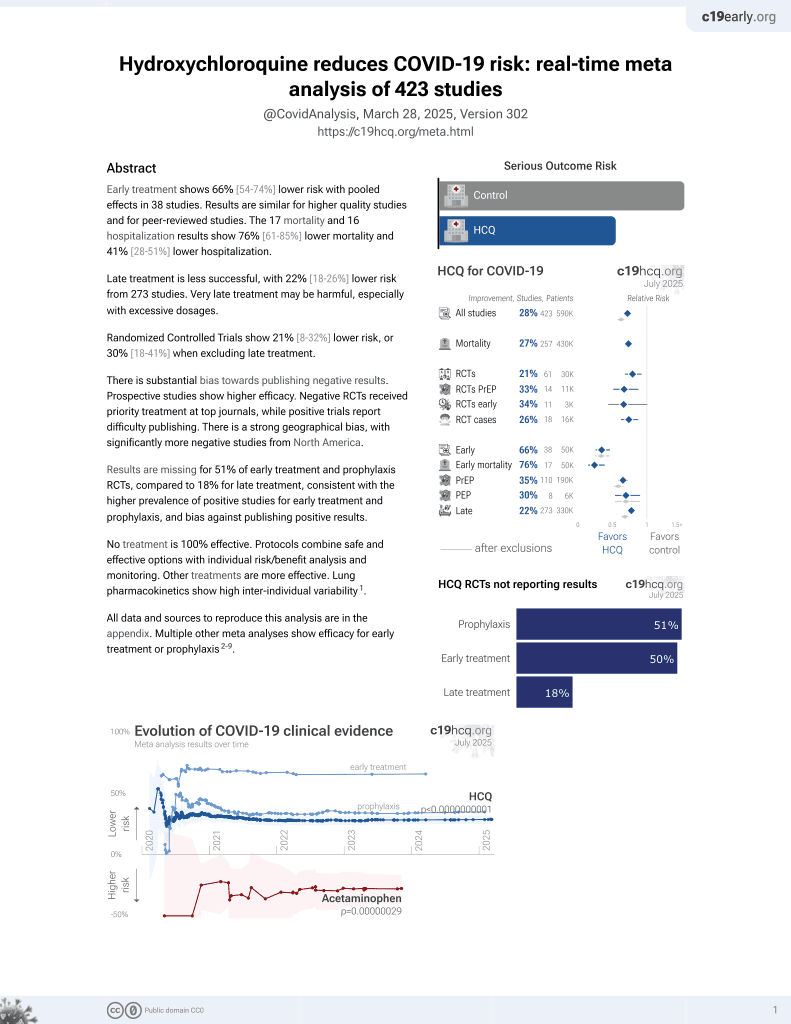
HCQ for COVID-19
1st treatment shown to reduce risk in
March 2020, now with p < 0.0000000001 from 425 studies, used in 59 countries.
No treatment is 100% effective.
Protocols combine treatments.
In vitro study of HCQ with mouse and human pluripotent stem cells and their cardiomyocyte derivatives. Results suggest HCQ has differential dose-dependent effects in mouse vs. human stem cell-derived cardiomyocytes. At lower concentrations (20-50μM), HCQ promoted proliferation and contractility. However at higher doses, HCQ was toxic. 20μM of HCQ promoted proliferation of stem cells, suggesting it may have a cardioprotective effect and could be a candidate for tissue repair. But higher doses above 100μM induced apoptosis and negative inotropic effects. The authors recommend careful HCQ dosing to avoid potential cardiotoxicity. Monitoring of treatment in lifelong users is also advised due to HCQ's long half-life.
41 preclinical studies support the efficacy of HCQ for COVID-19:

1.
Shang et al., Identification of Cathepsin L as the molecular target of hydroxychloroquine with chemical proteomics, Molecular & Cellular Proteomics, doi:10.1016/j.mcpro.2025.101314.
2.
González-Paz et al., Biophysical Analysis of Potential Inhibitors of SARS-CoV-2 Cell Recognition and Their Effect on Viral Dynamics in Different Cell Types: A Computational Prediction from In Vitro Experimental Data, ACS Omega, doi:10.1021/acsomega.3c06968.
3.
Alkafaas et al., A study on the effect of natural products against the transmission of B.1.1.529 Omicron, Virology Journal, doi:10.1186/s12985-023-02160-6.
4.
Guimarães Silva et al., Are Non-Structural Proteins From SARS-CoV-2 the Target of Hydroxychloroquine? An in Silico Study, ACTA MEDICA IRANICA, doi:10.18502/acta.v61i2.12533.
5.
Nguyen et al., The Potential of Ameliorating COVID-19 and Sequelae From Andrographis paniculata via Bioinformatics, Bioinformatics and Biology Insights, doi:10.1177/11779322221149622.
7.
Yadav et al., Repurposing the Combination Drug of Favipiravir, Hydroxychloroquine and Oseltamivir as a Potential Inhibitor Against SARS-CoV-2: A Computational Study, Research Square, doi:10.21203/rs.3.rs-628277/v1.
8.
Hussein et al., Molecular Docking Identification for the efficacy of Some Zinc Complexes with Chloroquine and Hydroxychloroquine against Main Protease of COVID-19, Journal of Molecular Structure, doi:10.1016/j.molstruc.2021.129979.
9.
Baildya et al., Inhibitory capacity of Chloroquine against SARS-COV-2 by effective binding with Angiotensin converting enzyme-2 receptor: An insight from molecular docking and MD-simulation studies, Journal of Molecular Structure, doi:10.1016/j.molstruc.2021.129891.
10.
Noureddine et al., Quantum chemical studies on molecular structure, AIM, ELF, RDG and antiviral activities of hybrid hydroxychloroquine in the treatment of COVID-19: molecular docking and DFT calculations, Journal of King Saud University - Science, doi:10.1016/j.jksus.2020.101334.
11.
Tarek et al., Pharmacokinetic Basis of the Hydroxychloroquine Response in COVID-19: Implications for Therapy and Prevention, European Journal of Drug Metabolism and Pharmacokinetics, doi:10.1007/s13318-020-00640-6.
12.
Rowland Yeo et al., Impact of Disease on Plasma and Lung Exposure of Chloroquine, Hydroxychloroquine and Azithromycin: Application of PBPK Modeling, Clinical Pharmacology & Therapeutics, doi:10.1002/cpt.1955.
13.
Pinatel et al., SARS-CoV-2 infects human primary cytotrophoblasts mainly through a non-canonical entry route, Molecular Human Reproduction, doi:10.1093/molehr/gaag015.
14.
Hitti et al., Hydroxychloroquine attenuates double-stranded RNA-stimulated hyper-phosphorylation of tristetraprolin/ZFP36 and AU-rich mRNA stabilization, Immunology, doi:10.1111/imm.13835.
15.
Yan et al., Super-resolution imaging reveals the mechanism of endosomal acidification inhibitors against SARS-CoV-2 infection, ChemBioChem, doi:10.1002/cbic.202400404.
16.
Mohd Abd Razak et al., In Vitro Anti-SARS-CoV-2 Activities of Curcumin and Selected Phenolic Compounds, Natural Product Communications, doi:10.1177/1934578X231188861.
17.
Alsmadi et al., The In Vitro, In Vivo, and PBPK Evaluation of a Novel Lung-Targeted Cardiac-Safe Hydroxychloroquine Inhalation Aerogel, AAPS PharmSciTech, doi:10.1208/s12249-023-02627-3.
18.
Wen et al., Cholinergic α7 nAChR signaling suppresses SARS-CoV-2 infection and inflammation in lung epithelial cells, Journal of Molecular Cell Biology, doi:10.1093/jmcb/mjad048.
19.
Kamga Kapchoup et al., In vitro effect of hydroxychloroquine on pluripotent stem cells and their cardiomyocytes derivatives, Frontiers in Pharmacology, doi:10.3389/fphar.2023.1128382.
20.
Milan Bonotto et al., Cathepsin inhibitors nitroxoline and its derivatives inhibit SARS-CoV-2 infection, Antiviral Research, doi:10.1016/j.antiviral.2023.105655.
21.
Miao et al., SIM imaging resolves endocytosis of SARS-CoV-2 spike RBD in living cells, Cell Chemical Biology, doi:10.1016/j.chembiol.2023.02.001.
22.
Yuan et al., Hydroxychloroquine blocks SARS-CoV-2 entry into the endocytic pathway in mammalian cell culture, Communications Biology, doi:10.1038/s42003-022-03841-8.
23.
Jitobaom et al., Synergistic anti-SARS-CoV-2 activity of repurposed anti-parasitic drug combinations, BMC Pharmacology and Toxicology, doi:10.1186/s40360-022-00580-8.
24.
Faísca et al., Enhanced In Vitro Antiviral Activity of Hydroxychloroquine Ionic Liquids against SARS-CoV-2, Pharmaceutics, doi:10.3390/pharmaceutics14040877.
25.
Delandre et al., Antiviral Activity of Repurposing Ivermectin against a Panel of 30 Clinical SARS-CoV-2 Strains Belonging to 14 Variants, Pharmaceuticals, doi:10.3390/ph15040445.
26.
Purwati et al., An in vitro study of dual drug combinations of anti-viral agents, antibiotics, and/or hydroxychloroquine against the SARS-CoV-2 virus isolated from hospitalized patients in Surabaya, Indonesia, PLOS One, doi:10.1371/journal.pone.0252302.
27.
Zhang et al., SARS-CoV-2 spike protein dictates syncytium-mediated lymphocyte elimination, Cell Death & Differentiation, doi:10.1038/s41418-021-00782-3.
28.
Dang et al., Structural basis of anti-SARS-CoV-2 activity of hydroxychloroquine: specific binding to NTD/CTD and disruption of LLPS of N protein, bioRxiv, doi:10.1101/2021.03.16.435741.
29.
Shang (B) et al., Inhibitors of endosomal acidification suppress SARS-CoV-2 replication and relieve viral pneumonia in hACE2 transgenic mice, Virology Journal, doi:10.1186/s12985-021-01515-1.
30.
Wang et al., Chloroquine and hydroxychloroquine as ACE2 blockers to inhibit viropexis of 2019-nCoV Spike pseudotyped virus, Phytomedicine, doi:10.1016/j.phymed.2020.153333.
31.
Sheaff, R., A New Model of SARS-CoV-2 Infection Based on (Hydroxy)Chloroquine Activity, bioRxiv, doi:10.1101/2020.08.02.232892.
32.
Ou et al., Hydroxychloroquine-mediated inhibition of SARS-CoV-2 entry is attenuated by TMPRSS2, PLOS Pathogens, doi:10.1371/journal.ppat.1009212.
33.
Andreani et al., In vitro testing of combined hydroxychloroquine and azithromycin on SARS-CoV-2 shows synergistic effect, Microbial Pathogenesis, doi:10.1016/j.micpath.2020.104228.
34.
Clementi et al., Combined Prophylactic and Therapeutic Use Maximizes Hydroxychloroquine Anti-SARS-CoV-2 Effects in vitro, Front. Microbiol., 10 July 2020, doi:10.3389/fmicb.2020.01704.
35.
Liu et al., Hydroxychloroquine, a less toxic derivative of chloroquine, is effective in inhibiting SARS-CoV-2 infection in vitro, Cell Discovery 6, 16 (2020), doi:10.1038/s41421-020-0156-0.
36.
Yao et al., In Vitro Antiviral Activity and Projection of Optimized Dosing Design of Hydroxychloroquine for the Treatment of Severe Acute Respiratory Syndrome Coronavirus 2 (SARS-CoV-2), Clin. Infect. Dis., 2020 Mar 9, doi:10.1093/cid/ciaa237.
Kamga Kapchoup et al., 12 Jul 2023, China, peer-reviewed, 3 authors.
Contact: nguemo@uni-koeln.de.
In vitro studies are an important part of preclinical research, however results may be very different in vivo.
In vitro effect of hydroxychloroquine on pluripotent stem cells and their cardiomyocytes derivatives
Frontiers in Pharmacology, doi:10.3389/fphar.2023.1128382
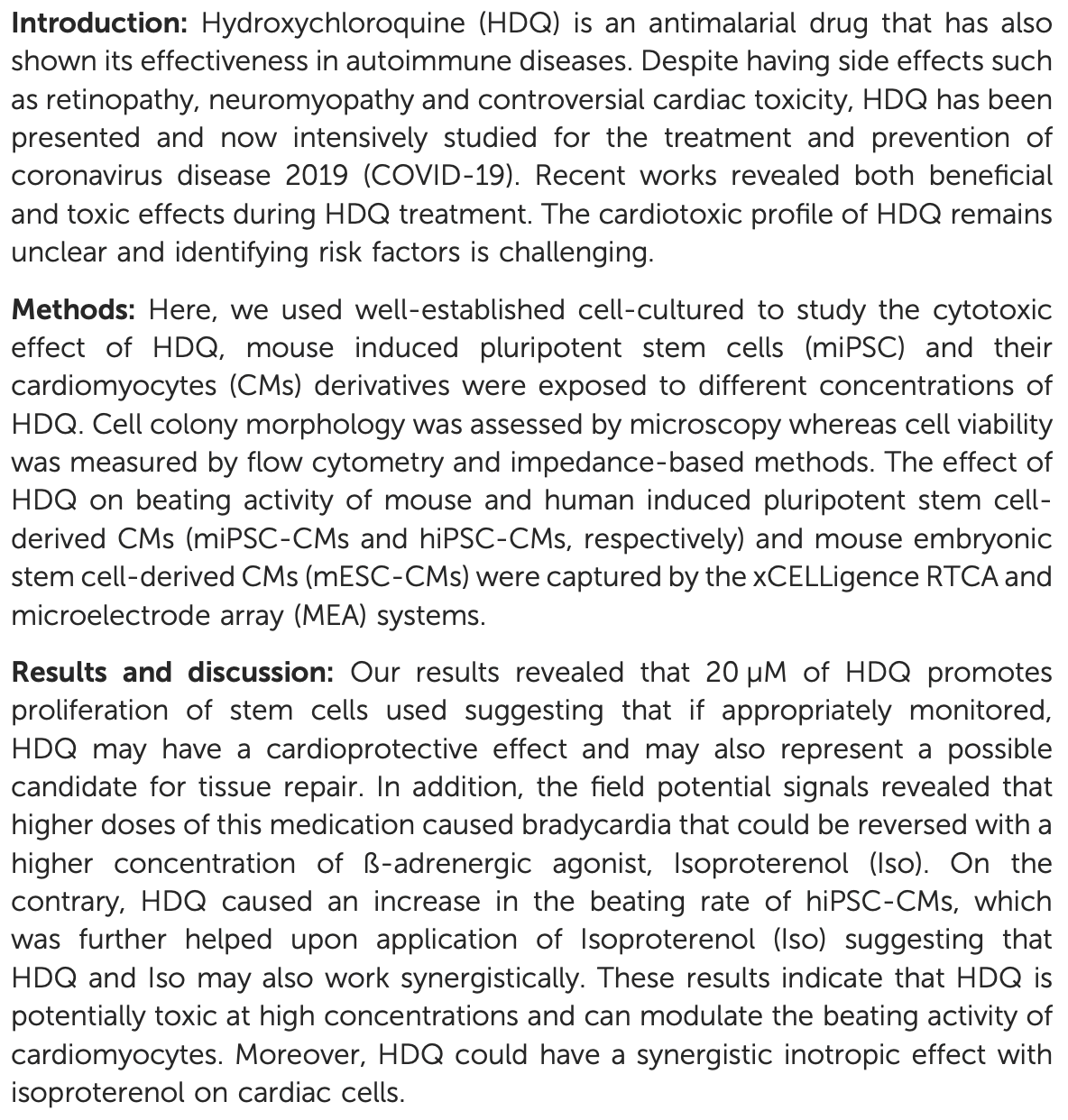
Introduction: Hydroxychloroquine (HDQ) is an antimalarial drug that has also shown its effectiveness in autoimmune diseases. Despite having side effects such as retinopathy, neuromyopathy and controversial cardiac toxicity, HDQ has been presented and now intensively studied for the treatment and prevention of coronavirus disease 2019 . Recent works revealed both beneficial and toxic effects during HDQ treatment. The cardiotoxic profile of HDQ remains unclear and identifying risk factors is challenging. Methods: Here, we used well-established cell-cultured to study the cytotoxic effect of HDQ, mouse induced pluripotent stem cells (miPSC) and their cardiomyocytes (CMs) derivatives were exposed to different concentrations of HDQ. Cell colony morphology was assessed by microscopy whereas cell viability was measured by flow cytometry and impedance-based methods. The effect of HDQ on beating activity of mouse and human induced pluripotent stem cellderived CMs (miPSC-CMs and hiPSC-CMs, respectively) and mouse embryonic stem cell-derived CMs (mESC-CMs) were captured by the xCELLigence RTCA and microelectrode array (MEA) systems. Results and discussion: Our results revealed that 20 µM of HDQ promotes proliferation of stem cells used suggesting that if appropriately monitored, HDQ may have a cardioprotective effect and may also represent a possible candidate for tissue repair. In addition, the field potential signals revealed that higher doses of this medication caused bradycardia that could be reversed with a higher concentration of ß-adrenergic agonist, Isoproterenol (Iso). On the contrary, HDQ caused an increase in the beating rate of hiPSC-CMs, which was further helped upon application of Isoproterenol (Iso) suggesting that HDQ and Iso may also work synergistically. These results indicate that HDQ is potentially toxic at high concentrations and can modulate the beating activity of cardiomyocytes. Moreover, HDQ could have a synergistic inotropic effect with isoproterenol on cardiac cells.
Author contributions FN and MK conceived, planed and designed the experiments; MK performed the measurements and analysis. MK drafted and wrote the manuscript with input from all authors. JH and FN revised the manuscript critically. All authors contributed to the article and approved the submitted version.
Conflict of interest The authors declare that the research was conducted in the absence of any commercial or financial relationships that could be construed as a potential conflict of interest.
Publisher's note All claims expressed in this article are solely those of the authors and do not necessarily represent those of their affiliated organizations, or those of the publisher, the editors and the reviewers. Any product that may be evaluated in this article, or claim that may be made by its manufacturer, is not guaranteed or endorsed by the publisher.
References
Al-Rawi, Meggitt, Williams, Wahie, Steady-state pharmacokinetics of hydroxychloroquine in patients with cutaneous lupus erythematosus, Lupus, doi:10.1177/0961203317727601
Both, Van De Peppel, Zillikens, Koedam, Van Leeuwen et al., Hydroxychloroquine decreases human MSC-derived osteoblast differentiation and mineralization in vitro, J. Cell. Mol. Med, doi:10.1111/jcmm.13373
Both, Zillikens, Hoorn, Zietse, Van Laar et al., Hydroxychloroquine is cardioprotective in neonatal RAT cardiomyocytes exposed to simulated myocardial ischaemic/reperfusion injury: An effect mediated through ERK phosphorylation, Calcif. tissue Int, doi:10.1093/rheumatology/keu093.003
Browning, Pharmacology of chloroquine and hydroxychloroquine
Chloroquine Retin ; Chen, Wang, Lin, Chronic hydroxychloroquine use associated with QT prolongation and refractory ventricular arrhythmia, Clin. Toxicol, doi:10.1080/15563650500514558
Costedoat-Chalumeau, Amoura, Hulot, Hammoud, Aymard et al., Low blood concentration of hydroxychloroquine is a marker for and predictor of disease exacerbations in patients with systemic lupus erythematosus, Arthritis Rheum, doi:10.1002/art.22156
Dubois, Antimalarials in the management of discoid and systemic lupus erythematosus, Semin. Arthritis Rheum, doi:10.1016/0049-0172(78)90033-1
Fatima, Xu, Nguemo, Kuzmenkin, Burkert et al., Murine transgenic iPS cell line for monitoring and selection of cardiomyocytes, Stem Cell Res, doi:10.1016/j.scr.2016.07.007
Folkerts, Hilgendorf, Wierenga, Jaques, Mulder et al., Inhibition of autophagy as a treatment strategy for p53 wild-type acute myeloid leukemia, Cell Death Dis, doi:10.1038/cddis.2017.317
Fong, Trinkaus, Adkins, Vij, Devine et al., None
Furst, Pharmacokinetics of hydroxychloroquine and chloroquine during treatment of rheumatic diseases, Lupus, doi:10.1177/0961203396005001041
Garcia-Cremades, Solans, Hughes, Ernest, Wallender et al., Optimizing hydroxychloroquine dosing for patients with COVID-19: An integrative modeling approach for effective drug repurposing, Clin. Pharmacol. Ther, doi:10.1002/cpt.1856
Hamad, Derichsweiler, Papadopoulos, Nguemo, Saric et al., Generation of human induced pluripotent stem cell-derived cardiomyocytes in 2D monolayer and scalable 3D suspension bioreactor cultures with reduced batch-to-batch variations, Theranostics, doi:10.7150/thno.32058
Hydroxychloroquine, a less toxic derivative of chloroquine, is effective in inhibiting SARS-CoV-2 infection in vitro, Cell Discov, doi:10.1038/s41421-020-0156-0
Jackson, Hansen, Gustafson, Abstract 2084: Pharmacokinetic and pharmacodynamic assessment of autophagy inhibition following hydroxychloroquine in mice, Cancer Res, doi:10.1158/1538-7445.am2016-2084
Jordaan, Dumotier, Traebert, Miller, Ghetti et al., Cardiotoxic potential of hydroxychloroquine, chloroquine and azithromycin in adult human primary cardiomyocytes, Toxicol. Sci. official J. Soc. Toxicol, doi:10.1093/toxsci/kfaa194
Joyce, Fabre, Mahon, Hydroxychloroquine cardiotoxicity presenting as a rapidly evolving biventricular cardiomyopathy: Key diagnostic features and literature review, Eur. heart J. Acute Cardiovasc. care, doi:10.1177/2048872612471215
Lakshminarayanan, Walsh, Mohanraj, Factors associated with low bone mineral density in female patients with systemic lupus erythematosus, J. rheumatology
Li, Cao, Li, Li, Yu et al., Hydroxychloroquine induced lung cancer suppression by enhancing chemo-sensitization and promoting the transition of M2-TAMs to M1-like macrophages, J. Exp. Clin. Cancer Res, doi:10.1186/s13046-018-0938-5
Liu, Bi, Chen, Guo, Tu et al., Time-dependent distribution of hydroxychloroquine in cynomolgus macaques using population pharmacokinetic modeling method, Front. Pharmacol, doi:10.3389/fphar.2020.602880
Liu, Cao, Xu, Wang, Zhang et al., None
Mackenzie, Scherbel, Chloroquine and hydroxychloroquine in rheumatological therapy, Clin. Rheumatic Dis, doi:10.1016/s0307-742x(21)00317-9
Merino, Martínez-Cossiani, Iniesta, Escobar, Rey et al., COVID-19 and QT interval prolongation: More than just drug toxicity?, doi:10.1093/europace/euaa145
Mok, Mak, Ma, Bone mineral density in postmenopausal Chinese patients with systemic lupus erythematosus, Lupus, doi:10.1191/0961203305lu2039oa
Mubagwa, Cardiac effects and toxicity of chloroquine: A short update
Oscanoa, Romero-Ortuno, Carvajal, Savarino, A pharmacological perspective of chloroquine in SARS-CoV-2 infection: An old drug for the fight against a new coronavirus?, Int. J. Antimicrob. agents, doi:10.1016/j.ijantimicag.2020.106078
Pfannkuche, Liang, Hannes, Xi, Fatima et al., Cardiac myocytes derived from murine reprogrammed fibroblasts: Intact hormonal regulation, cardiac ion channel expression and development of contractility, Cell. Physiology Biochem, doi:10.1159/000227815
Phillips, Chun, Hydroxychloroquine retinopathy after short-term therapy, Retin Cases Brief. Rep, doi:10.1097/ICB.0000000000000006
Stokkermans, Goyal, Bansal, Trichonas, Chloroquine and hydroxychloroquine toxicity
Sutanto, Heijman, Beta-adrenergic receptor stimulation modulates the cellular proarrhythmic effects of chloroquine and azithromycin, Front. Physiol, doi:10.3389/fphys.2020.587709
Tripathy, Dassarma, Roy, Chabalala, Matsabisa, A review on possible modes of action of chloroquine/hydroxychloroquine: Repurposing against SAR-CoV-2 (COVID-19) pandemic, Int. J. Antimicrob. Agents, doi:10.1016/j.ijantimicag.2020.106028
Wernig, Meissner, Foreman, Brambrink, Ku et al., In vitro reprogramming of fibroblasts into a pluripotent ES-cell-like state, Nature, doi:10.1038/nature05944
Wolfe, Marmor, Rates and predictors of hydroxychloroquine retinal toxicity in patients with rheumatoid arthritis and systemic lupus erythematosus, Arthritis Care Res. Hob, doi:10.1002/acr.20133
Wong, Gurung, Wong, Mak, Tse et al., Adverse effects of hydroxychloroquine and azithromycin on contractility and arrhythmogenicity revealed by human engineered cardiac tissues, J. Mol. Cell Cardiol, doi:10.1016/j.yjmcc.2020.12.014
Yang, Ray, Krafts, Cell proliferation
Yang, Wu, Liu, Liu, Guo et al., Cytotoxicity evaluation of chloroquine and hydroxychloroquine in multiple cell lines and tissues by dynamic imaging system and PBPK model, Front. Pharmacol, doi:10.3389/fphar.2020.574720
Yusuf, Sharma, Luqmani, Downes, Hydroxychloroquine retinopathy, doi:10.1038/eye.2016.298
DOI record:
{
"DOI": "10.3389/fphar.2023.1128382",
"ISSN": [
"1663-9812"
],
"URL": "http://dx.doi.org/10.3389/fphar.2023.1128382",
"abstract": "<jats:p><jats:bold>Introduction:</jats:bold> Hydroxychloroquine (HDQ) is an antimalarial drug that has also shown its effectiveness in autoimmune diseases. Despite having side effects such as retinopathy, neuromyopathy and controversial cardiac toxicity, HDQ has been presented and now intensively studied for the treatment and prevention of coronavirus disease 2019 (COVID-19). Recent works revealed both beneficial and toxic effects during HDQ treatment. The cardiotoxic profile of HDQ remains unclear and identifying risk factors is challenging.</jats:p><jats:p><jats:bold>Methods:</jats:bold> Here, we used well-established cell-cultured to study the cytotoxic effect of HDQ, mouse induced pluripotent stem cells (miPSC) and their cardiomyocytes (CMs) derivatives were exposed to different concentrations of HDQ. Cell colony morphology was assessed by microscopy whereas cell viability was measured by flow cytometry and impedance-based methods. The effect of HDQ on beating activity of mouse and human induced pluripotent stem cell-derived CMs (miPSC-CMs and hiPSC-CMs, respectively) and mouse embryonic stem cell-derived CMs (mESC-CMs) were captured by the xCELLigence RTCA and microelectrode array (MEA) systems.</jats:p><jats:p><jats:bold>Results and discussion:</jats:bold> Our results revealed that 20 µM of HDQ promotes proliferation of stem cells used suggesting that if appropriately monitored, HDQ may have a cardioprotective effect and may also represent a possible candidate for tissue repair. In addition, the field potential signals revealed that higher doses of this medication caused bradycardia that could be reversed with a higher concentration of ß-adrenergic agonist, Isoproterenol (Iso). On the contrary, HDQ caused an increase in the beating rate of hiPSC-CMs, which was further helped upon application of Isoproterenol (Iso) suggesting that HDQ and Iso may also work synergistically. These results indicate that HDQ is potentially toxic at high concentrations and can modulate the beating activity of cardiomyocytes. Moreover, HDQ could have a synergistic inotropic effect with isoproterenol on cardiac cells.</jats:p>",
"alternative-id": [
"10.3389/fphar.2023.1128382"
],
"author": [
{
"affiliation": [],
"family": "Kamga Kapchoup",
"given": "Michelle Vanessa",
"sequence": "first"
},
{
"affiliation": [],
"family": "Hescheler",
"given": "Jürgen",
"sequence": "additional"
},
{
"affiliation": [],
"family": "Nguemo",
"given": "Filomain",
"sequence": "additional"
}
],
"container-title": "Frontiers in Pharmacology",
"container-title-short": "Front. Pharmacol.",
"content-domain": {
"crossmark-restriction": true,
"domain": [
"frontiersin.org"
]
},
"created": {
"date-parts": [
[
2023,
7,
13
]
],
"date-time": "2023-07-13T00:13:48Z",
"timestamp": 1689207228000
},
"deposited": {
"date-parts": [
[
2023,
7,
13
]
],
"date-time": "2023-07-13T00:13:54Z",
"timestamp": 1689207234000
},
"indexed": {
"date-parts": [
[
2023,
7,
13
]
],
"date-time": "2023-07-13T04:29:09Z",
"timestamp": 1689222549917
},
"is-referenced-by-count": 0,
"issued": {
"date-parts": [
[
2023,
7,
12
]
]
},
"license": [
{
"URL": "https://creativecommons.org/licenses/by/4.0/",
"content-version": "vor",
"delay-in-days": 0,
"start": {
"date-parts": [
[
2023,
7,
12
]
],
"date-time": "2023-07-12T00:00:00Z",
"timestamp": 1689120000000
}
}
],
"link": [
{
"URL": "https://www.frontiersin.org/articles/10.3389/fphar.2023.1128382/full",
"content-type": "unspecified",
"content-version": "vor",
"intended-application": "similarity-checking"
}
],
"member": "1965",
"original-title": [],
"prefix": "10.3389",
"published": {
"date-parts": [
[
2023,
7,
12
]
]
},
"published-online": {
"date-parts": [
[
2023,
7,
12
]
]
},
"publisher": "Frontiers Media SA",
"reference": [
{
"DOI": "10.1177/0961203317727601",
"article-title": "Steady-state pharmacokinetics of hydroxychloroquine in patients with cutaneous lupus erythematosus",
"author": "Al-Rawi",
"doi-asserted-by": "publisher",
"first-page": "847",
"journal-title": "Lupus",
"key": "B1",
"volume": "27",
"year": "2018"
},
{
"DOI": "10.1111/jcmm.13373",
"article-title": "Hydroxychloroquine decreases human MSC-derived osteoblast differentiation and mineralization in vitro",
"author": "Both",
"doi-asserted-by": "publisher",
"first-page": "873",
"journal-title": "J. Cell. Mol. Med.",
"key": "B2",
"volume": "22",
"year": "2018"
},
{
"DOI": "10.1007/s00223-016-0112-z",
"article-title": "Bone mineral density in sjögren Syndrome patients with and without distal renal tubular acidosis",
"author": "Both",
"doi-asserted-by": "publisher",
"first-page": "573",
"journal-title": "Calcif. tissue Int.",
"key": "B3",
"volume": "98",
"year": "2016"
},
{
"DOI": "10.1093/rheumatology/keu093.003",
"article-title": "O45. Hydroxychloroquine is cardioprotective in neonatal RAT cardiomyocytes exposed to simulated myocardial ischaemic/reperfusion injury: An effect mediated through ERK phosphorylation",
"author": "Bourke",
"doi-asserted-by": "publisher",
"first-page": "i48",
"journal-title": "Rheumatology",
"key": "B4",
"volume": "53",
"year": "2014"
},
{
"DOI": "10.1007/978-1-4939-0597-3_2",
"article-title": "Pharmacology of chloroquine and hydroxychloroquine",
"author": "Browning",
"doi-asserted-by": "publisher",
"first-page": "35",
"journal-title": "Hydroxychloroquine Chloroquine Retin.",
"key": "B5",
"year": "2014"
},
{
"DOI": "10.1080/15563650500514558",
"article-title": "Chronic hydroxychloroquine use associated with QT prolongation and refractory ventricular arrhythmia",
"author": "Chen",
"doi-asserted-by": "publisher",
"first-page": "173",
"journal-title": "Clin. Toxicol.",
"key": "B6",
"volume": "44",
"year": "2006"
},
{
"DOI": "10.1002/art.22156",
"article-title": "Low blood concentration of hydroxychloroquine is a marker for and predictor of disease exacerbations in patients with systemic lupus erythematosus",
"author": "Costedoat-Chalumeau",
"doi-asserted-by": "publisher",
"first-page": "3284",
"journal-title": "Arthritis Rheum.",
"key": "B7",
"volume": "54",
"year": "2006"
},
{
"DOI": "10.1016/0049-0172(78)90033-1",
"article-title": "Antimalarials in the management of discoid and systemic lupus erythematosus",
"author": "Dubois",
"doi-asserted-by": "publisher",
"first-page": "33",
"journal-title": "Semin. Arthritis Rheum.",
"key": "B8",
"volume": "8",
"year": "1978"
},
{
"DOI": "10.1016/j.scr.2016.07.007",
"article-title": "Murine transgenic iPS cell line for monitoring and selection of cardiomyocytes",
"author": "Fatima",
"doi-asserted-by": "publisher",
"first-page": "266",
"journal-title": "Stem Cell Res.",
"key": "B9",
"volume": "17",
"year": "2016"
},
{
"DOI": "10.1038/cddis.2017.317",
"article-title": "Inhibition of autophagy as a treatment strategy for p53 wild-type acute myeloid leukemia",
"author": "Folkerts",
"doi-asserted-by": "publisher",
"first-page": "e2927",
"journal-title": "Cell Death Dis.",
"key": "B10",
"volume": "8",
"year": "2017"
},
{
"DOI": "10.1016/j.bbmt.2007.06.012",
"article-title": "A randomized double-blind trial of hydroxychloroquine for the prevention of chronic graft-versus-host disease after allogeneic peripheral blood stem cell transplantation",
"author": "Fong",
"doi-asserted-by": "publisher",
"first-page": "1201",
"journal-title": "Biol. Blood Marrow Transpl.",
"key": "B11",
"volume": "13",
"year": "2007"
},
{
"DOI": "10.1177/0961203396005001041",
"article-title": "Pharmacokinetics of hydroxychloroquine and chloroquine during treatment of rheumatic diseases",
"author": "Furst",
"doi-asserted-by": "publisher",
"first-page": "S11",
"journal-title": "Lupus",
"key": "B12",
"volume": "5",
"year": "1996"
},
{
"DOI": "10.1002/cpt.1856",
"article-title": "Optimizing hydroxychloroquine dosing for patients with COVID-19: An integrative modeling approach for effective drug repurposing",
"author": "Garcia-Cremades",
"doi-asserted-by": "publisher",
"first-page": "253",
"journal-title": "Clin. Pharmacol. Ther.",
"key": "B13",
"volume": "108",
"year": "2020"
},
{
"DOI": "10.7150/thno.32058",
"article-title": "Generation of human induced pluripotent stem cell-derived cardiomyocytes in 2D monolayer and scalable 3D suspension bioreactor cultures with reduced batch-to-batch variations",
"author": "Hamad",
"doi-asserted-by": "publisher",
"first-page": "7222",
"journal-title": "Theranostics",
"key": "B14",
"volume": "9",
"year": "2019"
},
{
"DOI": "10.1158/1538-7445.am2016-2084",
"article-title": "Abstract 2084: Pharmacokinetic and pharmacodynamic assessment of autophagy inhibition following hydroxychloroquine in mice",
"author": "Jackson",
"doi-asserted-by": "publisher",
"first-page": "2084",
"journal-title": "Cancer Res.",
"key": "B15",
"volume": "76",
"year": "2016"
},
{
"DOI": "10.1093/toxsci/kfaa194",
"article-title": "Cardiotoxic potential of hydroxychloroquine, chloroquine and azithromycin in adult human primary cardiomyocytes",
"author": "Jordaan",
"doi-asserted-by": "publisher",
"first-page": "356",
"journal-title": "Toxicol. Sci. official J. Soc. Toxicol.",
"key": "B16",
"volume": "180",
"year": "2021"
},
{
"DOI": "10.1177/2048872612471215",
"article-title": "Hydroxychloroquine cardiotoxicity presenting as a rapidly evolving biventricular cardiomyopathy: Key diagnostic features and literature review",
"author": "Joyce",
"doi-asserted-by": "publisher",
"first-page": "77",
"journal-title": "Eur. heart J. Acute Cardiovasc. care",
"key": "B17",
"volume": "2",
"year": "2013"
},
{
"article-title": "Factors associated with low bone mineral density in female patients with systemic lupus erythematosus",
"author": "Lakshminarayanan",
"first-page": "102",
"journal-title": "J. rheumatology",
"key": "B18",
"volume": "28",
"year": "2001"
},
{
"DOI": "10.1186/s13046-018-0938-5",
"article-title": "Hydroxychloroquine induced lung cancer suppression by enhancing chemo-sensitization and promoting the transition of M2-TAMs to M1-like macrophages",
"author": "Li",
"doi-asserted-by": "publisher",
"first-page": "259",
"journal-title": "J. Exp. Clin. Cancer Res.",
"key": "B19",
"volume": "37",
"year": "2018"
},
{
"DOI": "10.1038/s41421-020-0156-0",
"article-title": "Hydroxychloroquine, a less toxic derivative of chloroquine, is effective in inhibiting SARS-CoV-2 infection in vitro",
"author": "Liu",
"doi-asserted-by": "publisher",
"first-page": "16",
"journal-title": "Cell Discov.",
"key": "B20",
"volume": "6",
"year": "2020"
},
{
"DOI": "10.3389/fphar.2020.602880",
"article-title": "Time-dependent distribution of hydroxychloroquine in cynomolgus macaques using population pharmacokinetic modeling method",
"author": "Liu",
"doi-asserted-by": "publisher",
"first-page": "602880",
"journal-title": "Front. Pharmacol.",
"key": "B21",
"volume": "11",
"year": "2021"
},
{
"DOI": "10.1016/s0307-742x(21)00317-9",
"article-title": "Chloroquine and hydroxychloroquine in rheumatological therapy",
"author": "Mackenzie",
"doi-asserted-by": "publisher",
"first-page": "545",
"journal-title": "Clin. Rheumatic Dis.",
"key": "B22",
"volume": "6",
"year": "1980"
},
{
"DOI": "10.1093/europace/euaa145",
"article-title": "COVID-19 and QT interval prolongation: More than just drug toxicity?",
"author": "Merino",
"doi-asserted-by": "publisher",
"first-page": "1479",
"journal-title": "EP Eur.",
"key": "B23",
"volume": "22",
"year": "2020"
},
{
"DOI": "10.1191/0961203305lu2039oa",
"article-title": "Bone mineral density in postmenopausal Chinese patients with systemic lupus erythematosus",
"author": "Mok",
"doi-asserted-by": "publisher",
"first-page": "106",
"journal-title": "Lupus",
"key": "B24",
"volume": "14",
"year": "2005"
},
{
"DOI": "10.1016/j.ijantimicag.2020.106057",
"article-title": "Cardiac effects and toxicity of chloroquine: A short update",
"author": "Mubagwa",
"doi-asserted-by": "publisher",
"first-page": "106057",
"journal-title": "Int. J. Antimicrob. Agents",
"key": "B25",
"volume": "56",
"year": "2020"
},
{
"DOI": "10.1016/j.ijantimicag.2020.106078",
"article-title": "A pharmacological perspective of chloroquine in SARS-CoV-2 infection: An old drug for the fight against a new coronavirus?",
"author": "Oscanoa",
"doi-asserted-by": "publisher",
"first-page": "106078",
"journal-title": "Int. J. Antimicrob. agents",
"key": "B26",
"volume": "56",
"year": "2020"
},
{
"DOI": "10.1159/000227815",
"article-title": "Cardiac myocytes derived from murine reprogrammed fibroblasts: Intact hormonal regulation, cardiac ion channel expression and development of contractility",
"author": "Pfannkuche",
"doi-asserted-by": "publisher",
"first-page": "73",
"journal-title": "Cell. Physiology Biochem.",
"key": "B27",
"volume": "24",
"year": "2009"
},
{
"DOI": "10.1097/ICB.0000000000000006",
"article-title": "Hydroxychloroquine retinopathy after short-term therapy",
"author": "Phillips",
"doi-asserted-by": "publisher",
"first-page": "67",
"journal-title": "Retin Cases Brief. Rep.",
"key": "B28",
"volume": "8",
"year": "2014"
},
{
"article-title": "Chloroquine and hydroxychloroquine toxicity",
"author": "Stokkermans",
"key": "B29",
"volume-title": "StatPearls",
"year": "2021"
},
{
"DOI": "10.3389/fphys.2020.587709",
"article-title": "Beta-adrenergic receptor stimulation modulates the cellular proarrhythmic effects of chloroquine and azithromycin",
"author": "Sutanto",
"doi-asserted-by": "publisher",
"first-page": "587709",
"journal-title": "Front. Physiol.",
"key": "B30",
"volume": "11",
"year": "2020"
},
{
"DOI": "10.1016/j.ijantimicag.2020.106028",
"article-title": "A review on possible modes of action of chloroquine/hydroxychloroquine: Repurposing against SAR-CoV-2 (COVID-19) pandemic",
"author": "Tripathy",
"doi-asserted-by": "publisher",
"first-page": "106028",
"journal-title": "Int. J. Antimicrob. Agents",
"key": "B31",
"volume": "56",
"year": "2020"
},
{
"DOI": "10.1038/nature05944",
"article-title": "In vitro reprogramming of fibroblasts into a pluripotent ES-cell-like state",
"author": "Wernig",
"doi-asserted-by": "publisher",
"first-page": "318",
"journal-title": "Nature",
"key": "B32",
"volume": "448",
"year": "2007"
},
{
"DOI": "10.1002/acr.20133",
"article-title": "Rates and predictors of hydroxychloroquine retinal toxicity in patients with rheumatoid arthritis and systemic lupus erythematosus",
"author": "Wolfe",
"doi-asserted-by": "publisher",
"first-page": "775",
"journal-title": "Arthritis Care Res. Hob.",
"key": "B33",
"volume": "62",
"year": "2010"
},
{
"DOI": "10.1016/j.yjmcc.2020.12.014",
"article-title": "Adverse effects of hydroxychloroquine and azithromycin on contractility and arrhythmogenicity revealed by human engineered cardiac tissues",
"author": "Wong",
"doi-asserted-by": "publisher",
"first-page": "106",
"journal-title": "J. Mol. Cell Cardiol.",
"key": "B34",
"volume": "153",
"year": "2021"
},
{
"DOI": "10.3389/fphar.2020.574720",
"article-title": "Cytotoxicity evaluation of chloroquine and hydroxychloroquine in multiple cell lines and tissues by dynamic imaging system and PBPK model",
"author": "Yang",
"doi-asserted-by": "publisher",
"journal-title": "Front. Pharmacol.",
"key": "B35",
"volume": "11",
"year": "2020"
},
{
"DOI": "10.1016/B978-0-12-386454-3.00274-8",
"article-title": "Cell proliferation",
"author": "Yang",
"doi-asserted-by": "crossref",
"first-page": "761",
"key": "B36",
"volume-title": "Encyclopedia of toxicology",
"year": "2014"
},
{
"DOI": "10.1038/eye.2016.298",
"article-title": "Hydroxychloroquine retinopathy",
"author": "Yusuf",
"doi-asserted-by": "publisher",
"first-page": "828",
"journal-title": "Eye (Lond)",
"key": "B37",
"volume": "31",
"year": "2017"
}
],
"reference-count": 37,
"references-count": 37,
"relation": {},
"resource": {
"primary": {
"URL": "https://www.frontiersin.org/articles/10.3389/fphar.2023.1128382/full"
}
},
"score": 1,
"short-title": [],
"source": "Crossref",
"subject": [
"Pharmacology (medical)",
"Pharmacology"
],
"subtitle": [],
"title": "In vitro effect of hydroxychloroquine on pluripotent stem cells and their cardiomyocytes derivatives",
"type": "journal-article",
"update-policy": "http://dx.doi.org/10.3389/crossmark-policy",
"volume": "14"
}