The Potential of Ameliorating COVID-19 and Sequelae From Andrographis paniculata via Bioinformatics
et al., Bioinformatics and Biology Insights, doi:10.1177/11779322221149622, Jan 2023
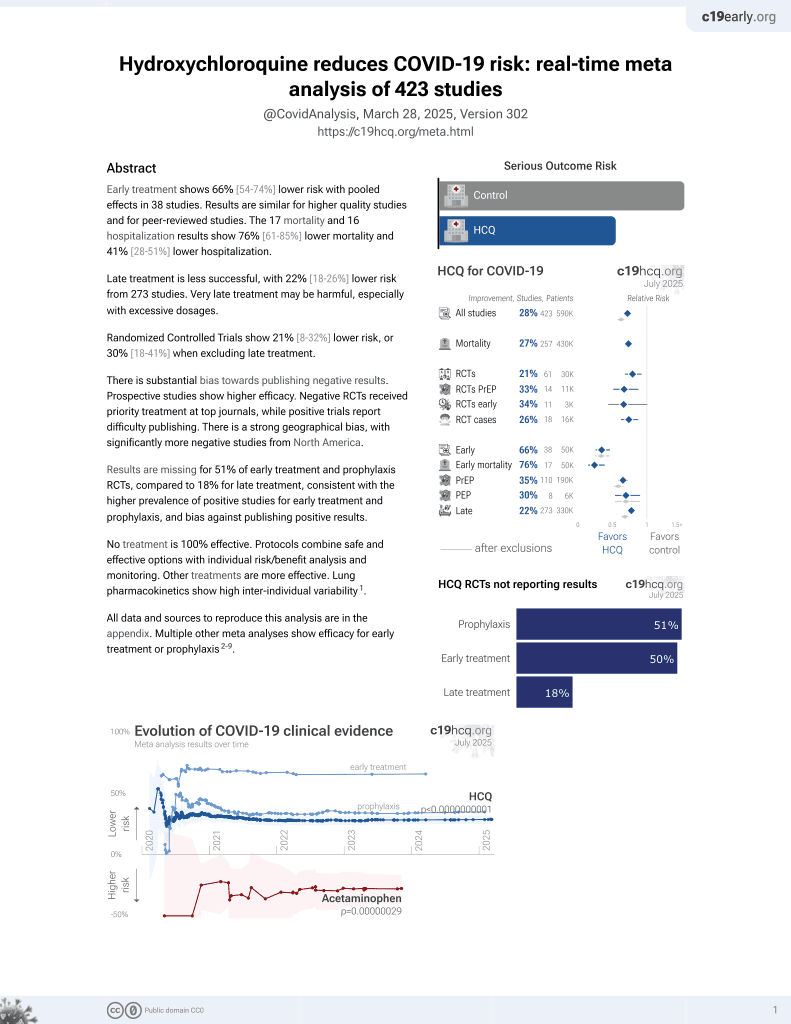
HCQ for COVID-19
1st treatment shown to reduce risk in
March 2020, now with p < 0.0000000001 from 425 studies, used in 59 countries.
No treatment is 100% effective.
Protocols combine treatments.
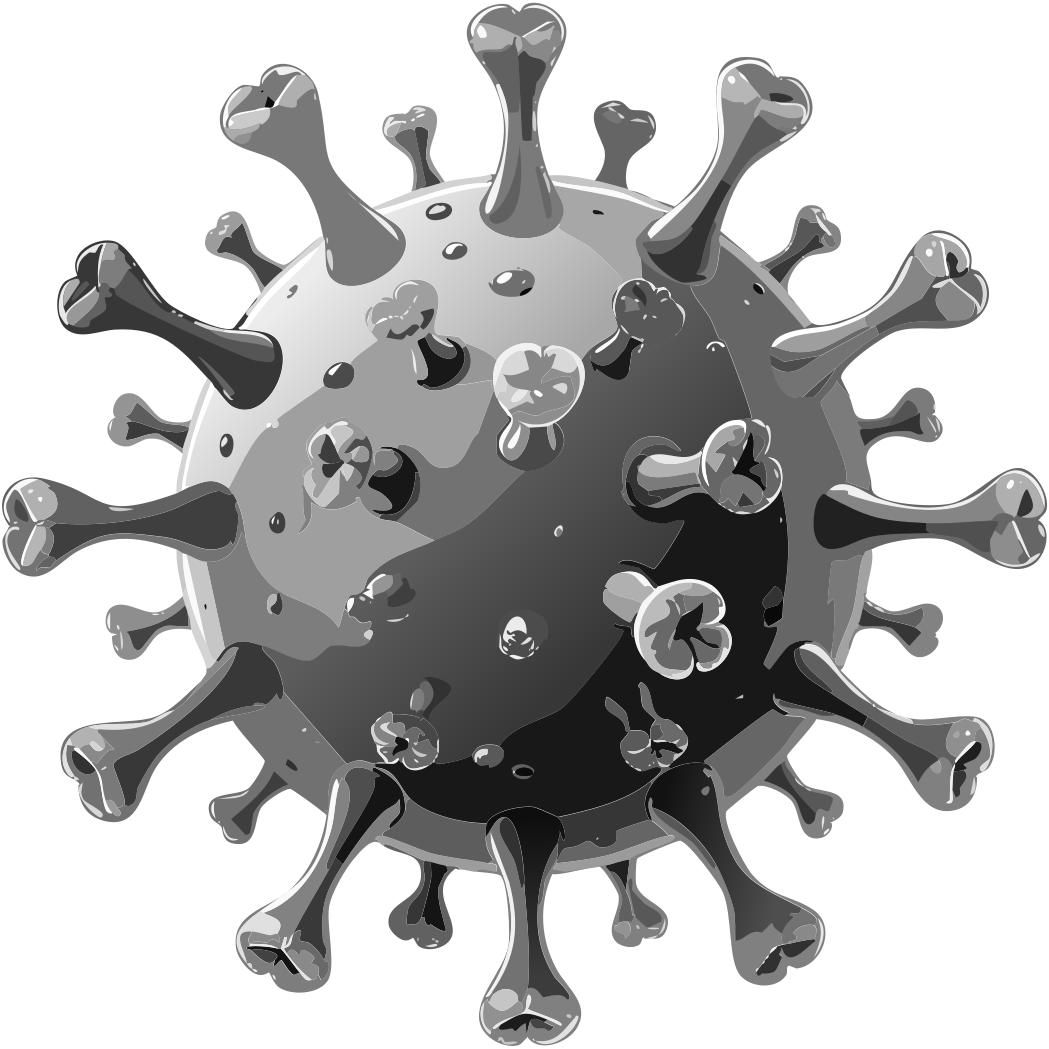
In silico study identifying multiple compounds including andrographolide, quercetin, and hydroxychloroquine (used as a reference) as promising inhibitors of SARS-CoV-2. Authors note the potential synergistic effect of multiple compounds.
41 preclinical studies support the efficacy of HCQ for COVID-19:
Study covers quercetin, andrographolide, and HCQ.

1.
Shang et al., Identification of Cathepsin L as the molecular target of hydroxychloroquine with chemical proteomics, Molecular & Cellular Proteomics, doi:10.1016/j.mcpro.2025.101314.
2.
González-Paz et al., Biophysical Analysis of Potential Inhibitors of SARS-CoV-2 Cell Recognition and Their Effect on Viral Dynamics in Different Cell Types: A Computational Prediction from In Vitro Experimental Data, ACS Omega, doi:10.1021/acsomega.3c06968.
3.
Alkafaas et al., A study on the effect of natural products against the transmission of B.1.1.529 Omicron, Virology Journal, doi:10.1186/s12985-023-02160-6.
4.
Guimarães Silva et al., Are Non-Structural Proteins From SARS-CoV-2 the Target of Hydroxychloroquine? An in Silico Study, ACTA MEDICA IRANICA, doi:10.18502/acta.v61i2.12533.
5.
Nguyen et al., The Potential of Ameliorating COVID-19 and Sequelae From Andrographis paniculata via Bioinformatics, Bioinformatics and Biology Insights, doi:10.1177/11779322221149622.
7.
Yadav et al., Repurposing the Combination Drug of Favipiravir, Hydroxychloroquine and Oseltamivir as a Potential Inhibitor Against SARS-CoV-2: A Computational Study, Research Square, doi:10.21203/rs.3.rs-628277/v1.
8.
Hussein et al., Molecular Docking Identification for the efficacy of Some Zinc Complexes with Chloroquine and Hydroxychloroquine against Main Protease of COVID-19, Journal of Molecular Structure, doi:10.1016/j.molstruc.2021.129979.
9.
Baildya et al., Inhibitory capacity of Chloroquine against SARS-COV-2 by effective binding with Angiotensin converting enzyme-2 receptor: An insight from molecular docking and MD-simulation studies, Journal of Molecular Structure, doi:10.1016/j.molstruc.2021.129891.
10.
Noureddine et al., Quantum chemical studies on molecular structure, AIM, ELF, RDG and antiviral activities of hybrid hydroxychloroquine in the treatment of COVID-19: molecular docking and DFT calculations, Journal of King Saud University - Science, doi:10.1016/j.jksus.2020.101334.
11.
Tarek et al., Pharmacokinetic Basis of the Hydroxychloroquine Response in COVID-19: Implications for Therapy and Prevention, European Journal of Drug Metabolism and Pharmacokinetics, doi:10.1007/s13318-020-00640-6.
12.
Rowland Yeo et al., Impact of Disease on Plasma and Lung Exposure of Chloroquine, Hydroxychloroquine and Azithromycin: Application of PBPK Modeling, Clinical Pharmacology & Therapeutics, doi:10.1002/cpt.1955.
13.
Pinatel et al., SARS-CoV-2 infects human primary cytotrophoblasts mainly through a non-canonical entry route, Molecular Human Reproduction, doi:10.1093/molehr/gaag015.
14.
Hitti et al., Hydroxychloroquine attenuates double-stranded RNA-stimulated hyper-phosphorylation of tristetraprolin/ZFP36 and AU-rich mRNA stabilization, Immunology, doi:10.1111/imm.13835.
15.
Yan et al., Super-resolution imaging reveals the mechanism of endosomal acidification inhibitors against SARS-CoV-2 infection, ChemBioChem, doi:10.1002/cbic.202400404.
16.
Mohd Abd Razak et al., In Vitro Anti-SARS-CoV-2 Activities of Curcumin and Selected Phenolic Compounds, Natural Product Communications, doi:10.1177/1934578X231188861.
17.
Alsmadi et al., The In Vitro, In Vivo, and PBPK Evaluation of a Novel Lung-Targeted Cardiac-Safe Hydroxychloroquine Inhalation Aerogel, AAPS PharmSciTech, doi:10.1208/s12249-023-02627-3.
18.
Wen et al., Cholinergic α7 nAChR signaling suppresses SARS-CoV-2 infection and inflammation in lung epithelial cells, Journal of Molecular Cell Biology, doi:10.1093/jmcb/mjad048.
19.
Kamga Kapchoup et al., In vitro effect of hydroxychloroquine on pluripotent stem cells and their cardiomyocytes derivatives, Frontiers in Pharmacology, doi:10.3389/fphar.2023.1128382.
20.
Milan Bonotto et al., Cathepsin inhibitors nitroxoline and its derivatives inhibit SARS-CoV-2 infection, Antiviral Research, doi:10.1016/j.antiviral.2023.105655.
21.
Miao et al., SIM imaging resolves endocytosis of SARS-CoV-2 spike RBD in living cells, Cell Chemical Biology, doi:10.1016/j.chembiol.2023.02.001.
22.
Yuan et al., Hydroxychloroquine blocks SARS-CoV-2 entry into the endocytic pathway in mammalian cell culture, Communications Biology, doi:10.1038/s42003-022-03841-8.
23.
Jitobaom et al., Synergistic anti-SARS-CoV-2 activity of repurposed anti-parasitic drug combinations, BMC Pharmacology and Toxicology, doi:10.1186/s40360-022-00580-8.
24.
Faísca et al., Enhanced In Vitro Antiviral Activity of Hydroxychloroquine Ionic Liquids against SARS-CoV-2, Pharmaceutics, doi:10.3390/pharmaceutics14040877.
25.
Delandre et al., Antiviral Activity of Repurposing Ivermectin against a Panel of 30 Clinical SARS-CoV-2 Strains Belonging to 14 Variants, Pharmaceuticals, doi:10.3390/ph15040445.
26.
Purwati et al., An in vitro study of dual drug combinations of anti-viral agents, antibiotics, and/or hydroxychloroquine against the SARS-CoV-2 virus isolated from hospitalized patients in Surabaya, Indonesia, PLOS One, doi:10.1371/journal.pone.0252302.
27.
Zhang et al., SARS-CoV-2 spike protein dictates syncytium-mediated lymphocyte elimination, Cell Death & Differentiation, doi:10.1038/s41418-021-00782-3.
28.
Dang et al., Structural basis of anti-SARS-CoV-2 activity of hydroxychloroquine: specific binding to NTD/CTD and disruption of LLPS of N protein, bioRxiv, doi:10.1101/2021.03.16.435741.
29.
Shang (B) et al., Inhibitors of endosomal acidification suppress SARS-CoV-2 replication and relieve viral pneumonia in hACE2 transgenic mice, Virology Journal, doi:10.1186/s12985-021-01515-1.
30.
Wang et al., Chloroquine and hydroxychloroquine as ACE2 blockers to inhibit viropexis of 2019-nCoV Spike pseudotyped virus, Phytomedicine, doi:10.1016/j.phymed.2020.153333.
31.
Sheaff, R., A New Model of SARS-CoV-2 Infection Based on (Hydroxy)Chloroquine Activity, bioRxiv, doi:10.1101/2020.08.02.232892.
32.
Ou et al., Hydroxychloroquine-mediated inhibition of SARS-CoV-2 entry is attenuated by TMPRSS2, PLOS Pathogens, doi:10.1371/journal.ppat.1009212.
33.
Andreani et al., In vitro testing of combined hydroxychloroquine and azithromycin on SARS-CoV-2 shows synergistic effect, Microbial Pathogenesis, doi:10.1016/j.micpath.2020.104228.
34.
Clementi et al., Combined Prophylactic and Therapeutic Use Maximizes Hydroxychloroquine Anti-SARS-CoV-2 Effects in vitro, Front. Microbiol., 10 July 2020, doi:10.3389/fmicb.2020.01704.
35.
Liu et al., Hydroxychloroquine, a less toxic derivative of chloroquine, is effective in inhibiting SARS-CoV-2 infection in vitro, Cell Discovery 6, 16 (2020), doi:10.1038/s41421-020-0156-0.
36.
Yao et al., In Vitro Antiviral Activity and Projection of Optimized Dosing Design of Hydroxychloroquine for the Treatment of Severe Acute Respiratory Syndrome Coronavirus 2 (SARS-CoV-2), Clin. Infect. Dis., 2020 Mar 9, doi:10.1093/cid/ciaa237.
Nguyen et al., 12 Jan 2023, peer-reviewed, 4 authors.
In silico studies are an important part of preclinical research, however results may be very different in vivo.
The Potential of Ameliorating COVID-19 and Sequelae From Andrographis paniculata via Bioinformatics
Bioinformatics and Biology Insights, doi:10.1177/11779322221149622
The current coronavirus disease 2019 (COVID-19) outbreak is alarmingly escalating and raises challenges in finding efficient compounds for treatment. Repurposing phytochemicals in herbs is an ideal and economical approach for screening potential herbal components against COVID-19. Andrographis paniculata, also known as Chuan Xin Lian, has traditionally been used as an anti-inflammatory and antibacterial herb for centuries and has recently been classified as a promising herbal remedy for adjuvant therapy in treating respiratory diseases. This study aimed to screen Chuan Xin Lian's bioactive components and elicit the potential pharmacological mechanisms and plausible pathways for treating COVID-19 using network pharmacology combined with molecular docking. The results found terpenoid (andrographolide) and flavonoid (luteolin, quercetin, kaempferol, and wogonin) derivatives had remarkable potential against COVID-19 and sequelae owing to their high degrees in the component-target-pathway network and strong binding capacities in docking scores. In addition, the Kyoto Encyclopedia of Genes and Genomes (KEGG) pathway analysis showed that the PI3K-AKT signaling pathway might be the most vital molecular pathway in the pathophysiology of COVID-19 and long-term sequelae whereby therapeutic strategies can intervene.
Author Contribution DTNH was in charge of the entire research and responsible for developing hypotheses, interpreting results, and performing the network analysis. DTNH, HTN, VMD, and TTP participated in the manuscript's writing and discussion. Data collection and screening were carried out by HTN, VMD, and TTP. All authors have read and agreed to the published version of the manuscript.
Supplemental Material Supplemental material for this article is available online.
References
Akbar, Andrographis paniculata: a review of pharmacological activities and clinical effects, Altern Med Rev
Akbarsha, Murugaian, Aspects of the male reproductive toxicity/ male antifertility property of andrographolide in albino rats: effect on the testis and the cauda epididymidal spermatozoa, Phytother Res
Banerjee, Kar, Mukherjee, Haldar, Sharma et al., Immunoprotective potential of ayurvedic herb kalmegh (Andrographis paniculata) against respiratory viral infections-LC-MS/MS and network pharmacology analysis, Phytochem Anal
Bardelčíková, Miroššay, Šoltýs, Mojžiš, Therapeutic and prophylactic effect of flavonoids in post-COVID-19 therapy, Phytother Res
Berman, Westbrook, Feng, The protein data bank, Nucleic Acids Res
Binkowski, Naghibzadeh, Liang, CASTp: computed atlas of surface topography of proteins, Nucleic Acids Res
Cáceres, Hancke, Burgos, Wikman, Prevention of common colds with Andrographis paniculata dried extract, Phytomedicine
Dai, Chen, Chai, Zhao, Wang et al., Overview of pharmacological activities of Andrographis paniculata and its major compound andrographolide, Crit Rev Food Sci Nutr
Daina, Michielin, Zoete, SwissADME: a free web tool to evaluate pharmacokinetics, drug-likeness and medicinal chemistry friendliness of small molecules, Sci Rep
Dundas, Ouyang, Tseng, Binkowski, Turpaz et al., CASTp: computed atlas of surface topography of proteins with structural and topographical mapping of functionally annotated residues, Nucleic Acids Res
Enmozhi, Raja, Sebastine, Joseph, Andrographolide as a potential inhibitor of SARS-CoV-2 main protease: an in silico approach, J Biomol Struct Dyn
Fan, Liao, Wei, Wang, Kai et al., Treatment efficacy of Lianhua Qingwen capsules for early-stage COVID-19, Am J Transl Res
Fang, Dong, Liu, HERB: a high-throughput experiment-and reference-guided database of traditional Chinese medicine, Nucleic Acids Res
Farahani, Niknam, Amirabad, Molecular pathways involved in COVID-19 and potential pathway-based therapeutic targets, Biomed Pharmacother
Fishilevich, Nudel, Rappaport, GeneHancer: genome-wide integration of enhancers and target genes in GeneCards, Database
Ge, Jung, Yao, ShinyGO: a graphical gene-set enrichment tool for animals and plants, Bioinformatics
Grosdidier, Zoete, Michielin, SwissDock, a protein-small molecule docking web service based on EADock DSS, Nucleic Acids Res
Gu, Zhang, Cen, Quercetin as a potential treatment for COVID-19-induced acute kidney injury: Based on network pharmacology and molecular docking study, PLoS ONE
Hancke, Burgos, Caceres, Wikman, A double-blind study with a new monodrug Kan Jang: decrease of symptoms and improvement in the recovery from common colds, Phytother Res
Hopkins, Network pharmacology, Nature Biotechnol
Hossain, Urbi, Karuniawati, burm. F.) Wall. Ex Nees: an updated review of phytochemistry, antimicrobial pharmacology, and clinical safety and efficacy, Life
Hou, Jin, Kang, Kim, Interleukin-6 (IL-6) and IL-17 synergistically promote viral persistence by inhibiting cellular apoptosis and cytotoxic T cell function, J Virol
Icard, Lincet, Wu, The key role of Warburg effect in SARS-CoV-2 replication and associated inflammatory response, Biochimie
Kabir, Hasan, Rahman, A survey of medicinal plants used by the Deb barma clan of the Tripura tribe of Moulvibazar district, Bangladesh, Jo Ethnobiol Ethnomed
Kamdem, Sang, Ho, Mechanism of the superoxide scavenging activity of neoandrographolide − a natural product from Andrographis paniculata nees, J Agric Food Chem
Kapil, Koul, Banerjee, Gupta, Antihepatotoxic effects of major diterpenoid constituents of Andrographis paniculata, Biochem Pharmacol
Kumar, Sridevi, Kumar, Nanduri, Rajagopal, Anticancer and immunostimulatory compounds from Andrographis paniculata, J Ethnopharmacol
Lesjak, Beara, Simin, Antioxidant and anti-inflammatory activities of quercetin and its derivatives, J Funct Foods
Luo, Liu, Wang, Traditional Chinese medicine combined with Moxibustion in the treatment of "long-COVID": a protocol for systematic review and meta-analysis, Medicine
Lättig, Böhl, Fischer, Mechanism of inhibition of human secretory phospholipase A2 by flavonoids: rationale for lead design, J Comput Aided Mol Des
Maltezou, Pavli, Tsakris, Post-COVID syndrome: an insight on its pathogenesis, Vaccines
Mehandru, Merad, Pathological sequelae of long-haul COVID, Nat Immunol
Misra, Pal, Guru, Katiyar, Srivastava et al., Antimalarial activity of Andrographis paniculata (Kalmegh) against plasmodium berghei NK 65 in mastomys natalensis, Int J Pharmacog
More, Patil, Sakle, Mokale, Network analysis and molecular mapping for SARS-CoV-2 to reveal drug targets and repurposing of clinically developed drugs, Virology
Mu, Sheng, Wang, Amin, Li et al., Potential compound from herbal food of Rhizoma Polygonati for treatment of COVID-19 analyzed by network pharmacology: viral and cancer signaling mechanisms, J Funct Foods
Murugan, Pandian, Jeyakanthan, Computational investigation on Andrographis paniculata phytochemicals to evaluate their potency against SARS-CoV-2 in comparison to known antiviral compounds in drug trials, J Biomol Struct Dyn
Naik, Hule, Evaluation of immunomodulatory activity of an extract of andrographolides from Andographis paniculata, Planta Med
Nath, Johnson, Mechanisms of viral persistence in the brain and therapeutic approaches, FEBS J
Okhuarobo, Falodun, Erharuyi, Imieje, Falodun et al., Harnessing the medicinal properties of Andrographis paniculata for diseases and beyond: a review of its phytochemistry and pharmacology, Asian Pac J Trop Dis
Parasher, COVID-19: current understanding of its pathophysiology, clinical presentation and treatment, Postgrad Med J
Pawar, Pal, Molecular and functional resemblance of dexamethasone and quercetin: a paradigm worth exploring in dexamethasone-nonresponsive COVID-19 patients, Phytother Res
Pettersen, Goddard, Huang, UCSF Chimera-a visualization system for exploratory research and analysis, J Comput Chem
Piñero, Queralt-Rosinach, Bravo, DisGeNET: a discovery platform for the dynamical exploration of human diseases and their genes, Database
Rajagopal, Kumar, Deevi, Satyanarayana, Rajagopalan, Andrographolide, a potential cancer therapeutic agent isolated from Andrographis paniculata, J Exp Ther Oncol
Rehan, Ahmed, Howladar, A computational approach identified andrographolide as a potential drug for suppressing COVID-19-induced cytokine storm, Front Immunol
Sa-Ngiamsuntorn, Suksatu, Pewkliang, Anti-SARS-CoV-2 activity of Andrographis paniculata extract and its major component andrographolide in human lung epithelial cells and cytotoxicity evaluation in major organ cell representatives, J Nat Prod
Sanner, Olson, Spehner, Reduced surface: an efficient way to compute molecular surfaces, Biopolymers
Sbp, Panggabean, Atikana, Antiviral activities of andrographolide and its derivatives: mechanism of action and delivery system, Pharmaceuticals
Schoch, Ciufo, Domrachev, NCBI taxonomy: a comprehensive update on curation, resources and tools, Database
Schultze, Aschenbrenner, COVID-19 and the human innate immune system, Cell
Shannon, Markiel, Ozier, Cytoscape: a software environment for integrated models of biomolecular interaction networks, Genome Res
Sharma, Singh, Sehgal, Handa, Antihepatotoxic activity of some plants used in herbal formulations, Fitoterapia
Sheeja, Shihab, Kuttan, Antioxidant and anti-inflammatory activities of the plant Andrographis paniculata nees, Immunopharmacol Immunotoxicol
Shen, Chen, Chiou, Andrographolide prevents oxygen radical production by human neutrophils: possible mechanism(s) involved in its antiinflammatory effect, Br J Pharmacol
Silveira, Prieto-Garcia, Boylan, COVID-19: is there evidence for the use of herbal medicines as adjuvant symptomatic therapy, Front Pharmacol
Singh, Banerjee, Rao, Modulatory influence of Andrographis paniculata on mouse hepatic and extrahepatic carcinogen metabolizing enzymes and antioxidant status, Phytother Res
Szklarczyk, Gable, Lyon, STRING v11: protein-protein association networks with increased coverage, supporting functional discovery in genome-wide experimental datasets, Nucleic Acids Res
Szklarczyk, Gable, Nastou, The STRING database in 2021: customizable protein-protein networks, and functional characterization of useruploaded gene/measurement sets, Nucleic Acids Res
Tang, Eisenbrand, Andrographis paniculata
Theoharides, Conti, Dexamethasone for COVID-19? Not so fast, J Biol Regul Homeost Agents
Tian, Chen, Lei, Zhao, Liang, CASTp 3.0: computed atlas of surface topography of proteins, Nucleic Acids Res
Trougakos, Stamatelopoulos, Terpos, Insights to SARS-CoV-2 life cycle, pathophysiology, and rationalized treatments that target COVID-19 clinical complications, J Biomed Sci
Valério, Georgetti, Magro, Quercetin reduces inflammatory pain: inhibition of oxidative stress and cytokine production, J Nat Prod
Veronese, Bonica, Cotugno, Interventions for improving long COVID-19 symptomatology: a systematic review, Viruses
Wang, Zhu, Xue, Wen, Tao, Research progress in the treatment of complications and sequelae of COVID-19, Front Med
Wiart, Kumar, Yusof, Hamimah, Fauzi et al., Antiviral properties of ent-labdene diterpenes of Andrographis paniculata nees, inhibitors of herpes simplex virus type 1, Phytother Res
Wu, Chern, Damu, Flavonoids and ent-labdane diterpenoids from Andrographis paniculata and their antiplatelet aggregatory and vasorelaxing effects, J Asian Nat Prod Res
Xu, Chen, Fry, Barrow, Marshall et al., Modulation of immune response in mice immunised with an inactivated salmonella vaccine and gavaged with Andrographis paniculata extract or andrographolide, Int Immunopharmacol
Zhang, Lv, Zhou, Efficacy and safety of Xiyanping injection in the treatment of COVID-19: a multicenter, prospective, open-label and randomized controlled trial, Phytother Res
Zheng, Xue, Wang, Guo, Liu, Application of network pharmacology in the study of the mechanism of action of traditional Chinese medicine in the treatment of COVID-19, Front Pharmacol
Zhu, Hou, Yang, Network pharmacology integrated with experimental validation revealed the anti-inflammatory effects of Andrographis paniculata, Sci Rep
DOI record:
{
"DOI": "10.1177/11779322221149622",
"ISSN": [
"1177-9322",
"1177-9322"
],
"URL": "http://dx.doi.org/10.1177/11779322221149622",
"abstract": "<jats:p> The current coronavirus disease 2019 (COVID-19) outbreak is alarmingly escalating and raises challenges in finding efficient compounds for treatment. Repurposing phytochemicals in herbs is an ideal and economical approach for screening potential herbal components against COVID-19. Andrographis paniculata, also known as Chuan Xin Lian, has traditionally been used as an anti-inflammatory and antibacterial herb for centuries and has recently been classified as a promising herbal remedy for adjuvant therapy in treating respiratory diseases. This study aimed to screen Chuan Xin Lian’s bioactive components and elicit the potential pharmacological mechanisms and plausible pathways for treating COVID-19 using network pharmacology combined with molecular docking. The results found terpenoid (andrographolide) and flavonoid (luteolin, quercetin, kaempferol, and wogonin) derivatives had remarkable potential against COVID-19 and sequelae owing to their high degrees in the component-target-pathway network and strong binding capacities in docking scores. In addition, the Kyoto Encyclopedia of Genes and Genomes (KEGG) pathway analysis showed that the PI3K-AKT signaling pathway might be the most vital molecular pathway in the pathophysiology of COVID-19 and long-term sequelae whereby therapeutic strategies can intervene. </jats:p>",
"alternative-id": [
"10.1177/11779322221149622"
],
"author": [
{
"affiliation": [
{
"name": "Faculty of Public Health, Can Tho University of Medicine and Pharmacy, Can Tho, Vietnam"
}
],
"family": "Nguyen",
"given": "Hien Thi",
"sequence": "first"
},
{
"affiliation": [
{
"name": "Faculty of Traditional Medicine, Can Tho University of Medicine and Pharmacy, Can Tho, Vietnam"
}
],
"family": "Do",
"given": "Van Mai",
"sequence": "additional"
},
{
"affiliation": [
{
"name": "Faculty of Pharmacy, Nguyen Tat Thanh University, Ho Chi Minh City, Vietnam"
}
],
"family": "Phan",
"given": "Thanh Thuy",
"sequence": "additional"
},
{
"affiliation": [
{
"name": "School of Pharmacy, College of Pharmacy, Taipei Medical University, Taipei"
}
],
"family": "Nguyen Huynh",
"given": "Dung Tam",
"sequence": "additional"
}
],
"container-title": "Bioinformatics and Biology Insights",
"container-title-short": "Bioinform Biol Insights",
"content-domain": {
"crossmark-restriction": true,
"domain": [
"journals.sagepub.com"
]
},
"created": {
"date-parts": [
[
2023,
1,
12
]
],
"date-time": "2023-01-12T09:15:33Z",
"timestamp": 1673514933000
},
"deposited": {
"date-parts": [
[
2023,
1,
12
]
],
"date-time": "2023-01-12T09:15:50Z",
"timestamp": 1673514950000
},
"indexed": {
"date-parts": [
[
2023,
1,
13
]
],
"date-time": "2023-01-13T06:02:26Z",
"timestamp": 1673589746737
},
"is-referenced-by-count": 0,
"issued": {
"date-parts": [
[
2023,
1
]
]
},
"language": "en",
"license": [
{
"URL": "https://creativecommons.org/licenses/by-nc/4.0/",
"content-version": "unspecified",
"delay-in-days": 0,
"start": {
"date-parts": [
[
2023,
1,
1
]
],
"date-time": "2023-01-01T00:00:00Z",
"timestamp": 1672531200000
}
}
],
"link": [
{
"URL": "http://journals.sagepub.com/doi/pdf/10.1177/11779322221149622",
"content-type": "application/pdf",
"content-version": "vor",
"intended-application": "text-mining"
},
{
"URL": "http://journals.sagepub.com/doi/full-xml/10.1177/11779322221149622",
"content-type": "application/xml",
"content-version": "vor",
"intended-application": "text-mining"
},
{
"URL": "http://journals.sagepub.com/doi/pdf/10.1177/11779322221149622",
"content-type": "unspecified",
"content-version": "vor",
"intended-application": "similarity-checking"
}
],
"member": "179",
"original-title": [],
"page": "117793222211496",
"prefix": "10.1177",
"published": {
"date-parts": [
[
2023,
1
]
]
},
"published-online": {
"date-parts": [
[
2023,
1,
12
]
]
},
"published-print": {
"date-parts": [
[
2023,
1
]
]
},
"publisher": "SAGE Publications",
"reference": [
{
"key": "bibr1-11779322221149622",
"unstructured": "World Health Organization. World health statistics 2022: monitoring health for the SDGs, sustainable development goals. Published May 19, 2022. https://www.who.int/publications/i/item/9789240051157"
},
{
"DOI": "10.3389/fmed.2021.757605",
"doi-asserted-by": "publisher",
"key": "bibr2-11779322221149622"
},
{
"DOI": "10.3390/v14091863",
"doi-asserted-by": "publisher",
"key": "bibr3-11779322221149622"
},
{
"author": "Luo D",
"journal-title": "Medicine",
"key": "bibr4-11779322221149622",
"volume": "101",
"year": "2022"
},
{
"DOI": "10.1038/nbt1007-1110",
"doi-asserted-by": "publisher",
"key": "bibr5-11779322221149622"
},
{
"DOI": "10.1016/j.virol.2020.12.006",
"doi-asserted-by": "publisher",
"key": "bibr6-11779322221149622"
},
{
"DOI": "10.1016/j.jff.2020.104149",
"doi-asserted-by": "publisher",
"key": "bibr7-11779322221149622"
},
{
"DOI": "10.1371/journal.pone.0245209",
"doi-asserted-by": "publisher",
"key": "bibr8-11779322221149622"
},
{
"DOI": "10.3389/fphar.2020.581840",
"doi-asserted-by": "publisher",
"key": "bibr9-11779322221149622"
},
{
"DOI": "10.1080/07391102.2020.1777901",
"doi-asserted-by": "publisher",
"key": "bibr10-11779322221149622"
},
{
"author": "Enmozhi SK",
"first-page": "3092",
"journal-title": "J Biomol Struct Dyn",
"key": "bibr11-11779322221149622",
"volume": "39",
"year": "2021"
},
{
"DOI": "10.3389/fimmu.2021.648250",
"doi-asserted-by": "publisher",
"key": "bibr12-11779322221149622"
},
{
"DOI": "10.1002/ptr.7141",
"doi-asserted-by": "publisher",
"key": "bibr13-11779322221149622"
},
{
"DOI": "10.1038/s41598-021-89257-6",
"doi-asserted-by": "publisher",
"key": "bibr14-11779322221149622"
},
{
"DOI": "10.1002/pca.3011",
"doi-asserted-by": "publisher",
"key": "bibr15-11779322221149622"
},
{
"DOI": "10.1002/ptr.2650090804",
"doi-asserted-by": "publisher",
"key": "bibr16-11779322221149622"
},
{
"DOI": "10.1016/S0944-7113(97)80051-7",
"doi-asserted-by": "publisher",
"key": "bibr17-11779322221149622"
},
{
"DOI": "10.1093/nar/gkaa1063",
"doi-asserted-by": "publisher",
"key": "bibr18-11779322221149622"
},
{
"DOI": "10.1038/srep42717",
"doi-asserted-by": "publisher",
"key": "bibr19-11779322221149622"
},
{
"DOI": "10.1093/database/bax028",
"doi-asserted-by": "publisher",
"key": "bibr20-11779322221149622"
},
{
"DOI": "10.1093/database/bav028",
"doi-asserted-by": "publisher",
"key": "bibr21-11779322221149622"
},
{
"DOI": "10.1093/database/baaa062",
"doi-asserted-by": "publisher",
"key": "bibr22-11779322221149622"
},
{
"DOI": "10.1093/nar/gky1131",
"doi-asserted-by": "publisher",
"key": "bibr23-11779322221149622"
},
{
"author": "Szklarczyk D",
"journal-title": "Nucleic Acids Res",
"key": "bibr24-11779322221149622",
"volume": "49",
"year": "2020"
},
{
"DOI": "10.1101/gr.1239303",
"doi-asserted-by": "publisher",
"key": "bibr25-11779322221149622"
},
{
"DOI": "10.1093/bioinformatics/btz931",
"doi-asserted-by": "publisher",
"key": "bibr26-11779322221149622"
},
{
"DOI": "10.1093/nar/gkr366",
"doi-asserted-by": "publisher",
"key": "bibr27-11779322221149622"
},
{
"DOI": "10.1093/nar/28.1.235",
"doi-asserted-by": "publisher",
"key": "bibr28-11779322221149622"
},
{
"DOI": "10.1093/nar/gky473",
"doi-asserted-by": "publisher",
"key": "bibr29-11779322221149622"
},
{
"DOI": "10.1093/nar/gkl282",
"doi-asserted-by": "publisher",
"key": "bibr30-11779322221149622"
},
{
"DOI": "10.1093/nar/gkg512",
"doi-asserted-by": "publisher",
"key": "bibr31-11779322221149622"
},
{
"DOI": "10.1002/(SICI)1097-0282(199603)38:3<305::AID-BIP4>3.0.CO;2-Y",
"doi-asserted-by": "publisher",
"key": "bibr32-11779322221149622"
},
{
"DOI": "10.1002/jcc.20084",
"doi-asserted-by": "publisher",
"key": "bibr33-11779322221149622"
},
{
"author": "Akbar S.",
"first-page": "66",
"journal-title": "Altern Med Rev",
"key": "bibr34-11779322221149622",
"volume": "16",
"year": "2011"
},
{
"DOI": "10.1186/1746-4269-10-1",
"author": "Kabir MH",
"doi-asserted-by": "crossref",
"first-page": "1",
"journal-title": "Jo Ethnobiol Ethnomed",
"key": "bibr35-11779322221149622",
"volume": "10",
"year": "2014"
},
{
"DOI": "10.1080/10286020701273627",
"doi-asserted-by": "publisher",
"key": "bibr36-11779322221149622"
},
{
"DOI": "10.1055/s-0029-1185398",
"doi-asserted-by": "publisher",
"key": "bibr37-11779322221149622"
},
{
"DOI": "10.1016/j.intimp.2006.12.008",
"doi-asserted-by": "publisher",
"key": "bibr38-11779322221149622"
},
{
"DOI": "10.1046/j.1359-4117.2003.01090.x",
"doi-asserted-by": "publisher",
"key": "bibr39-11779322221149622"
},
{
"DOI": "10.1016/j.jep.2004.03.004",
"doi-asserted-by": "publisher",
"key": "bibr40-11779322221149622"
},
{
"DOI": "10.1080/08923970600626007",
"doi-asserted-by": "publisher",
"key": "bibr41-11779322221149622"
},
{
"DOI": "10.1038/sj.bjp.0704493",
"doi-asserted-by": "publisher",
"key": "bibr42-11779322221149622"
},
{
"DOI": "10.1080/10408398.2018.1501657",
"doi-asserted-by": "publisher",
"key": "bibr43-11779322221149622"
},
{
"DOI": "10.1002/ptr.1765",
"doi-asserted-by": "publisher",
"key": "bibr44-11779322221149622"
},
{
"DOI": "10.3109/13880209209054010",
"doi-asserted-by": "publisher",
"key": "bibr45-11779322221149622"
},
{
"author": "Tang W",
"first-page": "97",
"key": "bibr46-11779322221149622",
"volume": "1992",
"volume-title": "Chinese Drugs of Plant Origin"
},
{
"author": "Sharma A",
"first-page": "131",
"journal-title": "Fitoterapia",
"key": "bibr47-11779322221149622",
"volume": "62",
"year": "1991"
},
{
"DOI": "10.1016/0006-2952(93)90364-3",
"doi-asserted-by": "publisher",
"key": "bibr48-11779322221149622"
},
{
"DOI": "10.1021/jf025556f",
"doi-asserted-by": "publisher",
"key": "bibr49-11779322221149622"
},
{
"DOI": "10.1002/ptr.730",
"doi-asserted-by": "publisher",
"key": "bibr50-11779322221149622"
},
{
"DOI": "10.1002/1099-1573(200009)14:6<432::AID-PTR622>3.0.CO;2-I",
"doi-asserted-by": "publisher",
"key": "bibr51-11779322221149622"
},
{
"DOI": "10.3390/ph14111102",
"doi-asserted-by": "publisher",
"key": "bibr52-11779322221149622"
},
{
"DOI": "10.1016/S2222-1808(14)60509-0",
"doi-asserted-by": "publisher",
"key": "bibr53-11779322221149622"
},
{
"DOI": "10.3390/life11040348",
"doi-asserted-by": "publisher",
"key": "bibr54-11779322221149622"
},
{
"DOI": "10.1021/acs.jnatprod.0c01324",
"doi-asserted-by": "publisher",
"key": "bibr55-11779322221149622"
},
{
"DOI": "10.1002/ptr.7436",
"doi-asserted-by": "publisher",
"key": "bibr56-11779322221149622"
},
{
"DOI": "10.1007/s10822-007-9129-8",
"doi-asserted-by": "publisher",
"key": "bibr57-11779322221149622"
},
{
"DOI": "10.1016/j.jff.2017.10.047",
"doi-asserted-by": "publisher",
"key": "bibr58-11779322221149622"
},
{
"DOI": "10.1021/np900259y",
"doi-asserted-by": "publisher",
"key": "bibr59-11779322221149622"
},
{
"DOI": "10.1002/ptr.6886",
"doi-asserted-by": "publisher",
"key": "bibr60-11779322221149622"
},
{
"author": "Theoharides TC",
"first-page": "1241",
"journal-title": "J Biol Regul Homeost Agents",
"key": "bibr61-11779322221149622",
"volume": "34",
"year": "2020"
},
{
"author": "Fan SJ",
"first-page": "1332",
"journal-title": "Am J Transl Res",
"key": "bibr62-11779322221149622",
"volume": "14",
"year": "2022"
},
{
"DOI": "10.1136/postgradmedj-2020-138577",
"doi-asserted-by": "publisher",
"key": "bibr63-11779322221149622"
},
{
"DOI": "10.1186/s12929-020-00703-5",
"doi-asserted-by": "publisher",
"key": "bibr64-11779322221149622"
},
{
"DOI": "10.1016/j.cell.2021.02.029",
"doi-asserted-by": "publisher",
"key": "bibr65-11779322221149622"
},
{
"DOI": "10.1016/j.biopha.2021.112420",
"doi-asserted-by": "publisher",
"key": "bibr66-11779322221149622"
},
{
"DOI": "10.3389/fphar.2022.926901",
"doi-asserted-by": "publisher",
"key": "bibr67-11779322221149622"
},
{
"DOI": "10.3390/vaccines9050497",
"doi-asserted-by": "publisher",
"key": "bibr68-11779322221149622"
},
{
"DOI": "10.1038/s41590-021-01104-y",
"doi-asserted-by": "publisher",
"key": "bibr69-11779322221149622"
},
{
"DOI": "10.1111/febs.15871",
"doi-asserted-by": "publisher",
"key": "bibr70-11779322221149622"
},
{
"DOI": "10.1128/JVI.00724-14",
"doi-asserted-by": "publisher",
"key": "bibr71-11779322221149622"
},
{
"DOI": "10.1016/j.biochi.2020.11.010",
"doi-asserted-by": "publisher",
"key": "bibr72-11779322221149622"
}
],
"reference-count": 72,
"references-count": 72,
"relation": {},
"resource": {
"primary": {
"URL": "http://journals.sagepub.com/doi/10.1177/11779322221149622"
}
},
"score": 1,
"short-title": [],
"source": "Crossref",
"subject": [
"Applied Mathematics",
"Computational Mathematics",
"Computer Science Applications",
"Molecular Biology",
"Biochemistry"
],
"subtitle": [],
"title": "The Potential of Ameliorating COVID-19 and Sequelae From <i>Andrographis paniculata</i> via Bioinformatics",
"type": "journal-article",
"update-policy": "http://dx.doi.org/10.1177/sage-journals-update-policy",
"volume": "17"
}
nguyen4