
Allosteric Interactions of Flavonoids with ACE2 and Potential Implications for COVID-19: Computational Insights, Metabolic and Mitochondrial Effects of Rutin in A549 Cells
et al., Cell Biochemistry and Biophysics, doi:10.1007/s12013-026-02093-1, Jun 2026
Quercetin for COVID-19
No treatment is 100% effective.
Protocols combine treatments.
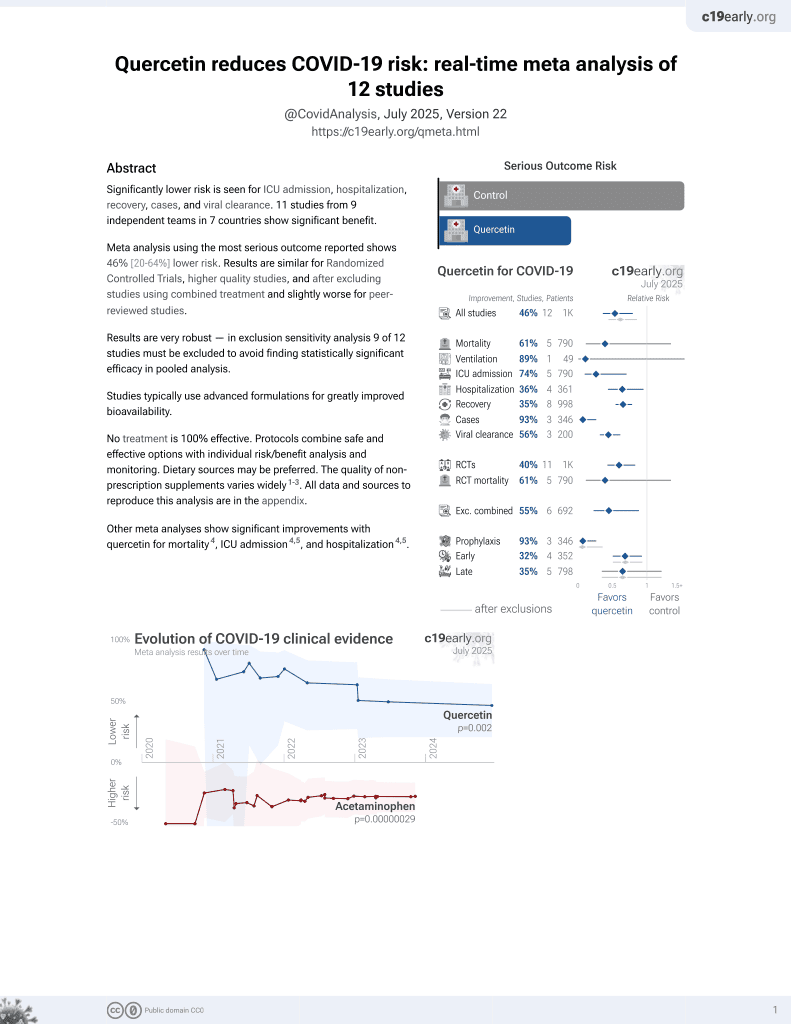
In silico and in vitro study showing that flavonoids, particularly rutin and isoquercetin, bind to an allosteric site on ACE2. Authors performed 120 ns MD simulations showing rutin and isoquercetin formed the most stable complexes with ACE2, with RMSD values below 2.0 Å and the lowest RMSF values.
Bioavailability. Quercetin has low bioavailability and studies typically use advanced formulations to improve bioavailability which may be required to reach therapeutic concentrations.
94 preclinical studies support the efficacy of quercetin for COVID-19:
In silico studies predict inhibition of SARS-CoV-2, or minimization of side effects, with quercetin or metabolites via binding to the spikeA,13,14,20,21,34,36,37,39,42,50,51,53,54,77 (and specifically the receptor binding domainB,10), MproC,9,10,13,14,18,20,22,24,26,28,30,32,35,36,39,42,46,48-50,54-57,74 , RNA-dependent RNA polymeraseD,10,12-14,20,44 , PLproE,14,49,57 , ACE2F,29,34,35,39,40,49,53 , TMPRSS2G,34, nucleocapsidH,14, helicaseI,14,41,46 , endoribonucleaseJ,51, NSP16/10K,17, cathepsin LL,38, Wnt-3M,34, FZDN,34, LRP6O,34, ezrinP,52, ADRPQ,50, NRP1R,53, EP300S,27, PTGS2T,35, HSP90AA1U,27,35 , matrix metalloproteinase 9V,43, IL-6W,33,47 , IL-10X,33, VEGFAY,47, and RELAZ,47 proteins, and inhibition of spike-ACE2 interactionAA,11.
In vitro studies demonstrate inhibition of the MproC,26,60,65,73 protein, and inhibition of spike-ACE2 interactionAA,61.
In vitro studies demonstrate efficacy in Calu-3AB,64, A549AC,33, HEK293-ACE2+AD,72, Huh-7AE,37, Caco-2AF,63, Vero E6AG,31,54,63 , mTECAH,66, RAW264.7AI,66, and HLMECAJ,11 cells.
Animal studies demonstrate efficacy in K18-hACE2 miceAK,69, db/db miceAL,66,76 , BALB/c miceAM,75, and rats31.
Quercetin reduced proinflammatory cytokines and protected lung and kidney tissue against LPS-induced damage in mice75, inhibits LPS-induced cytokine storm by modulating key inflammatory and antioxidant pathways in macrophages16, may block ACE2-spike interaction and NLRP3 inflammasome, limiting viral entry and inflammation7, upregulates the SIRT1/AMPK axis to inhibit oxidative injury and accelerate viral clearance78, inhibits SARS-CoV-2 ORF3a ion channel activity, which contributes to viral pathogenicity and cytotoxicity68, may alleviate COVID-19 ARDS via inhibition of EGFR and JAK2 inflammatory targets3, may destabilize the Spike protein, IL-6R, and integrins via conserved residues, blocking viral entry, hyperinflammation, and platelet aggregation79, and may reduce COVID-19 neuroinflammation and cognitive dysfunction through anti-inflammatory mechanisms and neuroprotective effects2.

1.
Tata et al., Allosteric Interactions of Flavonoids with ACE2 and Potential Implications for COVID-19: Computational Insights, Metabolic and Mitochondrial Effects of Rutin in A549 Cells, Cell Biochemistry and Biophysics, doi:10.1007/s12013-026-02093-1.
2.
Xie et al., Identification of key genes modules linking brain aging signatures and COVID-19-associated cognitive impairment, Virus Research, doi:10.1016/j.virusres.2026.199707.
3.
Gupta et al., Harnessing phytoconstituents to treat COVID-19 triggered acute respiratory distress syndrome: Insights from network pharmacology, and molecular modeling, Phytochemistry Letters, doi:10.1016/j.phytol.2025.104105.
4.
Sun et al., Feasibility of the inhibitor development for SARS-CoV-2: a systematic approach for drug design, Journal of Molecular Modeling, doi:10.1007/s00894-025-06541-2.
5.
Torabfam et al., Improving quercetin solubility via structural modification enhances dual-target coronavirus entry: an integrated in-vitro and in-silico study, Scientific Reports, doi:10.1038/s41598-025-27374-2.
6.
Abdelhameed et al., Phytochemical and antiviral investigation of Cynanchum acutum L. extract and derived semi-synthetic analogs targeting SARS-CoV-2 main protease, Future Journal of Pharmaceutical Sciences, doi:10.1186/s43094-025-00907-2.
7.
Manikyam et al., INP-Guided Network Pharmacology Discloses Multi-Target Therapeutic Strategy Against Cytokine and IgE Storms in the SARS-CoV-2 NB.1.8.1 Variant, Research Square, doi:10.21203/rs.3.rs-6819274/v1.
8.
Makoana et al., Integration of metabolomics and chemometrics with in-silico and in-vitro approaches to unravel SARS-Cov-2 inhibitors from South African plants, PLOS ONE, doi:10.1371/journal.pone.0320415.
9.
Bano et al., Biochemical Screening of Phytochemicals and Identification of Scopoletin as a Potential Inhibitor of SARS-CoV-2 Mpro, Revealing Its Biophysical Impact on Structural Stability, Viruses, doi:10.3390/v17030402.
10.
Rajamanickam et al., Exploring the Potential of Siddha Formulation MilagaiKudineer-Derived Phytotherapeutics Against SARS-CoV-2: An In-Silico Investigation for Antiviral Intervention, Journal of Pharmacy and Pharmacology Research, doi:10.26502/fjppr.0105.
11.
Moharram et al., Secondary metabolites of Alternaria alternate appraisal of their SARS-CoV-2 inhibitory and anti-inflammatory potentials, PLOS ONE, doi:10.1371/journal.pone.0313616.
12.
Metwaly et al., Integrated study of Quercetin as a potent SARS-CoV-2 RdRp inhibitor: Binding interactions, MD simulations, and In vitro assays, PLOS ONE, doi:10.1371/journal.pone.0312866.
13.
Al balawi et al., Assessing multi-target antiviral and antioxidant activities of natural compounds against SARS-CoV-2: an integrated in vitro and in silico study, Bioresources and Bioprocessing, doi:10.1186/s40643-024-00822-z.
14.
Haque et al., Exploring potential therapeutic candidates against COVID-19: a molecular docking study, Discover Molecules, doi:10.1007/s44345-024-00005-5.
15.
Pan et al., Decoding the mechanism of Qingjie formula in the prevention of COVID-19 based on network pharmacology and molecular docking, Heliyon, doi:10.1016/j.heliyon.2024.e39167.
16.
Xu et al., Quercetin inhibited LPS-induced cytokine storm by interacting with the AKT1-FoxO1 and Keap1-Nrf2 signaling pathway in macrophages, Scientific Reports, doi:10.1038/s41598-024-71569-y.
17.
Tamil Selvan et al., Computational Investigations to Identify Potent Natural Flavonoid Inhibitors of the Nonstructural Protein (NSP) 16/10 Complex Against Coronavirus, Cureus, doi:10.7759/cureus.68098.
18.
Sunita et al., Characterization of Phytochemical Inhibitors of the COVID-19 Primary Protease Using Molecular Modelling Approach, Asian Journal of Microbiology and Biotechnology, doi:10.56557/ajmab/2024/v9i28800.
19.
Wu et al., Biomarkers Prediction and Immune Landscape in Covid-19 and “Brain Fog”, Elsevier BV, doi:10.2139/ssrn.4897774.
20.
Raman et al., Phytoconstituents of Citrus limon (Lemon) as Potential Inhibitors Against Multi Targets of SARS‐CoV‐2 by Use of Molecular Modelling and In Vitro Determination Approaches, ChemistryOpen, doi:10.1002/open.202300198.
21.
Asad et al., Exploring the antiviral activity of Adhatoda beddomei bioactive compounds in interaction with coronavirus spike protein, Archives of Medical Reports, 1:1, archmedrep.com/index.php/amr/article/view/3.
22.
Irfan et al., Phytoconstituents of Artemisia Annua as potential inhibitors of SARS CoV2 main protease: an in silico study, BMC Infectious Diseases, doi:10.1186/s12879-024-09387-w.
23.
Yuan et al., Network pharmacology and molecular docking reveal the mechanisms of action of Panax notoginseng against post-COVID-19 thromboembolism, Review of Clinical Pharmacology and Pharmacokinetics - International Edition, doi:10.61873/DTFA3974.
24.
Nalban et al., Targeting COVID-19 (SARS-CoV-2) main protease through phytochemicals of Albizia lebbeck: molecular docking, molecular dynamics simulation, MM–PBSA free energy calculations, and DFT analysis, Journal of Proteins and Proteomics, doi:10.1007/s42485-024-00136-w.
25.
Zhou et al., Bioinformatics and system biology approaches to determine the connection of SARS-CoV-2 infection and intrahepatic cholangiocarcinoma, PLOS ONE, doi:10.1371/journal.pone.0300441.
26.
Waqas et al., Discovery of Novel Natural Inhibitors Against SARS-CoV-2 Main Protease: A Rational Approach to Antiviral Therapeutics, Current Medicinal Chemistry, doi:10.2174/0109298673292839240329081008.
27.
Hasanah et al., Decoding the therapeutic potential of empon-empon: a bioinformatics expedition unraveling mechanisms against COVID-19 and atherosclerosis, International Journal of Applied Pharmaceutics, doi:10.22159/ijap.2024v16i2.50128.
28.
Shaik et al., Computational identification of selected bioactive compounds from Cedrus deodara as inhibitors against SARS-CoV-2 main protease: a pharmacoinformatics study, Indian Drugs, doi:10.53879/id.61.02.13859.
29.
Wang et al., Investigating the Mechanism of Qu Du Qiang Fei 1 Hao Fang Formula against Coronavirus Disease 2019 Based on Network Pharmacology Method, World Journal of Traditional Chinese Medicine, doi:10.4103/2311-8571.395061.
30.
Singh et al., Unlocking the potential of phytochemicals in inhibiting SARS-CoV-2 M Pro protein - An in-silico and cell-based approach, Research Square, doi:10.21203/rs.3.rs-3888947/v1.
31.
El-Megharbel et al., Chemical and spectroscopic characterization of (Artemisinin/Quercetin/ Zinc) novel mixed ligand complex with assessment of its potent high antiviral activity against SARS-CoV-2 and antioxidant capacity against toxicity induced by acrylamide in male rats, PeerJ, doi:10.7717/peerj.15638.
32.
Akinwumi et al., Evaluation of therapeutic potentials of some bioactive compounds in selected African plants targeting main protease (Mpro) in SARS-CoV-2: a molecular docking study, Egyptian Journal of Medical Human Genetics, doi:10.1186/s43042-023-00456-4.
33.
Yang et al., Active ingredient and mechanistic analysis of traditional Chinese medicine formulas for the prevention and treatment of COVID-19: Insights from bioinformatics and in vitro experiments, Medicine, doi:10.1097/MD.0000000000036238.
34.
Chandran et al., Molecular docking analysis of quercetin with known CoVid-19 targets, Bioinformation, doi:10.6026/973206300191081.
35.
Qin et al., Exploring the bioactive compounds of Feiduqing formula for the prevention and management of COVID-19 through network pharmacology and molecular docking, Medical Data Mining, doi:10.53388/MDM202407003.
36.
Moschovou et al., Exploring the Binding Effects of Natural Products and Antihypertensive Drugs on SARS-CoV-2: An In Silico Investigation of Main Protease and Spike Protein, International Journal of Molecular Sciences, doi:10.3390/ijms242115894.
37.
Pan (B) et al., Quercetin: A promising drug candidate against the potential SARS-CoV-2-Spike mutants with high viral infectivity, Computational and Structural Biotechnology Journal, doi:10.1016/j.csbj.2023.10.029.
38.
Ahmed et al., Evaluation of the Effect of Zinc, Quercetin, Bromelain and Vitamin C on COVID-19 Patients, International Journal of Diabetes Management, doi:10.61797/ijdm.v2i2.259.
39.
Thapa et al., In-silico Approach for Predicting the Inhibitory Effect of Home Remedies on Severe Acute Respiratory Syndrome Coronavirus-2, Makara Journal of Science, doi:10.7454/mss.v27i3.1609.
40.
Alkafaas et al., A study on the effect of natural products against the transmission of B.1.1.529 Omicron, Virology Journal, doi:10.1186/s12985-023-02160-6.
41.
Singh (B) et al., Flavonoids as Potent Inhibitor of SARS-CoV-2 Nsp13 Helicase: Grid Based Docking Approach, Middle East Research Journal of Pharmaceutical Sciences, doi:10.36348/merjps.2023.v03i04.001.
42.
Mandal et al., In silico anti-viral assessment of phytoconstituents in a traditional (Siddha Medicine) polyherbal formulation – Targeting Mpro and pan-coronavirus post-fusion Spike protein, Journal of Traditional and Complementary Medicine, doi:10.1016/j.jtcme.2023.07.004.
43.
Sai Ramesh et al., Computational analysis of the phytocompounds of Mimusops elengi against spike protein of SARS CoV2 – An Insilico model, International Journal of Biological Macromolecules, doi:10.1016/j.ijbiomac.2023.125553.
44.
Corbo et al., Inhibitory potential of phytochemicals on five SARS-CoV-2 proteins: in silico evaluation of endemic plants of Bosnia and Herzegovina, Biotechnology & Biotechnological Equipment, doi:10.1080/13102818.2023.2222196.
45.
Azmi et al., Utilization of quercetin flavonoid compounds in onion (Allium cepa L.) as an inhibitor of SARS-CoV-2 spike protein against ACE2 receptors, 11th International Seminar on New Paradigm and Innovation on Natural Sciences and its Application, doi:10.1063/5.0140285.
46.
Alanzi et al., Structure-based virtual identification of natural inhibitors of SARS-CoV-2 and its Delta and Omicron variant proteins, Future Virology, doi:10.2217/fvl-2022-0184.
47.
Yang (B) et al., In silico evidence implicating novel mechanisms of Prunella vulgaris L. as a potential botanical drug against COVID-19-associated acute kidney injury, Frontiers in Pharmacology, doi:10.3389/fphar.2023.1188086.
48.
Wang (B) et al., Computational Analysis of Lianhua Qingwen as an Adjuvant Treatment in Patients with COVID-19, Society of Toxicology Conference, 2023, www.researchgate.net/publication/370491709_Y_Wang_A_E_Tan_O_Chew_A_Hsueh_and_D_E_Johnson_2023_Computational_Analysis_of_Lianhua_Qingwen_as_an_Adjuvant_Treatment_in_Patients_with_COVID-19_Toxicologist_1921_507.
49.
Ibeh et al., Computational studies of potential antiviral compounds from some selected Nigerian medicinal plants against SARS-CoV-2 proteins, Informatics in Medicine Unlocked, doi:10.1016/j.imu.2023.101230.
50.
Nguyen et al., The Potential of Ameliorating COVID-19 and Sequelae From Andrographis paniculata via Bioinformatics, Bioinformatics and Biology Insights, doi:10.1177/11779322221149622.
51.
Alavi et al., Interaction of Epigallocatechin Gallate and Quercetin with Spike Glycoprotein (S-Glycoprotein) of SARS-CoV-2: In Silico Study, Biomedicines, doi:10.3390/biomedicines10123074.
52.
Chellasamy et al., Docking and molecular dynamics studies of human ezrin protein with a modelled SARS-CoV-2 endodomain and their interaction with potential invasion inhibitors, Journal of King Saud University - Science, doi:10.1016/j.jksus.2022.102277.
53.
Şimşek et al., In silico identification of SARS-CoV-2 cell entry inhibitors from selected natural antivirals, Journal of Molecular Graphics and Modelling, doi:10.1016/j.jmgm.2021.108038.
54.
Kandeil et al., Bioactive Polyphenolic Compounds Showing Strong Antiviral Activities against Severe Acute Respiratory Syndrome Coronavirus 2, Pathogens, doi:10.3390/pathogens10060758.
55.
Rehman et al., Natural Compounds as Inhibitors of SARS-CoV-2 Main Protease (3CLpro): A Molecular Docking and Simulation Approach to Combat COVID-19, Current Pharmaceutical Design, doi:10.2174/1381612826999201116195851.
56.
Sekiou et al., In-Silico Identification of Potent Inhibitors of COVID-19 Main Protease (Mpro) and Angiotensin Converting Enzyme 2 (ACE2) from Natural Products: Quercetin, Hispidulin, and Cirsimaritin Exhibited Better Potential Inhibition than Hydroxy-Chloroquine Against COVID-19 Main Protease Active Site and ACE2, ChemRxiv, doi:10.26434/chemrxiv.12181404.v1.
57.
Zhang et al., In silico screening of Chinese herbal medicines with the potential to directly inhibit 2019 novel coronavirus, Journal of Integrative Medicine, doi:10.1016/j.joim.2020.02.005.
58.
Sisti et al., Evaluation of respiratory virus transmissibility and resilience from fomites: the case of 11 SARS-CoV-2 clinical isolates, Applied and Environmental Microbiology, doi:10.1128/aem.00774-25.
59.
Spinelli et al., Amphibian‐Derived Peptides as Natural Inhibitors of SARS‐CoV‐2 Main Protease (Mpro): A Combined In Vitro and In Silico Approach, Chemistry & Biodiversity, doi:10.1002/cbdv.202403202.
60.
Aguilera-Rodriguez et al., Inhibition of SARS-CoV-2 3CLpro by chemically modified tyrosinase from Agaricus bisporus, RSC Medicinal Chemistry, doi:10.1039/D4MD00289J.
61.
Emam et al., Establishment of in-house assay for screening of anti-SARS-CoV-2 protein inhibitors, AMB Express, doi:10.1186/s13568-024-01739-8.
62.
Fang et al., Development of nanoparticles incorporated with quercetin and ACE2-membrane as a novel therapy for COVID-19, Journal of Nanobiotechnology, doi:10.1186/s12951-024-02435-2.
63.
Roy et al., Quercetin inhibits SARS-CoV-2 infection and prevents syncytium formation by cells co-expressing the viral spike protein and human ACE2, Virology Journal, doi:10.1186/s12985-024-02299-w.
64.
DiGuilio et al., Quercetin improves and protects Calu-3 airway epithelial barrier function, Frontiers in Cell and Developmental Biology, doi:10.3389/fcell.2023.1271201.
65.
Zhang (B) et al., Discovery of the covalent SARS‐CoV‐2 Mpro inhibitors from antiviral herbs via integrating target‐based high‐throughput screening and chemoproteomic approaches, Journal of Medical Virology, doi:10.1002/jmv.29208.
66.
Wu (B) et al., SARS-CoV-2 N protein induced acute kidney injury in diabetic db/db mice is associated with a Mincle-dependent M1 macrophage activation, Frontiers in Immunology, doi:10.3389/fimmu.2023.1264447.
67.
Xu (B) et al., Bioactive compounds from Huashi Baidu decoction possess both antiviral and anti-inflammatory effects against COVID-19, Proceedings of the National Academy of Sciences, doi:10.1073/pnas.2301775120.
68.
Fam et al., Channel activity of SARS-CoV-2 viroporin ORF3a inhibited by adamantanes and phenolic plant metabolites, Scientific Reports, doi:10.1038/s41598-023-31764-9.
69.
Aguado et al., Senolytic therapy alleviates physiological human brain aging and COVID-19 neuropathology, bioRxiv, doi:10.1101/2023.01.17.524329.
70.
Goc et al., Inhibitory effects of specific combination of natural compounds against SARS-CoV-2 and its Alpha, Beta, Gamma, Delta, Kappa, and Mu variants, European Journal of Microbiology and Immunology, doi:10.1556/1886.2021.00022.
71.
Munafò et al., Quercetin and Luteolin Are Single-digit Micromolar Inhibitors of the SARS-CoV-2 RNA-dependent RNA Polymerase, Research Square, doi:10.21203/rs.3.rs-1149846/v1.
72.
Singh (C) et al., The spike protein of SARS-CoV-2 virus induces heme oxygenase-1: Pathophysiologic implications, Biochimica et Biophysica Acta (BBA) - Molecular Basis of Disease, doi:10.1016/j.bbadis.2021.166322.
73.
Bahun et al., Inhibition of the SARS-CoV-2 3CLpro main protease by plant polyphenols, Food Chemistry, doi:10.1016/j.foodchem.2021.131594.
74.
Abian et al., Structural stability of SARS-CoV-2 3CLpro and identification of quercetin as an inhibitor by experimental screening, International Journal of Biological Macromolecules, doi:10.1016/j.ijbiomac.2020.07.235.
75.
Shaker et al., Anti-cytokine Storm Activity of Fraxin, Quercetin, and their Combination on Lipopolysaccharide-Induced Cytokine Storm in Mice: Implications in COVID-19, Iranian Journal of Medical Sciences, doi:10.30476/ijms.2023.98947.3102.
76.
Wu (C) et al., Treatment with Quercetin inhibits SARS-CoV-2 N protein-induced acute kidney injury by blocking Smad3-dependent G1 cell cycle arrest, Molecular Therapy, doi:10.1016/j.ymthe.2022.12.002.
77.
Azmi (B) et al., The role of vitamin D receptor and IL‐6 in COVID‐19, Molecular Genetics & Genomic Medicine, doi:10.1002/mgg3.2172.
a.
The trimeric spike (S) protein is a glycoprotein that mediates viral entry by binding to the host ACE2 receptor, is critical for SARS-CoV-2's ability to infect host cells, and is a target of neutralizing antibodies. Inhibition of the spike protein prevents viral attachment, halting infection at the earliest stage.
b.
The receptor binding domain is a specific region of the spike protein that binds ACE2 and is a major target of neutralizing antibodies. Focusing on the precise binding site allows highly specific disruption of viral attachment with reduced potential for off-target effects.
c.
The main protease or Mpro, also known as 3CLpro or nsp5, is a cysteine protease that cleaves viral polyproteins into functional units needed for replication. Inhibiting Mpro disrupts the SARS-CoV-2 lifecycle within the host cell, preventing the creation of new copies.
d.
RNA-dependent RNA polymerase (RdRp), also called nsp12, is the core enzyme of the viral replicase-transcriptase complex that copies the positive-sense viral RNA genome into negative-sense templates for progeny RNA synthesis. Inhibiting RdRp blocks viral genome replication and transcription.
e.
The papain-like protease (PLpro) has multiple functions including cleaving viral polyproteins and suppressing the host immune response by deubiquitination and deISGylation of host proteins. Inhibiting PLpro may block viral replication and help restore normal immune responses.
f.
The angiotensin converting enzyme 2 (ACE2) protein is a host cell transmembrane protein that serves as the cellular receptor for the SARS-CoV-2 spike protein. ACE2 is expressed on many cell types, including epithelial cells in the lungs, and allows the virus to enter and infect host cells. Inhibition may affect ACE2's physiological function in blood pressure control.
g.
Transmembrane protease serine 2 (TMPRSS2) is a host cell protease that primes the spike protein, facilitating cellular entry. TMPRSS2 activity helps enable cleavage of the spike protein required for membrane fusion and virus entry. Inhibition may especially protect respiratory epithelial cells, buy may have physiological effects.
h.
The nucleocapsid (N) protein binds and encapsulates the viral genome by coating the viral RNA. N enables formation and release of infectious virions and plays additional roles in viral replication and pathogenesis. N is also an immunodominant antigen used in diagnostic assays.
i.
The helicase, or nsp13, protein unwinds the double-stranded viral RNA, a crucial step in replication and transcription. Inhibition may prevent viral genome replication and the creation of new virus components.
j.
The endoribonuclease, also known as NendoU or nsp15, cleaves specific sequences in viral RNA which may help the virus evade detection by the host immune system. Inhibition may hinder the virus's ability to mask itself from the immune system, facilitating a stronger immune response.
k.
The NSP16/10 complex consists of non-structural proteins 16 and 10, forming a 2'-O-methyltransferase that modifies the viral RNA cap structure. This modification helps the virus evade host immune detection by mimicking host mRNA, making NSP16/10 a promising antiviral target.
l.
Cathepsin L is a host lysosomal cysteine protease that can prime the spike protein through an alternative pathway when TMPRSS2 is unavailable. Dual targeting of cathepsin L and TMPRSS2 may maximize disruption of alternative pathways for virus entry.
m.
Wingless-related integration site (Wnt) ligand 3 is a host signaling molecule that activates the Wnt signaling pathway, which is important in development, cell growth, and tissue repair. Some studies suggest that SARS-CoV-2 infection may interfere with the Wnt signaling pathway, and that Wnt3a is involved in SARS-CoV-2 entry.
n.
The frizzled (FZD) receptor is a host transmembrane receptor that binds Wnt ligands, initiating the Wnt signaling cascade. FZD serves as a co-receptor, along with ACE2, in some proposed mechanisms of SARS-CoV-2 infection. The virus may take advantage of this pathway as an alternative entry route.
o.
Low-density lipoprotein receptor-related protein 6 is a cell surface co-receptor essential for Wnt signaling. LRP6 acts in tandem with FZD for signal transduction and has been discussed as a potential co-receptor for SARS-CoV-2 entry.
p.
The ezrin protein links the cell membrane to the cytoskeleton (the cell's internal support structure) and plays a role in cell shape, movement, adhesion, and signaling. Drugs that occupy the same spot on ezrin where the viral spike protein would bind may hindering viral attachment, and drug binding could further stabilize ezrin, strengthening its potential natural capacity to impede viral fusion and entry.
q.
The Adipocyte Differentiation-Related Protein (ADRP, also known as Perilipin 2 or PLIN2) is a lipid droplet protein regulating the storage and breakdown of fats in cells. SARS-CoV-2 may hijack the lipid handling machinery of host cells and ADRP may play a role in this process. Disrupting ADRP's interaction with the virus may hinder the virus's ability to use lipids for replication and assembly.
r.
Neuropilin-1 (NRP1) is a cell surface receptor with roles in blood vessel development, nerve cell guidance, and immune responses. NRP1 may function as a co-receptor for SARS-CoV-2, facilitating viral entry into cells. Blocking NRP1 may disrupt an alternative route of viral entry.
s.
EP300 (E1A Binding Protein P300) is a transcriptional coactivator involved in several cellular processes, including growth, differentiation, and apoptosis, through its acetyltransferase activity that modifies histones and non-histone proteins. EP300 facilitates viral entry into cells and upregulates inflammatory cytokine production.
t.
Prostaglandin G/H synthase 2 (PTGS2, also known as COX-2) is an enzyme crucial for the production of inflammatory molecules called prostaglandins. PTGS2 plays a role in the inflammatory response that can become severe in COVID-19 and inhibitors (like some NSAIDs) may have benefits in dampening harmful inflammation, but note that prostaglandins have diverse physiological functions.
u.
Heat Shock Protein 90 Alpha Family Class A Member 1 (HSP90AA1) is a chaperone protein that helps other proteins fold correctly and maintains their stability. HSP90AA1 plays roles in cell signaling, survival, and immune responses. HSP90AA1 may interact with numerous viral proteins, but note that it has diverse physiological functions.
v.
Matrix metalloproteinase 9 (MMP9), also called gelatinase B, is a zinc-dependent enzyme that breaks down collagen and other components of the extracellular matrix. MMP9 levels increase in severe COVID-19. Overactive MMP9 can damage lung tissue and worsen inflammation. Inhibition of MMP9 may prevent excessive tissue damage and help regulate the inflammatory response.
w.
The interleukin-6 (IL-6) pro-inflammatory cytokine (signaling molecule) has a complex role in the immune response and may trigger and perpetuate inflammation. Elevated IL-6 levels are associated with severe COVID-19 cases and cytokine storm. Anti-IL-6 therapies may be beneficial in reducing excessive inflammation in severe COVID-19 cases.
x.
The interleukin-10 (IL-10) anti-inflammatory cytokine helps regulate and dampen immune responses, preventing excessive inflammation. IL-10 levels can also be elevated in severe COVID-19. IL-10 could either help control harmful inflammation or potentially contribute to immune suppression.
y.
Vascular Endothelial Growth Factor A (VEGFA) promotes the growth of new blood vessels (angiogenesis) and has roles in inflammation and immune responses. VEGFA may contribute to blood vessel leakiness and excessive inflammation associated with severe COVID-19.
z.
RELA is a transcription factor subunit of NF-kB and is a key regulator of inflammation, driving pro-inflammatory gene expression. SARS-CoV-2 may hijack and modulate NF-kB pathways.
aa.
The interaction between the SARS-CoV-2 spike protein and the human ACE2 receptor is a primary method of viral entry, inhibiting this interaction can prevent the virus from attaching to and entering host cells, halting infection at an early stage.
ab.
Calu-3 is a human lung adenocarcinoma cell line with moderate ACE2 and TMPRSS2 expression and SARS-CoV-2 susceptibility. It provides a model of the human respiratory epithelium, but many not be ideal for modeling early stages of infection due to the moderate expression levels of ACE2 and TMPRSS2.
ac.
A549 is a human lung carcinoma cell line with low ACE2 expression and SARS-CoV-2 susceptibility. Viral entry/replication can be studied but the cells may not replicate all aspects of lung infection.
ad.
HEK293-ACE2+ is a human embryonic kidney cell line engineered for high ACE2 expression and SARS-CoV-2 susceptibility.
ae.
Huh-7 cells were derived from a liver tumor (hepatoma).
af.
Caco-2 cells come from a colorectal adenocarcinoma (cancer). They are valued for their ability to form a polarized cell layer with properties similar to the intestinal lining.
ag.
Vero E6 is an African green monkey kidney cell line with low/no ACE2 expression and high SARS-CoV-2 susceptibility. The cell line is easy to maintain and supports robust viral replication, however the monkey origin may not accurately represent human responses.
ah.
mTEC is a mouse tubular epithelial cell line.
ai.
RAW264.7 is a mouse macrophage cell line.
aj.
HLMEC (Human Lung Microvascular Endothelial Cells) are primary endothelial cells derived from the lung microvasculature. They are used to study endothelial function, inflammation, and viral interactions, particularly in the context of lung infections such as SARS-CoV-2. HLMEC express ACE2 and are susceptible to SARS-CoV-2 infection, making them a relevant model for studying viral entry and endothelial responses in the lung.
ak.
A mouse model expressing the human ACE2 receptor under the control of the K18 promoter.
al.
A mouse model of obesity and severe insulin resistance leading to type 2 diabetes due to a mutation in the leptin receptor gene that impairs satiety signaling.
am.
A mouse model commonly used in infectious disease and cancer research due to higher immune response and susceptibility to infection.
Tata et al., 8 Jun 2026, peer-reviewed, 5 authors.
Contact: favetata4real@yahoo.com, mthokonxumalo2020@gmail.com, kumaloh@ukzn.ac.za, khanr@ukzn.ac.za, vincentobakachi@gmail.com.
In vitro studies are an important part of preclinical research, however results may be very different in vivo.
Abstract: ## ORIGINAL PAPER
Allosteric Interactions of Flavonoids with ACE2 and Potential Implications for COVID-19: Computational Insights, Metabolic and Mitochondrial Effects of Rutin in A549 Cells
Fave Y. Tata 1,2 · Mthokozisi B. Nxumalo 1 · Vincent A. Obakachi 3 · Hezekiel M. Kumalo 1 · René B. Khan 1
Accepted: 4 May 2026 © The Author(s) 2026
Abstract
There has been a compelling need to identify new therapeutic targets and agents owing to the increasing complexity of disease mechanisms. Angiotensin-converting enzyme 2 (ACE2), the primary host receptor for severe acute respiratory syndrome coronavirus-2 (SARS-CoV-2, plays a crucial role in the pathophysiology of COVID-19, making ACE2 a potential biological target. Identification of small molecules that can interact with ACE2 may offer insights into a hosttargeted approach relevant to viral entry and ACE2-associated cellular pathways. The study evaluated allosteric interactions of selected flavonoids with ACE2, the cytotoxicity and metabolic effects of the promising candidate in A549 cells through computational and in vitro methods. Molecular docking identified flavonoid binding to ACE2, followed by a 120 ns molecular dynamics (MD) simulation to characterize the stability and dynamic behaviour of ACE2-flavonoid com -plexes. MM/GBSA binding free energy calculations and per residue energy decomposition were performed to identify key interactions stabilizing ligand binding. The in silico analyses showed ARG255, PRO328, GLU357, GLU384, GLU388, and ARG500 as the key allosteric residues contributing to ACE2-flavonoid complex stability. Rutin exhibited the most favourable binding affinity, followed by isoquercetin. Based on computational findings, rutin was selected for evaluation in A549 cells to assess cytotoxicity, metabolic and mitochondrial effects using MTT assay, ATP quantification, mitochondrial membrane potential (MMP), CYP3A4 activity and LDH release for membrane integrity. In vitro analyses showed that rutin is non-cytotoxic up to 500µM, enhances ATP production without adversely affecting MMP and membrane integrity. These findings indicate that rutin formed stable interactions with ACE2, with the potential to influence cellular energy metabolism without inducing cytotoxicity and therapeutic benefits in conditions linked to mitochondrial dysfunction and metabolic stress. While direct ACE2 enzymatic modulation was not confirmed experimentally, these findings provide a mechanistic basis for further studies on ACE2-flavonoid interactions and their potential biological implications in ACE2associated diseases.
Keywords ACE2 · COVID-19 · Flavonoids · Cytotoxicity · Rutin · Molecular dynamic simulations
[Fave Y. Tata favetata4real@yahoo.com](mailto:favetata4real@yahoo.com)
Mthokozisi B. Nxumalo mthokonxumalo2020@gmail.com; kumaloH@ukzn.ac.za
Vincent A. Obakachi KhanR@ukzn.ac.za; vincentobakachi@gmail.com
1 Drug Research and Innovation Unit, Discipline of Medical Biochemistry, School of Laboratory Medicine and Medical Science, University of KwaZulu-Natal, Durban 4000, South Africa
- 2 Molecular and Clinical Pharmacology Research Laboratory, Department of Pharmacology, Discipline of Pharmaceutical Sciences, University of KwaZulu-Natal, P.O. Box X5401, Durban 4000, South Africa
- 3 Department of Pharmaceutical Chemistry, Discipline of Pharmaceutical Sciences, College of Health Sciences, University of KwaZulu-Natal, Durban, South..
DOI record:
{
"DOI": "10.1007/s12013-026-02093-1",
"ISSN": [
"1559-0283"
],
"URL": "http://dx.doi.org/10.1007/s12013-026-02093-1",
"abstract": "<jats:title>Abstract</jats:title>\n <jats:p>There has been a compelling need to identify new therapeutic targets and agents owing to the increasing complexity of disease mechanisms. Angiotensin-converting enzyme 2 (ACE2), the primary host receptor for severe acute respiratory syndrome coronavirus-2 (SARS-CoV-2, plays a crucial role in the pathophysiology of COVID-19, making ACE2 a potential biological target. Identification of small molecules that can interact with ACE2 may offer insights into a host-targeted approach relevant to viral entry and ACE2-associated cellular pathways. The study evaluated allosteric interactions of selected flavonoids with ACE2, the cytotoxicity and metabolic effects of the promising candidate in A549 cells through computational and in vitro methods. Molecular docking identified flavonoid binding to ACE2, followed by a 120 ns molecular dynamics (MD) simulation to characterize the stability and dynamic behaviour of ACE2-flavonoid complexes. MM/GBSA binding free energy calculations and per residue energy decomposition were performed to identify key interactions stabilizing ligand binding. The in silico analyses showed ARG255, PRO328, GLU357, GLU384, GLU388, and ARG500 as the key allosteric residues contributing to ACE2-flavonoid complex stability. Rutin exhibited the most favourable binding affinity, followed by isoquercetin. Based on computational findings, rutin was selected for evaluation in A549 cells to assess cytotoxicity, metabolic and mitochondrial effects using MTT assay, ATP quantification, mitochondrial membrane potential (MMP), CYP3A4 activity and LDH release for membrane integrity. In vitro analyses showed that rutin is non-cytotoxic up to 500µM, enhances ATP production without adversely affecting MMP and membrane integrity. These findings indicate that rutin formed stable interactions with ACE2, with the potential to influence cellular energy metabolism without inducing cytotoxicity and therapeutic benefits in conditions linked to mitochondrial dysfunction and metabolic stress. While direct ACE2 enzymatic modulation was not confirmed experimentally, these findings provide a mechanistic basis for further studies on ACE2-flavonoid interactions and their potential biological implications in ACE2-associated diseases.</jats:p>",
"alternative-id": [
"2093"
],
"assertion": [
{
"group": {
"label": "Article History",
"name": "ArticleHistory"
},
"label": "Accepted",
"name": "accepted",
"order": 1,
"value": "4 May 2026"
},
{
"group": {
"label": "Article History",
"name": "ArticleHistory"
},
"label": "First Online",
"name": "first_online",
"order": 2,
"value": "8 June 2026"
},
{
"group": {
"label": "Declarations",
"name": "EthicsHeading"
},
"name": "Ethics",
"order": 1
},
{
"group": {
"label": "Conflict of interest",
"name": "EthicsHeading"
},
"name": "Ethics",
"order": 2,
"value": "The authors declare no conflicts of interest."
}
],
"author": [
{
"affiliation": [],
"family": "Tata",
"given": "Fave Y.",
"role": [
{
"role": "author",
"vocabulary": "crossref"
}
],
"sequence": "first"
},
{
"affiliation": [],
"family": "Nxumalo",
"given": "Mthokozisi B.",
"role": [
{
"role": "author",
"vocabulary": "crossref"
}
],
"sequence": "additional"
},
{
"affiliation": [],
"family": "Obakachi",
"given": "Vincent A.",
"role": [
{
"role": "author",
"vocabulary": "crossref"
}
],
"sequence": "additional"
},
{
"affiliation": [],
"family": "Kumalo",
"given": "Hezekiel M.",
"role": [
{
"role": "author",
"vocabulary": "crossref"
}
],
"sequence": "additional"
},
{
"affiliation": [],
"family": "Khan",
"given": "René B.",
"role": [
{
"role": "author",
"vocabulary": "crossref"
}
],
"sequence": "additional"
}
],
"container-title": "Cell Biochemistry and Biophysics",
"container-title-short": "Cell Biochem Biophys",
"content-domain": {
"crossmark-restriction": false,
"domain": [
"link.springer.com"
]
},
"created": {
"date-parts": [
[
2026,
6,
8
]
],
"date-time": "2026-06-08T12:20:08Z",
"timestamp": 1780921208000
},
"deposited": {
"date-parts": [
[
2026,
6,
8
]
],
"date-time": "2026-06-08T14:03:21Z",
"timestamp": 1780927401000
},
"funder": [
{
"DOI": "10.13039/501100004695",
"doi-asserted-by": "crossref",
"id": [
{
"asserted-by": "crossref",
"id": "10.13039/501100004695",
"id-type": "DOI"
}
],
"name": "University of KwaZulu-Natal"
}
],
"indexed": {
"date-parts": [
[
2026,
6,
8
]
],
"date-time": "2026-06-08T14:58:42Z",
"timestamp": 1780930722983,
"version": "3.54.1"
},
"is-referenced-by-count": 0,
"issued": {
"date-parts": [
[
2026,
6,
8
]
]
},
"language": "en",
"license": [
{
"URL": "https://creativecommons.org/licenses/by/4.0",
"content-version": "tdm",
"delay-in-days": 0,
"start": {
"date-parts": [
[
2026,
6,
8
]
],
"date-time": "2026-06-08T00:00:00Z",
"timestamp": 1780876800000
}
},
{
"URL": "https://creativecommons.org/licenses/by/4.0",
"content-version": "vor",
"delay-in-days": 0,
"start": {
"date-parts": [
[
2026,
6,
8
]
],
"date-time": "2026-06-08T00:00:00Z",
"timestamp": 1780876800000
}
}
],
"link": [
{
"URL": "https://link.springer.com/content/pdf/10.1007/s12013-026-02093-1.pdf",
"content-type": "application/pdf",
"content-version": "vor",
"intended-application": "text-mining"
},
{
"URL": "https://link.springer.com/article/10.1007/s12013-026-02093-1",
"content-type": "text/html",
"content-version": "vor",
"intended-application": "text-mining"
},
{
"URL": "https://link.springer.com/content/pdf/10.1007/s12013-026-02093-1.pdf",
"content-type": "application/pdf",
"content-version": "vor",
"intended-application": "similarity-checking"
}
],
"member": "297",
"original-title": [],
"prefix": "10.1007",
"published": {
"date-parts": [
[
2026,
6,
8
]
]
},
"published-online": {
"date-parts": [
[
2026,
6,
8
]
]
},
"publisher": "Springer Science and Business Media LLC",
"reference": [
{
"DOI": "10.3389/fphar.2020.586993",
"doi-asserted-by": "publisher",
"key": "2093_CR1",
"unstructured": "Omrani, M., Keshavarz, M., Nejad Ebrahimi, S., Mehrabi, M., McGaw, L. J., Ali Abdalla, M., & Mehrbod, P. (2021). Potential Natural Products Against Respiratory Viruses: A Perspective to Develop Anti-COVID-19 Medicines. Frontiers in Pharmacology, 11. https://doi.org/10.3389/fphar.2020.586993"
},
{
"DOI": "10.3390/ijms23052643",
"doi-asserted-by": "publisher",
"key": "2093_CR2",
"unstructured": "Haddad, M., Gaudreault, R., Sasseville, G., Nguyen, P. T., Wiebe, H., Van De Ven, T., Bourgault, S., Mousseau, N., & Ramassamy, C. (2022). Molecular Interactions of Tannic Acid with Proteins Associated with SARS-CoV-2 Infectivity. International Journal Of Molecular Sciences, 23(5). https://doi.org/10.3390/ijms23052643"
},
{
"DOI": "10.1016/j.arcmed.2020.05.012",
"author": "S Satarker",
"doi-asserted-by": "publisher",
"first-page": "482",
"issue": "6",
"journal-title": "Archives of Medical Research",
"key": "2093_CR3",
"unstructured": "Satarker, S., & Nampoothiri, M. (2020). Structural Proteins in Severe Acute Respiratory Syndrome Coronavirus-2. Archives of Medical Research, 51(6), 482–491. https://doi.org/10.1016/j.arcmed.2020.05.012",
"volume": "51",
"year": "2020"
},
{
"DOI": "10.1007/s40199-023-00461-3",
"author": "L Toigo",
"doi-asserted-by": "publisher",
"first-page": "51",
"issue": "1",
"journal-title": "DARU Journal of Pharmaceutical Sciences",
"key": "2093_CR4",
"unstructured": "Toigo, L., Dos Santos Teodoro, E. I., Guidi, A. C., Gancedo, N. C., Petruco, M. V., Melo, E. B., Tonin, F. S., Fernandez-Llimos, F., Chierrito, D., De Mello, J. C. P., De Medeiros, D. C., Araújo, A. C. C., & Sanches (2023). Flavonoid as possible therapeutic targets against COVID-19: a scoping review of in silico studies. DARU Journal of Pharmaceutical Sciences, 31(1), 51–68. https://doi.org/10.1007/s40199-023-00461-3",
"volume": "31",
"year": "2023"
},
{
"DOI": "10.1073/pnas.2024815118",
"doi-asserted-by": "publisher",
"key": "2093_CR5",
"unstructured": "Sender, R., Bar-On, Y. M., Gleizer, S., Bernshtein, B., Flamholz, A., Phillips, R., & Milo, R. (2021). The total number and mass of SARS-CoV-2 virions. Pnas 118(25), e2024815118 . https://doi.org/10.1073/pnas.2024815118"
},
{
"DOI": "10.1016/j.cell.2020.09.037",
"author": "L Piccoli",
"doi-asserted-by": "publisher",
"first-page": "1024",
"issue": "4",
"journal-title": "Cell",
"key": "2093_CR6",
"unstructured": "Piccoli, L., Park, Y. J., Tortorici, M. A., Czudnochowski, N., Walls, A. C., Beltramello, M., Silacci-Fregni, C., Pinto, D., Rosen, L. E., & Bowen, J. E. (2020). Mapping neutralizing and immunodominant sites on the SARS-CoV-2 spike receptor-binding domain by structure-guided high-resolution serology. Cell, 183(4), 1024–1042.",
"volume": "183",
"year": "2020"
},
{
"DOI": "10.1016/j.ejphar.2020.173620",
"author": "A Yarmohammadi",
"doi-asserted-by": "publisher",
"first-page": "173620",
"journal-title": "European Journal of Pharmacology",
"key": "2093_CR7",
"unstructured": "Yarmohammadi, A., Yarmohammadi, M., Fakhri, S., & Khan, H. (2021). Targeting pivotal inflammatory pathways in COVID-19: A mechanistic review. European Journal of Pharmacology, 890, 173620. https://doi.org/10.1016/j.ejphar.2020.173620",
"volume": "890",
"year": "2021"
},
{
"DOI": "10.1042/cs20200899",
"author": "L Lubbe",
"doi-asserted-by": "publisher",
"first-page": "2851",
"issue": "21",
"journal-title": "Clinical Science",
"key": "2093_CR8",
"unstructured": "Lubbe, L., Gyles, D., Oosthuizen, K., & Edward (2020). ACE2 and ACE: structure-based insights into mechanism, regulation and receptor recognition by SARS-CoV. Clinical Science, 134(21), 2851–2871. https://doi.org/10.1042/cs20200899",
"volume": "134",
"year": "2020"
},
{
"DOI": "10.1183/13993003.00912-2020",
"author": "NE Ingraham",
"doi-asserted-by": "publisher",
"first-page": "2000912",
"issue": "1",
"journal-title": "European Respiratory Journal",
"key": "2093_CR9",
"unstructured": "Ingraham, N. E., Barakat, A. G., Reilkoff, R., Bezdicek, T., Schacker, T., Chipman, J. G., Tignanelli, C. J., & Puskarich, M. A. (2020). Understanding the renin–angiotensin–aldosterone–SARS-CoV axis: a comprehensive review. European Respiratory Journal, 56(1), 2000912. https://doi.org/10.1183/13993003.00912-2020",
"volume": "56",
"year": "2020"
},
{
"DOI": "10.1002/jmv.25785",
"author": "H Cheng",
"doi-asserted-by": "publisher",
"first-page": "726",
"issue": "7",
"journal-title": "Journal of medical virology",
"key": "2093_CR10",
"unstructured": "Cheng, H., Wang, Y., & Wang, G. Q. (2020). Organ-protective effect of angiotensin‐converting enzyme 2 and its effect on the prognosis of COVID‐19. Journal of medical virology, 92(7), 726–730.",
"volume": "92",
"year": "2020"
},
{
"DOI": "10.1016/j.peptides.2022.170766",
"author": "AJ Turner",
"doi-asserted-by": "publisher",
"first-page": "170766",
"journal-title": "Peptides",
"key": "2093_CR11",
"unstructured": "Turner, A. J., & Nalivaeva, N. N. (2022). Angiotensin-converting enzyme 2 (ACE2): Two decades of revelations and re-evaluation. Peptides, 151, 170766. https://doi.org/10.1016/j.peptides.2022.170766",
"volume": "151",
"year": "2022"
},
{
"DOI": "10.3389/fpubh.2020.00216",
"author": "R Keni",
"doi-asserted-by": "publisher",
"first-page": "216",
"journal-title": "Frontiers in public health",
"key": "2093_CR12",
"unstructured": "Keni, R., Alexander, A., Nayak, P. G., Mudgal, J., & Nandakumar, K. (2020). COVID-19: emergence, spread, possible treatments, and global burden. Frontiers in public health, 8, 216.",
"volume": "8",
"year": "2020"
},
{
"DOI": "10.1111/ijcp.13488",
"doi-asserted-by": "publisher",
"key": "2093_CR13",
"unstructured": "Stein, R. A. (2020). The 2019 coronavirus: Learning curves, lessons, and the weakest link. International Journal of Clinical Practice 74(4), e13488. https://doi.org/10.1111/ijcp.13488"
},
{
"DOI": "10.18632/aging.202225",
"author": "B Wang",
"doi-asserted-by": "publisher",
"first-page": "22425",
"issue": "22",
"journal-title": "Aging (Albany NY)",
"key": "2093_CR14",
"unstructured": "Wang, B., Kovalchuk, A., Li, D., Rodriguez-Juarez, R., Ilnytskyy, Y., Kovalchuk, I., & Kovalchuk, O. (2020). In search of preventive strategies: novel high-CBD Cannabis sativa extracts modulate ACE2 expression in COVID-19 gateway tissues. Aging (Albany NY), 12(22), 22425–22444. https://doi.org/10.18632/aging.202225",
"volume": "12",
"year": "2020"
},
{
"DOI": "10.1016/j.yjmcc.2020.04.031",
"author": "S Groß",
"doi-asserted-by": "publisher",
"first-page": "47",
"journal-title": "Journal of Molecular and Cellular Cardiology",
"key": "2093_CR15",
"unstructured": "Groß, S., Jahn, C., Cushman, S., Bär, C., & Thum, T. (2020). SARS-CoV-2 receptor ACE2-dependent implications on the cardiovascular system: From basic science to clinical implications. Journal of Molecular and Cellular Cardiology, 144, 47–53. https://doi.org/10.1016/j.yjmcc.2020.04.031",
"volume": "144",
"year": "2020"
},
{
"DOI": "10.1172/jci.insight.138070",
"doi-asserted-by": "publisher",
"key": "2093_CR16",
"unstructured": "Li, S., Jiang, L., Li, X., Lin, F., Wang, Y., Li, B., Jiang, T., An, W., Liu, S., Liu, H., Xu, P., Zhao, L., Zhang, L., Mu, J., Wang, H., Kang, J., Li, Y., Huang, L., Zhu, C., Zhao, S., Lu, J., Ji, J., & Zhao, J. (2020). Clinical and pathological investigation of patients with severe COVID-19. JCI Insight, 5(12). https://doi.org/10.1172/jci.insight.138070"
},
{
"DOI": "10.1186/s13063-022-06075-5",
"author": "G Cárdenas",
"doi-asserted-by": "publisher",
"first-page": "148",
"issue": "1",
"journal-title": "Trials",
"key": "2093_CR17",
"unstructured": "Cárdenas, G., Chávez-Canales, M., Espinosa, A. M., Jordán-Ríos, A., Malagon, D. A., Murillo, M. F. M., Araujo, L. V. T., Campos, R. L. B., Wong-Chew, R. M., González, L. E. R., et al. (2022). Intranasal dexamethasone: a new clinical trial for the control of inflammation and neuroinflammation in COVID-19 patients. Trials, 23(1), 148. https://doi.org/10.1186/s13063-022-06075-5",
"volume": "23",
"year": "2022"
},
{
"DOI": "10.1016/s2213-2600(22)00002-9",
"author": "JR Baker",
"doi-asserted-by": "publisher",
"first-page": "545",
"issue": "6",
"journal-title": "Lancet Respir Med",
"key": "2093_CR18",
"unstructured": "Baker, J. R., Mahdi, M., NicolauJr., D. V., Ramakrishnan, S., Barnes, P. J., Simpson, J. L., Cass, S. P., Russell, R. E. K., Donnelly, L. E., & Bafadhel, M. (2022). Early Th2 inflammation in the upper respiratory mucosa as a predictor of severe COVID-19 and modulation by early treatment with inhaled corticosteroids: a mechanistic analysis. Lancet Respir Med, 10(6), 545–556. https://doi.org/10.1016/s2213-2600(22)00002-9",
"volume": "10",
"year": "2022"
},
{
"DOI": "10.1164/rccm.200912-1840OC",
"author": "V Shenoy",
"doi-asserted-by": "publisher",
"first-page": "1065",
"issue": "8",
"journal-title": "American Journal Of Respiratory And Critical Care Medicine",
"key": "2093_CR19",
"unstructured": "Shenoy, V., Ferreira, A. J., Qi, Y., Fraga-Silva, R. A., Díez-Freire, C., Dooies, A., Jun, J. Y., Sriramula, S., Mariappan, N., Pourang, D., Venugopal, C. S., Francis, J., Reudelhuber, T., Santos, R. A., Patel, J. M., Raizada, M. K., & Katovich, M. J. (2010). The angiotensin-converting enzyme 2/angiogenesis-(1–7)/Mas axis confers cardiopulmonary protection against lung fibrosis and pulmonary hypertension. American Journal Of Respiratory And Critical Care Medicine, 182(8), 1065–1072. https://doi.org/10.1164/rccm.200912-1840OC",
"volume": "182",
"year": "2010"
},
{
"DOI": "10.3390/cells11132102",
"author": "AK Ciechanowicz",
"doi-asserted-by": "publisher",
"first-page": "2102",
"issue": "13",
"journal-title": "Cells",
"key": "2093_CR20",
"unstructured": "Ciechanowicz, A. K., Lay, W. X., Prado Paulino, J., Suchocki, E., Leszczak, S., Leszczak, C., & Kucia, M. (2022). Angiotensin 1–7 Stimulates Proliferation of Lung Bronchoalveolar Progenitors—Implications for SARS-CoV-2 Infection. Cells, 11(13), 2102.",
"volume": "11",
"year": "2022"
},
{
"DOI": "10.1681/asn.2021091209",
"author": "L Hassler",
"doi-asserted-by": "publisher",
"first-page": "1293",
"issue": "7",
"journal-title": "Journal Of The American Society Of Nephrology",
"key": "2093_CR21",
"unstructured": "Hassler, L., Wysocki, J., Gelarden, I., Sharma, I., Tomatsidou, A., Ye, M., Gula, H., Nicoleascu, V., Randall, G., Pshenychnyi, S., Khurram, N., Kanwar, Y., Missiakas, D., Henkin, J., Yeldandi, A., & Batlle, D. (2022). A Novel Soluble ACE2 Protein Provides Lung and Kidney Protection in Mice Susceptible to Lethal SARS-CoV-2 Infection. Journal Of The American Society Of Nephrology, 33(7), 1293–1307. https://doi.org/10.1681/asn.2021091209",
"volume": "33",
"year": "2022"
},
{
"DOI": "10.1164/rccm.201712-2570OC",
"author": "J Zhang",
"doi-asserted-by": "publisher",
"first-page": "509",
"issue": "4",
"journal-title": "American Journal Of Respiratory And Critical Care Medicine",
"key": "2093_CR22",
"unstructured": "Zhang, J., Dong, J., Martin, M., He, M., Gongol, B., Marin, T. L., Chen, L., Shi, X., Yin, Y., Shang, F., Wu, Y., Huang, H. Y., Zhang, J., Zhang, Y., Kang, J., Moya, E. A., Huang, H. D., Powell, F. L., Chen, Z., Thistlethwaite, P. A., Yuan, Z. Y., & John, Y. J. (2018). AMP-activated protein kinase phosphorylation of angiotensin-converting enzyme 2 in endothelium mitigates pulmonary hypertension. American Journal Of Respiratory And Critical Care Medicine, 198(4), 509–520. https://doi.org/10.1164/rccm.201712-2570OC",
"volume": "198",
"year": "2018"
},
{
"DOI": "10.1016/j.dsx.2020.05.013",
"author": "M Marhl",
"doi-asserted-by": "publisher",
"first-page": "671",
"issue": "4",
"journal-title": "Clinical Research and Reviews",
"key": "2093_CR23",
"unstructured": "Marhl, M., Grubelnik, V., Magdič, M., & Markovič, R. (2020). Diabetes and metabolic syndrome as risk factors for COVID-19, Diabetes and Metabolic Syndrome. Clinical Research and Reviews, 14(4), 671–677. https://doi.org/10.1016/j.dsx.2020.05.013",
"volume": "14",
"year": "2020"
},
{
"DOI": "10.1155/2020/8896536",
"author": "E Nigro",
"doi-asserted-by": "publisher",
"first-page": "8896536",
"journal-title": "Int J Endocrinol",
"key": "2093_CR24",
"unstructured": "Nigro, E., Perrotta, F., Polito, R., D’Agnano, V., Scialò, F., Bianco, A., & Daniele, A. (2020). Metabolic Perturbations and Severe COVID-19 Disease: Implication of Molecular Pathways. Int J Endocrinol, 2020, 8896536. https://doi.org/10.1155/2020/8896536",
"volume": "2020",
"year": "2020"
},
{
"DOI": "10.18632/aging.103000",
"author": "B Wang",
"doi-asserted-by": "publisher",
"first-page": "6049",
"issue": "7",
"journal-title": "Aging (albany NY)",
"key": "2093_CR25",
"unstructured": "Wang, B., Li, R., Lu, Z., & Huang, Y. (2020). Does comorbidity increase the risk of patients with COVID-19: evidence from meta-analysis. Aging (albany NY), 12(7), 6049.",
"volume": "12",
"year": "2020"
},
{
"DOI": "10.1016/j.biopha.2022.113089",
"author": "P Sharma",
"doi-asserted-by": "publisher",
"first-page": "113089",
"journal-title": "Biomedicine & Pharmacotherapy",
"key": "2093_CR26",
"unstructured": "Sharma, P., Behl, T., Sharma, N., Singh, S., Grewal, A. S., Albarrati, A., Albratty, M., Meraya, A. M., & Bungau, S. (2022). COVID-19 and diabetes: Association intensify risk factors for morbidity and mortality. Biomedicine & Pharmacotherapy, 151, 113089. https://doi.org/10.1016/j.biopha.2022.113089",
"volume": "151",
"year": "2022"
},
{
"DOI": "10.1007/s11427-020-1643-8",
"author": "Y Liu",
"doi-asserted-by": "publisher",
"first-page": "364",
"journal-title": "Science China Life Sciences",
"key": "2093_CR27",
"unstructured": "Liu, Y., Yang, Y., Zhang, C., Huang, F., Wang, F., Yuan, J., Wang, Z., Li, J., Li, J., & Feng, C. (2020). Clinical and biochemical indexes from 2019-nCoV infected patients linked to viral loads and lung injury. Science China Life Sciences, 63, 364–374.",
"volume": "63",
"year": "2020"
},
{
"DOI": "10.4239/wjd.v12.i7.1026",
"author": "R Viurcos-Sanabria",
"doi-asserted-by": "publisher",
"first-page": "1026",
"issue": "7",
"journal-title": "World J Diabetes",
"key": "2093_CR28",
"unstructured": "Viurcos-Sanabria, R., & Escobedo, G. (2021). Immunometabolic bases of type 2 diabetes in the severity of COVID-19. World J Diabetes, 12(7), 1026–1041. https://doi.org/10.4239/wjd.v12.i7.1026",
"volume": "12",
"year": "2021"
},
{
"author": "YO Ali Abdalla",
"first-page": "5794350",
"issue": "1",
"journal-title": "Journal of Tropical Medicine",
"key": "2093_CR29",
"unstructured": "Ali Abdalla, Y. O., Subramaniam, B., Nyamathulla, S., Shamsuddin, N., Arshad, N. M., Mun, K. S., Awang, K., & Nagoor, N. H. (2022). Natural products for cancer therapy: a review of their mechanism of actions and toxicity in the past decade. Journal of Tropical Medicine, 2022(1), 5794350.",
"volume": "2022",
"year": "2022"
},
{
"DOI": "10.1016/j.ajps.2017.08.004",
"author": "T Wang",
"doi-asserted-by": "publisher",
"first-page": "12",
"issue": "1",
"journal-title": "Asian Journal of Pharmaceutical Sciences",
"key": "2093_CR30",
"unstructured": "Wang, T., Li, Q., & Bi, K. (2018). Bioactive flavonoids in medicinal plants: Structure, activity and biological fate. Asian Journal of Pharmaceutical Sciences, 13(1), 12–23. https://doi.org/10.1016/j.ajps.2017.08.004",
"volume": "13",
"year": "2018"
},
{
"DOI": "10.3390/cimb46040181",
"author": "B Hao",
"doi-asserted-by": "publisher",
"first-page": "2884",
"issue": "4",
"journal-title": "Current Issues in Molecular Biology",
"key": "2093_CR31",
"unstructured": "Hao, B., Yang, Z., Liu, H., Liu, Y., & Wang, S. (2024). Advances in flavonoid research: Sources, biological activities, and developmental prospectives. Current Issues in Molecular Biology, 46(4), 2884–2925.",
"volume": "46",
"year": "2024"
},
{
"DOI": "10.1016/j.compbiomed.2022.105231",
"doi-asserted-by": "publisher",
"key": "2093_CR32",
"unstructured": "Kumar, S., Paul, P., Yadav, P., Kaul, R., Maitra, S. S., Jha, S. K., & Chaari, A. (2022). A multi-targeted approach to identify potential flavonoids against three targets in the SARS-CoV-2 life cycle. Computers in Biology and Medicine, 142. https://doi.org/10.1016/j.compbiomed.2022.105231"
},
{
"DOI": "10.1016/j.compbiomed.2021.105155",
"doi-asserted-by": "publisher",
"key": "2093_CR33",
"unstructured": "Al-Shuhaib, M. B. S., Hashim, H. O., & Al-Shuhaib, J. M. B. (2022). Epicatechin is a promising novel inhibitor of SARS-CoV-2 entry by disrupting interactions between angiotensin-converting enzyme type 2 and the viral receptor binding domain: A computational/simulation study. Computers in Biology and Medicine, 141. https://doi.org/10.1016/j.compbiomed.2021.105155"
},
{
"DOI": "10.3390/biom11081254",
"doi-asserted-by": "publisher",
"key": "2093_CR34",
"unstructured": "Dejani, N. N., Elshabrawy, H. A., & Bezerra Filho, C. D. S. M. (2021). de Sousa, Anticoronavirus and immunomodulatory phenolic compounds: Opportunities and pharmacotherapeutic perspectives. Biomolecules, 11(8). https://doi.org/10.3390/biom11081254"
},
{
"DOI": "10.1080/07391102.2020.1868340",
"author": "C Sakshi",
"doi-asserted-by": "publisher",
"first-page": "5175",
"issue": "11",
"journal-title": "Journal of Biomolecular Structure and Dynamics",
"key": "2093_CR35",
"unstructured": "Sakshi, C., Harikrishnan, A., Jayaraman, S., Choudhury, A. R., & Veena, V. (2022). Predictive medicinal metabolites from Momordica dioica against comorbidity related proteins of SARS-CoV-2 infections. Journal of Biomolecular Structure and Dynamics, 40(11), 5175–5188. https://doi.org/10.1080/07391102.2020.1868340",
"volume": "40",
"year": "2022"
},
{
"DOI": "10.1016/j.ejphar.2020.173759",
"doi-asserted-by": "publisher",
"key": "2093_CR36",
"unstructured": "Mouffouk, C., Mouffouk, S., Mouffouk, S., Hambaba, L., & Haba, H. (2021). Flavonols as potential antiviral drugs targeting SARS-CoV-2 proteases (3CLpro and PLpro), spike protein, RNA-dependent RNA polymerase (RdRp) and angiotensin-converting enzyme II receptor (ACE2). European Journal of Pharmacology, 891. https://doi.org/10.1016/j.ejphar.2020.173759"
},
{
"DOI": "10.1093/nar/gkac1077",
"author": "SK Burley",
"doi-asserted-by": "publisher",
"first-page": "D488",
"issue": "D1",
"journal-title": "Nucleic Acids Research",
"key": "2093_CR37",
"unstructured": "Burley, S. K., Bhikadiya, C., Bi, C., Bittrich, S., Chao, H., Chen, L., Craig, P. A., Crichlow, G. V., Dalenberg, K., Duarte, J. M., & RCSB Protein Data Bank (RCSB. (2023). org): delivery of experimentally-determined PDB structures alongside one million computed structure models of proteins from artificial intelligence/machine learning. Nucleic Acids Research, 51(D1), D488–D508.",
"volume": "51",
"year": "2023"
},
{
"DOI": "10.1002/pro.4792",
"author": "EC Meng",
"doi-asserted-by": "publisher",
"first-page": "e4792",
"issue": "11",
"journal-title": "Protein Science",
"key": "2093_CR38",
"unstructured": "Meng, E. C., Goddard, T. D., Pettersen, E. F., Couch, G. S., Pearson, Z. J., Morris, J. H., & Ferrin, T. E. (2023). UCSF ChimeraX: Tools for structure building and analysis. Protein Science, 32(11), e4792.",
"volume": "32",
"year": "2023"
},
{
"DOI": "10.1002/pro.3943",
"author": "EF Pettersen",
"doi-asserted-by": "publisher",
"first-page": "70",
"issue": "1",
"journal-title": "Protein science",
"key": "2093_CR39",
"unstructured": "Pettersen, E. F., Goddard, T. D., Huang, C. C., Meng, E. C., Couch, G. S., Croll, T. I., Morris, J. H., & Ferrin, T. E. (2021). UCSF ChimeraX: Structure visualization for researchers, educators, and developers. Protein science, 30(1), 70–82.",
"volume": "30",
"year": "2021"
},
{
"DOI": "10.1002/jcc.21334",
"author": "O Trott",
"doi-asserted-by": "publisher",
"first-page": "455",
"issue": "2",
"journal-title": "Journal of computational chemistry",
"key": "2093_CR40",
"unstructured": "Trott, O., & Olson, A. J. (2010). AutoDock Vina: improving the speed and accuracy of docking with a new scoring function, efficient optimization, and multithreading. Journal of computational chemistry, 31(2), 455–461.",
"volume": "31",
"year": "2010"
},
{
"DOI": "10.1146/annurev-biochem-030222-120000",
"author": "JM Paggi",
"doi-asserted-by": "publisher",
"first-page": "389",
"journal-title": "Annual Review of Biochemistry",
"key": "2093_CR41",
"unstructured": "Paggi, J. M., Pandit, A., & Dror, R. O. (2024). The art and science of molecular docking. Annual Review of Biochemistry, 93, 389–410. https://doi.org/10.1146/annurev-biochem-030222-120000",
"volume": "93",
"year": "2024"
},
{
"DOI": "10.24198/ijcb.v2i1.46322",
"author": "U Baroroh",
"doi-asserted-by": "publisher",
"first-page": "22",
"issue": "1",
"journal-title": "Indonesian Journal of Computational Biology (IJCB)",
"key": "2093_CR42",
"unstructured": "Baroroh, U., Biotek, M., Muscifa, Z. S., Destiarani, W., Rohmatullah, F. G., & Yusuf, M. (2023). Molecular interaction analysis and visualization of protein-ligand docking using Biovia Discovery Studio Visualizer. Indonesian Journal of Computational Biology (IJCB), 2(1), 22–30.",
"volume": "2",
"year": "2023"
},
{
"DOI": "10.3390/molecules27144376",
"doi-asserted-by": "publisher",
"key": "2093_CR43",
"unstructured": "Ugbaja, S. C., Mtambo, S. E., Mushebenge, A. G., Appiah-Kubi, P., Abubakar, B. H., Ntuli, M. L., & Kumalo, H. M. (2022). Structural Investigations and Binding Mechanisms of Oseltamivir Drug Resistance Conferred by the E119V Mutation in Influenza H7N9 Virus. Molecules, 27(14). https://doi.org/10.3390/molecules27144376"
},
{
"DOI": "10.1016/j.tube.2020.101920",
"author": "OI Akinpelu",
"doi-asserted-by": "publisher",
"first-page": "101920",
"journal-title": "Tuberculosis",
"key": "2093_CR44",
"unstructured": "Akinpelu, O. I., Lawal, M. M., Kumalo, H. M., & Mhlongo, N. N. (2020). Drug repurposing: Fusidic acid as a potential inhibitor of M. tuberculosis FtsZ polymerization – Insight from DFT calculations, molecular docking and molecular dynamics simulations. Tuberculosis, 121, 101920. https://doi.org/10.1016/j.tube.2020.101920",
"volume": "121",
"year": "2020"
},
{
"DOI": "10.1080/07391102.2022.2062786",
"author": "A Sinyani",
"doi-asserted-by": "publisher",
"first-page": "4093",
"issue": "9",
"journal-title": "Journal of Biomolecular Structure and Dynamics",
"key": "2093_CR45",
"unstructured": "Sinyani, A., Idowu, K., Shunmugam, L., Kumalo, H. M., & Khan, R. (2023). A molecular dynamics perspective into estrogen receptor inhibition by selective flavonoids as alternative therapeutic options. Journal of Biomolecular Structure and Dynamics, 41(9), 4093–4105.",
"volume": "41",
"year": "2023"
},
{
"DOI": "10.1016/j.neuron.2018.08.011",
"author": "SA Hollingsworth",
"doi-asserted-by": "publisher",
"first-page": "1129",
"issue": "6",
"journal-title": "Neuron",
"key": "2093_CR46",
"unstructured": "Hollingsworth, S. A., & Dror, R. O. (2018). Molecular dynamics simulation for all. Neuron, 99(6), 1129–1143.",
"volume": "99",
"year": "2018"
},
{
"DOI": "10.1002/aic.18103",
"author": "Y Zhao",
"doi-asserted-by": "publisher",
"first-page": "e18103",
"issue": "8",
"journal-title": "AIChE Journal",
"key": "2093_CR47",
"unstructured": "Zhao, Y., Gee, R., & Doherty, M. F. (2023). Morphology prediction for organic molecular crystals using various force fields in ADDICT. AIChE Journal, 69(8), e18103.",
"volume": "69",
"year": "2023"
},
{
"DOI": "10.1039/C8RA07346E",
"author": "L Shunmugam",
"doi-asserted-by": "publisher",
"first-page": "42210",
"issue": "73",
"journal-title": "RSC advances",
"key": "2093_CR48",
"unstructured": "Shunmugam, L., & Soliman, M. E. S. (2018). Targeting HCV polymerase: a structural and dynamic perspective into the mechanism of selective covalent inhibition. RSC advances, 8(73), 42210–42222.",
"volume": "8",
"year": "2018"
},
{
"DOI": "10.3390/molecules27144515",
"author": "SE Mtambo",
"doi-asserted-by": "publisher",
"first-page": "4515",
"issue": "14",
"journal-title": "Molecules",
"key": "2093_CR49",
"unstructured": "Mtambo, S. E., & Kumalo, H. M. (2022). In Silico Drug Repurposing of FDA-Approved Drugs Highlighting Promacta as a Potential Inhibitor of H7N9 Influenza Virus. Molecules, 27(14), 4515.",
"volume": "27",
"year": "2022"
},
{
"DOI": "10.1021/acs.jctc.5b00093",
"author": "BA Wells",
"doi-asserted-by": "publisher",
"first-page": "3684",
"issue": "8",
"journal-title": "Journal of chemical theory and computation",
"key": "2093_CR50",
"unstructured": "Wells, B. A., & Chaffee, A. L. (2015). Ewald summation for molecular simulations. Journal of chemical theory and computation, 11(8), 3684–3695.",
"volume": "11",
"year": "2015"
},
{
"DOI": "10.1007/s12033-023-00831-x",
"author": "AM da Fonseca",
"doi-asserted-by": "publisher",
"first-page": "1919",
"issue": "8",
"journal-title": "Molecular Biotechnology",
"key": "2093_CR51",
"unstructured": "da Fonseca, A. M., Caluaco, B. J., Madureira, J. M. C., Cabongo, S. Q., Gaieta, E. M., Djata, F., Colares, R. P., Neto, M. M., Fernandes, C. F. C., & Marinho, G. S. (2024). Screening of potential inhibitors targeting the main protease structure of SARS-CoV-2 via molecular docking, and approach with molecular dynamics, RMSD, RMSF, H-bond, SASA and MMGBSA. Molecular Biotechnology, 66(8), 1919–1933.",
"volume": "66",
"year": "2024"
},
{
"DOI": "10.1016/j.tube.2020.101920",
"author": "OI Akinpelu",
"doi-asserted-by": "publisher",
"first-page": "101920",
"journal-title": "Tuberculosis",
"key": "2093_CR52",
"unstructured": "Akinpelu, O. I., Lawal, M. M., Kumalo, H. M., & Mhlongo, N. N. (2020). Drug repurposing: Fusidic acid as a potential inhibitor of M. tuberculosis FtsZ polymerization–Insight from DFT calculations, molecular docking and molecular dynamics simulations. Tuberculosis, 121, 101920.",
"volume": "121",
"year": "2020"
},
{
"DOI": "10.1080/07391102.2023.2294839",
"author": "S Zaib",
"doi-asserted-by": "publisher",
"first-page": "3031",
"issue": "6",
"journal-title": "Journal of Biomolecular Structure and Dynamics",
"key": "2093_CR53",
"unstructured": "Zaib, S., Rana, N., Ali, H. S., ur Rehman, M., Awwad, N. S., Ibrahium, H. A., & Khan, I. (2025). Identification of potential inhibitors targeting yellow fever virus helicase through ligand and structure-based computational studies. Journal of Biomolecular Structure and Dynamics, 43(6), 3031–3048.",
"volume": "43",
"year": "2025"
},
{
"DOI": "10.1080/07391102.2016.1165736",
"author": "N Chaudhary",
"doi-asserted-by": "publisher",
"first-page": "868",
"issue": "4",
"journal-title": "Journal of Biomolecular Structure and Dynamics",
"key": "2093_CR54",
"unstructured": "Chaudhary, N., & Aparoy, P. (2017). Deciphering the mechanism behind the varied binding activities of COXIBs through Molecular Dynamic Simulations, MM-PBSA binding energy calculations and per-residue energy decomposition studies. Journal of Biomolecular Structure and Dynamics, 35(4), 868–882.",
"volume": "35",
"year": "2017"
},
{
"DOI": "10.1016/j.heliyon.2020.e04944",
"doi-asserted-by": "publisher",
"key": "2093_CR55",
"unstructured": "Chaudhary, N., & Aparoy, P. (2020). Application of per-residue energy decomposition to identify the set of amino acids critical for in silico prediction of COX-2 inhibitory activity. Heliyon 6(10), e04944. https://doi.org/10.1016/j.heliyon.2020.e04944"
},
{
"DOI": "10.3390/nu14163437",
"author": "MA Rhman",
"doi-asserted-by": "publisher",
"first-page": "3437",
"issue": "16",
"journal-title": "Nutrients",
"key": "2093_CR56",
"unstructured": "Rhman, M. A., Devnarain, N., Khan, R., & Owira, P. M. O. (2022). Synergism potentiates oxidative antiproliferative effects of naringenin and quercetin in MCF-7 breast cancer cells. Nutrients, 14(16), 3437.",
"volume": "14",
"year": "2022"
},
{
"DOI": "10.2174/1389200043335397",
"author": "G Luo",
"doi-asserted-by": "publisher",
"first-page": "483",
"issue": "6",
"journal-title": "Current drug metabolism",
"key": "2093_CR57",
"unstructured": "Luo, G., Guenthner, T., Gan, L. S., & Humphreys, W. G. (2004). CYP3A4 induction by xenobiotics: biochemistry, experimental methods and impact on drug discovery and development. Current drug metabolism, 5(6), 483–505.",
"volume": "5",
"year": "2004"
},
{
"DOI": "10.3390/biomedicines10112686",
"author": "LS Klyushova",
"doi-asserted-by": "publisher",
"first-page": "2686",
"issue": "11",
"journal-title": "Biomedicines",
"key": "2093_CR58",
"unstructured": "Klyushova, L. S., Perepechaeva, M. L., & Grishanova, A. Y. (2022). The role of CYP3A in health and disease. Biomedicines, 10(11), 2686.",
"volume": "10",
"year": "2022"
},
{
"author": "Z Nozhat",
"first-page": "703",
"issue": "4",
"journal-title": "-Cancer Agents)",
"key": "2093_CR59",
"unstructured": "Nozhat, Z., Khalaji, M. S., Hedayati, M., & Kia, S. K. (2022). Different methods for cell viability and proliferation assay: essential tools in pharmaceutical studies, Anti-Cancer Agents in Medicinal Chemistry (Formerly Current Medicinal Chemistry-Anti. -Cancer Agents), 22(4), 703–712.",
"volume": "22",
"year": "2022"
},
{
"DOI": "10.3390/cells13060493",
"author": "PT Morse",
"doi-asserted-by": "publisher",
"first-page": "493",
"issue": "6",
"journal-title": "Cells",
"key": "2093_CR60",
"unstructured": "Morse, P. T., Arroum, T., Wan, J., Pham, L., Vaishnav, A., Bell, J., Pavelich, L., Malek, M. H., Sanderson, T. H., & Edwards, B. F. P. (2024). Phosphorylations and acetylations of cytochrome c control mitochondrial respiration, mitochondrial membrane potential, energy, ROS, and apoptosis. Cells, 13(6), 493.",
"volume": "13",
"year": "2024"
},
{
"DOI": "10.2174/1570180819666220922103109",
"author": "MT Muhammed",
"doi-asserted-by": "publisher",
"first-page": "480",
"issue": "3",
"journal-title": "Letters in Drug Design & Discovery",
"key": "2093_CR61",
"unstructured": "Muhammed, M. T., & Aki-Yalcin, E. (2024). Molecular docking: principles, advances, and its applications in drug discovery. Letters in Drug Design & Discovery, 21(3), 480–495.",
"volume": "21",
"year": "2024"
},
{
"DOI": "10.1039/c0cp00151a",
"author": "SY Huang",
"doi-asserted-by": "publisher",
"first-page": "12899",
"issue": "40",
"journal-title": "Physical Chemistry Chemical Physics",
"key": "2093_CR62",
"unstructured": "Huang, S. Y., Grinter, S. Z., & Zou, X. (2010). Scoring functions and their evaluation methods for protein–ligand docking: recent advances and future directions. Physical Chemistry Chemical Physics, 12(40), 12899–12908.",
"volume": "12",
"year": "2010"
},
{
"DOI": "10.1080/07391102.2020.1815584",
"author": "C Shivanika",
"doi-asserted-by": "publisher",
"first-page": "585",
"issue": "2",
"journal-title": "Journal of Biomolecular Structure and Dynamics",
"key": "2093_CR63",
"unstructured": "Shivanika, C., Deepak Kumar, S., Ragunathan, V., Tiwari, P., Sumitha, A., Brindha, P., & Devi (2022). Molecular docking, validation, dynamics simulations, and pharmacokinetic prediction of natural compounds against the SARS-CoV-2 main-protease. Journal of Biomolecular Structure and Dynamics, 40(2), 585–611. https://doi.org/10.1080/07391102.2020.1815584",
"volume": "40",
"year": "2022"
},
{
"DOI": "10.1080/07391102.2021.1942213",
"author": "Z Aliakbar Tehrani",
"doi-asserted-by": "publisher",
"first-page": "10250",
"issue": "20",
"journal-title": "Journal of Biomolecular Structure and Dynamics",
"key": "2093_CR64",
"unstructured": "Aliakbar Tehrani, Z., Rulíšek, L., & Černý, J. (2022). Molecular dynamics simulations provide structural insight into binding of cyclic dinucleotides to human STING protein. Journal of Biomolecular Structure and Dynamics, 40(20), 10250–10264.",
"volume": "40",
"year": "2022"
},
{
"DOI": "10.1038/s44386-024-00001-2",
"author": "H Wei",
"doi-asserted-by": "publisher",
"first-page": "1",
"issue": "1",
"journal-title": "npj Drug Discovery",
"key": "2093_CR65",
"unstructured": "Wei, H., & McCammon, J. A. (2024). Structure and dynamics in drug discovery. npj Drug Discovery, 1(1), 1–8.",
"volume": "1",
"year": "2024"
},
{
"DOI": "10.1016/j.molstruc.2023.135604",
"author": "JCM Lobato",
"doi-asserted-by": "publisher",
"first-page": "135604",
"journal-title": "Journal of Molecular Structure",
"key": "2093_CR66",
"unstructured": "Lobato, J. C. M., da Silva Arouche, T., Del Nero, J., dos Santos Borges, R., & Neto, A. M. J. C. (2023). Interactions between carbon nanotubes and external structures of SARS-CoV-2 using molecular docking and molecular dynamics. Journal of Molecular Structure, 1286, 135604.",
"volume": "1286",
"year": "2023"
},
{
"DOI": "10.1038/s42003-022-03416-7",
"author": "I Yasuda",
"doi-asserted-by": "publisher",
"first-page": "481",
"issue": "1",
"journal-title": "Communications biology",
"key": "2093_CR67",
"unstructured": "Yasuda, I., Endo, K., Yamamoto, E., Hirano, Y., & Yasuoka, K. (2022). Differences in ligand-induced protein dynamics extracted from an unsupervised deep learning approach correlate with protein–ligand binding affinities. Communications biology, 5(1), 481.",
"volume": "5",
"year": "2022"
},
{
"DOI": "10.1080/07391102.2024.2419855",
"doi-asserted-by": "publisher",
"key": "2093_CR68",
"unstructured": "Madasu, P. K., & Chandran, T. (2024). Structural insights into the toxicity of type II ribosome inactivating proteins (RIPs): a molecular dynamics study. Journal of Biomolecular Structure and Dynamics, 1–12. https://doi.org/10.1080/07391102.2024.2419855"
},
{
"DOI": "10.1002/mrc.953",
"author": "PA Frey",
"doi-asserted-by": "publisher",
"first-page": "S190",
"issue": "S1",
"journal-title": "Magnetic Resonance in Chemistry",
"key": "2093_CR69",
"unstructured": "Frey, P. A. (2001). Strong hydrogen bonding in molecules and enzymatic complexes. Magnetic Resonance in Chemistry, 39(S1), S190–S198.",
"volume": "39",
"year": "2001"
},
{
"DOI": "10.3390/biom13020235",
"author": "F Sebastiani",
"doi-asserted-by": "publisher",
"first-page": "235",
"issue": "2",
"journal-title": "Biomolecules",
"key": "2093_CR70",
"unstructured": "Sebastiani, F., Baroni, C., Patil, G., Dali, A., Becucci, M., Hofbauer, S., & Smulevich, G. (2023). The Role of the Hydrogen Bond Network in Maintaining Heme Pocket Stability and Protein Function Specificity of C. diphtheriae Coproheme Decarboxylase. Biomolecules, 13(2), 235.",
"volume": "13",
"year": "2023"
},
{
"DOI": "10.1093/bib/bbaa107",
"author": "DD Wang",
"doi-asserted-by": "publisher",
"first-page": "bbaa107",
"issue": "3",
"journal-title": "Briefings in bioinformatics",
"key": "2093_CR71",
"unstructured": "Wang, D. D., Zhu, M., & Yan, H. (2021). Computationally predicting binding affinity in protein–ligand complexes: free energy-based simulations and machine learning-based scoring functions. Briefings in bioinformatics, 22(3), bbaa107.",
"volume": "22",
"year": "2021"
},
{
"DOI": "10.3390/molecules28062583",
"author": "L Wang",
"doi-asserted-by": "publisher",
"first-page": "2583",
"issue": "6",
"journal-title": "Molecules",
"key": "2093_CR72",
"unstructured": "Wang, L., Wang, Y., Yu, Y., Liu, D., Zhao, J., & Zhang, L. (2023). Deciphering Selectivity Mechanism of BRD9 and TAF1 (2) toward Inhibitors Based on Multiple Short Molecular Dynamics Simulations and MM-GBSA Calculations. Molecules, 28(6), 2583.",
"volume": "28",
"year": "2023"
},
{
"DOI": "10.1146/annurev-physchem-040412-110047",
"author": "R Baron",
"doi-asserted-by": "publisher",
"first-page": "151",
"issue": "1",
"journal-title": "Annual review of physical chemistry",
"key": "2093_CR73",
"unstructured": "Baron, R., & McCammon, J. A. (2013). Molecular recognition and ligand association. Annual review of physical chemistry, 64(1), 151–175.",
"volume": "64",
"year": "2013"
},
{
"DOI": "10.2147/CPAA.S429064",
"doi-asserted-by": "crossref",
"key": "2093_CR74",
"unstructured": "Velásquez, P. A., Hernandez, J. C., Galeano, E., Hincapié-García, J., & Rugeles, M. T. (2024). W. Zapata-Builes, Effectiveness of Drug Repurposing and Natural Products Against SARS-CoV-2: A Comprehensive Review, Clinical Pharmacology: Advances and Applications 1–25."
},
{
"DOI": "10.3390/ijms222011069",
"author": "R Kaul",
"doi-asserted-by": "publisher",
"first-page": "11069",
"issue": "20",
"journal-title": "International journal of molecular sciences",
"key": "2093_CR75",
"unstructured": "Kaul, R., Paul, P., Kumar, S., Büsselberg, D., Dwivedi, V. D., & Chaari, A. (2021). Promising antiviral activities of natural flavonoids against SARS-CoV-2 targets: systematic review. International journal of molecular sciences, 22(20), 11069.",
"volume": "22",
"year": "2021"
},
{
"DOI": "10.1177/1934578X21991723",
"doi-asserted-by": "publisher",
"key": "2093_CR76",
"unstructured": "Agrawal, P. K., Agrawal, C., & Blunden, G. (2021). Rutin: A Potential Antiviral for Repurposing as a SARS-CoV-2 Main Protease (M < sup>pro) Inhibitor. Natural Product Communications, 16(4). https://doi.org/10.1177/1934578X21991723"
},
{
"DOI": "10.1155/2024/6647757",
"doi-asserted-by": "publisher",
"key": "2093_CR77",
"unstructured": "Mohanasundaram, S., Karthikeyan, P., Sampath, V., Anbazhagan, M., Prabhu, S. V., Khaled, J. M., Thiruvengadam, M., & Docking, M. (2024). Dynamics Simulations, ADMET, and DFT Calculations: Combined In Silico Approach to Screen Natural Inhibitors of 3CL and PL Proteases of SARS-CoV-2, Cellular Microbiology (2024) 1–19. https://doi.org/10.1155/2024/6647757"
},
{
"DOI": "10.1371/journal.pone.0240653",
"author": "SA Cherrak",
"doi-asserted-by": "publisher",
"first-page": "e0240653",
"issue": "10",
"journal-title": "Plos One",
"key": "2093_CR78",
"unstructured": "Cherrak, S. A., Merzouk, H., & Mokhtari-Soulimane, N. (2020). Potential bioactive glycosylated flavonoids as SARS-CoV-2 main protease inhibitors: A molecular docking and simulation studies. Plos One, 15(10), e0240653.",
"volume": "15",
"year": "2020"
},
{
"DOI": "10.3389/fmolb.2020.556481",
"author": "Z Xu",
"doi-asserted-by": "publisher",
"first-page": "556481",
"journal-title": "Frontiers in molecular biosciences",
"key": "2093_CR79",
"unstructured": "Xu, Z., Yang, L., Zhang, X., Zhang, Q., Yang, Z., Liu, Y., Wei, S., & Liu, W. (2020). Discovery of potential flavonoid inhibitors against COVID-19 3CL proteinase based on virtual screening strategy. Frontiers in molecular biosciences, 7, 556481.",
"volume": "7",
"year": "2020"
},
{
"DOI": "10.1155/2018/3502514",
"doi-asserted-by": "crossref",
"key": "2093_CR80",
"unstructured": "Fu, Y., Zhao, J., & Chen, Z. (2018). Insights into the molecular mechanisms of protein-ligand interactions by molecular docking and molecular dynamics simulation: A case of oligopeptide binding protein, Computational and mathematical methods in medicine (2018)."
},
{
"DOI": "10.1038/s41598-021-01690-9",
"author": "H Caohuy",
"doi-asserted-by": "publisher",
"first-page": "22195",
"issue": "1",
"journal-title": "Scientific Reports",
"key": "2093_CR81",
"unstructured": "Caohuy, H., Eidelman, O., Chen, T., Liu, S., Yang, Q., Bera, A., Walton, N. I., Wang, T. T., & Pollard, H. B. (2021). Common cardiac medications potently inhibit ACE2 binding to the SARS-CoV-2 Spike, and block virus penetration and infectivity in human lung cells. Scientific Reports, 11(1), 22195.",
"volume": "11",
"year": "2021"
},
{
"DOI": "10.1016/j.heliyon.2021.e06515",
"author": "D Bhowmik",
"doi-asserted-by": "publisher",
"first-page": "e06515",
"issue": "3",
"journal-title": "Heliyon",
"key": "2093_CR82",
"unstructured": "Bhowmik, D., Nandi, R., Prakash, A., & Kumar, D. (2021). Evaluation of flavonoids as 2019-nCoV cell entry inhibitor through molecular docking and pharmacological analysis. Heliyon, 7(3), e06515. https://doi.org/10.1016/j.heliyon.2021.e06515",
"volume": "7",
"year": "2021"
},
{
"DOI": "10.1128/jvi.02274-10",
"author": "K Wu",
"doi-asserted-by": "publisher",
"first-page": "5331",
"issue": "11",
"journal-title": "Journal of Virology",
"key": "2093_CR83",
"unstructured": "Wu, K., Chen, L., Peng, G., Zhou, W., Pennell, C. A., Mansky, L. M., Geraghty, R. J., & Li, F. (2011). A Virus-Binding Hot Spot on Human Angiotensin-Converting Enzyme 2 Is Critical for Binding of Two Different Coronaviruses. Journal of Virology, 85(11), 5331–5337. https://doi.org/10.1128/jvi.02274-10",
"volume": "85",
"year": "2011"
},
{
"DOI": "10.1080/07391102.2022.2032354",
"author": "GKRS Naresh",
"doi-asserted-by": "publisher",
"first-page": "2368",
"issue": "6",
"journal-title": "Journal of Biomolecular Structure and Dynamics",
"key": "2093_CR84",
"unstructured": "Naresh, G. K. R. S., & Guruprasad, L. (2023). Mutations in the receptor-binding domain of human SARS CoV-2 spike protein increases its affinity to bind human ACE-2 receptor. Journal of Biomolecular Structure and Dynamics, 41(6), 2368–2381. https://doi.org/10.1080/07391102.2022.2032354",
"volume": "41",
"year": "2023"
},
{
"DOI": "10.1021/acs.jmedchem.1c01978",
"author": "Z Wang",
"doi-asserted-by": "publisher",
"first-page": "1735",
"issue": "3",
"journal-title": "Journal of Medicinal Chemistry",
"key": "2093_CR85",
"unstructured": "Wang, Z., Huang, W., Zhou, K., Ren, X., & Ding, K. (2022). Targeting the non-catalytic functions: a new paradigm for kinase drug discovery? Journal of Medicinal Chemistry, 65(3), 1735–1748.",
"volume": "65",
"year": "2022"
},
{
"DOI": "10.3390/ijms25084281",
"author": "N Raisinghani",
"doi-asserted-by": "publisher",
"first-page": "4281",
"issue": "8",
"journal-title": "International Journal of Molecular Sciences",
"key": "2093_CR86",
"unstructured": "Raisinghani, N., Alshahrani, M., Gupta, G., & Verkhivker, G. (2024). Ensemble-Based Mutational Profiling and Network Analysis of the SARS-CoV-2 Spike Omicron XBB Lineages for Interactions with the ACE2 Receptor and Antibodies: Cooperation of Binding Hotspots in Mediating Epistatic Couplings Underlies Binding Mechanism and Immune Escape. International Journal of Molecular Sciences, 25(8), 4281.",
"volume": "25",
"year": "2024"
},
{
"DOI": "10.2174/1573409919666230726142418",
"author": "T Li",
"doi-asserted-by": "publisher",
"first-page": "784",
"issue": "6",
"journal-title": "Current Computer-Aided Drug Design",
"key": "2093_CR87",
"unstructured": "Li, T., Yan, Z., Zhou, W., Liu, Q., Liu, J., & Hua, H. (2024). Discovery of a Potential Allosteric Site in the SARS-CoV-2 Spike Protein and Targeting Allosteric Inhibitor to Stabilize the RBD Down State using a Computational Approach. Current Computer-Aided Drug Design, 20(6), 784–797.",
"volume": "20",
"year": "2024"
},
{
"DOI": "10.3390/v15102073",
"doi-asserted-by": "publisher",
"key": "2093_CR88",
"unstructured": "Alshahrani, M., Gupta, G., Xiao, S., Tao, P., & Verkhivker, G. (2023). Comparative Analysis of Conformational Dynamics and Systematic Characterization of Cryptic Pockets in the SARS-CoV-2 Omicron BA.2, BA.2.75 and XBB.1 Spike Complexes with the ACE2 Host Receptor: Confluence of Binding and Structural Plasticity in Mediating Networks of Conserved Allosteric Sites. Viruses, 15(10). https://doi.org/10.3390/v15102073"
},
{
"DOI": "10.1016/j.bbrc.2024.149825",
"author": "O Kalashnyk",
"doi-asserted-by": "publisher",
"first-page": "149825",
"journal-title": "Biochemical and Biophysical Research Communications",
"key": "2093_CR89",
"unstructured": "Kalashnyk, O., Lykhmus, O., Sullivan, R., Komisarenko, S., & Skok, M. (2024). Agonists or positive allosteric modulators of α7 nicotinic acetylcholine receptor prevent interaction of SARS-Cov-2 receptor-binding domain with astrocytoma cells. Biochemical and Biophysical Research Communications, 709, 149825.",
"volume": "709",
"year": "2024"
},
{
"DOI": "10.1080/07391102.2021.1989040",
"author": "M Kumari",
"doi-asserted-by": "publisher",
"first-page": "13497",
"issue": "24",
"journal-title": "Journal of Biomolecular Structure and Dynamics",
"key": "2093_CR90",
"unstructured": "Kumari, M., Singh, R., & Subbarao, N. (2022). Exploring the interaction mechanism between potential inhibitor and multi-target Mur enzymes of mycobacterium tuberculosis using molecular docking, molecular dynamics simulation, principal component analysis, free energy landscape, dynamic cross-correlation matrices, vector movements, and binding free energy calculation. Journal of Biomolecular Structure and Dynamics, 40(24), 13497–13526.",
"volume": "40",
"year": "2022"
},
{
"DOI": "10.1063/1.4885338",
"author": "F Sittel",
"doi-asserted-by": "publisher",
"first-page": "014111",
"issue": "1",
"journal-title": "The Journal of Chemical Physics",
"key": "2093_CR91",
"unstructured": "Sittel, F., Jain, A., & Stock, G. (2014). Principal component analysis of molecular dynamics: On the use of Cartesian vs. internal coordinates. The Journal of Chemical Physics, 141(1), 014111. https://doi.org/10.1063/1.4885338",
"volume": "141",
"year": "2014"
},
{
"DOI": "10.1007/978-3-031-19485-6_18",
"author": "S Mani",
"doi-asserted-by": "publisher",
"journal-title": "Techniques in Life Science and Biomedicine for the Non-Expert",
"key": "2093_CR92",
"unstructured": "Mani, S., & Swargiary, G. (2023). In Vitro Cytotoxicity Analysis: MTT/XTT, Trypan Blue Exclusion. Techniques in Life Science and Biomedicine for the Non-Expert. https://doi.org/10.1007/978-3-031-19485-6_18",
"year": "2023"
},
{
"key": "2093_CR93",
"unstructured": "Riss, T., Niles, A., Moravec, R., & Karassina, N. (2019). J. Vidugiriene, Cytotoxicity assays: in vitro methods to measure dead cells."
},
{
"DOI": "10.1016/B978-0-08-102643-4.00007-0",
"doi-asserted-by": "crossref",
"key": "2093_CR94",
"unstructured": "De Jong, W. H., Carraway, J. W., & Geertsma, R. E. In vivo and in vitro testing for the biological safety evaluation of biomaterials and medical devices, Biocompatibility and performance of medical devices, Elsevier2020, pp. 123–166. (Reprinted from."
},
{
"DOI": "10.1186/s40824-022-00258-6",
"doi-asserted-by": "publisher",
"key": "2093_CR95",
"unstructured": "Szymanski, L., Golaszewska, K., Wiatrowska, A., Dropik, M., Szymanski, P., Gromadka, B., Krakowiak, P., Wierzchowska, J., & Matak, D. (2022). ISO 10993 biological evaluation of novel hemostatic powder – 4SEAL®. Biomaterials Research, 26(1). https://doi.org/10.1186/s40824-022-00258-6"
},
{
"DOI": "10.1155/2020/8867669",
"author": "TT Hoai",
"doi-asserted-by": "publisher",
"first-page": "1",
"journal-title": "Journal of Nanomaterials",
"key": "2093_CR96",
"unstructured": "Hoai, T. T., Yen, P. T., Dao, T. T. B., Long, L. H., Anh, D. X., Minh, L. H., Anh, B. Q., & Thuong, N. T. (2020). Evaluation of the Cytotoxic Effect of Rutin Prenanoemulsion in Lung and Colon Cancer Cell Lines. Journal of Nanomaterials, 2020, 1–11. https://doi.org/10.1155/2020/8867669",
"volume": "2020",
"year": "2020"
},
{
"key": "2093_CR97",
"unstructured": "Riss,T. L., Moravec, R. A., Niles, A. L., Duellman, S., Benink, H. A., Worzella, T. J., & Minor, L. (2004). Cell Viability Assays. Assay Guidance Manual: Eli Lilly & Company and the National Center for Advancing Translational Sciences: Bethesda,MD, USA. 1–31. http://www.ncbi.nlm.nih.gov/pubmed/23805433"
},
{
"key": "2093_CR98",
"unstructured": "Farhana, A., & Lappin, S. L. Biochemistry, lactate dehydrogenase, Stat Pearls Publishing 2023. (Reprinted from)."
},
{
"DOI": "10.3390/molecules28237871",
"author": "AS Aloufi",
"doi-asserted-by": "publisher",
"first-page": "7871",
"issue": "23",
"journal-title": "Molecules",
"key": "2093_CR99",
"unstructured": "Aloufi, A. S., Habotta, O. A., Abdelfattah, M. S., Habib, M. N., Omran, M. M., Ali, S. A., Abdel Moneim, A. E., Korany, S. M., & Alrajhi, A. M. (2023). Resistomycin Suppresses Prostate Cancer Cell Growth by Instigating Oxidative Stress, Mitochondrial Apoptosis, and Cell Cycle Arrest. Molecules, 28(23), 7871.",
"volume": "28",
"year": "2023"
},
{
"DOI": "10.1371/journal.pone.0150303",
"author": "W Ye",
"doi-asserted-by": "publisher",
"first-page": "e0150303",
"issue": "3",
"journal-title": "Plos One",
"key": "2093_CR100",
"unstructured": "Ye, W., Zheng, Y., Zhang, S., Yan, L., Cheng, H., & Wu, M. (2016). Oxamate Improves Glycemic Control and Insulin Sensitivity via Inhibition of Tissue Lactate Production in db/db Mice. Plos One, 11(3), e0150303. https://doi.org/10.1371/journal.pone.0150303",
"volume": "11",
"year": "2016"
},
{
"DOI": "10.1152/ajpregu.00226.2022",
"author": "HC Shen",
"doi-asserted-by": "publisher",
"first-page": "R227",
"issue": "2",
"journal-title": "American Journal of Physiology-Regulatory Integrative and Comparative Physiology",
"key": "2093_CR101",
"unstructured": "Shen, H. C., Chen, Z. Q., Liu, X. C., Guan, J. F., Xie, D. Z., Li, Y. Y., & Xu, C. (2023). Sodium oxamate reduces lactate production to improve the glucose homeostasis of Micropterus salmoides fed high-carbohydrate diets. American Journal of Physiology-Regulatory Integrative and Comparative Physiology, 324(2), R227–R241.",
"volume": "324",
"year": "2023"
},
{
"DOI": "10.1016/j.cofs.2016.02.002",
"author": "H Zhang",
"doi-asserted-by": "publisher",
"first-page": "33",
"journal-title": "Current Opinion in Food Science",
"key": "2093_CR102",
"unstructured": "Zhang, H., & Tsao, R. (2016). Dietary polyphenols, oxidative stress and antioxidant and anti-inflammatory effects. Current Opinion in Food Science, 8, 33–42.",
"volume": "8",
"year": "2016"
},
{
"DOI": "10.3390/ijms25063264",
"author": "A Muscolo",
"doi-asserted-by": "publisher",
"first-page": "3264",
"issue": "6",
"journal-title": "International journal of molecular sciences",
"key": "2093_CR103",
"unstructured": "Muscolo, A., Mariateresa, O., Giulio, T., & Mariateresa, R. (2024). Oxidative stress: the role of antioxidant phytochemicals in the prevention and treatment of diseases. International journal of molecular sciences, 25(6), 3264.",
"volume": "25",
"year": "2024"
},
{
"DOI": "10.1016/j.drudis.2023.103560",
"author": "M Zhou",
"doi-asserted-by": "publisher",
"first-page": "103560",
"issue": "5",
"journal-title": "Drug Discovery Today",
"key": "2093_CR104",
"unstructured": "Zhou, M., Li, J., Xu, J., Zheng, L., & Xu, S. (2023). Exploring human CYP4 enzymes: Physiological roles, function in diseases and focus on inhibitors. Drug Discovery Today, 28(5), 103560.",
"volume": "28",
"year": "2023"
},
{
"DOI": "10.1016/j.pbiomolbio.2024.09.003",
"author": "IM Mokhosoev",
"doi-asserted-by": "publisher",
"first-page": "19",
"journal-title": "Progress in Biophysics and Molecular Biology",
"key": "2093_CR105",
"unstructured": "Mokhosoev, I. M., Astakhov, D. V., Terentiev, A. A., & Moldogazieva, N. T. (2024). Cytochrome P450 monooxygenase systems: Diversity and plasticity for adaptive stress response. Progress in Biophysics and Molecular Biology, 193, 19–34. https://doi.org/10.1016/j.pbiomolbio.2024.09.003",
"volume": "193",
"year": "2024"
},
{
"DOI": "10.1098/rstb.2012.0431",
"author": "DW Nebert",
"doi-asserted-by": "publisher",
"first-page": "20120431",
"issue": "1612",
"journal-title": "Philosophical Transactions of the Royal Society B: Biological Sciences",
"key": "2093_CR106",
"unstructured": "Nebert, D. W., Wikvall, K., & Miller, W. L. (2013). Human cytochromes P450 in health and disease. Philosophical Transactions of the Royal Society B: Biological Sciences, 368(1612), 20120431.",
"volume": "368",
"year": "2013"
},
{
"DOI": "10.1016/j.toxlet.2019.11.016",
"author": "J Bai",
"doi-asserted-by": "publisher",
"first-page": "187",
"journal-title": "Toxicology Letters",
"key": "2093_CR107",
"unstructured": "Bai, J., Li, L., Zhao, S., Fan, X., Zhang, J., Hu, M., Chen, Y., Sun, Y., Wang, B., & Jin, J. (2020). Heterotropic activation of flavonoids on cytochrome P450 3A4: A case example of alleviating dronedarone-induced cytotoxicity. Toxicology Letters, 319, 187–196.",
"volume": "319",
"year": "2020"
},
{
"DOI": "10.3390/biomedicines12030644",
"author": "M Kondža",
"doi-asserted-by": "publisher",
"first-page": "644",
"issue": "3",
"journal-title": "Biomedicines",
"key": "2093_CR108",
"unstructured": "Kondža, M., Brizić, I., & Jokić, S. (2024). Flavonoids as CYP3A4 Inhibitors In Vitro. Biomedicines, 12(3), 644.",
"volume": "12",
"year": "2024"
},
{
"author": "BA Alyami",
"first-page": "1",
"issue": "2",
"journal-title": "Ind J Pharm Edu Res",
"key": "2093_CR109",
"unstructured": "Alyami, B. A., Zaki, M., Youns, M., Amin, B., Abdou, R., Dawoud, M., & Attia, G. H. (2023). Rutin Inhibits Hepatic and Pancreatic Cancer Cell Proliferation by Inhibiting CYP3A4 and GST. Ind J Pharm Edu Res, 57(2), 1–8.",
"volume": "57",
"year": "2023"
}
],
"reference-count": 109,
"references-count": 109,
"relation": {},
"resource": {
"primary": {
"URL": "https://link.springer.com/10.1007/s12013-026-02093-1"
}
},
"score": 1,
"short-title": [],
"source": "Crossref",
"subject": [],
"subtitle": [],
"title": "Allosteric Interactions of Flavonoids with ACE2 and Potential Implications for COVID-19: Computational Insights, Metabolic and Mitochondrial Effects of Rutin in A549 Cells",
"type": "journal-article",
"update-policy": "https://doi.org/10.1007/springer_crossmark_policy"
}