Media covered none of the 3 studies showing significantly lower risk
No positive hypochlorous acid studies were covered
Hypochlorous Acid for COVID-19
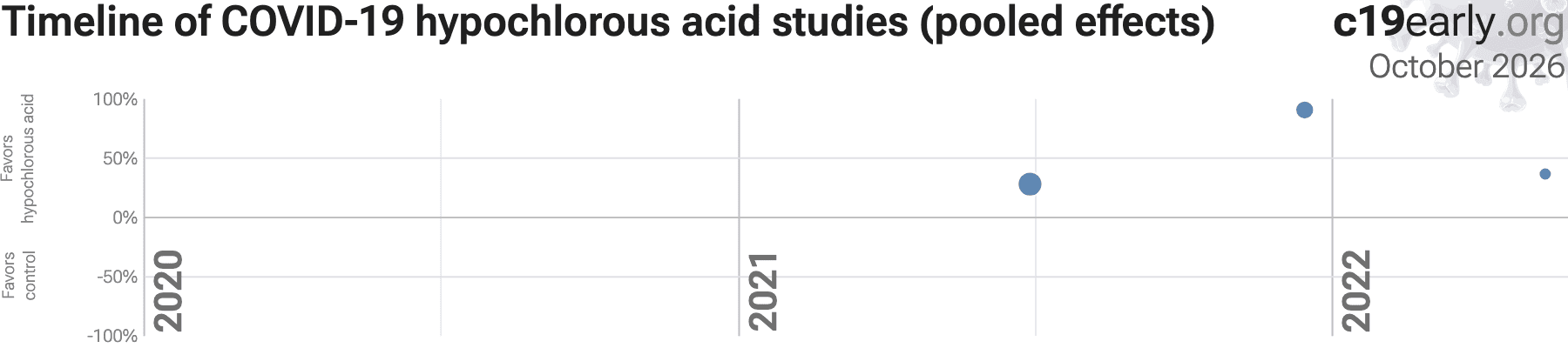
How the evidence developed
Meta-analysis results over time
Hypochlorous Acid for COVID-19
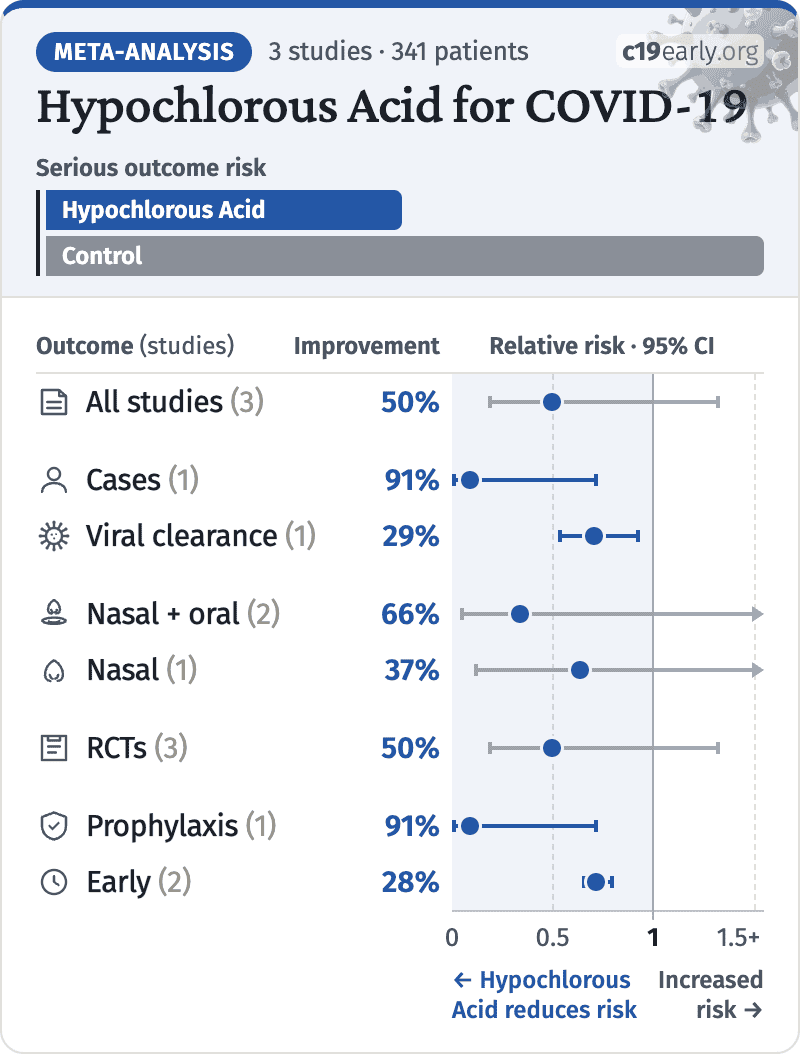
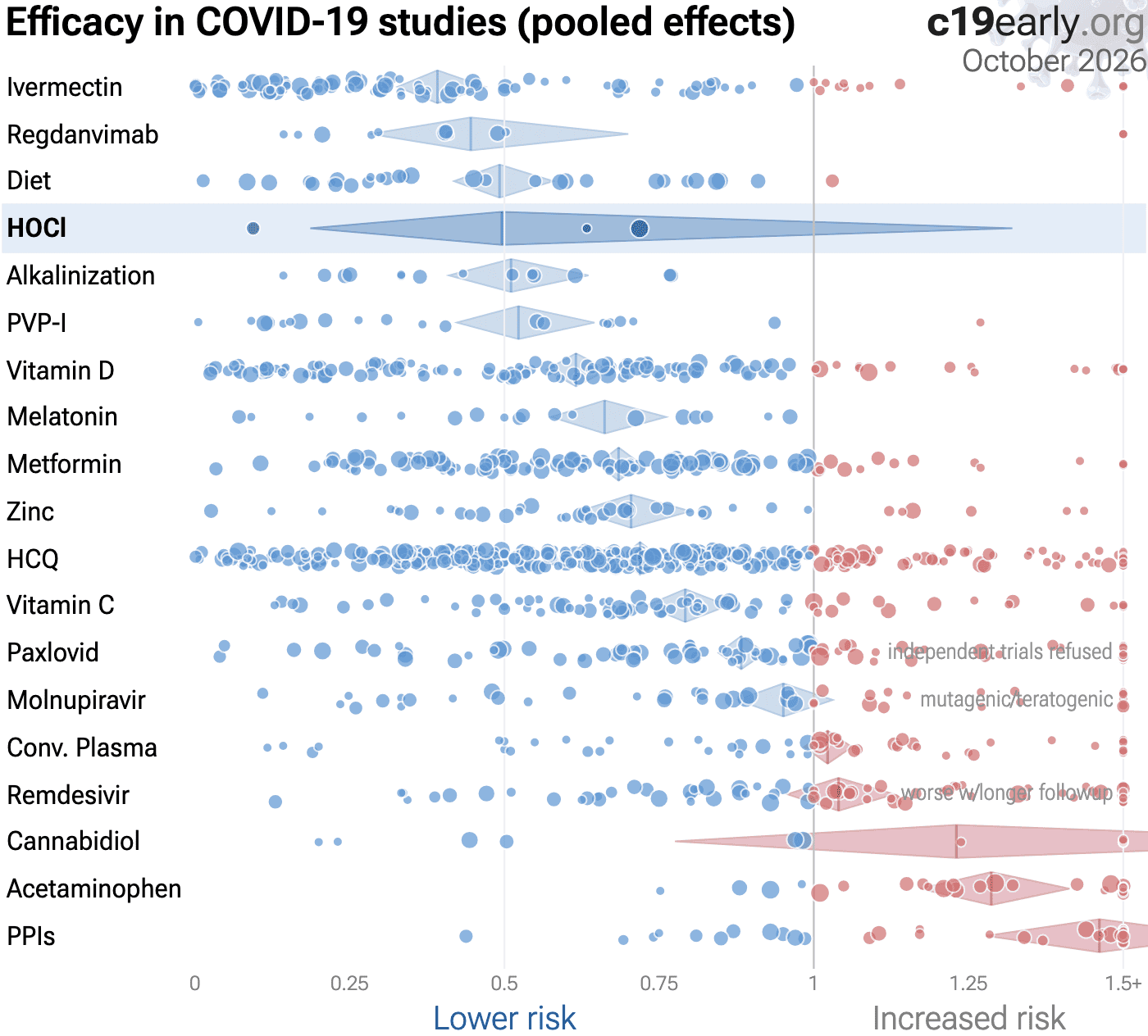
Highlights- Hypochlorous Acid reduces risk with low confidence for recovery, cases, and viral clearance, and very low confidence for pooled analysis.
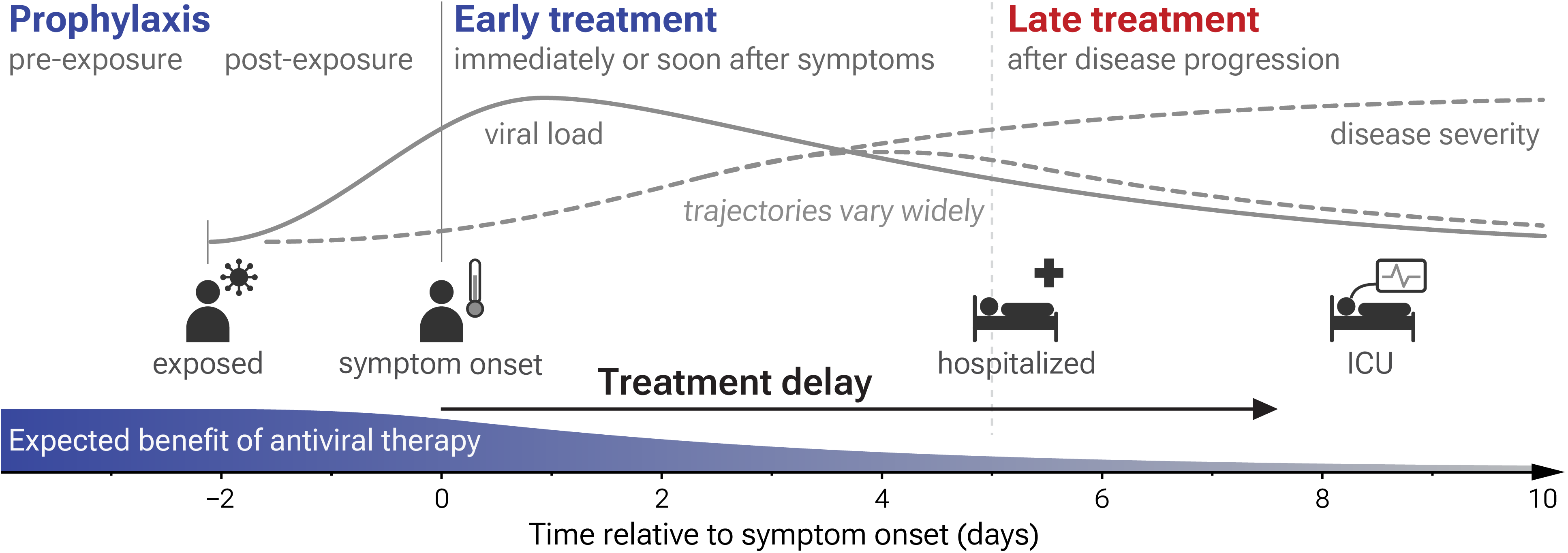
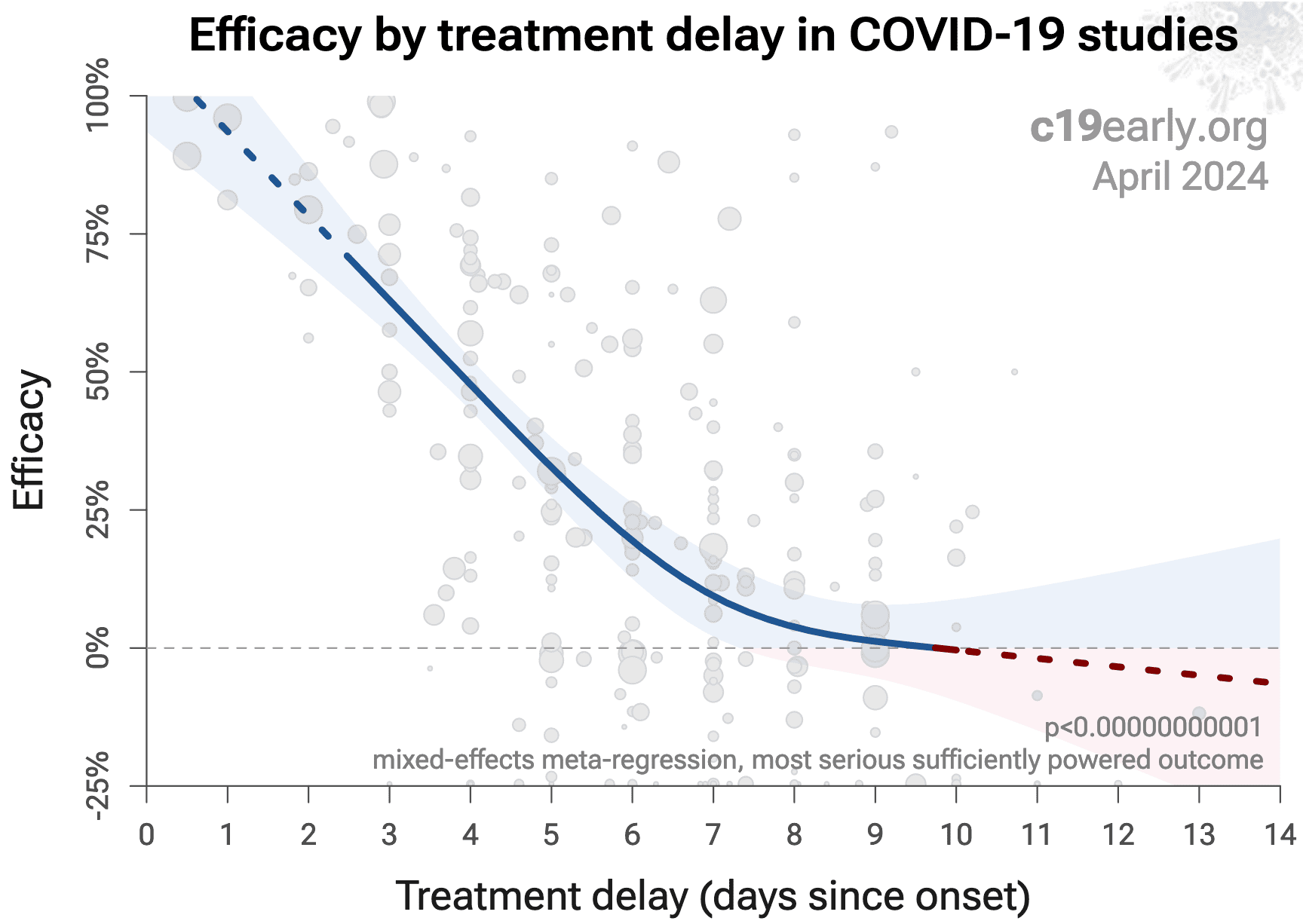
- Real-time updates and corrections with a consistent protocol for 227 treatments. Outcome specific analysis and combined evidence from all studies including treatment delay, a primary confounding factor.
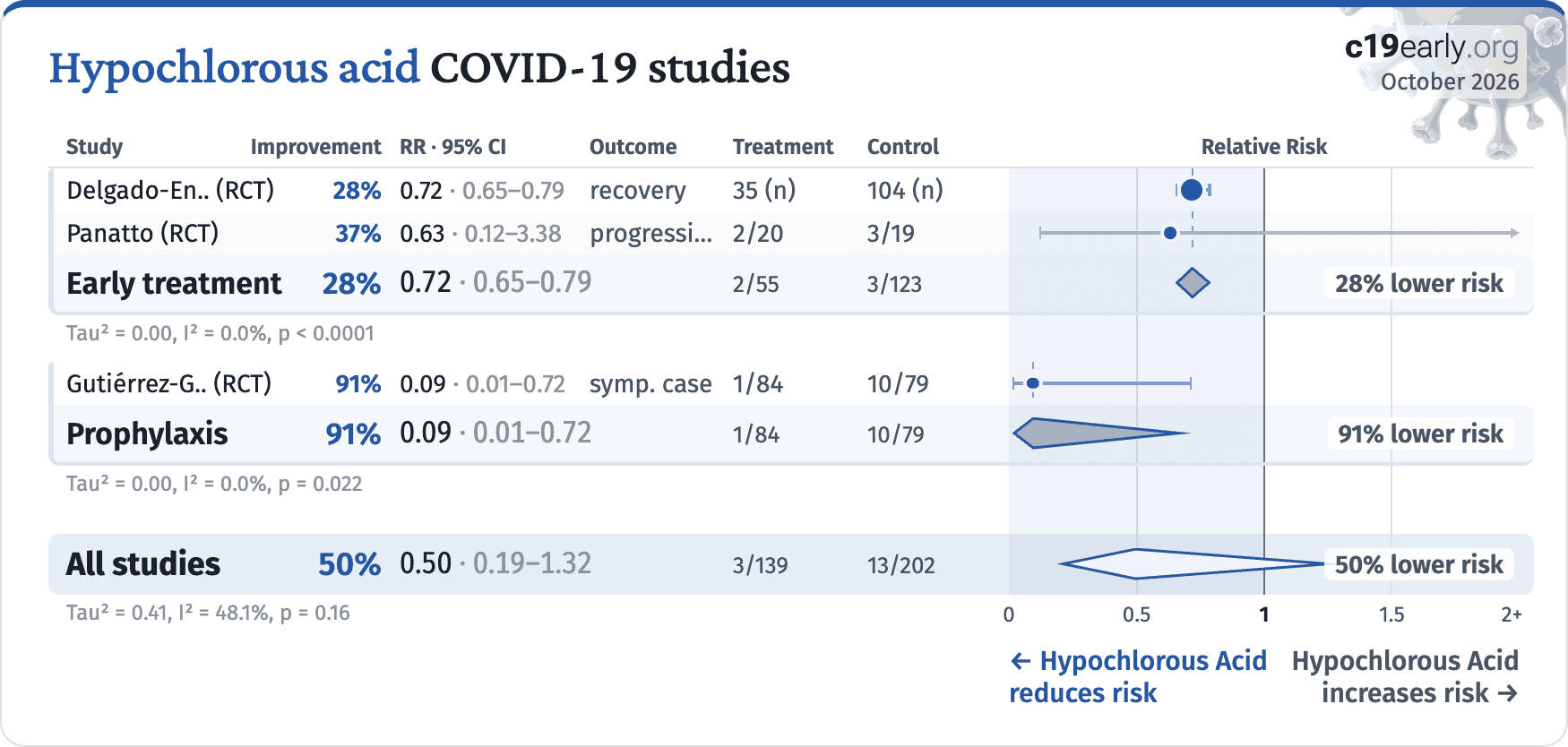
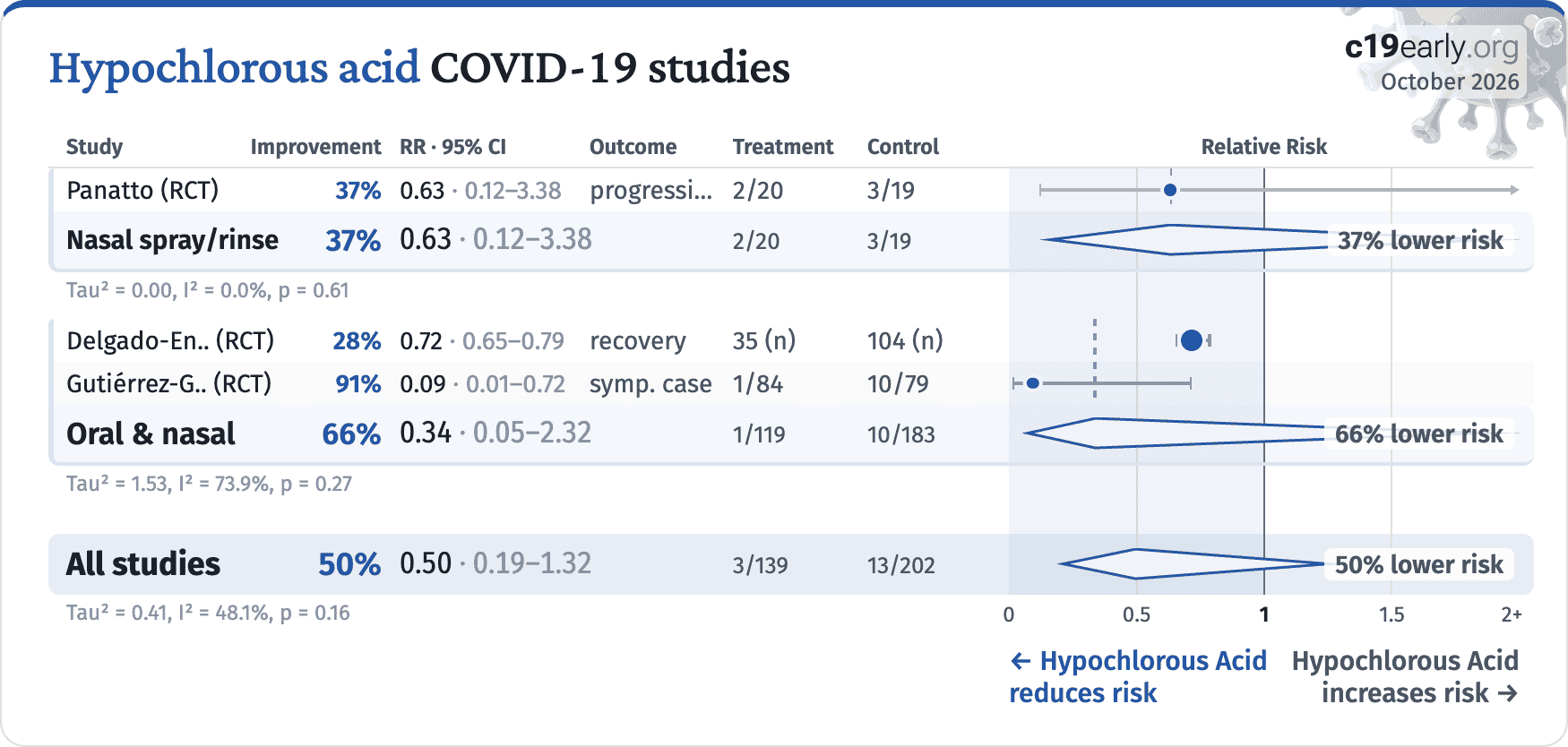
Hypochlorous acid COVID-19 studies
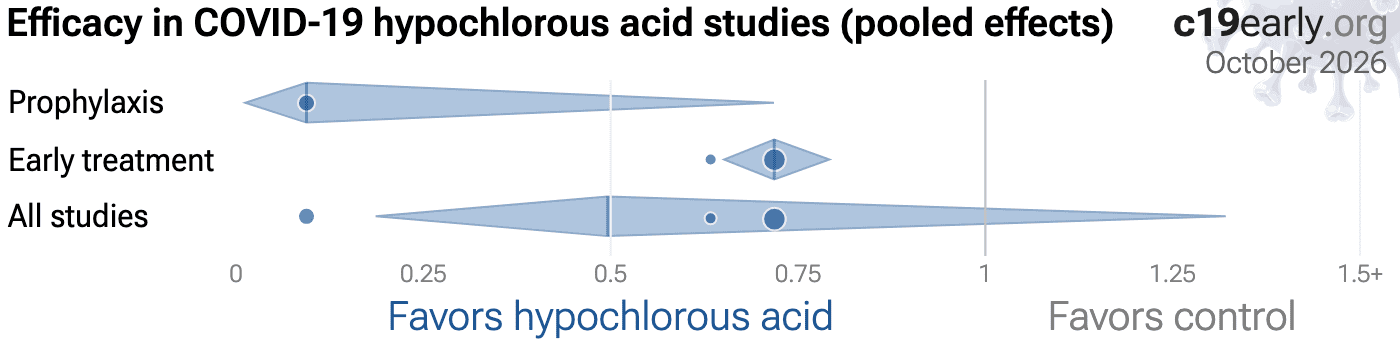
Hypochlorous Acid for COVID-19: meta-analysis results
Random-effects meta-analysis. Relative risk with 95% CI. * p < 0.05, ** p < 0.01, *** p < 0.001.
Hypochlorous acid COVID-19 studies
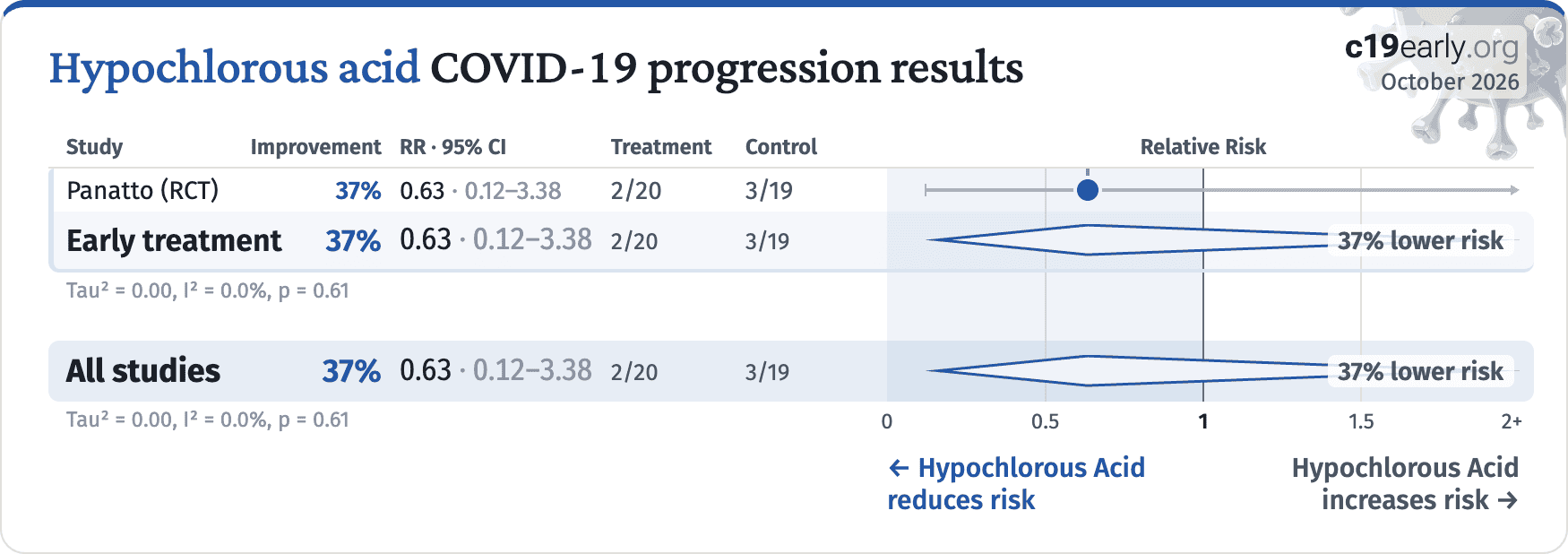
Hypochlorous acid COVID-19 progression results
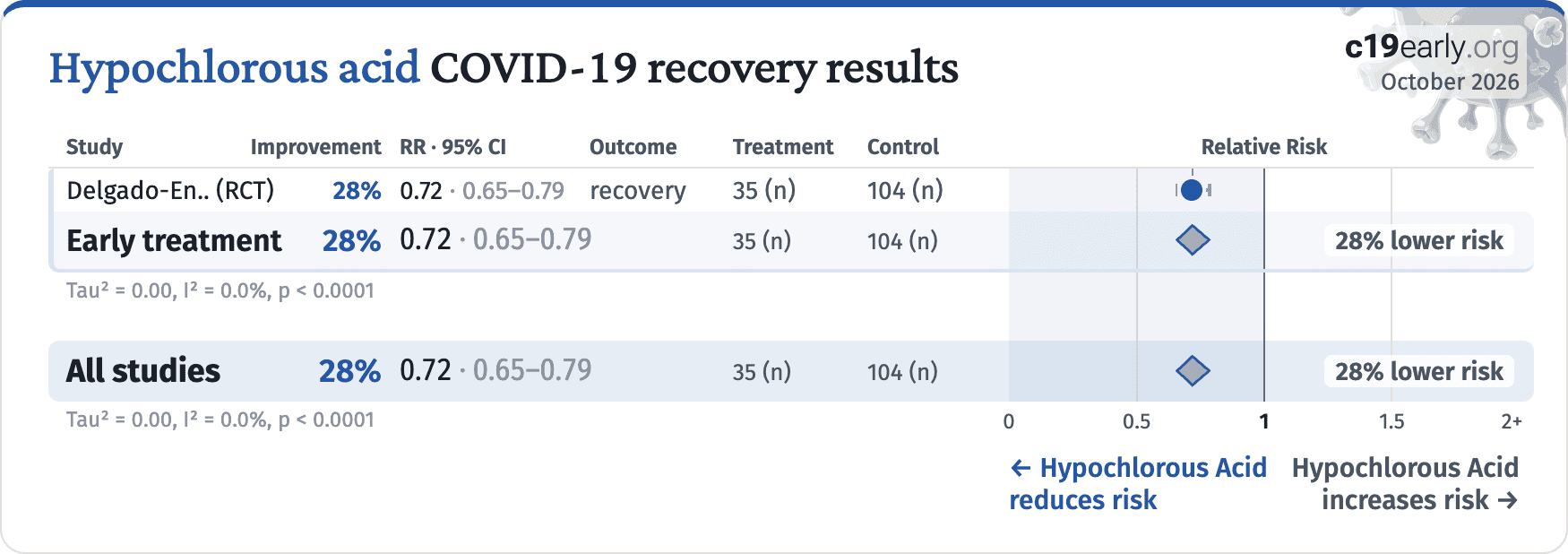
Hypochlorous acid COVID-19 recovery results
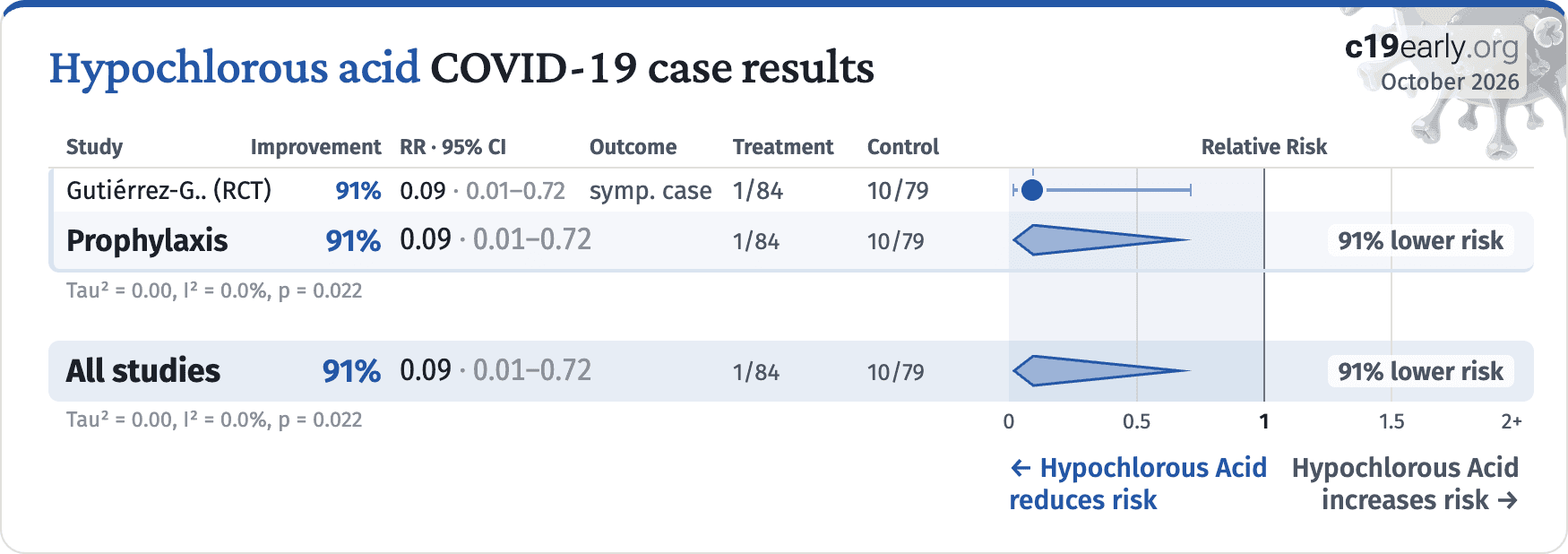
Hypochlorous acid COVID-19 case results
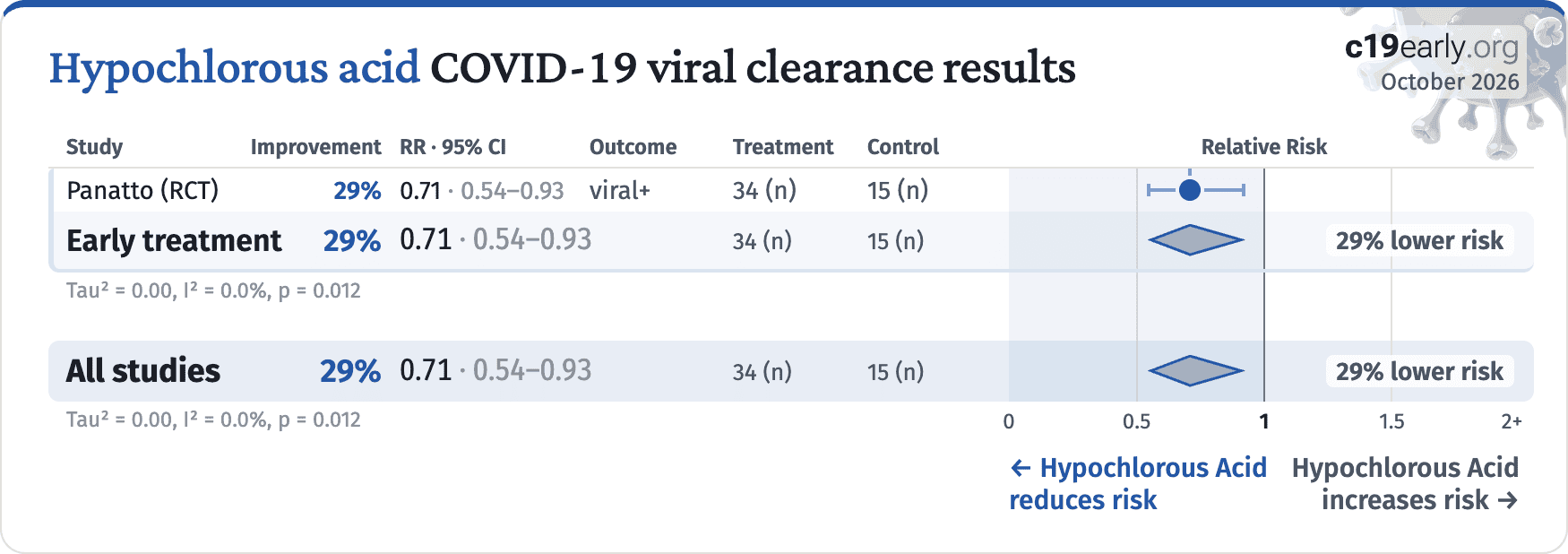
Hypochlorous acid COVID-19 viral clearance results
Hypochlorous acid COVID-19 studies
Media covered none of the 3 studies showing significantly lower risk
No positive hypochlorous acid studies were covered
Media bias for low-cost COVID‑19 treatments
Media covered only 0.8% of studies showing significantly lower COVID-19 risk
Only 5 positive studies were covered
one each: budesonide, cannabidiol, fluvoxamine, HCQ, vitamin D
34 negative studies were covered
HCQ 12, ivermectin 6, lopinavir/ritonavir 4, azithromycin 3, vitamin D 3, fluvoxamine 2, one each: ibuprofen, metformin, vitamin C, zinc
Media was 3.8× more likely to cover positive studies
19 positive studies were covered
paxlovid 5, remdesivir 3, casirivimab/imdevimab 2, convalescent plasma 2, molnupiravir 2, one each: antiandrogens, peginterferon lambda, sargramostim, tixagevimab/cilgavimab, tocilizumab
Only 6 negative studies were covered
remdesivir 3, one each: bamlanivimab/etesevimab, bebtelovimab, sotrovimab
Early treatment is more effective: baloxavir marboxil
When studies showed efficacy
all studies RCTs only delay RCTs alone not yet significant · blue : pooled outcomes grey : specific outcomes · higher risk red: meta-analysis shows harm · efficacy: ≥10% improvement, p < 0.05, ≥3 studies · harm: RR > 1.0, p < 0.05, ≥3 studies
| Administration | Improvement | Studies |
|---|---|---|
| Nasal & oral | 88% [72‑95%] | 10 |
| Nasal spray/rinse | 59% [50‑66%] | 21 |
| Oral spray/rinse | 38% [25‑49%] | 11 |
| Virucidal action | Chemically inactivating or destroying the structure of viral particles |
| Blocking attachment | Binding to the virus or host cells to prevent viral attachment to host cells |
| Physical barrier | Forming a physical layer over the nasal mucosa preventing viral access to host cells |
| Physical removal | Mechanical washout/flushing of viral particles and mucus (e.g., large volume irrigation) |
| Mucociliary clearance | Stimulating the natural beating of nasal cilia to accelerate the clearing of trapped pathogens |
| Treatment | Mechanisms | Notes |
|---|---|---|
| Azelastine103 |
Antiviral: inhibits interaction between spike protein and ACE2 Antiviral: potential inhibition of viral protease (Mpro) Other: H1-receptor antagonist (antihistamine) Other: mast cell stabilizer |
Antihistamine. Designed to affect human receptors. Risks include dysgeusia, drowsiness, and nasal burning. |
| Cetylpyridinium Chloride104 |
Virucidal: disrupts viral lipid envelope Antiseptic: quaternary ammonium compound |
Chemical virucide. Common in mouthwashes. Can cause temporary staining of teeth or tongue irritation if used frequently. |
| Chlorhexidine105 |
Virucidal: disrupts viral lipid membranes Antiseptic: cationic polybiguanide |
Chemical virucide. May cause tooth staining and altered taste. |
| Chlorpheniramine106 |
Antiviral: binds to viral spike protein to block entry Antiviral: high affinity for viral transport proteins Other: H1-receptor antagonist (1st generation antihistamine) Other: anticholinergic activity |
Antihistamine. Stronger systemic risks than azelastine. Known to cause significant sedation/drowsiness and cognitive impairment. |
| Hydrogen Peroxide107 |
Virucidal: oxidizing agent that destroys viral parts Other: tissue debridement |
Chemical virucide. Can be toxic to healthy tissue if concentration is too high (>1%). Long-term safety on nasal mucosa is debated. |
| Hypochlorous Acid |
Virucidal: oxidizes viral proteins, causing aggregation and loss of function. Impairs spike-ACE2 binding Antiseptic: broad-spectrum antimicrobial activity via oxidative damage to microbial proteins and membranes |
Chemical virucide. Activity depends on concentration, pH, and contact time. Saliva may reduce activity. |
| Inhaled Heparin108 |
Antiviral: acts as a decoy receptor (mimics heparan sulfate) Antiviral: anti-inflammatory effects on lung tissue Other: Anticoagulant |
Anticoagulant. Use requires caution regarding bleeding risks. |
| Iota-carrageenan109 |
Barrier: forms a viscous physical layer on mucosa Trap: electrostatistically traps virus particles (mimics cell surface) |
Physical barrier. High safety profile for daily use. |
| NaCl110 |
Cleaning: physically washes away viral particles Support: moisturizes mucosa to support natural immune barrier |
Physical wash. High degree of safety, reduces viral load via physical removal. |
| Nitric Oxide111 |
Virucidal: physically damages viral structure via nitrosylation Other: vasodilator (relaxes blood vessels) in systemic use |
Virucide/drug hybrid. In nasal spray form, it acts primarily as a topical disinfectant. Rapidly cleared, so systemic vasodilation risks are low but present. |
| Phthalocyanine112 |
Virucidal: generates reactive oxygen species (ROS) when exposed to light to kill virus Other: photosensitizer |
Chemical virucide. A synthetic compound often used in photodynamic therapy. Works by creating an oxidative environment hostile to the virus. |
| Povidone-Iodine113 |
Virucidal: oxidizes viral proteins and destabilizes membrane structures Antiseptic: broad-spectrum bacterial/fungal killer |
Chemical virucide. Highly effective but risk of thyroid absorption with chronic use. Can be irritating to mucous membranes. |
| Sodium Bicarbonate114 |
Environment: raises pH to inhibit viral fusion Cleaning: improves mucociliary clearance (washing) |
Physical/chemical environment. Changes the environment rather than attacking the virus directly. High degree of safety. |
| Treatment | Microbiome disruption potential | Notes |
|---|---|---|
| Iota-carrageenan109 | Low | Primarily antiviral, however extended use may mildly affect the microbiome |
| Nitric Oxide111 | Low to moderate | More selective towards pathogens, however excessive concentrations or prolonged use may disrupt the balance of bacteria |
| Alkalinization117 | Moderate | Increases pH, negatively impacting beneficial microbes that thrive in a slightly acidic environment |
| Cetylpyridinium Chloride104 | Moderate | Quaternary ammonium broad-spectrum antiseptic that can disrupt beneficial and harmful bacteria |
| Hypochlorous Acid | Moderate | Broad-spectrum oxidizing antiseptic that may affect beneficial and harmful bacteria |
| Phthalocyanine112 | Moderate to high | Photodynamic compound with antimicrobial activity, likely to affect the microbiome |
| Chlorhexidine105 | High | Potent antiseptic with broad activity, significantly disrupts the microbiome |
| Hydrogen Peroxide107 | High | Strong oxidizer, harming both beneficial and harmful microbes |
| Povidone-Iodine113 | High | Potent broad-spectrum antiseptic harmful to beneficial microbes |
Acid reduces riskHypochlorous Acid
increases risk →
This study includes nebulized and IV use which have different mechanisms of action. Nebulized treatment directly destroys the viral lipid envelope, whereas IV use may be beneficial via immunomodulation to minimize cytokine storm. For meta-analysis, we currently only include nebulized treatment. In this study, the only results provided for patients receiving nebulized treatment only is the change in symptom severity shown in Figure 2.
Acid reduces riskHypochlorous Acid
increases risk →
Acid reduces riskHypochlorous Acid
increases risk →
A complementary in vitro study demonstrated STX had ≥99.9% virucidal activity against various respiratory viruses including influenza, RSV, rhinovirus, adenovirus, parainfluenza, and seasonal coronavirus.

| Delgado-Enciso, 6/29/2021, Randomized Controlled Trial, Mexico, peer-reviewed, mean age 43.7, 44 authors, study period May 2020 - December 2020. | risk of no recovery, 28.1% lower, RR 0.72, p < 0.001, treatment mean 5.16 (±0.35) n=35, control mean 3.7 (±0.45) n=104, relative reduction in symptom severity, day 7. |
| risk of no recovery, 33.6% lower, RR 0.66, p < 0.001, treatment mean 4.83 (±0.37) n=35, control mean 3.21 (±0.42) n=104, relative reduction in symptom severity, day 6. | |
| risk of no recovery, 41.6% lower, RR 0.58, p < 0.001, treatment mean 4.32 (±0.4) n=35, control mean 2.52 (±0.37) n=104, relative reduction in symptom severity, day 5. | |
| risk of no recovery, 38.0% lower, RR 0.62, p < 0.001, treatment mean 3.97 (±0.4) n=35, control mean 2.46 (±0.32) n=104, relative reduction in symptom severity, day 4. | |
| risk of no recovery, 47.9% lower, RR 0.52, p < 0.001, treatment mean 3.28 (±0.31) n=35, control mean 1.71 (±0.26) n=104, relative reduction in symptom severity, day 3. | |
| risk of no recovery, 44.5% lower, RR 0.55, p < 0.001, treatment mean 2.74 (±0.22) n=35, control mean 1.52 (±0.22) n=104, relative reduction in symptom severity, day 2. | |
| risk of no recovery, 51.2% lower, RR 0.49, p < 0.001, treatment mean 2.05 (±0.18) n=35, control mean 1.0 (±0.15) n=104, relative reduction in symptom severity, day 1. | |
| Panatto, 5/12/2022, Randomized Controlled Trial, Italy, peer-reviewed, mean age 40.1, 10 authors, study period 20 May, 2021 - 9 November, 2021, trial NCT04909996 (history). | risk of progression, 36.7% lower, RR 0.63, p = 0.66, treatment 2 of 20 (10.0%), control 3 of 19 (15.8%), NNT 17, STX-5. |
| risk of progression, 85.4% lower, RR 0.15, p = 0.23, treatment 0 of 18 (0.0%), control 3 of 19 (15.8%), NNT 6.3, relative risk is not 0 because of continuity correction due to zero events (with reciprocal of the contrasting arm), STX-3. | |
| risk of progression, 66.7% lower, RR 0.33, p = 0.32, treatment 2 of 38 (5.3%), control 3 of 19 (15.8%), NNT 9.5, all patients. | |
| risk of no viral clearance, 29.1% lower, RR 0.71, p = 0.01, treatment 34, control 15, inverted to make RR<1 favor treatment, Ct < 40, day 5. | |
| risk of no viral clearance, 30.1% lower, RR 0.70, p = 0.002, treatment 34, control 15, inverted to make RR<1 favor treatment, Ct < 35, day 5. |
| Gutiérrez-García, 12/15/2021, Randomized Controlled Trial, Mexico, peer-reviewed, mean age 38.1, 6 authors, study period September 2020 - November 2020. | risk of symptomatic case, 90.6% lower, RR 0.09, p = 0.004, treatment 1 of 84 (1.2%), control 10 of 79 (12.7%), NNT 8.7. |