Temperature dependent viral tropism: understanding viral seasonality and pathogenicity as applied to the avoidance and treatment of endemic viral respiratory illnesses
et al., Reviews in Medical Virology, doi:10.1002/rmv.2241, May 2021
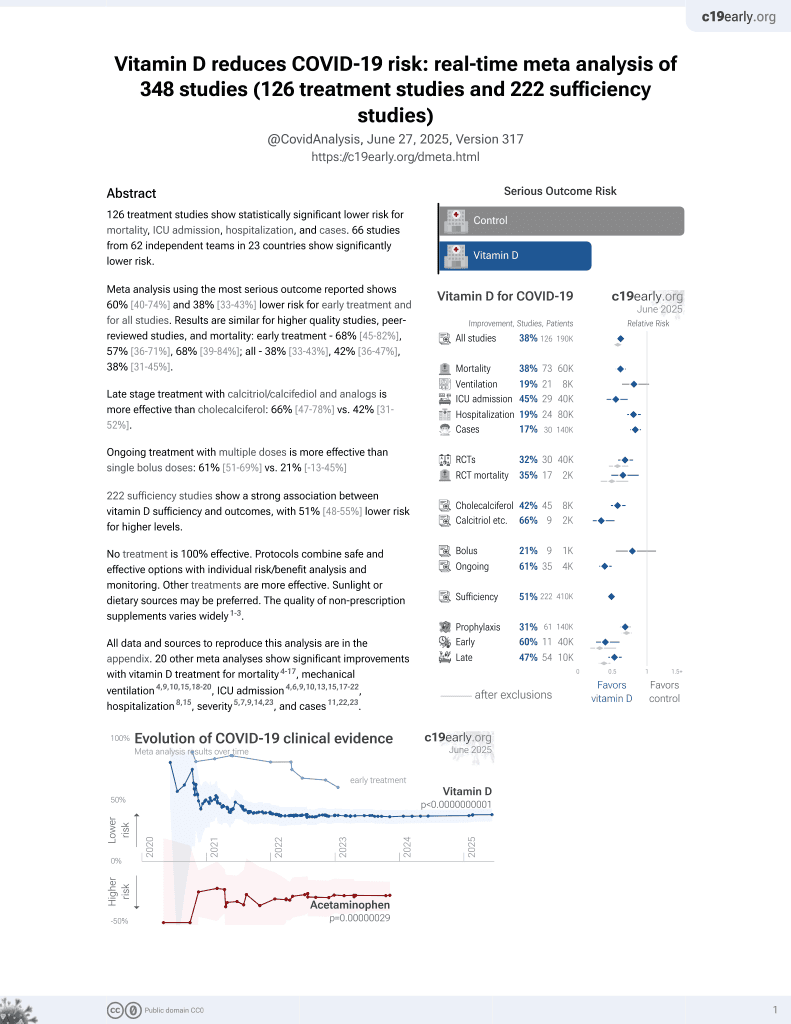
Vitamin D for COVID-19
8th treatment shown to reduce risk in
October 2020, now with p < 0.0000000001 from 138 studies, recognized in 18 countries.
No treatment is 100% effective.
Protocols combine treatments.

Review and hypothesis article proposing Temperature Dependent Viral Tropism (TDVT) to explain the seasonality, geographic distribution, and epidemic dynamics of respiratory viral illnesses, including COVID-19.

1.
Younes, S., The influence of micronutrients on olfactory dysfunction associated with COVID-19 and long COVID, Next Research, doi:10.1016/j.nexres.2026.101727.
2.
Jaurrieta-Largo et al., A Machine Learning Approach to Understanding the Genetic Role in COVID-19 Prognosis: The Influence of Gene Polymorphisms Related to Inflammation, Vitamin D, and ACE2, International Journal of Molecular Sciences, doi:10.3390/ijms26167975.
3.
Al-Khrasani et al., Do vitamins halt the COVID-19-evoked pro-inflammatory cytokines involved in the development of neuropathic pain?, Biomedicine & Pharmacotherapy, doi:10.1016/j.biopha.2025.118346.
4.
Kow et al., Vitamin D and COVID‐19: How much more evidence do we need?, Nutrition in Clinical Practice, doi:10.1002/ncp.11349.
5.
Bigman et al., A Comprehensive Scoping Review on Diet and Nutrition in Relation to Long COVID-19 Symptoms and Recovery, Nutrients, doi:10.3390/nu17111802.
6.
Hewison, M., COVID-19 and our understanding of vitamin D and immune function, The Journal of Steroid Biochemistry and Molecular Biology, doi:10.1016/j.jsbmb.2025.106710.
7.
Wimalawansa, S., Vitamin D Deficiency Meets Hill’s Criteria for Causation in SARS-CoV-2 Susceptibility, Complications, and Mortality: A Systematic Review, Nutrients, doi:10.3390/nu17030599.
8.
Sanduzzi Zamparelli et al., Immune-Boosting and Antiviral Effects of Antioxidants in COVID-19 Pneumonia: A Therapeutic Perspective, Life, doi:10.3390/life15010113.
9.
Fazli et al., Possible Link between Gut Microbiota, Diet, and COVID-19 Infection, Journal of Medical Bacteriology, 12:4, jmb.tums.ac.ir/index.php/jmb/article/view/525.
10.
Wojciulik et al., The impact of genetic polymorphism on course and severity of the SARS-CoV-2 infection and COVID-19 disease, Przeglad Epidemiologiczny, doi:10.32394/pe/194862.
11.
Wimalawansa (B), S., Unveiling the Interplay—Vitamin D and ACE-2 Molecular Interactions in Mitigating Complications and Deaths from SARS-CoV-2, Biology, doi:10.3390/biology13100831.
12.
Santa et al., Comparative analysis of COVID-19 responses in Japan and Africa: diet, phytochemicals, vitamin D, and gut microbiota in reducing mortality—A systematic review and meta-analysis, Frontiers in Nutrition, doi:10.3389/fnut.2024.1465324.
13.
Kaushal, A., Nutraceuticals and pharmacological to balance the transitional microbiome to extend immunity during COVID-19 and other viral infections, Journal of Translational Medicine, doi:10.1186/s12967-024-05587-9.
14.
Mu et al., Anti-inflammatory and Nutritional Interventions Against SARS-CoV-2: A Comprehensive Review, Journal of Agriculture and Food Research, doi:10.1016/j.jafr.2024.101422.
15.
Wimalawansa (C), S., Unlocking Insights: Navigating COVID-19 Challenges and Emulating Future Pandemic Resilience Strategies with Strengthening Natural Immunity, Heliyon, doi:10.1016/j.heliyon.2024.e34691.
16.
Imran et al., Therapeutic Role of Vitamin D in COVID-19 Patients, Clinical Nutrition Open Science, doi:10.1016/j.nutos.2024.07.004.
17.
Grant, W., Vitamin D and viral infections: Infectious diseases, autoimmune diseases, and cancers, Advances in Food and Nutrition Research, doi:10.1016/bs.afnr.2023.12.007.
18.
Polonowita et al., Molecular Quantum and Logic Process of Consciousness—Vitamin D Big-Data in COVID-19—A Case for Incorporating Machine Learning In Medicine, European Journal of Biomedical and Pharmaceutical sciences, doi:10.5281/zenodo.10435649.
19.
Gomaa et al., Pharmacological evaluation of vitamin D in COVID-19 and long COVID-19: recent studies confirm clinical validation and highlight metformin to improve VDR sensitivity and efficacy, Inflammopharmacology, doi:10.1007/s10787-023-01383-x.
20.
Gotelli et al., Understanding the immune-endocrine effects of vitamin D in SARS-CoV-2 infection: a role in protecting against neurodamage?, Neuroimmunomodulation, doi:10.1159/000533286.
21.
Cutolo et al., Involvement of the secosteroid vitamin D in autoimmune rheumatic diseases and COVID-19, Nature Reviews Rheumatology, doi:10.1038/s41584-023-00944-2.
22.
Schloss et al., Nutritional deficiencies that may predispose to long COVID, Inflammopharmacology, doi:10.1007/s10787-023-01183-3.
23.
Arora et al., Global Dietary and Herbal Supplement Use during COVID-19—A Scoping Review, Nutrients, doi:10.3390/nu15030771.
24.
Nicoll et al., COVID-19 Prevention: Vitamin D Is Still a Valid Remedy, Journal of Clinical Medicine, doi:10.3390/jcm11226818.
25.
Foshati et al., Antioxidants and clinical outcomes of patients with coronavirus disease 2019: A systematic review of observational and interventional studies, Food Science & Nutrition, doi:10.1002/fsn3.3034.
26.
Quesada-Gomez et al., Vitamin D Endocrine System and COVID-19: Treatment with Calcifediol, Nutrients, doi:10.3390/nu14132716.
27.
DiGuilio et al., Micronutrient Improvement of Epithelial Barrier Function in Various Disease States: A Case for Adjuvant Therapy, International Journal of Molecular Sciences, doi:10.3390/ijms23062995.
28.
Grant (B) et al., A Narrative Review of the Evidence for Variations in Serum 25-Hydroxyvitamin D Concentration Thresholds for Optimal Health, Nutrients, doi:10.3390/nu14030639.
29.
Shaw Stewart et al., Temperature dependent viral tropism: understanding viral seasonality and pathogenicity as applied to the avoidance and treatment of endemic viral respiratory illnesses, Reviews in Medical Virology, doi:10.1002/rmv.2241.
30.
Shah Alam et al., The role of vitamin D in reducing SARS-CoV-2 infection: An update, International Immunopharmacology, doi:10.1016/j.intimp.2021.107686.
31.
Griffin et al., Perspective: Vitamin D supplementation prevents rickets and acute respiratory infections when given as daily maintenance but not as intermittent bolus: implications for COVID-19, Clinical Medicine, doi:10.7861/clinmed.2021-0035.
32.
Kohlmeier et al., When Mendelian randomisation fails, BMJ Nutrition, Prevention & Health, doi:10.1136/bmjnph-2021-000265.
33.
Brenner, H., Vitamin D Supplementation to Prevent COVID-19 Infections and Deaths—Accumulating Evidence from Epidemiological and Intervention Studies Calls for Immediate Action, Nutrients, doi:10.3390/nu13020411.
34.
Mercola et al., Evidence Regarding Vitamin D and Risk of COVID-19 and Its Severity, Nutrients 2020, 12:11, 3361, doi:10.3390/nu12113361.
35.
Basha et al., Is the shielding effect of cholecalciferol in SARS CoV-2 infection dependable? An evidence based unraveling, Clinical Epidemiology and Global Health, doi:10.1016/j.cegh.2020.10.005.
36.
Xu et al., The importance of vitamin d metabolism as a potential prophylactic, immunoregulatory and neuroprotective treatment for COVID-19, Journal of Translational Medicine, doi:10.1186/s12967-020-02488-5.
37.
Alexander et al., Early Nutritional Interventions with Zinc, Selenium and Vitamin D for Raising Anti-Viral Resistance Against Progressive COVID-19, Nutrients, doi:10.3390/nu12082358.
38.
Andrade et al., Vitamin A and D deficiencies in the prognosis of respiratory tract infections: A systematic review with perspectives for COVID-19 and a critical analysis on supplementation, SciELO preprints, doi:10.1590/SciELOPreprints.839.
39.
Grant (C) et al., Evidence that Vitamin D Supplementation Could Reduce Risk of Influenza and COVID-19 Infections and Deaths, Nutrients, 12:4, 988, doi:10.3390/nu12040988.
40.
McCullough et al., Daily oral dosing of vitamin D3 using 5000 TO 50,000 international units a day in long-term hospitalized patients: Insights from a seven year experience, The Journal of Steroid Biochemistry and Molecular Biology, doi:10.1016/j.jsbmb.2018.12.010.
41.
EFSA, Scientific Opinion on the substantiation of health claims related to vitamin D and normal function of the immune system and inflammatory response (ID 154, 159), maintenance of normal muscle function (ID 155) and maintenance of normal cardiovascular function (ID 159) pursuant to Article 13(1) of Regulation (E, EFSA Journal, doi:10.2903/j.efsa.2010.1468.
42.
EFSA (B), Scientific Opinion on the substantiation of a health claim related to vitamin D and contribution to the normal function of the immune system pursuant to Article 14 of Regulation (EC) No 1924/2006, EFSA Journal, doi:10.2903/j.efsa.2015.4096.
Shaw Stewart et al., 3 May 2021, peer-reviewed, 2 authors.
Contact: patrick@douglas.co.uk.
Temperature dependent viral tropism: understanding viral seasonality and pathogenicity as applied to the avoidance and treatment of endemic viral respiratory illnesses
Reviews in Medical Virology, doi:10.1002/rmv.2241
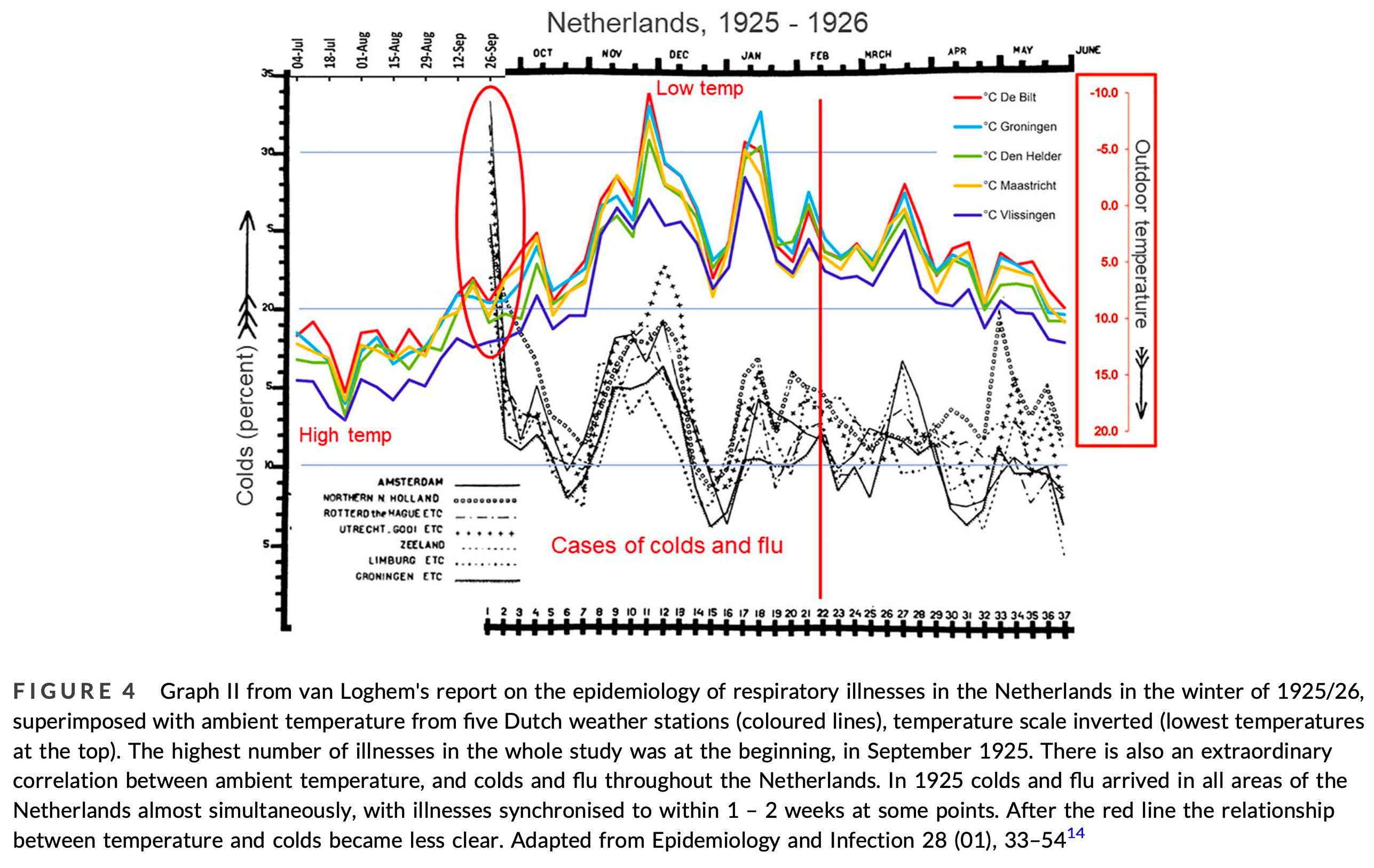
This review seeks to explain three features of viral respiratory illnesses that have perplexed generations of virologists: (1) the seasonal timing of respiratory illness and the rapid response of outbreaks to weather, specifically temperature; (2) the common viruses causing respiratory illness worldwide, including year-round disease in the Tropics; (3) the rapid arrival and termination of epidemics caused by influenza and other viruses. The inadequacy of the popular explanations of seasonality is discussed, and a simple hypothesis is proposed, called temperature dependent viral tropism (TDVT), that is compatible with the above features of respiratory illness. TDVT notes that viruses can spread more effectively if they moderate their pathogenicity (thereby maintaining host mobility) and suggests that endemic respiratory viruses accomplish this by developing thermal sensitivity within a range that supports organ-specific viral tropism within the human body, whereby they replicate most rapidly at temperatures below body temperature. This can confine them to the upper respiratory tract and allow them to avoid infecting the lungs, heart, gut etc. Biochemical and tissue-culture studies show that 'wild' respiratory viruses show such natural thermal sensitivity. The typical early autumn surge of colds and the occurrence of respiratory illness in the Tropics year-round at intermediate levels are explained by the tendency for strains to adapt their thermal sensitivity to their local climate and season. TDVT has important practical implications for preventing and treating respiratory illness including Covid-19. It is testable with many options for experiments to increase our understanding of viral seasonality and pathogenicity.
AUTHOR CONTRIBUTION Patrick
References
Allen, Bradburne, Stott, Goodwin, Tyrell, An outbreak of common colds at an Antarctic base after seventeen weeks of complete isolation, J Hyg
Andrewes, Adventures among viruses. III. The puzzle of the common cold, Clin Infect Dis
Ansart, Pelat, Boelle, Carrat, Flahault et al., Mortality burden of the 1918-1919 influenza pandemic in Europe
Baranovskaya, Sergeeva, Taraskin, Lozhkov, Vasin, Mutations designed to modify the NS gene mRNA secondary structure affect influenza A pathogenicity in vivo, MIR J
Bendix, India's sudden drop in coronavirus cases has puzzled disease experts. Strict Public Health Measures and Difficulty Recording Rural Cases may have Factored in
Bradburne, Bynoe, Tyrrell, Effects of a "new" human respiratory virus in volunteers, Br Med J
Byambasuren, Cardona, Bell, Clark, Mclaws et al., Estimating the extent of true asymptomatic COVID-19 and its potential for community transmission: systematic review and metaanalysis
Cameron, Moore, The epidemiology of respiratory infection in an isolated Antarctic community, J Hyg
Chew, Doraisingham, Ling, Kumarasinghe, Lee, Seasonal trends of viral respiratory tract infections in the tropics, Epidemiol Infect
Chu, Tian, Ren, Zhang, Zhang et al., Occurrence of temperature-sensitive influenza A viruses in nature, J Virol
Chursov, Kopetzky, Leshchiner, Kondofersky, Theis et al., Specific temperature-induced perturbations of secondary nRNA structures are associated with the cold-adapted temperature-sensitive phenotype of influenza A virus, RNA Biol
Cressler, Mcleod, Rozins, Van Den Hoogen, Day, The adaptive evolution of virulence: A review of theoretical predictions and empirical tests, Parasitology
Dalton, Mullin, Amorim, Medcalf, Tiley et al., Temperature sensitive influenza A virus genome replication results from low thermal stability of polymerase-cRNA complexes, Virology
Donaldson, Keatinge, Bucher, Cold exposure and winter mortality from ischaemic heart disease, cerebrovascular disease, respiratory disease, and all causes in warm and cold regions of Europe, Lancet
Douglas, Lindgren, Couch, Exposure to cold environment and rhinovirus common cold: failure to demonstrate effect, N. Engl J Med
Dowling, Jackson, Spiesman, Inouye, Transmission of the common cold to volunteers under controlled conditions, Am J Hyg
Du Prel, Puppe, Gröndahl, Are meteorological parameters associated with acute respiratory tract infections?, Clin Infect Dis
Eccles, Why is temperature sensitivity important for the success of common respiratory viruses?, Rev Med Virol
Elazhary, Derbyshire, Aerosol stability of bovine parainfluenza type 3 virus, Can J Comp Med
Evans, Repasky, Dtf, Fever and the thermal regulation of immunity: the immune system feels the heat, Nat Rev Immunol
Ewald, Host-parasite relations, vectors, and the evolution of disease severity, Annu Rev Ecol Systemat
Fei, Sun, Li, Characterization of receptor binding profiles of influenza A viruses using an ellipsometry-based labelfree glycan microarray assay platform, Biomolecules
Fenner, Marshall, A comparison of the virulence for European rabbits (Oryctolagus cuniculus) of strains of myxoma virus recovered in the field in Australia, Europe and America, J Hyg
Foy, Cooney, Allan, Albrecht, Influenza B in households: virus shedding without symptoms or antibody response, Am J Epidemiol
Frielle, Huang, Youngner, Persistent infection with influenza A virus: Evolution of virus mutants, Virology
Galanti, Birger, Ud-Dean, Longitudinal active sampling for respiratory viral infections across age groups, Influenza Other Respir Viruses
Galanti, Birger, Ud-Dean, Rates of asymptomatic respiratory virus infection across age groups, Epidemiol Infect
Gebauer, De La Torre, Gomes, Rapid selection of genetic and antigenic variants of foot-and-mouth disease virus during persistence in cattle, J Virol
Girardi, Jensen, Koprowski, SV40-induced transformation of human diploid cells: crisis and recovery, J Cell Comp Physiol
Granados, Goodall, Luinstra, Smieja, Mahony, Comparison of asymptomatic and symptomatic rhinovirus infections in university students: incidence, species diversity, and viral load, Diagnostic Microbiol Infect Dis
Gu, Covid-19-Projections
Guo, Bo, Lin, Meteorological factors and COVID-19 incidence in 190 countries: an observational study, Sci Total Environ
Hajat, Bird, Haines, Cold weather and GP consultations for respiratory conditions by elderly people in 16 locations in the UK, Eur J Epidemiol
Hope-Simpson, Golubev, A new concept of the epidemic process of influenza A virus, Epidemiol Infect
Hyppönen, Power, Hypovitaminosis D in British adults at age 45 y: Nationwide cohort study of dietary and lifestyle predictors, Am J Clin Nutr
Ijaz, Brunner, Sattar, Nair, Schoenbaum et al., Survival characteristics of airborne human coronavirus 229E, J General Virol
Jackson, Dowling, Anderson, Riff, Saporta et al., Temperature dependent viral tropism: understanding viral seasonality and pathogenicity as applied to the avoidance and treatment of endemic viral respiratory illnesses, Ann Intern Med
Jamshidi, Baniasad, Niyogi, Rott, Johnson et al., Effect of termperature, relative humidity and medium on the aerosol stability of infectious bovine rhinotracheitis virus, Int J Environ Res Public Health
Jardon, Garnier, pH, pCO2, and temperature effect on Radenovirus production, Biotechnol Prog
Karim, Ijaz, Sattar, Cm, Effect of relative humidity on the airborne survival of rhinovirus-14, Can J Microbiol
Kashiwagi, Hara, Nakazono, Hamada, Watanabe, Artificial hybrids of influenza A virus RNA polymerase reveal PA subunit modulates its thermal sensitivity, PLoS One
Kormuth, Lin, Prussin, Influenza virus infectivity is retained in aerosols and droplets independent of relative humidity, J Infect Dis
Kung, Jen, Yuan, Tien, Chu, Influenza in China in 1977: recurrence of influenza A subtype H1N1, Bull World Health Organ
Lidwell, Morgan, Williams, The epidemiology of the common cold IV. The effect of weather, J Hyg
Liu, Hossain, Mori, Kimura, Evaluation of a virus derived from MDCK cells infected persistently with influenza A virus as a potential live-attenuated vaccine candidate in the mouse model, J Med Virol
Lwoff, Factors influencing the evolution of viral diseases at the cellular level and in the organism, Bacteriol Rev
Manson, Cook, Lee, Vitamin D supplements and prevention of cancer and cardiovascular disease, N Engl J Med
Massey, Jones, Going viral: a brief history of Chilblain-like skin lesions ("COVID toes") amidst the COVID-19 pandemic, Seminars Oncol
Massin, Kuntz-Simon, Barbezange, Temperature sensitivity on growth and/or replication of H1N1, H1N2 and H3N2 influenza A viruses isolated from pigs and birds in mammalian cells, Vet Microbiol
Mcfadden, Pichurko, Bowman, Thermal mapping of the airways in humans, J Appl Physiol
Mcgonagle, Bridgewood, Ramanan, Meaney, Watad, COVID-19 vasculitis and novel vasulitis mimics, Lancet Rheumatol
Mecenas, Da, Moreira Bastos, Vallinoto, Normando, Effects of temperature and humidity on the spread of COVID-19: A systematic review, PLoS One
Milam, Smillie, A bacteriological study of "Colds" on an isolated tropical island St. John, United States Virgin Islands, West Indies, J Exp Med
Moura, Nunes, Silva, Siqueria, Respiratory syncytial virus infections in North-Eastern Brazil: Seasonal trends and general aspects, Am J Trop Med Hyg
Muchmore, Parkinson, Humphries, Scott, Mcintosh et al., Persistent parainfluenza virus shedding during isolation at the South Pole, Nature
Mudd, Grant, Reactions to chilling of the body surface: experimental study of a possible mechanism for the excitation of infections of the pharynx and tonsils, J Med Res
Muraki, Hongo, The molecular virology and reverse genetics of influenza C virus, Jpn J Infect Dis
Nagele, Meier-Ewert, Influenza-C-virion-associated RNAdependent RNA-polymerase activity, Biosci Rep
Narberhaus, Waldminghaus, Chowdhury, RNA thermometers, FEMS (Fed Eur Microbiol Soc) Microbiol Rev
Ngai, Chan, Chan, Replication and transcription activities of ribonucleoprotein complexes reconstituted from avian H5N1, H1N1pdm09 and H3N2 influenza viruses, PLoS One
Nguyen, Martinez, LA's COVID Cases, Deaths Decrease 'Significantly
Niazi, Groth, Cravigan, Susceptibility of an airborne common cold virus to relative humidity, Environ Sci Technol
Oxford, Corcoran, Schild, Naturally occurring temperature-sensitive influenza A viruses of the H1N1 and H3N2 subtypes, J General Virol
Pan, Yao, Liu, Warmer weather unlikely to reduce the COVID-19 transmission: An ecological study in 202 locations in 8 countries, Sci Total Environ
Papenburg, Baz, Hamelin, Household transmission of the 2009 pandemic A/H1N1 influenza virus: elevated laboratoryconfirmed secondary attack rates and evidnce of asymptomatic infections, Clin Infect Dis
Paynter, Ware, Sly, Williams, Weinstein, Seasonal immune modulation in humans: Observed patterns and potential environmental drivers, J Infect
Plotch, Krug, Influenza virion transcriptase: Synthesis in vitro of large, polyadenylic acid-containing complementary RNA, J Virol
Preble, Youngner, Temperature-sensitive viruses and the etiology of chronic and inapparent infections, J Infect Dis
Price, The isolation of a new virus associated with respiratory clinical disease in humans, Proc Natl Acad Sci
Re, Epidemic mechanisms of type A influenza, J Hyg
Re, The Transmission of Epidemic Influenza
Re, The role of season in the epidemiology of influenza, J Hyg
Richman, Murphy, The association of the temperaturesensitive phenotype with viral attenuation in animals and humans: Implications for the development and use of live virus vaccines, Clin Infect Dis
Russell, Newcastle disease virus and two influenza viruses: differing effects of acid and temperature on the uptake of infectious virus into bovine and canine kidney cell lines, Arch Virol
Sato, Watanabe, Ohmiya, Efficient isolation of human metapneumovirus using MNT-1, a human malignant melanoma cell line with early and distinct cytopathic effects, Microbiol Immunol
Sato, Watanabe, Ohmiya, Efficient isolation of human parainfluenza viruses 1 and 3 using MNT-1, a human malignant melanoma cell line system that exhibits an apparent cytopathic effect, Microbiol Immunol
Schuit, Ratnesar-Shumate, Yolitz, Airborne SARS-CoV-2 is rapidly inactivated by simulated sunlight, J Infect Dis
Schulman, Namias, Doherty, The effect of antipyretic therapy upon outcomes in critically ill patients: a randomized, prospective study, Surg Infect
Shachor-Meyouhas, Kasses, Petechial rash with pandemic influenza (H1N1) infection, Pediatr Infect Dis J
Shaman, Galanti, Direct observation of repeated infections with endemic coronaviruses, J Infect Dis
Stern, Tippett, Primary isolation of influenza viruses at 33°C, Lancet
Stewart, Bach 63. Ulmanen, Broni, Krug, Influenza virus temperaturesensitive cap (m7GpppNm)-dependent endonuclease, J Virol
Stewart, Bach, None
Stewart, Seasonality and selective trends in viral acute respiratory tract infections, Med Hypotheses
Takashita, Muraki, Sugawara, Intrinsic temperature sensitivity of influenza C virus hemagglutinin-esterase-fusion protein, J Virol
Tamerius, Nelson, Zhou, Viboud, Miller et al., Global influenza seasonality: Reconciling patterns across temperate and tropical regions, Environ Health Perspect
Tandale, Pawar, Burav, Seroepidemiology of pandemic influenza A (H1N1) 2009 virus infections in Pune, India, Br Med J Infect Dis
Tang, Lai, Wong, Hon, Incidence of common respiratory viral infections related to climate factors in hospitalized children in Hong Kong, Epidemiol Infect
Thai, Welkers, Hang, Pandemic H1N1 virus transmission and shedding dynamics in index case housholds of a prospective Vietnamese cohort, J Infect
Thompson, Barbu, Beiu, The impact of COVID-19 pandemic on long-term care facilities worldwide: An overview on international issues, Biomed Res Int
Tyrrell, Parsons, Some virus isolations from common colds, Lancet
Van Loghem, An epidemiological contribution to the knowledge of the respiratory diseases, J Hyg
Vano-Galvan, Martorell, Chilblains, Can Med Assoc J
Viegas, Barrero, Maffey, Mistchenko, Respiratory viruses seasonality in children under five years of age in Buenos Aires, Argentina: A five-year analysis, J Infect
Ward, Xiao, Zhang, Humidity is a consistent climactic factor contributing to SARS-CoV-2 transmission, Transboundary and Emerging Diseases
Weller, Beneficial effects of sunlight may account for the correlation between serum vitamin D levels and cardiovascular health, JAMA Cardiol
Zaitchik, Sweijd, Shumake-Guillemot, A framework for research linking weather, climate and COVID-19, Nat Commun
DOI record:
{
"DOI": "10.1002/rmv.2241",
"ISSN": [
"1052-9276",
"1099-1654"
],
"URL": "http://dx.doi.org/10.1002/rmv.2241",
"abstract": "<jats:title>Summary</jats:title><jats:p>This review seeks to explain three features of viral respiratory illnesses that have perplexed generations of virologists: (1) the seasonal timing of respiratory illness and the rapid response of outbreaks to weather, specifically temperature; (2) the common viruses causing respiratory illness worldwide, including year‐round disease in the Tropics; (3) the rapid arrival and termination of epidemics caused by influenza and other viruses. The inadequacy of the popular explanations of seasonality is discussed, and a simple hypothesis is proposed, called temperature dependent viral tropism (TDVT), that is compatible with the above features of respiratory illness. TDVT notes that viruses can spread more effectively if they<jats:italic>moderate</jats:italic>their pathogenicity (thereby maintaining host mobility) and suggests that endemic respiratory viruses accomplish this by developing thermal sensitivity within a range that supports organ‐specific viral tropism within the human body, whereby they replicate most rapidly at<jats:italic>temperatures below body temperature</jats:italic>. This can confine them to the upper respiratory tract and allow them to avoid infecting the lungs, heart, gut etc. Biochemical and tissue‐culture studies show that ‘wild’ respiratory viruses show such natural thermal sensitivity. The typical early autumn surge of colds and the occurrence of respiratory illness in the Tropics year‐round at intermediate levels are explained by the tendency for strains to adapt their thermal sensitivity to their local climate and season. TDVT has important practical implications for preventing and treating respiratory illness including Covid‐19. It is testable with many options for experiments to increase our understanding of viral seasonality and pathogenicity.</jats:p>",
"alternative-id": [
"10.1002/rmv.2241"
],
"article-number": "e2241",
"assertion": [
{
"group": {
"label": "Publication History",
"name": "publication_history"
},
"label": "Received",
"name": "received",
"order": 0,
"value": "2021-04-18"
},
{
"group": {
"label": "Publication History",
"name": "publication_history"
},
"label": "Accepted",
"name": "accepted",
"order": 1,
"value": "2021-04-20"
},
{
"group": {
"label": "Publication History",
"name": "publication_history"
},
"label": "Published",
"name": "published",
"order": 2,
"value": "2021-05-03"
}
],
"author": [
{
"ORCID": "https://orcid.org/0000-0002-0184-4083",
"affiliation": [
{
"name": "Douglas Instruments Ltd. Hungerford Berkshire UK"
}
],
"authenticated-orcid": false,
"family": "Shaw Stewart",
"given": "Patrick D.",
"sequence": "first"
},
{
"affiliation": [
{
"name": "Amgen Inc. Thousand Oaks California USA"
}
],
"family": "Bach",
"given": "Julia L.",
"sequence": "additional"
}
],
"container-title": "Reviews in Medical Virology",
"container-title-short": "Reviews in Medical Virology",
"content-domain": {
"crossmark-restriction": true,
"domain": [
"onlinelibrary.wiley.com"
]
},
"created": {
"date-parts": [
[
2021,
5,
4
]
],
"date-time": "2021-05-04T04:22:30Z",
"timestamp": 1620102150000
},
"deposited": {
"date-parts": [
[
2024,
8,
30
]
],
"date-time": "2024-08-30T03:49:44Z",
"timestamp": 1724989784000
},
"indexed": {
"date-parts": [
[
2026,
3,
24
]
],
"date-time": "2026-03-24T17:40:24Z",
"timestamp": 1774374024587,
"version": "3.50.1"
},
"is-referenced-by-count": 23,
"issue": "1",
"issued": {
"date-parts": [
[
2021,
5,
3
]
]
},
"journal-issue": {
"issue": "1",
"published-print": {
"date-parts": [
[
2022,
1
]
]
}
},
"language": "en",
"license": [
{
"URL": "http://creativecommons.org/licenses/by/4.0/",
"content-version": "vor",
"delay-in-days": 0,
"start": {
"date-parts": [
[
2021,
5,
3
]
],
"date-time": "2021-05-03T00:00:00Z",
"timestamp": 1620000000000
}
}
],
"link": [
{
"URL": "https://onlinelibrary.wiley.com/doi/pdf/10.1002/rmv.2241",
"content-type": "application/pdf",
"content-version": "vor",
"intended-application": "text-mining"
},
{
"URL": "https://onlinelibrary.wiley.com/doi/full-xml/10.1002/rmv.2241",
"content-type": "application/xml",
"content-version": "vor",
"intended-application": "text-mining"
},
{
"URL": "https://onlinelibrary.wiley.com/doi/pdf/10.1002/rmv.2241",
"content-type": "unspecified",
"content-version": "vor",
"intended-application": "similarity-checking"
}
],
"member": "311",
"original-title": [],
"prefix": "10.1002",
"published": {
"date-parts": [
[
2021,
5,
3
]
]
},
"published-online": {
"date-parts": [
[
2021,
5,
3
]
]
},
"published-print": {
"date-parts": [
[
2022,
1
]
]
},
"publisher": "Wiley",
"reference": [
{
"DOI": "10.1017/S002217240002578X",
"doi-asserted-by": "publisher",
"key": "e_1_2_10_2_1"
},
{
"DOI": "10.1289/ehp.1002383",
"doi-asserted-by": "publisher",
"key": "e_1_2_10_3_1"
},
{
"DOI": "10.1086/605435",
"doi-asserted-by": "publisher",
"key": "e_1_2_10_4_1"
},
{
"DOI": "10.1016/j.jinf.2003.10.006",
"doi-asserted-by": "publisher",
"key": "e_1_2_10_5_1"
},
{
"author": "Hope‐Simpson RE",
"key": "e_1_2_10_6_1",
"volume-title": "The Transmission of Epidemic Influenza",
"year": "2013"
},
{
"DOI": "10.4269/ajtmh.2006.74.165",
"doi-asserted-by": "publisher",
"key": "e_1_2_10_7_1"
},
{
"DOI": "10.1017/S0950268809990410",
"doi-asserted-by": "publisher",
"key": "e_1_2_10_8_1"
},
{
"DOI": "10.1017/S0022172400068728",
"doi-asserted-by": "publisher",
"key": "e_1_2_10_9_1"
},
{
"DOI": "10.1093/infdis/jiy221",
"doi-asserted-by": "publisher",
"key": "e_1_2_10_10_1"
},
{
"DOI": "10.1139/m85-199",
"doi-asserted-by": "publisher",
"key": "e_1_2_10_11_1"
},
{
"DOI": "10.1021/acs.est.0c06197",
"doi-asserted-by": "publisher",
"key": "e_1_2_10_12_1"
},
{
"article-title": "Aerosol stability of bovine parainfluenza type 3 virus",
"author": "Elazhary MA",
"first-page": "295",
"issue": "3",
"journal-title": "Can J Comp Med",
"key": "e_1_2_10_13_1",
"volume": "43",
"year": "1979"
},
{
"DOI": "10.1017/S0022172400045319",
"doi-asserted-by": "publisher",
"key": "e_1_2_10_14_1"
},
{
"DOI": "10.1017/S0022172400009372",
"doi-asserted-by": "publisher",
"key": "e_1_2_10_15_1"
},
{
"DOI": "10.1007/s10654-004-5731-4",
"doi-asserted-by": "publisher",
"key": "e_1_2_10_16_1"
},
{
"article-title": "Effects of temperature and humidity on the spread of COVID‐19: A systematic review",
"author": "Mecenas P",
"first-page": "15e0238339",
"issue": "9",
"journal-title": "PLoS One",
"key": "e_1_2_10_17_1",
"volume": "18",
"year": "2020"
},
{
"key": "e_1_2_10_18_1",
"volume-title": "A Timeline of COVID‐19 Developments in 2020",
"year": "2021"
},
{
"author": "Gu Y",
"key": "e_1_2_10_19_1",
"volume-title": "Covid‐19‐Projections",
"year": "2021"
},
{
"key": "e_1_2_10_20_1",
"volume-title": "National Climate Report",
"year": "2021"
},
{
"DOI": "10.1016/j.jinf.2014.09.006",
"doi-asserted-by": "publisher",
"key": "e_1_2_10_21_1"
},
{
"DOI": "10.1084/jem.53.5.733",
"doi-asserted-by": "publisher",
"key": "e_1_2_10_22_1"
},
{
"DOI": "10.1093/clinids/11.6.1022",
"doi-asserted-by": "publisher",
"key": "e_1_2_10_23_1"
},
{
"article-title": "Transmission of the common cold to volunteers under controlled conditions",
"author": "Dowling HF",
"first-page": "59",
"issue": "1",
"journal-title": "Am J Hyg",
"key": "e_1_2_10_24_1",
"volume": "68",
"year": "1958"
},
{
"DOI": "10.1093/ajcn/85.3.860",
"doi-asserted-by": "publisher",
"key": "e_1_2_10_25_1"
},
{
"DOI": "10.1056/NEJMoa1809944",
"doi-asserted-by": "publisher",
"key": "e_1_2_10_26_1"
},
{
"DOI": "10.1001/jamacardio.2019.4336",
"doi-asserted-by": "publisher",
"key": "e_1_2_10_27_1"
},
{
"DOI": "10.1017/S0950268898008905",
"doi-asserted-by": "publisher",
"key": "e_1_2_10_28_1"
},
{
"DOI": "10.1016/j.mehy.2015.11.005",
"doi-asserted-by": "publisher",
"key": "e_1_2_10_29_1"
},
{
"author": "Ansart S",
"first-page": "99",
"key": "e_1_2_10_30_1",
"volume-title": "Mortality burden of the 1918‐1919 influenza pandemic in Europe",
"year": "2009"
},
{
"author": "Bendix A",
"key": "e_1_2_10_31_1",
"volume-title": "Strict Public Health Measures and Difficulty Recording Rural Cases may have Factored in. 2021"
},
{
"author": "Nguyen M",
"key": "e_1_2_10_32_1",
"volume-title": "LA's COVID Cases, Deaths Decrease ‘Significantly’",
"year": "2021"
},
{
"key": "e_1_2_10_33_1",
"unstructured": "2021 World Health Organization (WHO)"
},
{
"DOI": "10.1128/MMBR.23.3.109-124.1959",
"doi-asserted-by": "publisher",
"key": "e_1_2_10_34_1"
},
{
"DOI": "10.1093/clinids/1.3.413",
"doi-asserted-by": "publisher",
"key": "e_1_2_10_35_1"
},
{
"article-title": "Why is temperature sensitivity important for the success of common respiratory viruses?",
"author": "Eccles R",
"first-page": "e02153",
"journal-title": "Rev Med Virol",
"key": "e_1_2_10_36_1",
"volume": "10",
"year": "2020"
},
{
"key": "e_1_2_10_37_1",
"volume-title": "Viral hemorragic fever",
"year": "2020"
},
{
"DOI": "10.1017/S003118201500092X",
"doi-asserted-by": "publisher",
"key": "e_1_2_10_38_1"
},
{
"DOI": "10.1017/S0022172400037098",
"doi-asserted-by": "publisher",
"key": "e_1_2_10_39_1"
},
{
"DOI": "10.1146/annurev.es.14.110183.002341",
"doi-asserted-by": "publisher",
"key": "e_1_2_10_40_1"
},
{
"DOI": "10.1155/2020/8870249",
"doi-asserted-by": "publisher",
"key": "e_1_2_10_41_1"
},
{
"DOI": "10.1073/pnas.42.12.892",
"doi-asserted-by": "publisher",
"key": "e_1_2_10_42_1"
},
{
"DOI": "10.1016/S0140-6736(60)90168-9",
"doi-asserted-by": "publisher",
"key": "e_1_2_10_43_1"
},
{
"DOI": "10.1136/bmj.3.5568.767",
"doi-asserted-by": "publisher",
"key": "e_1_2_10_44_1"
},
{
"DOI": "10.1016/S0140-6736(63)91992-5",
"doi-asserted-by": "publisher",
"key": "e_1_2_10_45_1"
},
{
"article-title": "Influenza in China in 1977: recurrence of influenza A subtype H1N1",
"author": "Kung HC",
"first-page": "913",
"issue": "6",
"journal-title": "Bull World Health Organ",
"key": "e_1_2_10_46_1",
"volume": "56",
"year": "1987"
},
{
"DOI": "10.1099/0022-1317-48-2-383",
"doi-asserted-by": "publisher",
"key": "e_1_2_10_47_1"
},
{
"DOI": "10.1021/bp025585a",
"doi-asserted-by": "publisher",
"key": "e_1_2_10_48_1"
},
{
"DOI": "10.1111/1348-0421.12446",
"doi-asserted-by": "publisher",
"key": "e_1_2_10_49_1"
},
{
"DOI": "10.1111/1348-0421.12542",
"doi-asserted-by": "publisher",
"key": "e_1_2_10_50_1"
},
{
"DOI": "10.1016/j.vetmic.2009.10.012",
"doi-asserted-by": "publisher",
"key": "e_1_2_10_51_1"
},
{
"DOI": "10.1128/JVI.41.2.353-359.1982",
"doi-asserted-by": "publisher",
"key": "e_1_2_10_52_1"
},
{
"DOI": "10.1016/0042-6822(84)90151-X",
"doi-asserted-by": "publisher",
"key": "e_1_2_10_53_1"
},
{
"DOI": "10.1002/jmv.21148",
"doi-asserted-by": "publisher",
"key": "e_1_2_10_54_1"
},
{
"DOI": "10.1017/S0950268800066851",
"doi-asserted-by": "publisher",
"key": "e_1_2_10_55_1"
},
{
"DOI": "10.1093/infdis/131.4.467",
"doi-asserted-by": "publisher",
"key": "e_1_2_10_56_1"
},
{
"DOI": "10.1128/JVI.62.6.2041-2049.1988",
"doi-asserted-by": "publisher",
"key": "e_1_2_10_57_1"
},
{
"DOI": "10.1007/BF01310871",
"doi-asserted-by": "publisher",
"key": "e_1_2_10_58_1"
},
{
"DOI": "10.3390/biom5031480",
"doi-asserted-by": "publisher",
"key": "e_1_2_10_59_1"
},
{
"DOI": "10.1128/JVI.01925-12",
"doi-asserted-by": "publisher",
"key": "e_1_2_10_60_1"
},
{
"DOI": "10.1128/JVI.21.1.24-34.1977",
"doi-asserted-by": "publisher",
"key": "e_1_2_10_61_1"
},
{
"DOI": "10.7883/yoken.63.157",
"doi-asserted-by": "publisher",
"key": "e_1_2_10_62_1"
},
{
"DOI": "10.1007/BF01121024",
"doi-asserted-by": "publisher",
"key": "e_1_2_10_63_1"
},
{
"DOI": "10.1128/JVI.45.1.27-35.1983",
"doi-asserted-by": "publisher",
"key": "e_1_2_10_64_1"
},
{
"DOI": "10.1371/journal.pone.0015140",
"doi-asserted-by": "publisher",
"key": "e_1_2_10_65_1"
},
{
"DOI": "10.1371/journal.pone.0065038",
"doi-asserted-by": "publisher",
"key": "e_1_2_10_66_1"
},
{
"DOI": "10.1186/1743-422X-3-58",
"doi-asserted-by": "publisher",
"key": "e_1_2_10_67_1"
},
{
"DOI": "10.4161/rna.22081",
"doi-asserted-by": "publisher",
"key": "e_1_2_10_68_1"
},
{
"DOI": "10.18527/2500-2236-2021-8-1-1-9",
"doi-asserted-by": "publisher",
"key": "e_1_2_10_69_1"
},
{
"DOI": "10.1111/j.1574-6976.2005.004.x",
"doi-asserted-by": "publisher",
"key": "e_1_2_10_70_1"
},
{
"DOI": "10.1152/jappl.1985.58.2.564",
"doi-asserted-by": "publisher",
"key": "e_1_2_10_71_1"
},
{
"article-title": "Influenza virus vaccine live intranasal‐‐‐MedImmune vaccines: CAIV‐T, influenza live intranasal",
"first-page": "312",
"issue": "5",
"journal-title": "Drugs R D",
"key": "e_1_2_10_72_1",
"volume": "4",
"year": "2003"
},
{
"DOI": "10.1097/INF.0b013e3181d40ced",
"doi-asserted-by": "publisher",
"key": "e_1_2_10_73_1"
},
{
"DOI": "10.1503/cmaj.110100",
"doi-asserted-by": "publisher",
"key": "e_1_2_10_74_1"
},
{
"DOI": "10.1053/j.seminoncol.2020.05.012",
"doi-asserted-by": "publisher",
"key": "e_1_2_10_75_1"
},
{
"DOI": "10.1016/S2665-9913(20)30420-3",
"doi-asserted-by": "publisher",
"key": "e_1_2_10_76_1"
},
{
"DOI": "10.1038/nri3843",
"doi-asserted-by": "publisher",
"key": "e_1_2_10_77_1"
},
{
"DOI": "10.1089/sur.2005.6.369",
"doi-asserted-by": "publisher",
"key": "e_1_2_10_78_1"
},
{
"DOI": "10.1016/j.jinf.2014.01.008",
"doi-asserted-by": "publisher",
"key": "e_1_2_10_79_1"
},
{
"DOI": "10.1093/oxfordjournals.aje.a114683",
"doi-asserted-by": "publisher",
"key": "e_1_2_10_80_1"
},
{
"DOI": "10.1086/656582",
"doi-asserted-by": "publisher",
"key": "e_1_2_10_81_1"
},
{
"article-title": "Seroepidemiology of pandemic influenza A (H1N1) 2009 virus infections in Pune, India",
"author": "Tandale BV",
"first-page": "255",
"issue": "1",
"journal-title": "Br Med J Infect Dis",
"key": "e_1_2_10_82_1",
"volume": "10",
"year": "2010"
},
{
"DOI": "10.1016/j.diagmicrobio.2015.05.001",
"doi-asserted-by": "publisher",
"key": "e_1_2_10_83_1"
},
{
"DOI": "10.1093/infdis/jiaa392",
"doi-asserted-by": "publisher",
"key": "e_1_2_10_84_1"
},
{
"DOI": "10.1111/irv.12629",
"doi-asserted-by": "publisher",
"key": "e_1_2_10_85_1"
},
{
"article-title": "Rates of asymptomatic respiratory virus infection across age groups",
"author": "Galanti M",
"first-page": "1",
"issue": "176",
"journal-title": "Epidemiol Infect",
"key": "e_1_2_10_86_1",
"volume": "147",
"year": "2019"
},
{
"article-title": "An outbreak of common colds at an Antarctic base after seventeen weeks of complete isolation",
"author": "Allen TR",
"first-page": "657",
"issue": "4",
"journal-title": "J Hyg",
"key": "e_1_2_10_87_1",
"volume": "71",
"year": "1973"
},
{
"DOI": "10.1017/S0022172400041292",
"doi-asserted-by": "publisher",
"key": "e_1_2_10_88_1"
},
{
"DOI": "10.1038/289187a0",
"doi-asserted-by": "publisher",
"key": "e_1_2_10_89_1"
},
{
"article-title": "Reactions to chilling of the body surface: experimental study of a possible mechanism for the excitation of infections of the pharynx and tonsils",
"author": "Mudd S",
"first-page": "53",
"issue": "1",
"journal-title": "J Med Res",
"key": "e_1_2_10_90_1",
"volume": "40",
"year": "1919"
},
{
"article-title": "Cold exposure and winter mortality from ischaemic heart disease, cerebrovascular disease, respiratory disease, and all causes in warm and cold regions of Europe",
"author": "Donaldson GC",
"first-page": "1341",
"issue": "9092",
"journal-title": "Lancet",
"key": "e_1_2_10_91_1",
"volume": "349",
"year": "1997"
},
{
"DOI": "10.1056/NEJM196810032791404",
"doi-asserted-by": "publisher",
"key": "e_1_2_10_92_1"
},
{
"DOI": "10.1002/jcp.1030650110",
"doi-asserted-by": "publisher",
"key": "e_1_2_10_93_1"
},
{
"key": "e_1_2_10_94_1",
"volume-title": "Coronavirus (COVID‐19) Cases",
"year": "2021"
},
{
"author": "Byambasuren O",
"key": "e_1_2_10_95_1",
"volume-title": "Estimating the extent of true asymptomatic COVID‐19 and its potential for community transmission: systematic review and meta‐analysis",
"year": "2020"
},
{
"DOI": "10.1038/s41467-020-19546-7",
"doi-asserted-by": "publisher",
"key": "e_1_2_10_96_1"
},
{
"DOI": "10.1016/j.scitotenv.2020.142272",
"doi-asserted-by": "publisher",
"key": "e_1_2_10_97_1"
},
{
"DOI": "10.1016/j.scitotenv.2020.143783",
"doi-asserted-by": "publisher",
"key": "e_1_2_10_98_1"
},
{
"DOI": "10.1111/tbed.13766",
"doi-asserted-by": "publisher",
"key": "e_1_2_10_99_1"
},
{
"DOI": "10.3390/ijerph17217847",
"doi-asserted-by": "publisher",
"key": "e_1_2_10_100_1"
},
{
"DOI": "10.1099/0022-1317-5-2-283",
"doi-asserted-by": "publisher",
"key": "e_1_2_10_101_1"
},
{
"DOI": "10.1093/fampra/cmi072",
"doi-asserted-by": "publisher",
"key": "e_1_2_10_102_1"
},
{
"DOI": "10.1038/nature14460",
"doi-asserted-by": "publisher",
"key": "e_1_2_10_103_1"
},
{
"DOI": "10.1017/S0022172400039176",
"doi-asserted-by": "publisher",
"key": "e_1_2_10_104_1"
},
{
"DOI": "10.1128/am.15.1.35-42.1967",
"doi-asserted-by": "publisher",
"key": "e_1_2_10_105_1"
},
{
"article-title": "Survival of a picornavirus and its infectious ribonucleic acid after aerosolization",
"author": "Akers TG",
"first-page": "325",
"issue": "2",
"journal-title": "Epidemiol Infect",
"key": "e_1_2_10_106_1",
"volume": "71",
"year": "1973"
},
{
"DOI": "10.1017/S0022172400022786",
"doi-asserted-by": "publisher",
"key": "e_1_2_10_107_1"
},
{
"DOI": "10.1007/BF01317930",
"doi-asserted-by": "publisher",
"key": "e_1_2_10_108_1"
},
{
"article-title": "Effect of termperature, relative humidity and medium on the aerosol stability of infectious bovine rhinotracheitis virus",
"author": "Elazhary MA",
"first-page": "158",
"issue": "2",
"journal-title": "Can J Comp Med",
"key": "e_1_2_10_109_1",
"volume": "43",
"year": "1979"
},
{
"article-title": "Aerosol stability of bovine adenovirus type 3",
"author": "Elazhary MA",
"first-page": "305",
"issue": "3",
"journal-title": "Can J Comp Med",
"key": "e_1_2_10_110_1",
"volume": "43",
"year": "1979"
},
{
"DOI": "10.1099/0022-1317-66-12-2743",
"doi-asserted-by": "publisher",
"key": "e_1_2_10_111_1"
},
{
"DOI": "10.2460/ajvr.1990.51.03.331",
"article-title": "Survival of pseudorabies virus in aerosol",
"author": "Schoenbaum MA",
"doi-asserted-by": "crossref",
"first-page": "331",
"issue": "3",
"journal-title": "Am J Vet Res",
"key": "e_1_2_10_112_1",
"volume": "51",
"year": "1990"
},
{
"DOI": "10.1093/infdis/jiaa334",
"doi-asserted-by": "publisher",
"key": "e_1_2_10_113_1"
},
{
"DOI": "10.7326/0003-4819-53-4-719",
"doi-asserted-by": "publisher",
"key": "e_1_2_10_114_1"
}
],
"reference-count": 113,
"references-count": 113,
"relation": {},
"resource": {
"primary": {
"URL": "https://onlinelibrary.wiley.com/doi/10.1002/rmv.2241"
}
},
"score": 1,
"short-title": [],
"source": "Crossref",
"subject": [],
"subtitle": [],
"title": "Temperature dependent viral tropism: understanding viral seasonality and pathogenicity as applied to the avoidance and treatment of endemic viral respiratory illnesses",
"type": "journal-article",
"update-policy": "https://doi.org/10.1002/crossmark_policy",
"volume": "32"
}