Interferon-α for hantavirus: real-time meta-analysis of 1 study

Serious Outcome Risk
Hospital Icon Control
Hospital Icon Interferon-α
0 0.5 1 1.5+ All studies 0% 1 50 Improvement, Studies, Patients Relative Risk Mortality 0% 1 50 RCTs 0% 1 50 Early 0% 1 50 Interferon-α for hantavirus c19early.org May 2026 Favorsinterferon-α Favorscontrol
Abstract
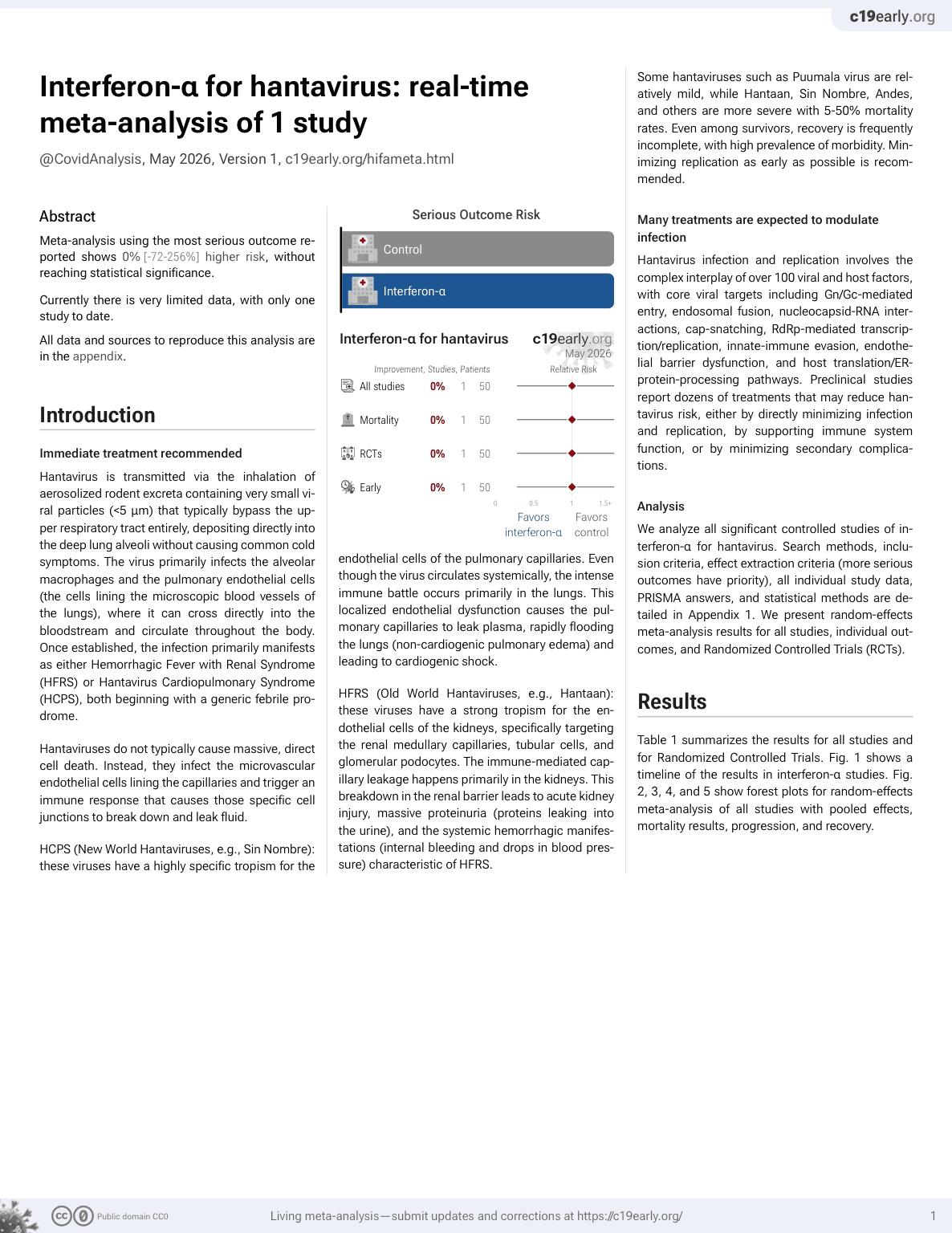
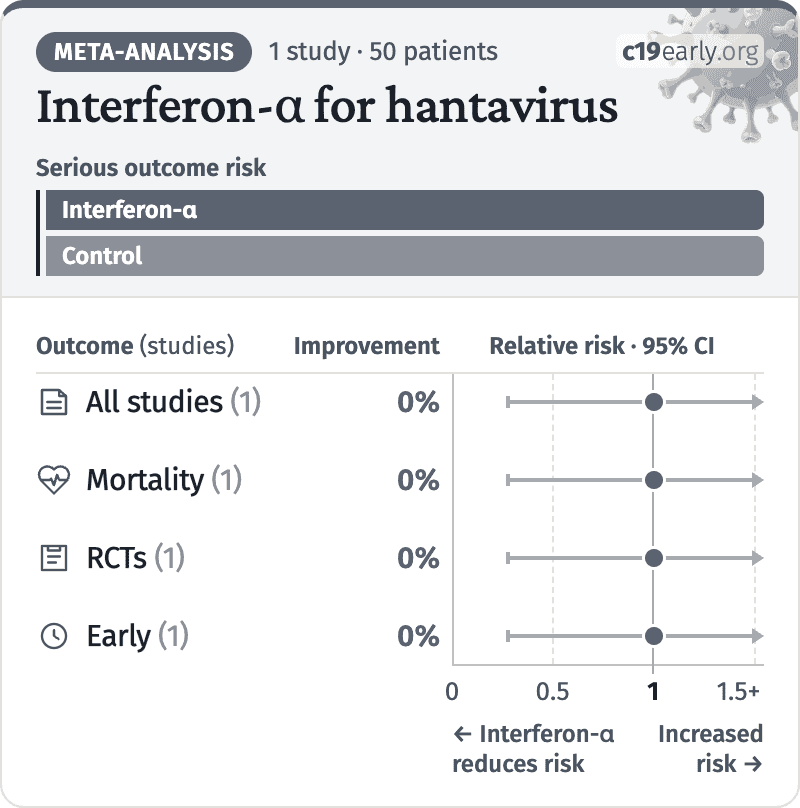
Meta-analysis using the most serious outcome reported shows 0% [-72‑256%] higher risk, without reaching statistical significance.
Serious Outcome Risk
Hospital Icon Control
Hospital Icon Interferon-α
0 0.5 1 1.5+ All studies 0% 1 50 Improvement, Studies, Patients Relative Risk Mortality 0% 1 50 RCTs 0% 1 50 Early 0% 1 50 Interferon-α for hantavirus c19early.org May 2026 Favorsinterferon-α Favorscontrol
Currently there is very limited data, with only one study to date.
All data and sources to reproduce this analysis are in the appendix.
0 0.25 0.5 0.75 1 1.25 1.5 1.75 2+ Gui (RCT) 0% 1.00 [0.28-3.56] death 4/25 4/25 HFRS, Hantann Improvement, RR [CI] Treatment Control Tau​2 = 0.00, I​2 = 0.0%, p = 1. Early treatment 0% 1.00 [0.28-3.56] 4/25 4/25 no change All studies 0% 1.00 [0.28-3.56] 4/25 4/25 no change 1 interferon-α hantavirus study c19early.org May 2026 Tau​2 = 0.00, I​2 = 0.0%, p = 1. Effect extraction pre-specified(most serious outcome, see appendix) Favors interferon-α Favors control
0 0.25 0.5 0.75 1 1.25 1.5 1.75 2+ Gui (RCT) 0% death HFRS, Hantann Improvement Relative Risk [CI] Tau​2 = 0.00, I​2 = 0.0%, p = 1. Early treatment 0% no change All studies 0% no change 1 interferon-α hantavirus study c19early.org May 2026 Tau​2 = 0.00, I​2 = 0.0%, p = 1. Effect extraction pre-specifiedRotate device for details Favors interferon-α Favors control
A
Hantavirus is transmitted via the inhalation of aerosolized rodent excreta containing very small viral particles (<5 μm) that typically bypass the upper respiratory tract entirely, depositing directly into the deep lung alveoli without causing common cold symptoms. The virus primarily infects the alveolar macrophages and the pulmonary endothelial cells (the cells lining the microscopic blood vessels of the lungs), where it can cross directly into the bloodstream and circulate throughout the body. Once established, the infection primarily manifests as either Hemorrhagic Fever with Renal Syndrome (HFRS) or Hantavirus Cardiopulmonary Syndrome (HCPS), both beginning with a generic febrile prodrome.
Hantaviruses do not typically cause massive, direct cell death. Instead, they infect the microvascular endothelial cells lining the capillaries and trigger an immune response that causes those specific cell junctions to break down and leak fluid.
HCPS (New World Hantaviruses, e.g., Sin Nombre): these viruses have a highly specific tropism for the endothelial cells of the pulmonary capillaries. Even though the virus circulates systemically, the intense immune battle occurs primarily in the lungs. This localized endothelial dysfunction causes the pulmonary capillaries to leak plasma, rapidly flooding the lungs (non-cardiogenic pulmonary edema) and leading to cardiogenic shock.
HFRS (Old World Hantaviruses, e.g., Hantaan): these viruses have a strong tropism for the endothelial cells of the kidneys, specifically targeting the renal medullary capillaries, tubular cells, and glomerular podocytes. The immune-mediated capillary leakage happens primarily in the kidneys. This breakdown in the renal barrier leads to acute kidney injury, massive proteinuria (proteins leaking into the urine), and the systemic hemorrhagic manifestations (internal bleeding and drops in blood pressure) characteristic of HFRS.
Some hantaviruses such as Puumala virus are relatively mild, while Hantaan, Sin Nombre, Andes, and others are more severe with 5-50% mortality rates. Even among survivors, recovery is frequently incomplete, with high prevalence of morbidity. Minimizing replication as early as possible is recommended.
Hantavirus infection and replication involves the complex interplay of over 100 viral and host factors, with core viral targets including Gn/Gc-mediated entry, endosomal fusion, nucleocapsid-RNA interactions, cap-snatching, RdRp-mediated transcription/replication, innate-immune evasion, endothelial barrier dysfunction, and host translation/ER-protein-processing pathways. Preclinical studies report dozens of treatments that may reduce hantavirus risk, either by directly minimizing infection and replication, by supporting immune system function, or by minimizing secondary complications.
We analyze all significant controlled studies of interferon-α for hantavirus. Search methods, inclusion criteria, effect extraction criteria (more serious outcomes have priority), all individual study data, PRISMA answers, and statistical methods are detailed in Appendix 1. We present random-effects meta-analysis results for all studies, individual outcomes, and Randomized Controlled Trials (RCTs).
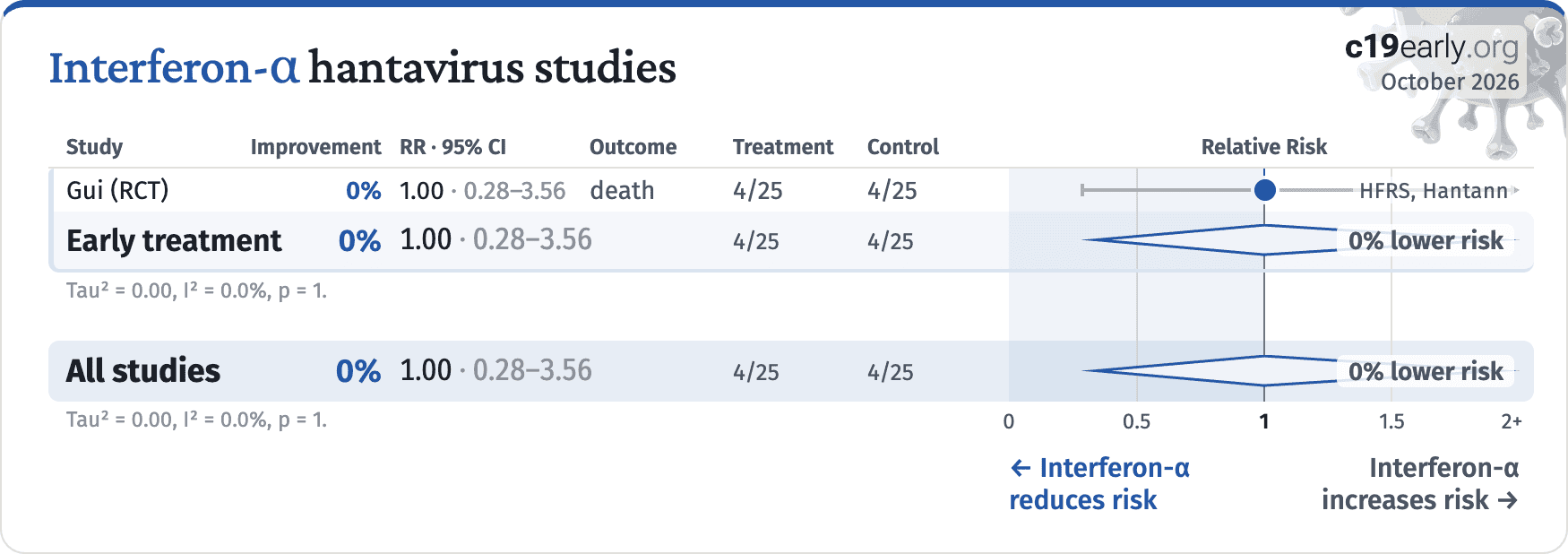
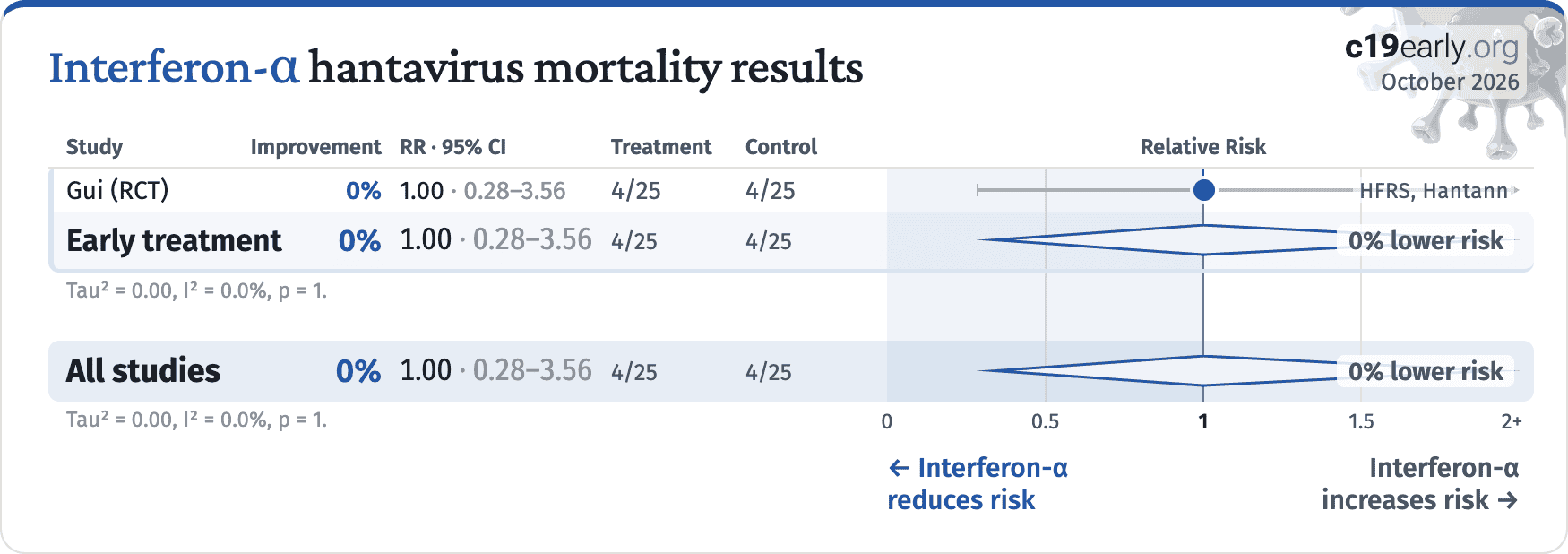
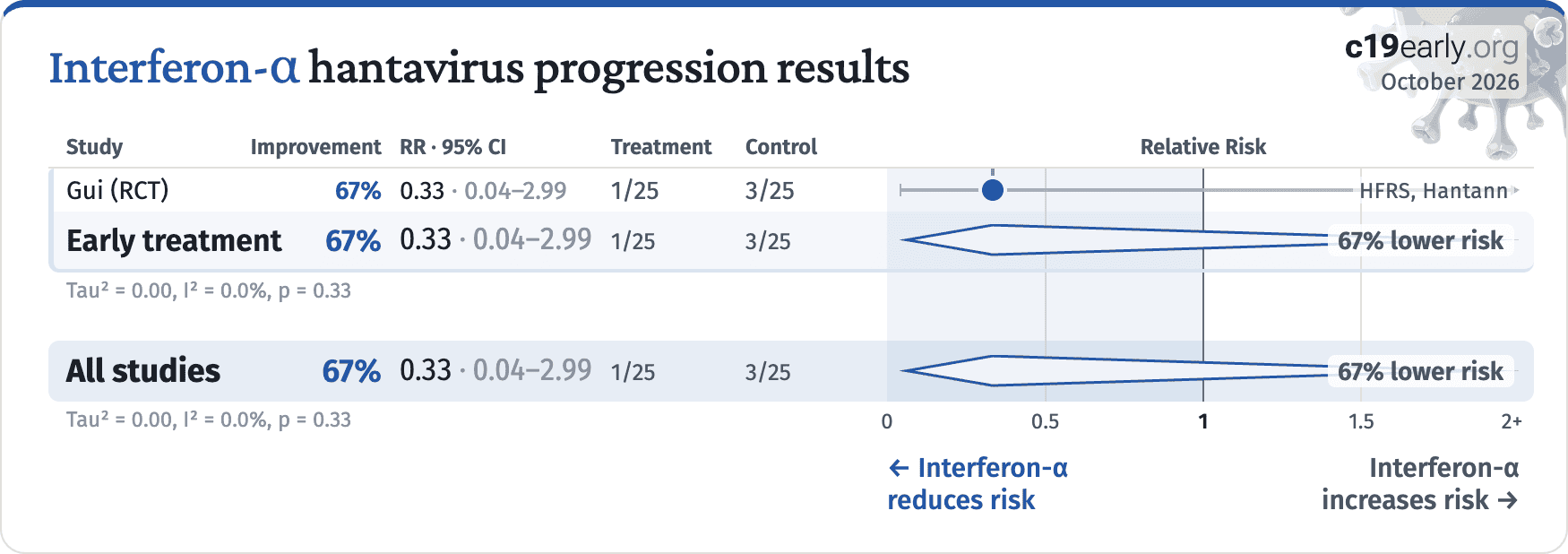
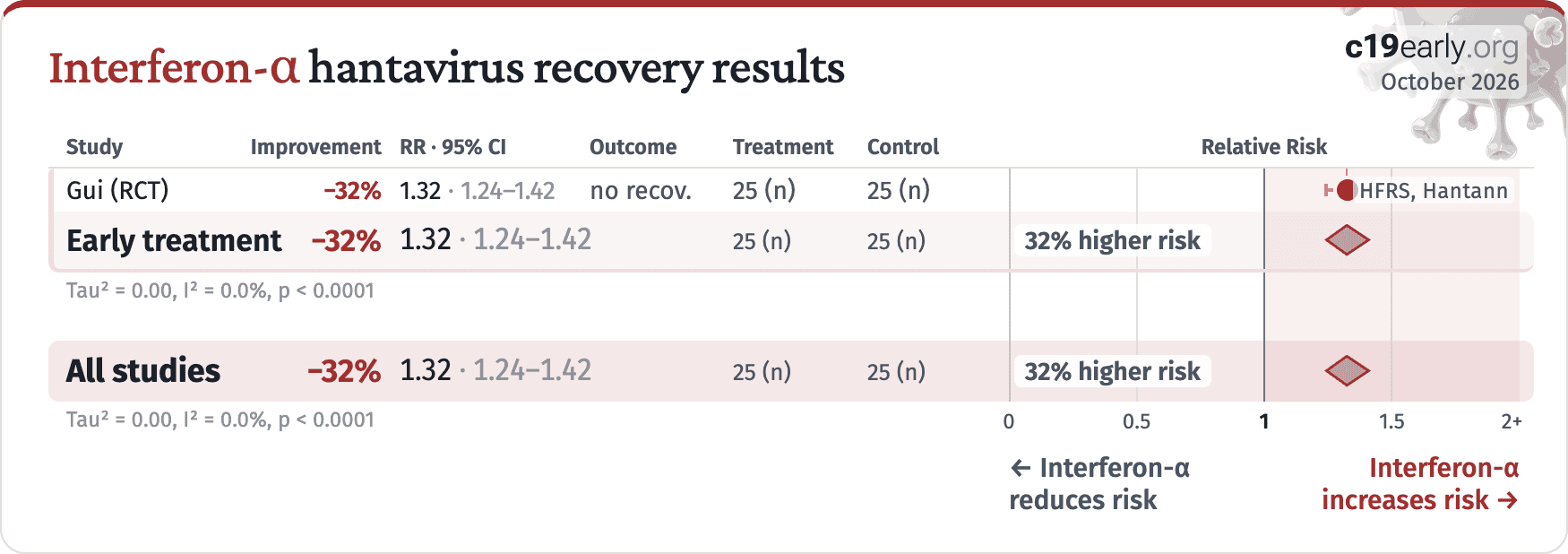
Table 1 summarizes the results for all studies and for Randomized Controlled Trials. Fig. 2, 3, 4, and 5 show forest plots for random-effects meta-analysis of all studies with pooled effects, mortality results, progression, and recovery.
Table 1. Random-effects meta-analysis for all studies and for Randomized Controlled Trials. Results show the relative risk with treatment and the 95% confidence interval.
Relative Risk Studies Patients
All studies1.00 [0.28‑3.56]150
RCTsRCTs1.00 [0.28‑3.56]150
Loading..
Loading..
Fig. 2. Random-effects meta-analysis for all studies. Effect extraction is pre-specified, using the most serious outcome reported. For details see the appendix.
Loading..
Loading..
Fig. 3. Random-effects meta-analysis for mortality results.
Loading..
Fig. 4. Random-effects meta-analysis for progression.
Loading..
Fig. 5. Random-effects meta-analysis for recovery.
Fig. 6 and 7 show forest plots for random-effects meta-analysis of all Randomized Controlled Trials and RCT mortality results. RCT results are included in Table 1. Currently there is only one study which is an RCT.
Loading..
Loading..
Fig. 6. Random-effects meta-analysis for all Randomized Controlled Trials. Effect extraction is pre-specified, using the most serious outcome reported. For details see the appendix.
Loading..
Loading..
Fig. 7. Random-effects meta-analysis for RCT mortality results.
Summary statistics from meta-analysis necessarily lose information. As with all meta-analyses, studies are heterogeneous, with differences in treatment delay, treatment regimen, patient demographics, variants, conflicts of interest, standard of care, and other factors. We provide analyses for specific outcomes and by treatment delay, and we aim to identify key characteristics in the forest plots and summaries. Results should be viewed in the context of study characteristics.
Details of treatment delay per patient is often not available. For example, a study may treat 90% of patients relatively early, but the events driving the outcome may come from 10% of patients treated very late.
Comparison across treatments is confounded by differences in the studies performed, for example dose, variants, and conflicts of interest. Trials with conflicts of interest may use designs better suited to the preferred outcome.
In some cases, the most serious outcome has very few events, resulting in lower confidence results being used in pooled analysis, however the method is simpler and more transparent. This is less critical as the number of studies increases. Restriction to outcomes with sufficient power may be beneficial in pooled analysis and improve accuracy when there are few studies, however we maintain our pre-specified method to avoid any retrospective changes.
Studies show that combinations of treatments can be highly synergistic and may result in many times greater efficacy than individual treatments alone1-18. Therefore standard of care may be critical and benefits may diminish or disappear if standard of care does not include certain treatments.
This real-time analysis is constantly updated based on submissions. Accuracy benefits from widespread review and submission of updates and corrections from reviewers. Less popular treatments may receive fewer reviews.
No treatment or intervention is 100% available and effective for all current and future variants. Efficacy may vary significantly with different variants and within different populations. All treatments have potential side effects. Propensity to experience side effects may be predicted in advance by qualified physicians. We do not provide medical advice. Before taking any medication, consult a qualified physician who can compare all options, provide personalized advice, and provide details of risks and benefits based on individual medical history and situations.

Meta-analysis using the most serious outcome reported shows 0% [-72‑256%] higher risk, without reaching statistical significance.
Currently there is very limited data, with only one study to date.
 
Contact.
Contact us on X at @CovidAnalysis.
Funding.
We have received no funding or compensation in any form, and do not accept donations. This is entirely volunteer work.
Conflicts of interest.
We have no conflicts of interest. We have no affiliation with any pharmaceutical companies, supplement companies, governments, political parties, or advocacy organizations.
AI.
We use AI models (Gemini, Grok, Claude, and ChatGPT) tasked with functioning as additional peer-reviewers to check for errors, suggest improvements, and review spelling and grammar. Any corrections are verified and applied manually. Our preference for em dashes is independent of AI.
Dedication.
This work is dedicated to those who risked their career to save lives under extreme censorship and persecution from authorities and media that have not even reviewed most of the science. In alphabetical order, those that paid the ultimate price: Dr. Thomas J. Borody, Dr. Jackie Stone, Dr. Vladimir (Zev) Zelenko; and those that continue to risk their careers to save lives: Dr. Mary Talley Bowden, Dr. Flavio Cadegiani, Dr. Shankara Chetty, Dr. Ryan Cole, Dr. George Fareed, Dr. Sabine Hazan, Dr. Pierre Kory, Dr. Tess Lawrie, Dr. Robert Malone, Dr. Paul Marik, Dr. Peter McCullough, Dr. Didier Raoult, Dr. Harvey Risch, Dr. Brian Tyson, Dr. Joseph Varon, and the estimated over one million physicians worldwide that prescribed one or more low-cost COVID-19 treatments known to reduce risk, contrary to authority beliefs.
Public domain.
This is a public domain work distributed in accordance with the Creative Commons CC0 1.0 Universal license, which dedicates the work to the public domain by waiving all rights worldwide under copyright law. You can distribute, remix, adapt, and build upon this work in any medium or format, including for commercial purposes, without asking permission. Referenced material and third-party images retain any original copyrights or restrictions. See: https://creativecommons.org/publicdomain/zero/1.0/.
Mortality 0% improvement lower risk ← → higher risk Anuria 67% Oliguria 43% Fever -32% Interferon-α  Gui et al.  EARLY TREATMENT RCT Is early treatment with interferon-α beneficial for hantavirus? RCT 50 patients in China Worse recovery with interferon-α (p<0.000001) c19early.org Gui et al., J. Infectious Diseases, May 1987 0 0.5 1 1.5 2+ RR
RCT 50 hospitalized patients with hemorrhagic fever with renal syndrome (HFRS) showing no significant benefit with recombinant alpha-2 interferon treatment. Mortality was identical in both groups (16% each, 4 deaths per group). The interferon group showed significantly fewer serious bleeding manifestations (10 vs. 17 patients) and less severe proteinuria, but no significant differences in hypotension, oliguria, polyuria, uremia, or thrombocytopenia. Authors hypothesize that the lack of significant therapeutic effect may be because all patients already had high antibody levels on admission, suggesting that treatment may have been too late. They suggest earlier treatment or different dosing might show greater effectiveness. Submit Corrections or Updates.
We perform ongoing searches of PubMed, medRxiv, Europe PMC, ClinicalTrials.gov, The Cochrane Library, Google Scholar, Research Square, ScienceDirect, Oxford University Press, the reference lists of other studies and meta-analyses, and submissions to the site c19early.org, which regularly receives notification of studies upon publication. Search terms are interferon-α and hantavirus. Automated searches are performed twice daily, with all matches reviewed for inclusion. All studies regarding the use of interferon-α for Hantavirus that report a comparison with a control group are included in the main analysis. Studies with major unexplained data issues, for example major outcome data that is impossible to be correct with no response from the authors, are excluded.
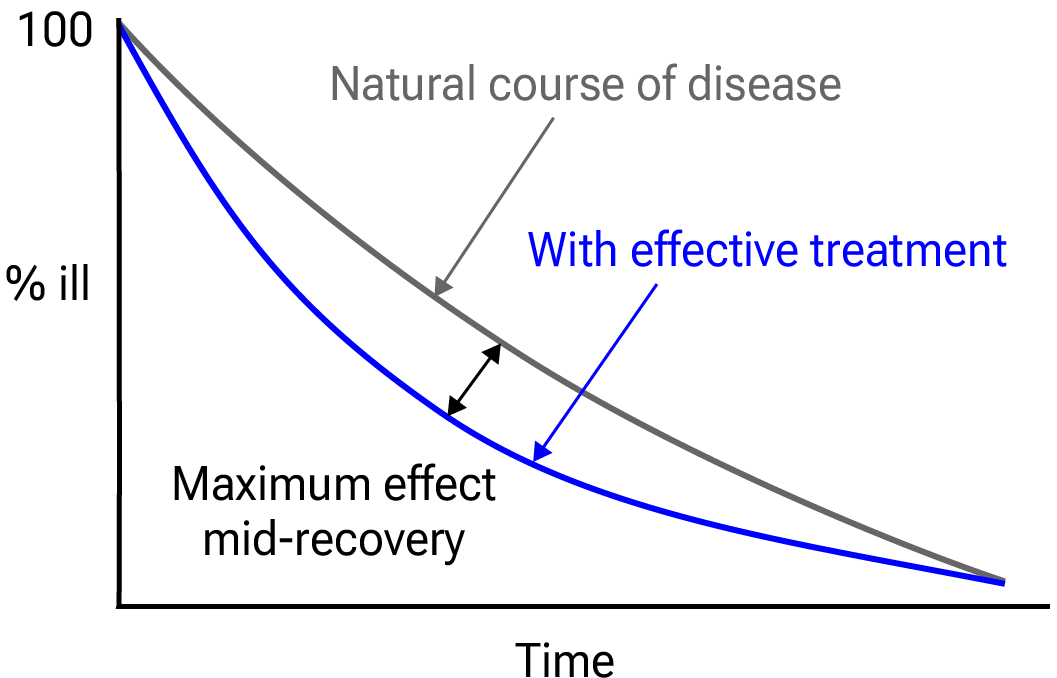
Fig. 8. Mid-recovery results can more accurately reflect efficacy when almost all patients recover. Mateja et al. confirm that intermediate viral load results more accurately reflect hospitalization/death.
We extracted effect sizes and associated data from all studies. If studies report multiple kinds of effects then the most serious outcome is used in pooled analysis, while other outcomes are included in the outcome-specific analyses. For example, if effects for mortality and cases are reported then they are both used in specific outcome analyses, while mortality is used for pooled analysis. If symptomatic results are reported at multiple times, we use the latest time, for example if mortality results are provided at 14 days and 28 days, the results at 28 days have preference. Mortality alone is preferred over combined outcomes. Outcomes with zero events in both arms are not used, the next most serious outcome with one or more events is used. For example, in low-risk populations with no mortality, a reduction in mortality with treatment is not possible, however a reduction in hospitalization, for example, is still valuable. Clinical outcomes are considered more important than viral outcomes. When basically all patients recover in both treatment and control groups, preference for viral clearance and recovery is given to results mid-recovery where available. After most or all patients have recovered there is little or no room for an effective treatment to do better, however faster recovery is valuable. An IPD meta-analysis confirms that intermediate viral load reduction is more closely associated with hospitalization/death than later viral load reduction20. If only individual symptom data is available, the most serious symptom has priority, for example difficulty breathing or low SpO2 is more important than cough.
Forest plots are computed using PythonMeta21 with the DerSimonian and Laird random-effects model (the fixed effect assumption is not plausible in this case) and inverse variance weighting. Results are presented with 95% confidence intervals. Heterogeneity among studies was assessed using the I2 statistic. When results provide an odds ratio, we compute the relative risk when possible, or convert to a relative risk according to Zhang et al. Reported confidence intervals and p-values are used when available, and adjusted values are used when provided. If multiple types of adjustments are reported propensity score matching and multivariable regression has preference over propensity score matching or weighting, which has preference over multivariable regression. Adjusted results have preference over unadjusted results for a more serious outcome when the adjustments significantly alter results. When needed, conversion between reported p-values and confidence intervals followed Altman, Altman (B), and Fisher's exact test was used to calculate p-values for event data. If continuity correction for zero values is required, we use the reciprocal of the opposite arm with the sum of the correction factors equal to 125. Results are expressed with RR < 1.0 favoring treatment, and using the risk of a negative outcome when applicable (for example, the risk of death rather than the risk of survival). If studies only report relative continuous values such as relative times, the ratio of the time for the treatment group versus the time for the control group is used. Calculations are done in Python (3.14.4) with scipy (1.17.1), pythonmeta (1.26), numpy (2.4.4), statsmodels (0.14.6), and plotly (6.7.0). Mixed-effects meta-regression results are computed with R (4.4.0) using the metafor (4.6-0) and rms (6.8-0) packages, and using the most serious sufficiently powered outcome. For all statistical tests, a p-value less than 0.05 was considered statistically significant. Grobid 0.8.2 is used to parse PDF documents.
When evaluating potential effect modification across groups, we use an interaction test as described by Altman (C) et al. We compared the log-transformed relative risks using a z-test, deriving the standard error of the difference from the 95% confidence intervals. A two-sided interaction p-value of < 0.05 was considered a statistically significant difference in treatment effect between the groups.
Our quality evaluation focuses on known issues and bias, and the potential impact on outcomes, rather than just the risk of bias. The estimated potential impact of each confounding factor, and the direction of the impact is considered. For example, consider a study that shows significantly lower risk, the value of the study varies significantly if confounding points to an underestimate or an overestimate of efficacy. In one case, the real effect may be null, while the other case provides stronger evidence of efficacy (which may be greater than the study shows). Analysis focusing on the risk of bias, while simpler, may penalize studies for theoretical or technical issues that have no or minimal impact on outcomes. Analysis also depends on the outcome, for example certain issues are less relevant for objective outcomes such as mortality. Inaccurate penalization, and inaccurate high-quality evaluation in the face of known major issues affecting outcomes, increases in significance during a pandemic when immediate recognition of new evidence is critical, and when considering all global studies, as required during a pandemic. Investigators in other countries may have different customs for design, analysis, and reporting, and different English language skills, however they may not be less diligent or have greater bias. Investigators in lower-pharmaceutical-profit countries may have lower bias towards profitable interventions.
This is a living analysis and is updated regularly. Submit updates or corrections with the form below. We received no funding, this research is done in our spare time. We have no affiliation with any pharmaceutical companies, supplement companies, governments, political parties, or advocacy organizations.
A summary of study results is below. Please submit updates and corrections at the bottom of this page.
A summary of study results is below. Please submit updates and corrections at https://c19early.org/hifameta.html.
Effect extraction follows pre-specified rules as detailed above and gives priority to more serious outcomes. For pooled analyses, the first (most serious) outcome is used, which may differ from the effect a paper focuses on. Other outcomes are used in outcome specific analyses.
Gui, 5/1/1987, Randomized Controlled Trial, placebo-controlled, China, peer-reviewed, 6 authors, HFRS, Hantann. risk of death, no change, RR 1.00, p = 1.00, treatment 4 of 25 (16.0%), control 4 of 25 (16.0%).
anuria, 66.7% lower, RR 0.33, p = 0.61, treatment 1 of 25 (4.0%), control 3 of 25 (12.0%), NNT 13.
oliguria, 42.9% lower, RR 0.57, p = 0.50, treatment 4 of 25 (16.0%), control 7 of 25 (28.0%), NNT 8.3.
fever, 32.4% higher, RR 1.32, p < 0.001, treatment mean 4.5 (±0.22) n=25, control mean 3.4 (±0.45) n=25.