Abstract: ARTICLE IN PRESS
Communications Medicine
https://doi.org/10.1038/s43856-026-01535-4
Article in Press
Paxlovid shows organ-specific and age-specific
impacts on risk of developing post-acute sequelae
of COVID-19
Alaleh Azhir, Jingya Cheng, Jiazi Tian, Shawn N. Murphy & Hossein Estiri
S
Received: 1 May 2025
PR
We are providing an unedited version of this manuscript to give early access to its
findings. Before final publication, the manuscript will undergo further editing. Please
note there may be errors present which affect the content, and all legal disclaimers
apply.
LE
IN
If this paper is publishing under a Transparent Peer Review model then Peer
Review reports will publish with the final article.
A
R
TI
C
Cite this article as: Azhir, A., Cheng, J.,
Tian, J. et al. Paxlovid shows organspecific and age-specific impacts on
risk of developing post-acute
sequelae of COVID-19. Commun Med
(2026). https://doi.org/10.1038/
s43856-026-01535-4
ES
Accepted: 9 March 2026
© The Author(s) 2026. Open Access This article is licensed under a Creative Commons Attribution-NonCommercial-NoDerivatives 4.0 International
License, which permits any non-commercial use, sharing, distribution and reproduction in any medium or format, as long as you give appropriate credit
to the original author(s) and the source, provide a link to the Creative Commons licence, and indicate if you modified the licensed material. You do not
have permission under this licence to share adapted material derived from this article or parts of it. The images or other third party material in this
article are included in the article's Creative Commons licence, unless indicated otherwise in a credit line to the material. If material is not included in the
article's Creative Commons licence and your intended use is not permitted by statutory regulation or exceeds the permitted use, you will need to obtain
permission directly from the copyright holder. To view a copy of this licence, visit http://creativecommons.org/licenses/by-nc-nd/4.0/.
ARTICLE IN PRESS
Paxlovid shows organ-specific and age-specific
impacts on risk of developing post-acute sequelae of
COVID-19
Alaleh Azhir, MD, MSc1,2*; Jingya Cheng, M.B.1*; Jiazi Tian, M.Sc.1; Shawn N. Murphy, MD, PhD3
Hossein Estiri, PhD1†
1 Department of Medicine, Massachusetts General Hospital, Boston, MA, USA
S
2 Department of Medicine, Brigham and Women's Hospital, Boston, MA, USA
A
R
TI
C
LE
IN
PR
ES
3 Department of Neurology, Massachusetts General Hospital, Boston, MA, USA
* contributed equally
† Corresponding author: Hossein Estiri
Email: hestiri@mgh.harvard.edu
399 Revolution Drive, Suite 790, Somerville, MA, 02145, USA
ARTICLE IN PRESS
Abstract
Background: The impact of antiviral therapies, including Paxlovid, on post-acute sequelae of
COVID-19 (PASC) remains inconclusive.
S
Methods: We analyzed data from 19,413 patients (age > 18) from a validated PASC research
cohort in New England who experienced at least one COVID-19 infection episode between
January 1, 2022, and June 7, 2022, totaling 22,094 episodes. Multivariable logistic regression
with inverse probability weights was used to infer the causal effects of Paxlovid treatment during
acute infection and the risk of PASC overall (primary outcome), stratified by age group and organ
system.
IN
PR
ES
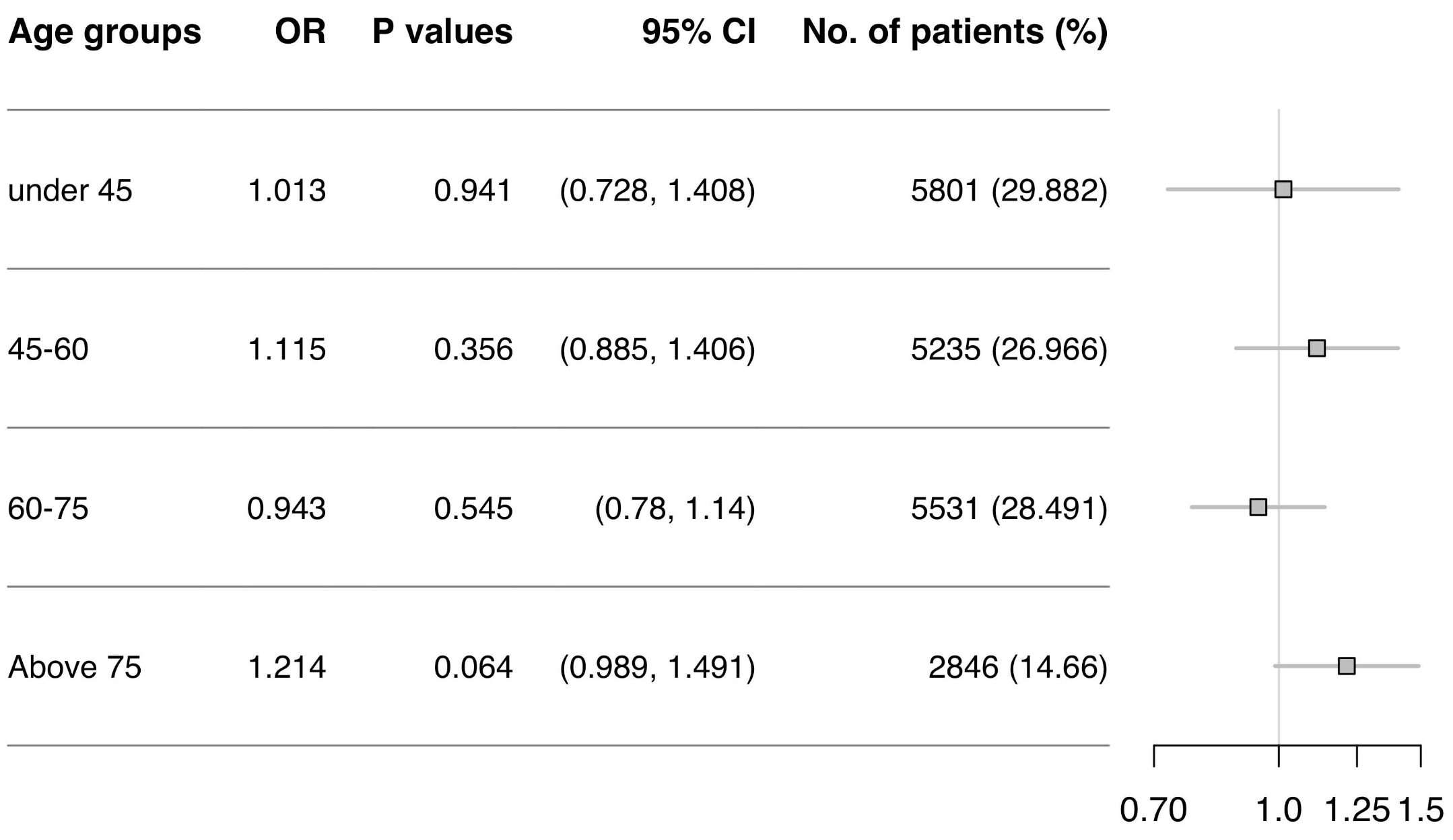
Results: Across all age groups, Paxlovid shows no statistically significant effect in lowering overall
PASC risk. Stratification by organ system reveals a..
DOI record:
{
"DOI": "10.1038/s43856-026-01535-4",
"ISSN": [
"2730-664X"
],
"URL": "http://dx.doi.org/10.1038/s43856-026-01535-4",
"alternative-id": [
"1535"
],
"assertion": [
{
"group": {
"label": "Article History",
"name": "ArticleHistory"
},
"label": "Received",
"name": "received",
"order": 1,
"value": "1 May 2025"
},
{
"group": {
"label": "Article History",
"name": "ArticleHistory"
},
"label": "Accepted",
"name": "accepted",
"order": 2,
"value": "9 March 2026"
},
{
"group": {
"label": "Article History",
"name": "ArticleHistory"
},
"label": "First Online",
"name": "first_online",
"order": 3,
"value": "24 March 2026"
},
{
"group": {
"label": "Competing interests",
"name": "EthicsHeading"
},
"name": "Ethics",
"order": 1,
"value": "The authors declare no competing interests."
}
],
"author": [
{
"affiliation": [],
"family": "Azhir",
"given": "Alaleh",
"sequence": "first"
},
{
"ORCID": "https://orcid.org/0009-0006-1236-1614",
"affiliation": [],
"authenticated-orcid": false,
"family": "Cheng",
"given": "Jingya",
"sequence": "additional"
},
{
"ORCID": "https://orcid.org/0000-0003-0599-3438",
"affiliation": [],
"authenticated-orcid": false,
"family": "Tian",
"given": "Jiazi",
"sequence": "additional"
},
{
"ORCID": "https://orcid.org/0000-0002-1905-8806",
"affiliation": [],
"authenticated-orcid": false,
"family": "Murphy",
"given": "Shawn N.",
"sequence": "additional"
},
{
"ORCID": "https://orcid.org/0000-0002-0204-8978",
"affiliation": [],
"authenticated-orcid": false,
"family": "Estiri",
"given": "Hossein",
"sequence": "additional"
}
],
"container-title": "Communications Medicine",
"container-title-short": "Commun Med",
"content-domain": {
"crossmark-restriction": false,
"domain": [
"link.springer.com"
]
},
"created": {
"date-parts": [
[
2026,
3,
24
]
],
"date-time": "2026-03-24T20:35:39Z",
"timestamp": 1774384539000
},
"deposited": {
"date-parts": [
[
2026,
3,
24
]
],
"date-time": "2026-03-24T20:35:49Z",
"timestamp": 1774384549000
},
"funder": [
{
"DOI": "10.13039/100000060",
"award": [
"R01AI165535"
],
"award-info": [
{
"award-number": [
"R01AI165535"
]
}
],
"doi-asserted-by": "publisher",
"id": [
{
"asserted-by": "publisher",
"id": "10.13039/100000060",
"id-type": "DOI"
}
],
"name": "U.S. Department of Health & Human Services | NIH | National Institute of Allergy and Infectious Diseases"
}
],
"indexed": {
"date-parts": [
[
2026,
3,
24
]
],
"date-time": "2026-03-24T22:26:31Z",
"timestamp": 1774391191549,
"version": "3.50.1"
},
"is-referenced-by-count": 0,
"issued": {
"date-parts": [
[
2026,
3,
24
]
]
},
"language": "en",
"license": [
{
"URL": "https://creativecommons.org/licenses/by-nc-nd/4.0",
"content-version": "tdm",
"delay-in-days": 0,
"start": {
"date-parts": [
[
2026,
3,
24
]
],
"date-time": "2026-03-24T00:00:00Z",
"timestamp": 1774310400000
}
},
{
"URL": "https://creativecommons.org/licenses/by-nc-nd/4.0",
"content-version": "am",
"delay-in-days": 0,
"start": {
"date-parts": [
[
2026,
3,
24
]
],
"date-time": "2026-03-24T00:00:00Z",
"timestamp": 1774310400000
}
}
],
"link": [
{
"URL": "https://www.nature.com/articles/s43856-026-01535-4",
"content-type": "text/html",
"content-version": "vor",
"intended-application": "text-mining"
}
],
"member": "297",
"original-title": [],
"prefix": "10.1038",
"published": {
"date-parts": [
[
2026,
3,
24
]
]
},
"published-online": {
"date-parts": [
[
2026,
3,
24
]
]
},
"publisher": "Springer Science and Business Media LLC",
"reference": [
{
"DOI": "10.15620/cdc:132417",
"doi-asserted-by": "publisher",
"key": "1535_CR1",
"unstructured": "Adjaye-Gbewonyo, D., Vahratian, A., Cria, G. P. & Bertolli, J. Long COVID in Adults: United States, 2022. (National Center for Health Statistics (U.S.), 2023). https://doi.org/10.15620/cdc:132417."
},
{
"DOI": "10.1056/NEJMoa2118542",
"doi-asserted-by": "crossref",
"key": "1535_CR2",
"unstructured": "Hammond, J. et al. Oral nirmatrelvir for high-risk, nonhospitalized adults with Covid-19. N. Engl. J. Med. 386, 1397–1408 (2022)."
},
{
"DOI": "10.1016/S1473-3099(23)00011-7",
"doi-asserted-by": "crossref",
"key": "1535_CR3",
"unstructured": "Aggarwal, N. R. et al. Real-world use of nirmatrelvir-ritonavir in outpatients with COVID-19 during the era of omicron variants including BA.4 and BA.5 in Colorado, USA: a retrospective cohort study. Lancet Infect. Dis. 23, 696–705 (2023)."
},
{
"DOI": "10.1001/jamainternmed.2023.0743",
"author": "Y Xie",
"doi-asserted-by": "crossref",
"first-page": "554",
"journal-title": "JAMA Intern. Med.",
"key": "1535_CR4",
"unstructured": "Xie, Y., Choi, T. & Al-Aly, Z. Association of treatment with nirmatrelvir and the risk of post-COVID-19 condition. JAMA Intern. Med. 183, 554–564 (2023).",
"volume": "183",
"year": "2023"
},
{
"DOI": "10.1016/j.jinf.2024.106190",
"doi-asserted-by": "crossref",
"key": "1535_CR5",
"unstructured": "Jiang, J. et al. Early use of oral antiviral drugs and the risk of post COVID-19 syndrome: a systematic review and network meta-analysis. J. Infect. 89, 106190 (2024)."
},
{
"DOI": "10.1002/jmv.29333",
"doi-asserted-by": "crossref",
"key": "1535_CR6",
"unstructured": "Durstenfeld, M. S. et al. Association of nirmatrelvir for acute SARS-CoV-2 infection with subsequent Long COVID symptoms in an observational cohort study. J. Med. Virol. 96, e29333 (2024)."
},
{
"DOI": "10.7326/M23-1394",
"author": "GN Ioannou",
"doi-asserted-by": "crossref",
"first-page": "1486",
"journal-title": "Ann. Intern. Med.",
"key": "1535_CR7",
"unstructured": "Ioannou, G. N. et al. Effectiveness of nirmatrelvir-ritonavir against the development of post-COVID-19 conditions among U.S. veterans: a target trial emulation. Ann. Intern. Med. 176, 1486–1497 (2023).",
"volume": "176",
"year": "2023"
},
{
"DOI": "10.7326/M22-3565",
"author": "KL Bajema",
"doi-asserted-by": "crossref",
"first-page": "807",
"journal-title": "Ann. Intern. Med.",
"key": "1535_CR8",
"unstructured": "Bajema, K. L. et al. Effectiveness of COVID-19 treatment with nirmatrelvir-ritonavir or molnupiravir among U.S. veterans: target trial emulation studies with one-month and six-month outcomes. Ann. Intern. Med. 176, 807–816 (2023).",
"volume": "176",
"year": "2023"
},
{
"DOI": "10.1001/jamainternmed.2023.5099",
"author": "KW Fung",
"doi-asserted-by": "crossref",
"first-page": "1404",
"journal-title": "JAMA Intern. Med.",
"key": "1535_CR9",
"unstructured": "Fung, K. W., Baye, F., Baik, S. H. & McDonald, C. J. Nirmatrelvir and molnupiravir and post-COVID-19 condition in older patients. JAMA Intern. Med. 183, 1404–1406 (2023).",
"volume": "183",
"year": "2023"
},
{
"DOI": "10.1016/S1473-3099(24)00217-2",
"author": "H Wang",
"doi-asserted-by": "crossref",
"first-page": "1130",
"journal-title": "Lancet Infect. Dis.",
"key": "1535_CR10",
"unstructured": "Wang, H. et al. Association of nirmatrelvir-ritonavir with post-acute sequelae and mortality in patients admitted to hospital with COVID-19: a retrospective cohort study. Lancet Infect. Dis. 24, 1130–1140 (2024).",
"volume": "24",
"year": "2024"
},
{
"DOI": "10.1001/jamainternmed.2024.2007",
"author": "LN Geng",
"doi-asserted-by": "crossref",
"first-page": "1024",
"journal-title": "JAMA Intern. Med.",
"key": "1535_CR11",
"unstructured": "Geng, L. N. et al. Nirmatrelvir-ritonavir and symptoms in adults with postacute sequelae of SARS-CoV-2 infection: the STOP-PASC randomized clinical trial: the STOP-PASC randomized clinical trial. JAMA Intern. Med. 184, 1024–1034 (2024).",
"volume": "184",
"year": "2024"
},
{
"DOI": "10.1002/jmv.28750",
"author": "MH Chuang",
"doi-asserted-by": "crossref",
"journal-title": "J. Med. Virol.",
"key": "1535_CR12",
"unstructured": "Chuang, M. H. et al. Efficacy of nirmatrelvir and ritonavir for post-acute COVID-19 sequelae beyond 3 months of SARS-CoV-2 infection. J. Med. Virol. 95, e28750 (2023).",
"volume": "95",
"year": "2023"
},
{
"DOI": "10.21203/rs.3.rs-4536807/v1",
"doi-asserted-by": "publisher",
"key": "1535_CR13",
"unstructured": "Wang, F. et al. Real-World Effectiveness of Nirmatrelvir in Protecting Long COVID for Outpatient Adult Patients-A Large-Scale Observational Cohort Study from the RECOVER Initiative. Res sq https://doi.org/10.21203/rs.3.rs-4536807/v1 (2024)."
},
{
"DOI": "10.1101/2025.04.02.25324861",
"doi-asserted-by": "publisher",
"key": "1535_CR14",
"unstructured": "Shen Y. et al. Assessment of Nirmatrelvir-Ritonavir Effects on Acute and Post-Acute COVID-19 Illness in US Adolescents: Target Trial Emulation. MedRXiv https://doi.org/10.1101/2025.04.02.25324861 (2025)."
},
{
"author": "FS Sharif-Askari",
"journal-title": "Sci. Rep.",
"key": "1535_CR15",
"unstructured": "Sharif-Askari, F. S. et al. Nirmatrelvir plus ritonavir reduces COVID-19 hospitalization and prevents long COVID in adult outpatients. Sci. Rep. 14, 25901 (2024).",
"volume": "14",
"year": "2024"
},
{
"DOI": "10.1186/s12889-024-19264-5",
"author": "R Sk Abd Razak",
"doi-asserted-by": "crossref",
"journal-title": "BMC Public Health",
"key": "1535_CR16",
"unstructured": "Sk Abd Razak, R. et al. Post-COVID syndrome prevalence: a systematic review and meta-analysis. BMC Public Health 24, 1785 (2024).",
"volume": "24",
"year": "2024"
},
{
"DOI": "10.1016/j.medj.2024.10.009",
"doi-asserted-by": "publisher",
"key": "1535_CR17",
"unstructured": "Azhir, A. et al. Precision phenotyping for curating research cohorts of patients with unexplained post-acute sequelae of COVID-19. Med https://doi.org/10.1016/j.medj.2024.10.009 (2024)."
},
{
"key": "1535_CR18",
"unstructured": "WHO. Coronavirus disease (COVID-19): Post COVID-19 condition. Accessed 2023. https://www.who.int/news-room/questions-and-answers/item/coronavirus-disease-(covid-19)-post-covid-19-condition."
},
{
"DOI": "10.1056/NEJMsb2408466",
"author": "EW Ely",
"doi-asserted-by": "crossref",
"first-page": "1746",
"journal-title": "N. Engl. J. Med.",
"key": "1535_CR19",
"unstructured": "Ely, E. W., Brown, L. M. & Fineberg, H. V. National academies of sciences, engineering, and medicine committee on examining the working definition for long covid. Long Covid defined. N. Engl. J. Med. 391, 1746–1753 (2024).",
"volume": "391",
"year": "2024"
},
{
"DOI": "10.1001/jamanetworkopen.2022.38354",
"author": "ZH Strasser",
"doi-asserted-by": "crossref",
"first-page": "e2238354",
"journal-title": "JAMA Netw. Open",
"key": "1535_CR20",
"unstructured": "Strasser, Z. H., Greifer, N., Hadavand, A., Murphy, S. N. & Estiri, H. Estimates of SARS-CoV-2 Omicron BA.2 subvariant severity in New England. JAMA Netw. Open 5, e2238354 (2022).",
"volume": "5",
"year": "2022"
},
{
"DOI": "10.1016/j.cmi.2020.11.028",
"author": "D Yahav",
"doi-asserted-by": "crossref",
"first-page": "315",
"journal-title": "Clin. Microbiol. Infect.",
"key": "1535_CR21",
"unstructured": "Yahav, D. et al. Definitions for coronavirus disease 2019 reinfection, relapse and PCR re-positivity. Clin. Microbiol. Infect. 27, 315–318 (2021).",
"volume": "27",
"year": "2021"
},
{
"DOI": "10.1016/S1473-3099(21)00703-9",
"author": "JB Soriano",
"doi-asserted-by": "crossref",
"first-page": "e102",
"journal-title": "Lancet Infect. Dis.",
"key": "1535_CR22",
"unstructured": "Soriano, J. B., Murthy, S., Marshall, J. C., Relan, P. & Diaz, J. V. WHO clinical case definition working group on post-COVID-19 condition. A clinical case definition of post-COVID-19 condition by a Delphi consensus. Lancet Infect. Dis. 22, e102–e107 (2022).",
"volume": "22",
"year": "2022"
},
{
"DOI": "10.21105/joss.00648",
"author": "A Gasparini",
"doi-asserted-by": "crossref",
"first-page": "648",
"journal-title": "J. Open Source Softw.",
"key": "1535_CR23",
"unstructured": "Gasparini, A. comorbidity: An R package for computing comorbidity scores. J. Open Source Softw. 3, 648 (2018).",
"volume": "3",
"year": "2018"
},
{
"DOI": "10.1093/pan/mpr025",
"author": "J Hainmueller",
"doi-asserted-by": "crossref",
"first-page": "25",
"journal-title": "Polit. Anal.",
"key": "1535_CR24",
"unstructured": "Hainmueller, J. Entropy balancing for causal effects: a multivariate reweighting method to produce balanced samples in observational studies. Polit. Anal. 20, 25–46 (2012).",
"volume": "20",
"year": "2012"
},
{
"author": "E Xu",
"journal-title": "Nat. Commun.",
"key": "1535_CR25",
"unstructured": "Xu, E., Xie, Y. & Al-Aly, Z. Long-term gastrointestinal outcomes of COVID-19. Nat. Commun. 14, 983 (2023).",
"volume": "14",
"year": "2023"
},
{
"DOI": "10.1016/S1473-3099(24)00171-3",
"author": "W Zuo",
"doi-asserted-by": "crossref",
"first-page": "845",
"journal-title": "Lancet Infect. Dis.",
"key": "1535_CR26",
"unstructured": "Zuo, W. et al. The persistence of SARS-CoV-2 in tissues and its association with long COVID symptoms: a cross-sectional cohort study in China. Lancet Infect. Dis. 24, 845–855 (2024).",
"volume": "24",
"year": "2024"
},
{
"DOI": "10.1038/s41590-017-0006-x",
"author": "J Nikolich-Žugich",
"doi-asserted-by": "crossref",
"first-page": "10",
"journal-title": "Nat. Immunol.",
"key": "1535_CR27",
"unstructured": "Nikolich-Žugich, J. The twilight of immunity: emerging concepts in aging of the immune system. Nat. Immunol. 19, 10–19 (2018).",
"volume": "19",
"year": "2018"
},
{
"DOI": "10.1038/s41392-023-01451-2",
"author": "Z Liu",
"doi-asserted-by": "crossref",
"first-page": "200",
"journal-title": "Sig. Transduct. Target. Ther.",
"key": "1535_CR28",
"unstructured": "Liu, Z. et al. Immunosenescence: molecular mechanisms and diseases. Sig. Transduct. Target. Ther. 8, 200 (2023).",
"volume": "8",
"year": "2023"
},
{
"DOI": "10.1016/j.arr.2021.101422",
"author": "A Santoro",
"doi-asserted-by": "crossref",
"journal-title": "Ageing Res. Rev.",
"key": "1535_CR29",
"unstructured": "Santoro, A., Bientinesi, E. & Monti, D. Immunosenescence and inflammaging in the aging process: age-related diseases or longevity? Ageing Res. Rev. 71, 101422 (2021).",
"volume": "71",
"year": "2021"
},
{
"DOI": "10.1016/j.cmi.2024.07.023",
"author": "G Sun",
"doi-asserted-by": "crossref",
"first-page": "1618",
"journal-title": "Clin. Microbiol. Infect.",
"key": "1535_CR30",
"unstructured": "Sun, G., Lin, K., Ai, J. & Zhang, W. The efficacy of antivirals, corticosteroids, and mAbs as acute COVID treatments in reducing the incidence of long COVID’-Author’s reply. Clin. Microbiol. Infect. 30, 1618–1619 (2024).",
"volume": "30",
"year": "2024"
},
{
"DOI": "10.1038/s41598-025-06052-3",
"author": "M Berry",
"doi-asserted-by": "crossref",
"journal-title": "Sci. Rep.",
"key": "1535_CR31",
"unstructured": "Berry, M. et al. Risk of long COVID in hospitalized individuals treated with remdesivir for acute COVID-19. Sci. Rep. 15, 27441 (2025).",
"volume": "15",
"year": "2025"
},
{
"DOI": "10.1093/jleuko/qiac001",
"author": "MS Islam",
"doi-asserted-by": "crossref",
"first-page": "236",
"journal-title": "J. Leukoc. Biol.",
"key": "1535_CR32",
"unstructured": "Islam, M. S., Wang, Z., Abdel-Mohsen, M., Chen, X. & Montaner, L. J. Tissue injury and leukocyte changes in post-acute sequelae of SARS-CoV-2: review of 2833 post-acute patient outcomes per immune dysregulation and microbial translocation in long COVID. J. Leukoc. Biol. 113, 236–254 (2023).",
"volume": "113",
"year": "2023"
},
{
"DOI": "10.1016/S0140-6736(24)01136-X",
"author": "T Greenhalgh",
"doi-asserted-by": "crossref",
"first-page": "707",
"journal-title": "Lancet",
"key": "1535_CR33",
"unstructured": "Greenhalgh, T., Sivan, M., Perlowski, A. & Nikolich, J. Ž Long COVID: a clinical update. Lancet 404, 707–724 (2024).",
"volume": "404",
"year": "2024"
},
{
"DOI": "10.7554/eLife.86002",
"author": "ZA Sherif",
"doi-asserted-by": "crossref",
"journal-title": "Elife",
"key": "1535_CR34",
"unstructured": "Sherif, Z. A., Gomez, C. R., Connors, T. J., Henrich, T. J. & Reeves, W. B. Pathogenic mechanisms of post-acute sequelae of SARS-CoV-2 infection (PASC). Elife 12, e86002 (2023).",
"volume": "12",
"year": "2023"
},
{
"author": "A Mantovani",
"first-page": "1891",
"journal-title": "Cell Death Differ.",
"key": "1535_CR35",
"unstructured": "Mantovani, A. et al. Covid-19 Commission of the Accademia Nazionale dei Lincei Cappuccinelli Pietro 13 Fitzgerald Garrett 14 Bacci Massimo Livi 15 Melino Gennaro 16 Parisi Giorgio 17 Rappuoli Rino 18 19 Rezza Giovanni 20 Vineis Paolo 21. Long Covid: where we stand and challenges ahead. Cell Death Differ. 29, 1891–1900 (2022).",
"volume": "29",
"year": "2022"
},
{
"DOI": "10.1371/journal.pone.0275274",
"author": "JA Frontera",
"doi-asserted-by": "crossref",
"first-page": "e0275274",
"journal-title": "Plos ONE",
"key": "1535_CR36",
"unstructured": "Frontera, J. A. et al. Post-acute sequelae of COVID-19 symptom phenotypes and therapeutic strategies: a prospective, observational study. Plos ONE 17, e0275274 (2022).",
"volume": "17",
"year": "2022"
},
{
"DOI": "10.1016/S1473-3099(25)00073-8",
"doi-asserted-by": "crossref",
"key": "1535_CR37",
"unstructured": "Sawano, M. et al. Nirmatrelvir–ritonavir versus placebo–ritonavir in individuals with long COVID in the USA (PAX LC): a double-blind, randomised, placebo-controlled, phase 2, decentralised trial. Lancet Infect. Dis. 25, 936–946 (2025)."
},
{
"key": "1535_CR38",
"unstructured": "Greifer, N. Weighting for covariate balance in observational studies [R package WeightIt version 0.13.1]. Published online 2022. Accessed July 7, 2022. https://CRAN.R-project.org/package=WeightIt."
},
{
"key": "1535_CR39",
"unstructured": "Greifer, N. Covariate balance tables and plots: a guide to the cobalt package. 2024. Accessed May 31, 2024. https://cloud.r-project.org/web/packages/cobalt/vignettes/cobalt.html."
},
{
"key": "1535_CR40",
"unstructured": "Arel-Bundock, V., Greifer, N. & Bacher, E. Marginaleffects: Predictions, Comparisons, Slopes, Marginal Means, and Hypothesis Tests.; 2024. Accessed May 31, 2024. https://CRAN.R-project.org/package=marginaleffects."
},
{
"key": "1535_CR41",
"unstructured": "Survey: analysis of complex survey samples. Comprehensive R Archive Network (CRAN). Accessed 2022. https://cran.r-project.org/web/packages/survey/index.html."
},
{
"DOI": "10.5281/zenodo.18749575",
"author": "A Azhir",
"doi-asserted-by": "publisher",
"journal-title": "Version 1.0.1. Zenodo",
"key": "1535_CR42",
"unstructured": "Azhir, A., Cheng, J. & Estiri, H. Paxlovid shows organ-specific and age-specific impacts on risk of developing post-acute sequelae of COVID-19. Version 1.0.1. Zenodo https://doi.org/10.5281/zenodo.18749575 (2026).",
"year": "2026"
}
],
"reference-count": 42,
"references-count": 42,
"relation": {},
"resource": {
"primary": {
"URL": "https://www.nature.com/articles/s43856-026-01535-4"
}
},
"score": 1,
"short-title": [],
"source": "Crossref",
"subject": [],
"subtitle": [],
"title": "Paxlovid shows organ-specific and age-specific impacts on risk of developing post-acute sequelae of COVID-19",
"type": "journal-article",
"update-policy": "https://doi.org/10.1007/springer_crossmark_policy"
}