Efficacy of Chloroquine and Lopinavir/ Ritonavir in mild/general novel coronavirus (CoVID-19) infections: a prospective, open-label, multicenter randomized controlled clinical study

Xia et al., ChiCTR2000029741, Feb 2020
Late treatmentRetrospective · 25 patients · China
HCQ for COVID-19
Xia et al. ChiCTR2000029741 · February 2020
Outcome
Improvement
Relative Risk · 95% CI
00.511.52+
← HCQ reduces riskIncreased risk →
Improved viral clearance with HCQ
Not statistically significant · p = 0.17

HCQ for COVID-19

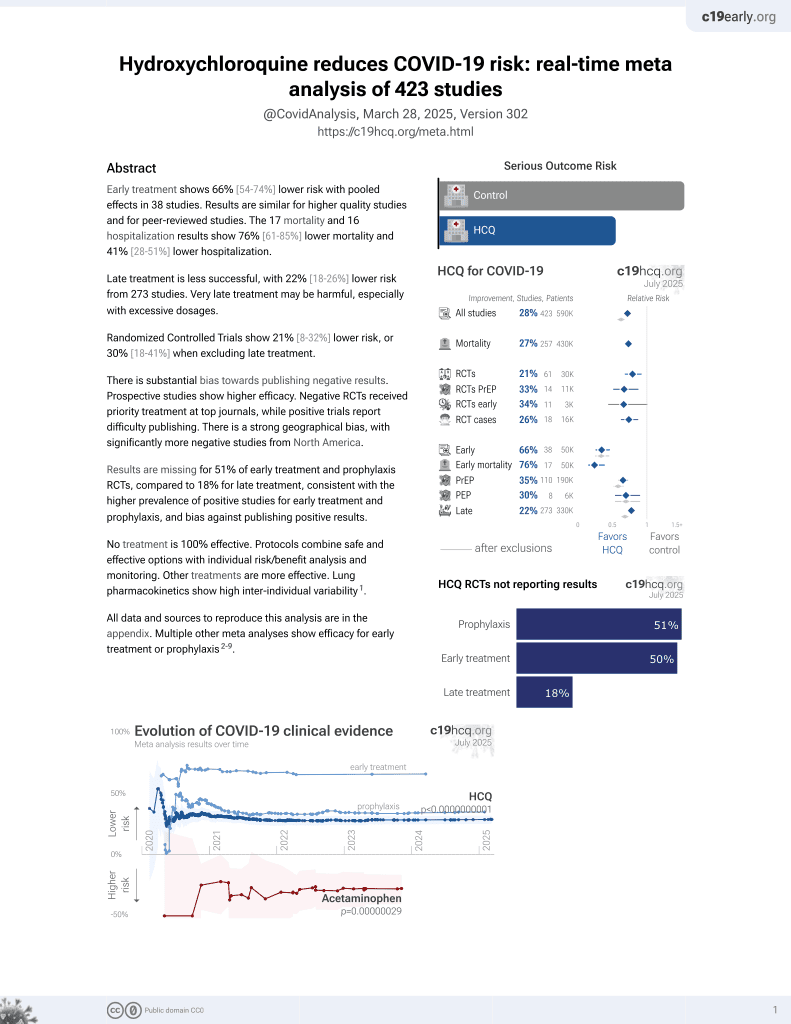
1st treatment shown to reduce risk in March 2020, now with p < 0.0000000001 from 427 studies, used in 59 countries.

No treatment is 100% effective.
Protocols combine treatments.

Early results from a very small trial, reported within the application for a later trial. Very minimal details are provided, but we include this as the earliest published result. For COVID-19 patients with pneumonia the viral negative conversion rate was 50% (5/10) with CQ versus 20% (3/15) with lopinavir/ritonavir.
Standard of Care (SOC) for COVID-19 in the study country, China, is average with moderate efficacy for approved treatments1.
This study is excluded in the after exclusion results of meta-analysis: minimal details provided.
OutcomeImprovementEffect · pTreatmentControl
risk of no viral clearance 37.5% lower · RR 0.62 · p = 0.17 37.5% lowerRR 0.62p = 0.17 5 of 10 (50.0%) 12 of 15 (80.0%) treatment 5 of 10 (50.0%), control 12 of 15 (80.0%)NNT 3.3

Effect extraction follows pre-specified rules prioritizing more serious outcomes. Submit updates.

Xia et al., 11 Feb 2020, retrospective, China, preprint, 1 author.

Protocol efficacy and cost by country

Treatment protocols varied widely

November 2026
Efficacy of protocol
SeychellesSCIcelandISBelizeBZMaltaMTLuxembourgLUMontenegroMEBhutanBTGuyanaGYComorosKMFijiFJDjiboutiDJCyprusCYMauritiusMUEstoniaEETrinidad and TobagoTTEquatorial GuineaGQBahrainBHLatviaLVGuinea-BissauGWSloveniaSINorth MacedoniaMKLesothoLSGabonGABotswanaBWGambiaGMNamibiaNALithuaniaLTAlbaniaALQatarQAJamaicaJMArmeniaAMMongoliaMNBosnia and HerzegovinaBAUruguayUYEritreaERGeorgiaGECroatiaHRPanamaPAMauritaniaMRNew ZealandNZCentral African RepublicCFIrelandIELiberiaLRCosta RicaCRNorwayNOSlovakiaSKCongoCGFinlandFIDenmarkDKSingaporeSGEl SalvadorSVKyrgyzstanKGNicaraguaNILebanonLBLibyaLYBulgariaBGParaguayPYHong KongHKSierra LeoneSLTogoTGSwitzerlandCHIsraelILSerbiaRSPapua New GuineaPGAustriaATBelarusBYTajikistanTJHungaryHUUnited Arab EmiratesAEHondurasHNSwedenSEAzerbaijanAZPortugalPTJordanJOGreeceGRCzechiaCZDominican RepublicDOSouth SudanSSCubaCUHaitiHTBelgiumBEBoliviaBOTunisiaTNBurundiBIBeninBJRwandaRWGuineaGNZimbabweZWChadTDCambodiaKHSenegalSNNetherlandsNLSyriaSYEcuadorECGuatemalaGTZambiaZMKazakhstanKZMalawiMWRomaniaROMaliMLBurkina FasoBFSri LankaLKTaiwanTWNigerNEAustraliaAUCôte d'IvoireCICameroonCMMadagascarMGVenezuelaVENepalNPYemenYEGhanaGHMozambiqueMZMalaysiaMYAngolaAOPeruPEUzbekistanUZSaudi ArabiaSAMoroccoMACanadaCAPolandPLAfghanistanAFIraqIQUkraineUASudanSDAlgeriaDZArgentinaARUgandaUGSpainESColombiaCOSouth KoreaKRKenyaKEMyanmarMMSouth AfricaZAItalyITFranceFRUKGBThailandTHGermanyDEIranIRTurkeyTRDR CongoCDVietnamVNEgyptEGPhilippinesPHEthiopiaETJapanJPMexicoMXRussiaRUBangladeshBDNigeriaNGBrazilBRPakistanPKIndonesiaIDUSAUSIndiaINChinaCNmore effective, cheaperless effective, costlier
0%20%40%60%
$0$500$1,000$1,500+
Cost per course

China favored low-cost treatments. The average efficacy of treatments was moderate. Low-cost treatments improve early treatment, and provide complementary/synergistic benefits.

Late treatment
is less effective