Role of Vitamin D Levels in COVID-19 Disease Severity: A Multicenter Retrospective Study from Qatar
Abdelelah S Jazar, Raed B Alalaween, Reem K Al-Saadi, Noora M Aljaffali, Zohair A Al Arabi, Mai A Ghabashi, Firas S Azzeh
Pakistan Journal of Biological Sciences, doi:10.3923/pjbs.2025.640.648
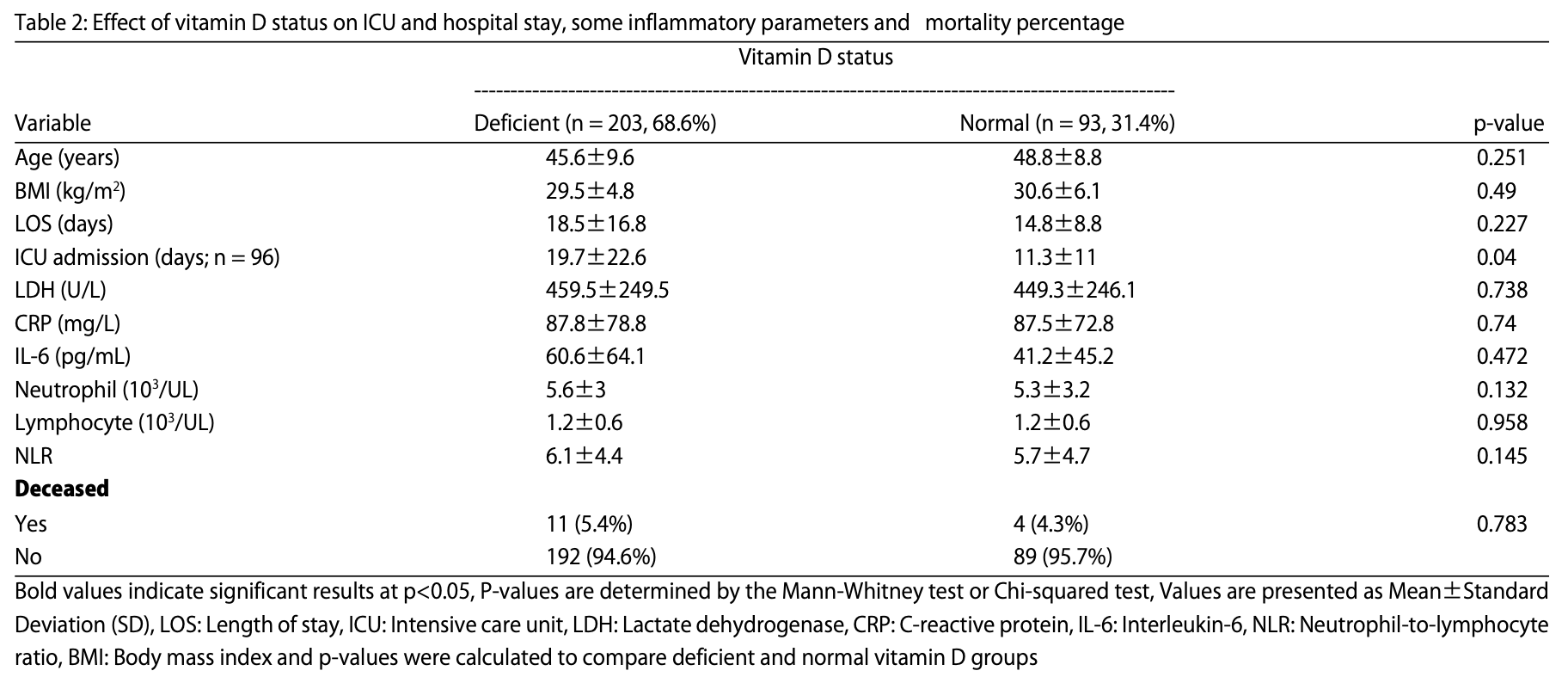
Background and Objective: Up to now, evidence remains inconclusive about how vitamin D (VD) status relates to the severity of COVID-19 among hospitalized patients. The present study aims to explore the impact of VD status on the severity of COVID-19 among hospitalized patients in Qatar and examine its effects on health factors related to the disease. Materials and Methods: A retrospective, cross-sectional, multicenter study was conducted at Hamad Medical Corporation in Qatar from March, 2020 to May, 2021. Demographics, laboratory values, comorbidities, clinical outcomes and some inflammatory markers were retrieved from the hospitalʼs system. The severity of COVID-19 disease was determined by an elevated neutrophil-lymphocyte ratio (NLR). A patient with VD levels less than 20 ng/mL was considered deficient. Data were analyzed using SPSS v22, with significance set at p<0.05, employing Mann-Whitney, Chi-squared and correlation tests as appropriate. Results: The VD deficiency was common (68.6%), with longer ICU stays observed in deficient patients compared to those with normal VD status (19.7 vs. 11.2; p = 0.04). There was a trend of higher NLR with lower VD levels. No significant difference in interleukin-6 levels was found between the deficient and sufficient VD groups (60.6±64.1 vs. 41.2±45.2 pg/mL; p = 0.472). Conclusion: This study highlights the link between VD status and COVID-19 disease severity. The findings suggest that suboptimal levels of VD in COVID-19 patients may be potentially associated with increased length of stay in the ICU and have a minor impact on the pro-inflammatory state.
References
Adami, Giollo, Fassio, Benini, Bertoldo, Vitamin D and disease severity in coronavirus disease 19 (COVID-19), Reumatismo
Alkhafaji, Al Argan, Albaker, Al Elq, Al-Hariri, The impact of vitamin D level on the severity and outcome of hospitalized patients with COVID-19 disease, Int. J. Gen. Med
Bassatne, Basbous, Chakhtoura, Zein, Rahme et al., The link between COVID-19 and vitamin D (VIVID): A systematic review and meta-analysis, Metabolism,
doi:10.1016/j.metabol.2021.154753Begum, Mirghani, The role of vitamin D in COVID-19 survival and prevention: A meta-analysis, Sudan J. Med. Sci
Benskin, A basic review of the preliminary evidence that COVID-19 risk and severity is increased in vitamin D deficiency, Front. Public Health,
doi:10.3389/fpubh.2020.00513Carmeliet, Dermauw, Bouillon, Vitamin D signaling in calcium and bone homeostasis: A delicate balance, Best Pract. Res. Clin. Endocrinol. Metab
Chen, Li, Zheng, Zhou, Liu, Factors associated with duration of hospital stay and complications in patients with COVID-19, J. Public Health Emerg
Demir, Demir, Aygun, Vitamin D deficiency is associated with COVID 19 positivity and severity of the disease, J. Med. Virol
Dhar, Vishnupriyan, Damodar, Gujar, Das, IL-6 and IL-10 as predictors of disease severity in COVID-19 patients: Results from meta-analysis and regression, Heliyon,
doi:10.1016/j.heliyon.2021.e06155Di Filippo, Uygur, Locatelli, Nannipieri, Frara et al., Low vitamin D levels predict outcomes of COVID-19 in patients with both severe and non-severe disease at hospitalization, Endocrine
Ebrahimzadeh, Mohseni, Narimani, Ebrahimzadeh, Kazemi, Association between vitamin D status and risk of COVID-19 in-hospital mortality: A systematic review and meta-analysis of observational studies, Crit. Rev. Food Sci. Nutr
Han, Ma, Li, Liu, Zhao, Profiling serum cytokines in COVID-19 patients reveals IL-6 and IL-10 are disease severity predictors, Emerging Microbes Infect
Hekmatnia, Rahmani, Feili, Ebrahimzadeh, A review of the effect of COVID-19 on immune responses of the body, J. Fam. Med. Primary Care
Hernández, Nan, Fernandez-Ayala, García-Unzueta, Hernández-Hernández, Vitamin D status in hospitalized patients with SARS-CoV-2 infection, J. Clin. Endocrinol. Metab
Herold, Jurinovic, Arnreich, Lipworth, Hellmuth, Elevated levels of IL-6 and CRP predict the need for mechanical ventilation in COVID-19, J. Allergy Clin. Immunol
Hopefl, Ben-Eltriki, Deb, Association between vitamin D levels and inflammatory markers in COVID-19 patients: A meta-analysis of observational studies, J. Pharm. Pharm. Sci
Khojah, Ahmed, Al-Thagfan, Alahmadi, Abdou, The impact of serum levels of vitamin D3 and its metabolites on the prognosis and disease severity of COVID-19, Nutrients
Konikowska, Kiliñ-Pstrusi½ska, Matera-Witkiewicz, Kujawa, Adamik, Association of serum vitamin D concentration with the final course of hospitalization in patients with COVID-19, Front. Immunol,
doi:10.3389/fimmu.2023.1231813Luo, Liao, Shen, Li, Cheng, Vitamin D deficiency is associated with COVID-19 incidence and disease severity in Chinese people, J. Nutr
Mallah, Ghorab, Al-Salmi, Abdellatif, Tharmaratnam, COVID-19: Breaking down a global health crisis, Ann. Clin. Microbiol. Antimicrob
Mcelvaney, Mcevoy, Mcelvaney, Carroll, Murphy, Characterization of the inflammatory response to severe COVID-19 illness, Am. J. Respir. Crit. Care Med
Nielsen, Junker, Boelt, Cohen, Munger, Vitamin D status and severity of COVID-19, Sci. Rep
Pereira, Damascena, Azevedo, De Almeida Oliveira, Da Mota et al., Vitamin D deficiency aggravates COVID-19: Systematic review and meta-analysis, Crit. Rev. Food Sci. Nutr
Pimentel, Vega, Pichard, Low vitamin D levels and increased neutrophil in patients admitted at ICU with COVID-19, Clin. Nutr. ESPEN
Qiu, Bao, Tian, Zhang, Pan, Vitamin D status in hospitalized COVID-19 patients is associated with disease severity and IL-5 production, Virol. J
Radujkovic, Hippchen, Tiwari-Heckler, Dreher, Boxberger et al., Vitamin D deficiency and outcome of COVID-19 patients, Nutrients,
doi:10.3390/nu12092757Rathod, Ahirwar, Banerjee, Joshi, Khot, Association of vitamin D with the severity of disease and mortality in COVID-19, Ann. Afr. Med
Ricci, Pagliuca, Dʼascanio, Innammorato, De Vitis, Circulating vitamin D levels status and clinical prognostic indices in COVID-19 patients, Respir. Res
Shah, Saxena, Mavalankar, Vitamin D supplementation, COVID-19 and disease severity: A metaanalysis, QJM: Int. J. Med
Simadibrata, Calvin, Wijaya, Ibrahim, Neutrophil-to-lymphocyte ratio on admission to predict the severity and mortality of COVID-19 patients: A meta-analysis, Am. J. Emerg. Med
Singh, Nimavat, Singh, Ahmad, Sinha, Prevalence of low level of vitamin D among COVID-19 patients and associated risk factors in India-A hospital-based study, Int. J. Gen. Med
Sîrbe, Rednic, Grama, Pop, An update on the effects of vitamin D on the immune system and autoimmune diseases, Int. J. Mol. Sci,
doi:10.3390/ijms23179784Tekin, Yassa, Birol, Unlu, Sahin, Vitamin D status is not associated with clinical severity of COVID-19 in pregnant women, Eur. J. Nutr
Tentolouris, Achilla, Anastasiou, Eleftheriadou, Tentolouris, The association of vitamin D receptor polymorphisms with COVID-19 severity, Nutrients
Ye, Tang, Liao, Shaw, Deng, Does serum vitamin D level affect COVID-19 infection and its severity?-A case-control study, J. Am. Coll. Nutr
DOI record:
{
"DOI": "10.3923/pjbs.2025.640.648",
"ISSN": [
"1028-8880"
],
"URL": "http://dx.doi.org/10.3923/pjbs.2025.640.648",
"author": [
{
"affiliation": [],
"family": "Jazar",
"given": "Abdelelah S.",
"sequence": "first"
},
{
"affiliation": [],
"family": "Alalaween",
"given": "Raed B.",
"sequence": "additional"
},
{
"affiliation": [],
"family": "Al-Saadi",
"given": "Reem K.",
"sequence": "additional"
},
{
"affiliation": [],
"family": "Aljaffali",
"given": "Noora M.",
"sequence": "additional"
},
{
"affiliation": [],
"family": "Al Arabi",
"given": "Zohair A.",
"sequence": "additional"
},
{
"affiliation": [],
"family": "Ghabashi",
"given": "Mai A.",
"sequence": "additional"
},
{
"ORCID": "https://orcid.org/0000-0002-1400-5465",
"affiliation": [],
"authenticated-orcid": true,
"family": "Azzeh",
"given": "Firas S.",
"sequence": "additional"
}
],
"container-title": "Pakistan Journal of Biological Sciences",
"container-title-short": "Pakistan J. of Biological Sciences",
"content-domain": {
"crossmark-restriction": false,
"domain": [
"scialert.net"
]
},
"created": {
"date-parts": [
[
2025,
12,
24
]
],
"date-time": "2025-12-24T10:43:29Z",
"timestamp": 1766573009000
},
"deposited": {
"date-parts": [
[
2025,
12,
24
]
],
"date-time": "2025-12-24T10:44:01Z",
"timestamp": 1766573041000
},
"indexed": {
"date-parts": [
[
2025,
12,
24
]
],
"date-time": "2025-12-24T10:45:25Z",
"timestamp": 1766573125373,
"version": "3.48.0"
},
"is-referenced-by-count": 0,
"issue": "10",
"issued": {
"date-parts": [
[
2025,
12,
25
]
]
},
"journal-issue": {
"issue": "10",
"published-print": {
"date-parts": [
[
2025,
12,
25
]
]
}
},
"link": [
{
"URL": "https://www.scialert.net/fulltext/?doi=pjbs.2025.640.648",
"content-type": "unspecified",
"content-version": "vor",
"intended-application": "similarity-checking"
}
],
"member": "2297",
"original-title": [],
"page": "640-648",
"prefix": "10.3923",
"published": {
"date-parts": [
[
2025,
12,
25
]
]
},
"published-print": {
"date-parts": [
[
2025,
12,
25
]
]
},
"publisher": "Science Alert",
"reference": [
{
"DOI": "10.4103/jfmpc.jfmpc_677_21",
"doi-asserted-by": "publisher",
"key": "ref1"
},
{
"DOI": "10.1093/qjmed/hcab009",
"doi-asserted-by": "publisher",
"key": "ref2"
},
{
"DOI": "10.1016/J.BEEM.2015.06.001",
"doi-asserted-by": "publisher",
"key": "ref3"
},
{
"DOI": "10.1093/JN/NXAA332",
"doi-asserted-by": "publisher",
"key": "ref4"
},
{
"DOI": "10.1080/10408398.2020.1841090",
"doi-asserted-by": "publisher",
"key": "ref5"
},
{
"DOI": "10.4081/REUMATISMO.2020.1333",
"doi-asserted-by": "publisher",
"key": "ref6"
},
{
"DOI": "10.1080/07315724.2020.1826005",
"doi-asserted-by": "publisher",
"key": "ref7"
},
{
"DOI": "10.2147/IJGM.S346169",
"doi-asserted-by": "publisher",
"key": "ref8"
},
{
"DOI": "10.1007/S00394-021-02709-7",
"doi-asserted-by": "publisher",
"key": "ref9"
},
{
"DOI": "10.1016/J.CLNESP.2021.05.021",
"doi-asserted-by": "publisher",
"key": "ref10"
},
{
"DOI": "10.1002/jmv.26832",
"doi-asserted-by": "publisher",
"key": "ref11"
},
{
"DOI": "10.1210/clinem/dgaa733",
"doi-asserted-by": "publisher",
"key": "ref12"
},
{
"DOI": "10.2147/IJGM.S309003",
"doi-asserted-by": "publisher",
"key": "ref13"
},
{
"DOI": "10.18433/jpps32518",
"doi-asserted-by": "publisher",
"key": "ref14"
},
{
"DOI": "10.4103/aam.aam_21_22",
"doi-asserted-by": "publisher",
"key": "ref15"
},
{
"DOI": "10.1007/s12020-023-03331-9",
"doi-asserted-by": "publisher",
"key": "ref16"
},
{
"DOI": "10.1080/10408398.2021.2012419",
"doi-asserted-by": "publisher",
"key": "ref17"
},
{
"DOI": "10.1016/j.ajem.2021.01.006",
"doi-asserted-by": "publisher",
"key": "ref18"
},
{
"DOI": "10.1080/22221751.2020.1770129",
"doi-asserted-by": "publisher",
"key": "ref19"
},
{
"DOI": "10.1164/rccm.202005-1583OC",
"doi-asserted-by": "publisher",
"key": "ref20"
},
{
"DOI": "10.1016/j.jaci.2020.05.008",
"doi-asserted-by": "publisher",
"key": "ref21"
},
{
"DOI": "10.18502/sjms.v19i1.15776",
"doi-asserted-by": "publisher",
"key": "ref22"
}
],
"reference-count": 22,
"references-count": 22,
"relation": {},
"resource": {
"primary": {
"URL": "https://www.scialert.net/abstract/?doi=pjbs.2025.640.648"
}
},
"score": 1,
"short-title": [],
"source": "Crossref",
"subject": [],
"subtitle": [],
"title": "Role of Vitamin D Levels in COVID-19 Disease Severity: A Multicenter Retrospective Study from Qatar",
"type": "journal-article",
"update-policy": "https://doi.org/10.3923/crossmark-policy",
"volume": "28"
}