High-dose vitamin D supplementation in patients with severe acute respiratory syndrome coronavirus 2 pneumonia hospitalized in a polyvalent intensive care unit: A retrospective cohort study
et al., Nutrition in Clinical Practice, doi:10.1002/ncp.11277, Feb 2025
Vitamin D for COVID-19
8th treatment shown to reduce risk in
October 2020, now with p < 0.00000000001 from 126 studies, recognized in 18 countries.
No treatment is 100% effective. Protocols
combine treatments.
6,300+ studies for
210+ treatments. c19early.org
|
Retrospective ICU patients in Portugal, showing significantly lower mortality with vitamin D treatment.
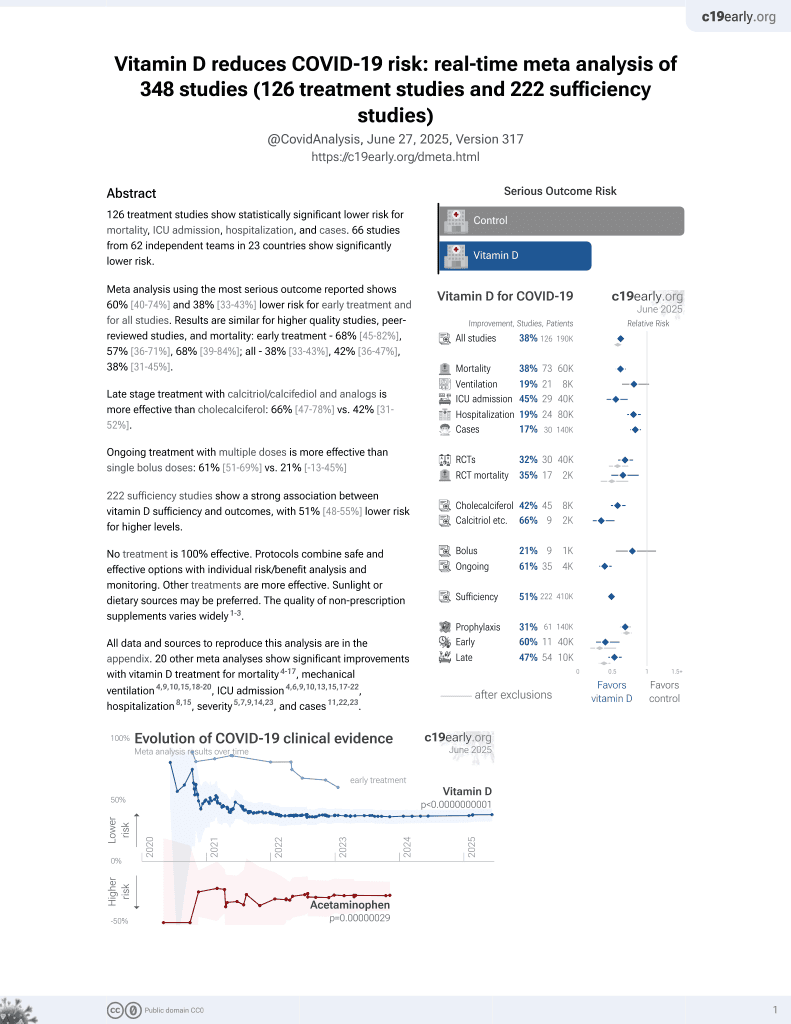
This is the 125th of 126 COVID-19 controlled studies for vitamin D, which collectively show efficacy with p<0.0000000001 (1 in 155 septillion).
30 studies are RCTs, which show efficacy with p=0.0000032.
Standard of Care (SOC) for COVID-19 in the study country,
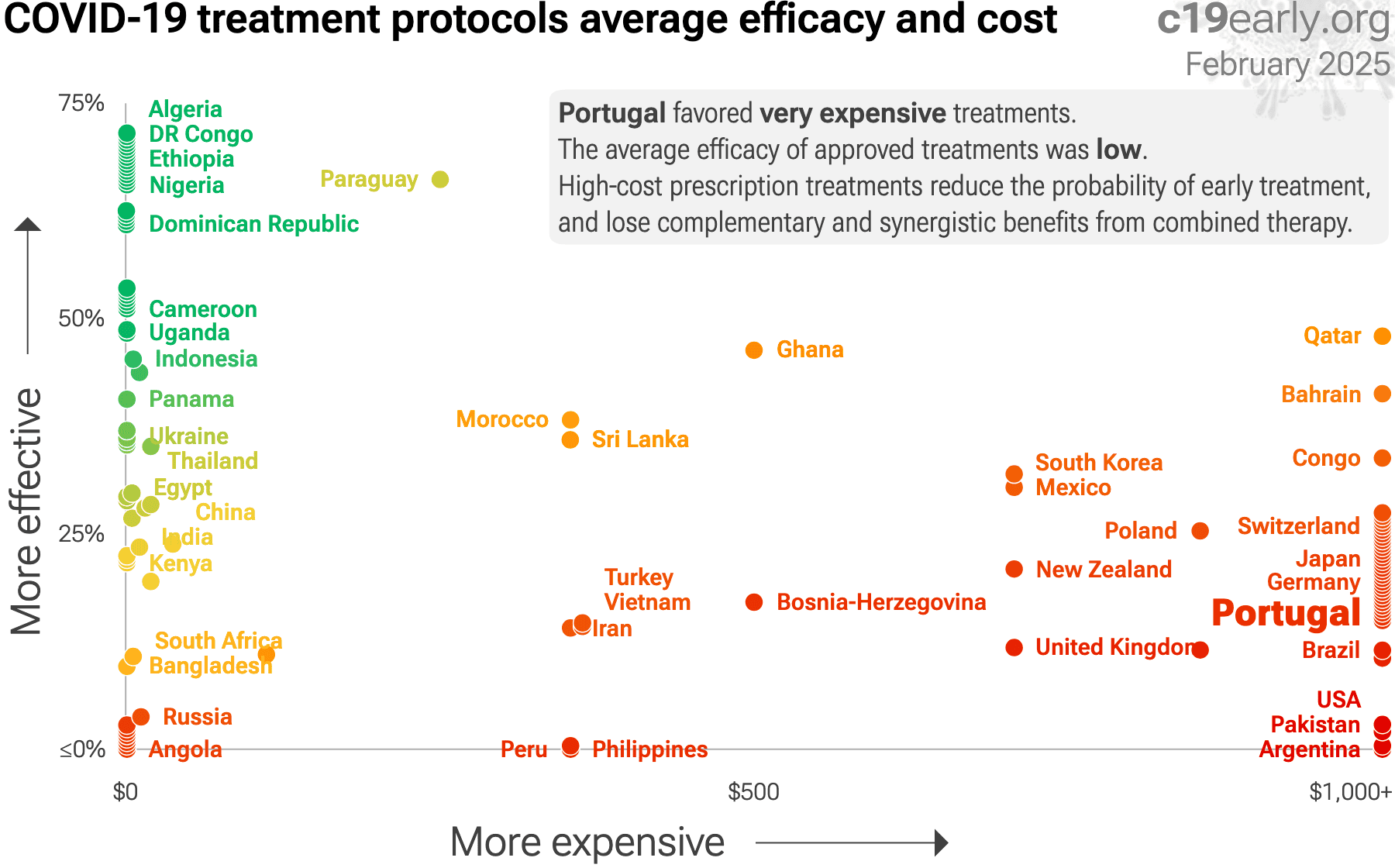
Portugal, is very poor with very low average efficacy for approved treatments1.
Only expensive, high-profit treatments were approved for early treatment. Low-cost treatments were excluded, reducing the probability of early treatment due to access and cost barriers, and eliminating complementary and synergistic benefits seen with many low-cost treatments.
This may explain in part the very high mortality seen in this study.
Results may differ in countries with improved SOC.
|
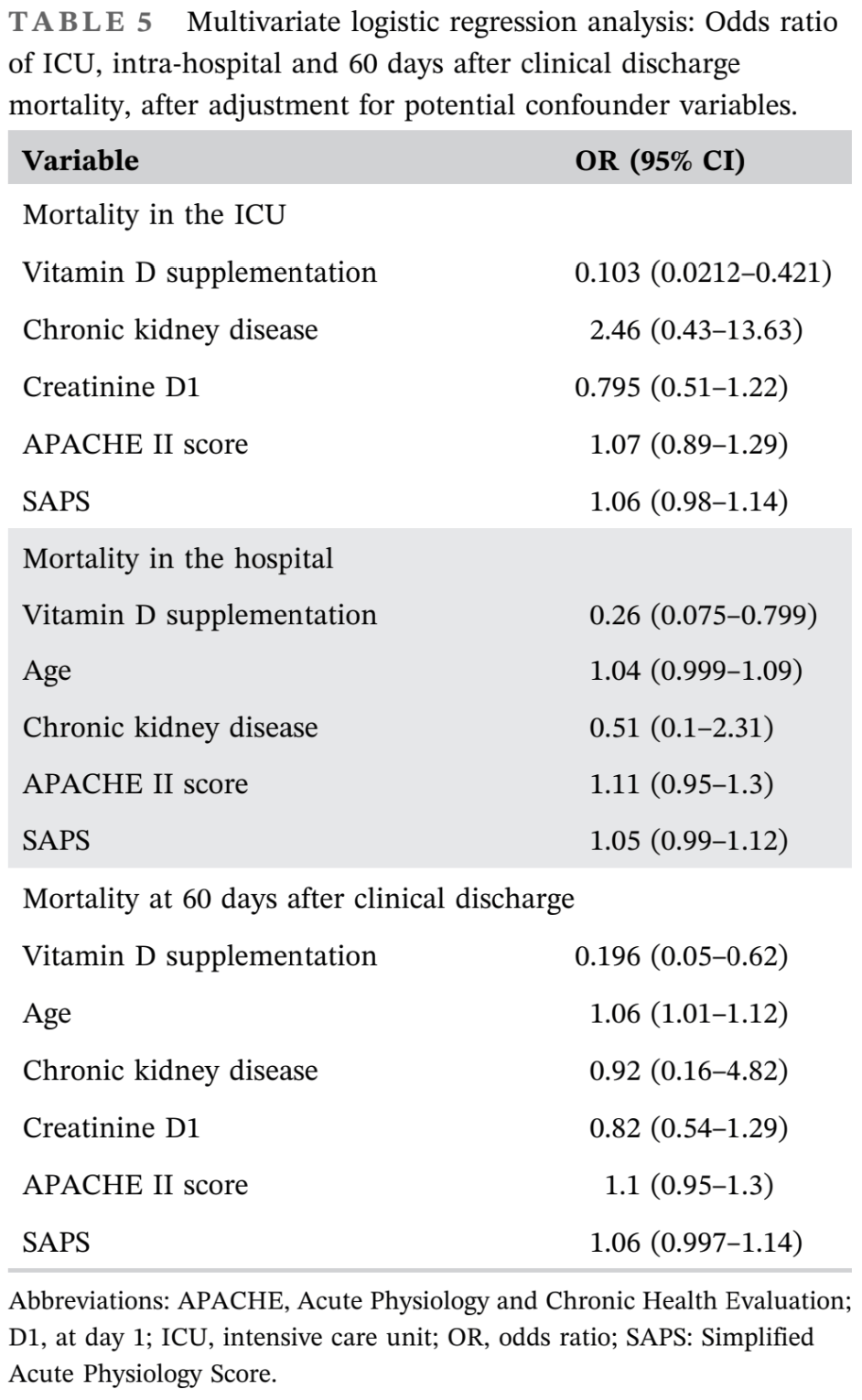
risk of death, 73.2% lower, RR 0.27, p = 0.02, treatment 9 of 72 (12.5%), control 18 of 54 (33.3%), NNT 4.8, adjusted per study, odds ratio converted to relative risk, 60 days after discharge, multivariable.
|
|
risk of death, 66.7% lower, RR 0.33, p = 0.04, treatment 9 of 72 (12.5%), control 16 of 54 (29.6%), NNT 5.8, adjusted per study, odds ratio converted to relative risk, in hospital, multivariable.
|
|
risk of death, 86.9% lower, RR 0.13, p = 0.006, treatment 3 of 72 (4.2%), control 13 of 54 (24.1%), NNT 5.0, adjusted per study, odds ratio converted to relative risk, in ICU, multivariable.
|
| Effect extraction follows pre-specified rules prioritizing more serious outcomes. Submit updates |
Vasconcelos et al., 19 Feb 2025, retrospective, Portugal, peer-reviewed, 3 authors, study period 14 April, 2020 - 31 October, 2020, dosage 125,000IU days 1-2.