Evaluating the Efficacy of Convalescent Plasma in Symptomatic Outpatients Infected With COVID-19

Van Hise et al., NCT04438057, NCT04438057, Aug 2021
Early treatmentRCT · NCT04438057 · 103 patients · USA
Conv. Plasma for COVID-19
Van Hise et al. NCT04438057 · August 2021
Outcome
Improvement
Relative Risk · 95% CI
00.511.52+
← Convalescent
Plasma reduces risk
Increased risk →
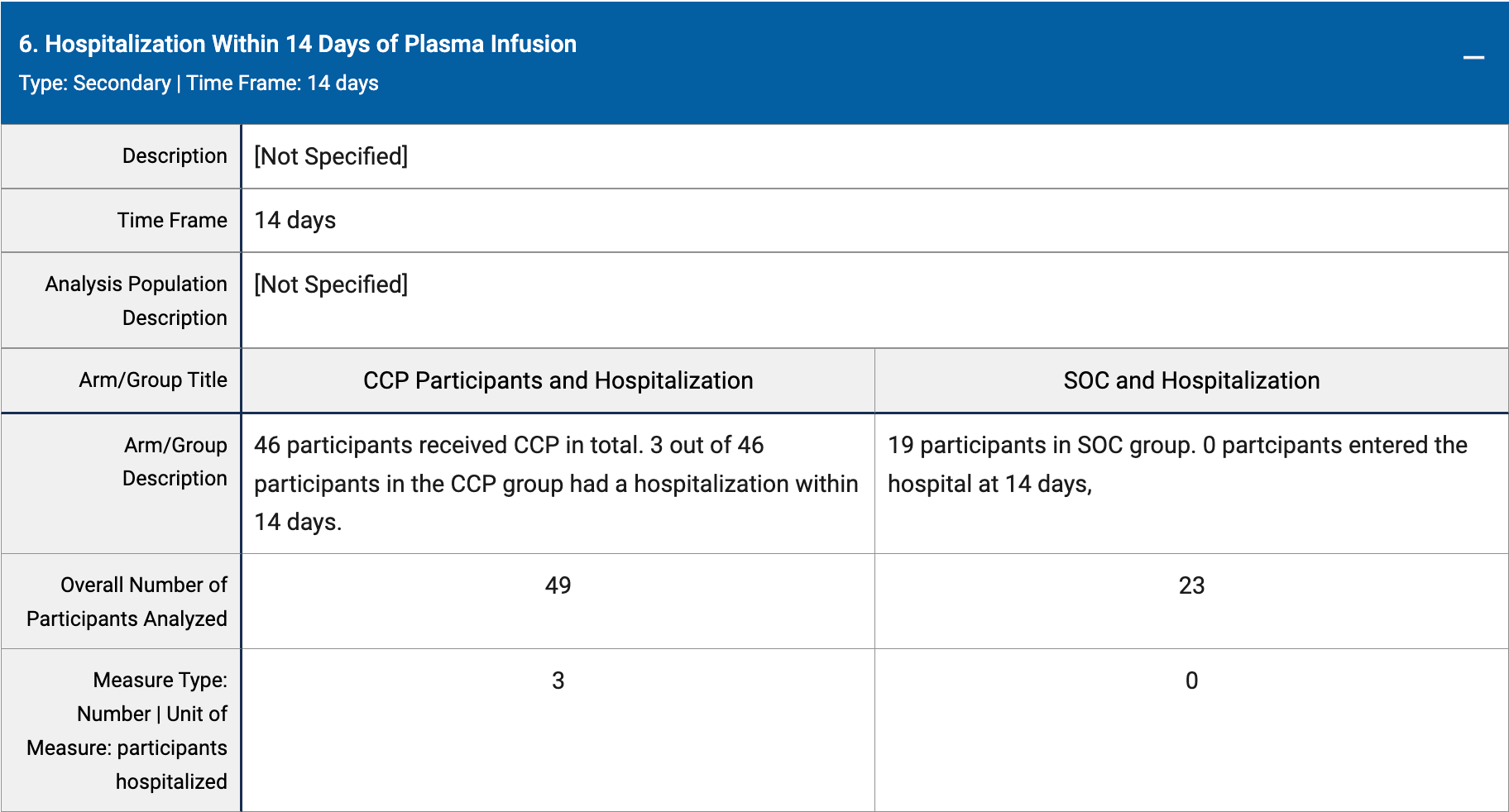
Higher hospitalization with treatment
Not statistically significant · p = 0.55

RCT 72 outpatients in the USA showing no significant difference with convalescent plasma treatment.
Standard of Care (SOC) for COVID-19 in the study country, the USA, is very poor with very low average efficacy for approved treatments1. Only expensive, high-profit treatments were approved for early treatment. Low-cost treatments were excluded, reducing the probability of early treatment due to access and cost barriers, and eliminating complementary and synergistic benefits seen with many low-cost treatments.
OutcomeImprovementEffect · pTreatmentControl
risk of hospitalization 440.8% higher · RR 5.41 · p = 0.55 440.8% higherRR 5.41p = 0.55 3 of 49 (6.1%) 0 of 23 (0.0%) treatment 3 of 49 (6.1%), control 0 of 23 (0.0%)continuity correction due to zero events

Effect extraction follows pre-specified rules prioritizing more serious outcomes. Submit updates.

Van Hise et al., 12 Aug 2021, Randomized Controlled Trial, USA, preprint, 1 author, trial NCT04438057 (history). Contact: vanhise@midcusa.com.

Protocol efficacy and cost by country

Treatment protocols varied widely

November 2026
Efficacy of protocol
SeychellesSCIcelandISBelizeBZMaltaMTLuxembourgLUMontenegroMEBhutanBTGuyanaGYComorosKMFijiFJDjiboutiDJCyprusCYMauritiusMUEstoniaEETrinidad and TobagoTTEquatorial GuineaGQBahrainBHLatviaLVGuinea-BissauGWSloveniaSINorth MacedoniaMKLesothoLSGabonGABotswanaBWGambiaGMNamibiaNALithuaniaLTAlbaniaALQatarQAJamaicaJMArmeniaAMMongoliaMNBosnia and HerzegovinaBAUruguayUYEritreaERGeorgiaGECroatiaHRPanamaPAMauritaniaMRNew ZealandNZCentral African RepublicCFIrelandIELiberiaLRCosta RicaCRNorwayNOSlovakiaSKCongoCGFinlandFIDenmarkDKSingaporeSGEl SalvadorSVKyrgyzstanKGNicaraguaNILebanonLBLibyaLYBulgariaBGParaguayPYHong KongHKSierra LeoneSLTogoTGSwitzerlandCHIsraelILSerbiaRSPapua New GuineaPGAustriaATBelarusBYTajikistanTJHungaryHUUnited Arab EmiratesAEHondurasHNSwedenSEAzerbaijanAZPortugalPTJordanJOGreeceGRCzechiaCZDominican RepublicDOSouth SudanSSCubaCUHaitiHTBelgiumBEBoliviaBOTunisiaTNBurundiBIBeninBJRwandaRWGuineaGNZimbabweZWChadTDCambodiaKHSenegalSNNetherlandsNLSyriaSYEcuadorECGuatemalaGTZambiaZMKazakhstanKZMalawiMWRomaniaROMaliMLBurkina FasoBFSri LankaLKTaiwanTWNigerNEAustraliaAUCôte d'IvoireCICameroonCMMadagascarMGVenezuelaVENepalNPYemenYEGhanaGHMozambiqueMZMalaysiaMYAngolaAOPeruPEUzbekistanUZSaudi ArabiaSAMoroccoMACanadaCAPolandPLAfghanistanAFIraqIQUkraineUASudanSDAlgeriaDZArgentinaARUgandaUGSpainESColombiaCOSouth KoreaKRKenyaKEMyanmarMMSouth AfricaZAItalyITFranceFRUKGBThailandTHGermanyDEIranIRTurkeyTRDR CongoCDVietnamVNEgyptEGPhilippinesPHEthiopiaETJapanJPMexicoMXRussiaRUBangladeshBDNigeriaNGBrazilBRPakistanPKIndonesiaIDIndiaINChinaCNUSAUSmore effective, cheaperless effective, costlier
0%20%40%60%
$0$500$1,000$1,500+
Cost per course

USA favored high-profit treatments. The average efficacy of treatments was very low. High-cost protocols reduce early treatment, and forgo complementary/synergistic benefits.
