Early administration of neutralising monoclonal antibodies and post-acute sequelae of COVID-19
et al., International Journal of Infectious Diseases, doi:10.1016/j.ijid.2026.108435, Jan 2026
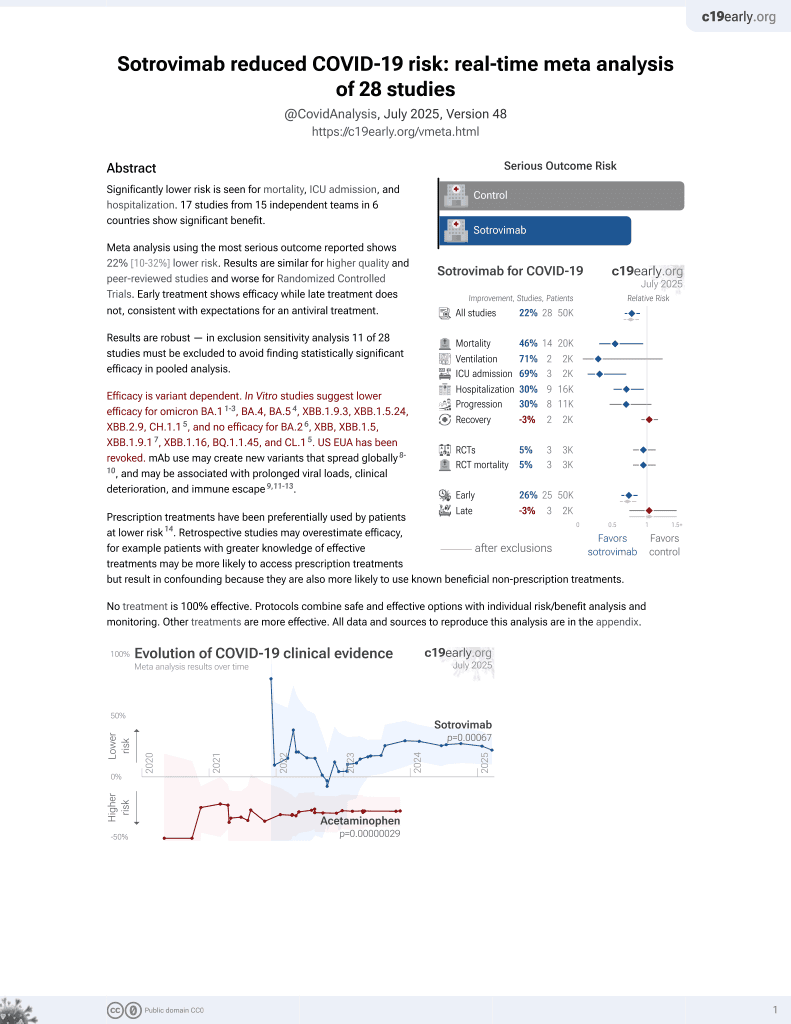
Sotrovimab for COVID-19
45th treatment shown to reduce risk in
August 2022, now with p = 0.00048 from 29 studies, recognized in 42 countries.
Efficacy is variant dependent.
No treatment is 100% effective.
Protocols combine treatments.
Retrospective 19,689 hospitalized COVID-19 patients in Singapore showing no significant reduction in overall post-acute sequelae of COVID-19 (PASC) with early monoclonal antibody treatment, but increased risk of autoimmune complications.
Potential mechanisms for the increased risk include:
- prolonged antibody exposure: unlike antivirals which clear in days, neutralising mAbs have longer half-lives. This persistence may facilitate immune complex formation, Fc receptor-mediated immune activation, or complement activation.
- amplification of processes: exogenously administered antibodies may amplify or prolong immune-mediated processes beyond the acute phase of infection, leading to a breakdown of immune tolerance.
Efficacy is variant dependent. In Vitro studies predict lower efficacy for BA.11-3, BA.4, BA.54, XBB.1.9.3, XBB.1.5.24, XBB.2.9, CH.1.15, and no efficacy for BA.26, XBB, XBB.1.5, ХВВ.1.9.17, XBB.1.16, BQ.1.1.45, and CL.15. US EUA has been revoked.
Study covers casirivimab/imdevimab, tixagevimab/cilgavimab, and sotrovimab.

1.
Liu et al., Striking Antibody Evasion Manifested by the Omicron Variant of SARS-CoV-2, bioRxiv, doi:10.1101/2021.12.14.472719.
2.
Sheward et al., Variable loss of antibody potency against SARS-CoV-2 B.1.1.529 (Omicron), bioRxiv, doi:10.1101/2021.12.19.473354.
3.
VanBlargan et al., An infectious SARS-CoV-2 B.1.1.529 Omicron virus escapes neutralization by several therapeutic monoclonal antibodies, bioRxiv, doi:10.1101/2021.12.15.472828.
4.
Haars et al., Prevalence of SARS-CoV-2 Omicron Sublineages and Spike Protein Mutations Conferring Resistance against Monoclonal Antibodies in a Swedish Cohort during 2022–2023, Microorganisms, doi:10.3390/microorganisms11102417.
5.
Pochtovyi et al., In Vitro Efficacy of Antivirals and Monoclonal Antibodies against SARS-CoV-2 Omicron Lineages XBB.1.9.1, XBB.1.9.3, XBB.1.5, XBB.1.16, XBB.2.4, BQ.1.1.45, CH.1.1, and CL.1, Vaccines, doi:10.3390/vaccines11101533.
Ngiam et al., 31 Jan 2026, retrospective, Singapore, peer-reviewed, 13 authors, study period 1 January, 2020 - 31 December, 2024.
Contact: nicholas_ngiam@nuhs.edu.sg, ian.wee.l.e@singhealth.com.sg, juetao.lim@ntu.edu.sg, enoch_xh_loy@ncid.sg, matthew.koh@mohh.com.sg, an_ting_tay@moh.gov.sg, huei_xin_lou@moh.gov.sg, phyllis_kim@moh.gov.sg, calvin_chiew@cda.gov.sg, barnaby.young@nhghealth.com.sg, shawn.vasoo@nhghealth.com.sg, david.lye@nhghealth.com.sg, kelvin_bryan_tan@moh.gov.sg, nicknjh1311@hotmail.com.
Early administration of neutralising monoclonal antibodies and post-acute sequelae of COVID-19
International Journal of Infectious Diseases, doi:10.1016/j.ijid.2026.108435
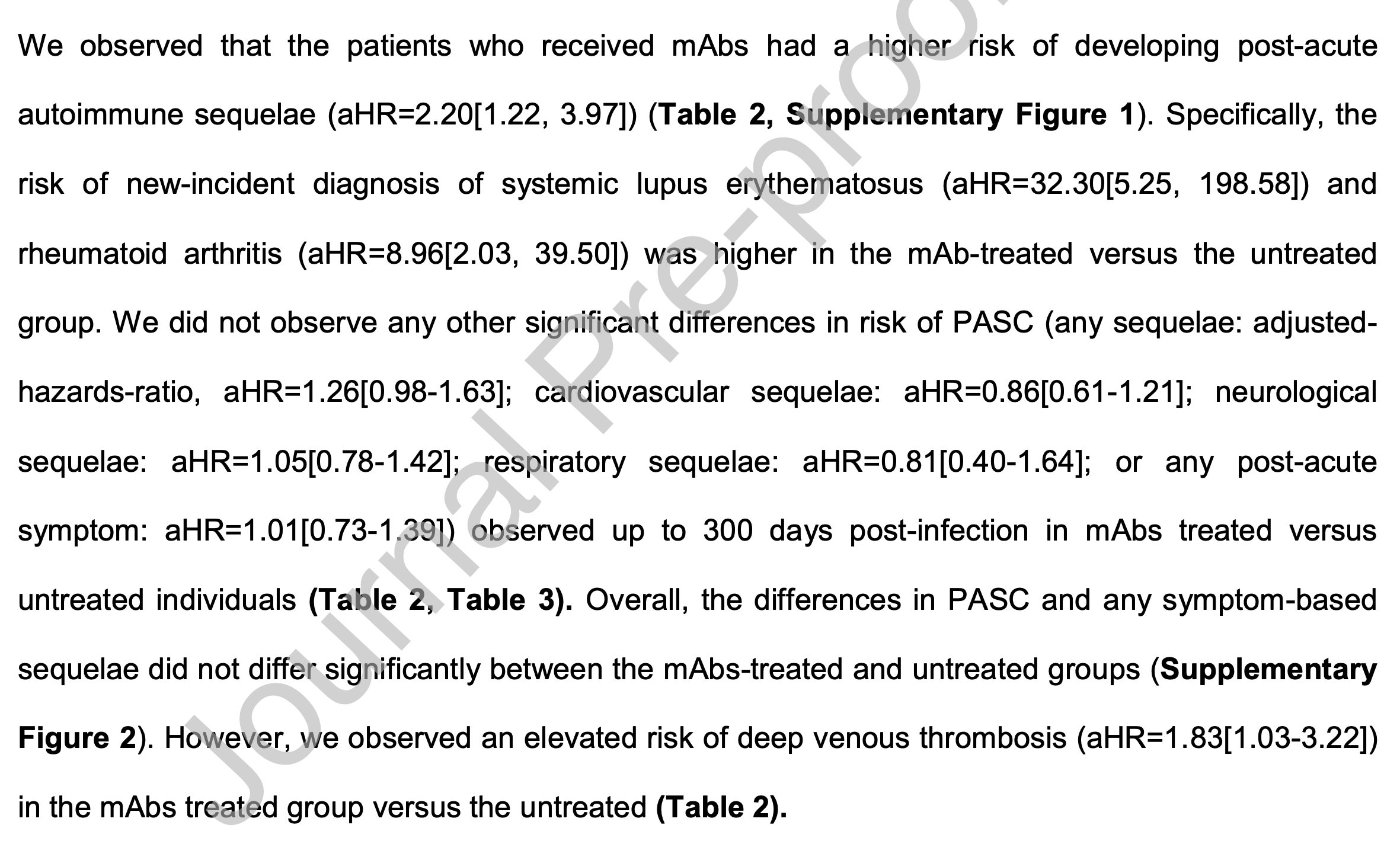
Objectives Post-acute sequelae of COVID-19 (PASC) are more common in unvaccinated or immunocompromised individuals. In Singapore, neutralising monoclonal antibodies (mAbs) were offered early in the disease course to such high-risk patients. We evaluated the impact of early mAb use on the risk of post-acute multi-system complications and symptoms.
Methods Using national COVID-19 registries and healthcare claims data, we conducted a retrospective cohort study including all Singaporeans who were unvaccinated, partially vaccinated, or immunocompromised at the time of SARS-CoV-2 infection between July 2021 and December 2022. Individuals were stratified by receipt of mAbs. Overlap weighting was applied to balance baseline characteristics. Competing risks regression was used to compare outcomes from 31 to 300 days postinfection, adjusted for demographics, vaccination status, and comorbidities.
Results Of 19,689 eligible hospitalised individuals, 6.9% received early mAb therapy. While mAb treatment had no significant impact on overall post-acute sequelae (aHR for any sequelae:1.26[0.98-1.63]), we observed an increased risk of autoimmune ), particularly systemic lupus erythematosus and rheumatoid arthritis). There was also elevated risk of deep venous thrombosis (aHR=1. 83[1.03-3.22]), but this was no longer significant after adjusting for prior healthcare utilisation.
Conclusions Early mAb therapy did not significantly alter overall PASC risk but was associated with increased autoimmune complications. These findings may highlight the need for long-term safety monitoring in future mAb trials for SARS-CoV-2.
Research in Context Evidence before this study We searched PubMed, Embase, and the Cochrane Library for studies published between Jan 1, 2020, and Dec 31, 2024, using the search terms ("COVID-19" OR "SARS-CoV-2") AND ("monoclonal antibody" OR "casirivimab" OR "imdevimab" OR "sotrovimab" OR "tixagevimab" OR "cilgavimab") AND ("long COVID" OR "post-acute sequelae" OR "PASC" OR "autoimmune" OR "thrombosis"), without language restrictions. We also reviewed reference lists of relevant articles. Prior studies have demonstrated that early treatment with neutralising monoclonal antibodies (mAbs) such as casirivimab/imdevimab, sotrovimab, or tixagevimab/cilgavimab reduced short-term outcomes such as hospitalisation or death in high-risk individuals with COVID-19. However, few studies have examined their long-term safety or the risk of post-acute sequelae of COVID-19 (PASC). Data on autoimmune or thrombotic complications following mAb treatment remain sparse and largely limited to pharmacovigilance reports or small case series. No large population-based studies have comprehensively assessed the association between early mAb use and subsequent risk of PASC across multiple organ systems.
Added value of this study To our..
Declaration of Interest Statement The authors declare that they have no known competing financial interests or personal relationships that could have appeared to influence the work reported in this paper.
References
Abani, Casirivimab and imdevimab in patients admitted to hospital with COVID-19 (RECOVERY): a randomised, controlled, open-label, platform trial, The Lancet, doi:10.1016/S0140-6736(22)00163-5
Aziz, Siles, Kelley, Wylie, Melamed et al., Clinical characteristics of Long COVID patients presenting to a dedicated academic post-COVID-19 clinic in Central Texas, Sci Rep, doi:10.1038/s41598-023-48502-w
Conrad, Incidence, prevalence, and co-occurrence of autoimmune disorders over time and by age, sex, and socioeconomic status: a population-based cohort study of 22 million individuals in the UK, The Lancet, doi:10.1016/S0140-6736(23)00457-9
Ely, Brown, Fineberg, Long Covid Defined, N Engl J Med, doi:10.1056/NEJMsb2408466
Evering, Post-acute COVID-19 outcomes including participant-reported long COVID: amubarvimab/romlusevimab versus placebo in the ACTIV-2 trial, EClinicalMedicine, doi:10.1016/j.eclinm.2024.102787
Focosi, Franchini, Casadevall, Maggi, An update on the anti-spike monoclonal antibody pipeline for SARS-CoV-2, Clinical Microbiology and Infection, doi:10.1016/j.cmi.2024.04.012
Forte-Soto, Safety, Tolerability and Pharmacokinetics of Half-Life Extended Severe Acute Respiratory Syndrome Coronavirus 2 Neutralizing Monoclonal Antibodies AZD7442 (Tixagevimab-Cilgavimab) in Healthy Adults, The Journal of Infectious Diseases, doi:10.1093/infdis/jiad014
Ge, Antibody neutralization of SARS-CoV-2 through ACE2 receptor mimicry, Nat Commun, doi:10.1038/s41467-020-20501-9
Griffin, Mcneil, Okusa, Berrent, Guo et al., Does monoclonal antibody treatment for COVID-19 impact short and long-term outcomes in a large generalisable population? A retrospective cohort study in the USA, BMJ Open, doi:10.1136/bmjopen-2022-069247
Gupta, Early Treatment for Covid-19 with SARS-CoV-2 Neutralizing Antibody Sotrovimab, N Engl J Med, doi:10.1056/NEJMoa2107934
Hamdh, A prospective cohort study assessing the relationship between long-COVID symptom incidence in COVID-19 patients and COVID-19 vaccination, Sci Rep, doi:10.1038/s41598-023-30583-2
Karsten, Köhl, The immunoglobulin, IgG Fc receptor and complement triangle in autoimmune diseases, Immunobiology, doi:10.1016/j.imbio.2012.07.015
Lim, Long-term Cardiovascular, Cerebrovascular, and Other Thrombotic Complications in COVID-19 Survivors: A Retrospective Cohort Study, Clinical Infectious Diseases, doi:10.1093/cid/ciad469
Montastruc, Lafaurie, Flumian, De Canecaude, Increased reporting of venous and arterial thromboembolic events reported with tixagevimab-cilgavimab for coronavirus disease 2019, Clinical Microbiology and Infection, doi:10.1016/j.cmi.2022.11.026
Najjar-Debbiny, Gronich, Weber, Stein, Saliba, Effectiveness of Evusheld in Immunocompromised Patients: Propensity Score-Matched Analysis, Clinical Infectious Diseases, doi:10.1093/cid/ciac855
Opolka-Hoffmann, The impact of immunogenicity on therapeutic antibody pharmacokinetics: A preclinical evaluation of the effect of immune complex formation and antibody effector function on clearance, MAbs, doi:10.1080/19420862.2021.1995929
Ordaya, Razonable, Emerging anti-spike monoclonal antibodies against SARS-CoV-2, Expert Opinion on Biological Therapy, doi:10.1080/14712598.2024.2326647
Płazak, Drabik, SARS-CoV-2 infection and SLE: endothelial dysfunction, atherosclerosis, and thrombosis, Clin Rheumatol, doi:10.1007/s10067-022-06497-1
Serrano, Espinosa, Serrano, Cervera, COVID-19 and the antiphospholipid syndrome, Autoimmunity Reviews, doi:10.1016/j.autrev.2022.103206
Sharif-Askari, Sotrovimab Lowers the Risk of COVID -19 Related Hospitalization or Death in a Large Population Cohort in the United Arab Emirates, Clin Pharma and Therapeutics, doi:10.1002/cpt.2700
Sheward, Neutralisation sensitivity of the SARS-CoV-2 omicron (B.1.1.529) variant: a cross-sectional study, The Lancet Infectious Diseases, doi:10.1016/S1473-3099(22)00129-3
Tan, Factors associated with delayed diagnosis of symptomatic adult COVID-19 cases presenting to primary care: a population-wide study during transition from Delta to Omicron BA.1 in Singapore, The Lancet Regional Health -Western Pacific, doi:10.1016/j.lanwpc.2023.100919
Tan, Lam, Matchar, Zee, Wong, Singapore's health-care system: key features, challenges, and shifts, The Lancet, doi:10.1016/S0140-6736(21)00252-X
Thomas, Scully, Clinical features of thrombosis and bleeding in COVID-19, Blood, doi:10.1182/blood.2021012247
Tonutti, Mechanistic considerations linking SARS-CoV-2 infection, inflammation, and the loss of immune tolerance, Current Opinion in Immunology, doi:10.1016/j.coi.2025.102567
Vanblargan, An infectious SARS-CoV-2 B.1.1.529 Omicron virus escapes neutralization by therapeutic monoclonal antibodies, Nat Med, doi:10.1038/s41591-021-01678-y
Wee, Autoimmune Sequelae After Delta or Omicron Variant SARS-CoV-2 Infection in a Highly Vaccinated Cohort, JAMA Netw Open, doi:10.1001/jamanetworkopen.2024.30983
Wee, Nirmatrelvir/ritonavir treatment and risk for postacute sequelae of COVID-19 in older Singaporeans, Clin Microbiol Infect, doi:10.1016/j.cmi.2024.08.019
Wee, Real-world effectiveness of nirmatrelvir/ritonavir against COVID-19 hospitalizations and severe COVID-19 in community-dwelling elderly Singaporeans during Omicron BA.2, BA.4/5, and XBB transmission, Clinical Microbiology and Infection, doi:10.1016/j.cmi.2023.06.016
Weinreich, REGEN-COV Antibody Combination and Outcomes in Outpatients with Covid-19, N Engl J Med, doi:10.1056/NEJMoa2108163
Xie, Choi, Al-Aly, Association of Treatment With Nirmatrelvir and the Risk of Post-COVID-19 Condition, JAMA Intern Med, doi:10.1001/jamainternmed.2023.0743
Xie, Choi, Al-Aly, Molnupiravir and risk of post-acute sequelae of covid-19: cohort study, BMJ, doi:10.1136/bmj-2022-074572
DOI record:
{
"DOI": "10.1016/j.ijid.2026.108435",
"ISSN": [
"1201-9712"
],
"URL": "http://dx.doi.org/10.1016/j.ijid.2026.108435",
"alternative-id": [
"S1201971226000706"
],
"article-number": "108435",
"assertion": [
{
"label": "This article is maintained by",
"name": "publisher",
"value": "Elsevier"
},
{
"label": "Article Title",
"name": "articletitle",
"value": "Early administration of neutralising monoclonal antibodies and post-acute sequelae of COVID-19"
},
{
"label": "Journal Title",
"name": "journaltitle",
"value": "International Journal of Infectious Diseases"
},
{
"label": "CrossRef DOI link to publisher maintained version",
"name": "articlelink",
"value": "https://doi.org/10.1016/j.ijid.2026.108435"
},
{
"label": "Content Type",
"name": "content_type",
"value": "article"
},
{
"label": "Copyright",
"name": "copyright",
"value": "© 2026 The Author(s). Published by Elsevier Ltd on behalf of International Society for Infectious Diseases."
}
],
"author": [
{
"ORCID": "https://orcid.org/0000-0002-3339-7281",
"affiliation": [],
"authenticated-orcid": false,
"family": "Ngiam",
"given": "Jinghao Nicholas",
"sequence": "first"
},
{
"affiliation": [],
"family": "Wee",
"given": "Liang En",
"sequence": "additional"
},
{
"affiliation": [],
"family": "Lim",
"given": "Jue Tao",
"sequence": "additional"
},
{
"affiliation": [],
"family": "Loy",
"given": "Enoch Xueheng",
"sequence": "additional"
},
{
"affiliation": [],
"family": "Koh",
"given": "Matthew Chung Yi",
"sequence": "additional"
},
{
"affiliation": [],
"family": "Tay",
"given": "An Ting",
"sequence": "additional"
},
{
"affiliation": [],
"family": "Lou",
"given": "Huei Xin",
"sequence": "additional"
},
{
"affiliation": [],
"family": "Kim",
"given": "Phyllis",
"sequence": "additional"
},
{
"affiliation": [],
"family": "Chiew",
"given": "Calvin J",
"sequence": "additional"
},
{
"affiliation": [],
"family": "Young",
"given": "Barnaby Edward",
"sequence": "additional"
},
{
"affiliation": [],
"family": "Vasoo",
"given": "Shawn",
"sequence": "additional"
},
{
"affiliation": [],
"family": "Lye",
"given": "David Chien Boon",
"sequence": "additional"
},
{
"affiliation": [],
"family": "Tan",
"given": "Kelvin Bryan",
"sequence": "additional"
}
],
"container-title": "International Journal of Infectious Diseases",
"container-title-short": "International Journal of Infectious Diseases",
"content-domain": {
"crossmark-restriction": true,
"domain": [
"clinicalkey.com",
"clinicalkey.com.au",
"clinicalkey.es",
"clinicalkey.fr",
"clinicalkey.jp",
"ijidonline.com",
"elsevier.com",
"sciencedirect.com"
]
},
"created": {
"date-parts": [
[
2026,
1,
25
]
],
"date-time": "2026-01-25T23:16:24Z",
"timestamp": 1769382984000
},
"deposited": {
"date-parts": [
[
2026,
1,
25
]
],
"date-time": "2026-01-25T23:16:25Z",
"timestamp": 1769382985000
},
"funder": [
{
"DOI": "10.13039/501100001350",
"doi-asserted-by": "publisher",
"id": [
{
"asserted-by": "publisher",
"id": "10.13039/501100001350",
"id-type": "DOI"
}
],
"name": "Ministry of Health -Singapore"
},
{
"DOI": "10.13039/501100001349",
"doi-asserted-by": "publisher",
"id": [
{
"asserted-by": "publisher",
"id": "10.13039/501100001349",
"id-type": "DOI"
}
],
"name": "National Medical Research Council"
}
],
"indexed": {
"date-parts": [
[
2026,
1,
26
]
],
"date-time": "2026-01-26T09:16:19Z",
"timestamp": 1769418979964,
"version": "3.49.0"
},
"is-referenced-by-count": 0,
"issued": {
"date-parts": [
[
2026,
1
]
]
},
"language": "en",
"license": [
{
"URL": "https://www.elsevier.com/tdm/userlicense/1.0/",
"content-version": "tdm",
"delay-in-days": 0,
"start": {
"date-parts": [
[
2026,
1,
1
]
],
"date-time": "2026-01-01T00:00:00Z",
"timestamp": 1767225600000
}
},
{
"URL": "https://www.elsevier.com/legal/tdmrep-license",
"content-version": "tdm",
"delay-in-days": 0,
"start": {
"date-parts": [
[
2026,
1,
1
]
],
"date-time": "2026-01-01T00:00:00Z",
"timestamp": 1767225600000
}
},
{
"URL": "http://creativecommons.org/licenses/by/4.0/",
"content-version": "vor",
"delay-in-days": 23,
"start": {
"date-parts": [
[
2026,
1,
24
]
],
"date-time": "2026-01-24T00:00:00Z",
"timestamp": 1769212800000
}
}
],
"link": [
{
"URL": "https://api.elsevier.com/content/article/PII:S1201971226000706?httpAccept=text/xml",
"content-type": "text/xml",
"content-version": "vor",
"intended-application": "text-mining"
},
{
"URL": "https://api.elsevier.com/content/article/PII:S1201971226000706?httpAccept=text/plain",
"content-type": "text/plain",
"content-version": "vor",
"intended-application": "text-mining"
}
],
"member": "78",
"original-title": [],
"page": "108435",
"prefix": "10.1016",
"published": {
"date-parts": [
[
2026,
1
]
]
},
"published-print": {
"date-parts": [
[
2026,
1
]
]
},
"publisher": "Elsevier BV",
"reference-count": 0,
"references-count": 0,
"relation": {},
"resource": {
"primary": {
"URL": "https://linkinghub.elsevier.com/retrieve/pii/S1201971226000706"
}
},
"score": 1,
"short-title": [],
"source": "Crossref",
"subject": [],
"subtitle": [],
"title": "Early administration of neutralising monoclonal antibodies and post-acute sequelae of COVID-19",
"type": "journal-article",
"update-policy": "https://doi.org/10.1016/elsevier_cm_policy"
}
ngiam