Epidemiological Analysis of Nitric Oxide Nasal Spray (VirX™) Use in Students Exposed to COVID-19 Infected Individuals
et al., Respiratory Therapy, 18:2, 2023 (date from earlier release of results), Apr 2022
42nd treatment shown to reduce risk in
June 2022, now with p = 0.012 from 12 studies, recognized in 10 countries.
Lower risk for cases and viral clearance.
No treatment is 100% effective. Protocols
combine treatments.
6,300+ studies for
210+ treatments. c19early.org
|
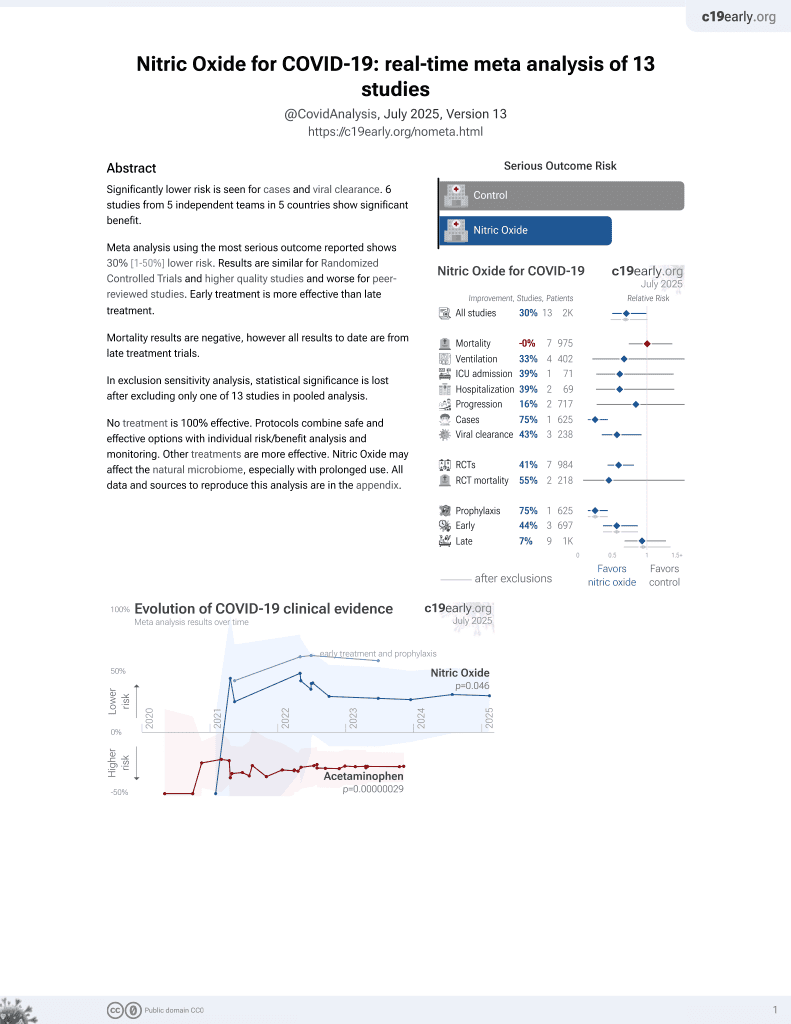
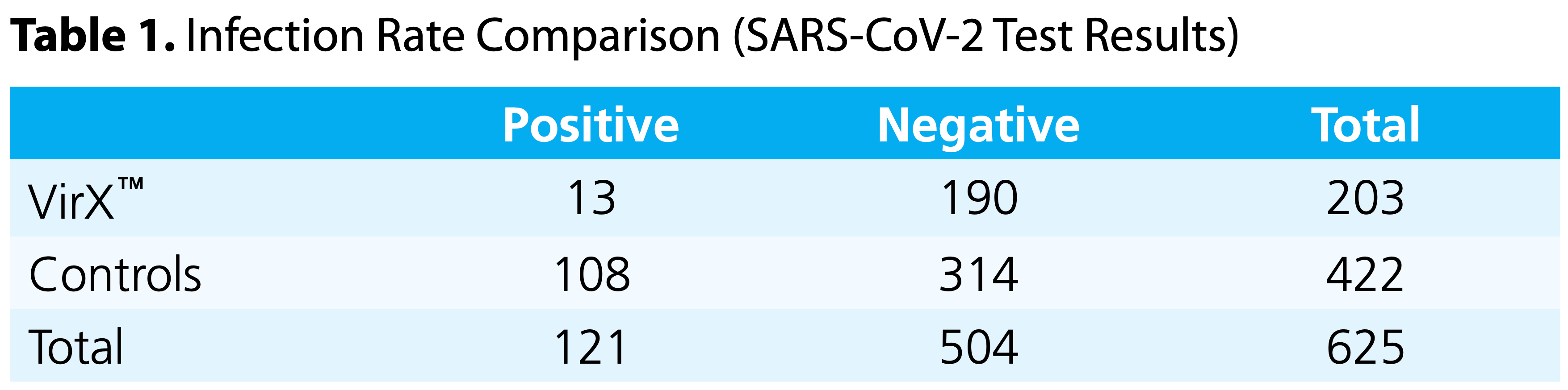
Retrospective 625 high-risk university students in Thailand showing reduced SARS-CoV-2 infection rates with nitric oxide nasal spray prophylaxis. Among students exposed to infected individuals, those voluntarily using treatment (n=203) had a 6.4% infection rate compared to 25.6% in the control group (n=422) (p<0.0001). Adverse events were limited to mild nasal burning or irritation in 11.4% of users, with no severe events reported. Authors note the study is limited by its retrospective, open-label nature and lack of randomization. Students who chose the treatment may have been more health-conscious or compliant with other protective measures. Authors are executives of the manufacturer.
Targeted administration to the respiratory tract provides treatment directly
to the typical source of initial SARS-CoV-2 infection and replication, and
allows for rapid onset of action, higher local drug concentration, and reduced systemic side effects.
|
risk of case, 75.0% lower, RR 0.25, p < 0.001, treatment 13 of 203 (6.4%), control 108 of 422 (25.6%), NNT 5.2.
|
| Effect extraction follows pre-specified rules prioritizing more serious outcomes. Submit updates |
Miller et al., 30 Apr 2022, retrospective, Thailand, peer-reviewed, 2 authors.
Abstract: Volume 18 Number 2 Spring 2023
The Journal of Pulmonary Technique
Epidemiological Analysis of Nitric Oxide Nasal
Spray (VirX ) Use in Students Exposed to
COVID-19 Infected Individuals
™
Chris Miller, PhD, BA, RT and Keith Moore, PharmD, FCCP, BCPS