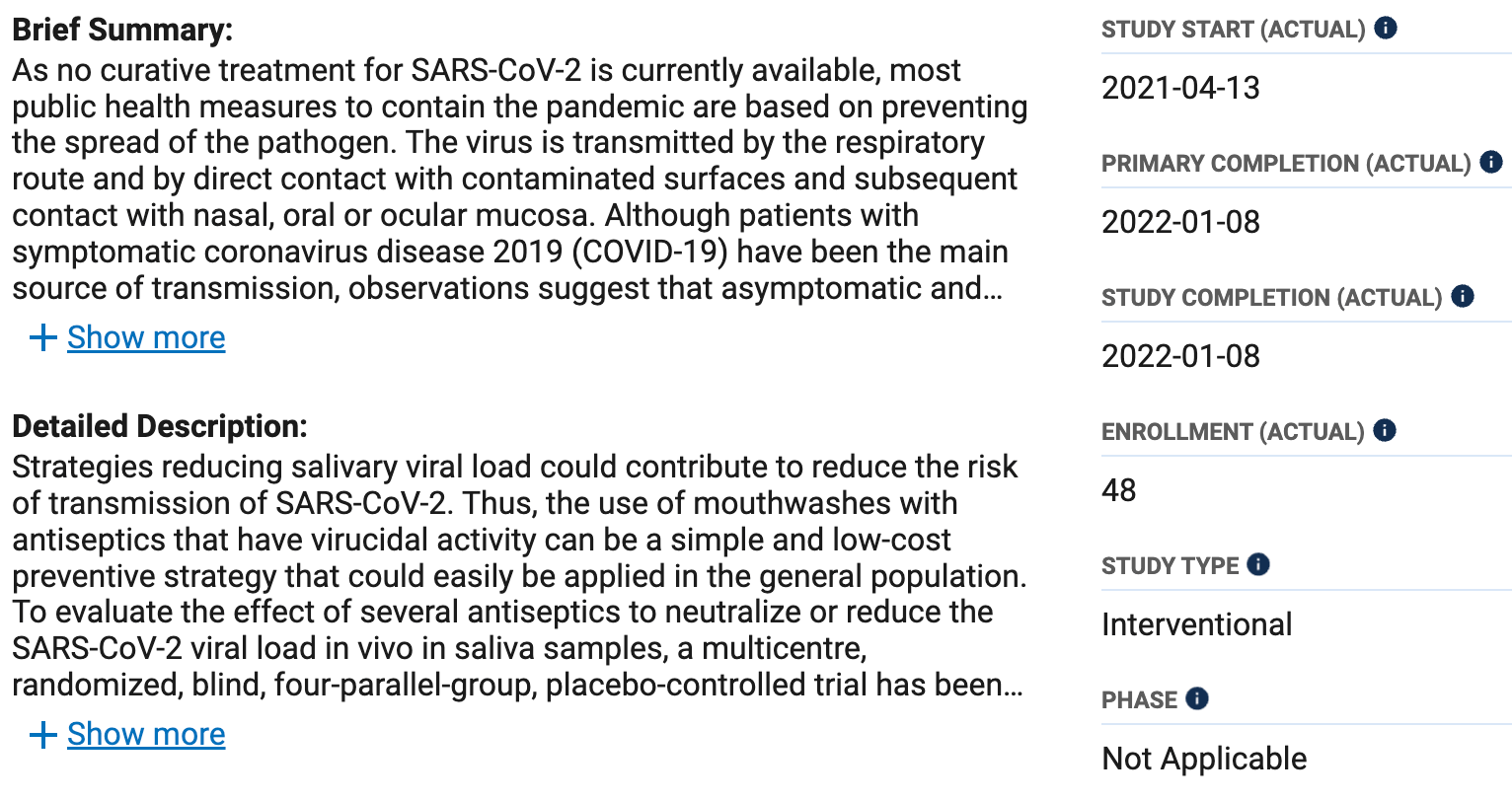
Evaluation of the Efficacy of Mouth Rinses With Commercial Mouthwashes to Decrease Viral Load in Saliva in COVID-19 Patients
et al., NCT05543603, NCT05543603, Jan 2022
Chlorhexidine for COVID-19
No treatment is 100% effective.
Protocols combine treatments.
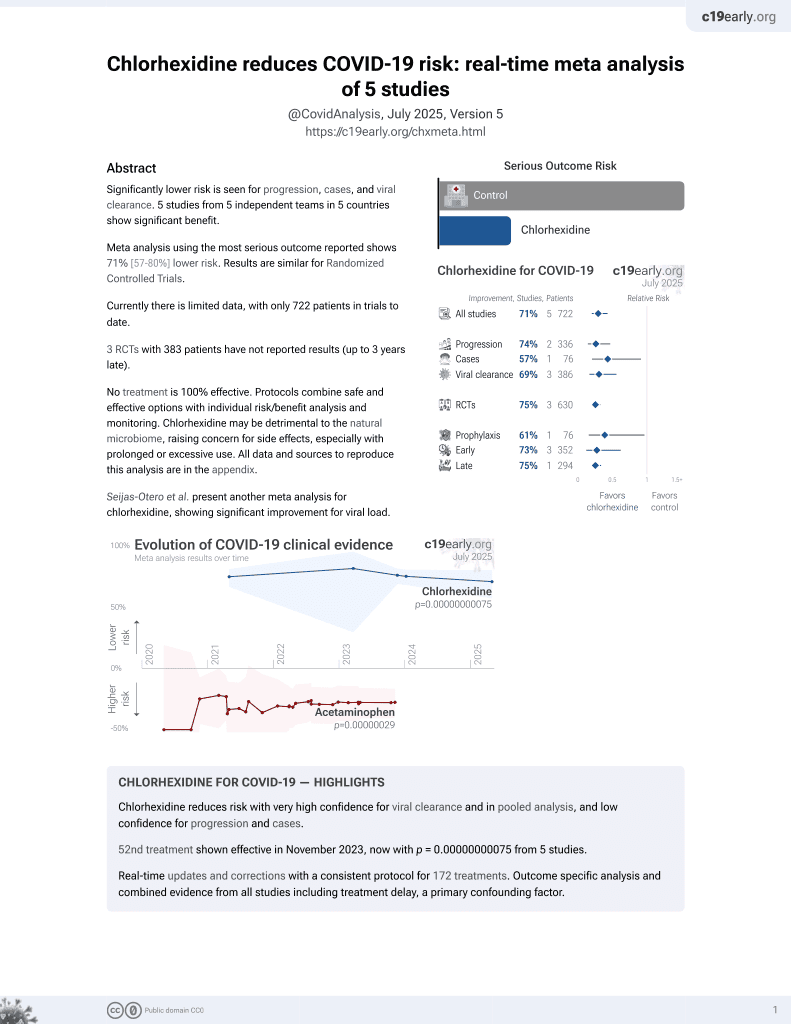
48 patient chlorhexidine early treatment RCT with results not reported over 4 years after completion.
Analysis of short-term changes in viral load using PCR may not detect
effective treatments because PCR is unable to differentiate between intact
infectious virus and non-infectious or destroyed virus particles. For example
Tarragó-Gil, Alemany perform RCTs with cetylpyridinium chloride
(CPC) mouthwash that show no difference in PCR viral load, however there was
significantly increased detection of SARS-CoV-2 nucleocapsid protein,
indicating viral lysis. CPC inactivates SARS-CoV-2 by degrading its membrane,
exposing the nucleocapsid of the virus. To better estimate changes in viral
load and infectivity, methods like viral culture that can
differentiate intact vs. degraded virus are preferred.

1.
Keating et al., SHIELD Study: Using Naso-oropharyngeal Antiseptic Decolonization to Reduce COVID-19 Viral Shedding (SHIELD), NCT04478019, clinicaltrials.gov/study/NCT04478019.
2.
Xie et al., Oral Rinse to Reduced Expelled Severe Acute Respiratory Syndrome Coronavirus 2 (SARS-CoV-2) During COVID-19 Infection, NCT04931004, clinicaltrials.gov/study/NCT04931004.
3.
Mira et al., Evaluation of the Efficacy of Mouth Rinses With Commercial Mouthwashes to Decrease Viral Load in Saliva in COVID-19 Patients, NCT05543603, clinicaltrials.gov/study/NCT05543603.
Mira et al., 8 Jan 2022, Double Blind Randomized Controlled Trial, placebo-controlled, trial NCT05543603 (history).