An International, Multicenter, Randomized, Double-blind, Adaptive Placebo-controlled Study of the Efficacy and Safety of a Single Administration of Olokizumab and RPH-104 With Standard Therapy in Patients With Severe SARS-CoV-2 Infection (COVID-19)

Samsonov et al., NCT04380519, NCT04380519, Jan 2022
Late treatmentDouble-blind RCT · NCT04380519 · 248 patients · Russia
Goflikicept for COVID-19
Samsonov et al. NCT04380519 · January 2022
Outcome
Improvement
Relative Risk · 95% CI
Higher mortality with goflikicept
Not statistically significant · p = 0.066

RCT 248 hospitalized patients showing higher mortality (p=0.07) with goflikicept (RPH-104).
Study covers olokizumab and goflikicept.
OutcomeImprovementEffect · pTreatmentControl
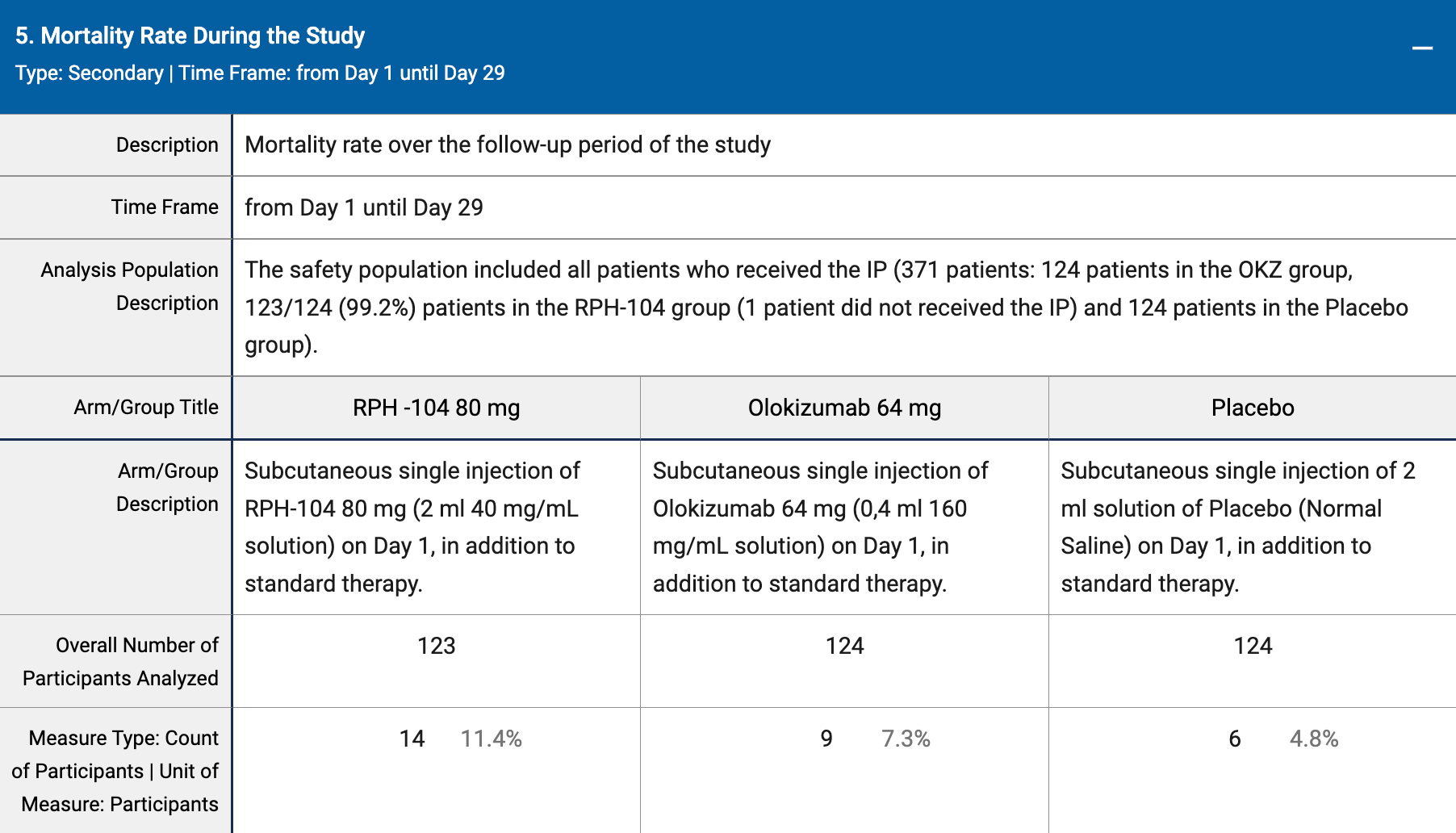
risk of death 135.2% higher · RR 2.35 · p = 0.07 135.2% higherRR 2.35p = 0.07 14 of 123 (11.4%) 6 of 124 (4.8%) treatment 14 of 123 (11.4%), control 6 of 124 (4.8%)day 29
risk of no improvement 2+ points 0.0% lower · RR 1.00 · p = 1.00 0.0% lowerRR 1.00p = 1.00 30 of 124 (24.2%) 30 of 124 (24.2%) treatment 30 of 124 (24.2%), control 30 of 124 (24.2%)day 29
risk of no improvement 1+ points 2.7% lower · RR 0.97 · p = 1.00 2.7% lowerRR 0.97p = 1.00 36 of 124 (29.0%) 37 of 124 (29.8%) treatment 36 of 124 (29.0%), control 37 of 124 (29.8%)NNT 124day 29

Effect extraction follows pre-specified rules prioritizing more serious outcomes. Submit updates.

Samsonov et al., 24 Jan 2022, Double Blind Randomized Controlled Trial, placebo-controlled, Russia, preprint, 1 author, trial NCT04380519 (history). Contact: sa.grishin@rpharm.ru.

Protocol efficacy and cost by country

Treatment protocols varied widely

November 2026
Efficacy of protocol
SeychellesSCIcelandISBelizeBZMaltaMTLuxembourgLUMontenegroMEBhutanBTGuyanaGYComorosKMFijiFJDjiboutiDJCyprusCYMauritiusMUEstoniaEETrinidad and TobagoTTEquatorial GuineaGQBahrainBHLatviaLVGuinea-BissauGWSloveniaSINorth MacedoniaMKLesothoLSGabonGABotswanaBWGambiaGMNamibiaNALithuaniaLTAlbaniaALQatarQAJamaicaJMArmeniaAMMongoliaMNBosnia and HerzegovinaBAUruguayUYEritreaERGeorgiaGECroatiaHRPanamaPAMauritaniaMRNew ZealandNZCentral African RepublicCFIrelandIELiberiaLRCosta RicaCRNorwayNOSlovakiaSKCongoCGFinlandFIDenmarkDKSingaporeSGEl SalvadorSVKyrgyzstanKGNicaraguaNILebanonLBLibyaLYBulgariaBGParaguayPYHong KongHKSierra LeoneSLTogoTGSwitzerlandCHIsraelILSerbiaRSPapua New GuineaPGAustriaATBelarusBYTajikistanTJHungaryHUUnited Arab EmiratesAEHondurasHNSwedenSEAzerbaijanAZPortugalPTJordanJOGreeceGRCzechiaCZDominican RepublicDOSouth SudanSSCubaCUHaitiHTBelgiumBEBoliviaBOTunisiaTNBurundiBIBeninBJRwandaRWGuineaGNZimbabweZWChadTDCambodiaKHSenegalSNNetherlandsNLSyriaSYEcuadorECGuatemalaGTZambiaZMKazakhstanKZMalawiMWRomaniaROMaliMLBurkina FasoBFSri LankaLKTaiwanTWNigerNEAustraliaAUCôte d'IvoireCICameroonCMMadagascarMGVenezuelaVENepalNPYemenYEGhanaGHMozambiqueMZMalaysiaMYAngolaAOPeruPEUzbekistanUZSaudi ArabiaSAMoroccoMACanadaCAPolandPLAfghanistanAFIraqIQUkraineUASudanSDAlgeriaDZArgentinaARUgandaUGSpainESColombiaCOSouth KoreaKRKenyaKEMyanmarMMSouth AfricaZAItalyITFranceFRUKGBThailandTHGermanyDEIranIRTurkeyTRDR CongoCDVietnamVNEgyptEGPhilippinesPHEthiopiaETJapanJPMexicoMXBangladeshBDNigeriaNGBrazilBRPakistanPKIndonesiaIDUSAUSIndiaINChinaCNRussiaRUmore effective, cheaperless effective, costlier
0%20%40%60%
$0$500$1,000$1,500+
Cost per course

Russia favored low-cost treatments. The average efficacy of treatments was moderate. Low-cost treatments improve early treatment, and provide complementary/synergistic benefits.

Late treatment
is less effective
