Lilly's neutralizing antibody bamlanivimab (LY-CoV555) prevented COVID-19 at nursing homes in the BLAZE-2 trial, reducing risk by up to 80 percent for residents

Lilly, Press Release, Jan 2021

Bamlanivimab/etesevimab for COVID-19

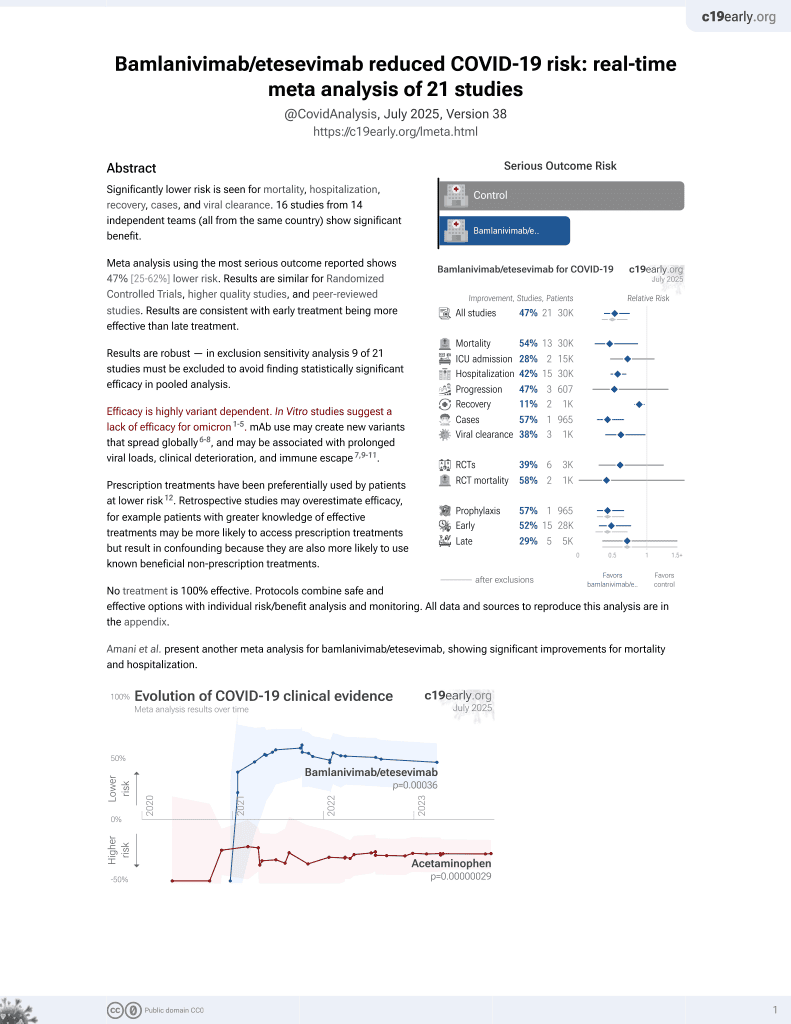
21st treatment shown to reduce risk in May 2021, now with p = 0.00049 from 22 studies, recognized in 11 countries. Efficacy is variant dependent.

No treatment is 100% effective.
Protocols combine treatments.

Press release on the BLAZE-2 trial at nursing homes showing significantly lower symptomatic COVID-19 with treatment.
Efficacy is highly variant dependent. In Vitro research suggests a lack of efficacy for omicron1-5.
Standard of Care (SOC) for COVID-19 in the study country, the USA, is very poor with very low average efficacy for approved treatments6. Only expensive, high-profit treatments were approved for early treatment. Low-cost treatments were excluded, reducing the probability of early treatment due to access and cost barriers, and eliminating complementary and synergistic benefits seen with many low-cost treatments.
OutcomeImprovementEffect · pTreatmentControl
risk of symptomatic case 57.0% lower · RR 0.43 · p < 0.001*** 57.0% lowerRR 0.43p < 0.001*** 483 482 treatment 483, control 482group sizes estimated because they were not supplied
risk of symptomatic case 80.0% lower · RR 0.20 · p < 0.001*** 80.0% lowerRR 0.20p < 0.001*** 150 149 treatment 150, control 149nursing home residents, group sizes estimated because they were not supplied

Effect extraction follows pre-specified rules prioritizing more serious outcomes. Submit updates. *** p < 0.001

Lilly et al., 21 Jan 2021, Randomized Controlled Trial, USA, preprint, 1 author.

Protocol efficacy and cost by country

Treatment protocols varied widely

November 2026
Efficacy of protocol
SeychellesSCIcelandISBelizeBZMaltaMTLuxembourgLUMontenegroMEBhutanBTGuyanaGYComorosKMFijiFJDjiboutiDJCyprusCYMauritiusMUEstoniaEETrinidad and TobagoTTEquatorial GuineaGQBahrainBHLatviaLVGuinea-BissauGWSloveniaSINorth MacedoniaMKLesothoLSGabonGABotswanaBWGambiaGMNamibiaNALithuaniaLTAlbaniaALQatarQAJamaicaJMArmeniaAMMongoliaMNBosnia and HerzegovinaBAUruguayUYEritreaERGeorgiaGECroatiaHRPanamaPAMauritaniaMRNew ZealandNZCentral African RepublicCFIrelandIELiberiaLRCosta RicaCRNorwayNOSlovakiaSKCongoCGFinlandFIDenmarkDKSingaporeSGEl SalvadorSVKyrgyzstanKGNicaraguaNILebanonLBLibyaLYBulgariaBGParaguayPYHong KongHKSierra LeoneSLTogoTGSwitzerlandCHIsraelILSerbiaRSPapua New GuineaPGAustriaATBelarusBYTajikistanTJHungaryHUUnited Arab EmiratesAEHondurasHNSwedenSEAzerbaijanAZPortugalPTJordanJOGreeceGRCzechiaCZDominican RepublicDOSouth SudanSSCubaCUHaitiHTBelgiumBEBoliviaBOTunisiaTNBurundiBIBeninBJRwandaRWGuineaGNZimbabweZWChadTDCambodiaKHSenegalSNNetherlandsNLSyriaSYEcuadorECGuatemalaGTZambiaZMKazakhstanKZMalawiMWRomaniaROMaliMLBurkina FasoBFSri LankaLKTaiwanTWNigerNEAustraliaAUCôte d'IvoireCICameroonCMMadagascarMGVenezuelaVENepalNPYemenYEGhanaGHMozambiqueMZMalaysiaMYAngolaAOPeruPEUzbekistanUZSaudi ArabiaSAMoroccoMACanadaCAPolandPLAfghanistanAFIraqIQUkraineUASudanSDAlgeriaDZArgentinaARUgandaUGSpainESColombiaCOSouth KoreaKRKenyaKEMyanmarMMSouth AfricaZAItalyITFranceFRUKGBThailandTHGermanyDEIranIRTurkeyTRDR CongoCDVietnamVNEgyptEGPhilippinesPHEthiopiaETJapanJPMexicoMXRussiaRUBangladeshBDNigeriaNGBrazilBRPakistanPKIndonesiaIDIndiaINChinaCNUSAUSmore effective, cheaperless effective, costlier
0%20%40%60%
$0$500$1,000$1,500+
Cost per course

USA favored high-profit treatments. The average efficacy of treatments was very low. High-cost protocols reduce early treatment, and forgo complementary/synergistic benefits.