Protective Effect of Fluvoxamine for COVID-19 in Obsessive-Compulsive Disorder

Diaz et al., The Primary Care Companion For CNS Disorders, doi:10.4088/PCC.22br03337, Oct 2022

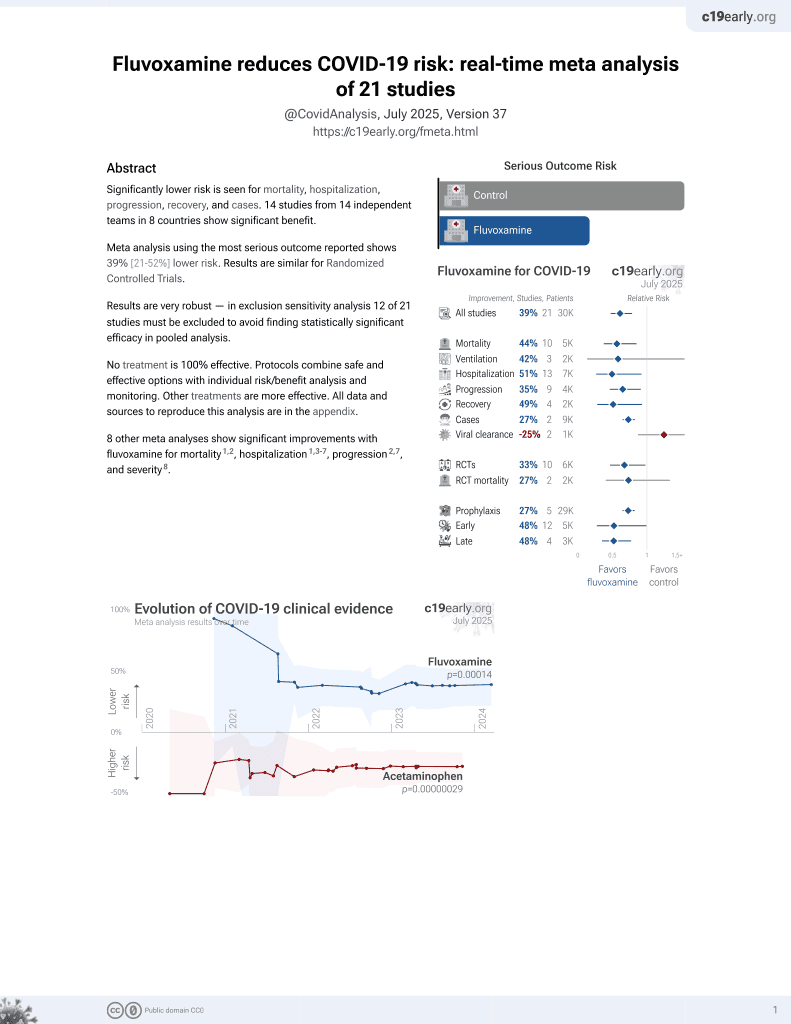
Fluvoxamine for COVID-19

26th treatment shown to reduce risk in November 2021, now with p = 0.00014 from 21 studies, recognized in 2 countries.

No treatment is 100% effective.
Protocols combine treatments.

TriNetX PSM retrospective 82,069 OCD patients, showing lower risk of COVID-19 with fluvoxamine use.
Standard of Care (SOC) for COVID-19 in the study country, the USA, is very poor with very low average efficacy for approved treatments1. Only expensive, high-profit treatments were approved for early treatment. Low-cost treatments were excluded, reducing the probability of early treatment due to access and cost barriers, and eliminating complementary and synergistic benefits seen with many low-cost treatments.
OutcomeImprovementEffect · pTreatmentControl
risk of case 28.0% lower · OR 0.72 · p < 0.001*** 28.0% lowerOR 0.72p < 0.001*** 4,558 4,558 treatment 4,558, control 4,558RR approximated with ORpropensity score matching

Effect extraction follows pre-specified rules prioritizing more serious outcomes. Submit updates. *** p < 0.001

Diaz et al., 6 Oct 2022, retrospective, USA, peer-reviewed, 2 authors.

Protocol efficacy and cost by country

Treatment protocols varied widely

November 2026
Efficacy of protocol
SeychellesSCIcelandISBelizeBZMaltaMTLuxembourgLUMontenegroMEBhutanBTGuyanaGYComorosKMFijiFJDjiboutiDJCyprusCYMauritiusMUEstoniaEETrinidad and TobagoTTEquatorial GuineaGQBahrainBHLatviaLVGuinea-BissauGWSloveniaSINorth MacedoniaMKLesothoLSGabonGABotswanaBWGambiaGMNamibiaNALithuaniaLTAlbaniaALQatarQAJamaicaJMArmeniaAMMongoliaMNBosnia and HerzegovinaBAUruguayUYEritreaERGeorgiaGECroatiaHRPanamaPAMauritaniaMRNew ZealandNZCentral African RepublicCFIrelandIELiberiaLRCosta RicaCRNorwayNOSlovakiaSKCongoCGFinlandFIDenmarkDKSingaporeSGEl SalvadorSVKyrgyzstanKGNicaraguaNILebanonLBLibyaLYBulgariaBGParaguayPYHong KongHKSierra LeoneSLTogoTGSwitzerlandCHIsraelILSerbiaRSPapua New GuineaPGAustriaATBelarusBYTajikistanTJHungaryHUUnited Arab EmiratesAEHondurasHNSwedenSEAzerbaijanAZPortugalPTJordanJOGreeceGRCzechiaCZDominican RepublicDOSouth SudanSSCubaCUHaitiHTBelgiumBEBoliviaBOTunisiaTNBurundiBIBeninBJRwandaRWGuineaGNZimbabweZWChadTDCambodiaKHSenegalSNNetherlandsNLSyriaSYEcuadorECGuatemalaGTZambiaZMKazakhstanKZMalawiMWRomaniaROMaliMLBurkina FasoBFSri LankaLKTaiwanTWNigerNEAustraliaAUCôte d'IvoireCICameroonCMMadagascarMGVenezuelaVENepalNPYemenYEGhanaGHMozambiqueMZMalaysiaMYAngolaAOPeruPEUzbekistanUZSaudi ArabiaSAMoroccoMACanadaCAPolandPLAfghanistanAFIraqIQUkraineUASudanSDAlgeriaDZArgentinaARUgandaUGSpainESColombiaCOSouth KoreaKRKenyaKEMyanmarMMSouth AfricaZAItalyITFranceFRUKGBThailandTHGermanyDEIranIRTurkeyTRDR CongoCDVietnamVNEgyptEGPhilippinesPHEthiopiaETJapanJPMexicoMXRussiaRUBangladeshBDNigeriaNGBrazilBRPakistanPKIndonesiaIDIndiaINChinaCNUSAUSmore effective, cheaperless effective, costlier
0%20%40%60%
$0$500$1,000$1,500+
Cost per course

USA favored high-profit treatments. The average efficacy of treatments was very low. High-cost protocols reduce early treatment, and forgo complementary/synergistic benefits.

DOI record: { "DOI": "10.4088/pcc.22br03337", "ISSN": [ "2155-7780" ], "URL": "http://dx.doi.org/10.4088/PCC.22br03337", "author": [ { "affiliation": [], "family": "Diaz", "given": "Ailyn D.", "sequence": "first" }, { "affiliation": [], "family": "Baweja", "given": "Raman", "sequence": "additional" } ], "container-title": "The Primary Care Companion For CNS Disorders", "container-title-short": "Prim. Care Companion CNS Disord.", "content-domain": { "crossmark-restriction": false, "domain": [] }, "created": { "date-parts": [ [ 2022, 9, 29 ] ], "date-time": "2022-09-29T21:33:32Z", "timestamp": 1664487212000 }, "deposited": { "date-parts": [ [ 2022, 9, 29 ] ], "date-time": "2022-09-29T21:33:32Z", "timestamp": 1664487212000 }, "indexed": { "date-parts": [ [ 2022, 9, 29 ] ], "date-time": "2022-09-29T22:11:28Z", "timestamp": 1664489488944 }, "is-referenced-by-count": 0, "issue": "5", "issued": { "date-parts": [ [ 2022, 10, 6 ] ] }, "journal-issue": { "issue": "5", "published-online": { "date-parts": [ [ 2022, 10, 6 ] ] } }, "member": "2558", "original-title": [], "prefix": "10.4088", "published": { "date-parts": [ [ 2022, 10, 6 ] ] }, "published-online": { "date-parts": [ [ 2022, 10, 6 ] ] }, "publisher": "Physicians Postgraduate Press, Inc", "reference-count": 0, "references-count": 0, "relation": {}, "resource": { "primary": { "URL": "https://www.psychiatrist.com/pcc/ocd/protective-effect-fluvoxamine-covid-19-obsessive-compulsive-disorder-real-world-case-control-study/" } }, "score": 1, "short-title": [], "source": "Crossref", "subject": [ "General Medicine" ], "subtitle": [ "A Real-World Case-Control Study" ], "title": "Protective Effect of Fluvoxamine for COVID-19 in Obsessive-Compulsive Disorder", "type": "journal-article", "volume": "24" }