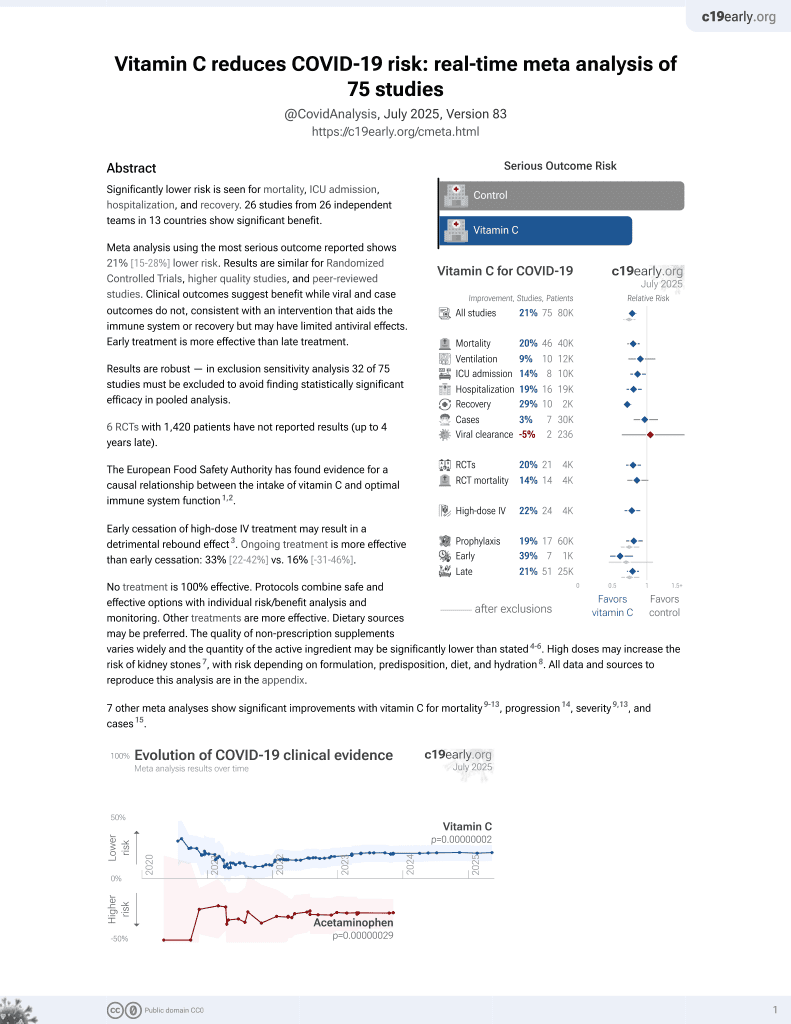
Vitamin C for COVID-19
6th treatment shown to reduce risk in
September 2020, now with p = 0.000000069 from 72 studies, recognized in 22 countries.
No treatment is 100% effective.
Protocols combine treatments.

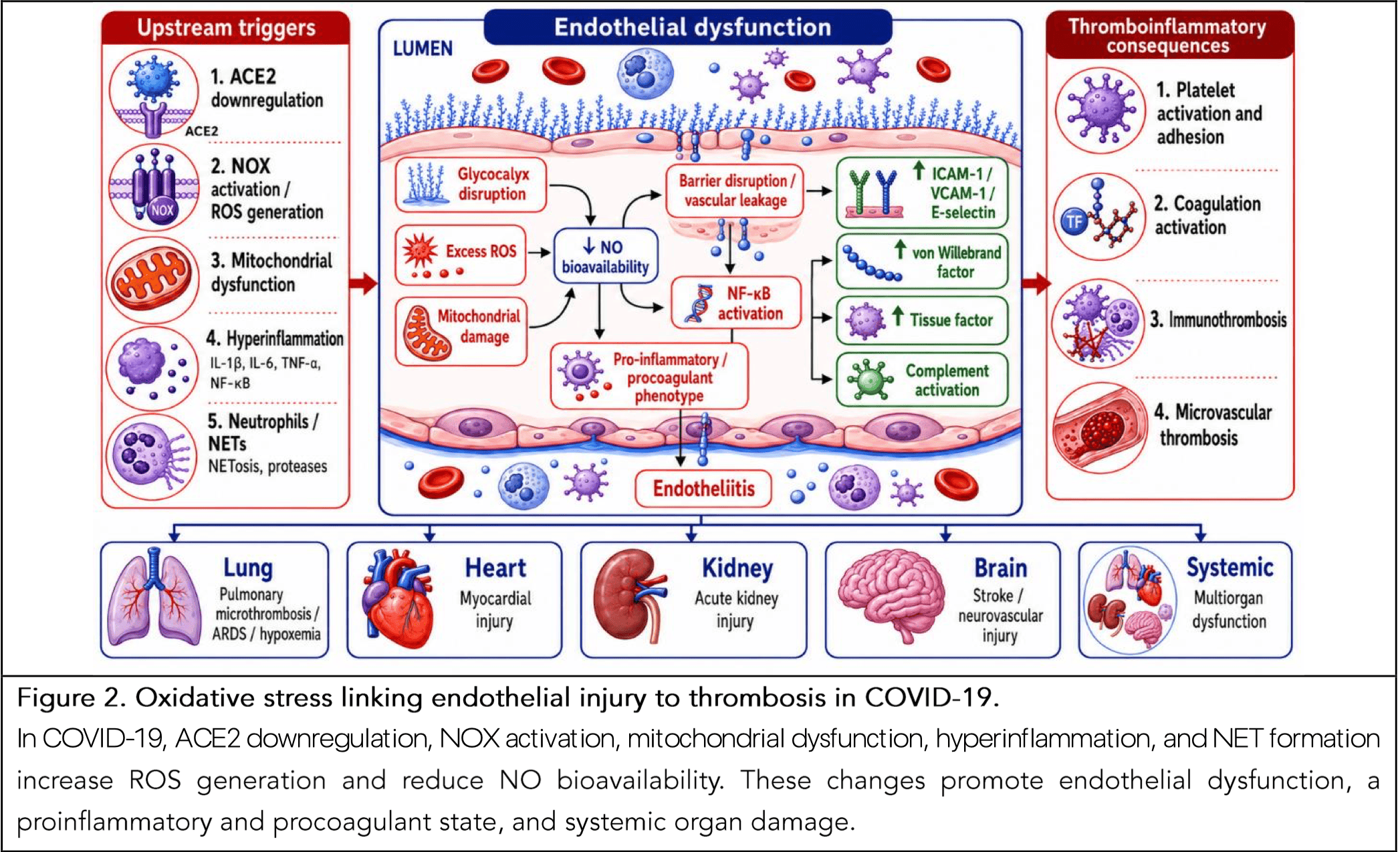
Review of oxidative stress and antioxidant treatments for COVID-19. Impaired antioxidant defenses are linked with inflammation, vascular injury, thrombosis, and severe disease.

1.
Neves et al., Oxidative Stress and COVID-19: A Mechanistic and Translational Review, Medical Research Archives, doi:10.18103/mra.2026.0430.
2.
Younes, S., The influence of micronutrients on olfactory dysfunction associated with COVID-19 and long COVID, Next Research, doi:10.1016/j.nexres.2026.101727.
3.
Al-Khrasani et al., Do vitamins halt the COVID-19-evoked pro-inflammatory cytokines involved in the development of neuropathic pain?, Biomedicine & Pharmacotherapy, doi:10.1016/j.biopha.2025.118346.
4.
Sanduzzi Zamparelli et al., Immune-Boosting and Antiviral Effects of Antioxidants in COVID-19 Pneumonia: A Therapeutic Perspective, Life, doi:10.3390/life15010113.
5.
Fazli et al., Possible Link between Gut Microbiota, Diet, and COVID-19 Infection, Journal of Medical Bacteriology, 12:4, jmb.tums.ac.ir/index.php/jmb/article/view/525.
6.
Xie et al., The role of reactive oxygen species in severe acute respiratory syndrome coronavirus 2 (SARS-COV-2) infection-induced cell death, Cellular & Molecular Biology Letters, doi:10.1186/s11658-024-00659-6.
7.
Kaushal, A., Nutraceuticals and pharmacological to balance the transitional microbiome to extend immunity during COVID-19 and other viral infections, Journal of Translational Medicine, doi:10.1186/s12967-024-05587-9.
8.
Mu et al., Anti-inflammatory and Nutritional Interventions Against SARS-CoV-2: A Comprehensive Review, Journal of Agriculture and Food Research, doi:10.1016/j.jafr.2024.101422.
9.
Hemilä et al., Rebound effect explains the divergence in survival after 5 days in a controlled trial on vitamin C for COVID-19 patients, Frontiers in Medicine, doi:10.3389/fmed.2024.1391346.
10.
Schloss et al., Nutritional deficiencies that may predispose to long COVID, Inflammopharmacology, doi:10.1007/s10787-023-01183-3.
11.
Yamasaki et al., Pleiotropic Functions of Nitric Oxide Produced by Ascorbate for the Prevention and Mitigation of COVID-19: A Revaluation of Pauling’s Vitamin C Therapy, Microorganisms, doi:10.3390/microorganisms11020397.
12.
Arora et al., Global Dietary and Herbal Supplement Use during COVID-19—A Scoping Review, Nutrients, doi:10.3390/nu15030771.
13.
Foshati et al., Antioxidants and clinical outcomes of patients with coronavirus disease 2019: A systematic review of observational and interventional studies, Food Science & Nutrition, doi:10.1002/fsn3.3034.
14.
Hemilä (B) et al., Bias against Vitamin C in Mainstream Medicine: Examples from Trials of Vitamin C for Infections, Life, doi:10.3390/life12010062.
15.
May et al., Therapeutic potential of megadose vitamin C to reverse organ dysfunction in sepsis and COVID-19, British Journal of Pharmacology, doi:10.1111/bph.15579.
17.
Holford et al., Vitamin C—An Adjunctive Therapy for Respiratory Infection, Sepsis and COVID-19, Nutrients, doi:10.3390/nu12123760.
Neves et al., 31 Aug 2026, peer-reviewed, 2 authors.
Abstract: THE EUROPEAN SOCIETY OF MEDICINE
Published 31 August 2026
Medical Research Archives, Volume 14 Issue 8
ORIGINAL RESEARCH
Redox Dysregulation in COVID-19: Mechanisms, Prognostic
Biomarkers, and Therapeutic Implications
Fabio Fernandes Neves1 and Alceu Afonso Jordao2
ABSTRACT
OPEN ACCESS
Severe COVID-19 is not only a viral pneumonia but also a systemic disorder characterized by inflammation,
endothelial dysfunction, immunothrombosis, and multiorgan injury. Oxidative stress has frequently been
described in this setting, but its clinical meaning remains uncertain.
This narrative review synthesizes mechanistic and clinical evidence on redox dysregulation in COVID-19,
with emphasis on prognostic biomarkers and redox-targeted therapeutic strategies.
This distinction is clinically relevant because several pathways involved in severe COVID-19 converge on redox
imbalance. Evidence suggests that SARS-CoV-2 can disturb redox balance through ACE2 downregulation,
angiotensin II accumulation, NADPH oxidase activation, mitochondrial injury, inflammasome signaling,
endothelial dysfunction, and immunothrombosis. Together, these processes increase reactive oxygen and
nitrogen species, reduce nitric oxide availability, weaken antioxidant defenses, and help connect viral
pneumonia with vascular injury, microthrombosis, and multiorgan damage.
Clinical studies show that several oxidative stress markers are associated with worse COVID-19 outcomes.
Higher levels of hydrogen peroxide, total oxidative stress, malondialdehyde, 8-isoprostanes, nitrotyrosine,
protein carbonyls, and oxidized LDL have been linked to severe disease, ICU admission, respiratory failure,
and mortality. Lower levels of glutathione, superoxide dismutase, catalase, glutathione peroxidase, and thiols
suggest reduced antioxidant reserve. Even so, these markers are not ready for routine clinical use because
studies differ in timing, assays, samples, patient populations, and outcomes. Antioxidant or redox-modulating
therapies, including N-acetylcysteine, vitamin C, selenium, zinc, and NRF2 activators, remain biologically
plausible but clinically unproven.
At present, redox biomarkers and antioxidant interventions remain investigational. Future studies should
use standardized serial biomarker panels and phenotype-driven trial designs to determine whether redoxguided risk stratification or treatment can improve COVID-19 outcomes.
Keywords: COVID-19, SARS-CoV-2, oxidative stress, reactive oxygen species, antioxidants.
Medical Research Archives
1
THE EUROPEAN SOCIETY OF MEDICINE
AUTHOR AFFILIATIONS
Department of Medicine, Federal University of São Carlos, São Carlos-SP, Brazil
1
fabioneves@ufscar.br
Department of Health Sciences, Ribeirão Preto Medical School, University of São Paulo,
2
Ribeirão Preto-SP, Brazil.
DOI
https://doi.org/10.18103/mra.2026.0430
CITATION
Neves, F.F.1 and Jordao, A.A., 2026. Redox Dysregulation in COVID-19: Mechanisms, Prognostic Biomarkers, and Therapeutic
Implications. Medical Research Archives, [online] 14(8).
COPYRIGHT
© 2026 European Society of Medicine. This is an open-access article distributed under the terms of the Creative
Commons Attribution License, which permits unrestricted use, distribution, and reproduction in any medium, provided
the original author and source are credited.
ISSN
2375-1924
Medical Research Archives
2
THE EUROPEAN SOCIETY OF MEDICINE
DOI record:
{
"DOI": "10.18103/mra.2026.0430",
"ISSN": [
"2375-1924",
"2375-1916"
],
"URL": "http://dx.doi.org/10.18103/mra.2026.0430",
"abstract": "<jats:p>This review aimed to explain how oxidative stress contributes to COVID-19 pathogenesis, assess whether redox biomarkers may help predict clinical risk, and discuss whether redox-targeted therapies have a credible role in future research or care. Evidence suggests that oxidative stress is not simply a by-product of severe infection. SARS-CoV-2 can disturb redox balance through ACE2 downregulation, angiotensin II accumulation, NADPH oxidase activation, mitochondrial injury, inflammasome signaling, endothelial dysfunction, and immunothrombosis. Together, these processes increase reactive oxygen and nitrogen species, reduce nitric oxide availability, weaken antioxidant defenses, and help connect viral pneumonia with vascular injury, microthrombosis, and multiorgan damage. Clinical studies show that several oxidative stress markers are associated with worse COVID-19 outcomes. Higher levels of hydrogen peroxide, total oxidative stress, malondialdehyde, 8-isoprostanes, nitrotyrosine, protein carbonyls, and oxidized LDL have been linked to severe disease, ICU admission, respiratory failure, and mortality. Lower levels of glutathione, superoxide dismutase, catalase, glutathione peroxidase, and thiols suggest reduced antioxidant reserve. Even so, these markers are not ready for routine clinical use because studies differ in timing, assays, samples, patient populations, and outcomes. Redox-related genetic variants may help explain why some patients develop greater oxidative injury, but this field remains exploratory. Persistent redox imbalance may also contribute to long COVID, especially fatigue, brain fog, cardiovascular dysfunction, dysautonomia, and exercise intolerance. Antioxidant or redox-modulating therapies, including N-acetylcysteine, vitamin C, selenium, zinc, and NRF2 activators, remain biologically plausible but clinically unproven. Future studies should use serial biomarker panels and phenotype-driven trials to identify patients most likely to benefit.</jats:p>",
"author": [
{
"affiliation": [
{
"name": "Department of Medicine, Federal University of Sao Carlos, Sao Carlos-SP, Brazil."
}
],
"family": "Fernandes Neves",
"given": "Fabio",
"role": [
{
"role": "author",
"vocabulary": "crossref"
}
],
"sequence": "first"
},
{
"affiliation": [
{
"name": "Department of Health Sciences, Ribeirao Preto Medical School, University of Sao Paulo, Ribeirao Preto-SP, Brazil."
}
],
"family": "Afonso Jordao",
"given": "Alceu",
"role": [
{
"role": "author",
"vocabulary": "crossref"
}
],
"sequence": "additional"
}
],
"container-title": "Medical Research Archives",
"container-title-short": "MRAJ",
"content-domain": {
"crossmark-restriction": false,
"domain": []
},
"created": {
"date-parts": [
[
2026,
7,
7
]
],
"date-time": "2026-07-07T05:27:51Z",
"timestamp": 1783402071000
},
"deposited": {
"date-parts": [
[
2026,
10,
16
]
],
"date-time": "2026-10-16T07:50:15Z",
"timestamp": 1792137015000
},
"indexed": {
"date-parts": [
[
2026,
11,
10
]
],
"date-time": "2026-11-10T15:03:51Z",
"timestamp": 1794323031753,
"version": "4.9.0"
},
"is-referenced-by-count": 0,
"issue": "7",
"issued": {
"date-parts": [
[
2026,
8,
3
]
]
},
"journal-issue": {
"issue": "7",
"published-online": {
"date-parts": [
[
2026,
7,
31
]
]
}
},
"license": [
{
"URL": "https://creativecommons.org/licenses/by/4.0/",
"content-version": "vor",
"delay-in-days": 0,
"start": {
"date-parts": [
[
2026,
8,
3
]
],
"date-time": "2026-08-03T00:00:00Z",
"timestamp": 1785715200000
}
}
],
"link": [
{
"URL": "https://esmed.org/MRA/mra/article/download/7754/99193550446",
"content-type": "application/pdf",
"content-version": "vor",
"intended-application": "text-mining"
},
{
"URL": "https://esmed.org/MRA/mra/article/download/7754/99193550446",
"content-type": "unspecified",
"content-version": "vor",
"intended-application": "similarity-checking"
}
],
"member": "7483",
"original-title": [],
"prefix": "10.18103",
"published": {
"date-parts": [
[
2026,
8,
3
]
]
},
"published-online": {
"date-parts": [
[
2026,
8,
3
]
]
},
"publisher": "European Society of Medicine",
"reference-count": 0,
"references-count": 0,
"relation": {},
"resource": {
"primary": {
"URL": "https://esmed.org/MRA/mra/article/view/7754"
}
},
"score": 1,
"short-title": [],
"source": "Crossref",
"subject": [],
"subtitle": [],
"title": "Oxidative Stress and COVID-19: A Mechanistic and Translational Review",
"type": "journal-article",
"volume": "14"
}
neves3